-
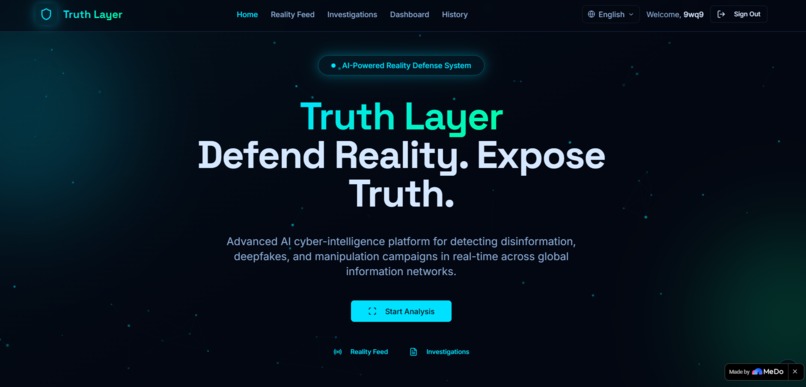
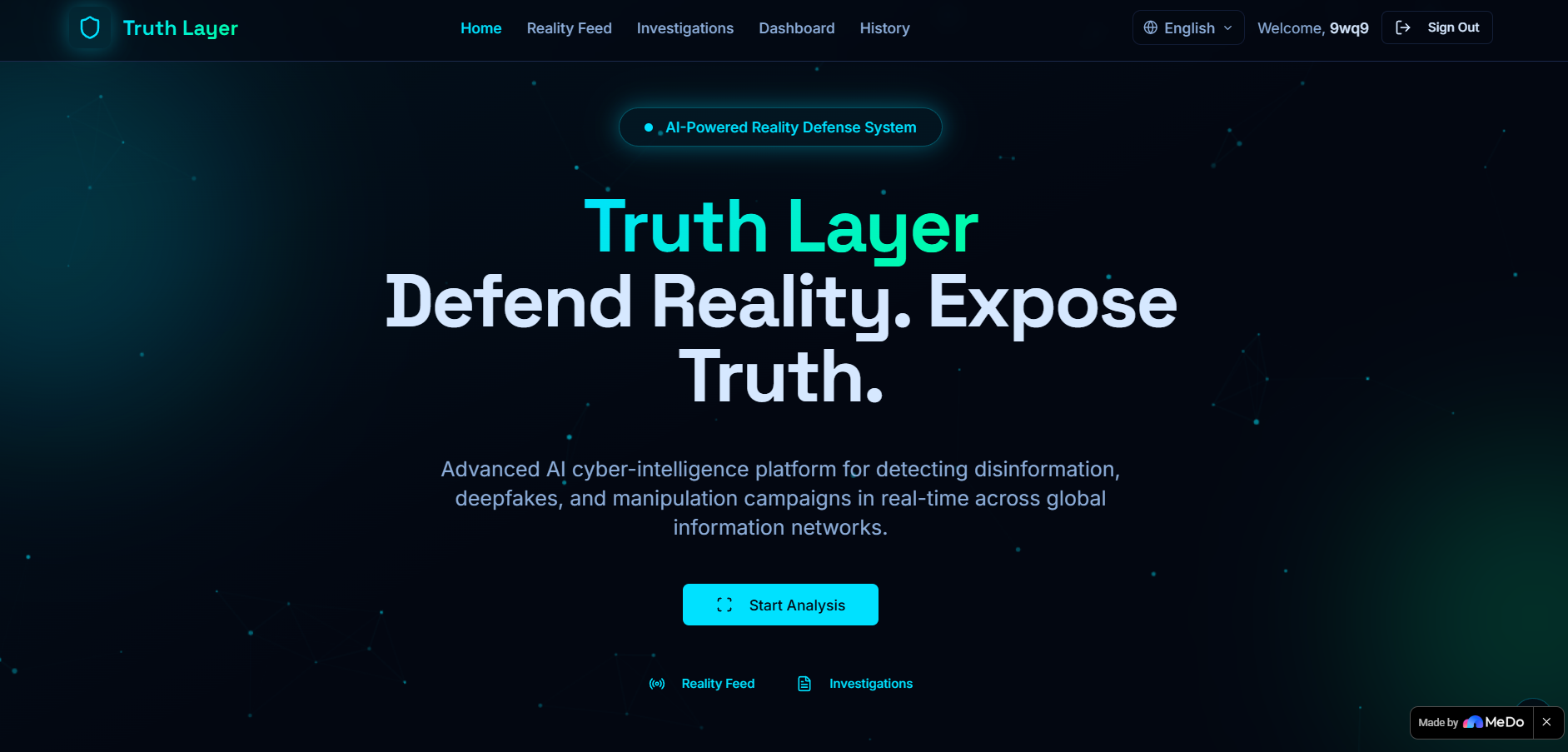
"Truth Layer homepage introducing an AI-powered defense system against misinformation, deepfakes, and manipulation campaigns."
-
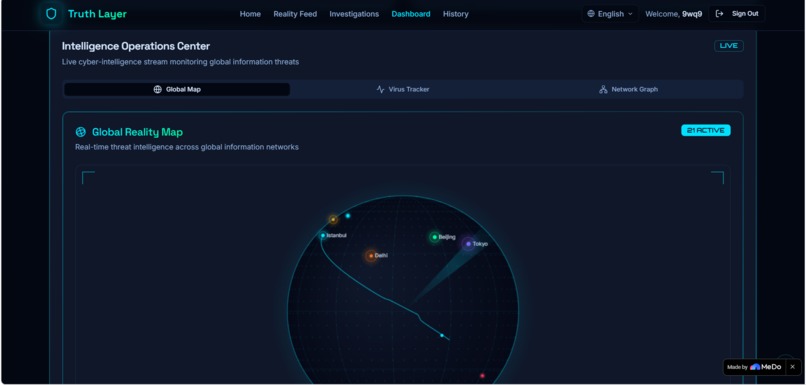
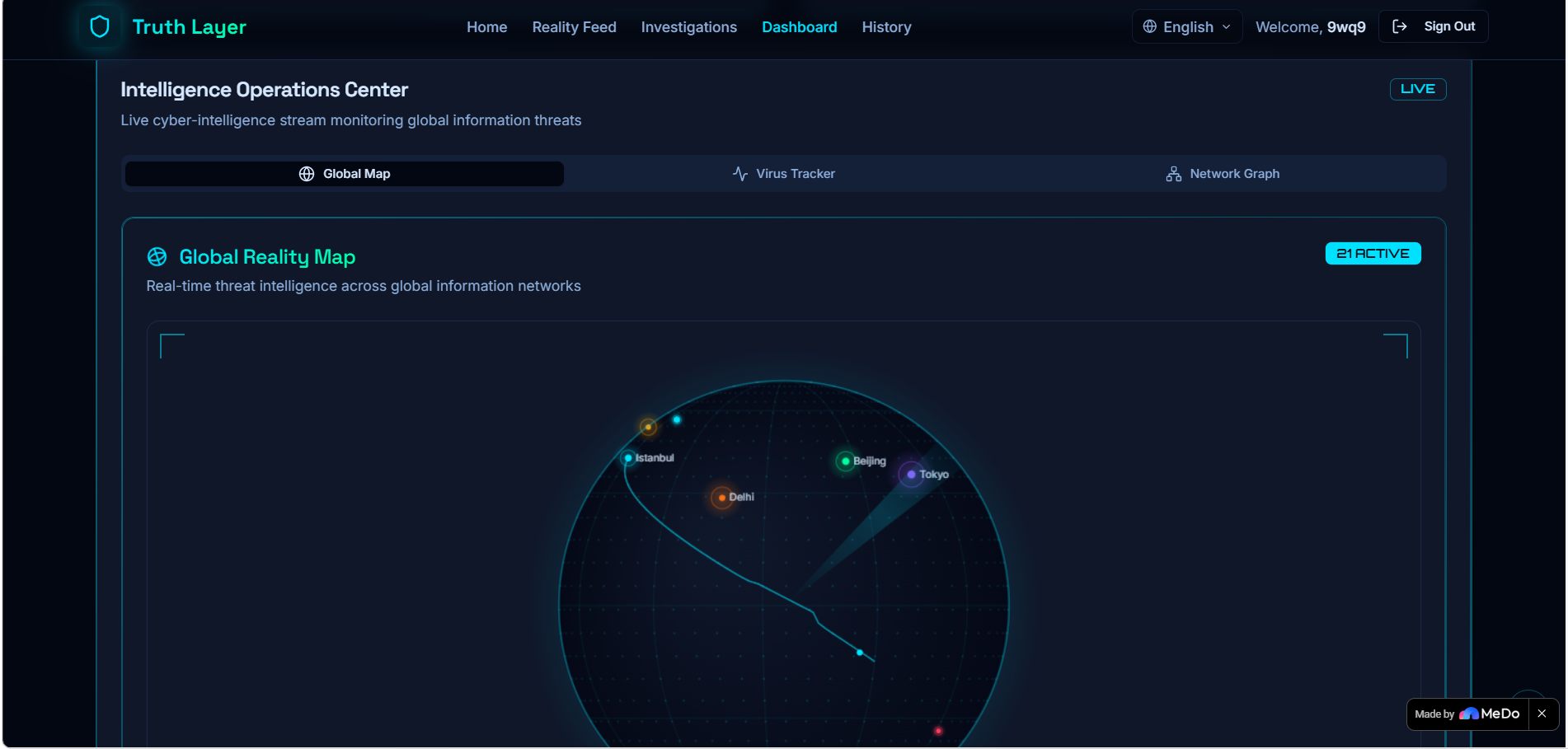
Real-time global intelligence visualization tracking suspicious information activity across digital networks."
-
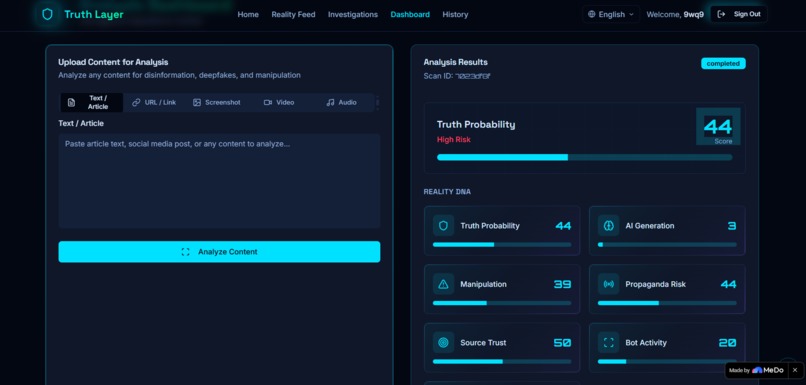
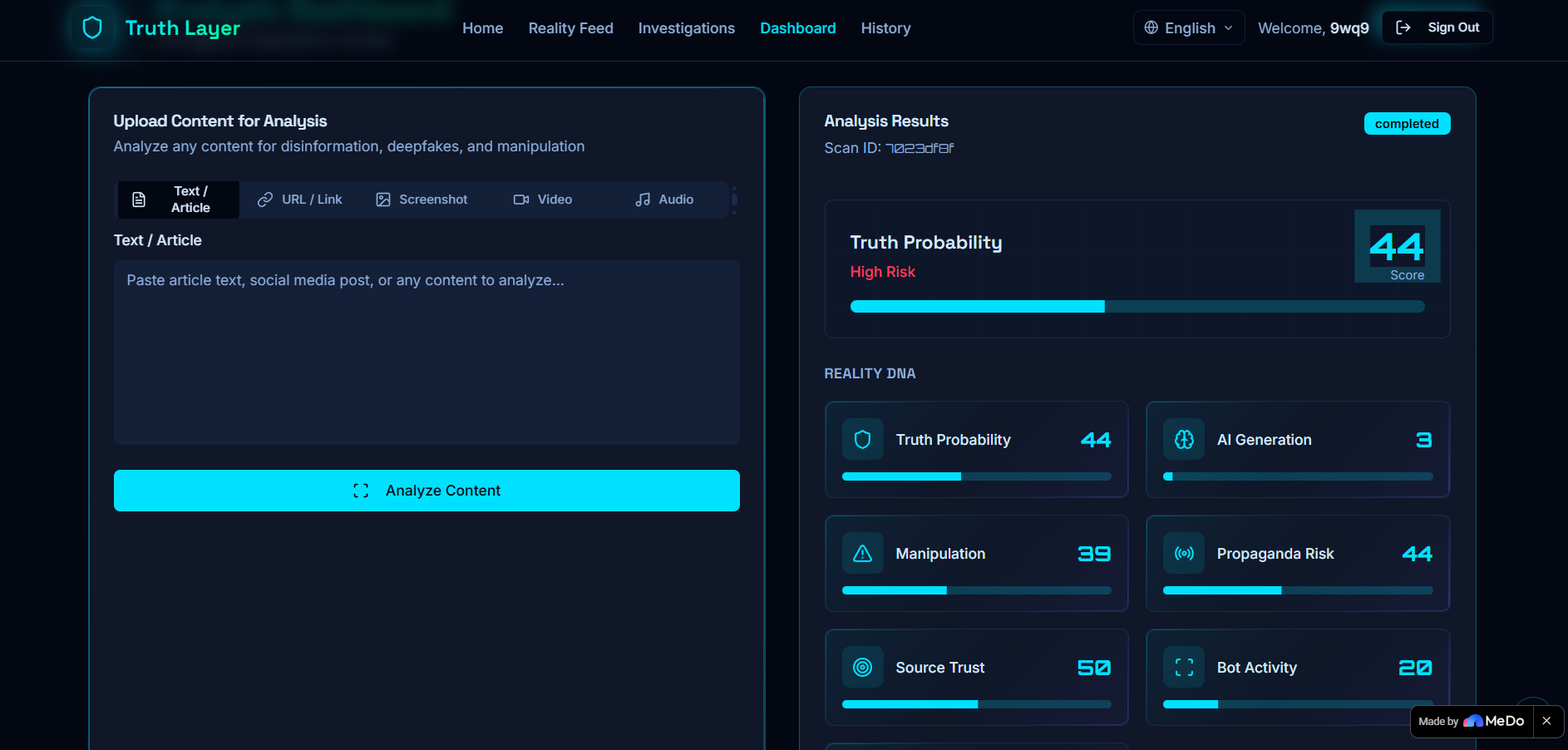
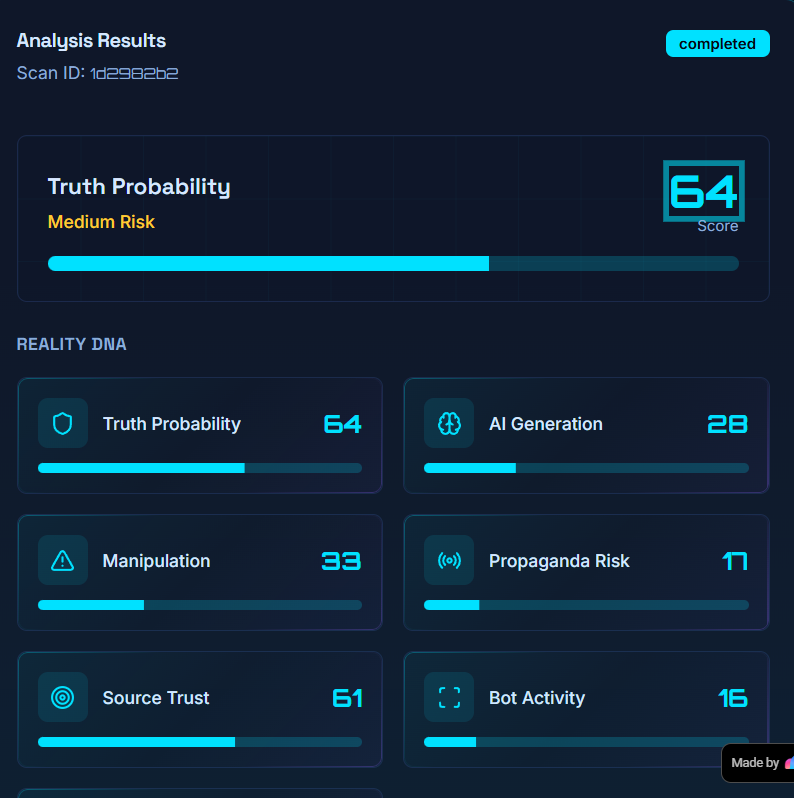
"AI analysis engine detecting manipulation patterns, propaganda risk, bot activity, and content authenticity.
-
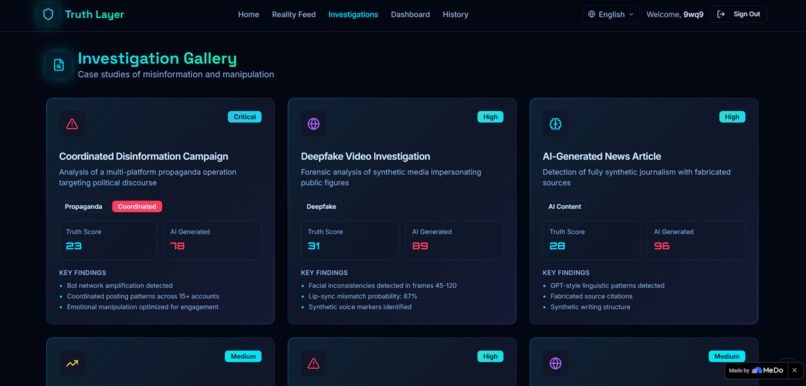
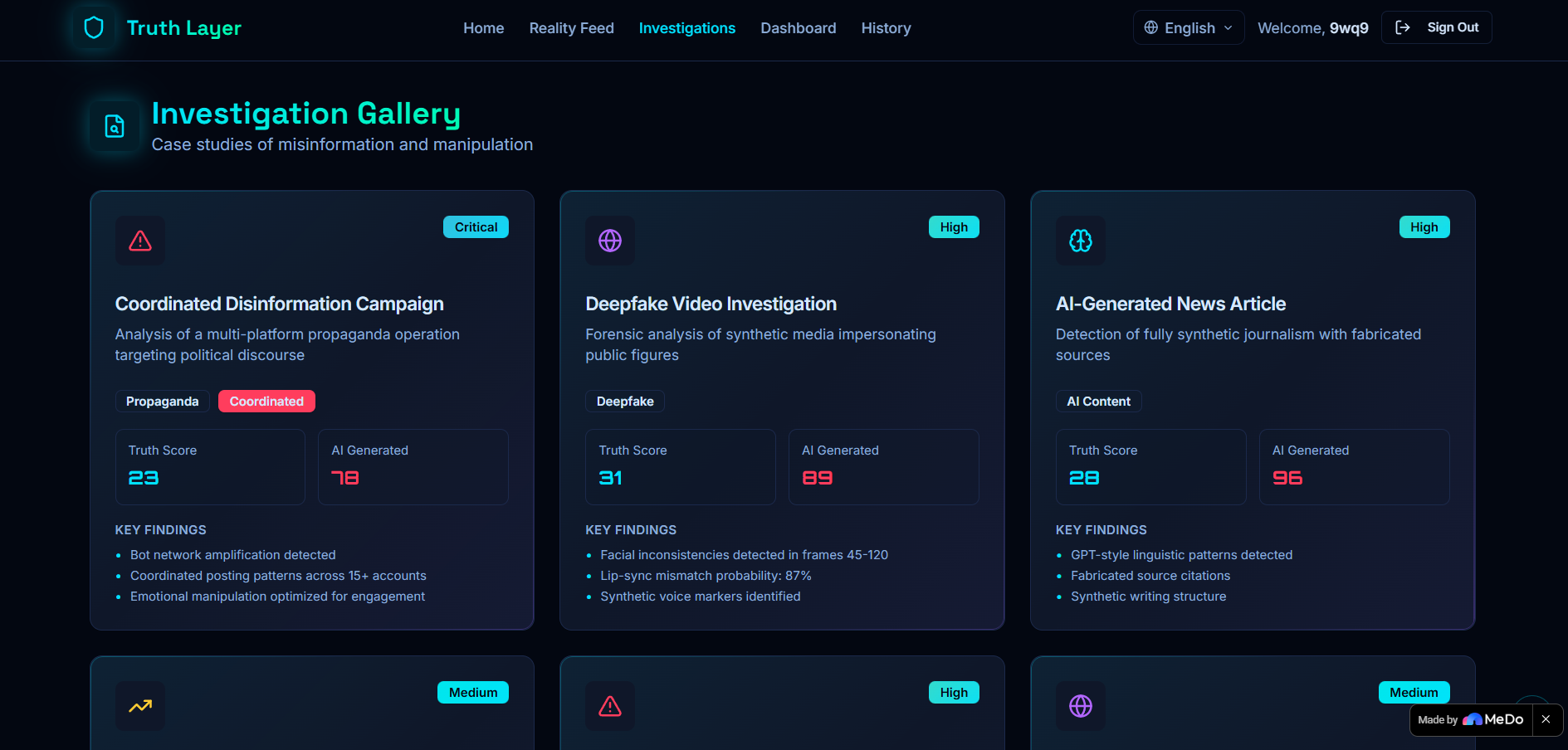
"Case investigation gallery showcasing misinformation analysis and deepfake detection scenarios."
-
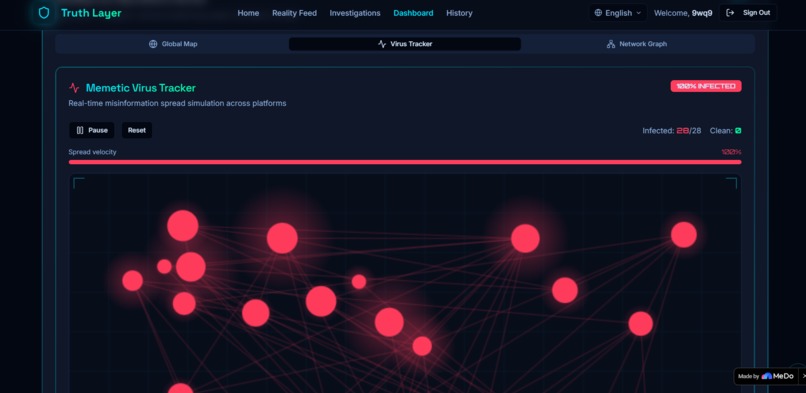
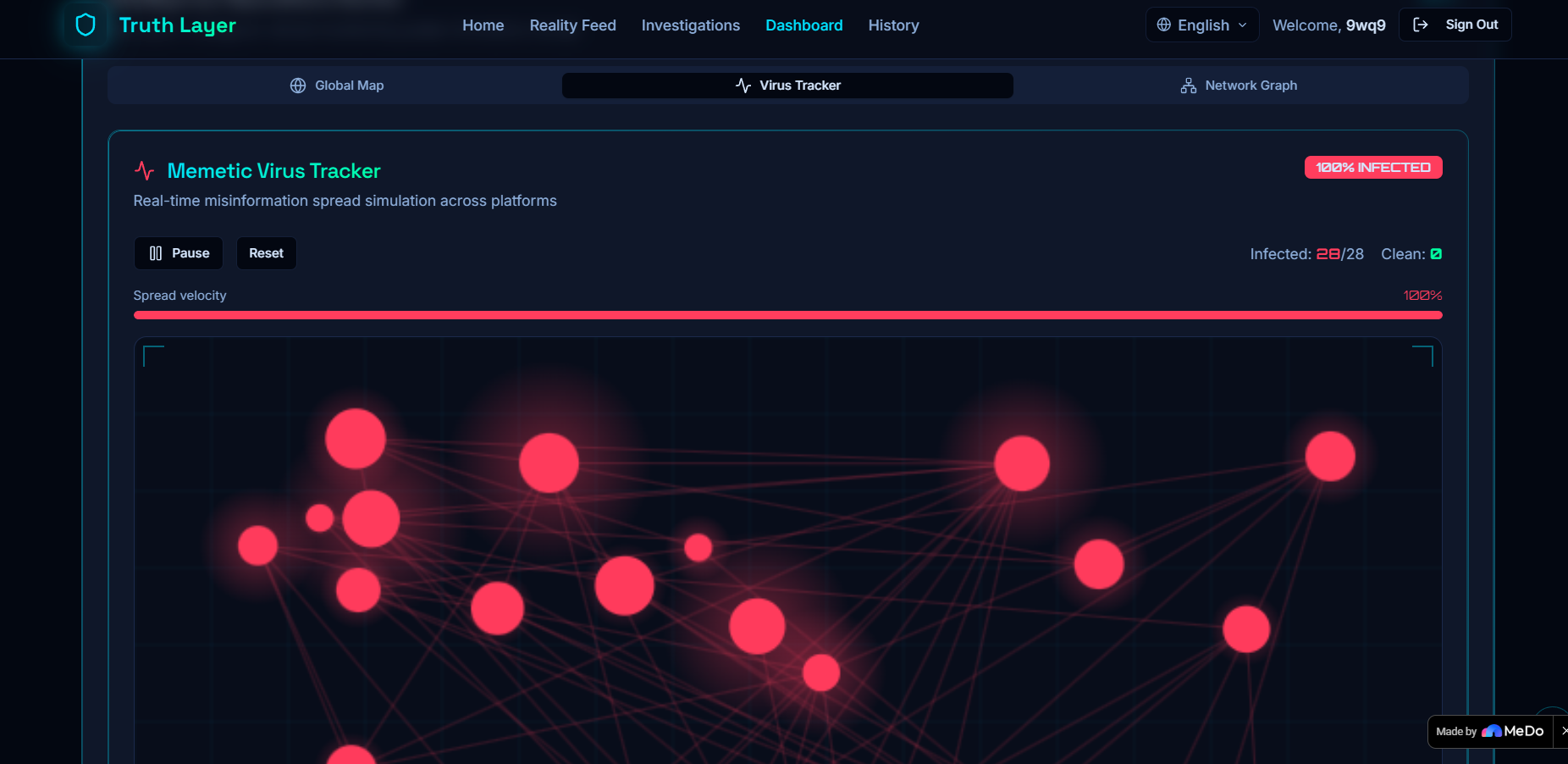
"Interactive misinformation propagation simulator visualizing how false information spreads across networks."
-
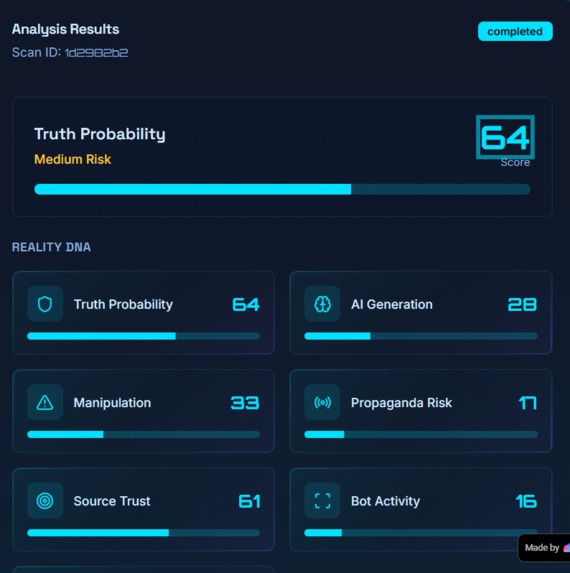
AI-generated credibility scoring system measuring truth probability, source trust, and manipulation indicators."
-
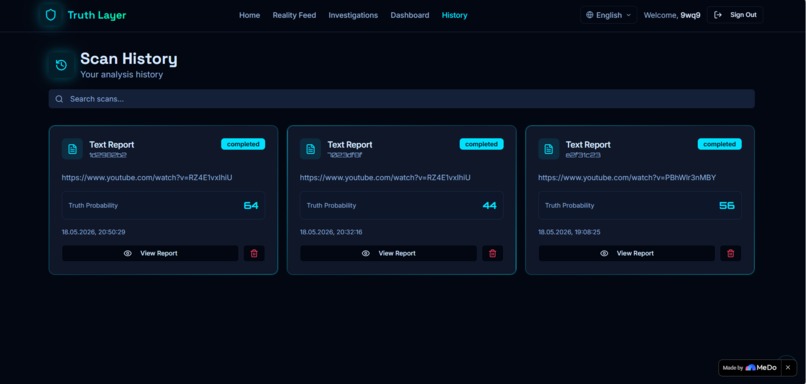
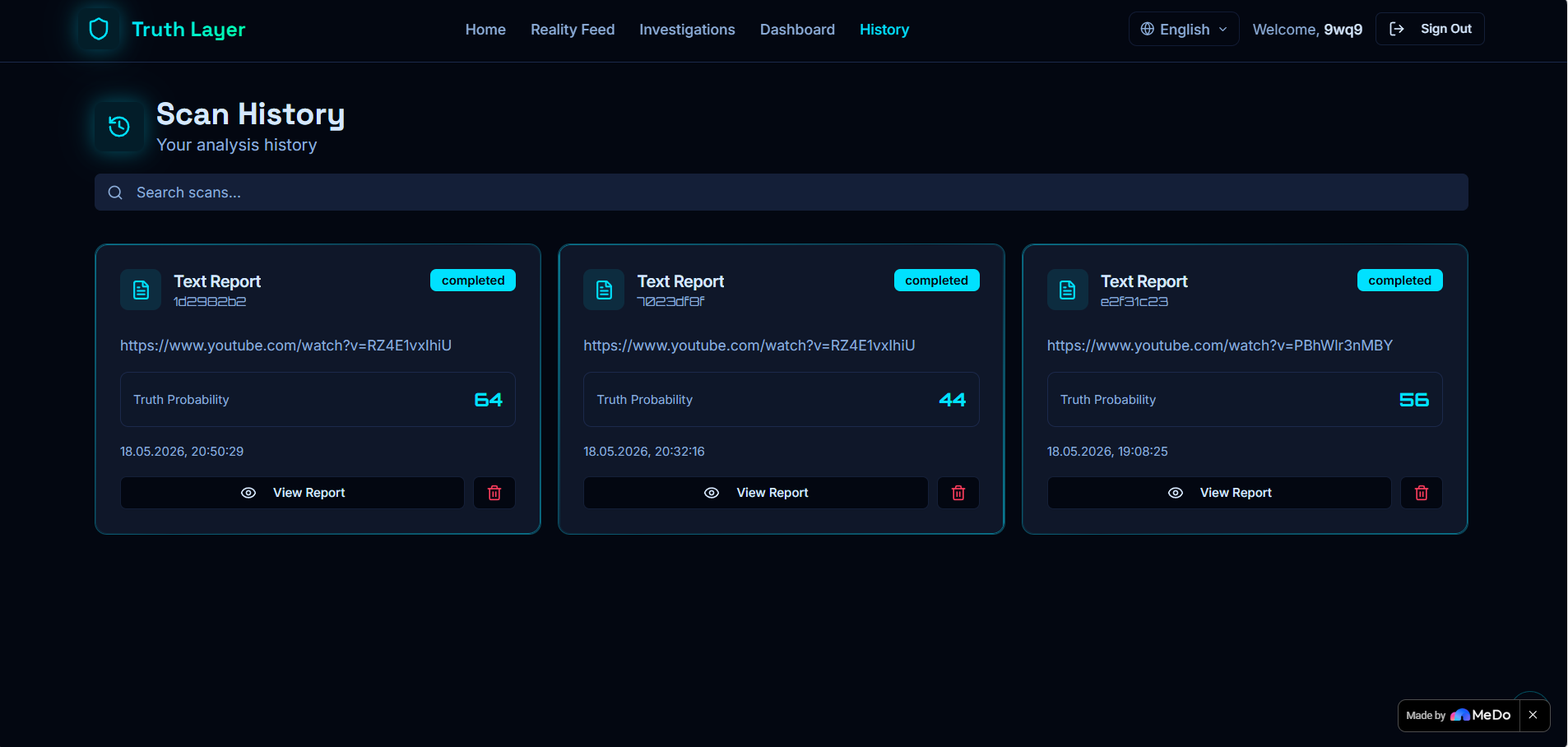
Historical analysis dashboard allowing users to review previous investigations and intelligence reports."
Ins## Inspiration
The internet is becoming increasingly difficult to trust. Deepfakes, AI-generated misinformation, coordinated manipulation campaigns, and bot networks spread faster than humans can verify information.
Truth Layer was created to help defend reality itself.
The goal of this project is to build an AI-powered cyber intelligence platform capable of detecting misinformation, synthetic media, manipulation attempts, and suspicious network behavior in real time.
We wanted to create something that feels like a next-generation intelligence system — powerful, visual, and understandable.
What it does
Truth Layer analyzes digital content and provides intelligence indicators including:
- Truth Probability scoring
- AI-generated content detection
- Deepfake detection
- Manipulation analysis
- Propaganda risk evaluation
- Source trust analysis
- Bot activity detection
- Global threat visualization
- Real-time misinformation propagation tracking
- Investigation dashboard and forensic reporting
The platform transforms complex cyber intelligence signals into a clear visual analysis system.
How we built it
Truth Layer was built using MeDo.
The platform combines:
- AI-powered analysis systems
- Interactive intelligence dashboards
- Network visualization systems
- Real-time simulation interfaces
- Threat intelligence concepts
- Modern cyber-defense inspired UX design
The system architecture was designed to make advanced information verification technology accessible and intuitive.
Challenges we ran into
One of the biggest challenges was balancing complexity with usability.
Cyber intelligence systems often become difficult for normal users to understand.
We focused heavily on creating a visual interface that communicates sophisticated analysis clearly while maintaining a futuristic and professional experience.
Designing meaningful threat visualization and creating an intelligence-style workflow also required multiple iterations.
Accomplishments that we're proud of
We built a platform that feels like a real cyber intelligence operating system.
Some highlights:
- Real-time threat visualization
- AI content detection workflows
- Interactive misinformation tracking
- Investigation gallery system
- Multi-layer analysis scoring engine
- Intelligence operations dashboard
Truth Layer evolved from an idea into a fully interactive intelligence experience.
What we learned
Building Truth Layer reinforced how critical trust and information verification are becoming in the AI era.
We also learned how powerful visual systems can be when presenting advanced analytical concepts.
What's next for Truth Layer
Future plans include:
- Expanded AI detection models
- Larger misinformation intelligence datasets
- Browser extensions
- Social media verification integrations
- Multi-language intelligence support
- Cross-platform deployment
Truth Layer aims to become a powerful layer of defense against digital misinformation.piration
Built With
- ai-content-analysis
- cyber-intelligence-architecture
- data-analysis-systems
- deepfake-detection
- interactive-dashboards
- medo-platform
- network-visualization
- react
- real-time-threat-intelligence
- responsive
- typescript
- web

Log in or sign up for Devpost to join the conversation.