-
-
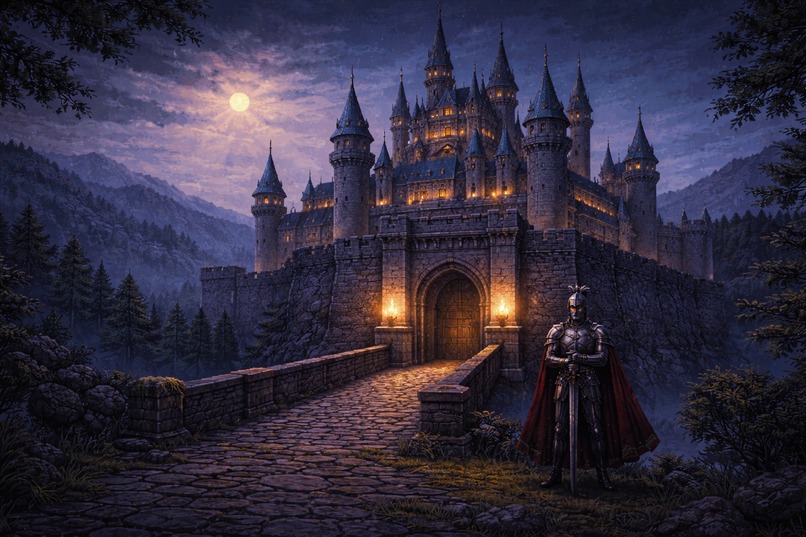
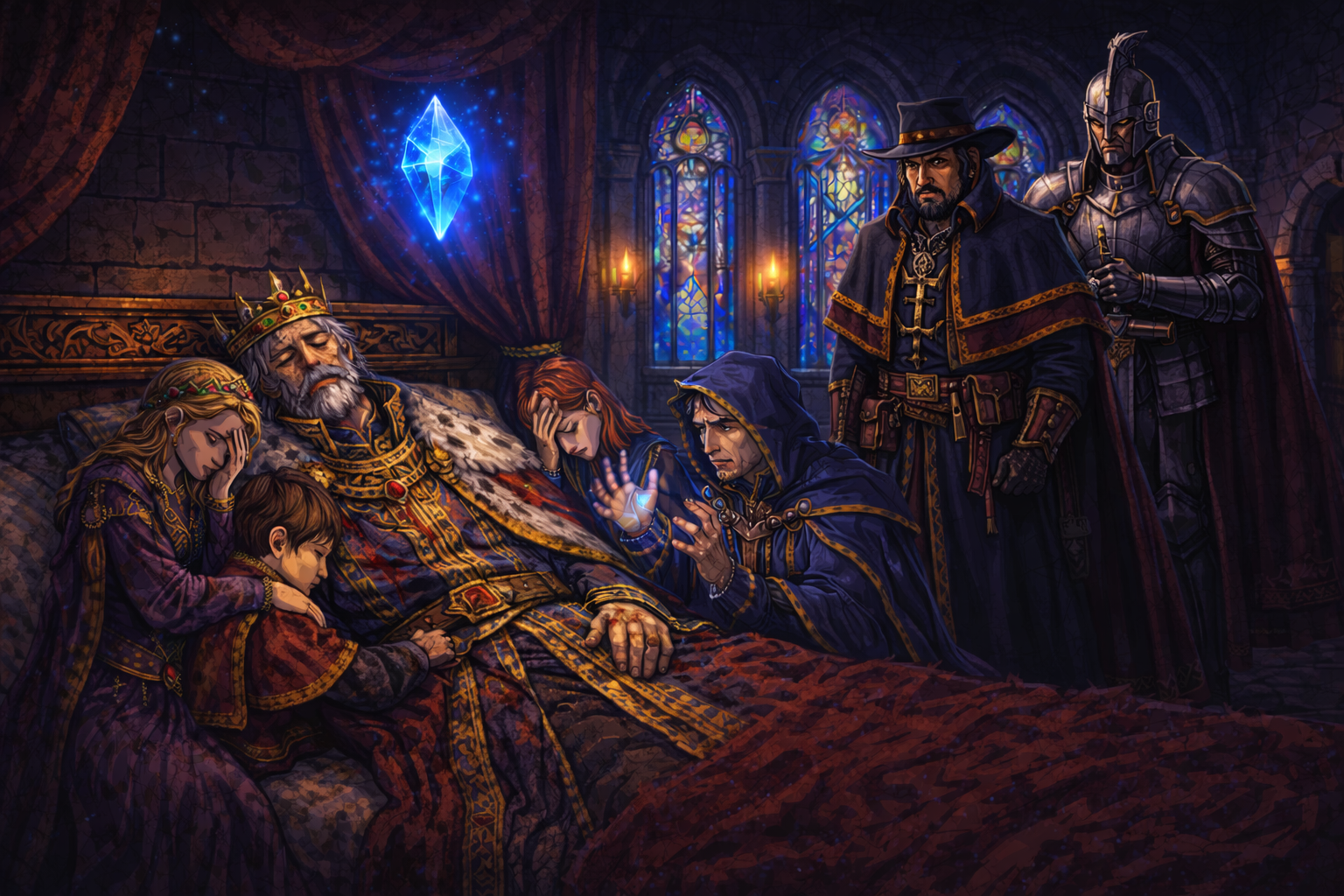
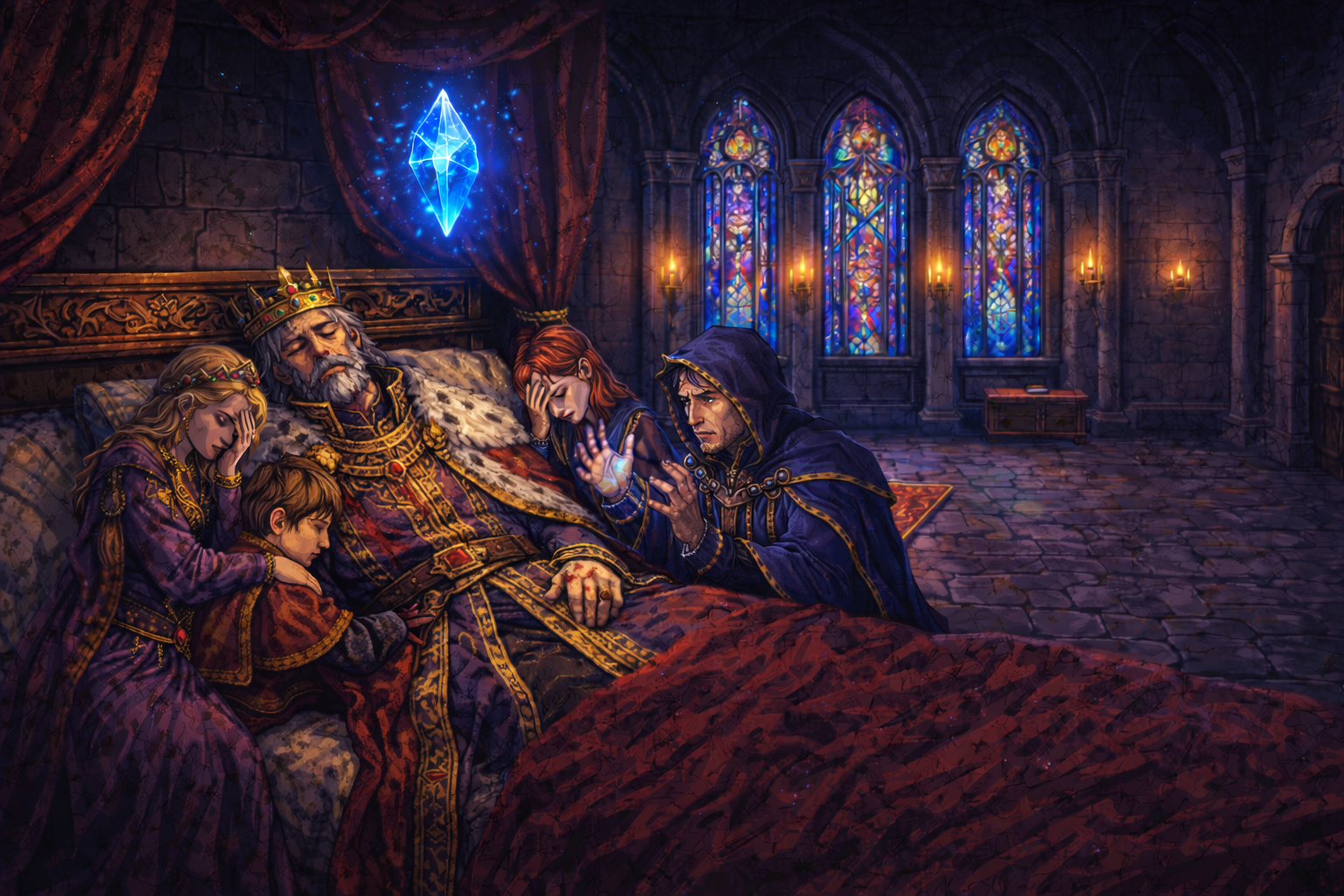
Opening Scene
-
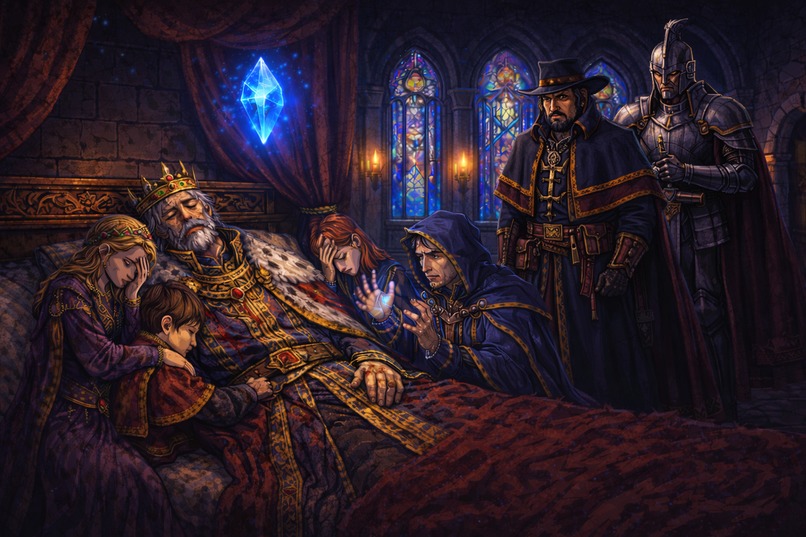
The Inquisitor Arrives
-
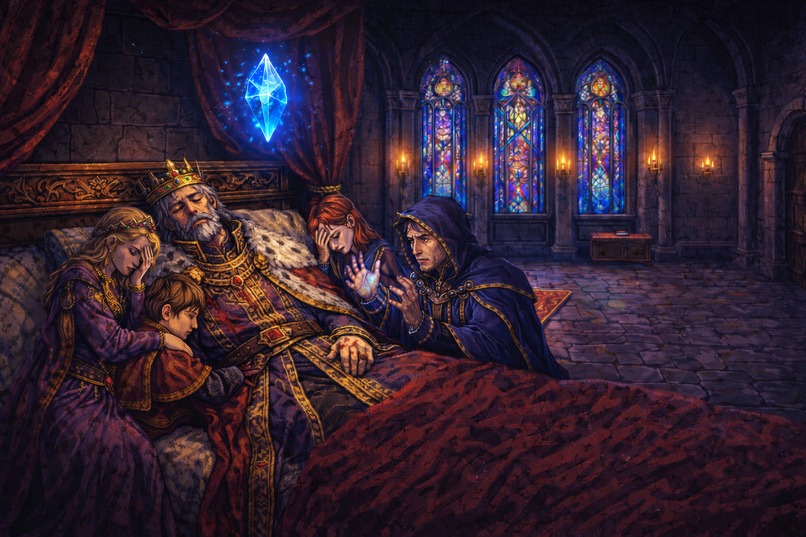
Family Grief
Inspiration
We were inspired by three main ideas:
The concept of evidence decay over time, both scientifically and narratively.
Games like Return of the Obra Dinn and Her Story, where the player pieces together truth from fragments.
The philosophical tension between immortality as myth and mortality as reality.
We wanted to create a game that:
Encourages critical reasoning.
Rewards careful evidence selection.
Subverts the traditional “save the king” fantasy trope.
Instead of offering power fantasy, we chose emotional consequence.
What it does
The player:
Explores six memory chambers.
Selects up to three pieces of evidence.
Each piece carries a weighted value (1, 5, or 10).
If total weight ≥ 12, the ritual can proceed.
The player must then accuse one of three suspects:
Queen Elira
Master Vale (Royal Chef)
Brannic Ashhand (Goblin Groundskeeper)
There are multiple endings:
Failure Ending (insufficient evidence)
Wrong Accusation Ending
True Justice Ending
Even in the good ending, the King dies — but the kingdom stabilizes and embraces reality instead of myth.
How we built it
We built the game using:
Scene-based branching narrative logic
Weighted evidence evaluation system
Deterministic outcome branching
Image-based storytelling pipeline
State-driven scene progression logic
The evidence system functions roughly as:
Total Evidence Weight
∑
𝑖
1 3 𝑤 𝑖 Total Evidence Weight= i=1 ∑ 3
w i
If:
Total Weight ≥ 12 Total Weight≥12
→ Ritual proceeds.
Else → Immediate failure.
We structured the game so every scene always contains:
1 meaningful evidence item
3 neutral or misleading items
This prevents meta-gaming and keeps replay value high.
We designed all endings before implementation to ensure narrative cohesion.
Challenges we ran into
Designing a branching system that felt meaningful without exploding in complexity.
Ensuring no scene felt “empty” or mechanically irrelevant.
Maintaining emotional weight even when the King always dies.
Preventing players from meta-gaming based on scene patterns.
Balancing symbolic storytelling without explicitly stating the theme.
The hardest design challenge was emotional pacing — making hope believable before removing it.
Accomplishments that we're proud of
A fully consistent weighted evidence system.
Multiple fully realized narrative endings.
A thematic twist that reframes player expectations.
Symbolism integrated into mechanics (cracked crystal, fading memory).
A final coronation that transforms tragedy into maturity.
We’re especially proud that the game’s core mechanic (evidence weight decay) mirrors its philosophical theme.
What we learned
We learned that:
Strong narrative structure requires mechanical alignment.
Constraints make better storytelling.
A “non-happy” ending can be more satisfying than a traditional victory.
System design and philosophy can reinforce each other.
We also learned how important it is to design endings early in development rather than at the end.
What's next for Truth Has a Half Life
Future improvements include:
Adding procedural memory variations.
Expanding suspect backstories.
Introducing dynamic dialogue trees.
Adding a time-pressure UI element tied to crystal glow intensity.
Implementing replay statistics and branching visualization.
Potential voice acting and adaptive music.
Long term, we’d love to evolve it into a fully voiced narrative mystery with expanded chapters.
Technologies Used What languages, frameworks, platforms, cloud services, databases, APIs, or other technologies did you use?
We used:
JavaScript (game logic and state management)
HTML/CSS (UI and layout)
Node.js (runtime environment)
VS Code / Cursor (development environment)
AI image generation tools (for cinematic scene creation)
Git / GitHub (version control)
Markdown for structured narrative scripting
The project was built as a scene-based interactive narrative application with branching state logic and weighted evidence evaluation.


Log in or sign up for Devpost to join the conversation.