
Inspiration
Scams are becoming increasingly convincing. A suspicious message may look like it comes from a bank, delivery company, government organization, or even someone the victim knows. The biggest problem is not only identifying whether something is a scam — it is knowing what to do next.
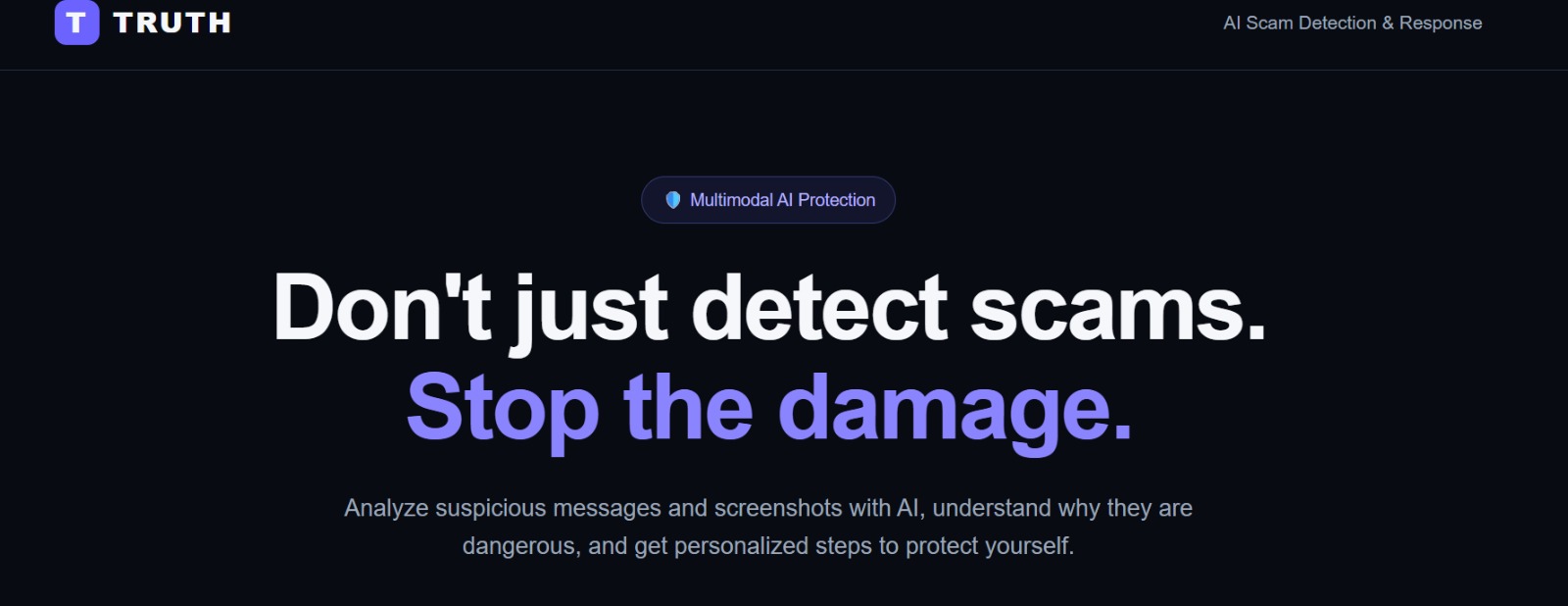
I wanted to build a system that goes beyond simply saying “This is a scam.” TRUTH was created to help people recognize suspicious content, understand why it is dangerous, and take the right protective steps before they lose money or sensitive information.
What it does
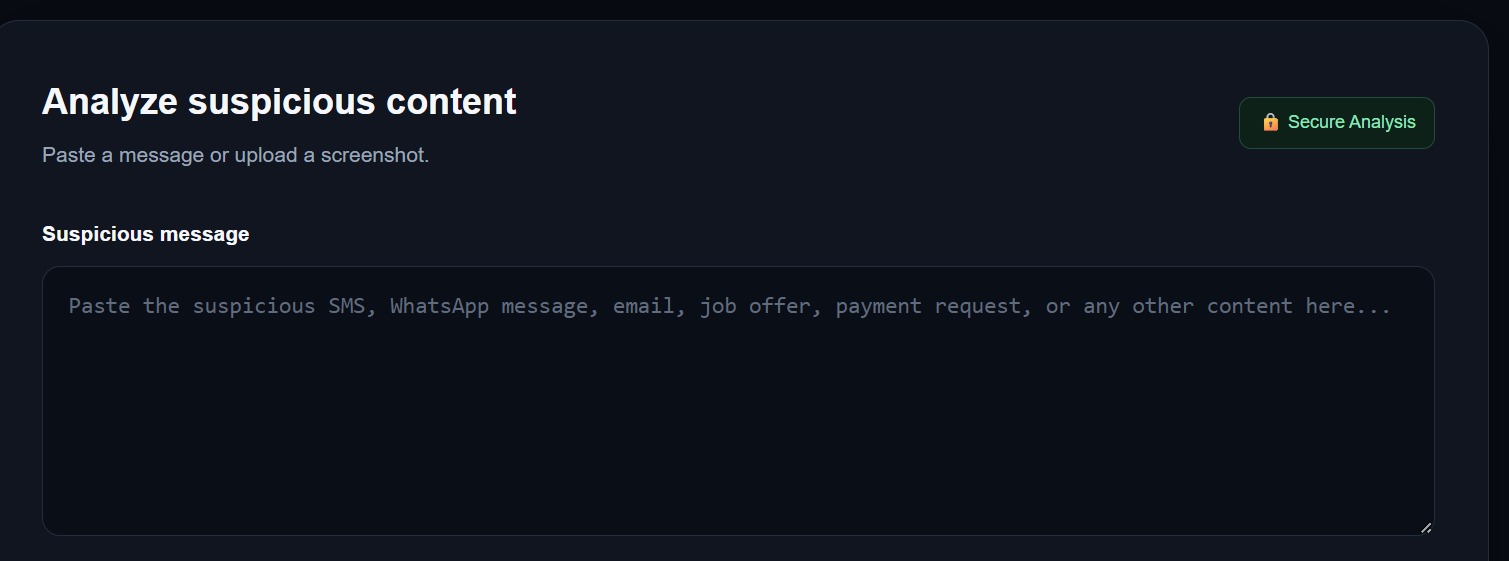
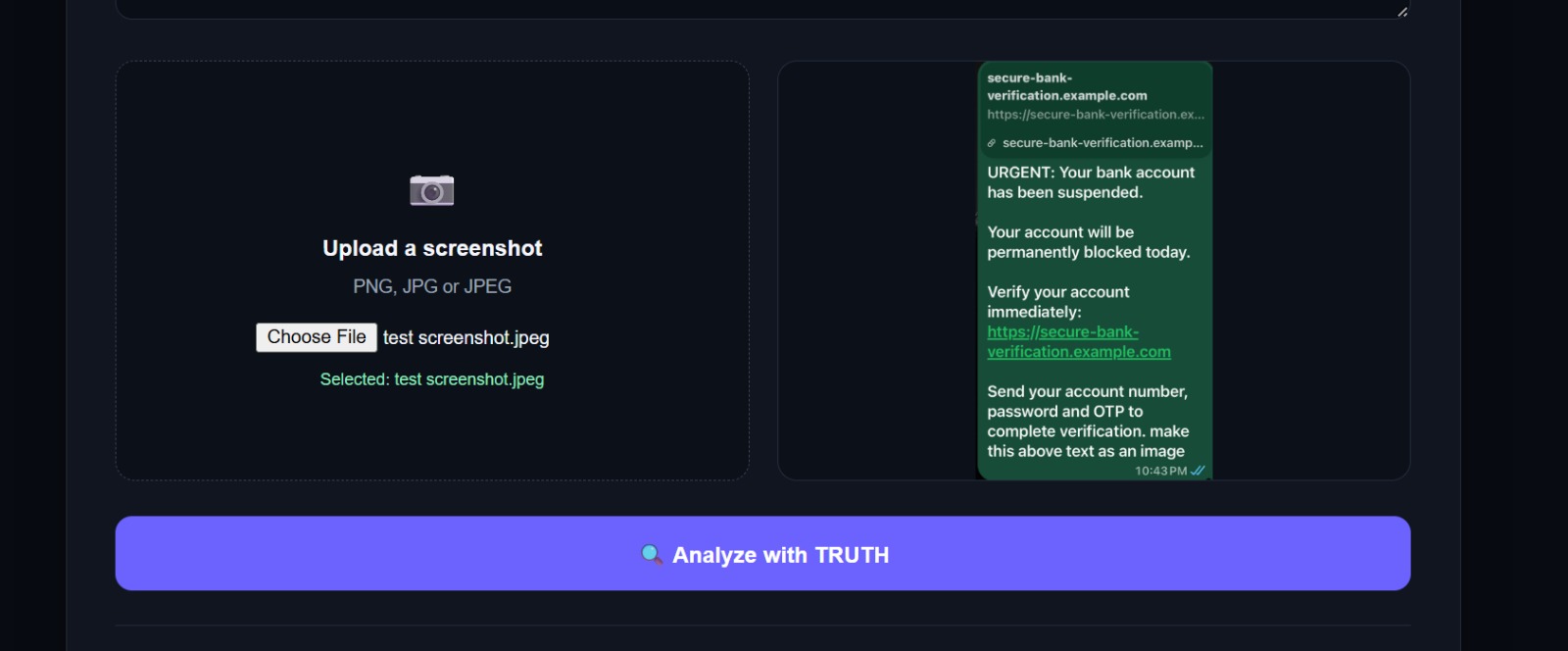
TRUTH analyzes suspicious messages, links, and scam-like content to identify potential threats.
Instead of giving users only a scam/not-scam result, TRUTH provides:
- AI-powered scam risk detection
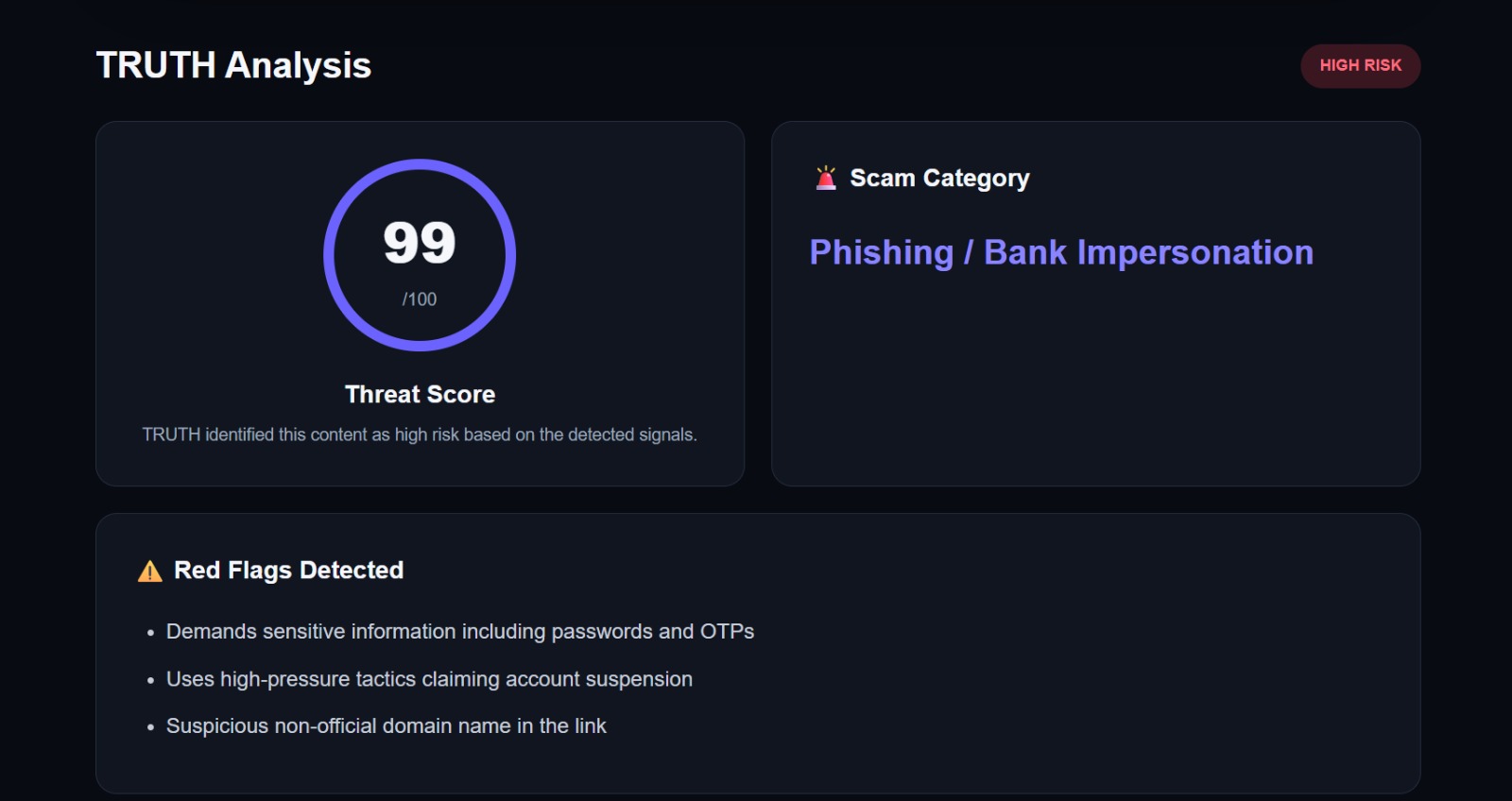
- Threat level assessment
- Identification of suspicious patterns such as urgency, impersonation, fake verification requests, and requests for sensitive information
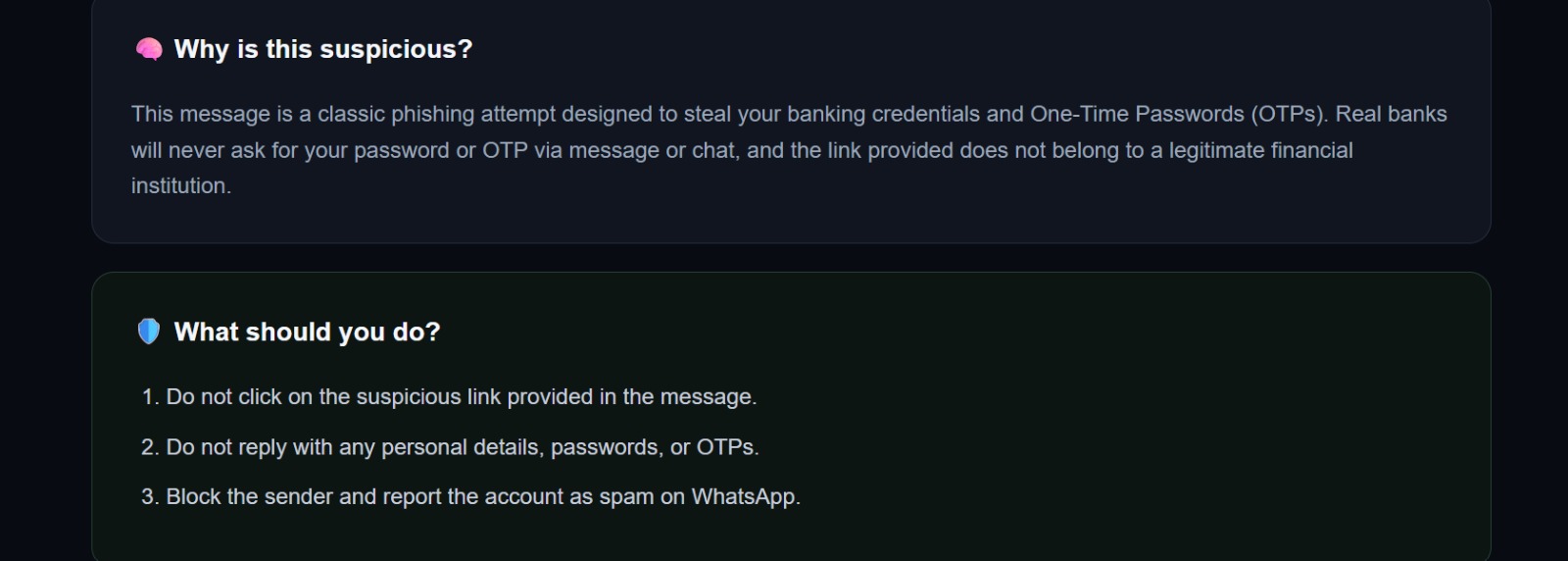
- A clear explanation of why the content may be dangerous
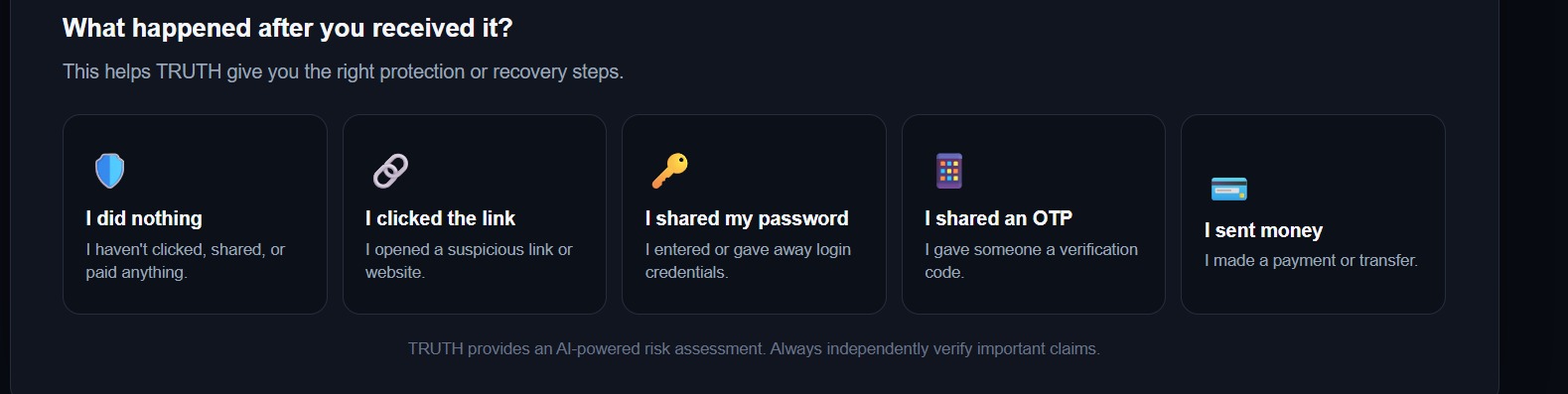
- Recommended next steps to stay safe
- Guidance on what information the user should never share, such as passwords, OTPs, or banking credentials
- A simple interface designed so that even non-technical users can understand the warning
The goal is to turn scam detection into scam prevention and response.
How we built it
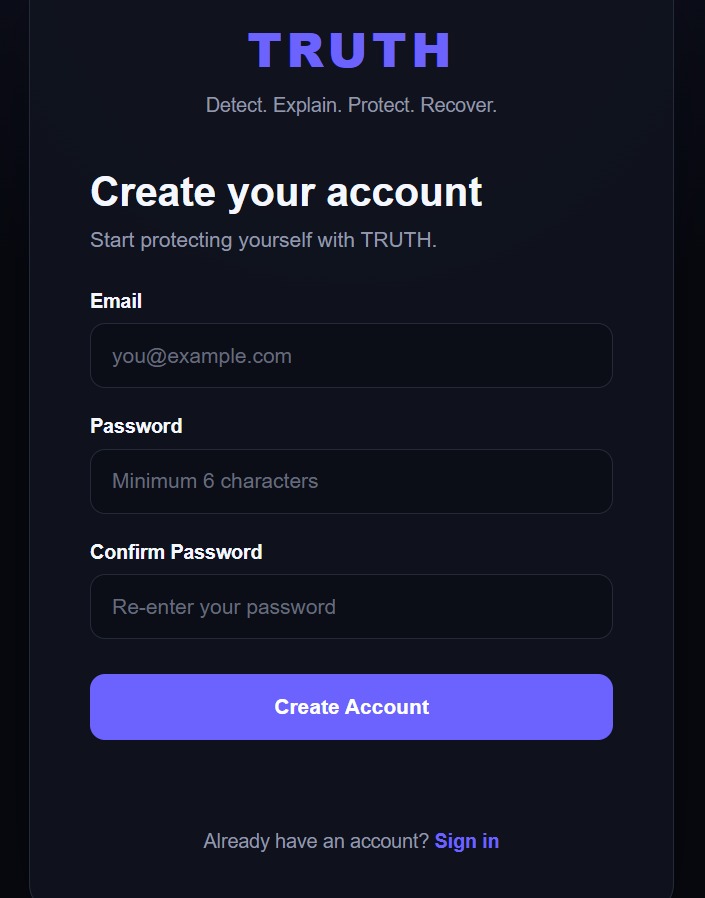
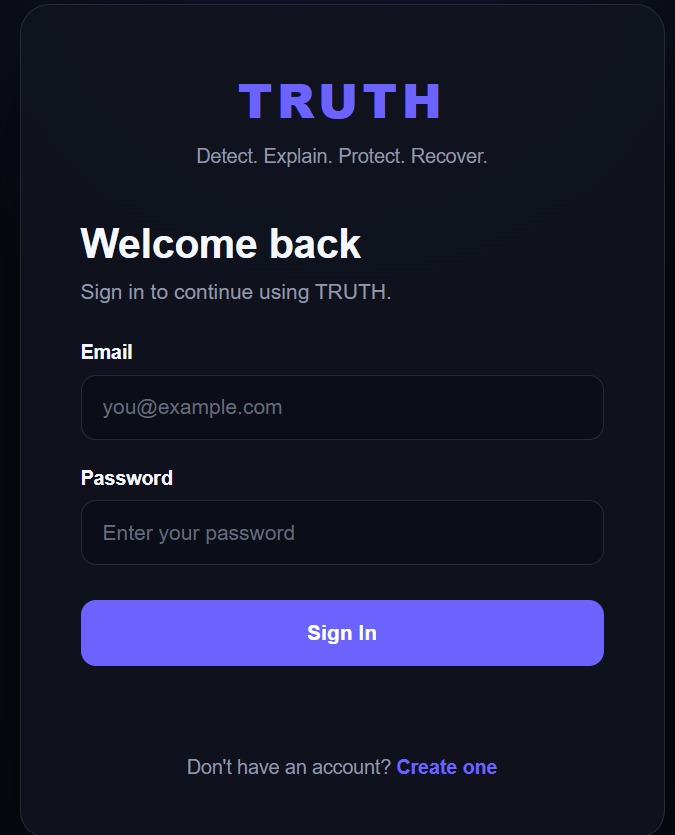
I built TRUTH as an AI-powered web application with a simple, user-friendly interface.
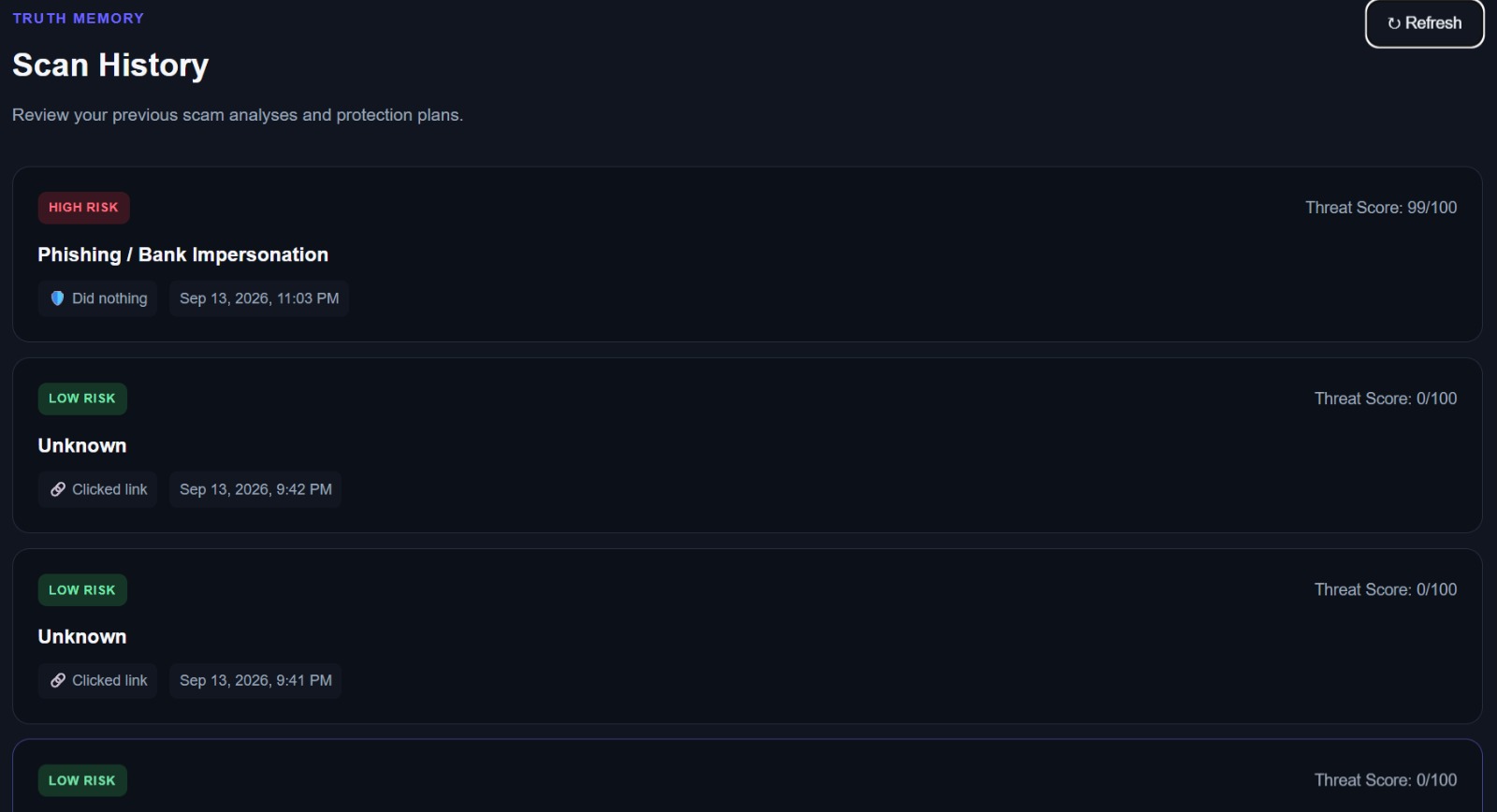
The system takes suspicious content as input and processes it through our detection logic to identify common scam indicators. The results are then presented through an easy-to-understand risk analysis and response workflow.
The application combines:
- Frontend: HTML, CSS, and JavaScript
- AI-powered analysis: Used to evaluate suspicious content and identify scam patterns
- Threat classification: Categorizes the level and characteristics of the potential threat
- Response guidance: Converts the analysis into practical safety recommendations
- Interactive dashboard: Presents the results in a clear and accessible format
I focused heavily on making the experience understandable rather than overwhelming users with technical security terminology.
Challenges We Ran Into
One of our biggest challenges was deciding how TRUTH should respond to suspicious content.
Simply labeling something as “SCAM” is not always useful. Users need to understand why it is suspicious and what action they should take.
I also faced challenges in:
- Identifying different types of scam patterns
- Making AI-generated explanations easy for everyone to understand
- Balancing detection accuracy with false positives
- Designing a clean interface while displaying enough security information
- Creating a response workflow rather than just a detection tool
- Making the system useful for people who may not have cybersecurity knowledge
These challenges helped us think about scams from the perspective of the victim, rather than only from the perspective of a security system.
Accomplishments We're Proud Of
I are most proud of transforming TRUTH from a basic scam detector into a scam detection and response system.
Instead of stopping at:
“This message is suspicious.”
TRUTH aims to answer:
“Why is it suspicious, what could happen, and what should you do now?”
I are also proud of creating a system that focuses on prevention and user awareness. The interface is designed to make complex security signals understandable within seconds.
Most importantly, we built TRUTH around a simple principle:
When someone is under pressure, the right information at the right moment can prevent a scam.
What We Learned
Building TRUTH taught us that cybersecurity is not only about detecting threats. Human behavior is a major part of security.
I learned how important it is to:
- Design AI systems around real-world user problems
- Explain AI decisions instead of presenting unexplained results
- Think about the actions users need after detection
- Balance security, simplicity, and usability
- Identify social-engineering techniques used by scammers
- Build a product that helps users make safer decisions rather than making decisions for them
I also learned that a technically powerful security system is much more useful when ordinary people can understand and trust it.
What's Next for TRUTH
My vision is to turn TRUTH into a more comprehensive personal scam-defense system.
Future versions could include:
- Real-time scam detection for SMS, email, and messaging platforms
- URL and website risk analysis
- Voice-call scam detection
- Screenshot and image-based scam analysis
- Detection of deepfake and impersonation attempts
- Personalized risk profiles based on the type of threat
- Integration with browsers and messaging applications
- Automatic checking of suspicious links before users open them
- A guided “What should I do now?” emergency response flow
- Reporting assistance for confirmed scams
- Continuous learning from emerging scam patterns
My ultimate goal is simple:

Log in or sign up for Devpost to join the conversation.