Inspiration
Every day, thousands of students and job seekers fall victim to fake internship offers, scam scholarship portals, and fraudulent recruiter messages. Many of these scams demand upfront "training fees," use free @gmail.com accounts posing as official corporate HRs, or direct users to unsecure phishing links.
We were inspired to build TrustVerify AI to create a free, fast, and accessible tool that instantly analyzes offer letters, links, and recruiter profiles to protect users from financial fraud and privacy theft.
What it does
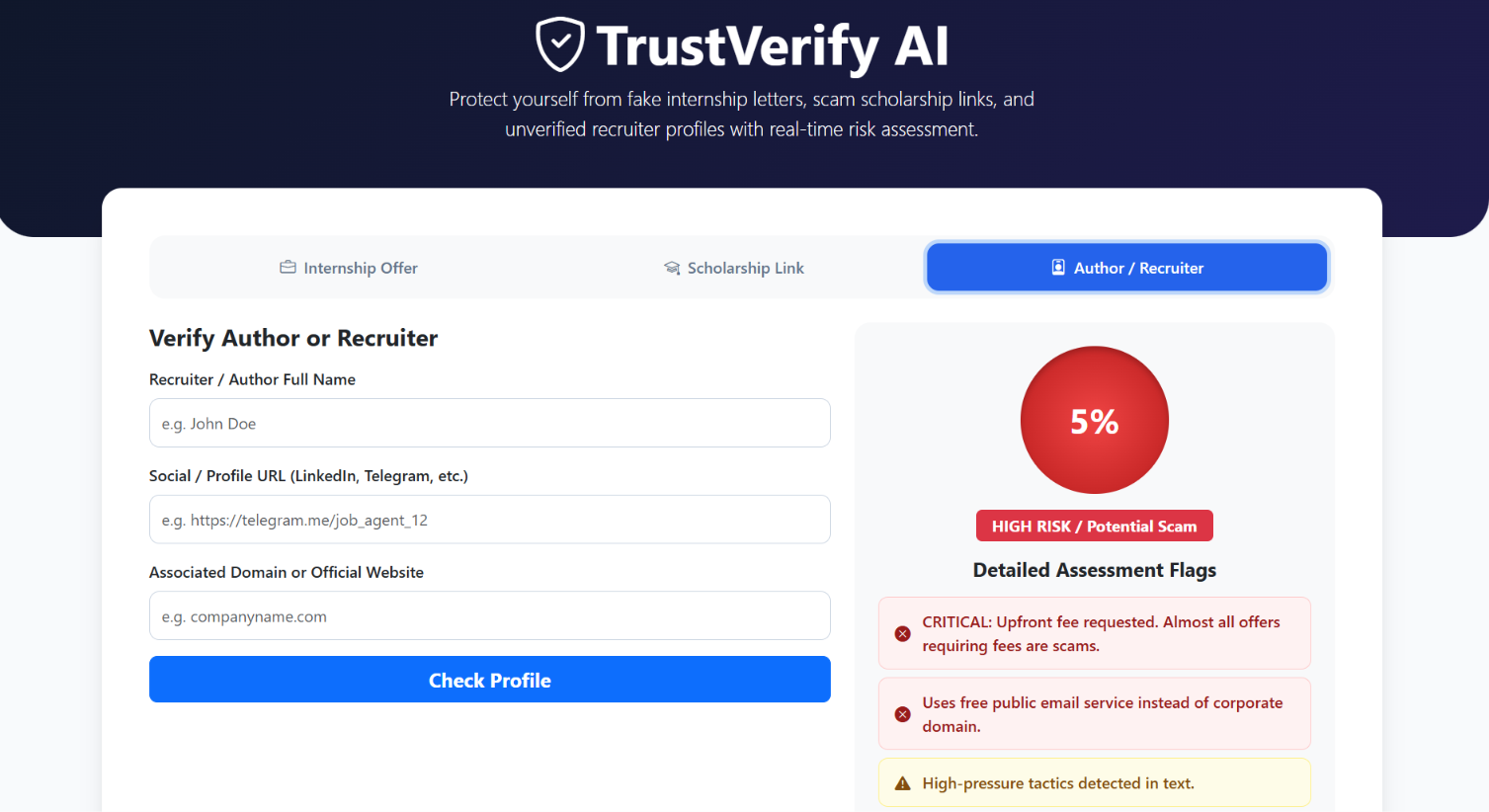
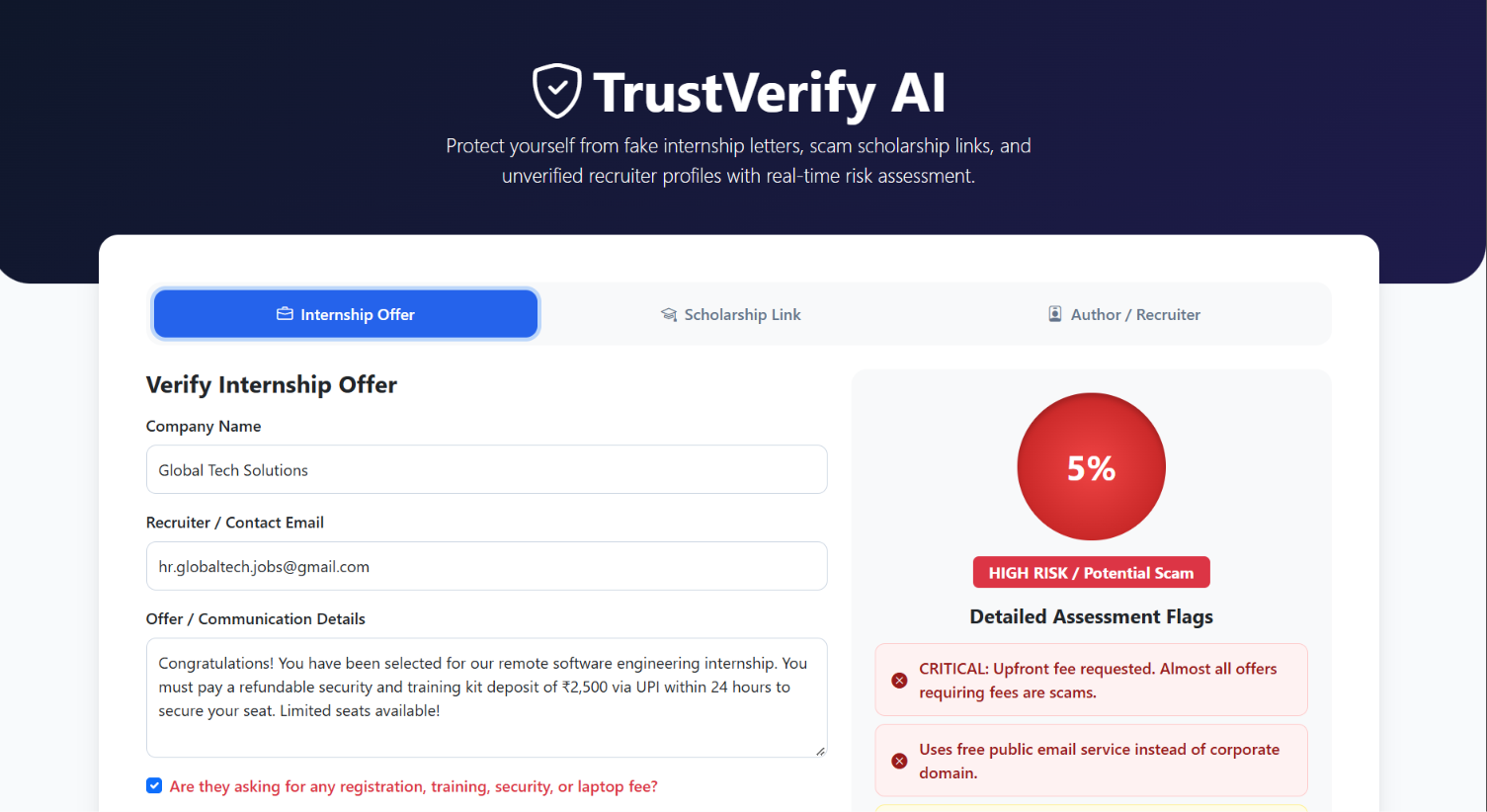
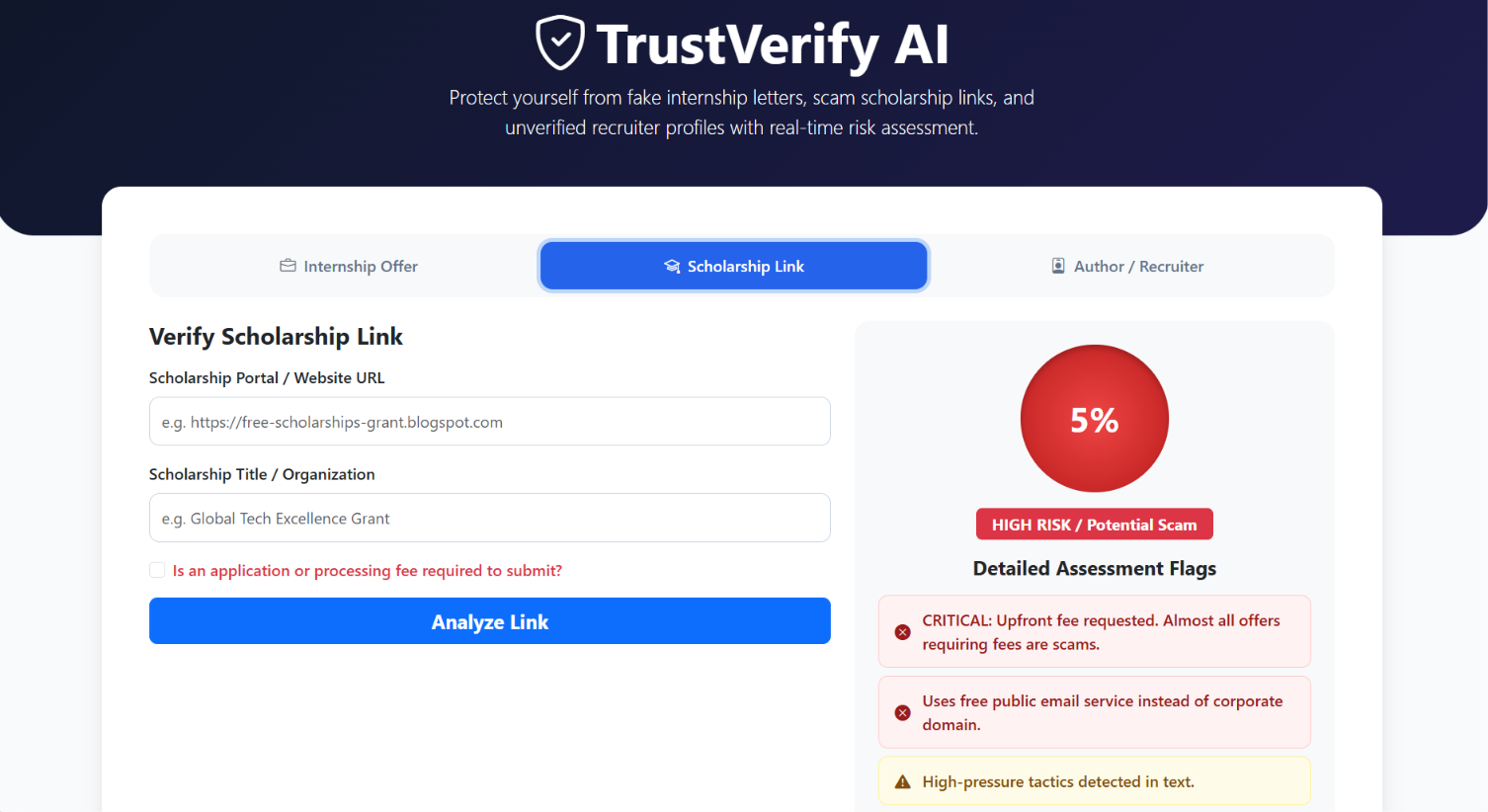
TrustVerify AI is an all-in-one authenticity checker that evaluates three major risk vectors:
- Internship Offer Verification: Scans offer details, company details, contact emails, and text patterns. It flags critical warning signs like upfront registration fees, public domain recruiter emails, and high-pressure urgency tactics.
- Scholarship Link Analyzer: Analyzes portal URLs for SSL security (
https://), free hosting platforms (.blogspot.com,.wixsite.com), trusted TLDs (.edu,.gov,.org), and application processing fees. - Author / Recruiter Profile Check: Evaluates contact transparency, profile structures (like LinkedIn vs. Telegram outreach), and associated corporate domains.
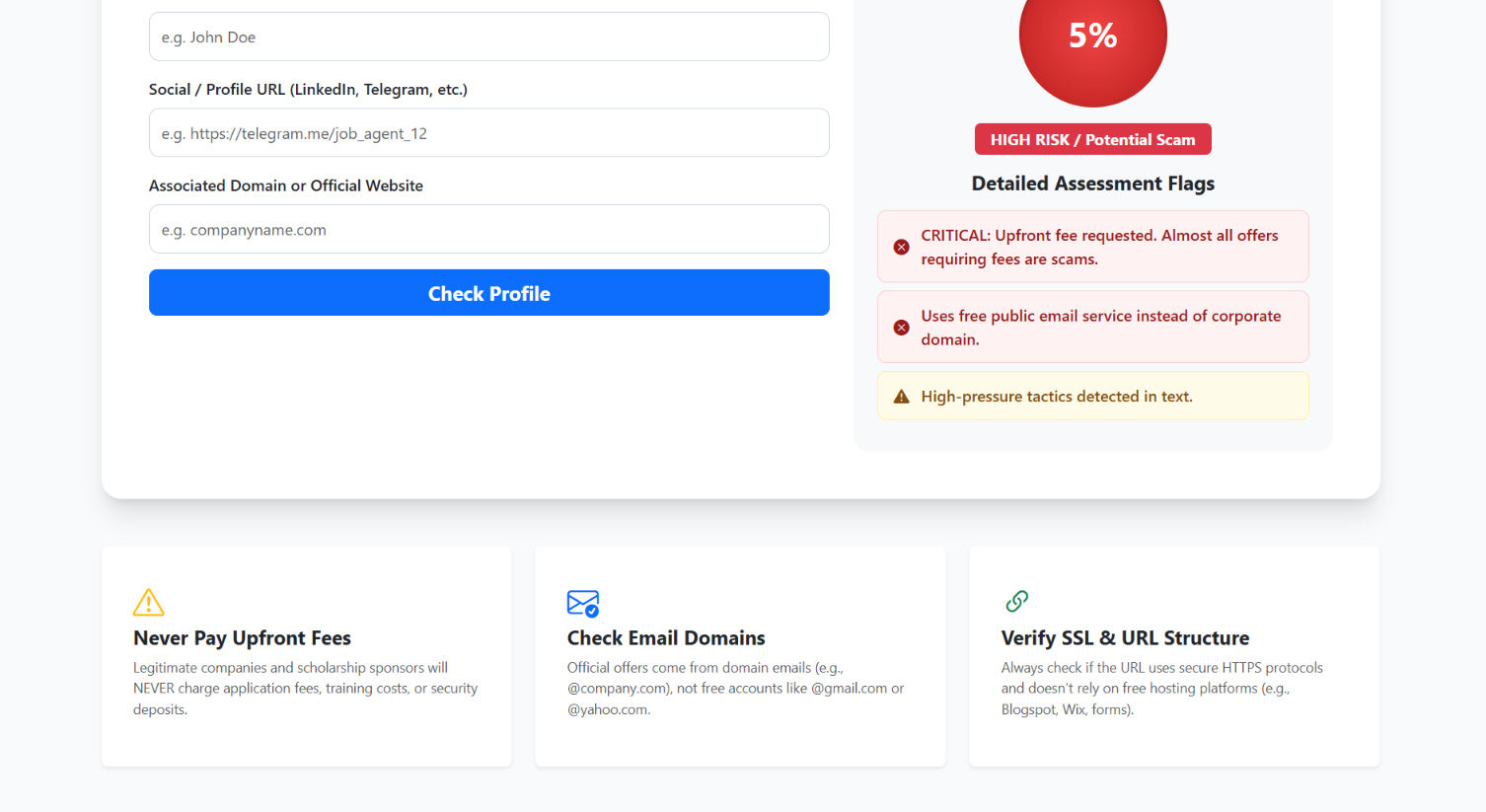
The app processes these inputs through an interactive evaluation engine to output a visual Trust Score (0–100%), risk badges (Low Risk, Suspicious, or High Risk / Scam Alert), and a detailed breakdown of specific warning flags.
How we built it
- Frontend Architecture: Built using clean HTML5, Bootstrap 5, and custom CSS with a modern glassmorphic hero header and responsive tab interface.
- Dynamic Risk Engine: Developed in pure JavaScript, utilizing rule-based scoring algorithms to calculate trust percentages and generate color-coded alert badges.
- Iconography & Design: Integrated Bootstrap Icons for clear visual flag indicators (success checks, warnings, and error badges).
- Zero-Dependency Deployment: Crafted as a lightweight, single-page web app packaged cleanly into a standalone
.zipdistribution for instant deployment on GitHub Pages, Netlify, or Vercel.
Challenges we faced
- Balancing False Positives & Negatives: Fine-tuning the scoring logic so legitimate startups using alternative domains aren't unfairly tagged as scams, while ensuring dangerous scams requesting money are strictly caught.
- Clean UI / UX Design: Designing a intuitive, tabbed user interface that presents complex risk assessments and multiple flag categories clearly without overwhelming the user.
What we learned
- How to structure practical rule-based evaluation engines in JavaScript to identify security risks and common phishing vectors.
- Effective techniques for building accessible, fully client-side security tools that require zero server setup and safeguard user privacy.
What's next for TrustVerify AI
- Integrating automated web scraping and WHOIS API lookup to check domain registration dates and owner verification in real-time.
- Implementing an AI-driven NLP parser to automatically extract text and red flags directly from uploaded offer PDF documents.
- Adding a community reporting database where users can flag known scam emails and URLs to warn others.
Built With
- bootstrap-icons
- bootstrap5
- css3
- html5
- javascript
- responsive-design

Log in or sign up for Devpost to join the conversation.