Inspiration
Global trade is the backbone of the country's economy, yet still rely one paper invoices, emails and manual stamps. We learned that these processes are "messy: fraudsters might swap documents, mistakes happen, and processes take days or weeks". This is what inspired the to create the "TrustTrade Ledger" to close the global trade finance gap.by replacing these slow, paper-based manual processes with secure, auditable digital infrastructure.
What it does
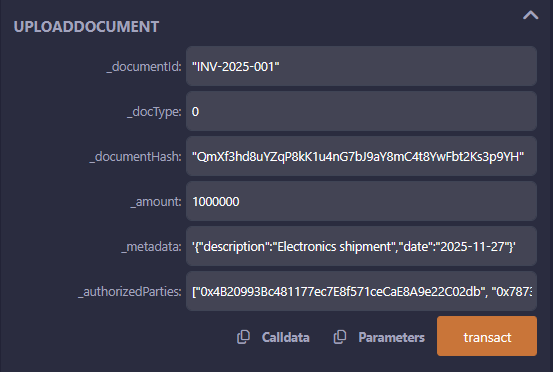
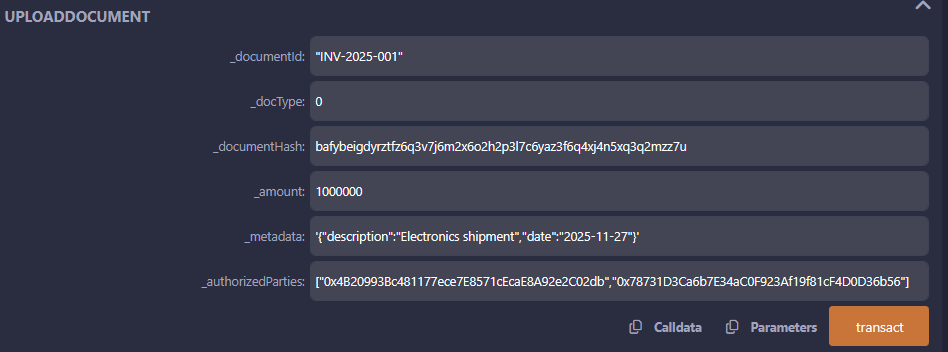
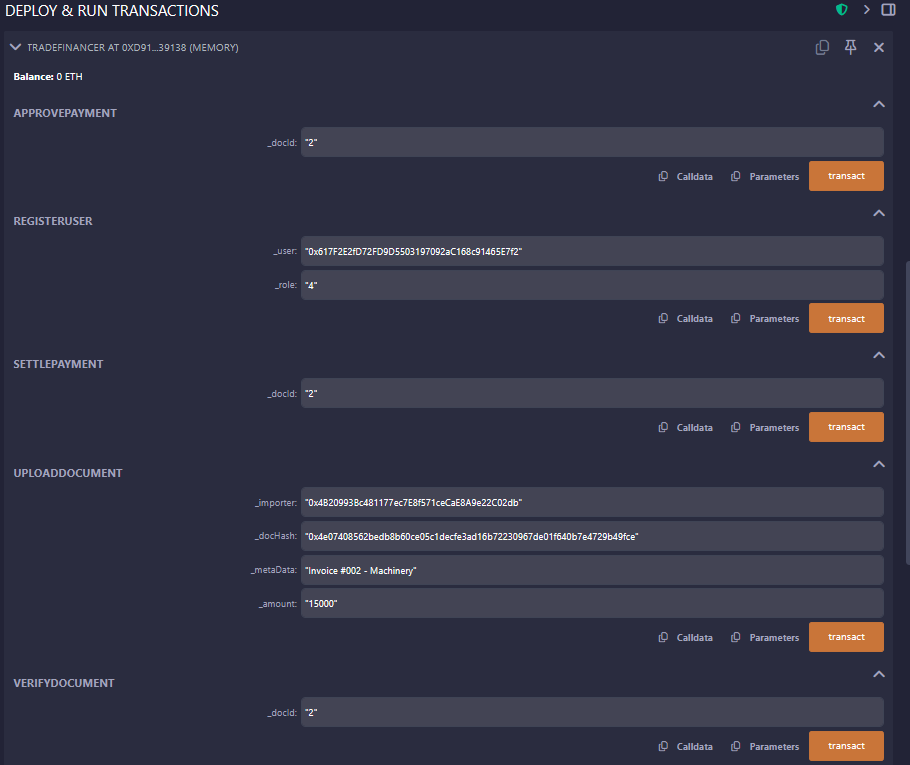
TrustTrade Ledger is a decentralized application (DApp) prototype that digitizes the trade finance lifecycle. It creates a secure workflow between four distinct parties: Exporters, Importers, Banks, and Verifiers (Customs/Logistics). Instead of manual papers, the system Digitizes Documents: The Exporter uploads a cryptographic hash of the invoice. Enforces Verification: The Smart Contract prevents the Importer from approving payment until the Verifier (Customs) explicitly signs off on the goods. Automates Settlement: Once all conditions are met, the Bank releases the payment instantly, updating the invoice status to "Paid". Creates an Audit Trail: Every action is timestamped and immutable, creating a "complete audit trail" that regulators can trust.
How we built it
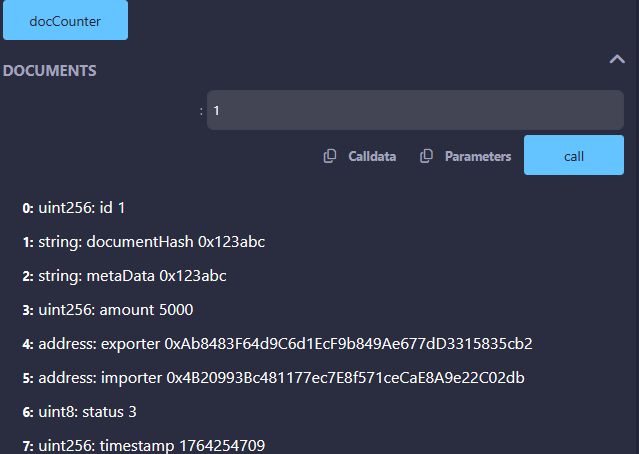
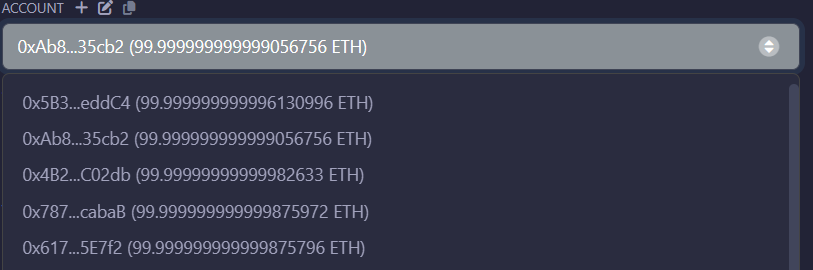
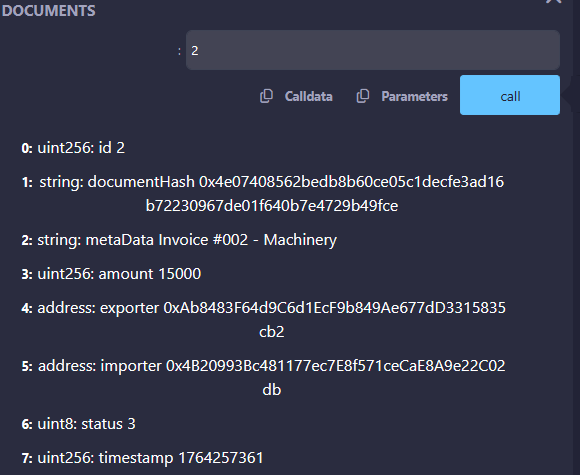
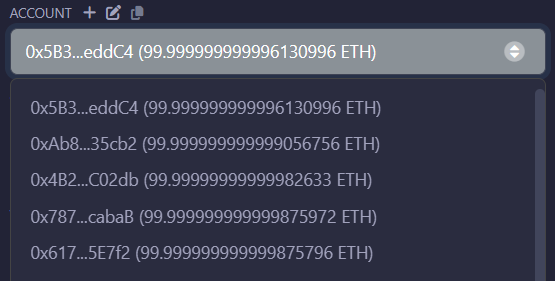
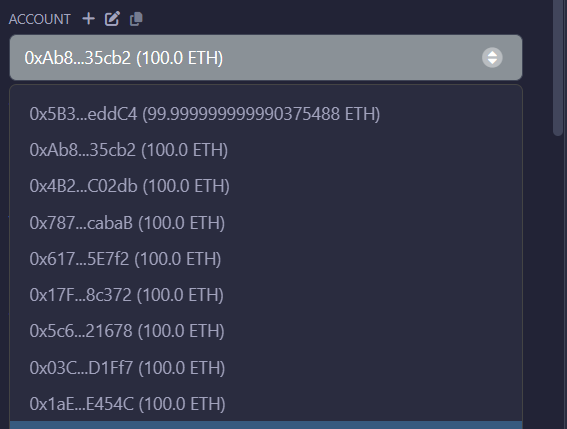
We have built using Solidity code for the smart contract and used Gemini AI to build the code the core logic was by studying multiple research papers to see what can be done We have used Remix IDE to run the Solidity code and used Remix VM to simulate the participants Smart Contract Architecture: We utilized struct data types to define the Document model, storing metadata and state on-chain.Security: We implemented SHA-256 hashing algorithms to secure the integrity of off-chain files. The mathematical representation of the document integrity is defined as:Hash(doc) = SHA256(file) This hash $H(doc)$ is stored on-chain, ensuring that if even one bit of the off-chain PDF changes, the hash will mismatch, alerting the network to fraud.Access Control: We used enum types to define roles (Exporter, Importer, Bank, Verifier) and created custom modifiers (onlyRole) to ensure strict permissioning—so an Exporter cannot approve their own payment.
Challenges we ran into
Generated using Gemini but there were some code errors and Remix VM problems but fixed it.
Accomplishments that we're proud of
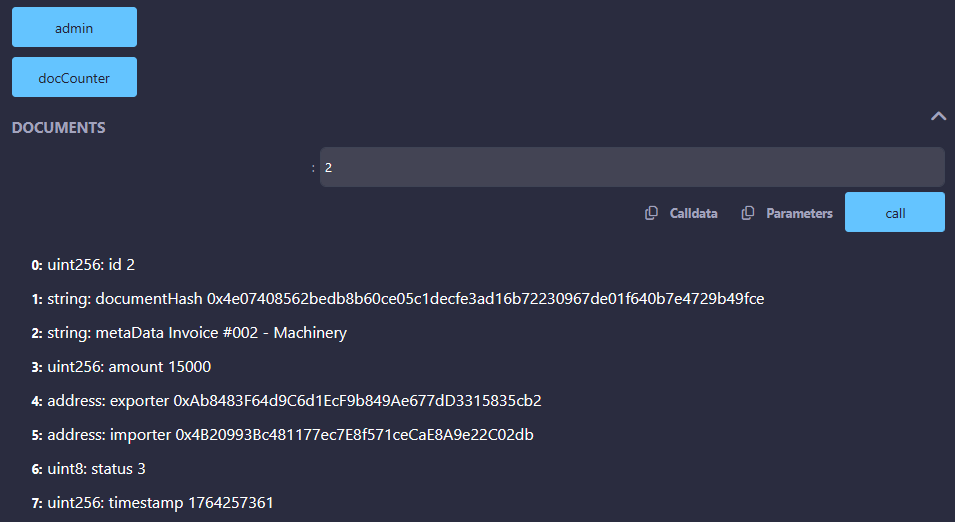
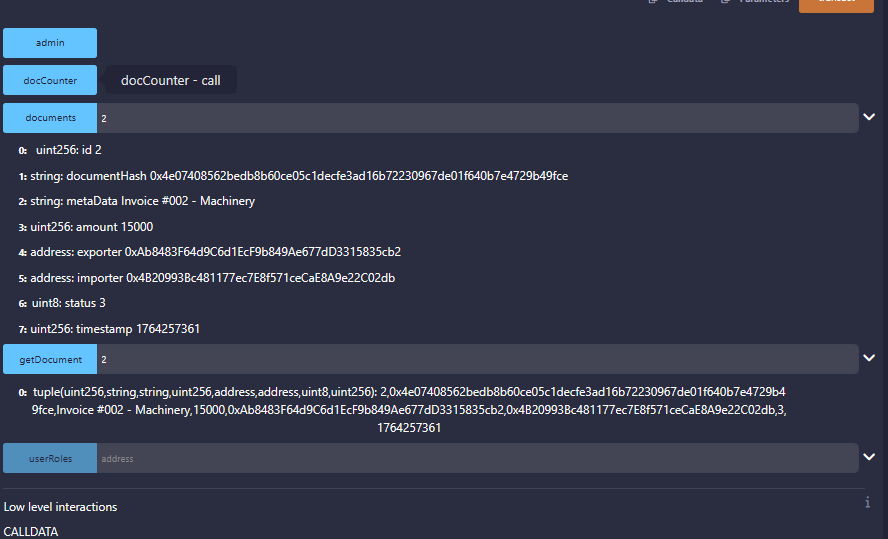
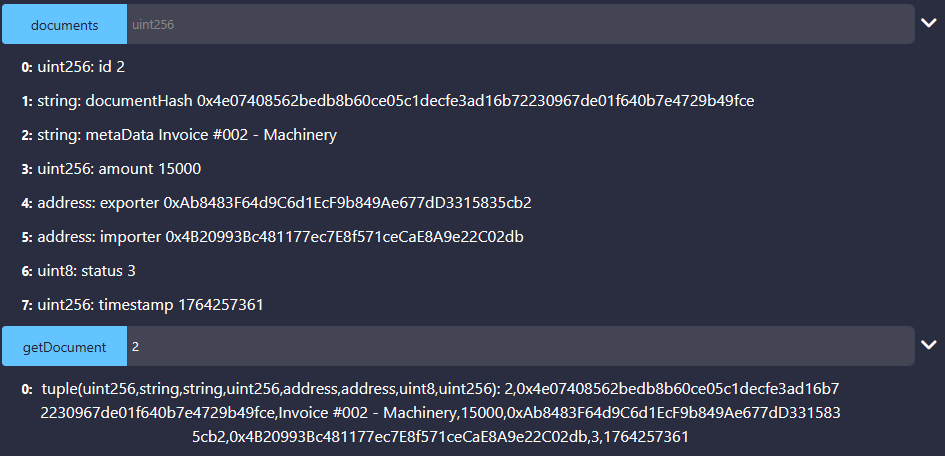
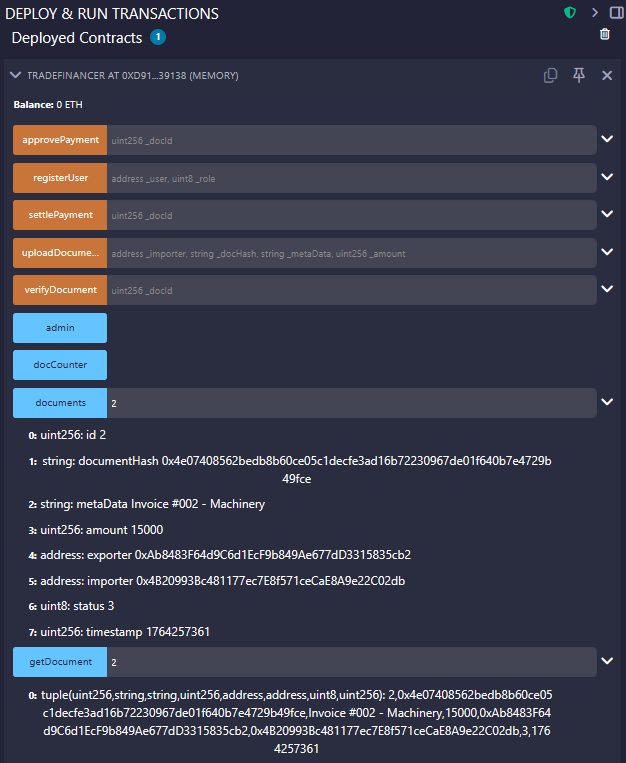
Zero-Trust Execution: We successfully built a system where the Bank does not need to trust the Exporter; they only need to trust the code. The status 3 (Paid) can only exist if the Verifier and Importer have done their jobs. Functional Prototype: We went from a theoretical concept to a deployed contract on the Remix VM that successfully executes a full financial lifecycle.
What we learned
Solidity Programming Language Role-Based Access Control (RBAC): We learned how to simulate a "permissioned blockchain" environment on Ethereum by whitelisting specific addresses for specific roles. Blockchain implementation
What's next for TrustTrade Ledger
Currently, TrustTrade Ledger is a functional backend prototype.Frontend Integration: Building a React.js dashboard using Web3.js so users can interact with the contract via a GUI instead of Remix. IPFS Integration: Automating the "off-chain" storage by connecting the DApp to the InterPlanetary File System (IPFS) to store the actual PDF files in a decentralized manner.
Built With
- blockchain
- remix
- solidity

Log in or sign up for Devpost to join the conversation.