-
-
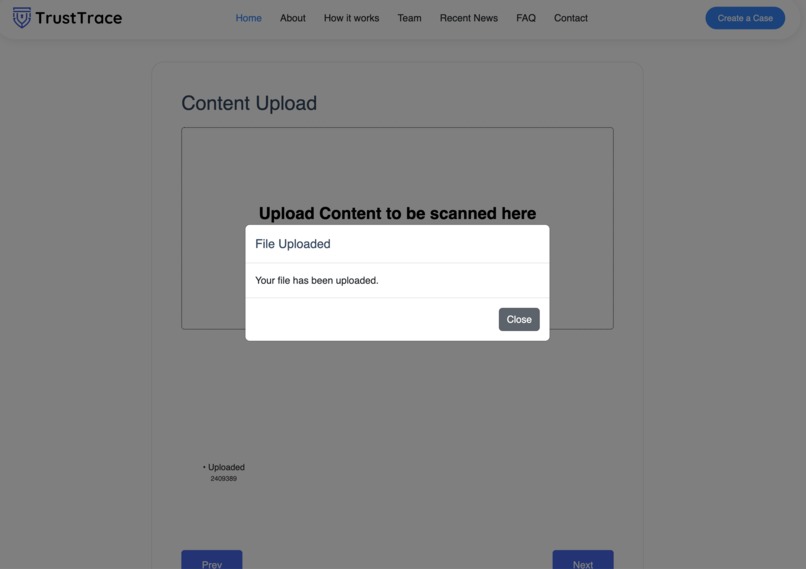
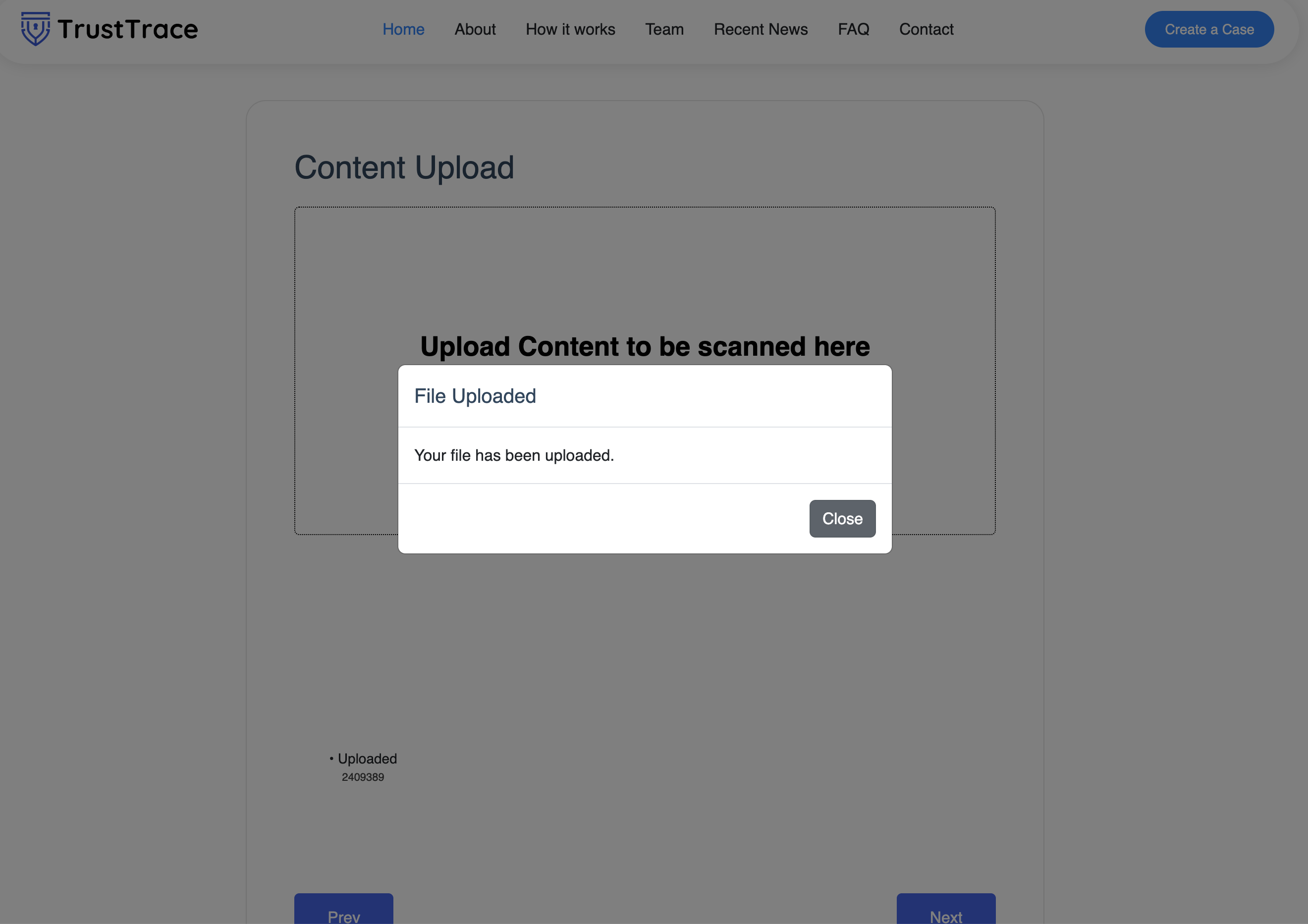
Video Uploaded
-
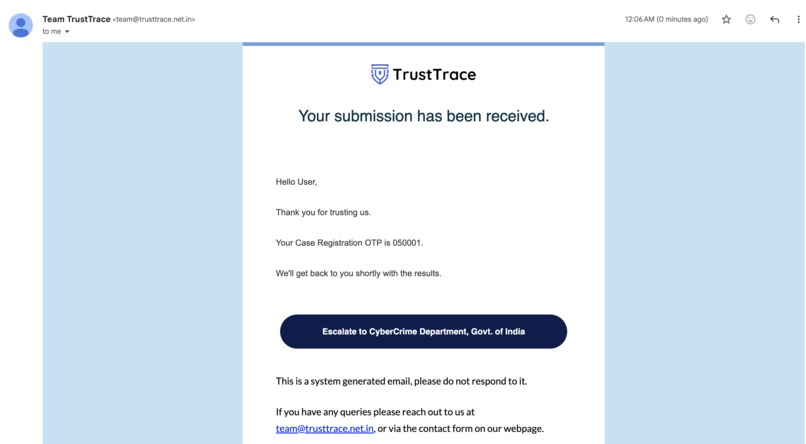
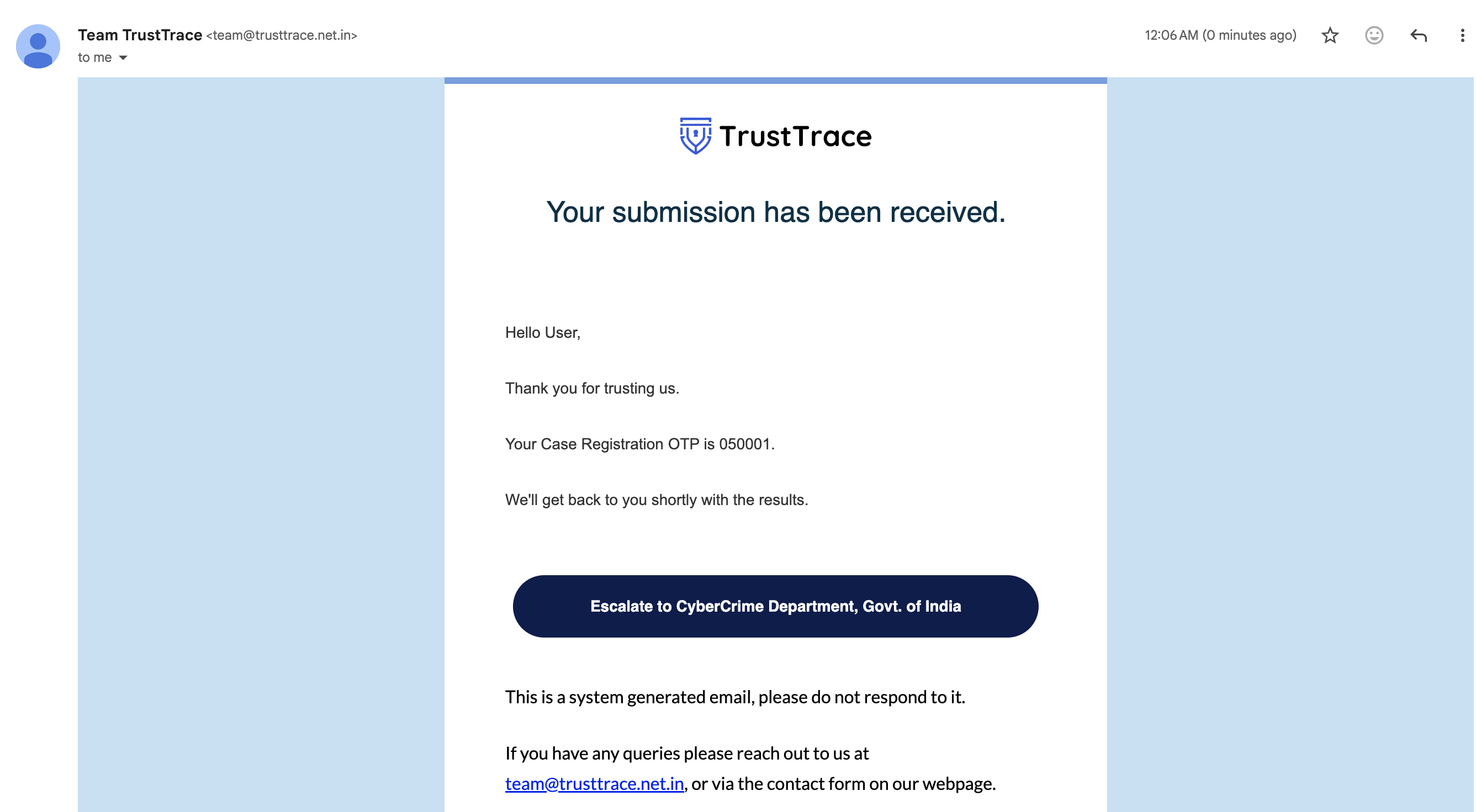
Automated Email Notification System
-
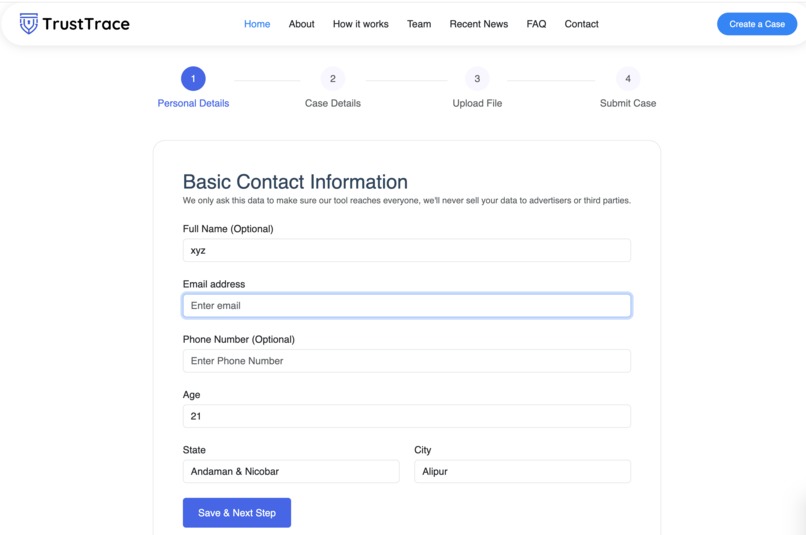
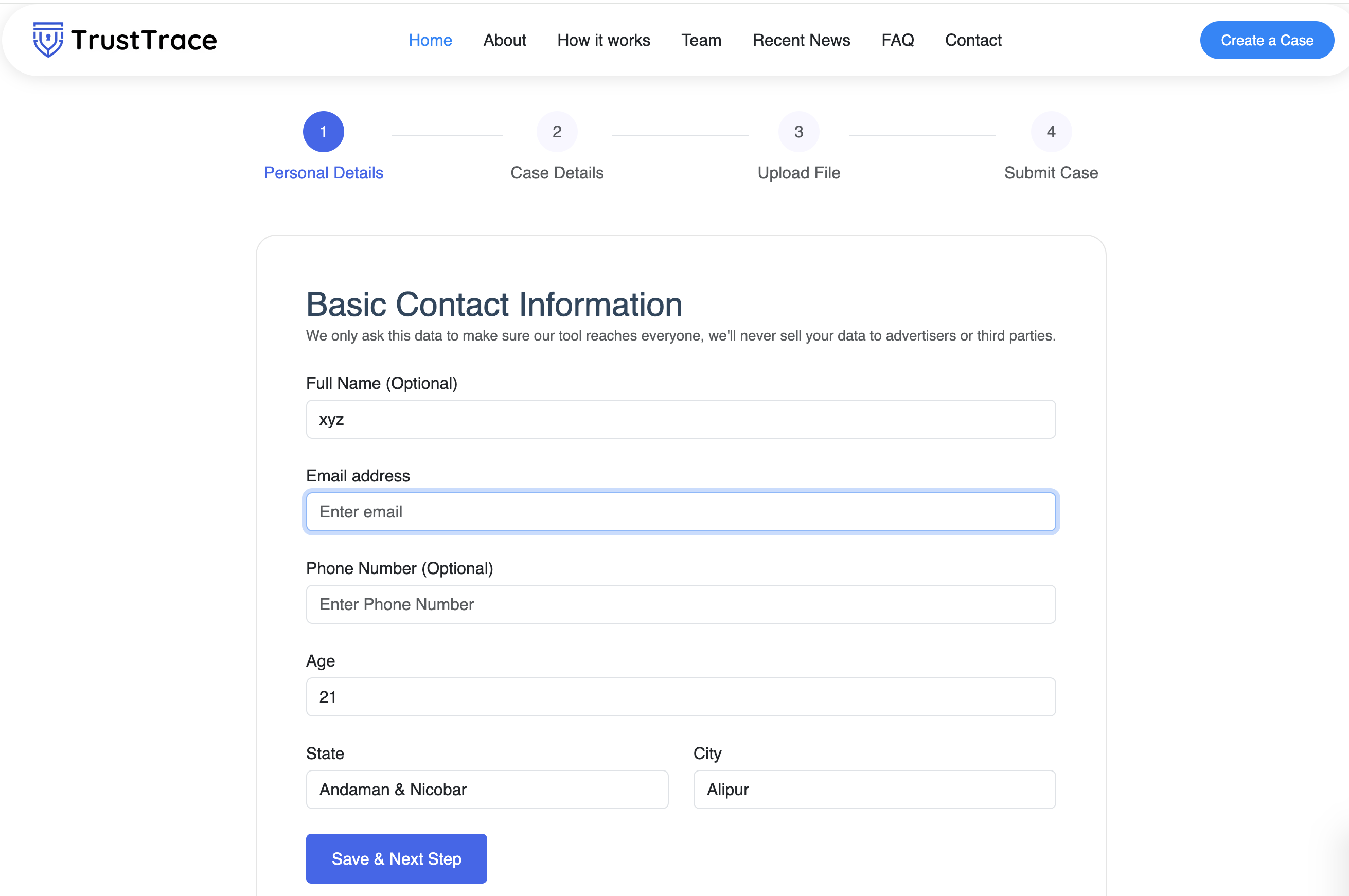
Case Creation: Email-based OTP verification (Name optional)
-
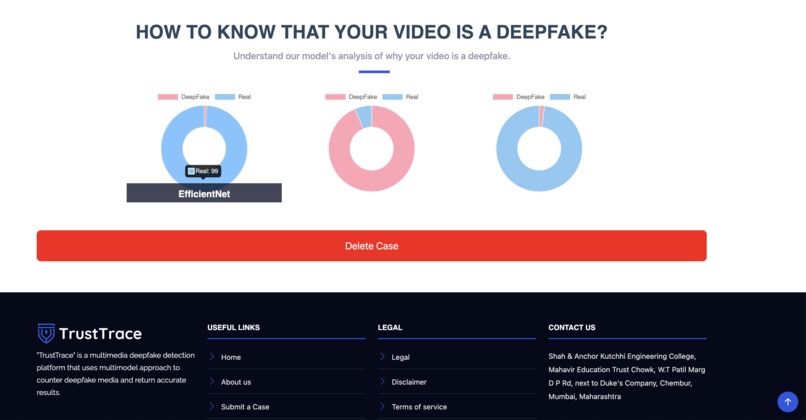
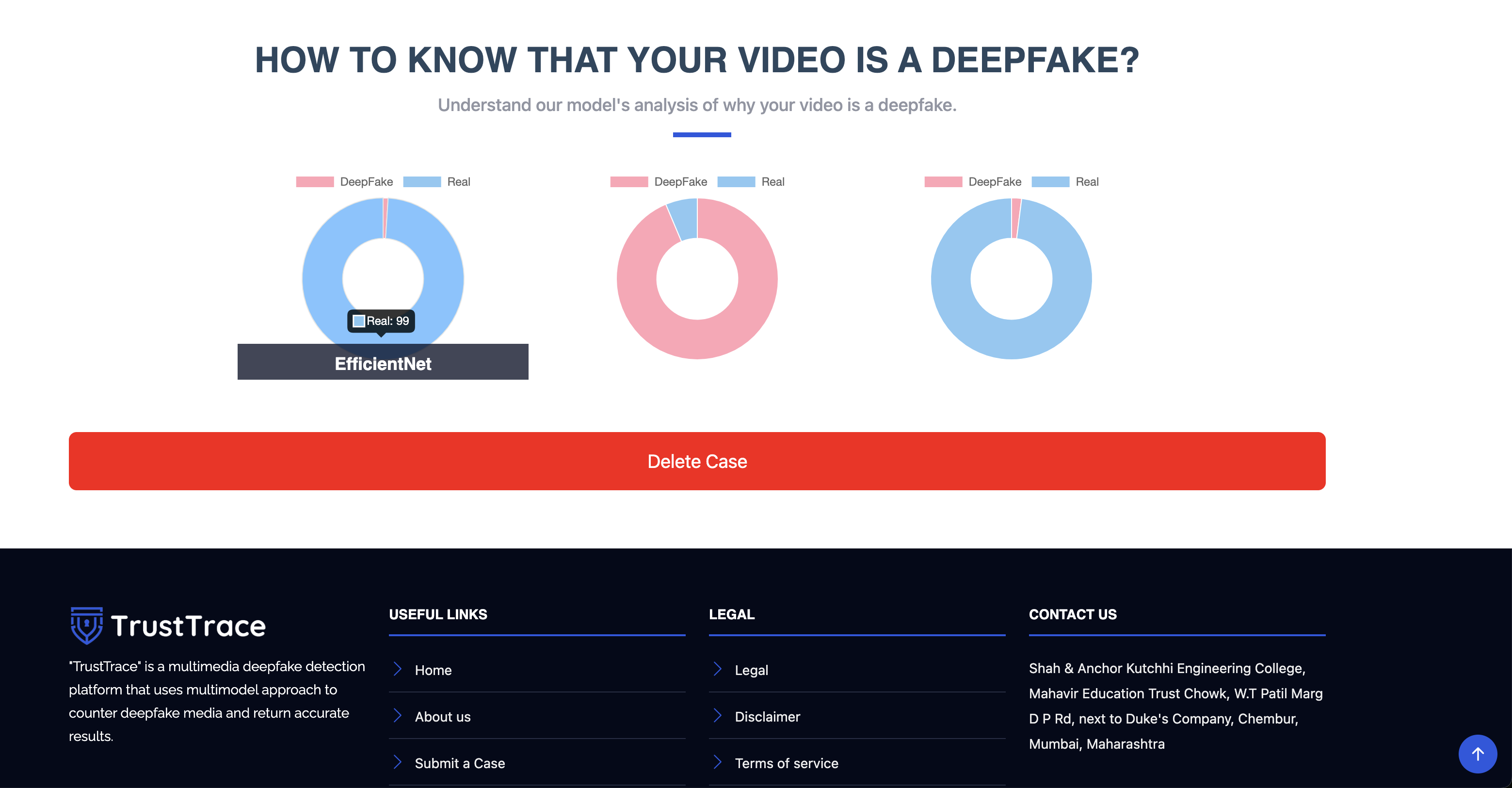
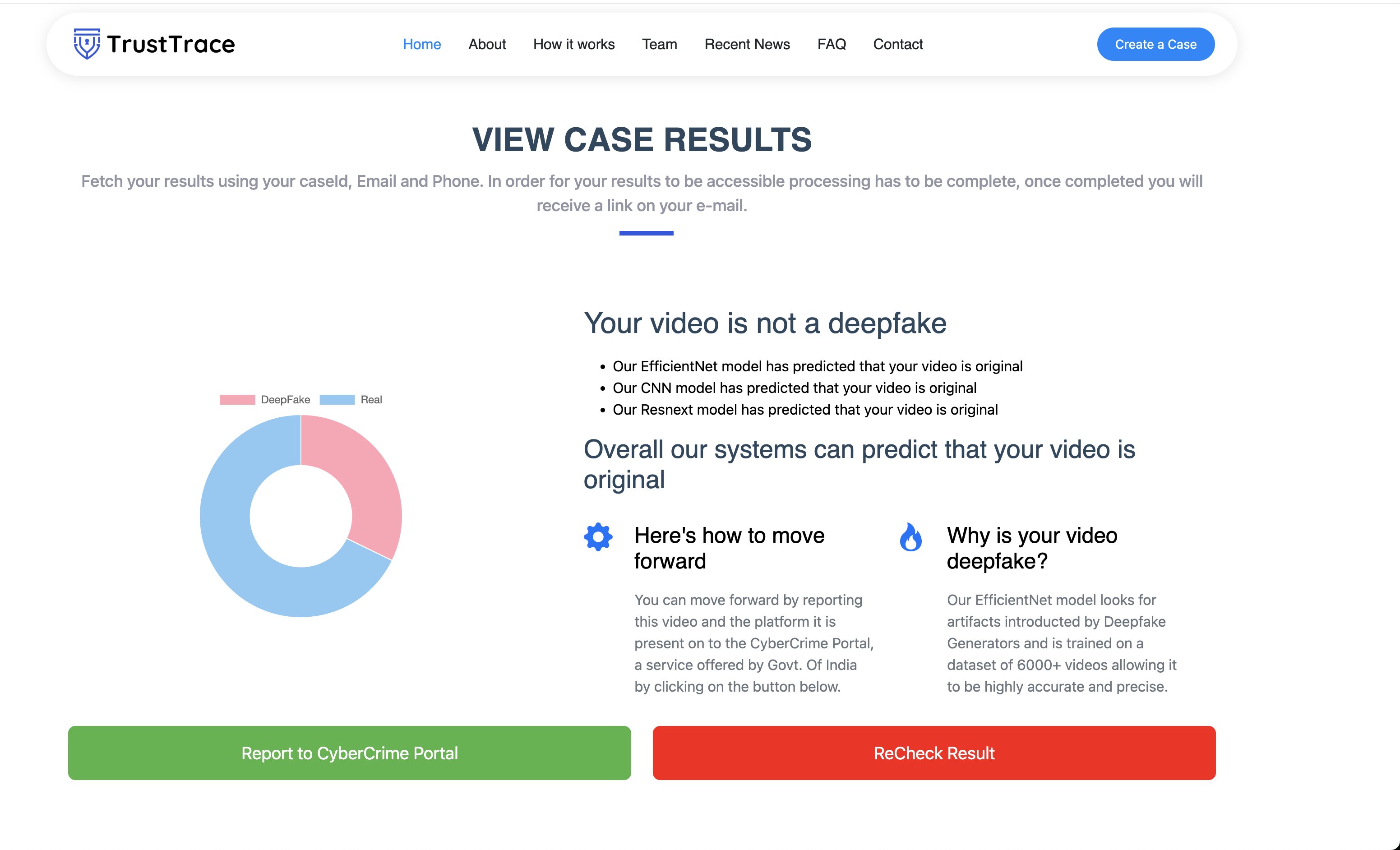
Multiple models analyze different video attributes. One model may flag deepfake due to specific artifacts, improving reliability.
-
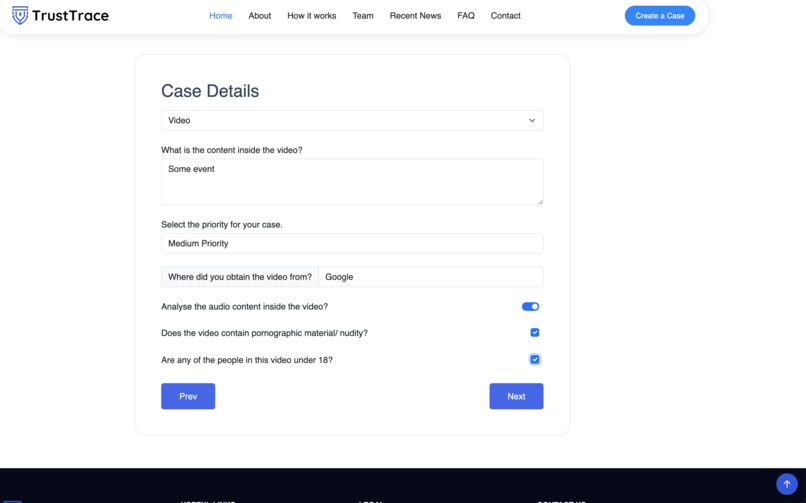
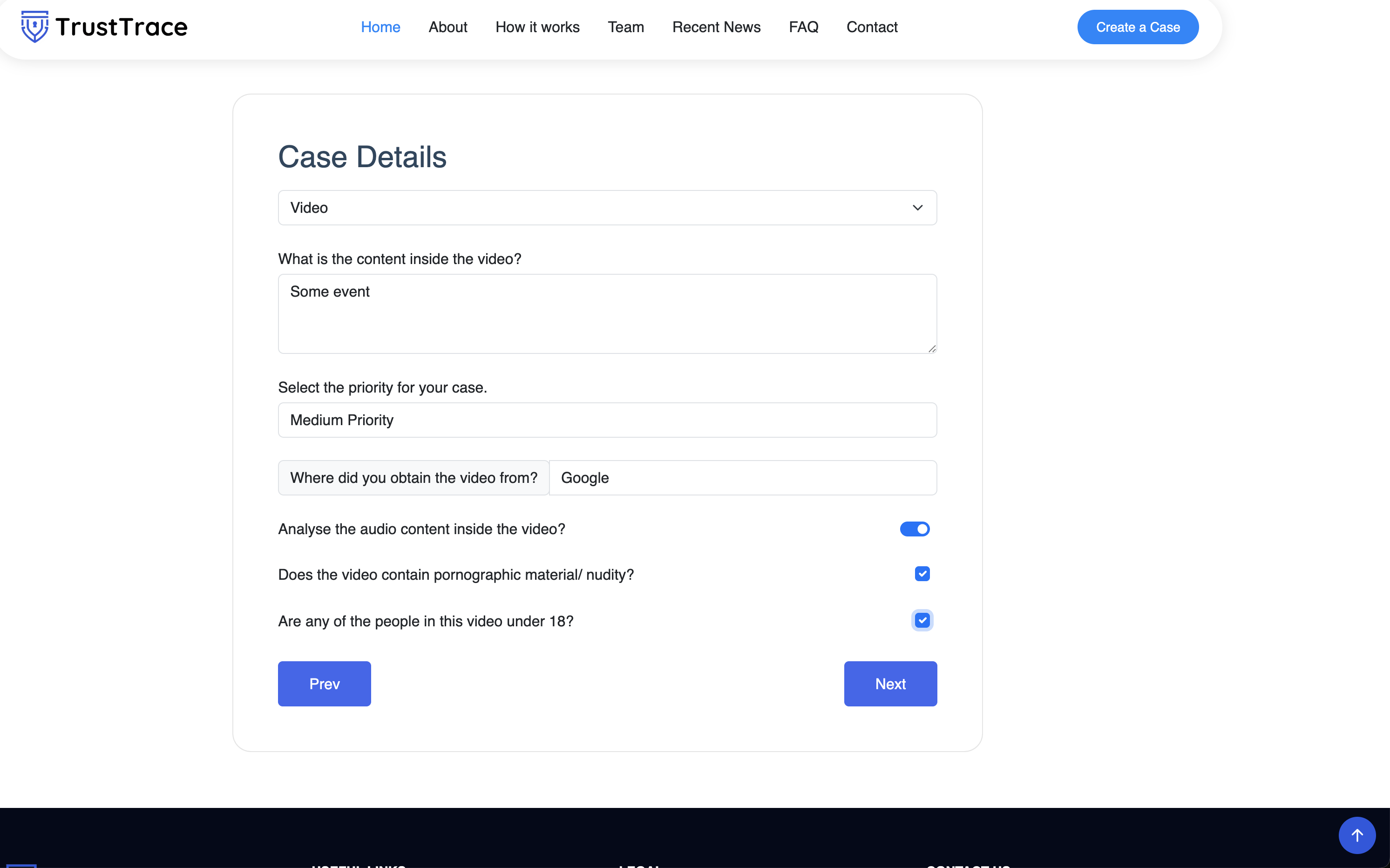
Video Upload: Content Sensitivity and 18+ Compliance Selection
-
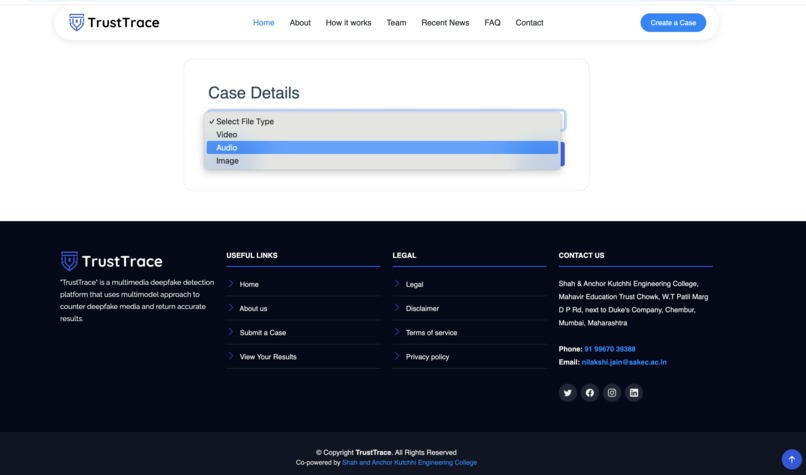
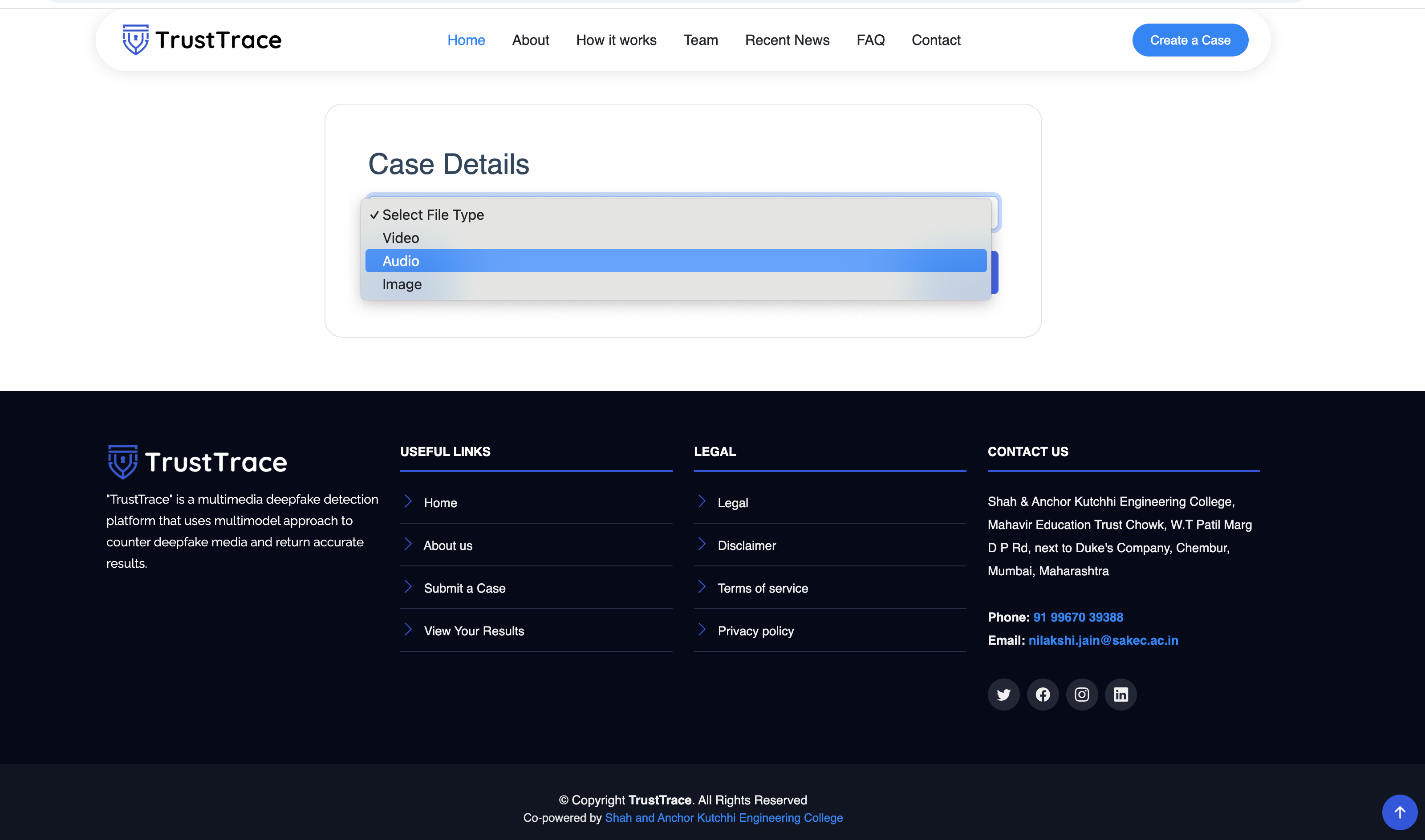
Select Media Type – Image, Audio, or Video
-
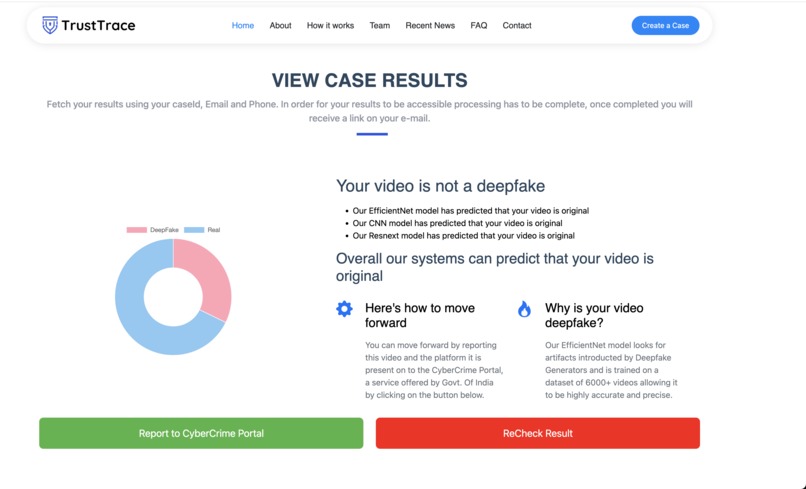
Our result page
-

Home Page of our website..Just click on create a case in order to check your media..

Inspiration
The idea for this project builds on work our team has been doing for over a year through TrustTrace, a unified deepfake detection platform we built to verify images, audio, and video in one place. TrustTrace was born out of growing concern about how easily AI can now be misused — we saw morphed videos of Indian Prime Minister Narendra Modi circulate widely, we saw cricket legend Sachin Tendulkar speak publicly about a deepfake video of him being used in a financial scam, and we saw similar manipulated audio and video involving public figures globally, including former U.S. President Donald Trump. These cases made it clear that deepfakes are no longer experimental — they are an active tool for fraud and deception.
While building TrustTrace, we kept encountering one specific, rapidly growing version of this problem: deepfakes are now being used to fake entire job interviews. Attackers use real-time face-swap and voice-cloning tools to impersonate someone else during a live video interview — sometimes to fraudulently secure remote jobs, sometimes to bypass identity verification entirely. This is a documented and growing attack pattern, and unlike a suspicious video circulating on social media, it happens live, in a moment where a hiring manager has to make a decision in real time with no way to check it afterward.
TrustTrace, in its current form, is built for case-based, after-the-fact verification — someone uploads a file, waits, and gets a result. That workflow doesn't work when the harm happens live, during a 30-minute call. So for this hackathon, we set out to build something new: a real-time layer that brings deepfake detection into the moment it's actually needed.
What it does
TrustTrace Interview Shield is a real-time deepfake verification layer built during this hackathon, designed specifically for the hiring and interview process. It sits alongside a live video interview and continuously checks whether the candidate on screen is a real, unmanipulated person.
The process works as follows. A recruiter starts an interview session through our companion tool. At regular intervals during the call, frames and audio snippets are captured and sent to TrustTrace's existing detection engine via API. A live dashboard shows the recruiter a running trust score, with alerts if manipulation artifacts are detected mid-call. At the end of the interview, a session report is generated — reusing TrustTrace's existing case-based system — giving HR teams a verifiable, exportable record for compliance purposes.
This is new functionality that did not exist in TrustTrace before this hackathon. TrustTrace previously supported only asynchronous, single-file uploads with no live monitoring, no interview-specific workflow, and no recruiter-facing dashboard.
How we built it
We used TrustTrace's existing detection models (image, audio, and video deepfake classifiers, trained over the past year with support from a development grant through our institution and CyberPeace Foundation) as the underlying detection engine, accessed via API rather than its normal case-upload web flow.
On top of that, during this hackathon we built a frame- and audio-sampling pipeline that periodically pulls snippets from a live video call, a new backend service that routes those snippets to the TrustTrace detection API and aggregates results into a running confidence score, a recruiter-facing live dashboard built during the hackathon showing real-time trust signals during the interview, and a post-interview report generator that packages results into a shareable summary for HR records.
Challenges we ran into
The biggest challenge was adapting an asynchronous, single-file detection system into something that could feel close to real-time without needing to train an entirely new real-time model in the hackathon window. We addressed this with a sampling-based approach, checking frames and audio at intervals rather than continuously, which let us build something genuinely demoable within the time we had, while being transparent that this is a first step toward true real-time detection rather than a finished solution.
We also had to think carefully about the specific failure modes of interview fraud versus general deepfake detection. For example, lower webcam video quality, inconsistent lighting, and the fact that a live call has very different compression artifacts than an uploaded file, all of which affect detection reliability.
What we learned
We learned how different the design requirements are for real-time, decision-in-the-moment verification versus after-the-fact forensic verification, even when the underlying detection models are the same. We also got hands-on experience turning a research-grade detection system into an API-driven service that a completely different, purpose-built application could consume.
What's next for TrustTrace
This hackathon project is a first step toward one of TrustTrace's own long-term goals: real-time deepfake monitoring. Next, we'd like to improve sampling frequency and latency, expand beyond hiring into other live-verification contexts such as video-call-based identity checks, and eventually fold this real-time layer back into the main TrustTrace platform as a supported feature.
Built With
bootstrap, celery, css3, django, html5, javascript, machine-learning, mongodb, nginx, node.js, python


Log in or sign up for Devpost to join the conversation.