-
-
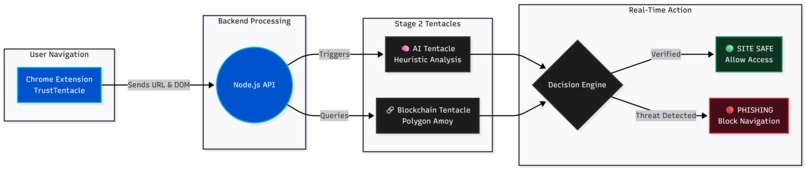
architecture
-
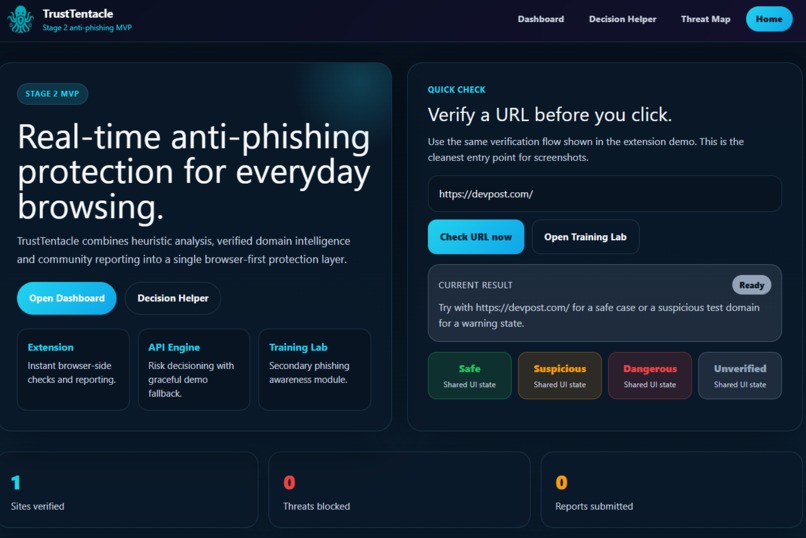
home
-
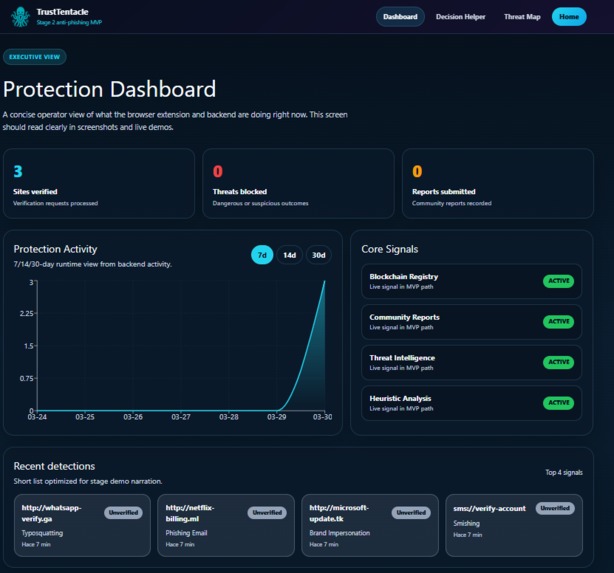
dashboard
-
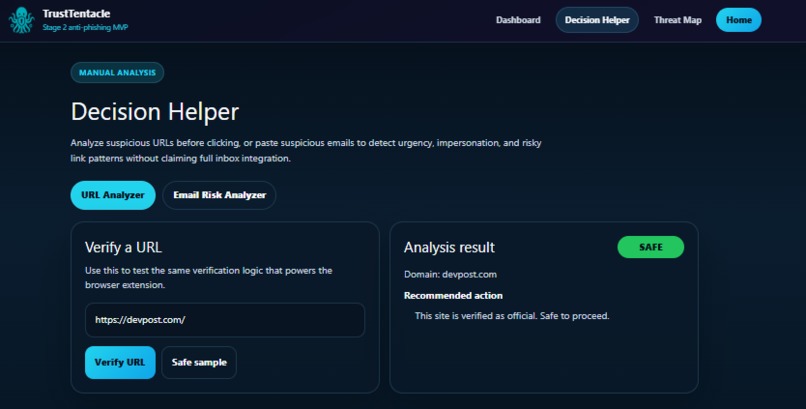
decision-helper
-
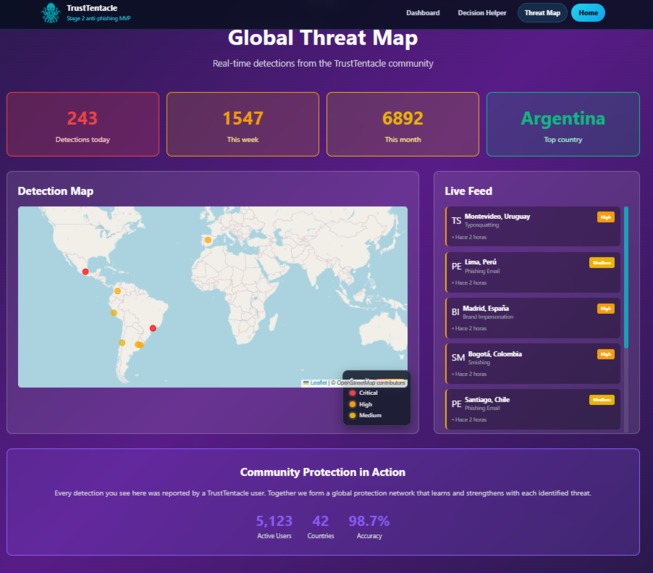
threat-map
-
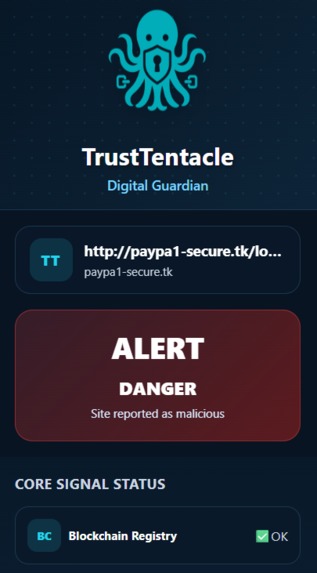
popup-danger
-
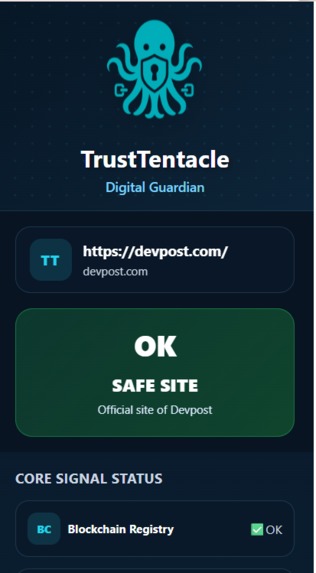
popup-safe
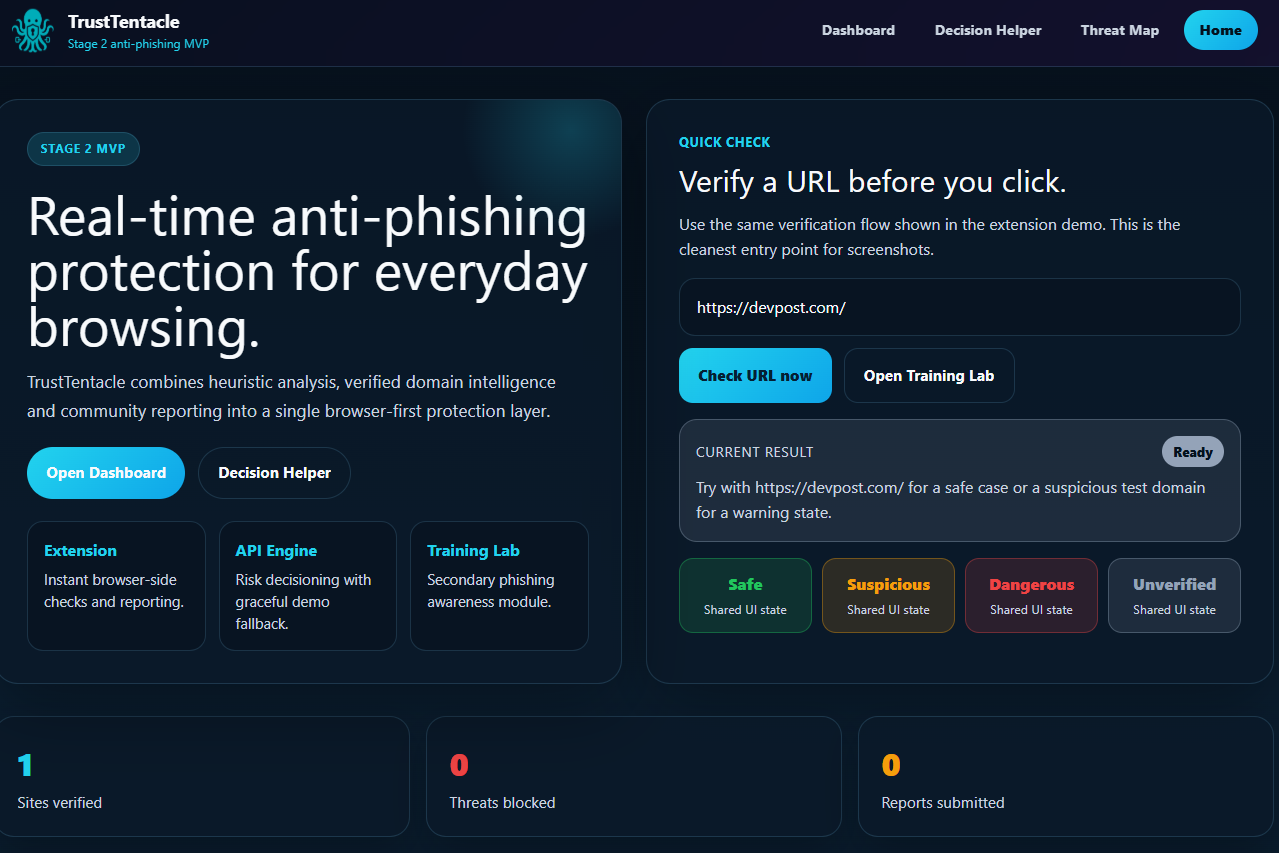
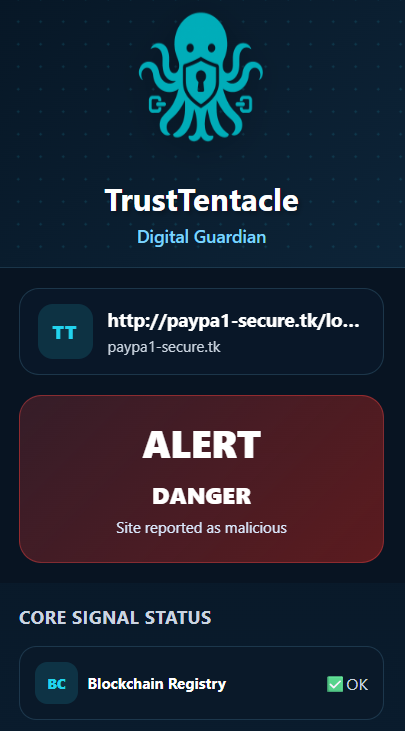
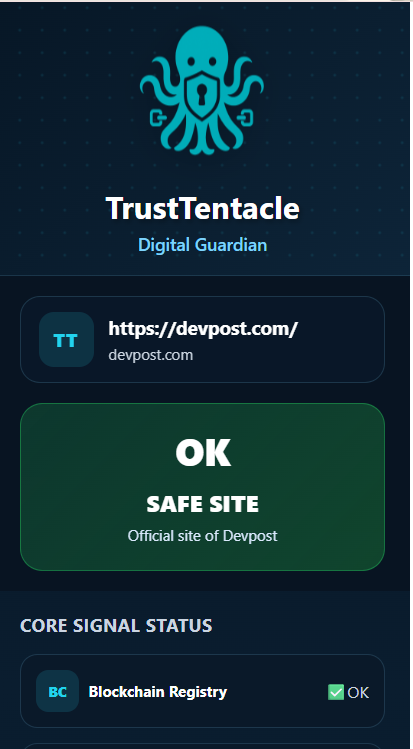
🏆 Octopus Hackathon 2025 - Stage 2 Finalist (Top 50 out of 900+ projects)
🌊 Inspiration: "In the digital ocean, only the smartest octopus can protect you"
Phishing and social engineering continue to grow while most defenses remain reactive. We wanted to build a proactive browsing control that works in real time for everyday users, not only enterprise security teams.
The octopus inspired our architecture: multiple independent signals working in parallel to detect risk early and reduce the chance of compromise before credentials, payments, or trust are exposed.
🐙 What it does
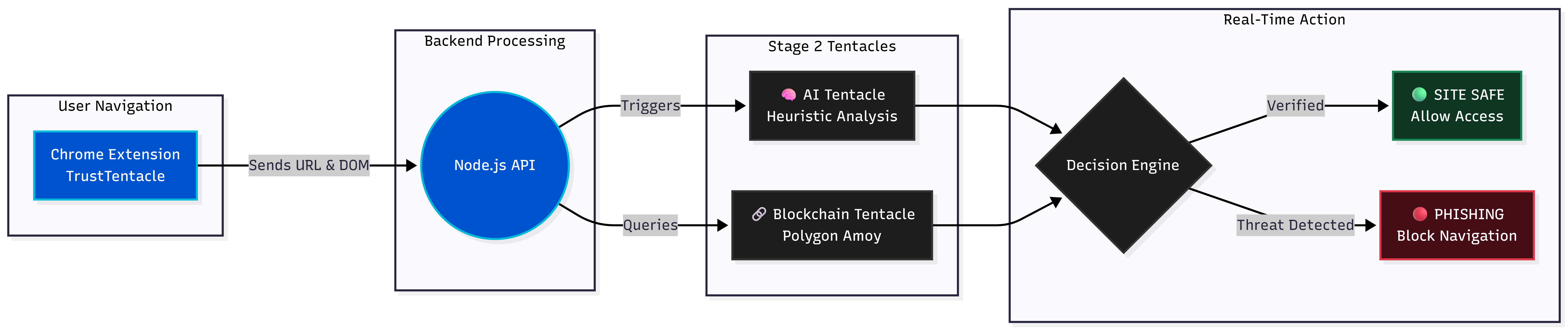
TrustTentacle is a browser-first anti-phishing guardian with a multi-signal decision flow.
Our Stage 2 MVP focuses on the core controls:
- 🧠 Heuristic and AI-assisted risk analysis: URL and behavior-oriented signals classify sites as
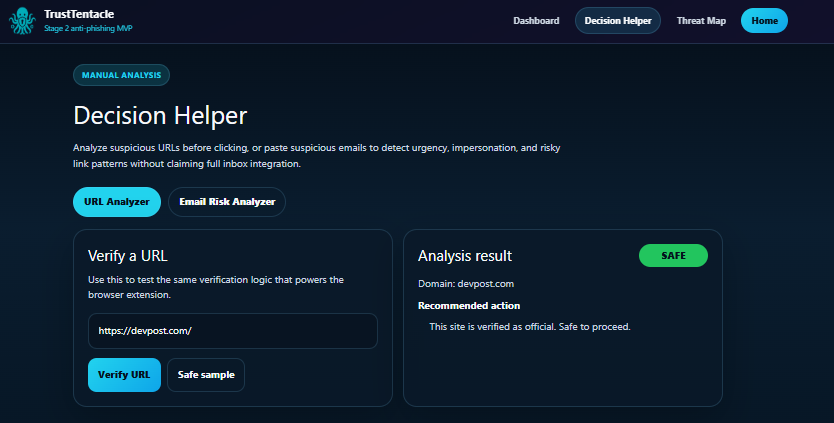
SAFE,SUSPICIOUS,DANGEROUS, orUNVERIFIED. - 🔗 Trusted-domain verification architecture: a registry-based verification model with smart contract infrastructure and a Polygon Amoy integration path included in the repository.
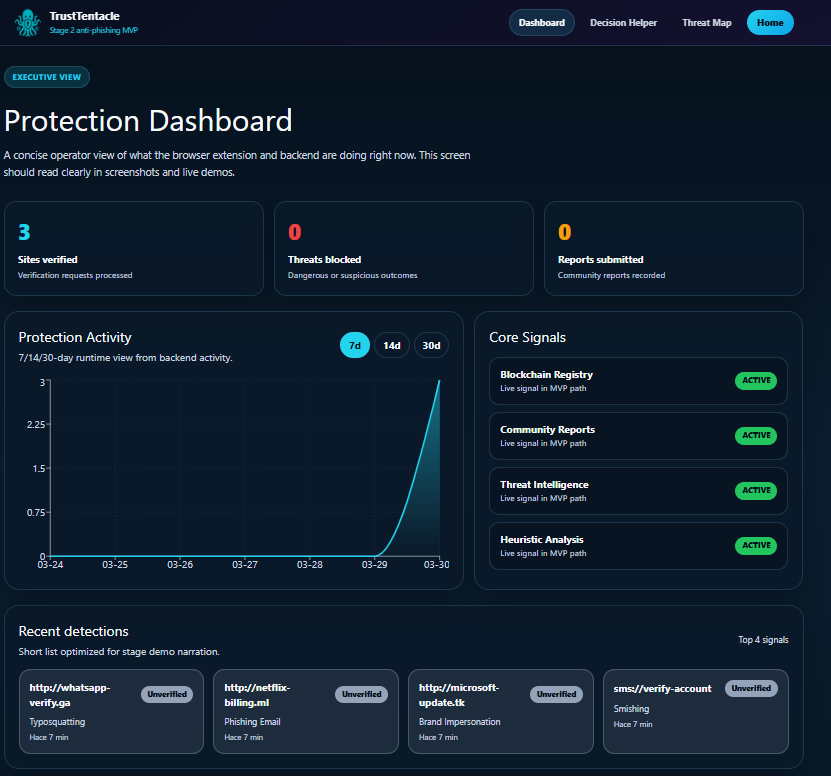
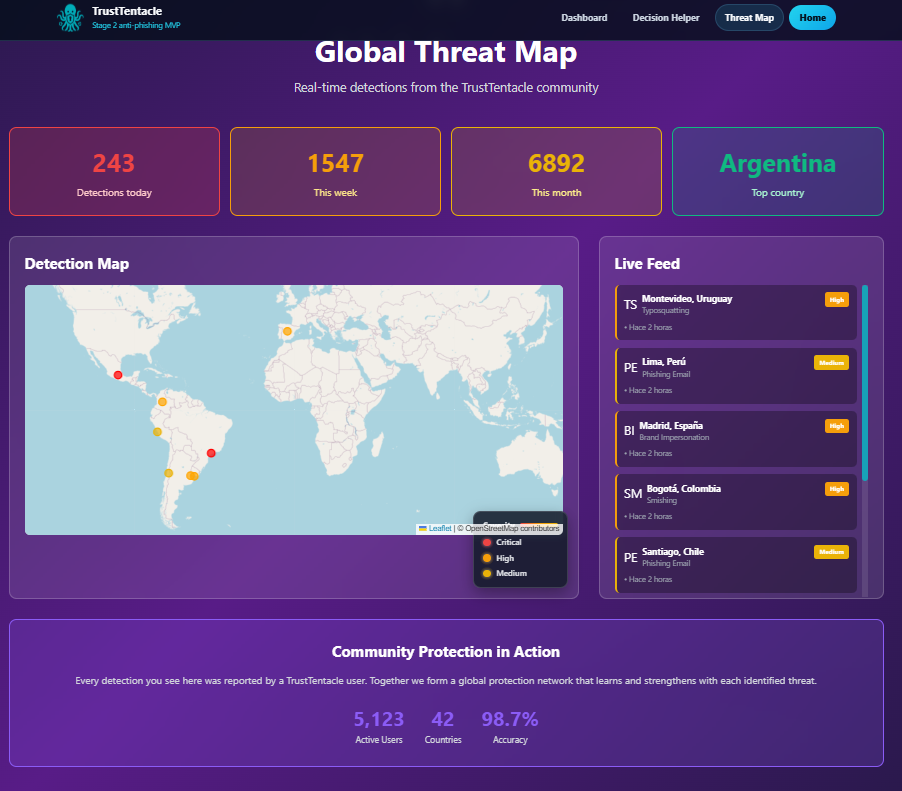
- 🤝 Community reporting loop: users can report suspicious links or pages, and those reports feed threat visibility and runtime stats.
🏗️ How we built it
- Chrome Extension (Manifest V3): popup checks, context-menu actions, warnings, explainable risk indicators, and reporting flow.
- Backend Decision Engine (Node.js/Express): aggregates trust signals, computes verdicts, and exposes verification, reporting, email-analysis, and stats APIs.
- Web Dashboard (React/Vite): visualizes protection activity, threat trends, and manual analysis flows.
- Web3 Layer (Solidity/Hardhat): contracts and deployment assets are included for progressive on-chain verification.
⚠️ Challenges we ran into
Our main challenge was balancing security depth vs UX latency. A browser security tool must be fast and understandable, or users simply disable it.
We addressed this by simplifying the decision flow for the MVP, keeping checks lightweight for live usage, and adding graceful fallback behavior when external services are unavailable.
🎓 What we learned
We learned that trust products need both strong technical signals and a user experience simple enough for everyday browsing. We also confirmed that combining deterministic trust registries with adaptive risk analysis is a strong direction for reducing phishing exposure.
🚀 What's next for TrustTentacle
Next milestones:
- Expand advanced signals such as SSL depth, visual similarity detection, and richer threat intelligence.
- Strengthen on-chain verification workflows for production scenarios.
- Launch organization-level dashboard views for security, compliance, and GRC reporting.

Log in or sign up for Devpost to join the conversation.