-
-
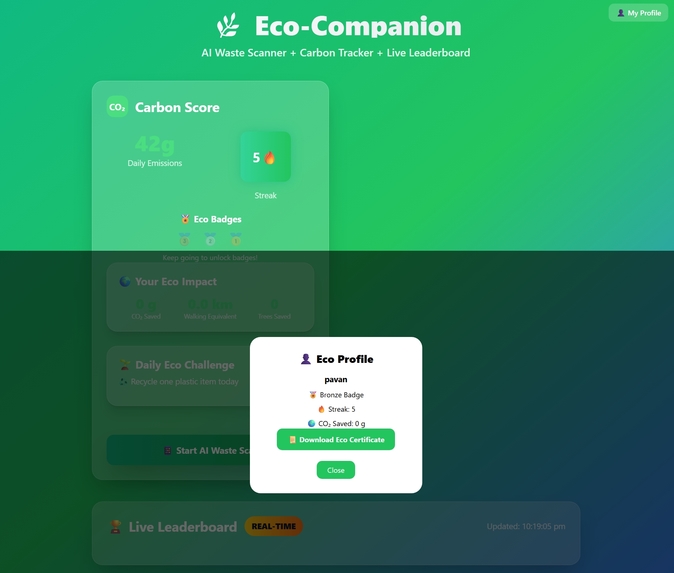
Profile
-
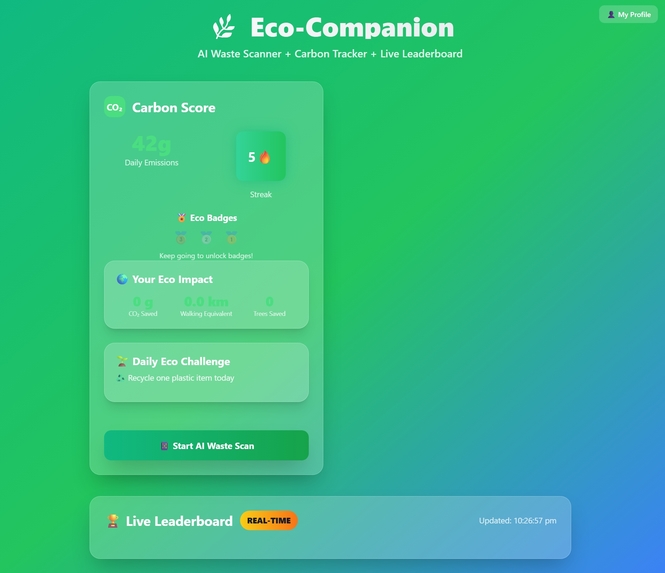
landing page
-
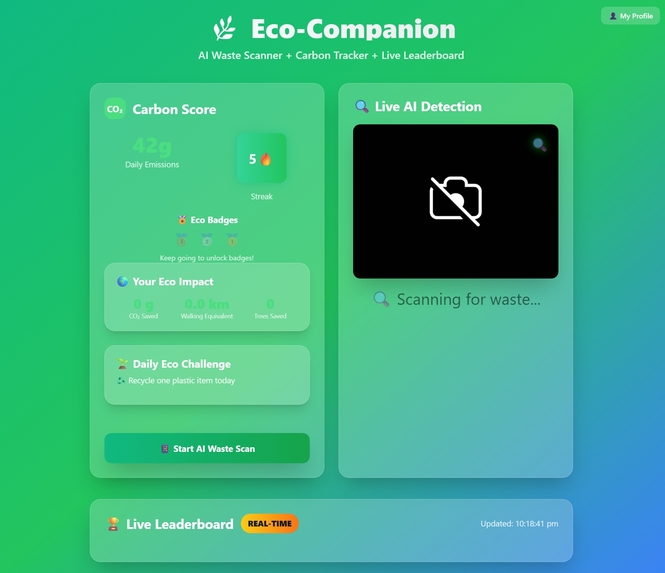
AI Scan
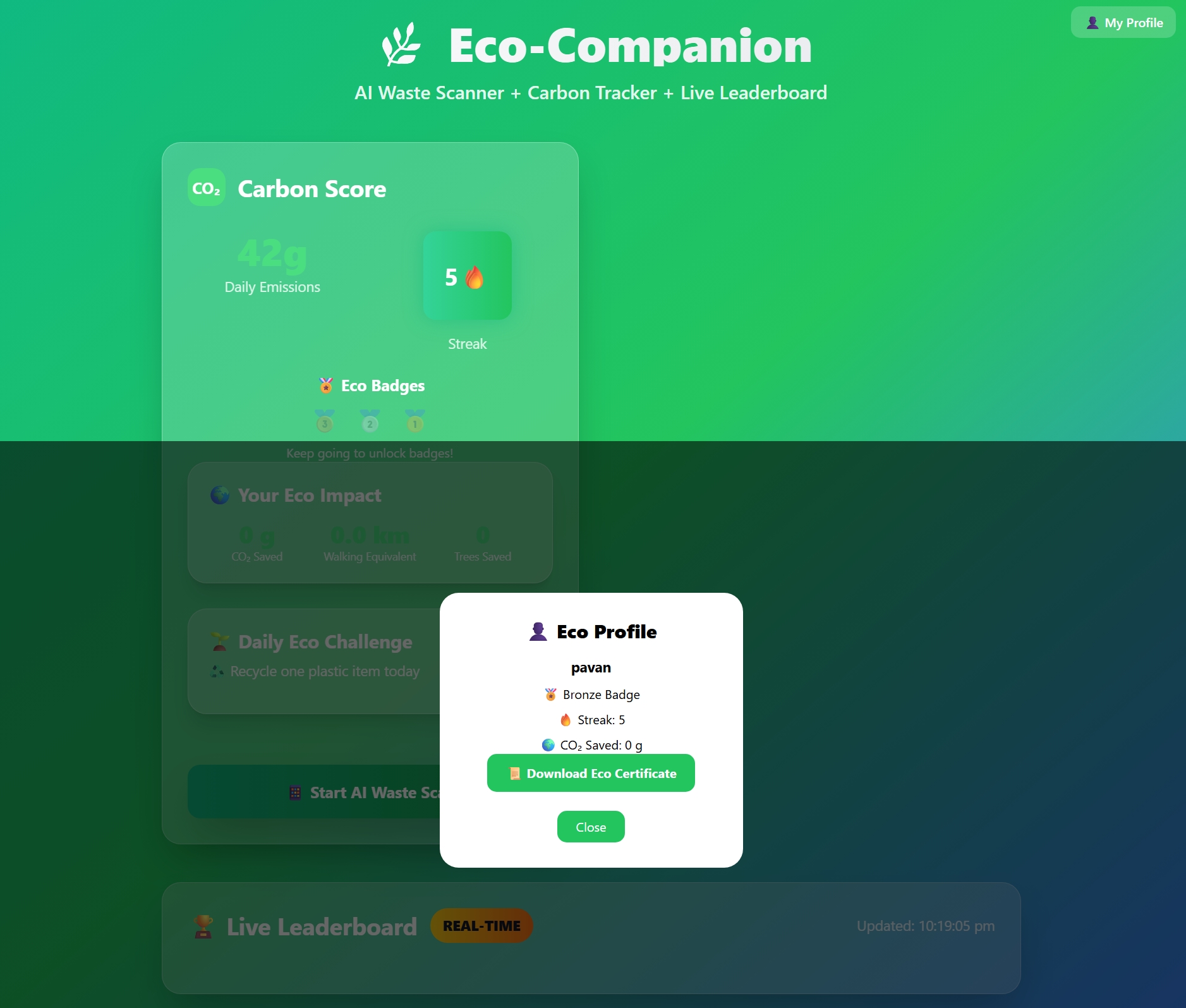
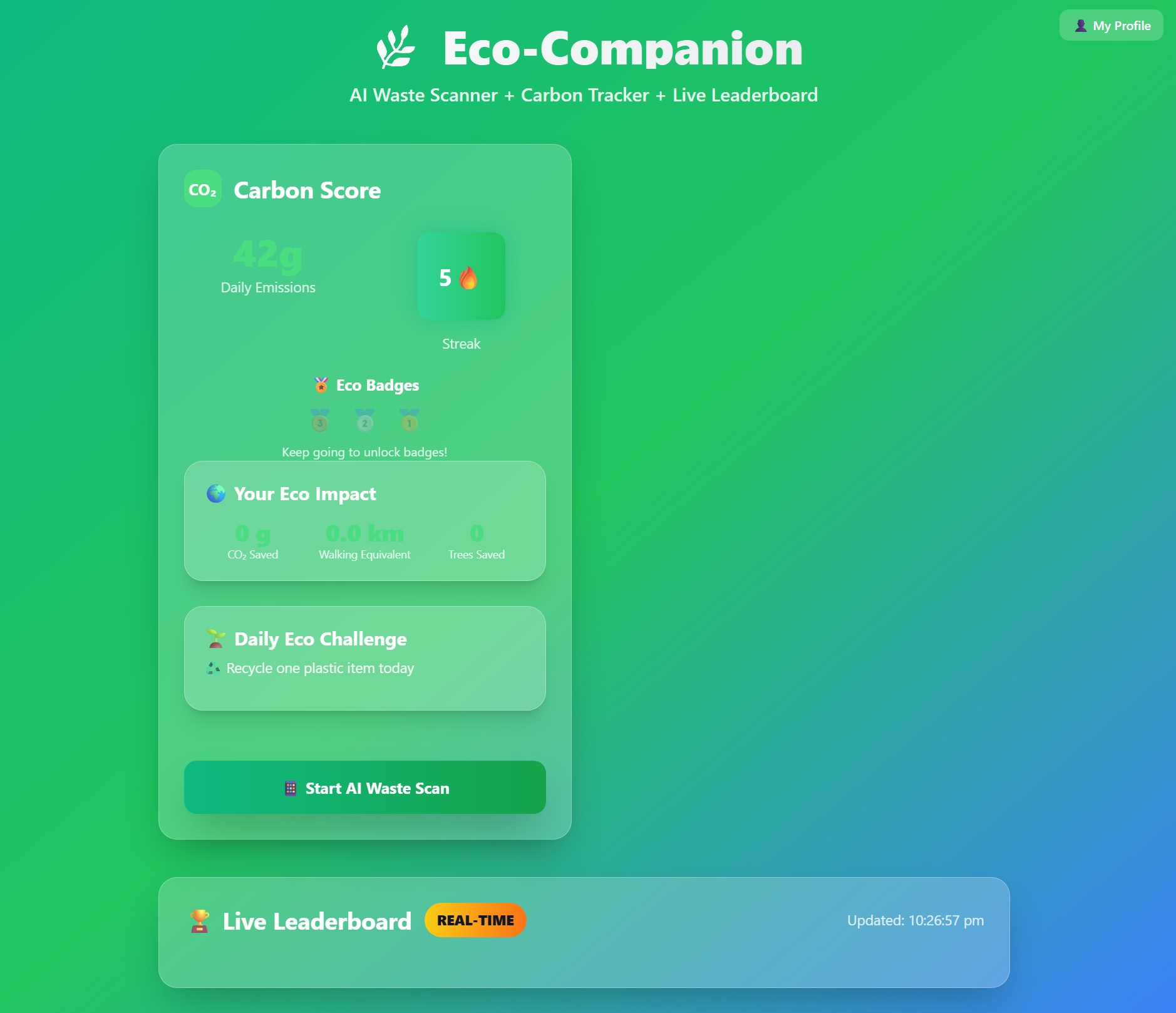
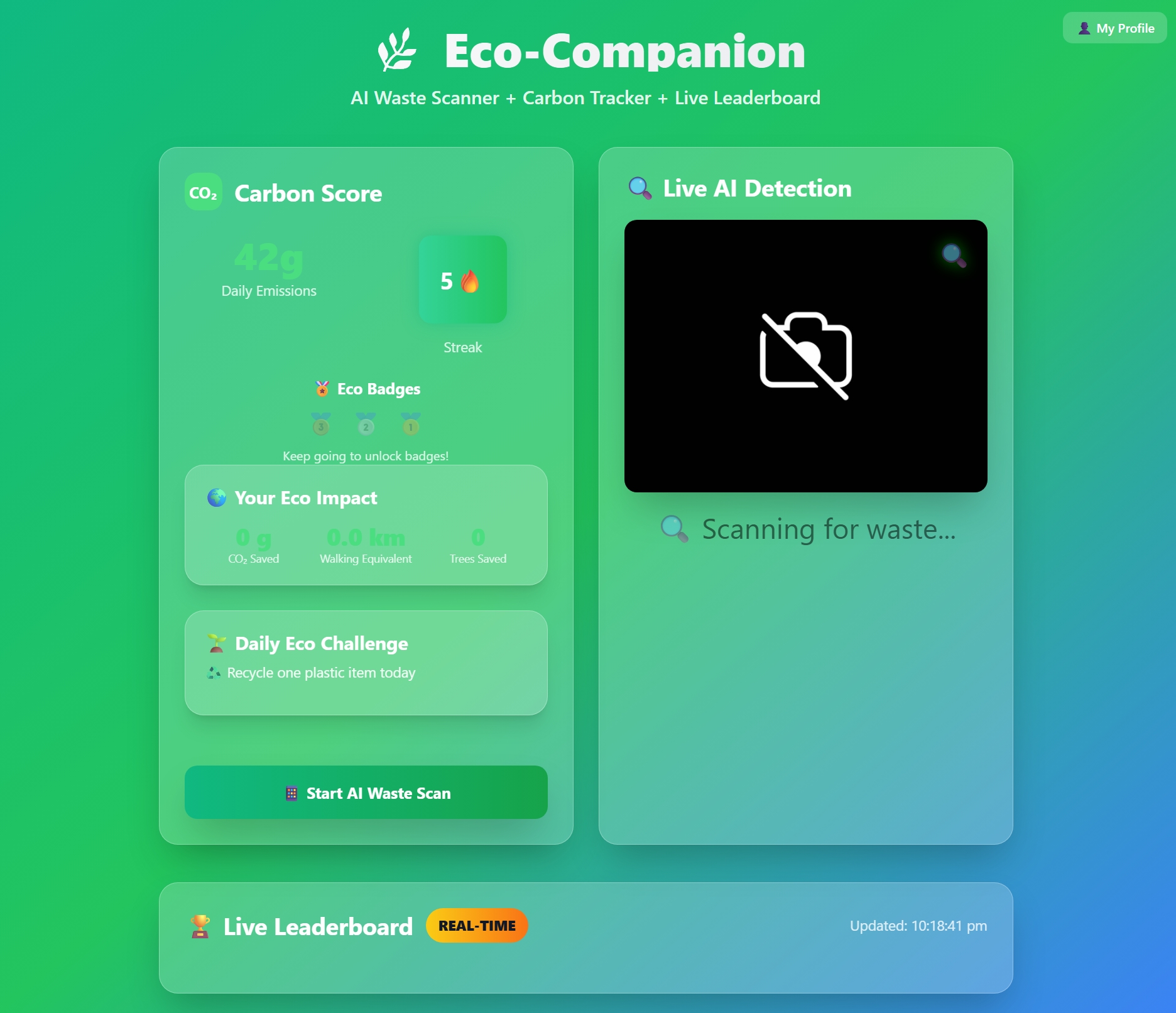
The inspiration for Eco-Companion AI came from noticing a common gap between intention and action. Many people genuinely care about the environment, but they struggle to understand how their everyday choices affect the planet. Sustainability information is often complex, fragmented, or too technical, which makes eco-friendly living feel overwhelming rather than achievable. I wanted to create a solution that simplifies sustainability and makes it personal, practical, and accessible.
With this vision, I built Eco-Companion AI as a personal sustainability assistant. The platform helps users understand their environmental impact and guides them toward making smarter, eco-friendly decisions in their daily lives. Instead of overwhelming users with data, Eco-Companion AI focuses on clear insights and actionable suggestions. The goal is not perfection, but consistent improvement through awareness and informed choices.
Eco-Companion AI was built as a web-based application with a strong emphasis on usability and clarity. I used HTML, CSS, and Tailwind CSS to design a clean, responsive interface, and JavaScript-based logic to power the AI-driven recommendations. The system was designed to be lightweight, scalable, and easy to expand in the future, allowing more advanced AI capabilities and deeper personalization to be added over time.
One of the biggest challenges I faced was balancing technical intelligence with user simplicity. Environmental data and sustainability concepts can become complex very quickly, so transforming them into meaningful, easy-to-understand guidance required multiple design and logic iterations. Another challenge was ensuring the AI felt like a helpful companion rather than a generic tool, which pushed me to focus on user experience and interaction flow.
Completing Eco-Companion AI is something I am proud of because it successfully combines technology with social responsibility. I was able to build a functional AI-powered solution that addresses a real-world problem, while maintaining a clean and intuitive user experience. More importantly, the project demonstrates how artificial intelligence can be used to promote awareness and positive behavioral change.
Throughout this project, I learned how impactful thoughtful design and simplicity can be. I gained hands-on experience in building user-centric AI applications and learned how to translate complex ideas into accessible solutions. The project reinforced my belief that innovation is most powerful when it serves people and the planet together.
Looking ahead, Eco-Companion AI has strong potential for growth. Future plans include deeper personalization using advanced AI models, integration of real-time environmental data, progress tracking to visualize user impact, and the development of a community-driven sustainability platform. This project is just the first step toward building technology that not only innovates, but also inspires responsibility and long-term positive change.
Eco-Companion AI represents my commitment to using artificial intelligence for good — empowering individuals to make smarter choices today for a more sustainable future tomorrow.

Log in or sign up for Devpost to join the conversation.