-
-
-
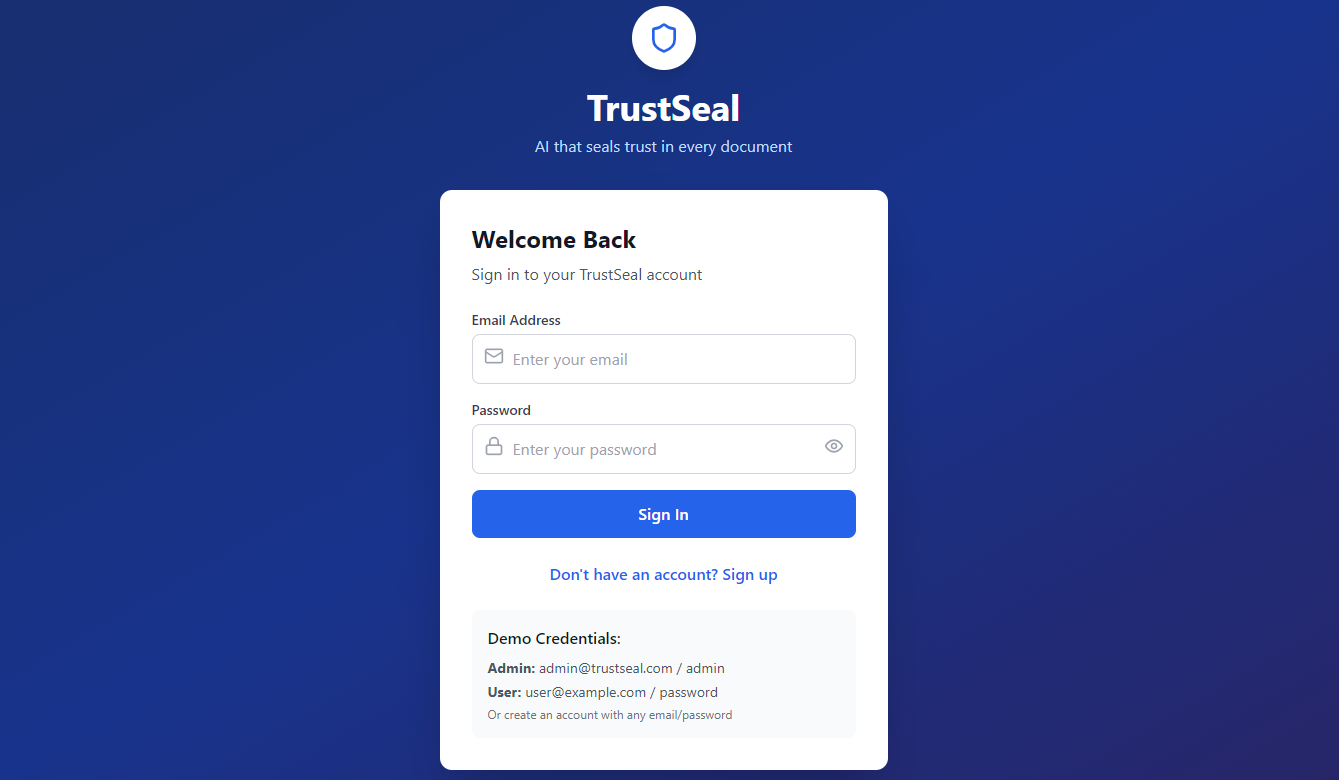
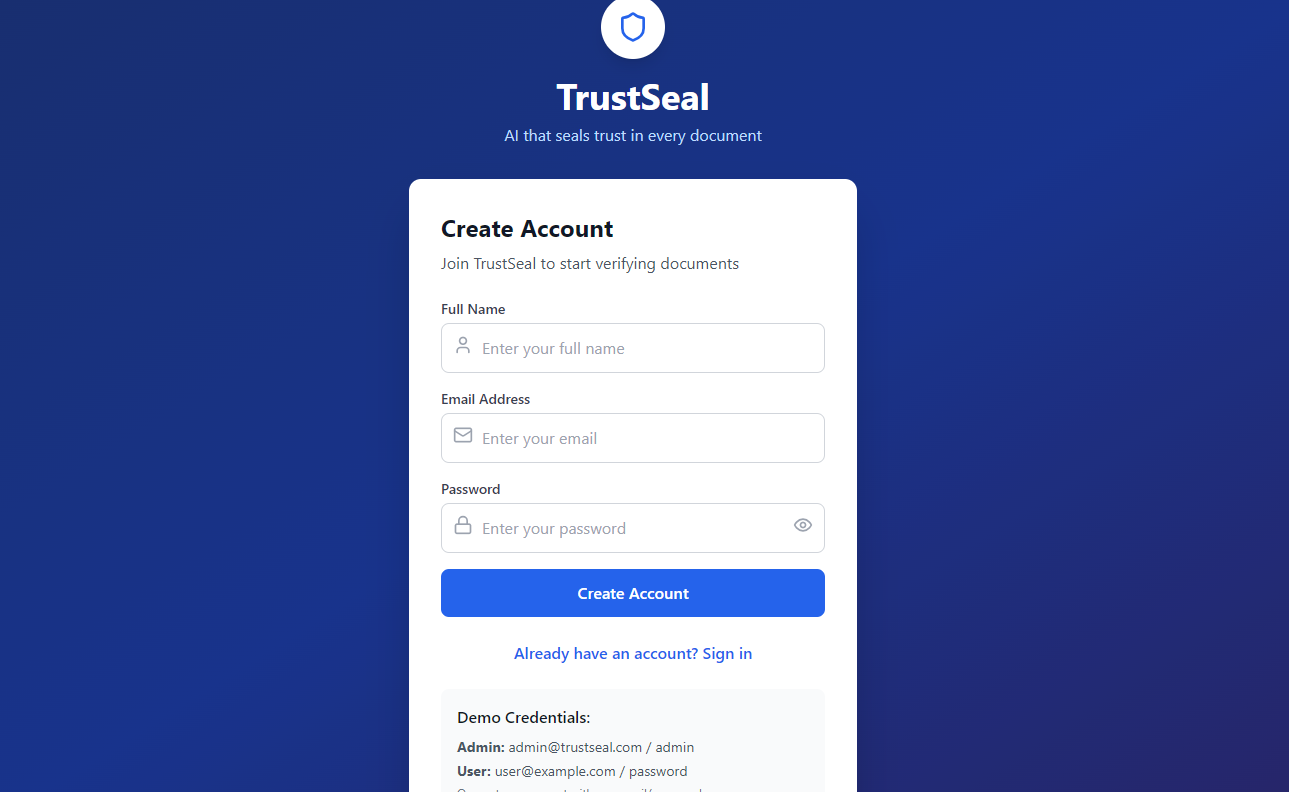
signup
-
-
-
-
-
🌐 TrustSeal: AI-Powered Document Authenticity Verification
✨ Inspiration
In today’s world, digital transactions are everywhere—contracts, academic certificates, identity documents, and financial records are exchanged daily. Unfortunately, so are frauds and manipulations.
With the rise of deepfakes and advanced editing tools, even trained experts can struggle to detect tampered or counterfeit documents.
Our team asked:
How can we restore trust in digital documents while keeping verification fast and user-friendly?
This question inspired TrustSeal: an AI-powered verification system that instantly analyzes documents for tampering, forgery, and hidden anomalies.
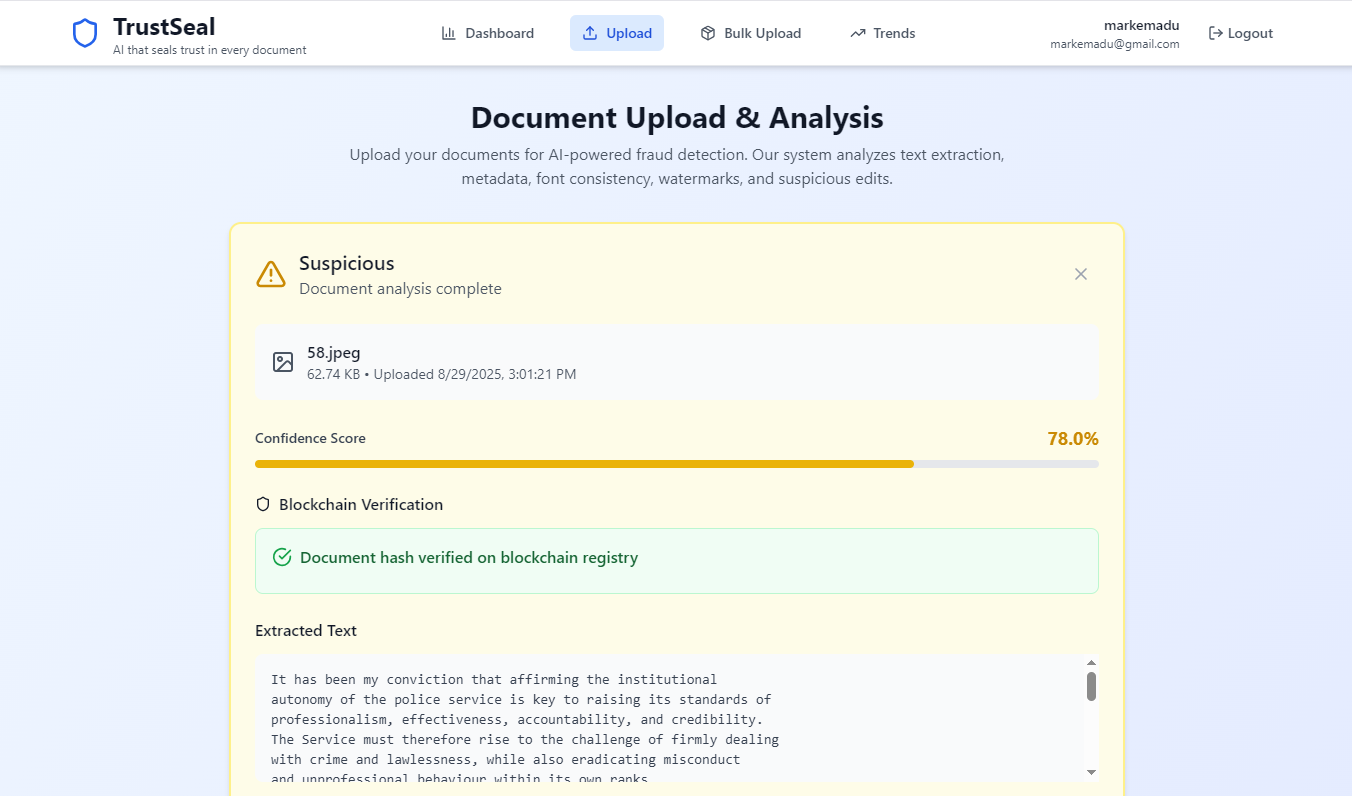
🛠️ What It Does
TrustSeal provides users with:
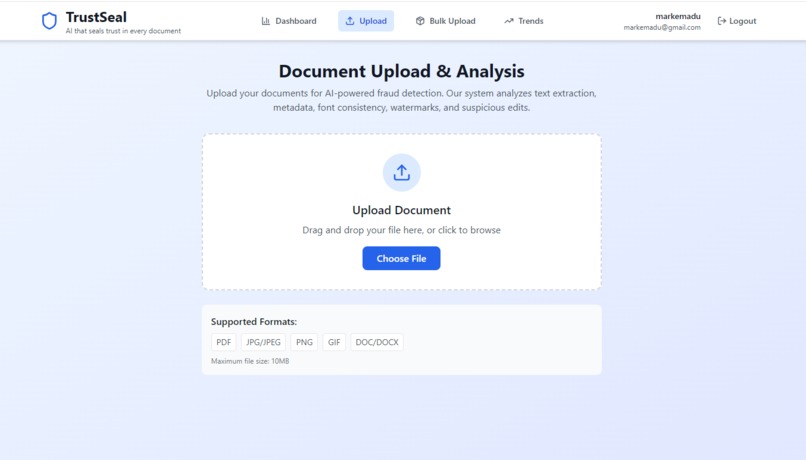
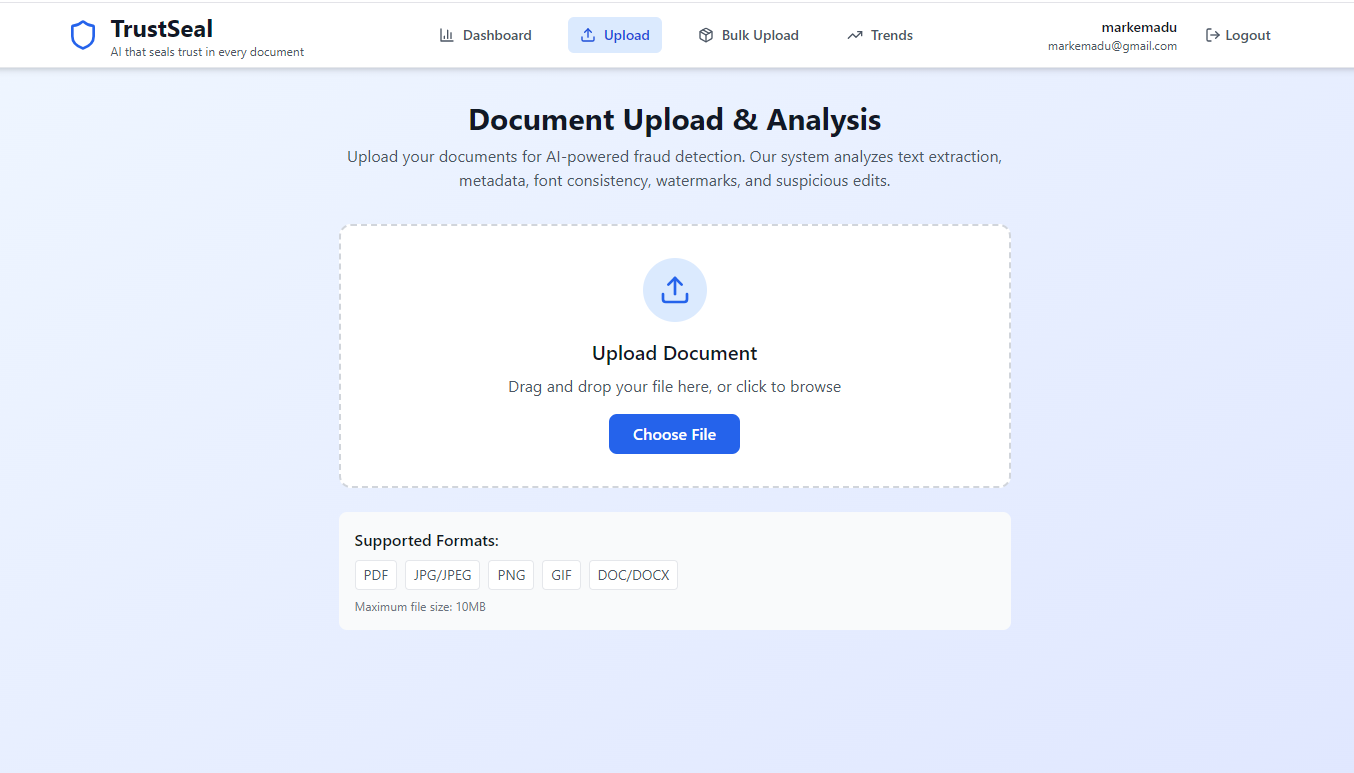
- 📤 Upload & Verify: Supports PDFs, images, and Word files.
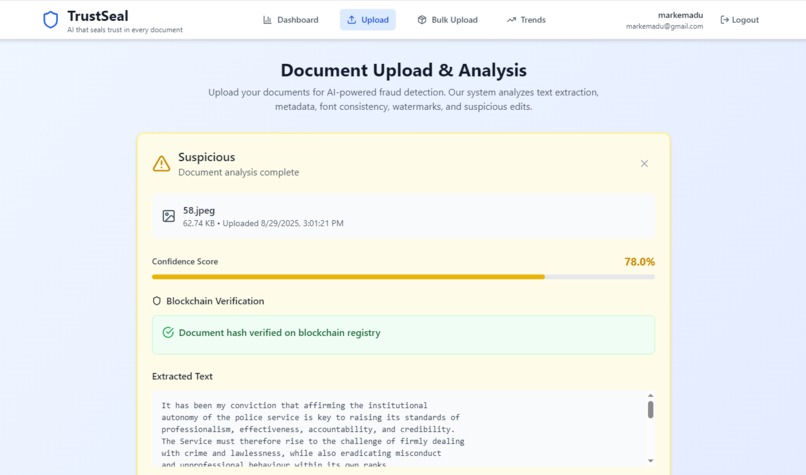
- 🔎 Tampering Detection: AI detects pixel-level edits, cloning, and inconsistencies.
- 📑 Metadata Analysis: Checks timestamps, origin, and hidden properties.
- 🔤 OCR & NLP: Extracts text for semantic consistency and anomaly detection.
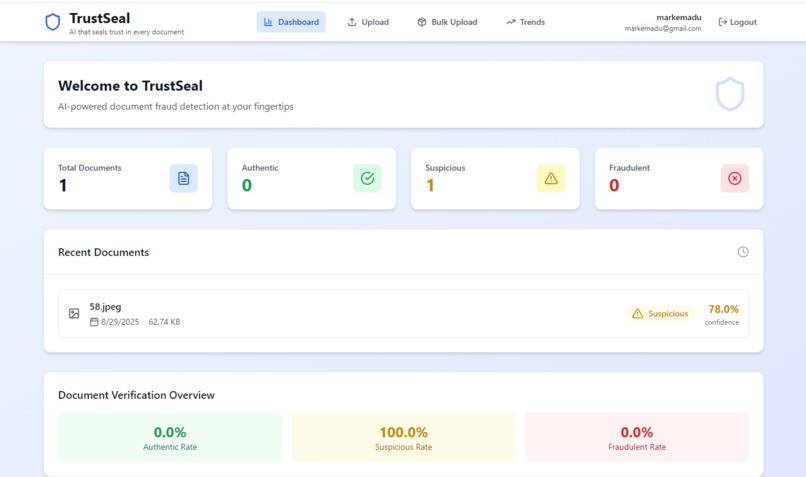
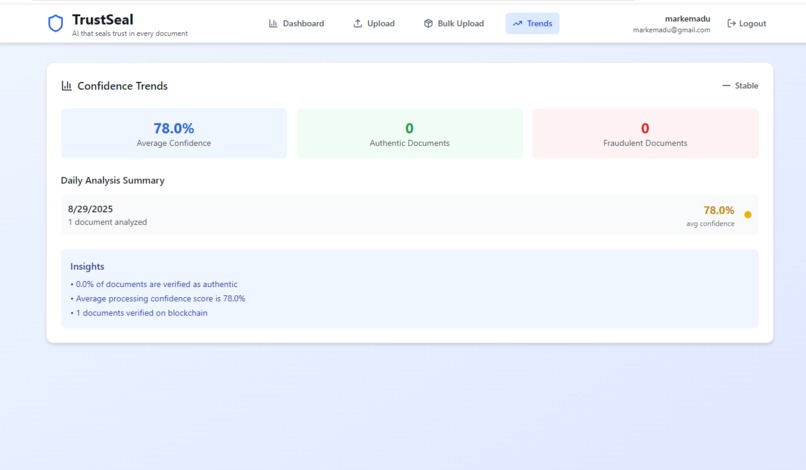
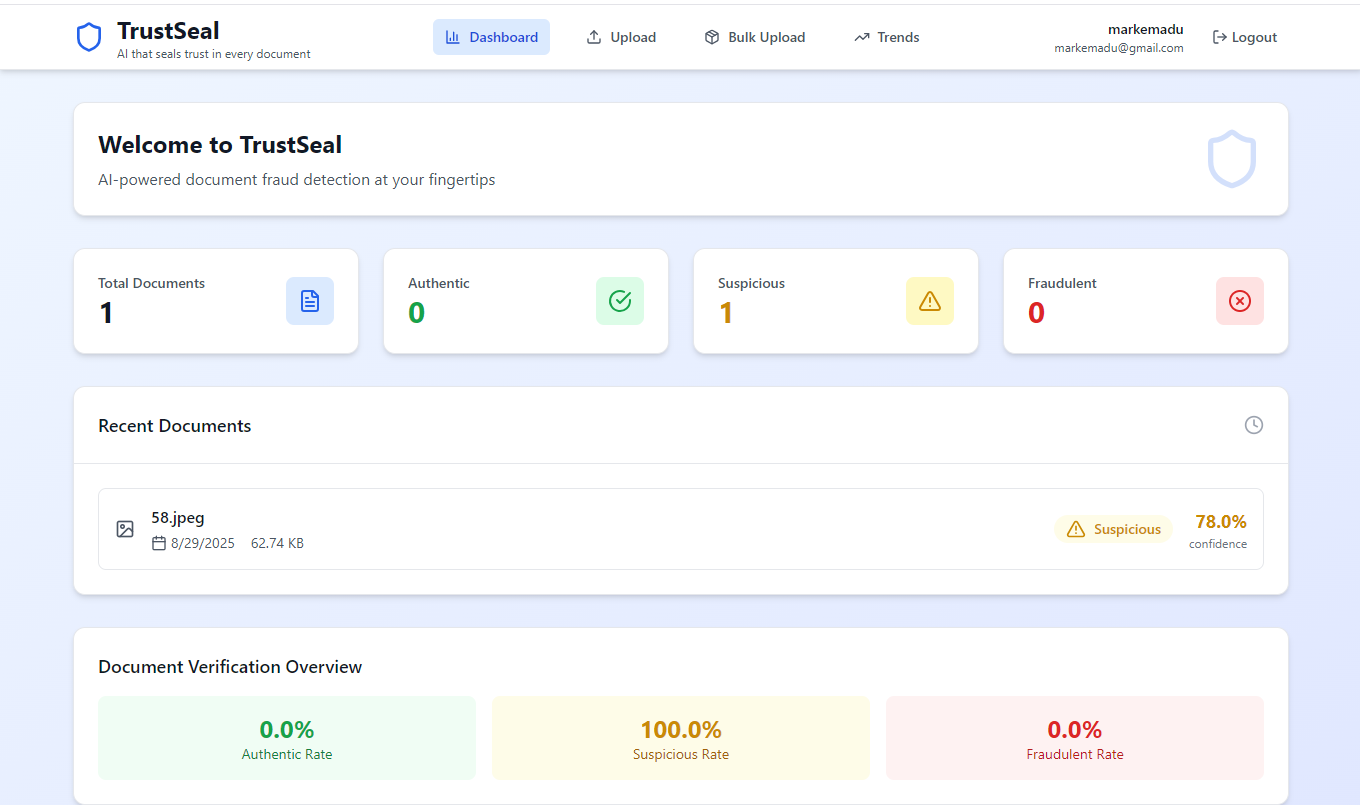
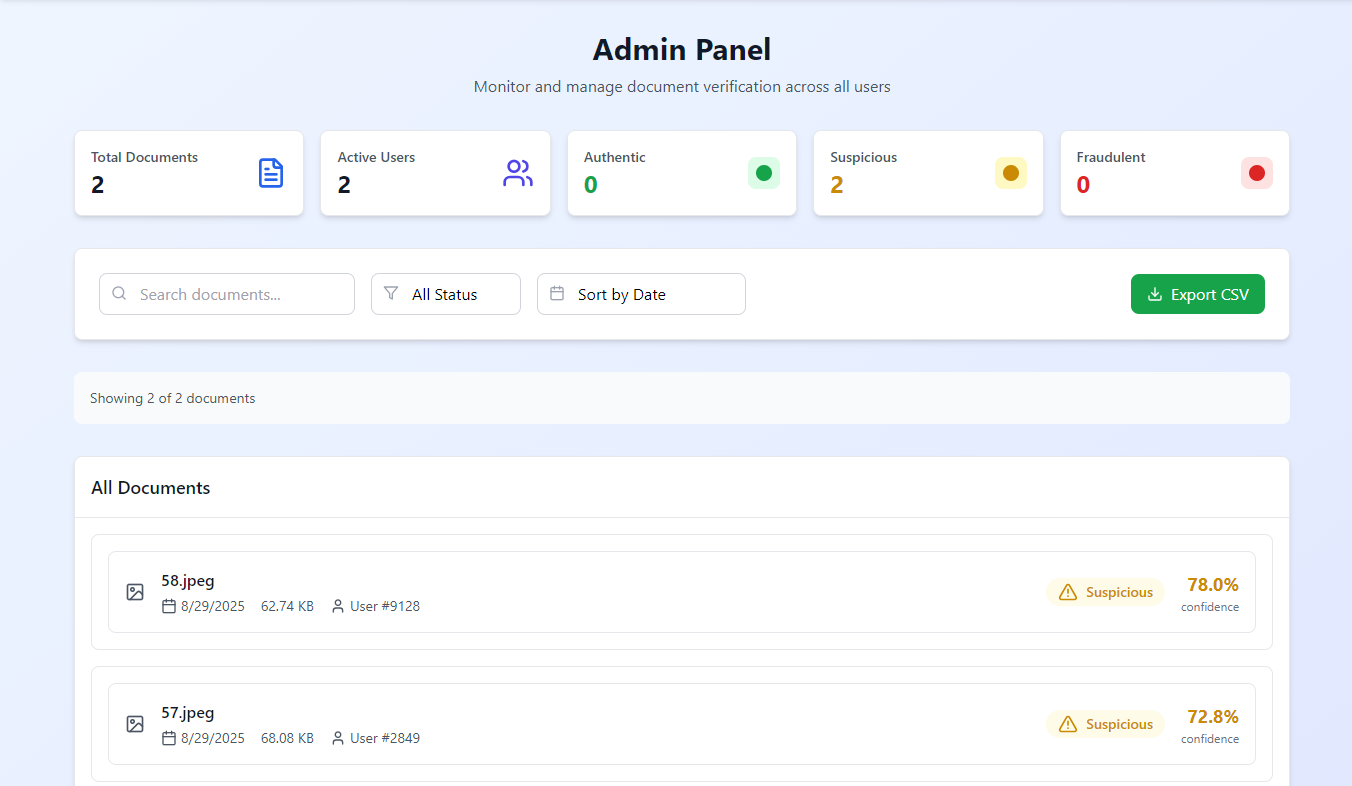
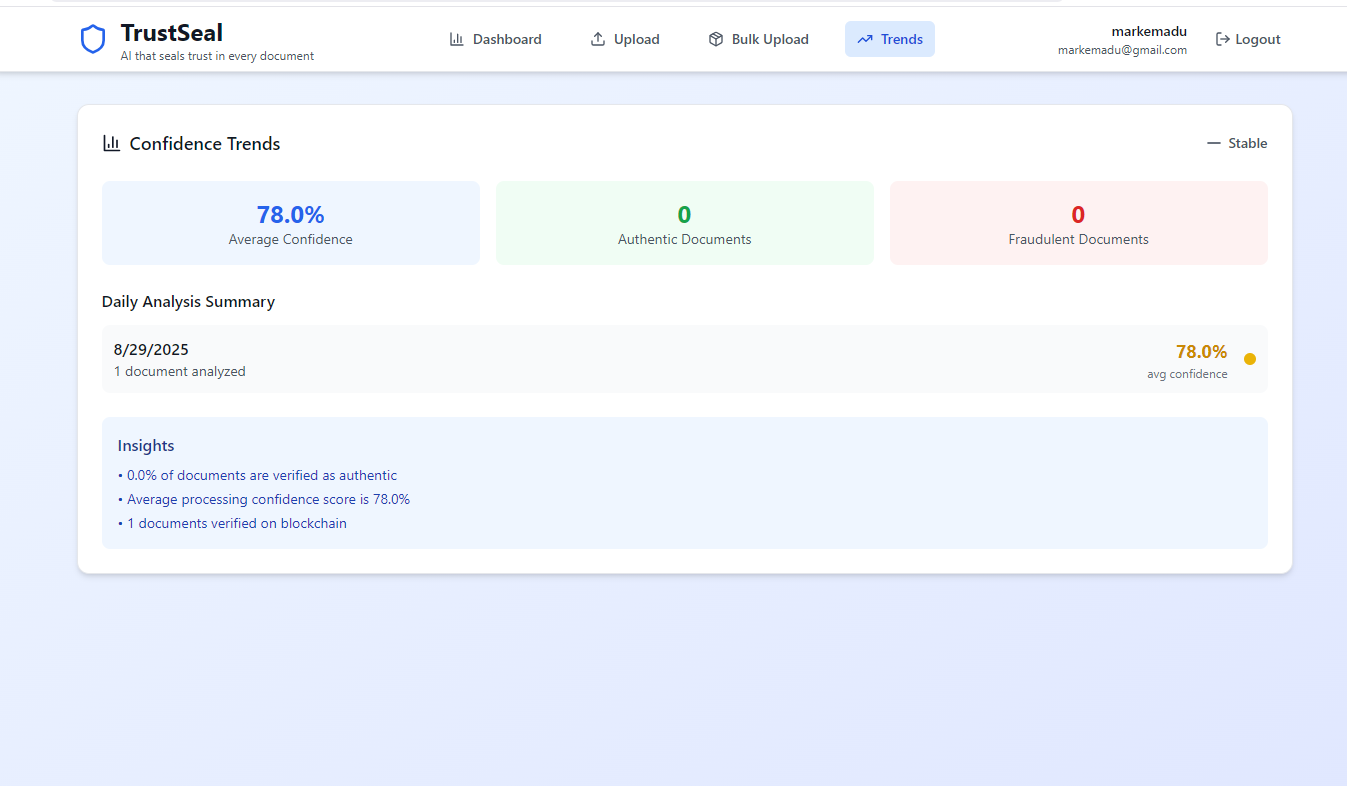
- 📊 Confidence Score: Shows probability of authenticity vs fraud.
- 🖼️ Heatmap Visualization: Highlights suspicious regions in the document.
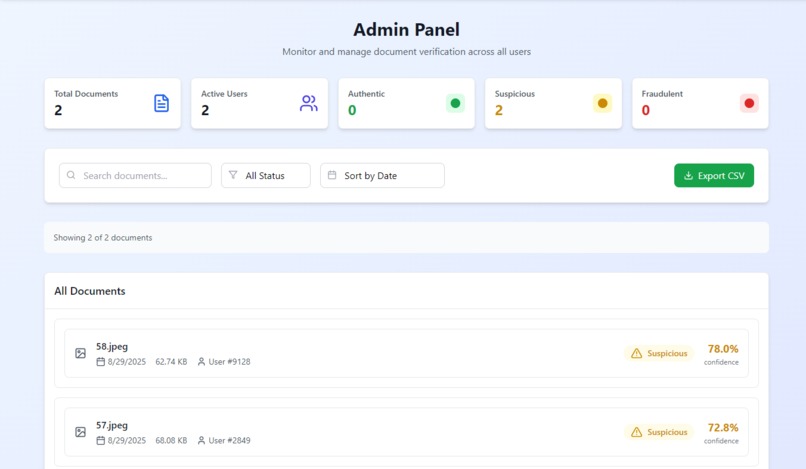
- 📜 Detailed Reports: Exportable for compliance or auditing purposes.
⚙️ How We Built It
We designed TrustSeal as a modular verification pipeline with several layers:
- Document Preprocessing – Normalization, resizing, and cleaning for OCR.
- OCR & NLP – Using Tesseract + Transformers to extract text, then validate language patterns.
- Image Forensics – Detecting pixel anomalies, compression irregularities, and copy-move edits.
- Metadata Checks – Comparing embedded timestamps, authorship, and revision history.
- Confidence Scoring – A formula combining all anomaly signals:
Inline: ( Score = \frac{\sum_{i=1}^{n} w_i f_i}{n} )
Display:
$$ Score = \frac{\sum_{i=1}^{n} w_i f_i}{n} $$
where ( f_i ) are anomaly features and ( w_i ) are their respective weights.
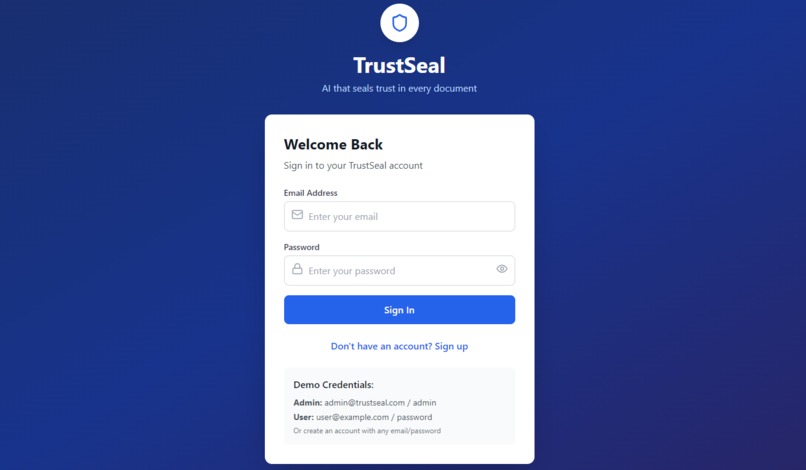
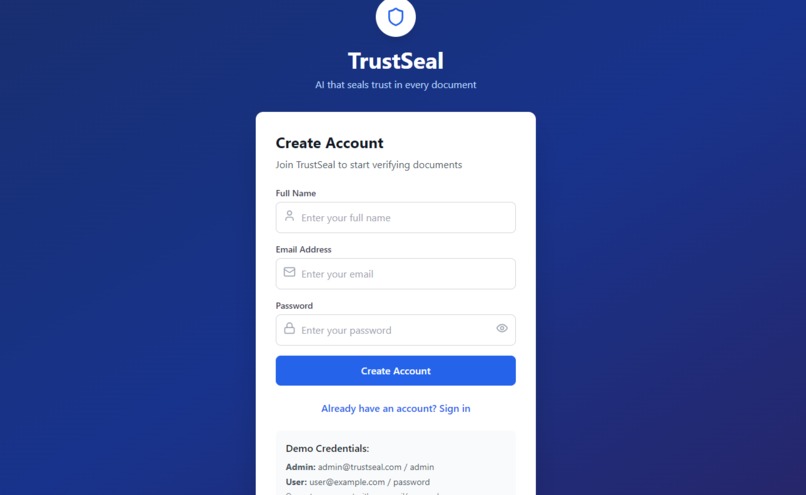
- User Dashboard – React-based frontend with a clean, modern UI.
- Database Layer – TiDB Serverless for structured + vector data storage.
🚧 Challenges We Faced
- OCR Complexity: Dealing with scanned documents that had stamps, watermarks, and handwritten notes.
- False Positives: Differentiating real tampering from natural compression artifacts.
- Scalability: Ensuring large file analysis didn’t slow down queries.
- Time Pressure: Building a working prototype in just a few days.
📚 What We Learned
- How combining OCR, image forensics, and metadata analysis produces stronger fraud detection.
- Practical use of vector databases (TiDB) for anomaly search.
- The importance of explainable AI: Users trust results more when they can see anomalies via heatmaps.
- Effective team collaboration and rapid prototyping in a hackathon environment.
💡 Future Plans
We see TrustSeal becoming more than just a hackathon project:
- ✅ Blockchain-inspired immutable audit trail for verified documents.
- ✅ Integration with universities, banks, and government systems.
- ✅ Support for real-time API for enterprise verification.
- ✅ Multi-language OCR support for global adoption.
🛠️ Built With
React – Frontend framework
TypeScript – Type safety
Vite – Build tool
Tailwind CSS – Styling
Tesseract.js – OCR for images
pdfjs-dist – PDF text extraction
mammoth – DOCX text extraction
Vercel – Deployment
GitHub – Version control
Figma – UI/UX design mockups
🚀 Try It Out
🎯 Closing Thoughts
TrustSeal is more than a tool—it’s a step towards digital trust. By blending AI, forensics, and database innovation, we created a platform that helps organizations and individuals fight fraud, ensure compliance, and build confidence in the digital age.
Built With
- css
- figma
- github
- mammoth
- ocr
- pdfjs-dist
- react
- tailwind
- tesseract.js
- typescript
- ui/ux
- vercel
- vite


Log in or sign up for Devpost to join the conversation.