Inspiration
We all shop online, but not every website deserves our trust. A website can look professional and still hide suspicious activity. For users, figuring out whether a merchant is genuine before making a payment is not always easy.
That made us think: what if people could investigate a website before trusting it with their money?
This is where TrustOra started. We wanted to build something that could help users spot warning signs, understand potential risks, and make more informed decisions while shopping online.
What it does
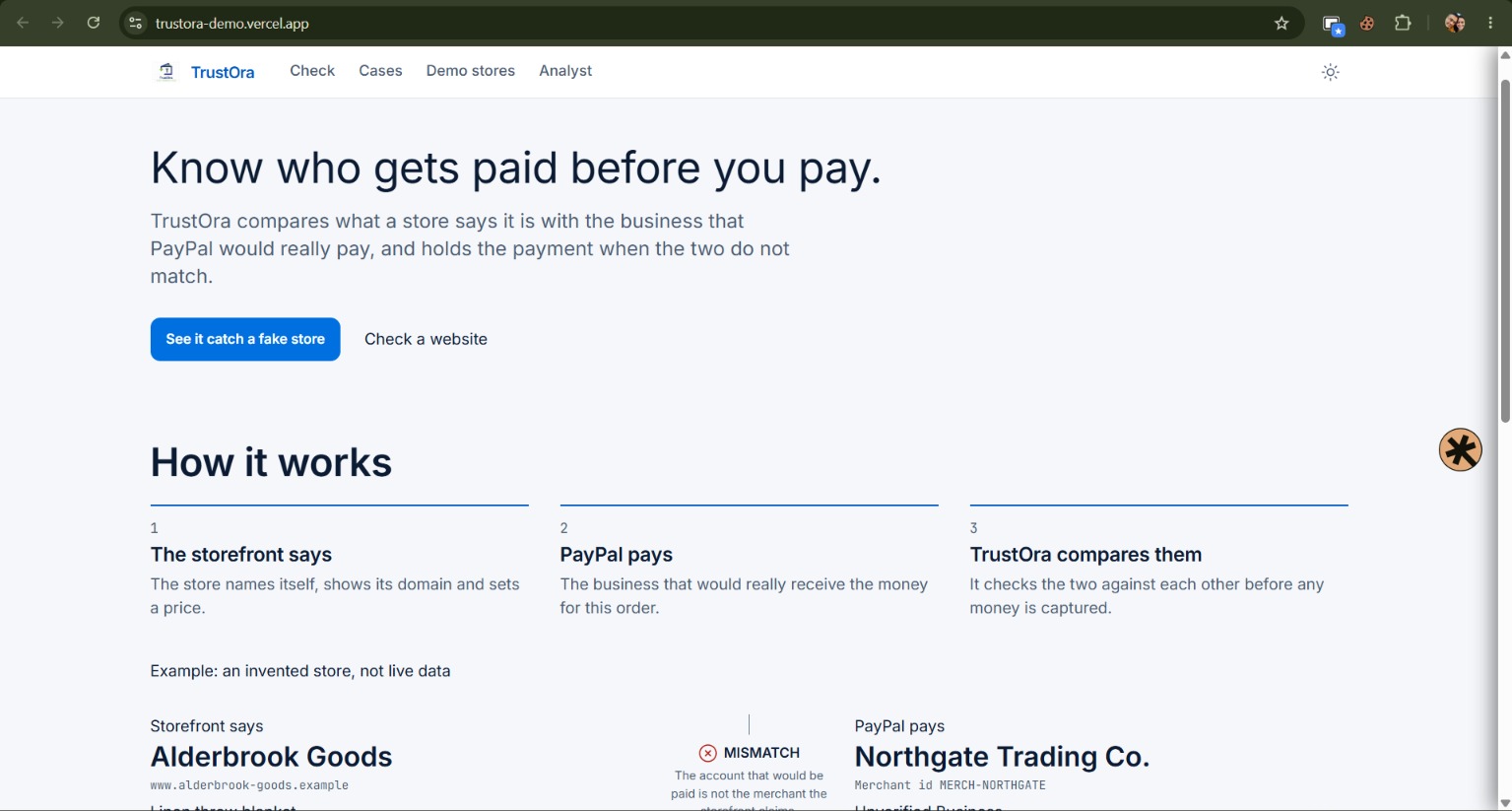
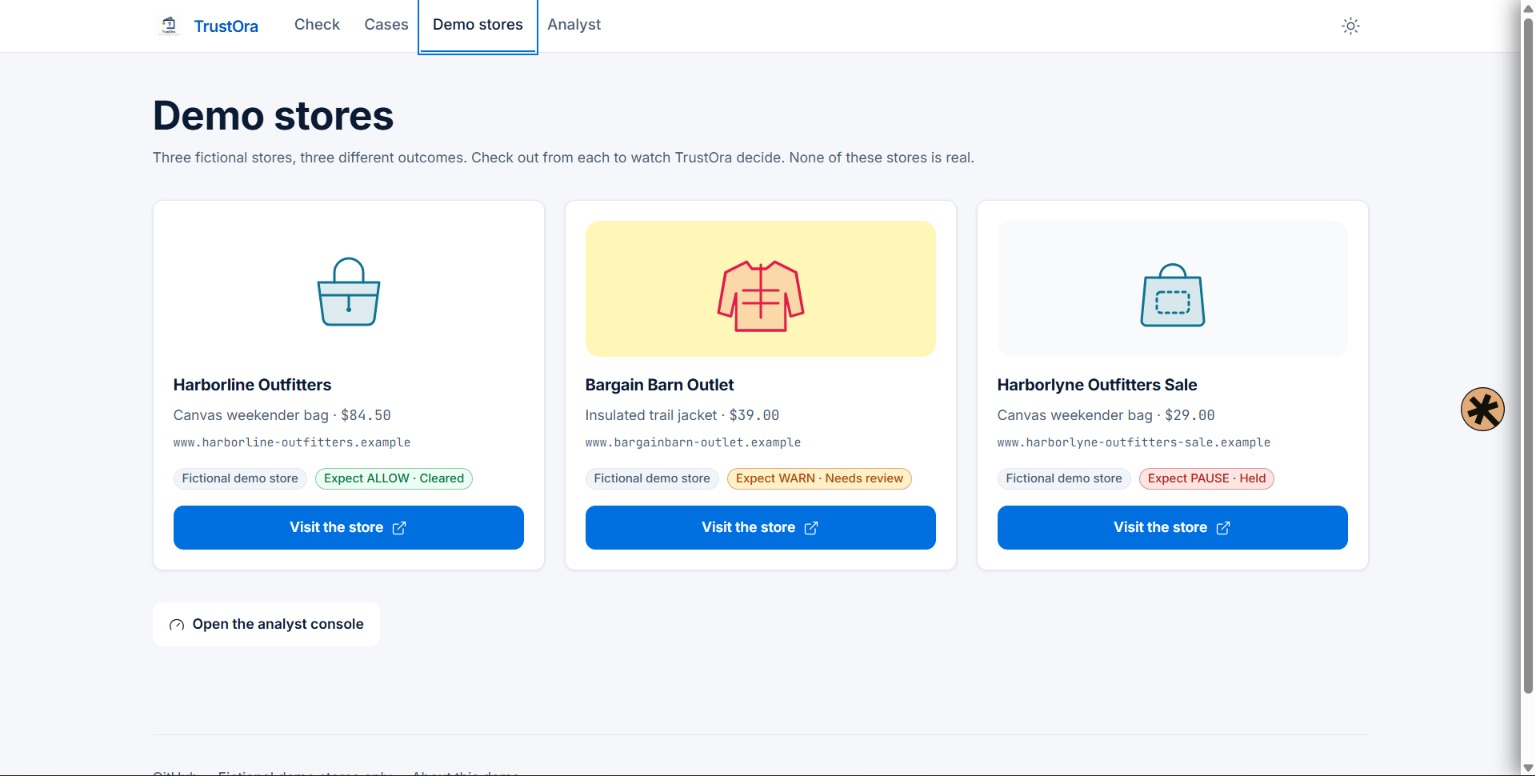
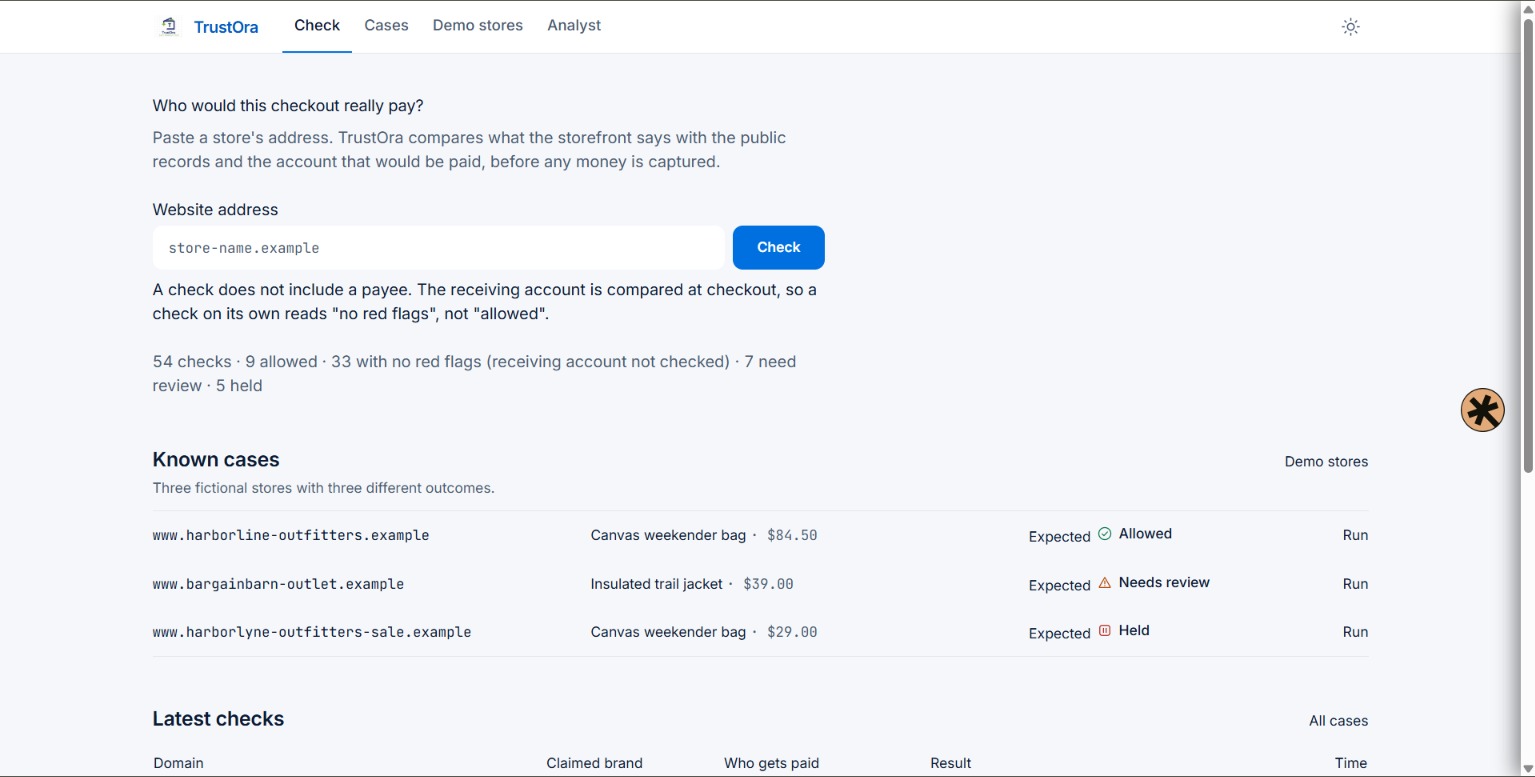
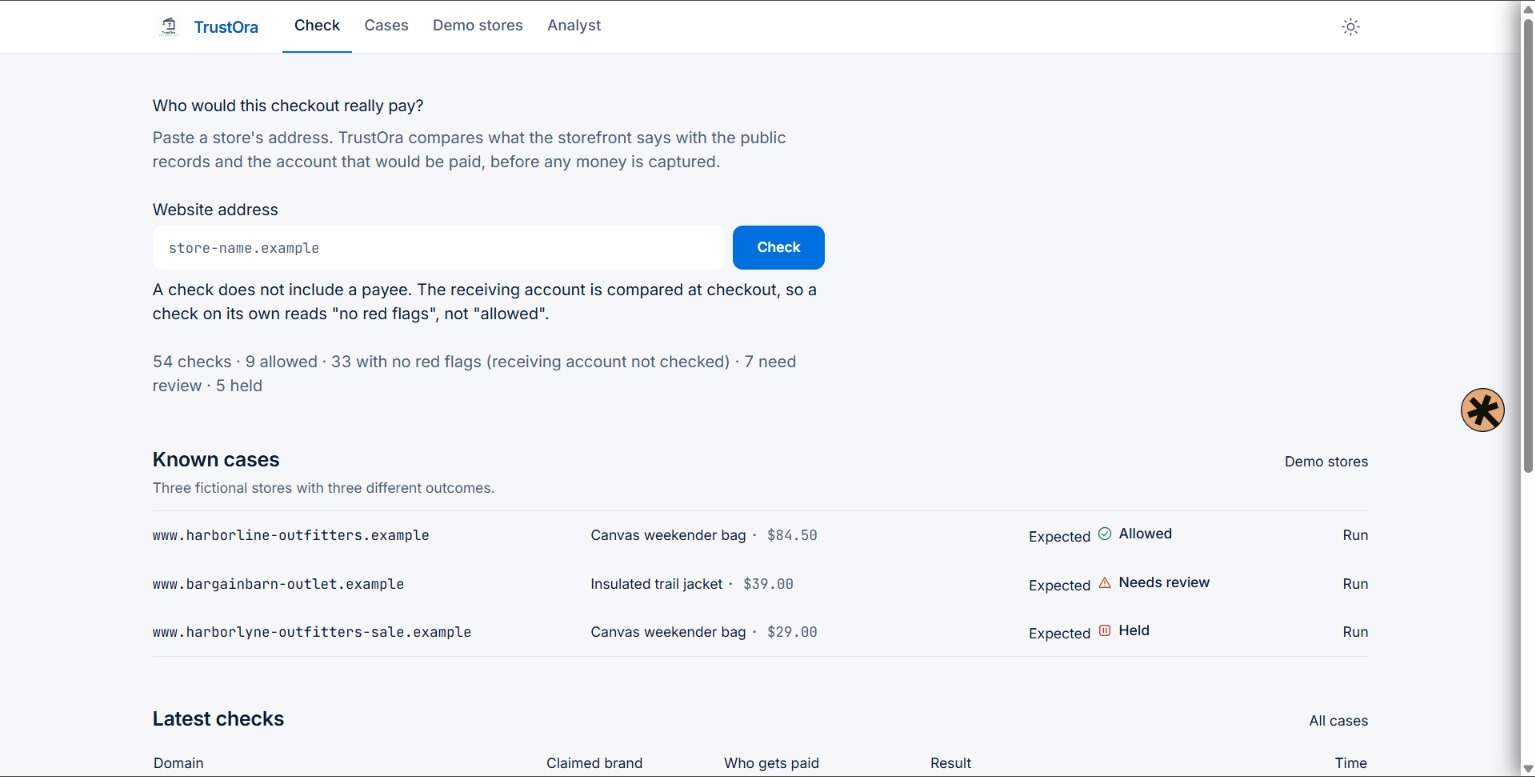
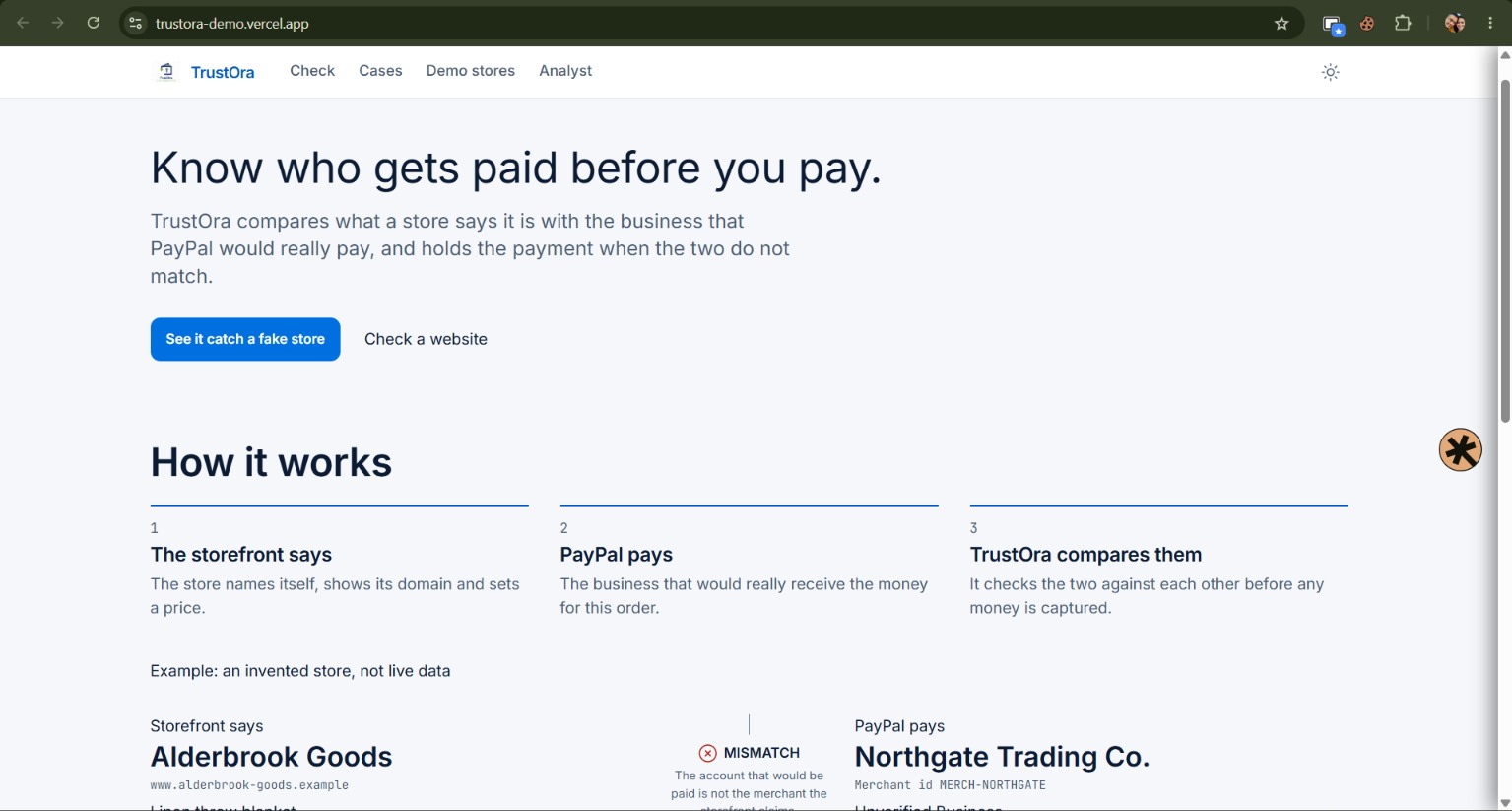
TrustOra helps users investigate online merchants and identify potential risks before making a transaction.
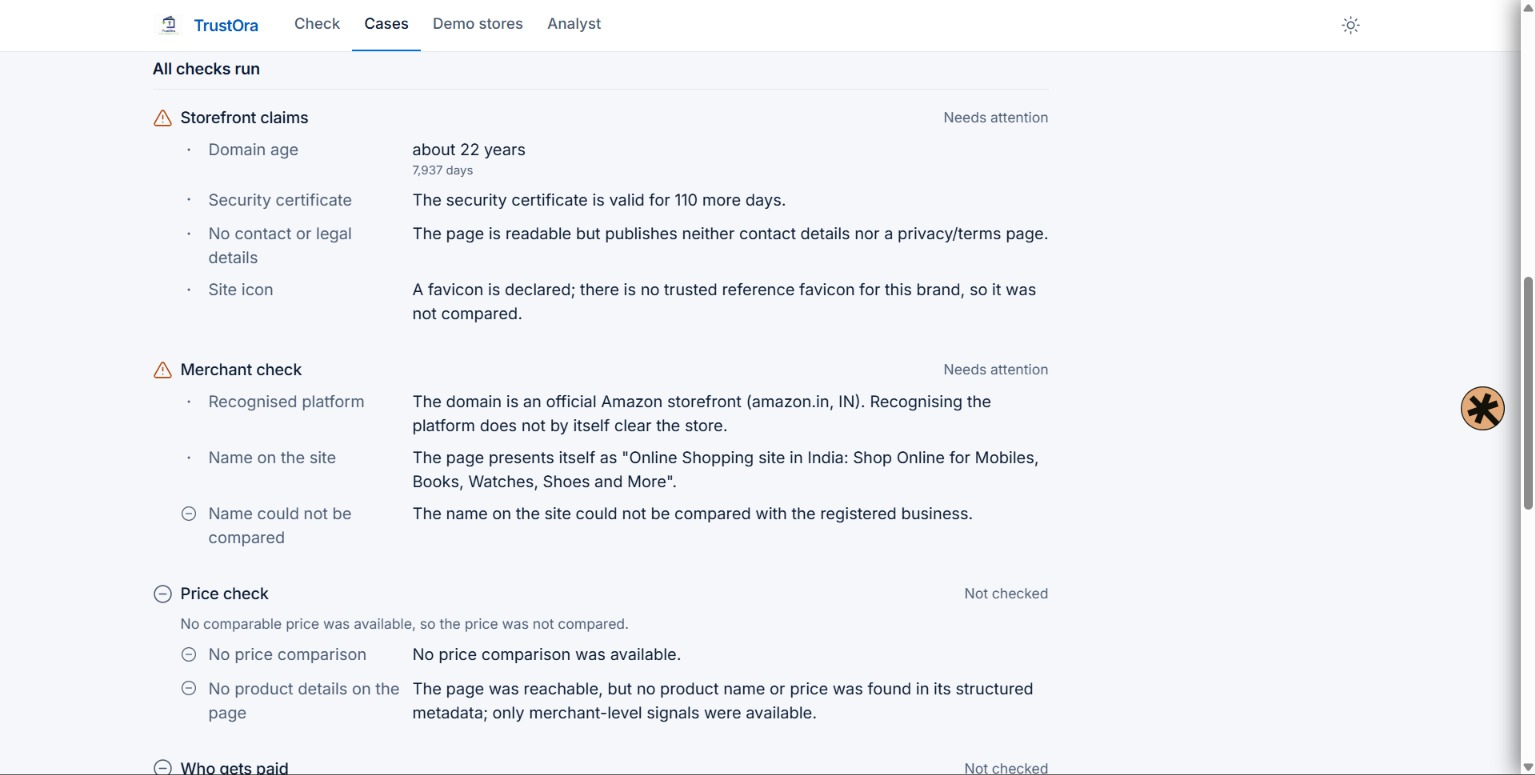
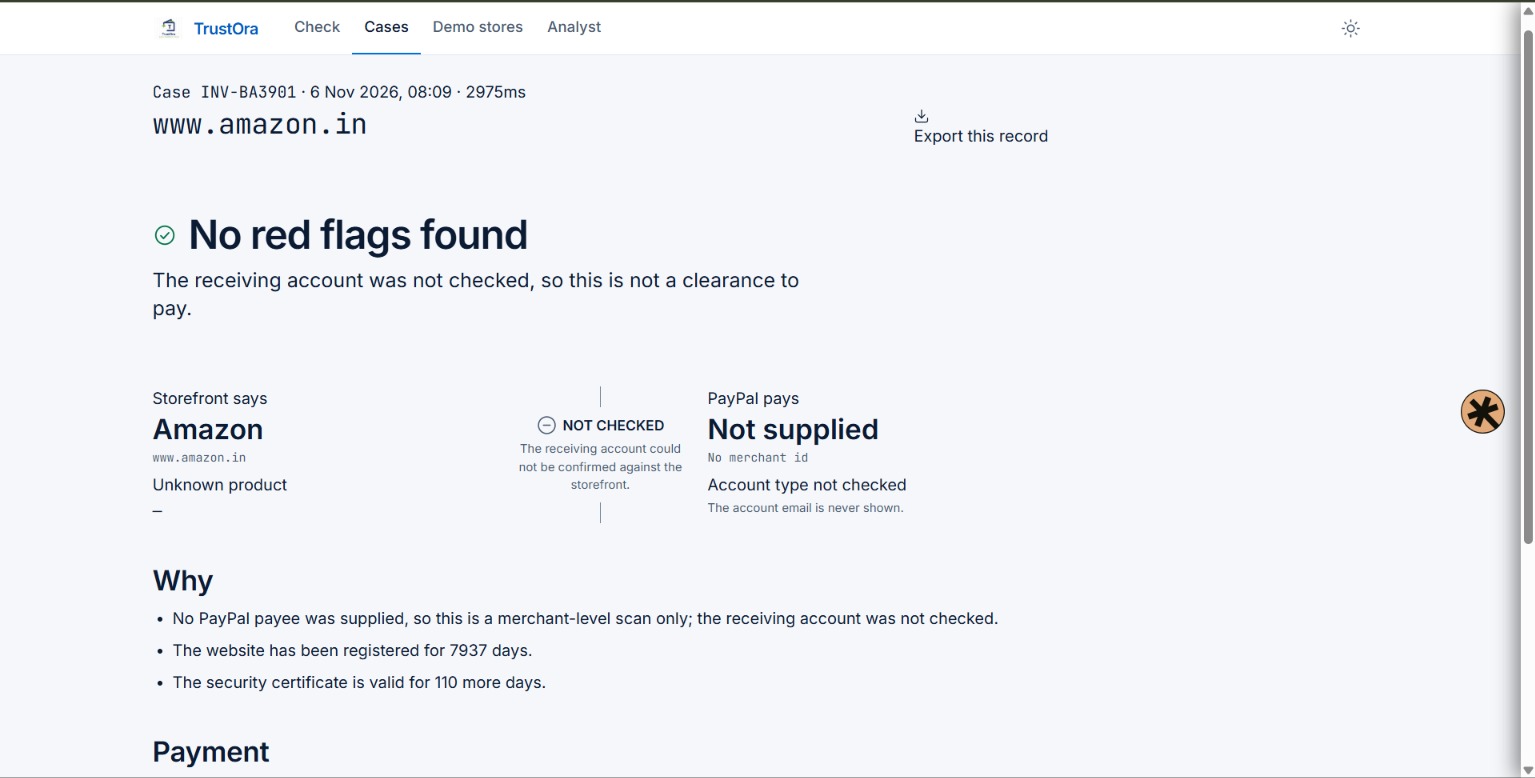
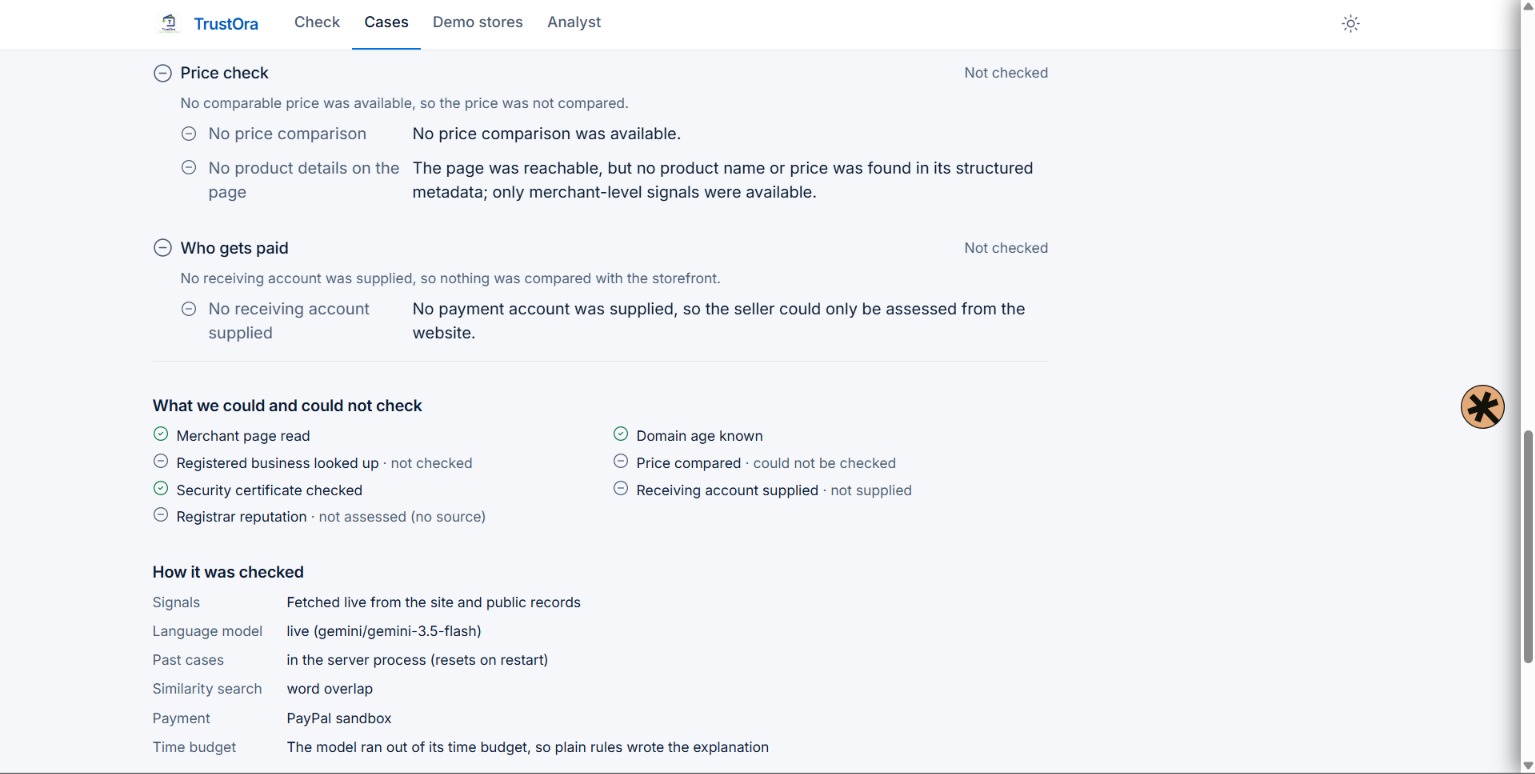
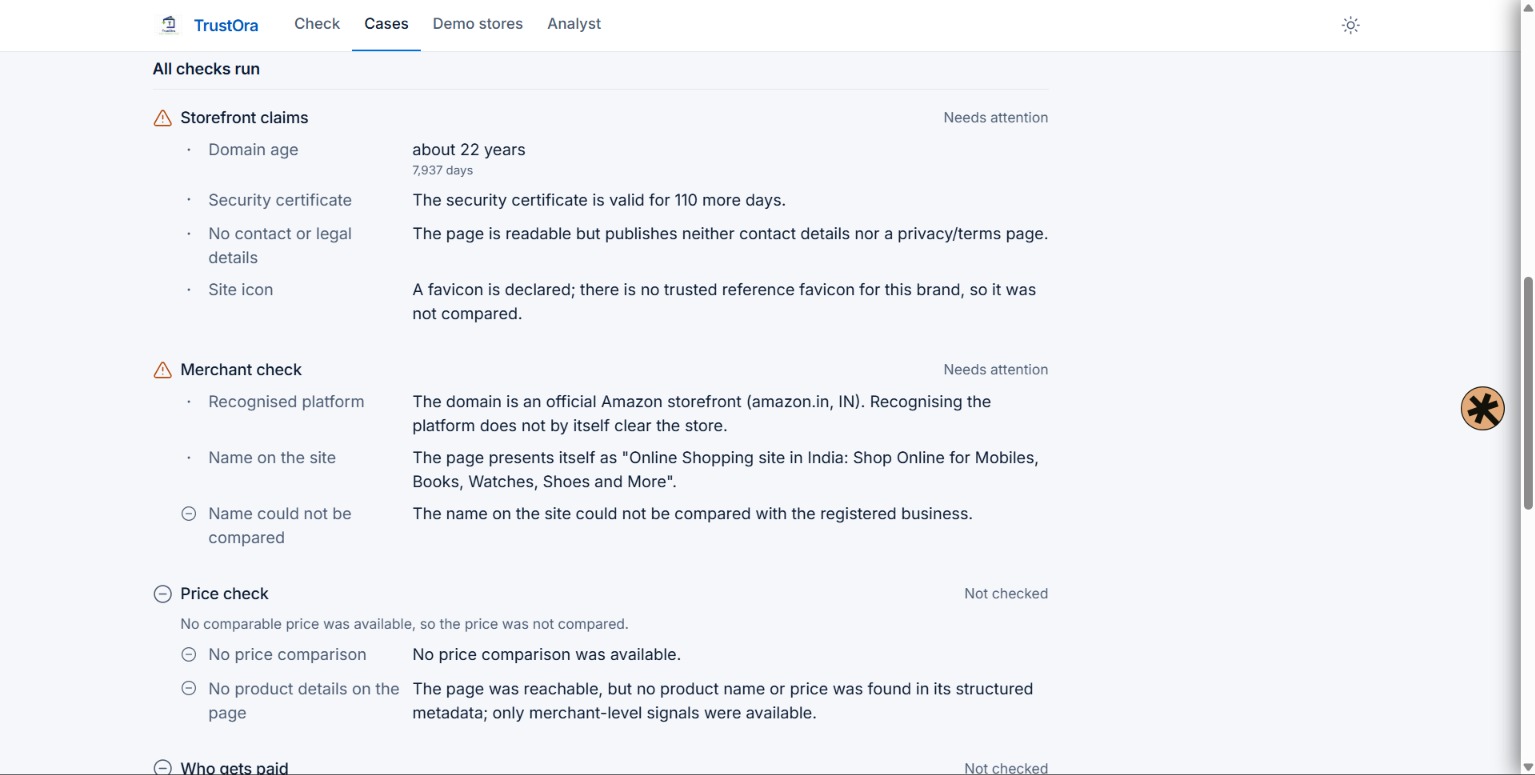
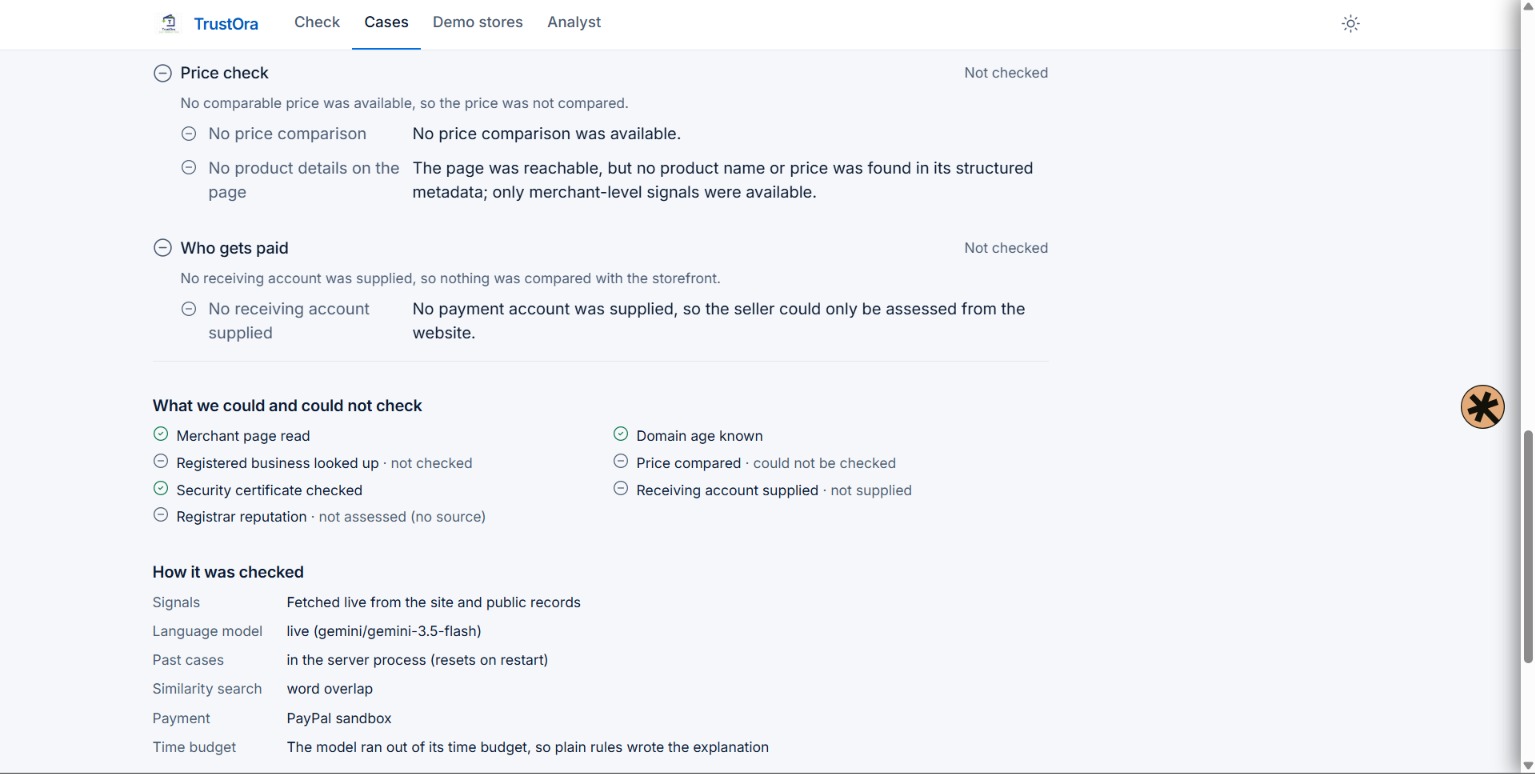
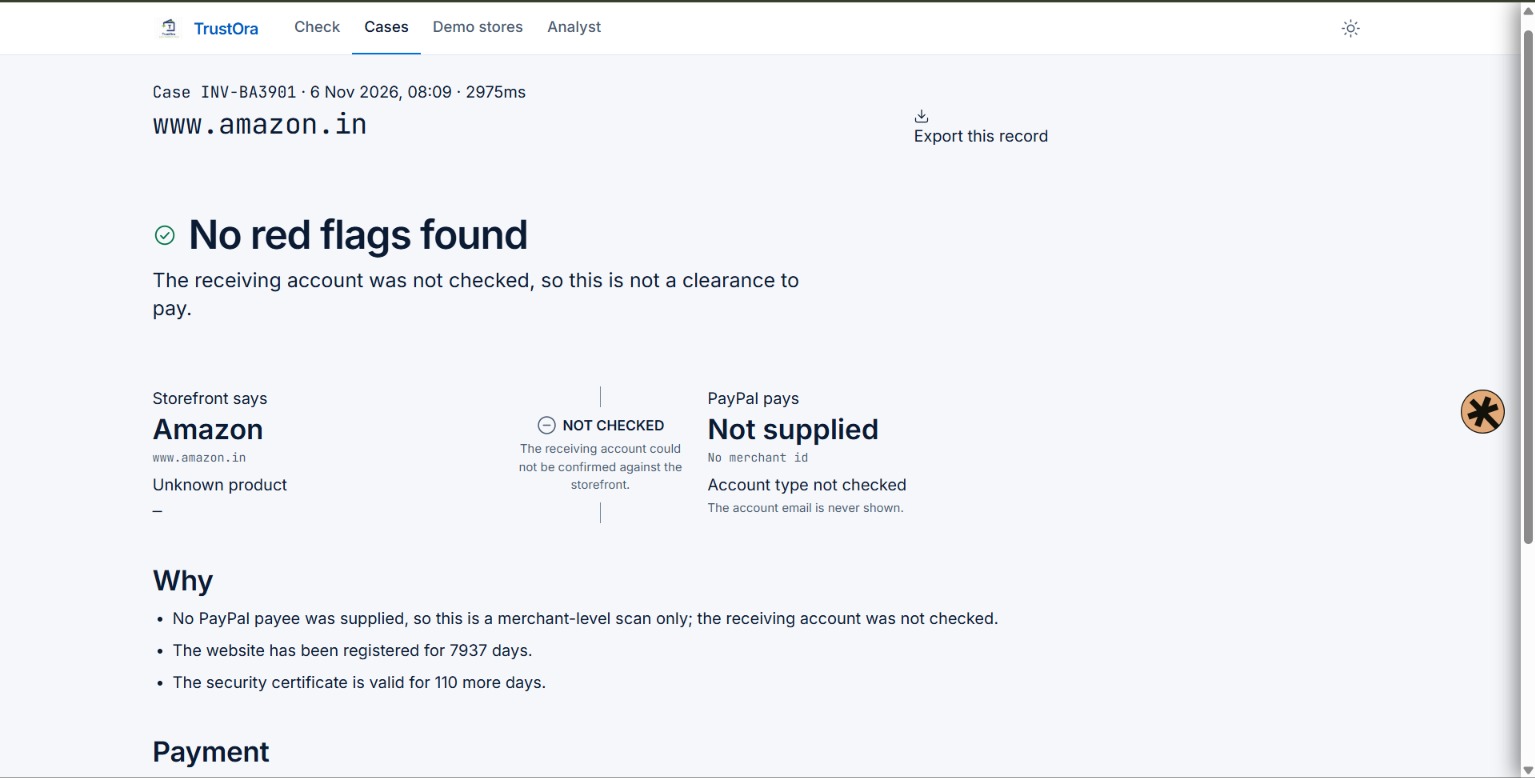
Users can scan a website, view its risk assessment, and explore the signals behind the investigation. Instead of presenting only a score, TrustOra aims to make the findings easier to understand.
Our platform includes:
- AI-powered website risk investigation.
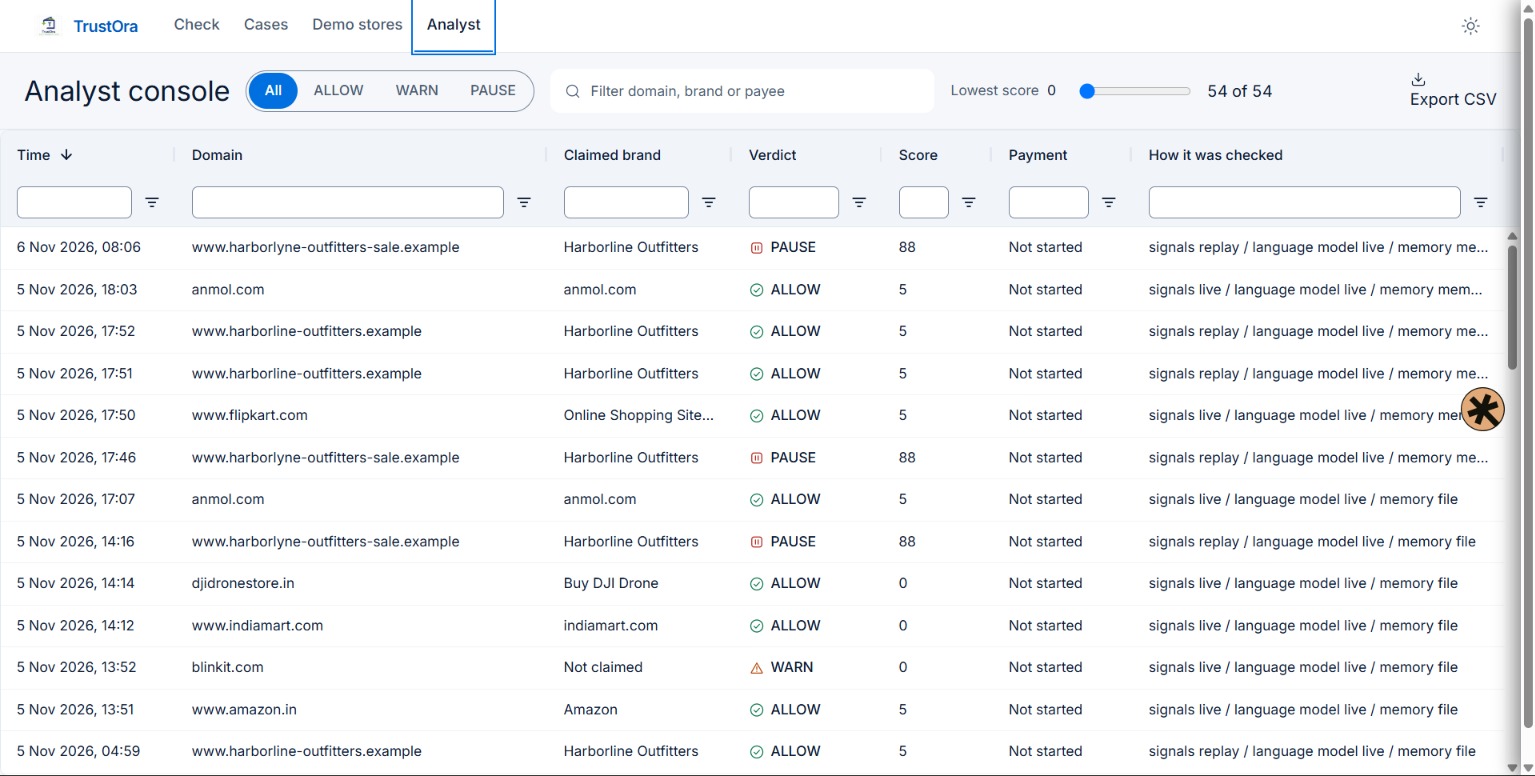
- Risk scores and suspicious signal analysis.
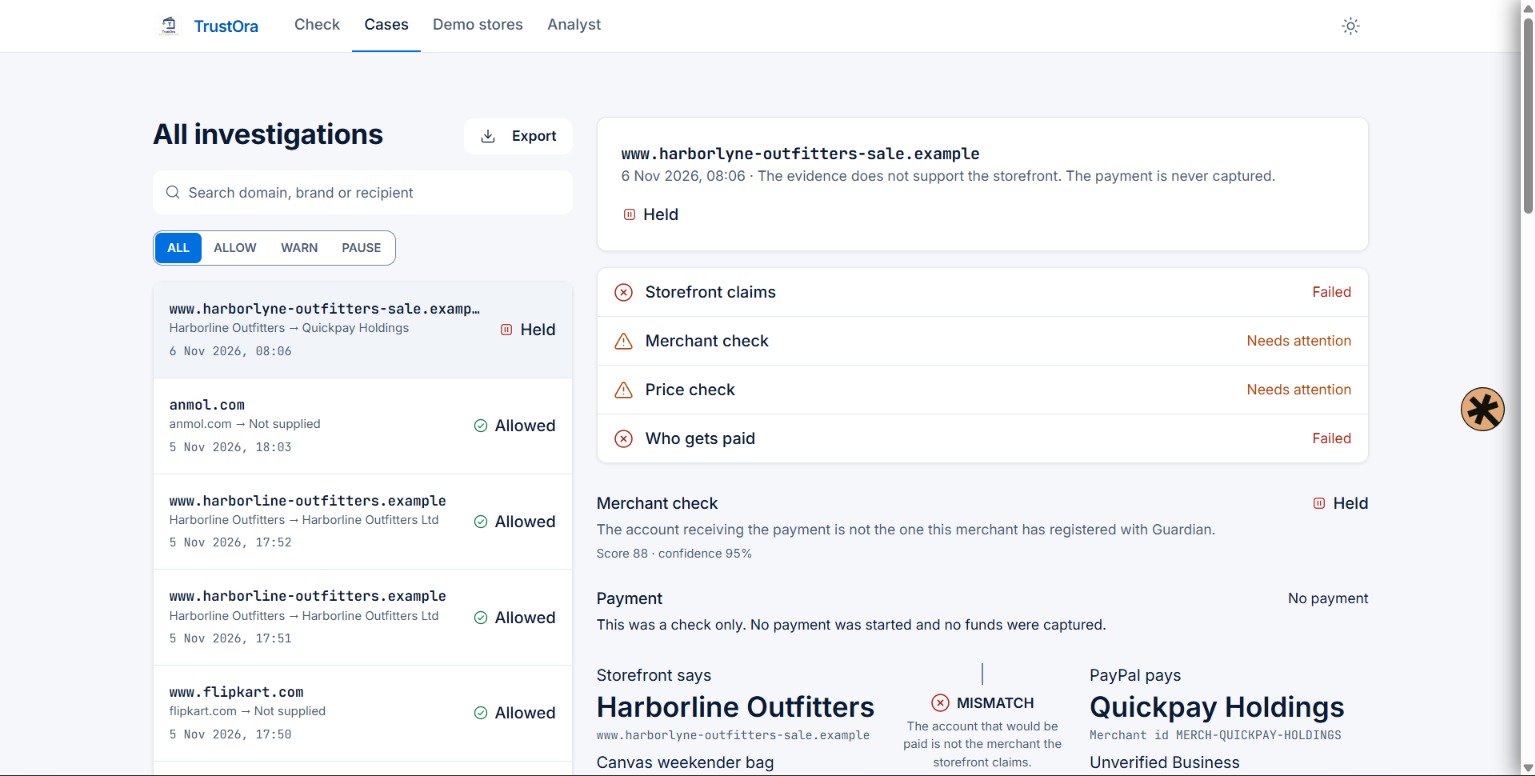
- Investigation history and detailed reports.
- Comparison of multiple website investigations.
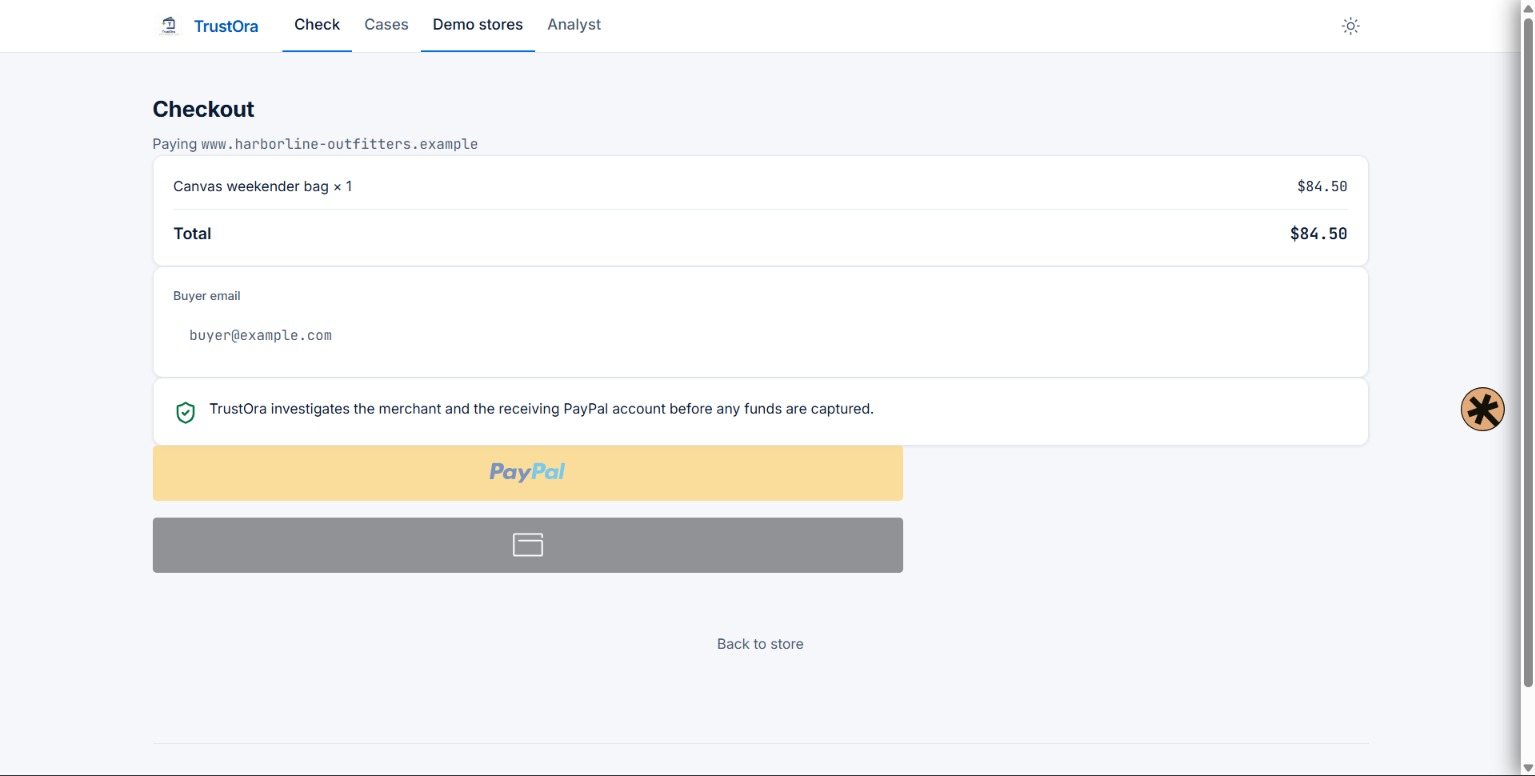
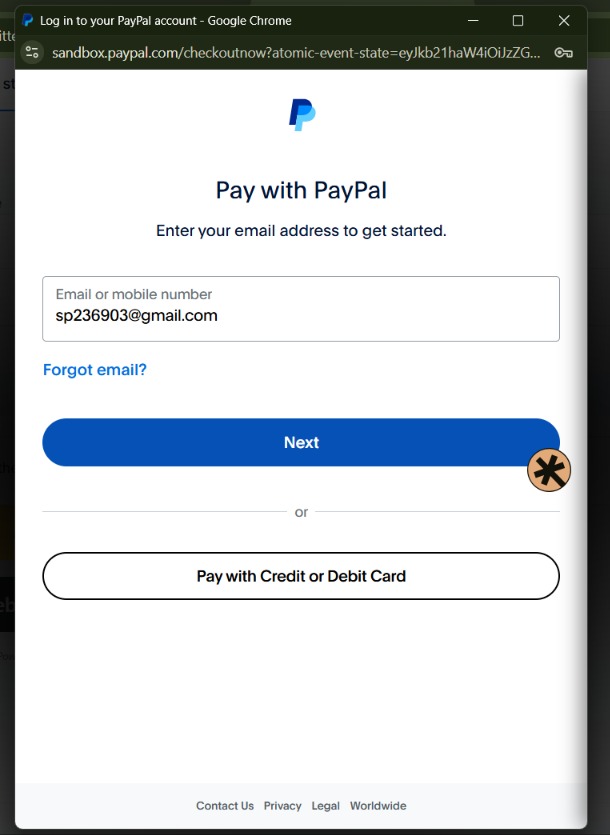
- PayPal Sandbox integration for demonstrating payment capture and void workflows.
The goal is simple: help users make more informed decisions before they pay.
How we built it
We brought together a full-stack application, an AI investigation engine, and payment testing into one platform.
The frontend is built with React and TypeScript, while the backend uses Node.js and Express. We use an LLM to support website investigations and store investigation and merchant data in a database.
We also integrated PayPal Sandbox to test payment-related workflows, including capture and void operations. This allowed us to explore how website risk analysis could connect with payment experiences.
A major part of our work was making sure these components worked together as a complete application rather than separate features.
Challenges we ran into
One of the biggest challenges was making the investigation results useful and consistent. A risk score alone is not enough if users cannot understand why a website was flagged.
We also had to deal with frontend and backend integration, API response consistency, payment workflow testing, and deployment issues.
Connecting the AI investigation flow with the rest of the application took considerable testing and debugging. We worked through these issues by testing individual components and then validating the complete workflow.
Accomplishments that we're proud of
What makes us proud is that TrustOra became more than just an idea or a UI prototype.
We built a working investigation platform with AI-based analysis, investigation history, reports, and PayPal Sandbox workflows. We also developed automated tests to check important parts of the application.
We create the website where people can blindly trust and check which website is secure for them.
Seeing the frontend, backend, AI engine, and payment integration come together into one working system was one of the most rewarding parts of the project.
What we learned
This project taught us that building an AI-powered application involves much more than connecting a model to an API.
We learned how to integrate AI into a real application workflow, handle data between different services, test payment operations, and debug issues across the stack.
We also learned the importance of presenting AI results in a way that users can actually understand and act on.
We learned that how to find and solve the real world problem.
What's next for TrustOra
We see TrustOra as a starting point for making online transactions more transparent and safer.
In the future, we want to improve the accuracy of our risk analysis, expand merchant investigation capabilities, and provide more useful explanations for suspicious activity.
Our main Goal to make the online shopping more safe and secure.
We also plan to explore deeper PayPal integration and more advanced ways for AI to assist users during online checkout.
Our vision is to help people feel more confident about where they shop and who they trust with their payments.
Built With
- artificial-intelligence
- express.js
- fraud-detection
- gemini
- llm
- node.js
- paypal
- paypal-sandbox
- postgresql
- react
- risk-analysis
- typescript


