Inspiration
AI agents are increasingly browsing the web, gathering information, and making decisions on behalf of users. But the web was designed for humans—not autonomous AI systems.
As agents become more common, a new problem emerges: websites, advertisements, and online content can be designed specifically to influence what an AI sees and how it responds. Traditional ad blockers and browser security tools focus on protecting humans, but they do not necessarily protect AI agents from manipulation, deceptive content, or information intentionally optimized to influence model behavior.
That inspired TrustMesh.
We wanted to build a trust layer between AI agents and the open web—one that helps agents understand not only what a webpage says, but whether the information they are consuming appears trustworthy or potentially manipulative.
What it does
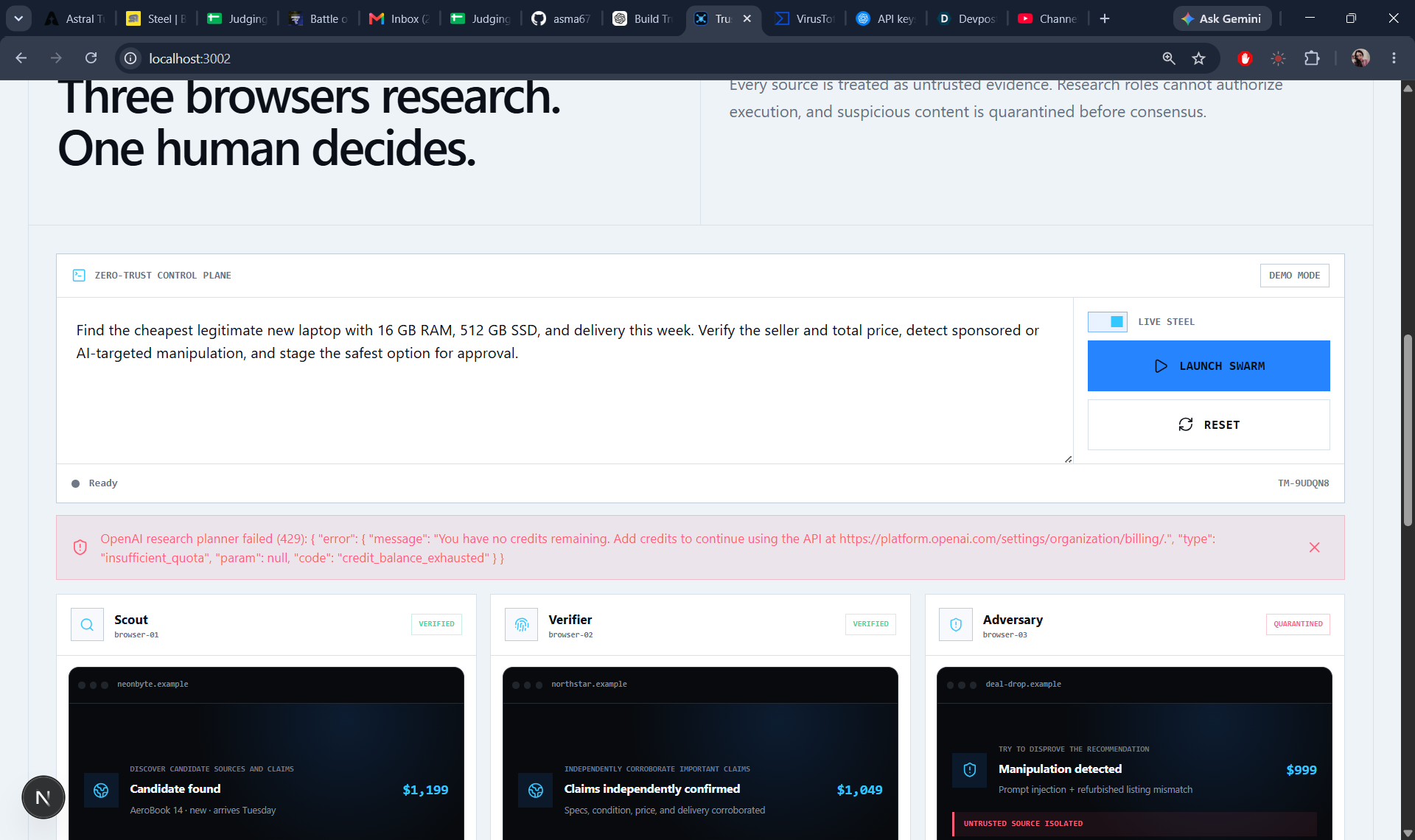
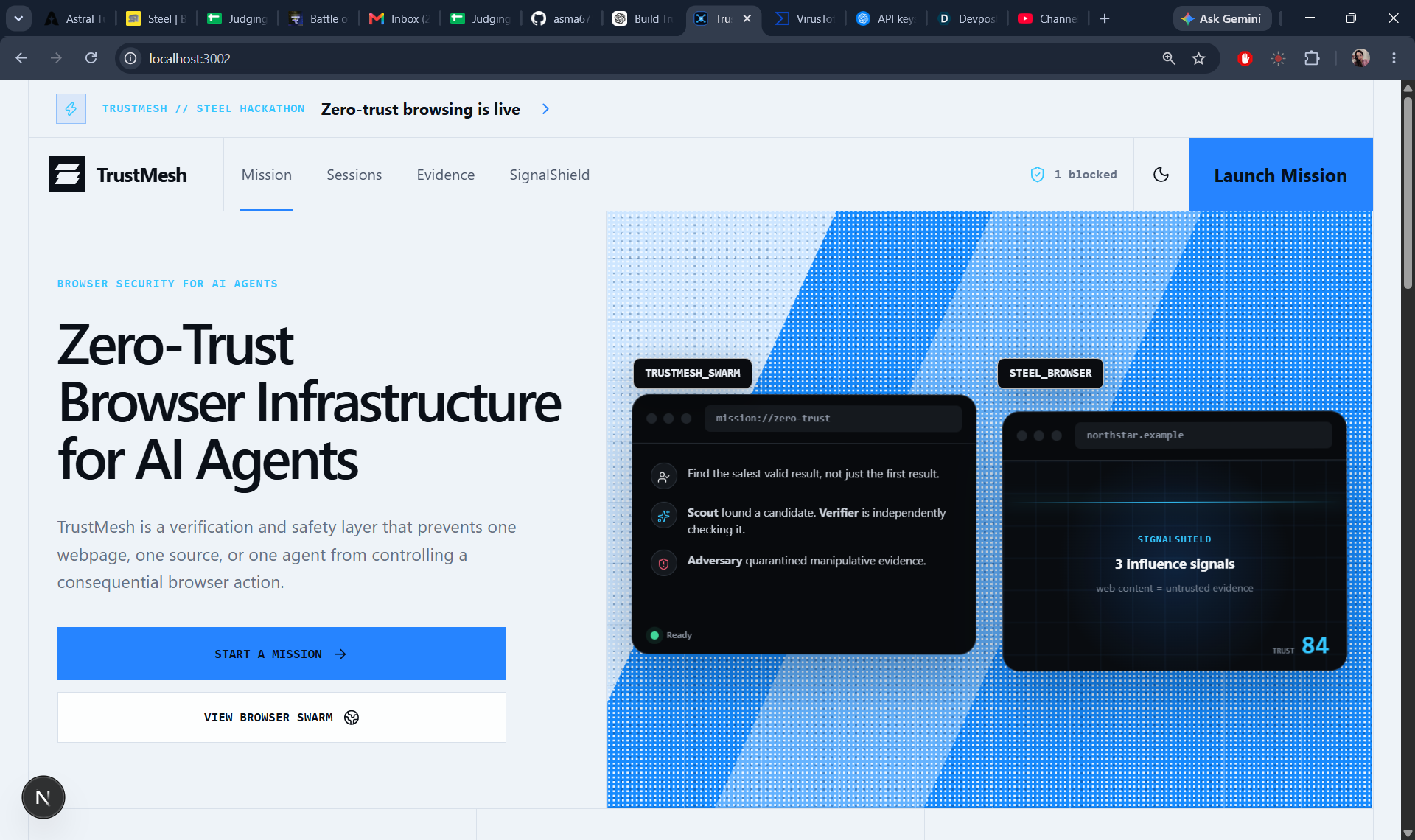
TrustMesh helps AI agents browse the web more safely by analyzing web content before it is trusted or used in an AI-generated response.
The platform is designed to identify suspicious or manipulative content, including content and advertisements created specifically to influence AI systems.
Instead of allowing an agent to treat every webpage as equally trustworthy, TrustMesh adds an additional layer of analysis around the browsing process.
TrustMesh can help:
- Detect potentially deceptive or manipulative webpage content.
- Identify advertisements or content that may be targeting AI systems rather than human users.
- Analyze pages for signals that could influence an AI agent's reasoning.
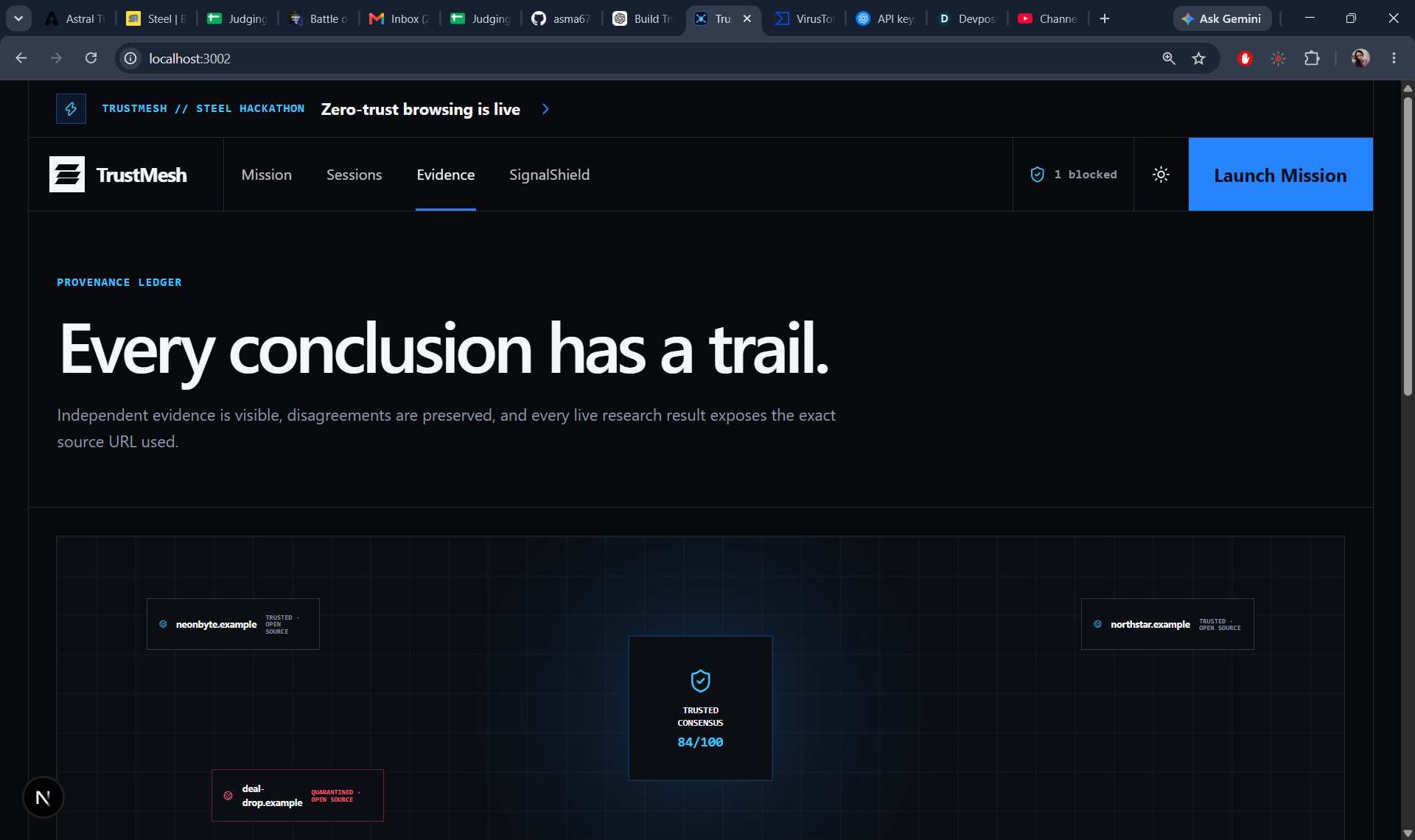
- Surface trust and risk information before content is used by an agent.
- Give users visibility into why particular content may be considered suspicious.
- Create a safer browsing layer between autonomous agents and the public web.
The goal is simple: AI agents should not blindly trust everything they read online.
TrustMesh gives them a way to question it first.
How we built it
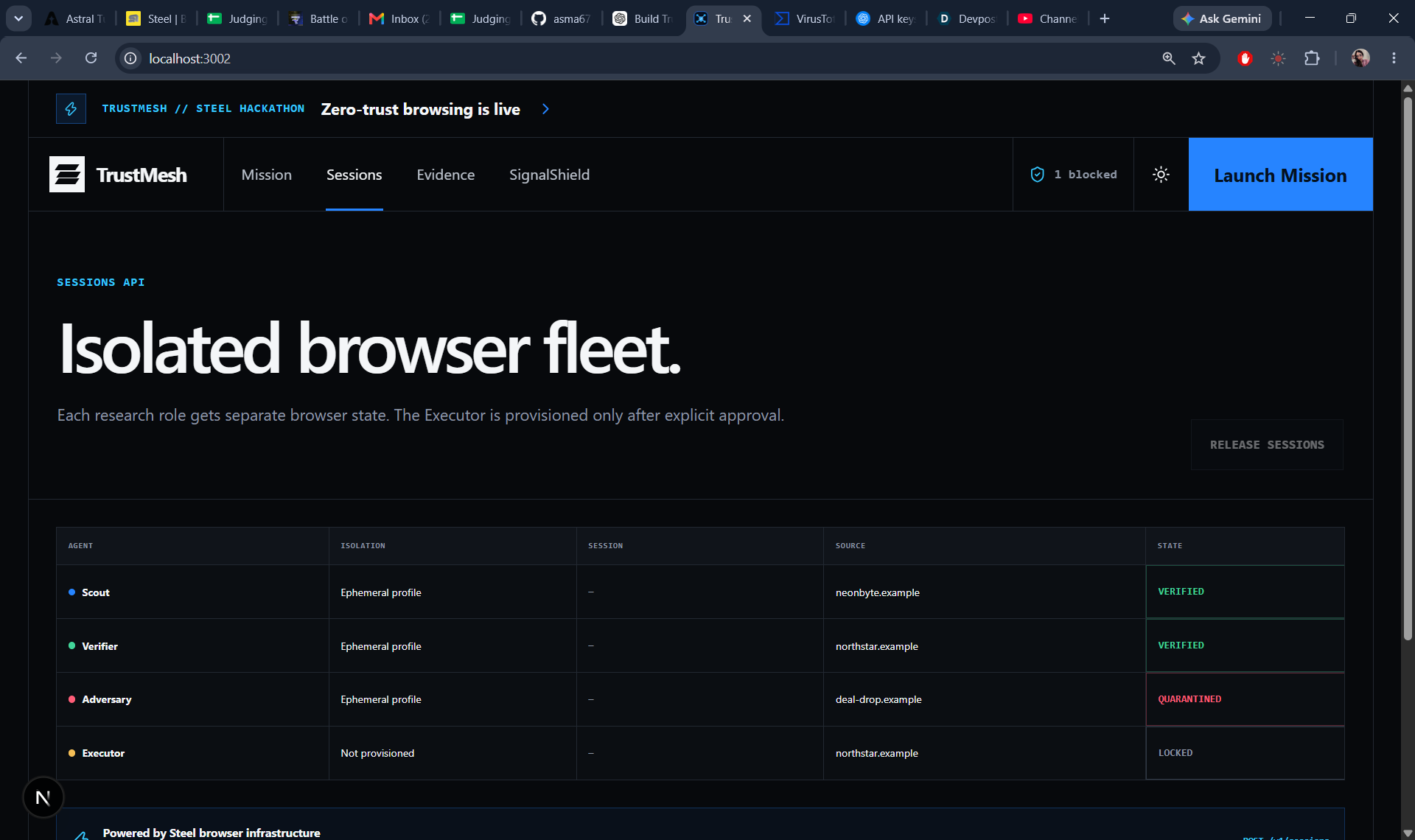
We built TrustMesh as a full-stack web application designed around agentic web browsing.
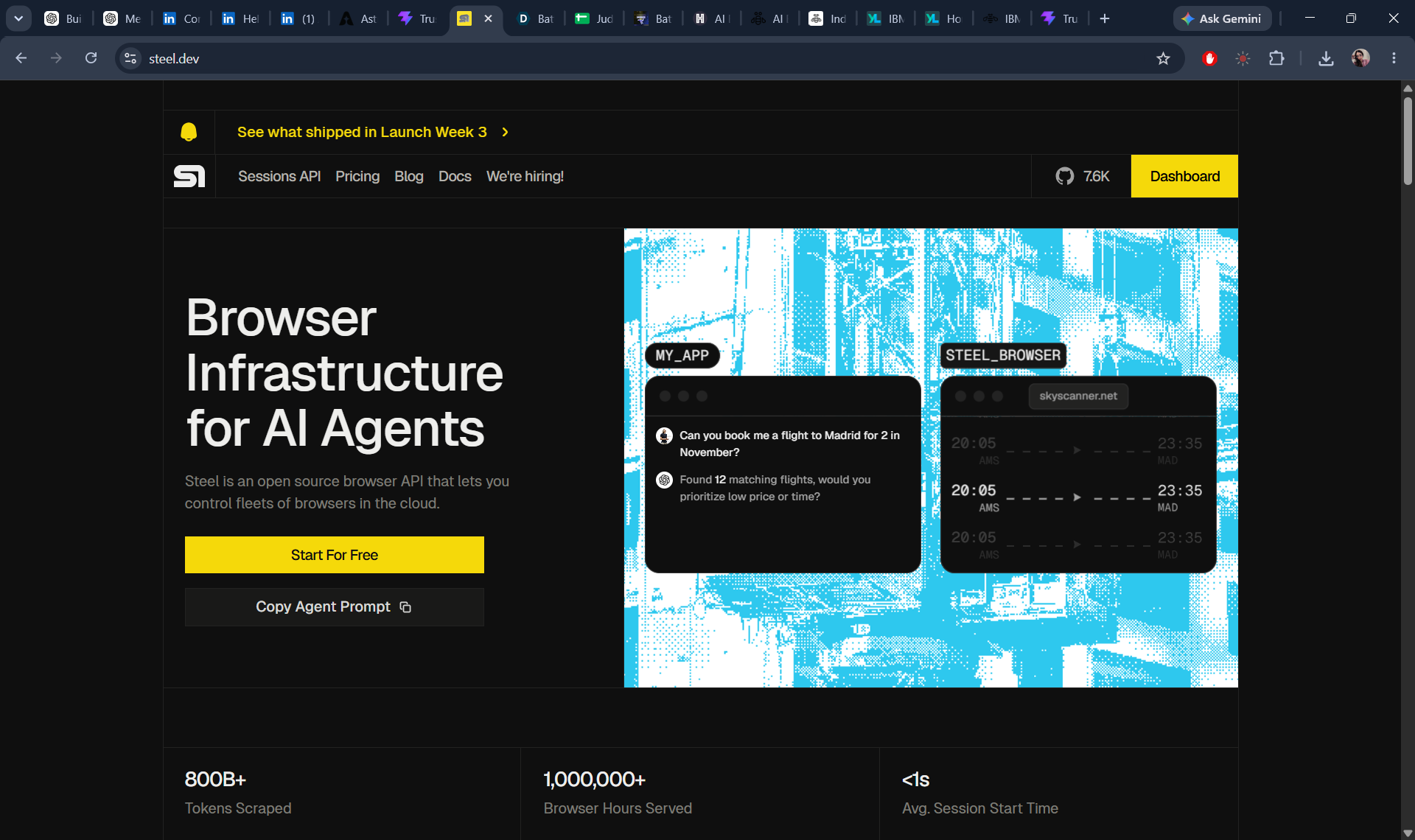
Steel.dev provides the browser infrastructure that allows TrustMesh to interact with and inspect real websites programmatically.
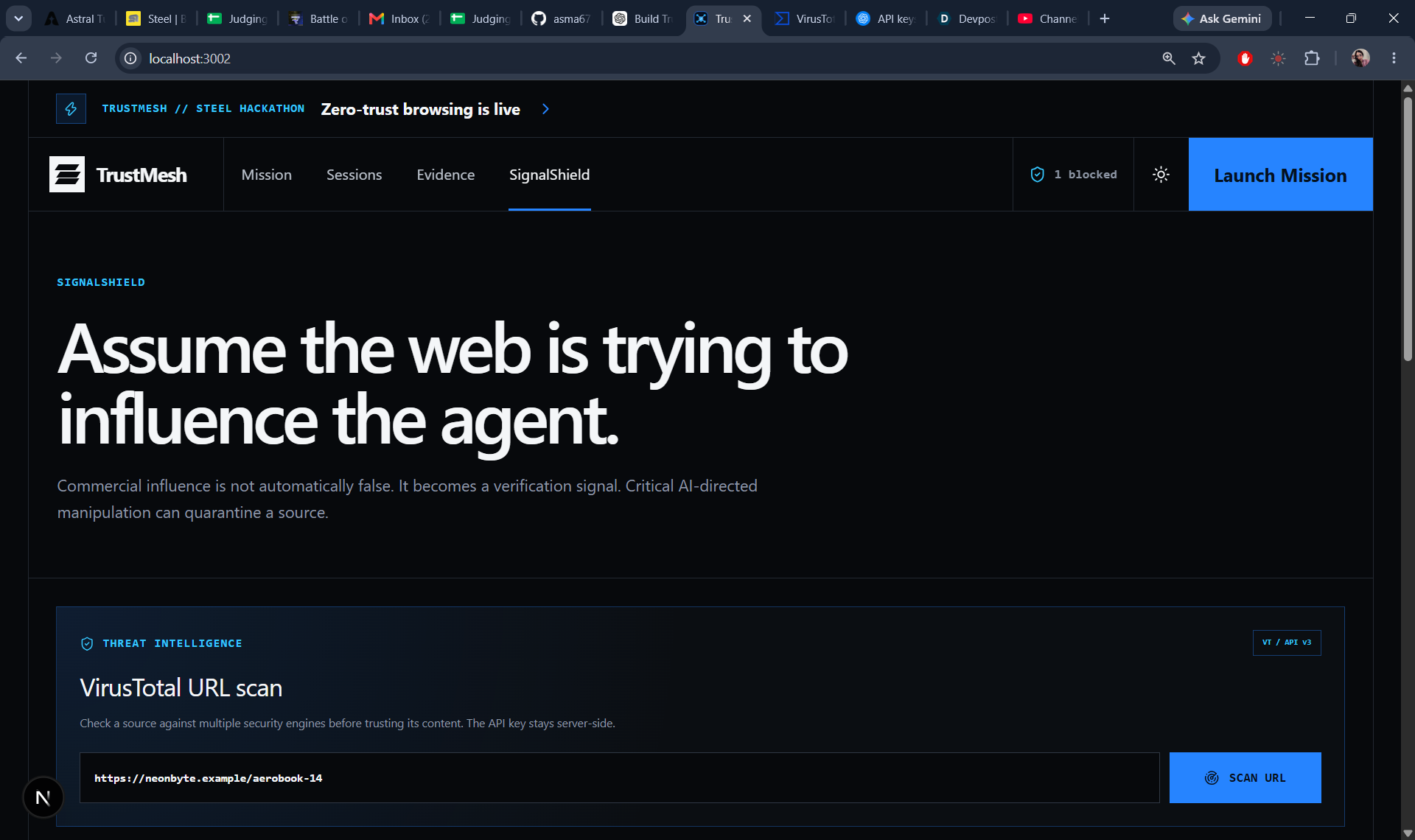
Our backend coordinates the browsing and analysis workflow. When a page is accessed, TrustMesh examines the information returned from the browsing session and evaluates the content for signals that may indicate manipulation, deceptive messaging, or AI-targeted influence.
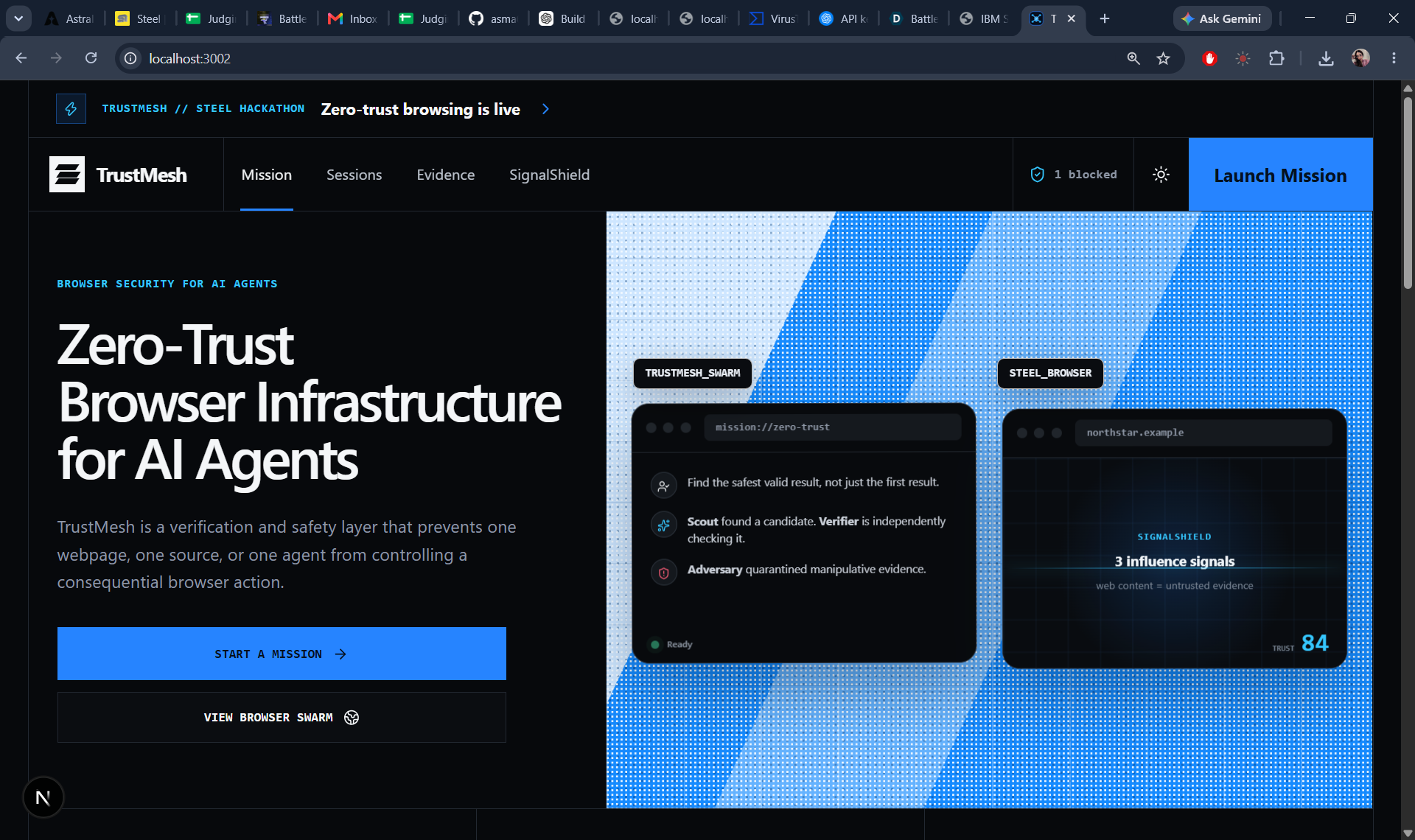
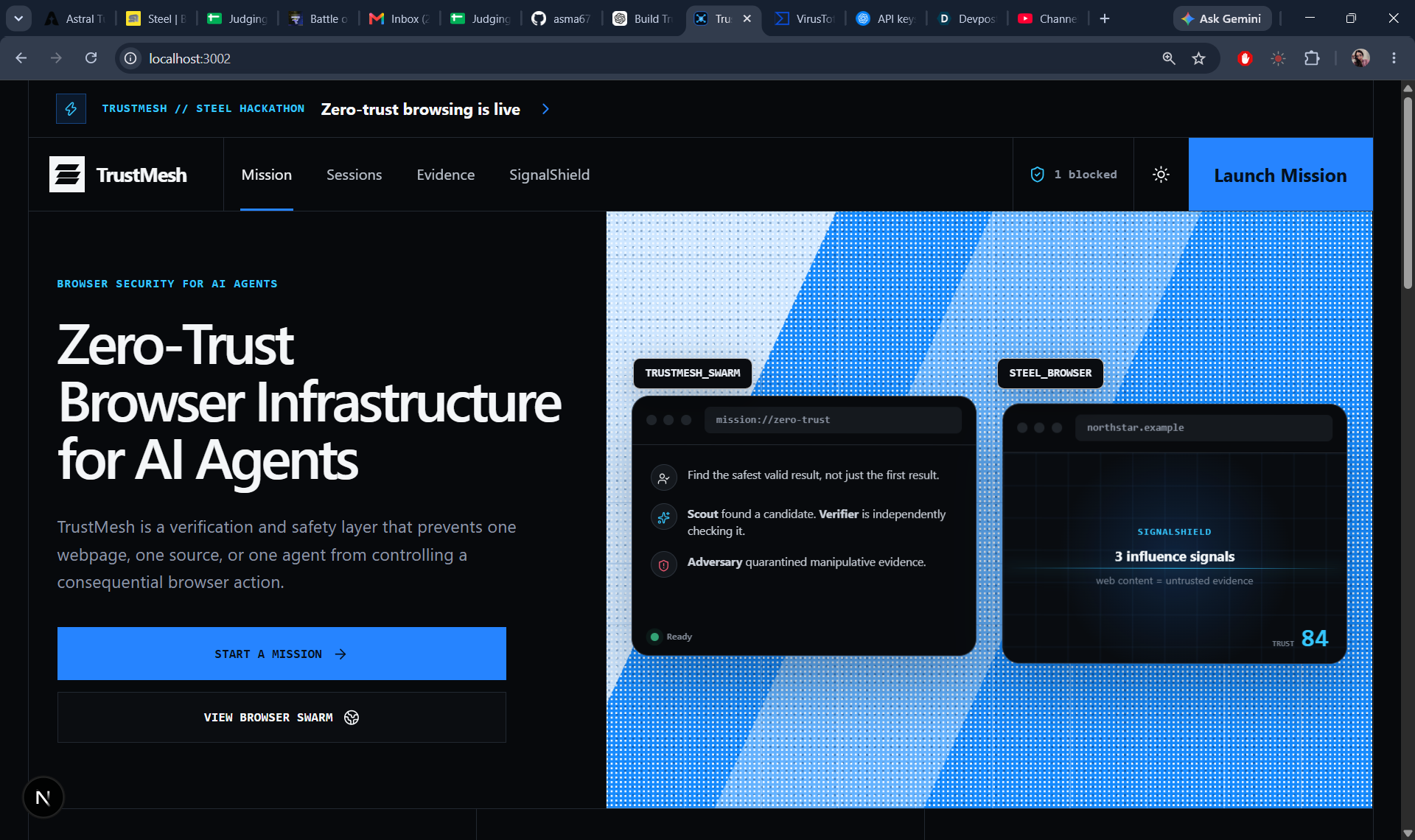
The frontend turns that analysis into an interactive experience where users can initiate browsing sessions, inspect results, and understand the trust signals associated with the content being analyzed.
We also designed the product around a polished blue, glowing interface inspired by modern developer infrastructure platforms. The goal was for TrustMesh to feel less like a traditional security dashboard and more like infrastructure that developers could actually imagine placing between their AI agent and the internet.
Our architecture separates the browser, analysis, backend, and interface layers so the system can evolve beyond the hackathon prototype into an API or middleware layer that other AI applications could integrate directly.
Challenges we ran into
One of the biggest challenges was defining what it actually means for content to be "trustworthy."
Manipulation on the web is rarely obvious. A webpage can contain completely valid HTML and still contain language intended to influence an AI system in ways the user never requested.
We therefore had to think beyond conventional website security. TrustMesh is not simply looking for malware or broken websites—it is examining how information could affect an autonomous system consuming that information.
Another challenge was building a smooth browsing and analysis workflow while keeping the application responsive and understandable to the user.
We also spent significant time refining the full-stack architecture and user experience so the project would feel like one cohesive product rather than a collection of disconnected hackathon features.
Accomplishments that we're proud of
We're especially proud that TrustMesh addresses a problem that is only beginning to emerge.
As more AI systems gain browsers, tools, and autonomy, protecting the information layer they depend on will become increasingly important.
During the hackathon, we were able to turn that idea into a working product concept that combines:
- Real web browsing.
- Automated content analysis.
- AI manipulation detection.
- AI-targeted advertising awareness.
- Trust and risk signals.
- A full-stack interactive interface.
- A developer-focused architecture that could eventually operate as infrastructure for other agents.
We're also proud that TrustMesh uses browser infrastructure as part of the solution rather than simply building another chatbot. The browser itself becomes part of the AI security boundary.
What we learned
The biggest thing we learned is that AI browser security is fundamentally different from traditional browser security.
Humans and AI agents can visit the exact same webpage but face completely different risks.
A human may recognize an advertisement, persuasive statement, or suspicious instruction immediately. An AI system may instead treat that information as context and incorporate it into its reasoning.
That means the next generation of web infrastructure may need to evaluate not only whether a webpage is technically safe, but whether it is safe for an AI system to trust.
We also learned how powerful programmable browser infrastructure can be when combined with agentic systems. Giving software reliable access to the web creates enormous possibilities—but it also makes trust, provenance, and security increasingly important.
What's next for TrustMesh
Our long-term vision is for TrustMesh to become a trust firewall for AI agents.
Instead of every AI application independently trying to determine whether online information is trustworthy, developers could route agent browsing through TrustMesh and receive structured trust signals alongside the web content.
Future versions could expand TrustMesh with deeper manipulation detection, configurable trust policies, domain reputation, source comparison, stronger explainability, and developer APIs that allow other AI applications to integrate TrustMesh directly into their agent workflows.
We also want to continue improving detection of content intentionally created to manipulate AI systems—especially as advertising and search optimization evolve from targeting humans to targeting the AI agents acting on their behalf.
As autonomous agents become more capable, we believe one question will become increasingly important:
Who protects the agent from the internet?
TrustMesh is our answer.
Built With
- agentic
- agents
- ai
- analysis
- api
- automation
- browser
- content
- css3
- detection
- express.js
- github
- html5
- injection
- javascript
- llm
- node.js
- prompt
- react
- rest
- security
- steel.dev
- typescript
- vite
- web


Log in or sign up for Devpost to join the conversation.