Inspiration
Digital transactions often come down to one simple problem: trust.
A client wants to know that their money will only be released when the agreed work is completed, while a builder wants confidence that they will be paid fairly for their work. I wanted to explore whether AI and blockchain could work together to solve this problem.
This project also became my first serious Web3 project. I started with the idea of building a smart escrow system and then expanded it into TrustLock AI, where AI can understand agreements and assist with verifying whether the agreed work has actually been completed.
What it does
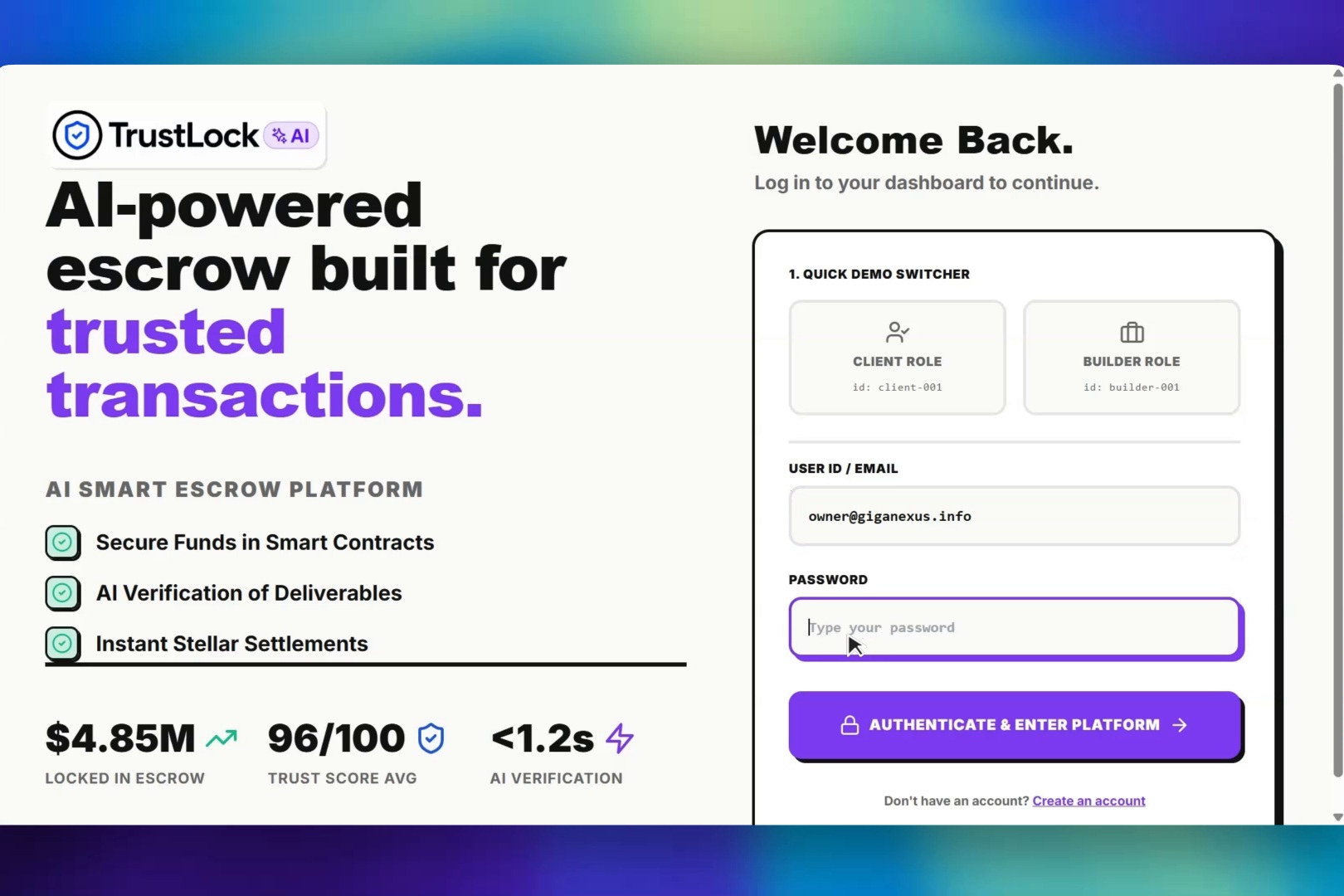
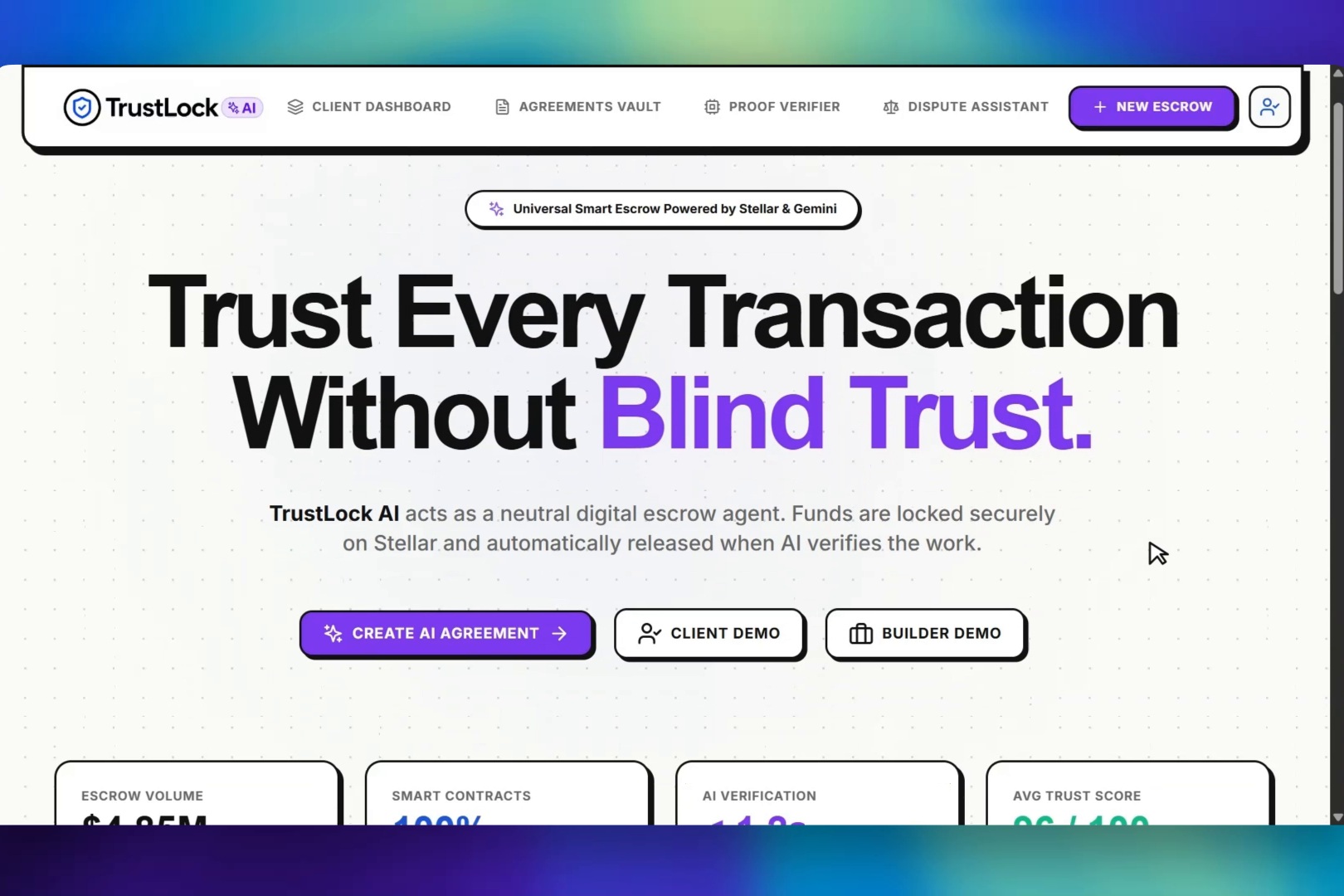
TrustLock AI is an AI-powered smart escrow platform designed to create a more transparent way for clients and builders to work together.
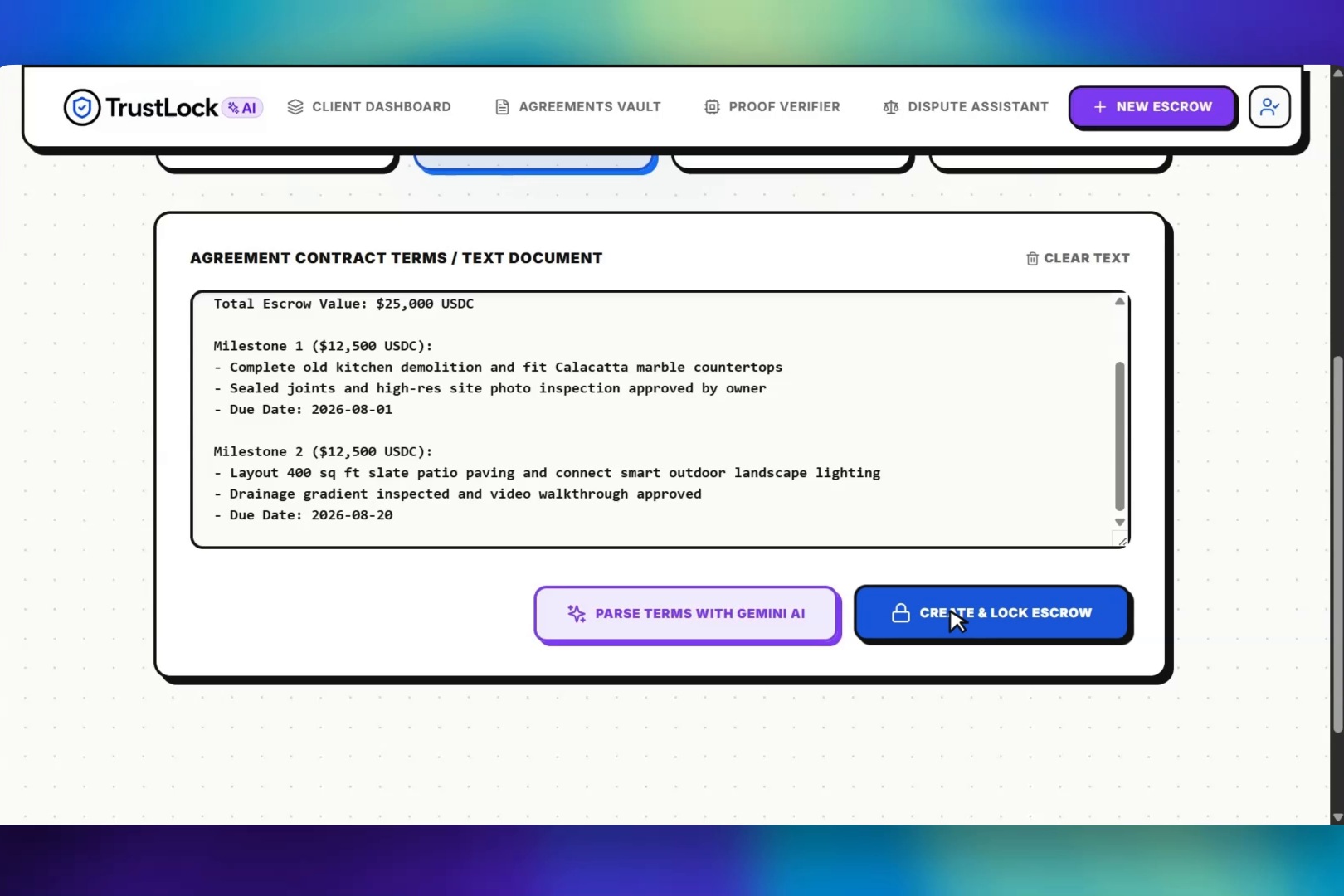
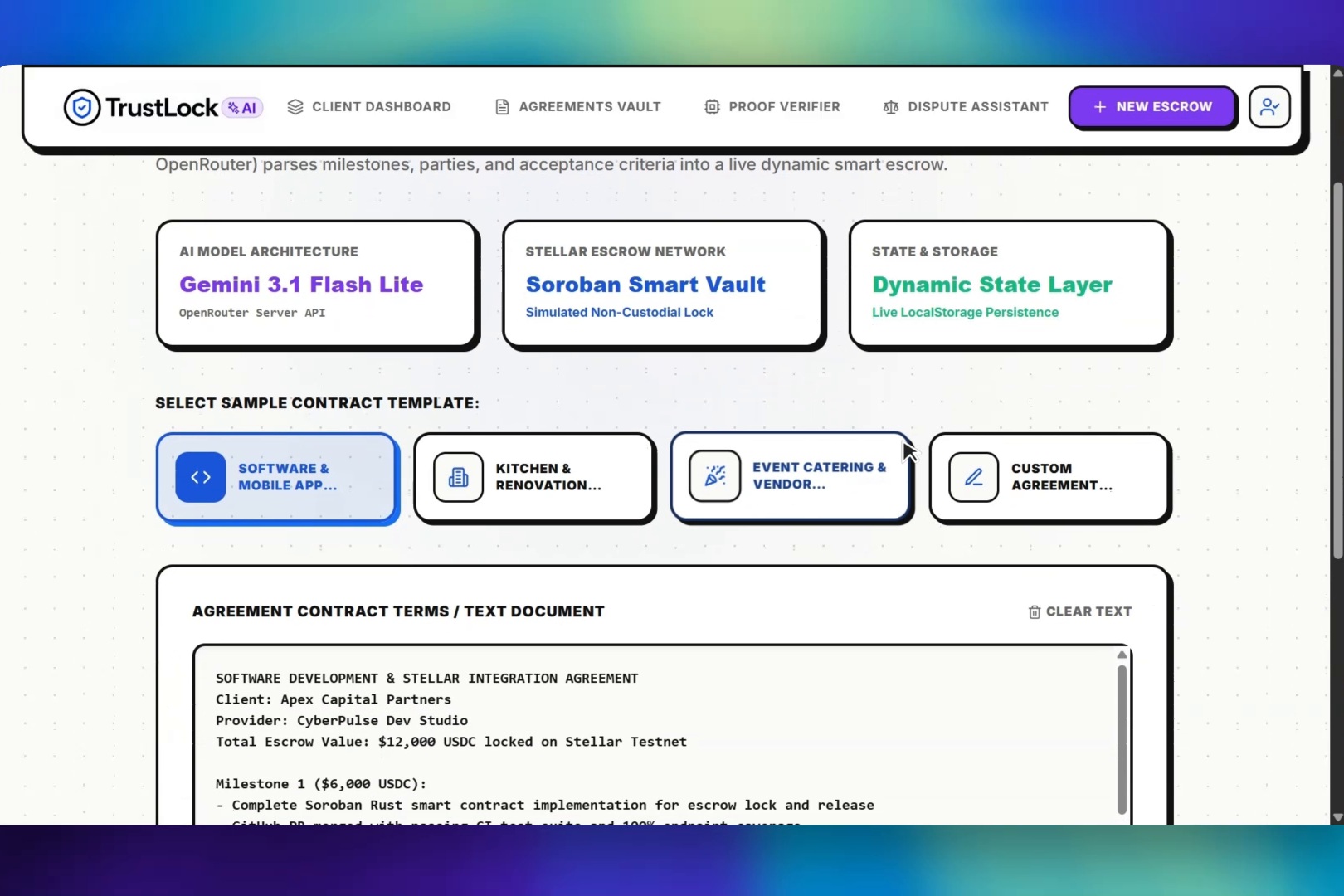
A client can create an agreement using natural language. AI analyzes the agreement and extracts important information such as milestones, amounts, deadlines, and acceptance criteria.
The workflow then allows:
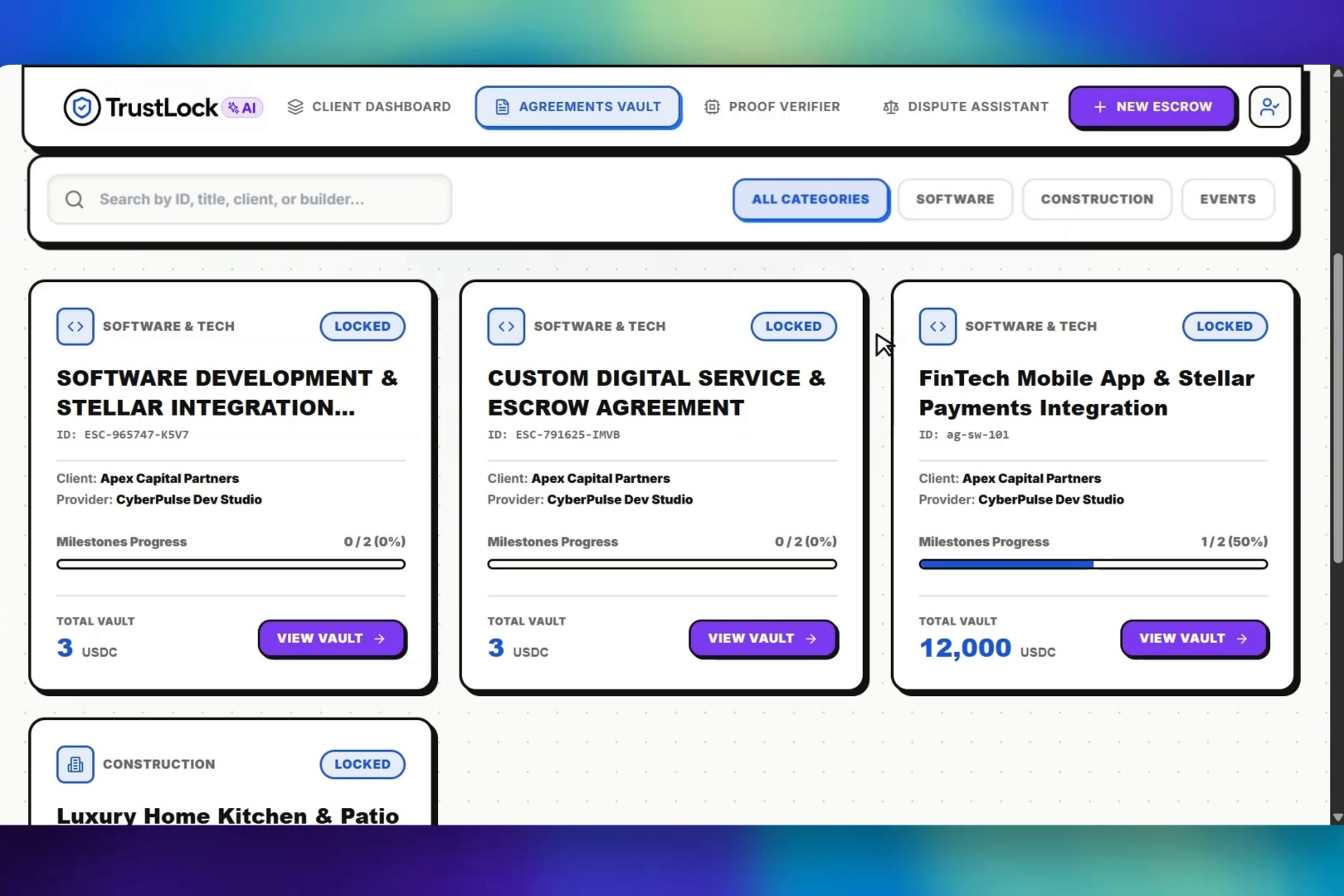
- Creating and managing escrow agreements
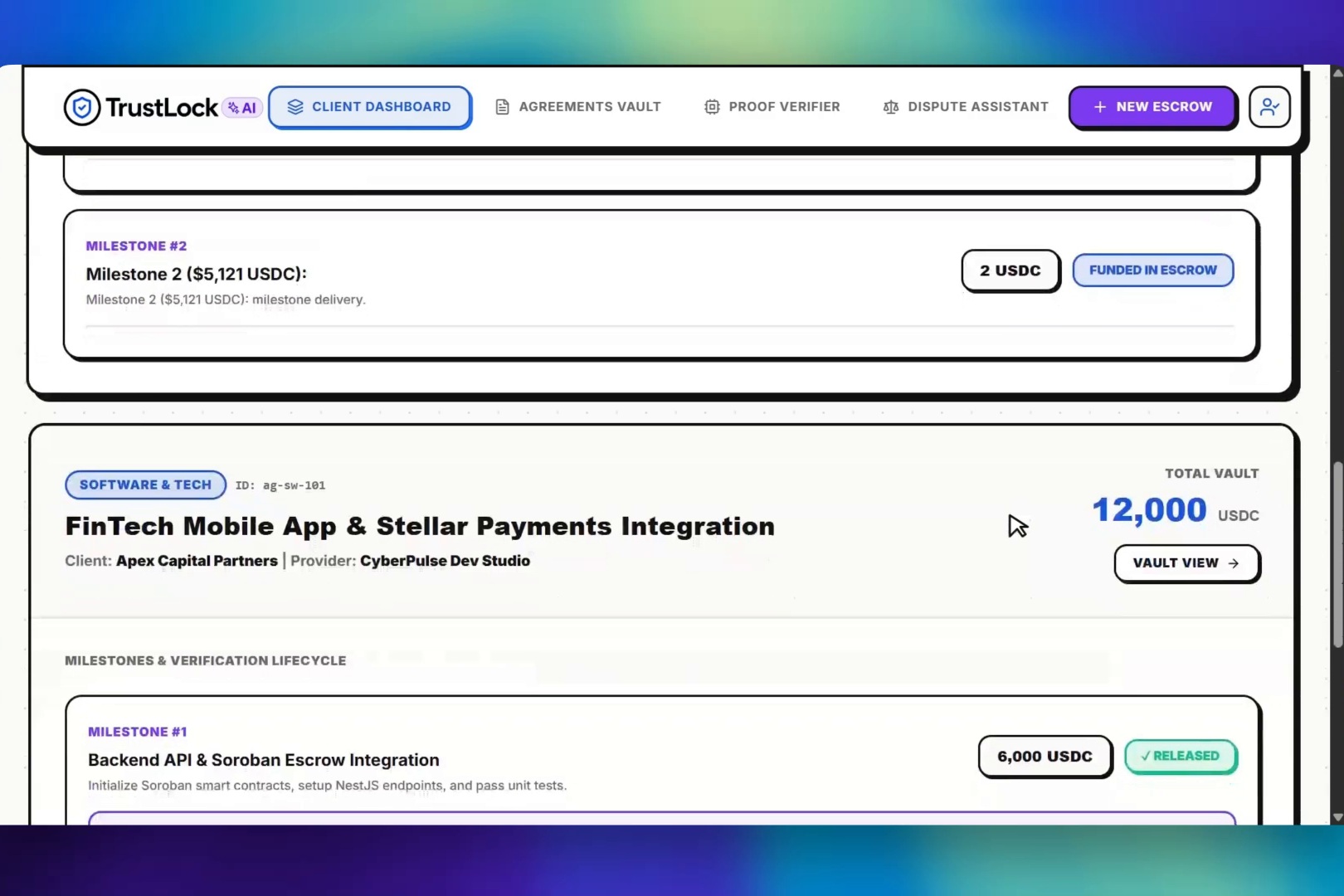
- Structuring agreements into milestones
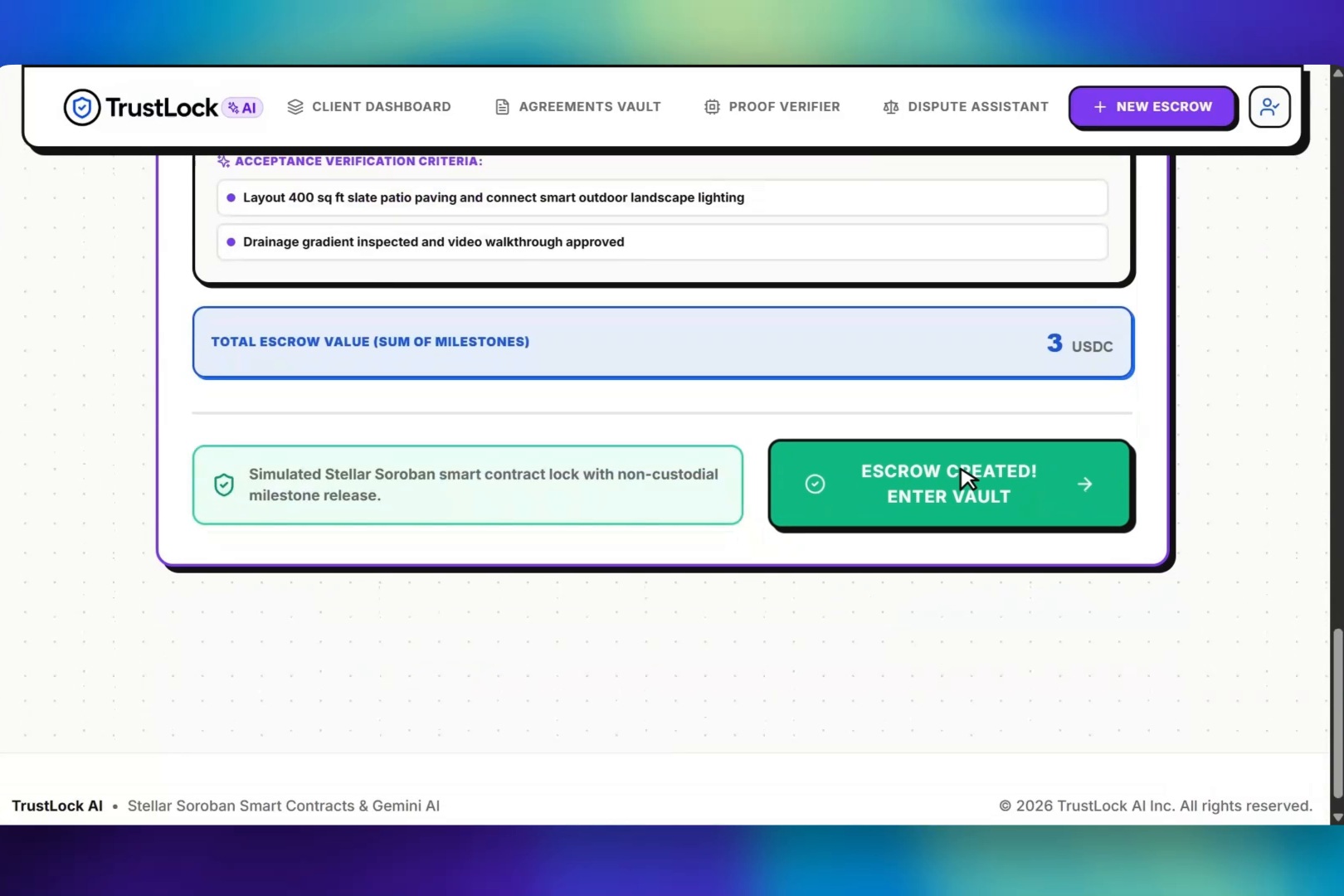
- Locking funds through the Stellar-based escrow workflow
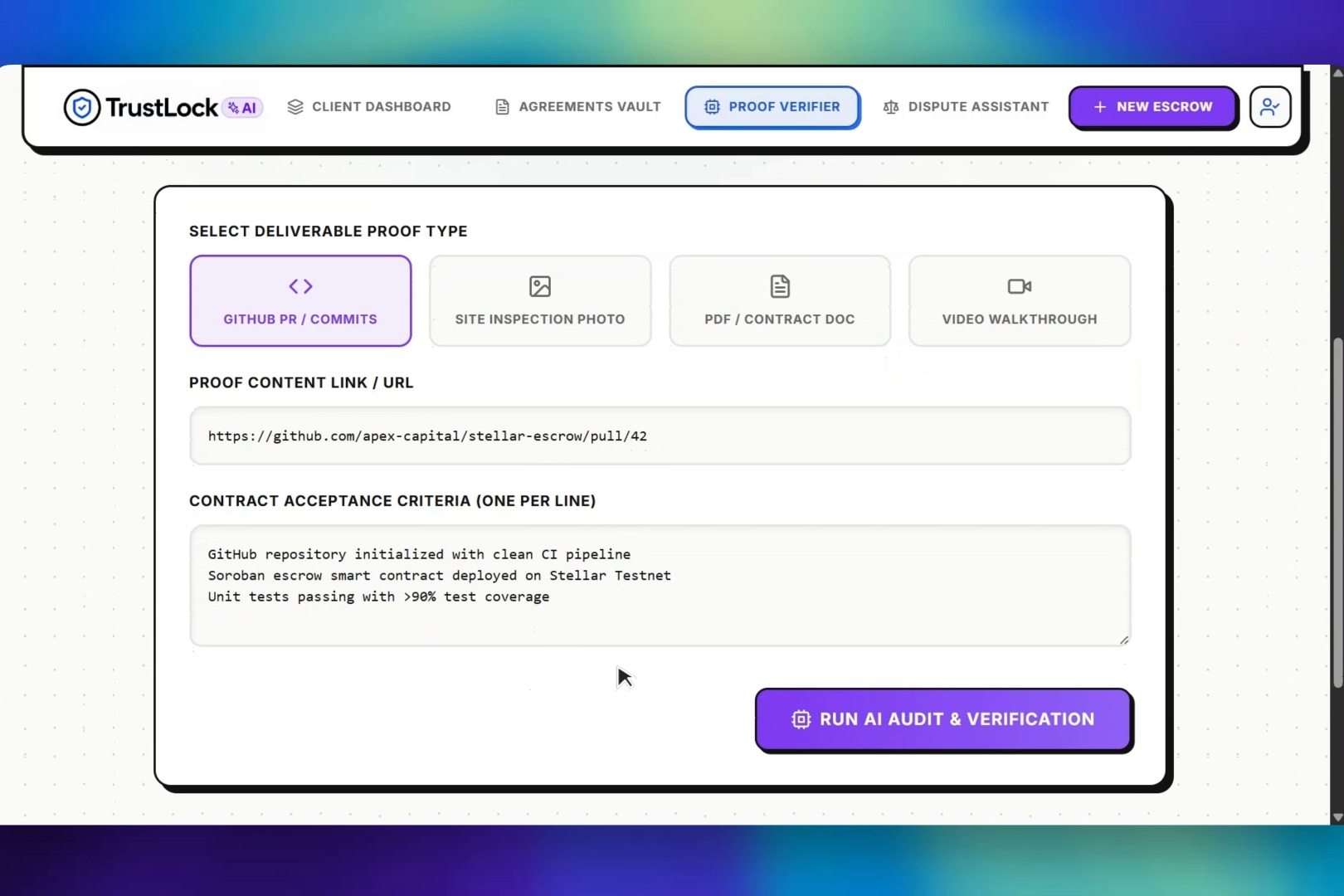
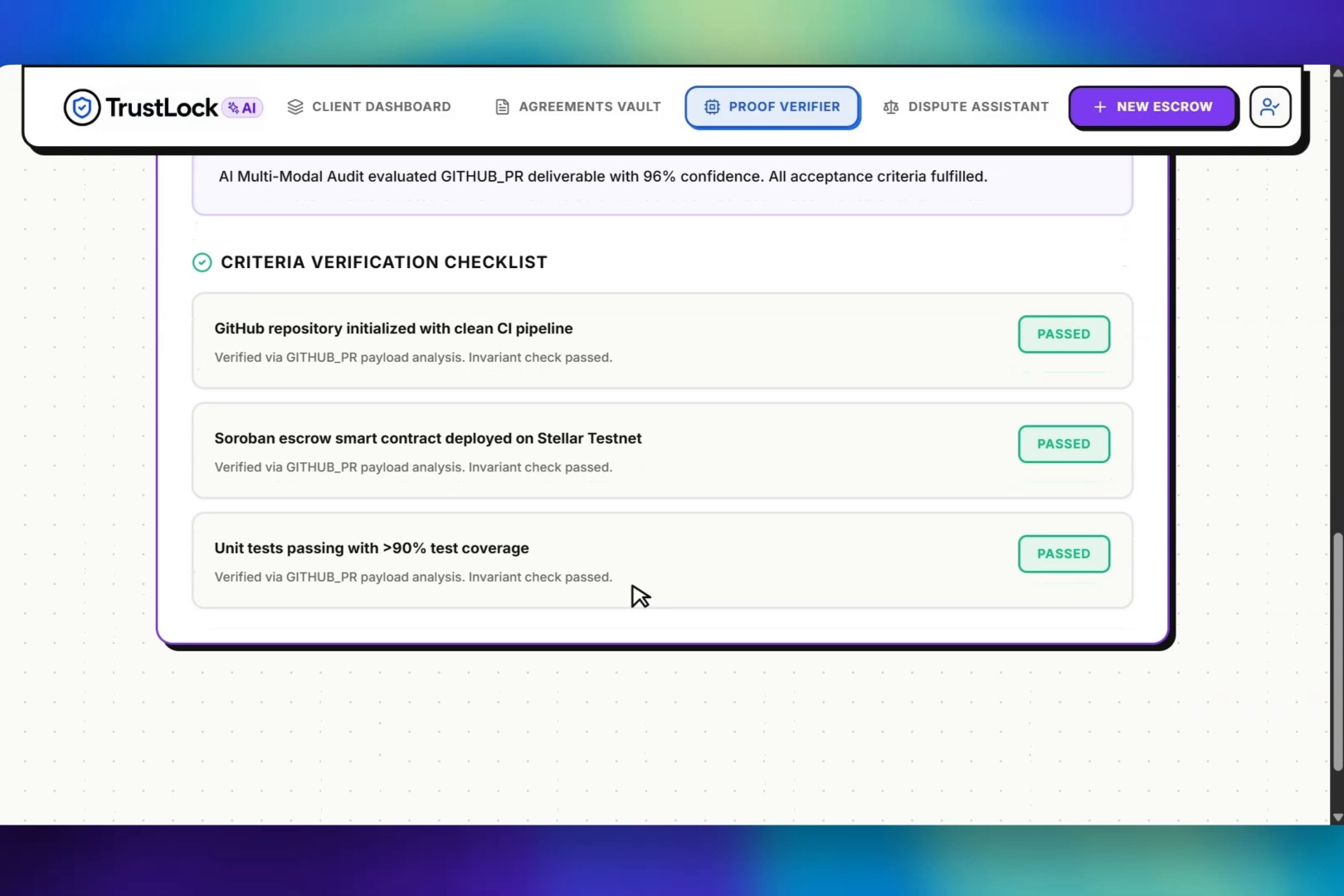
- Submitting proof of completed work
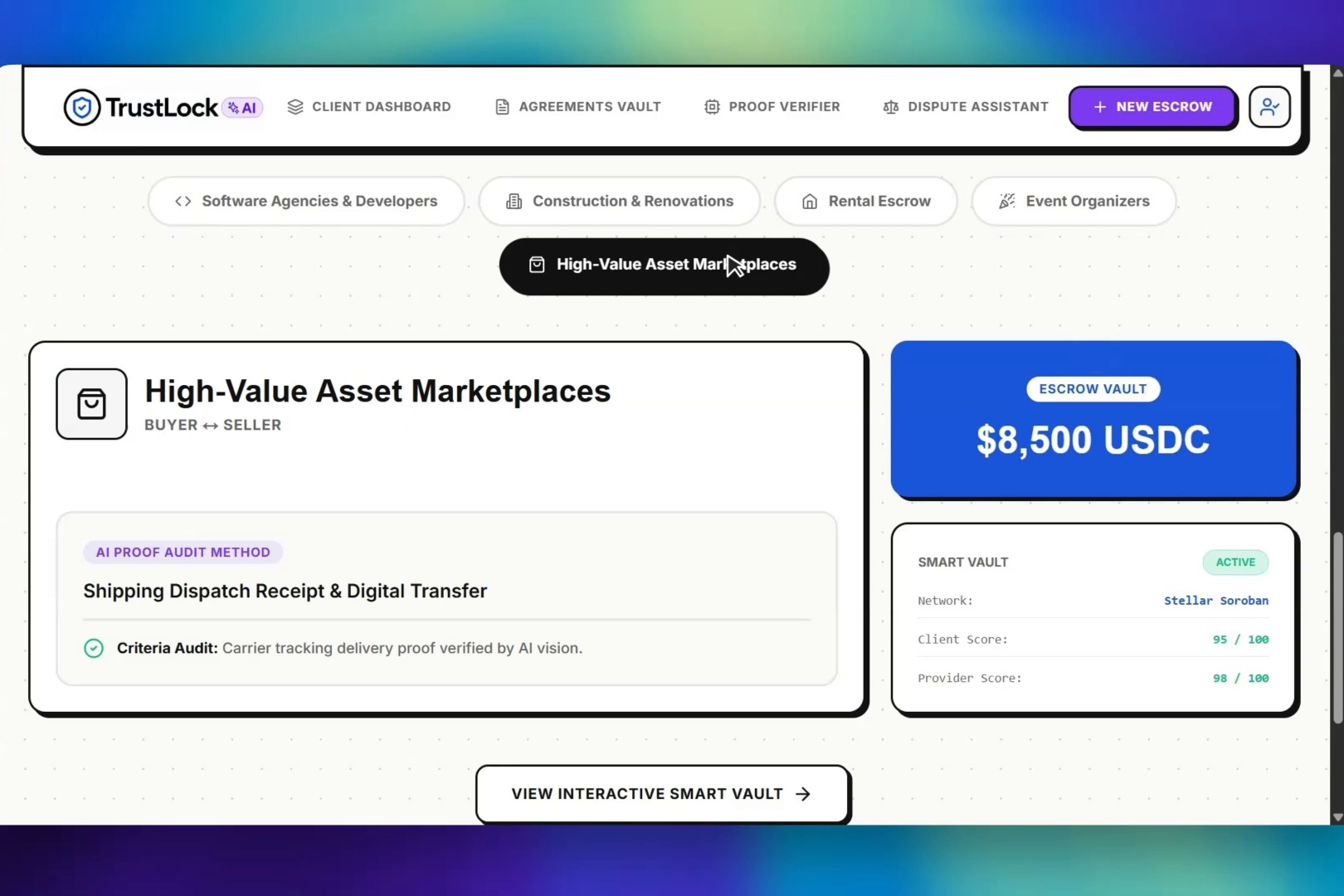
- Using AI to assist with proof verification
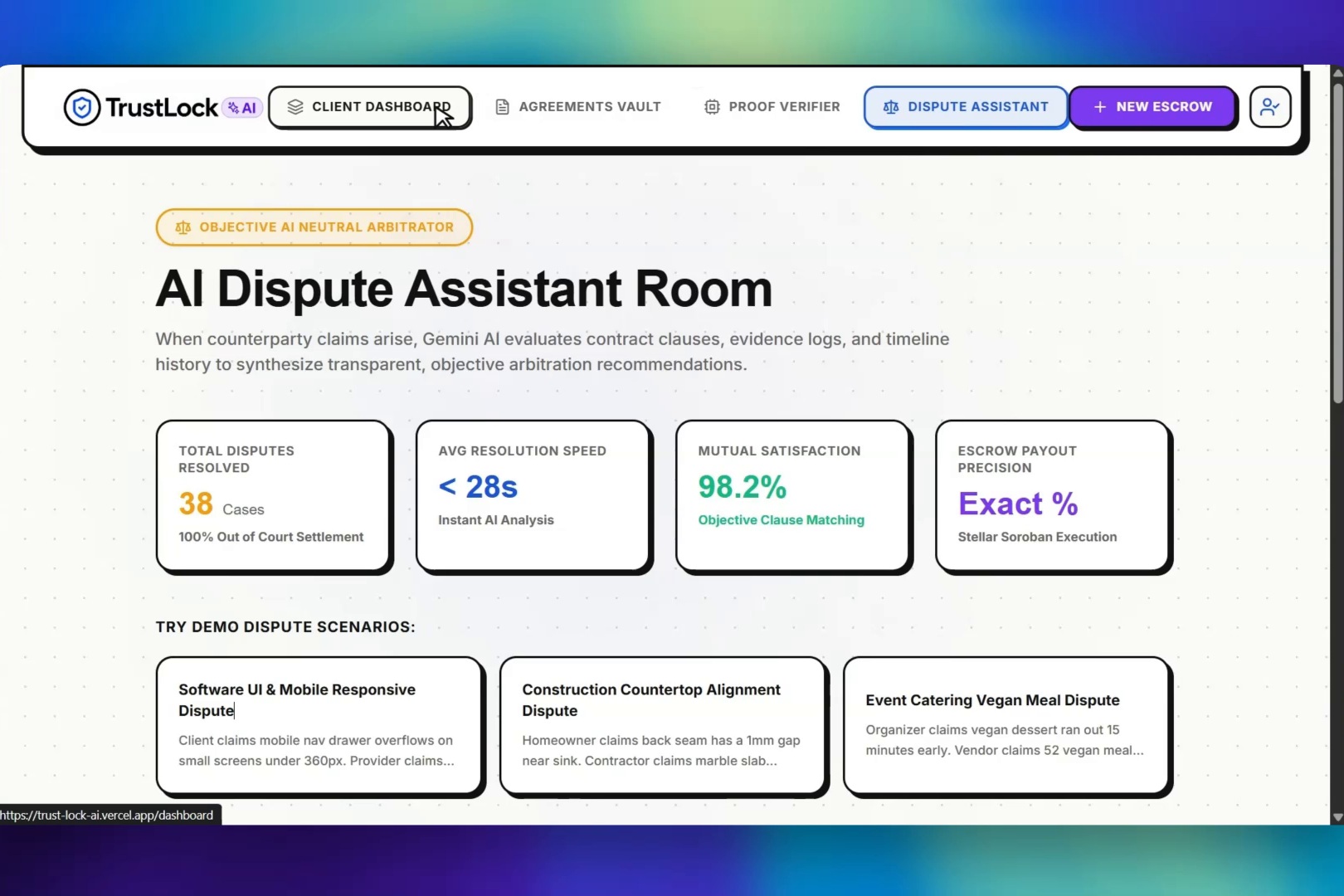
- Getting AI assistance during disputes
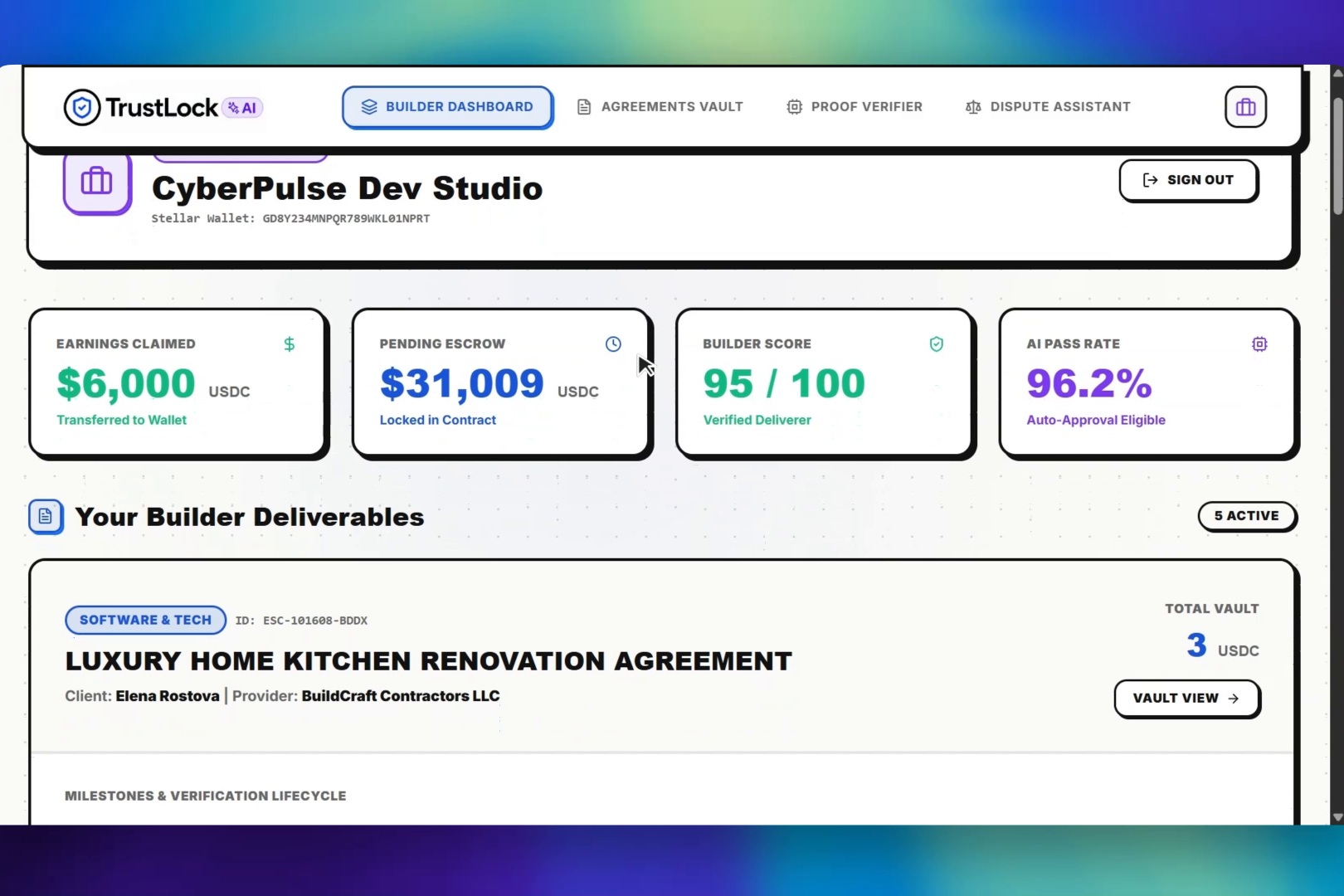
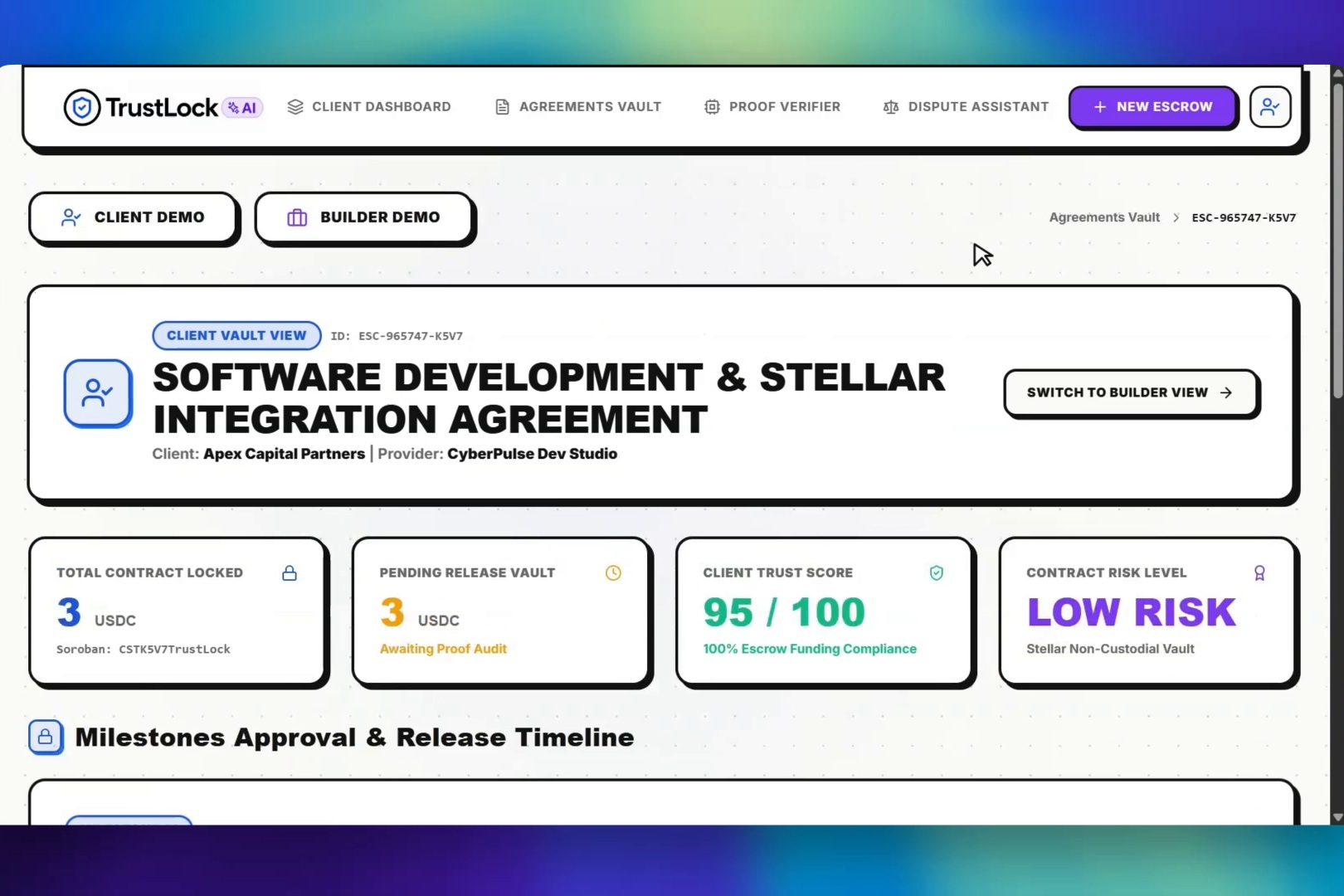
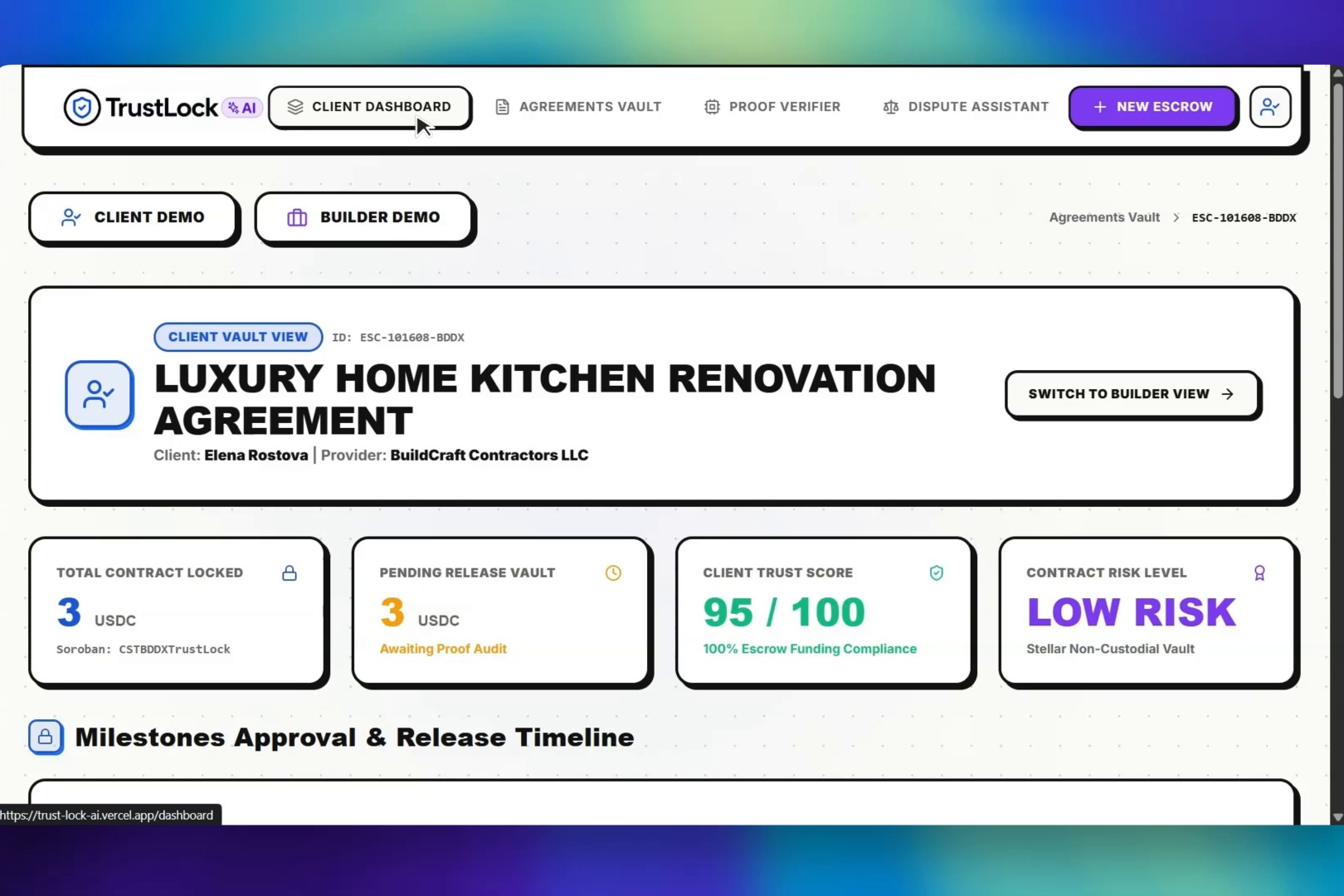
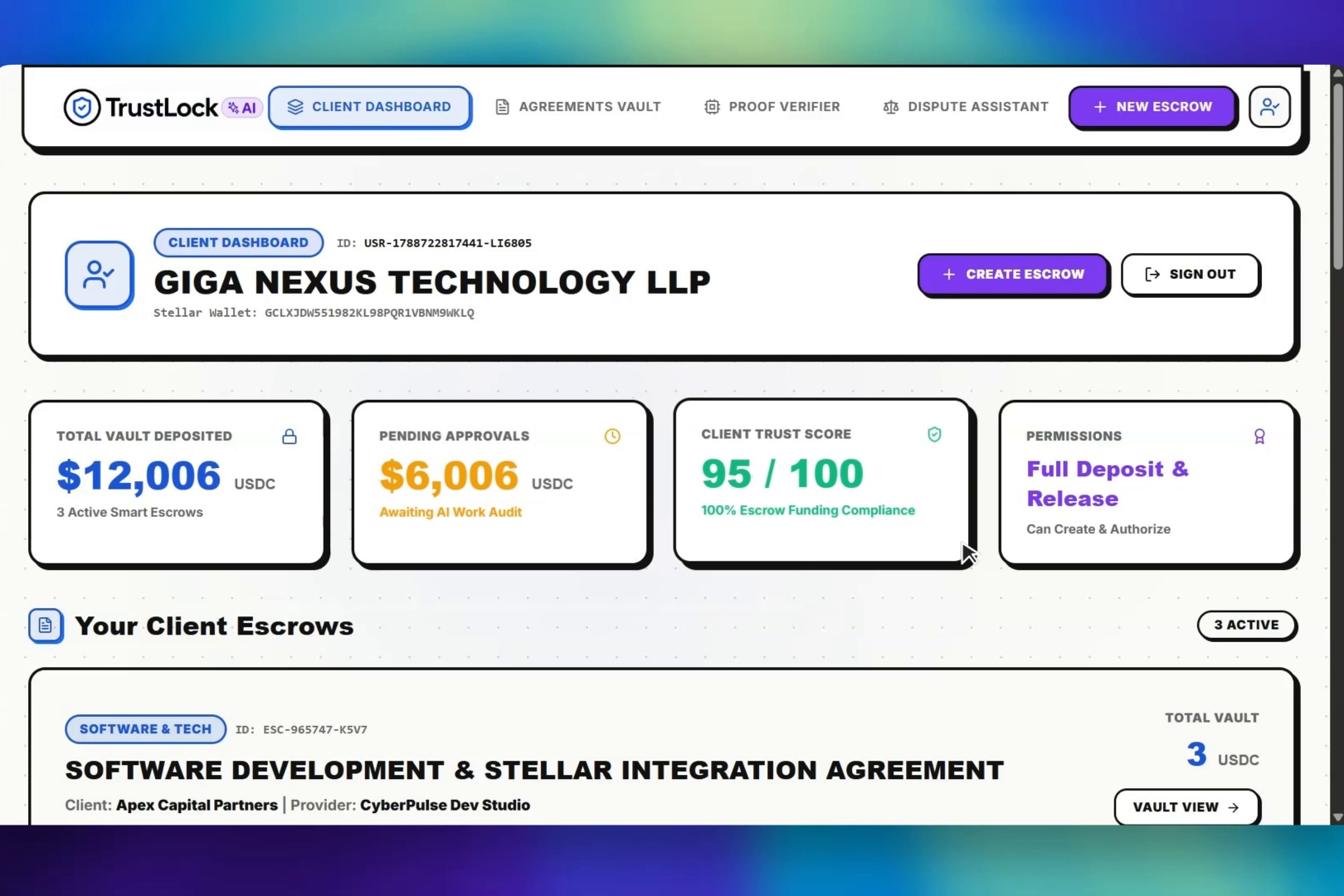
- Tracking agreements and milestone progress through dashboards
The application is also dynamic rather than being a collection of hardcoded demo screens. Creating an escrow, adding milestones, submitting proof, and changing verification states actually updates the application state.
How we built it
I built TrustLock AI using React and TypeScript with a focus on making the application interactive and modular.
For the AI functionality, I integrated Google Gemini 3.1 Flash Lite through OpenRouter. Gemini is used to understand natural-language agreements and turn them into structured data that the application can work with.
I also used AO's Agent Orchestrator to coordinate the AI-driven workflow within TrustLock AI. This allows the different AI tasks involved in the escrow process to work together as part of a larger workflow rather than existing as completely isolated features.
Stellar is used as the blockchain foundation for the escrow and payment concept.
I also replaced static demo data with dynamic application state and persistence. This means actions taken by a user can flow through the application and update dashboards, agreements, milestones, and verification states.
Challenges we ran into
The biggest challenge was moving beyond a UI that simply looked like an escrow platform and making it behave like one.
Initially, it was easy to display example agreements, amounts, and milestones. The harder part was making these elements respond to actual user actions.
Another challenge was connecting AI output to the rest of the application. Instead of simply displaying Gemini's response as text, I needed to structure the output so that the application could use it to create milestones, acceptance criteria, and other agreement data.
Working with Web3 for the first time was also a learning curve, especially when thinking about how the blockchain layer should fit into the overall product rather than being added just for the sake of using blockchain.
Accomplishments that we're proud of
I'm proud that TrustLock AI evolved from an initial product concept into a working interactive prototype.
Some things I'm particularly proud of are:
- Building my first Web3 project around Stellar
- Integrating a real AI model instead of using predefined AI responses
- Using AO's Agent Orchestrator for the AI workflow
- Building dynamic agreement and milestone flows
- Creating separate AI functionality for agreement parsing, proof verification, and dispute assistance
- Moving away from hardcoded demo data
- Creating a complete client-to-builder escrow workflow
Most importantly, I learned how to combine AI, agent workflows, and blockchain into a single product instead of treating them as separate technologies.
What we learned
This project taught me that building a convincing product is very different from building a convincing UI.
A static screen can make almost anything look functional, but making the underlying workflow respond to real user actions requires much more thought about state, data flow, and architecture.
I also learned a lot about Web3 through Stellar and about designing AI features that produce structured information that an application can actually use.
Using AO's Agent Orchestrator also helped me understand how multiple AI-driven tasks can be coordinated into a larger workflow.
What's next for TrustLock AI
The current version is a prototype, and there is a lot of room to take it further.
The next step would be to make the escrow infrastructure fully production-ready, including deeper on-chain integration, wallet-based authentication, and stronger transaction handling.
I would also like to improve the AI verification system by supporting more types of evidence, such as GitHub activity, documents, images, and other project deliverables.
Long term, I want TrustLock AI to become a reliable infrastructure layer for digital work — where agreements are understandable, payments are protected, work can be verified, and both sides have a transparent record of what happened.
Built With
- ao-agent-orchestrator
- css
- gemini
- html
- javascript
- next.js
- openrouter
- react
- stellar
- supabase
- tailwind-css
- tailwindcss
- typescript
- vercel
