-
-
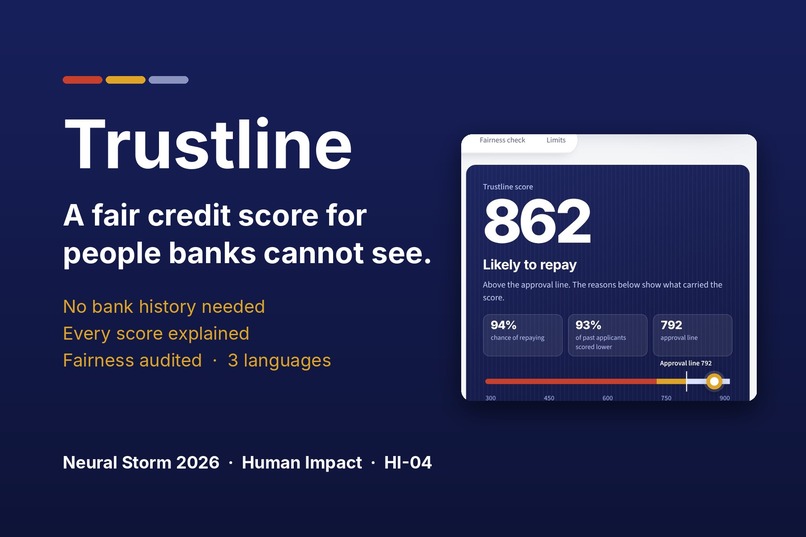
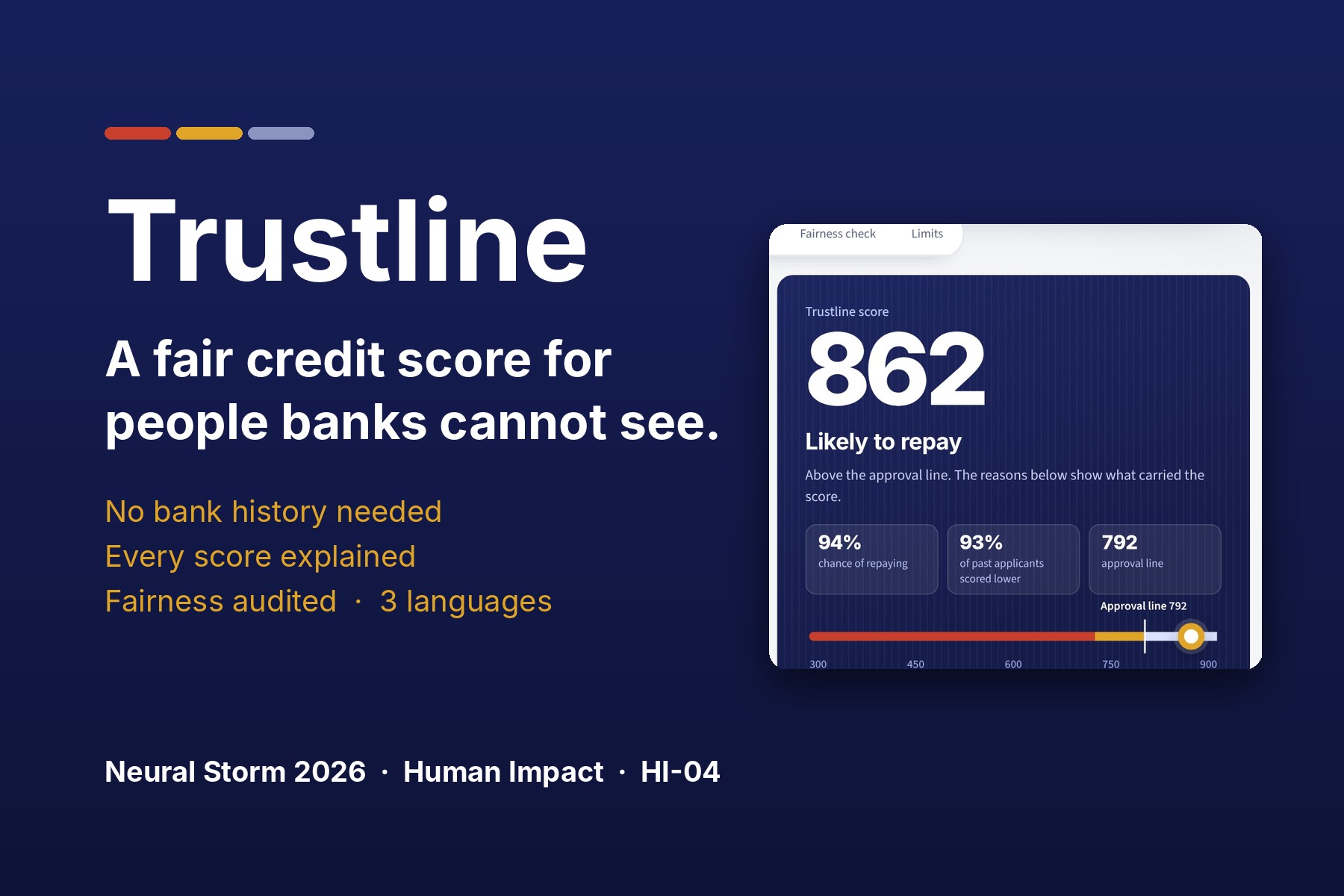
Trustline: a fair credit score for people banks cannot see
-
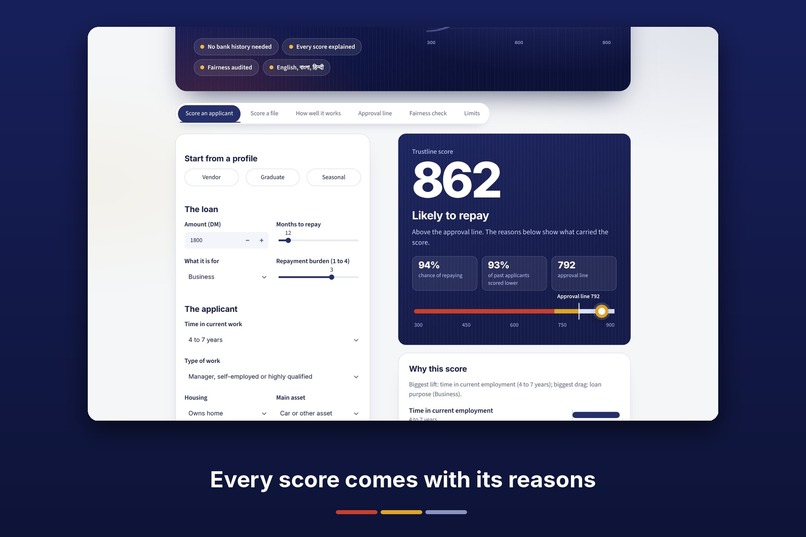
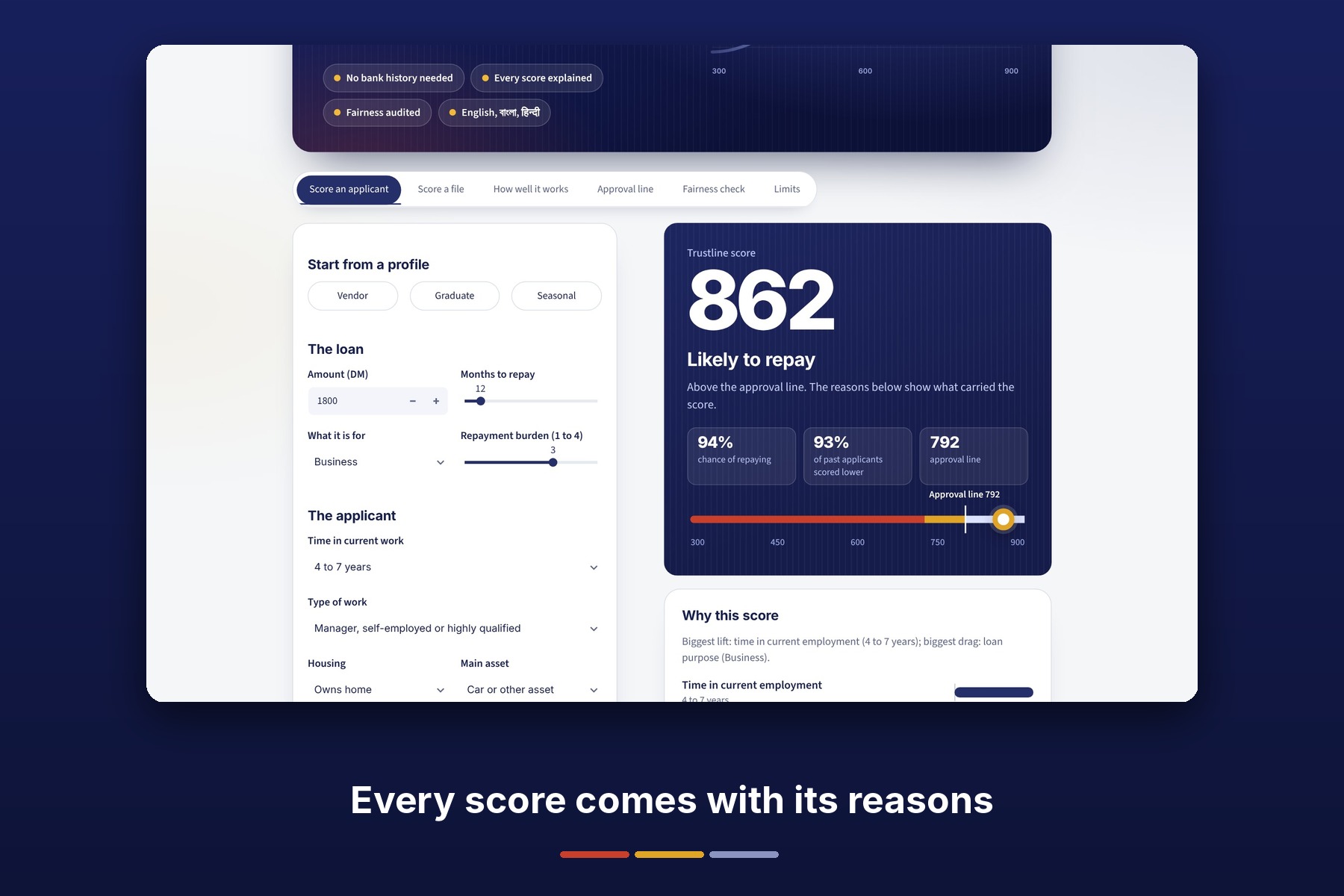
Score screen: a 300–900 Trustline score with the approval line and plain-language reasons for every applicant.
-
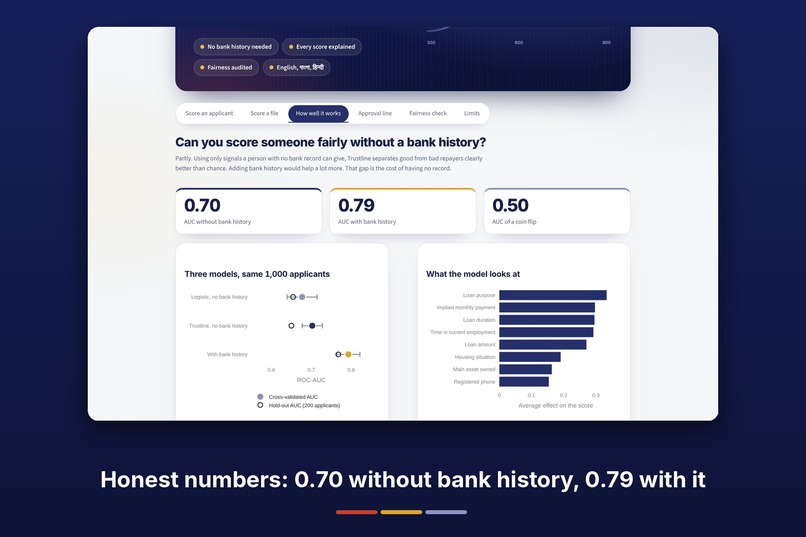
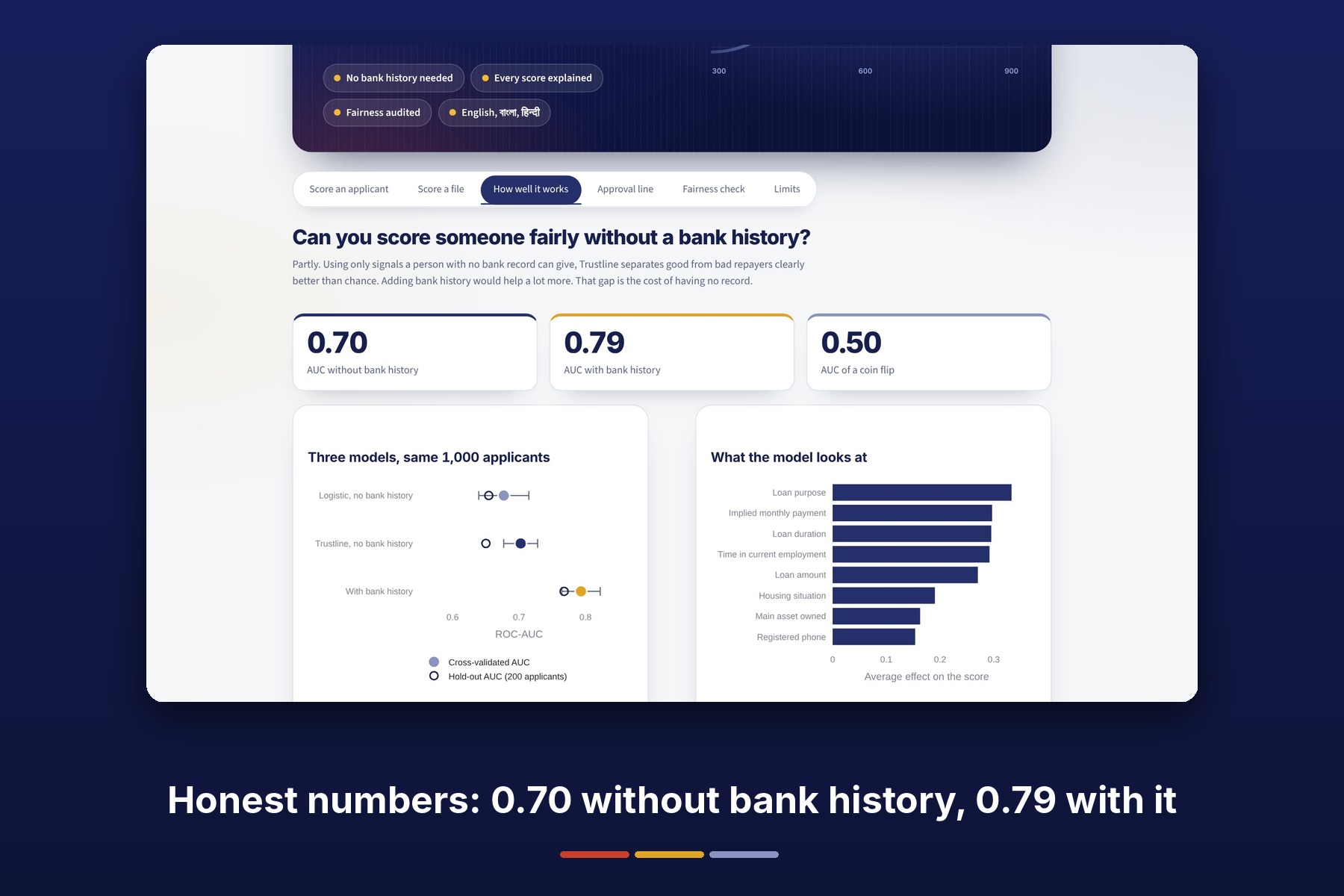
Honest performance: AUC 0.70 without bank history, 0.79 with it, and 0.50 for a coin flip.
-
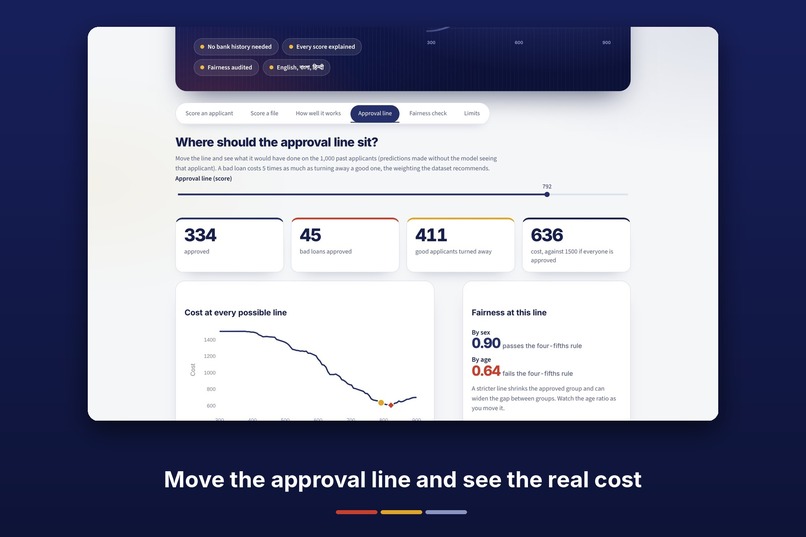
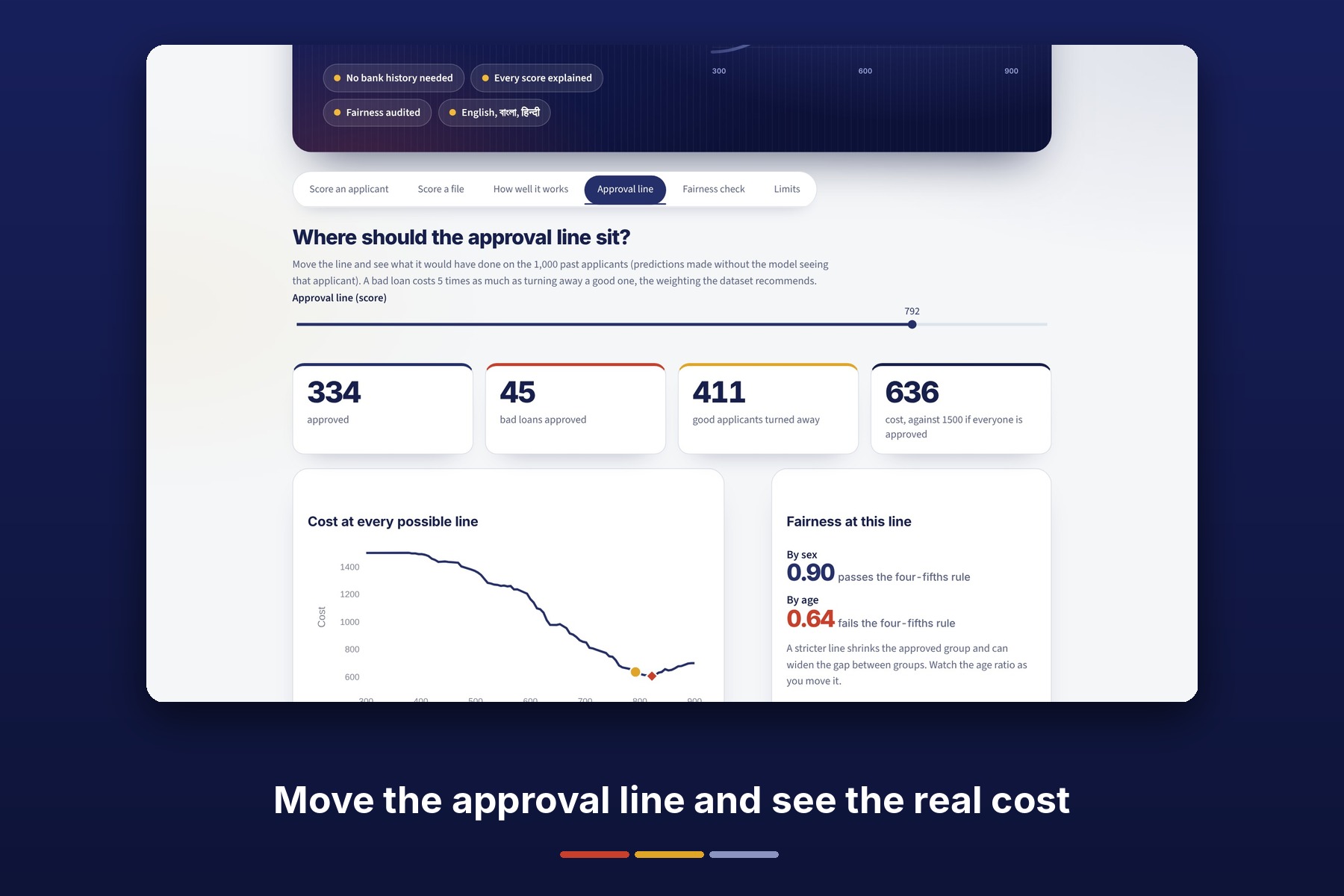
Approval-line simulator: move the line and watch approved loans, bad loans, turned-away good applicants and total cost change.
-
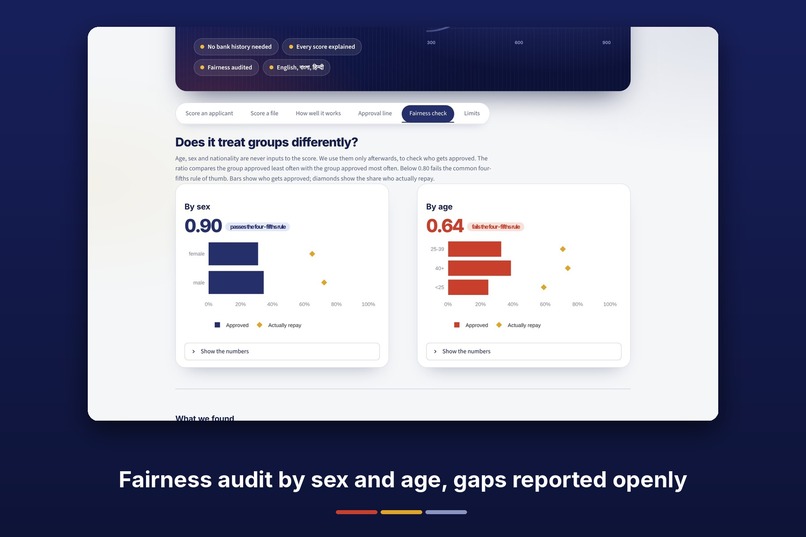
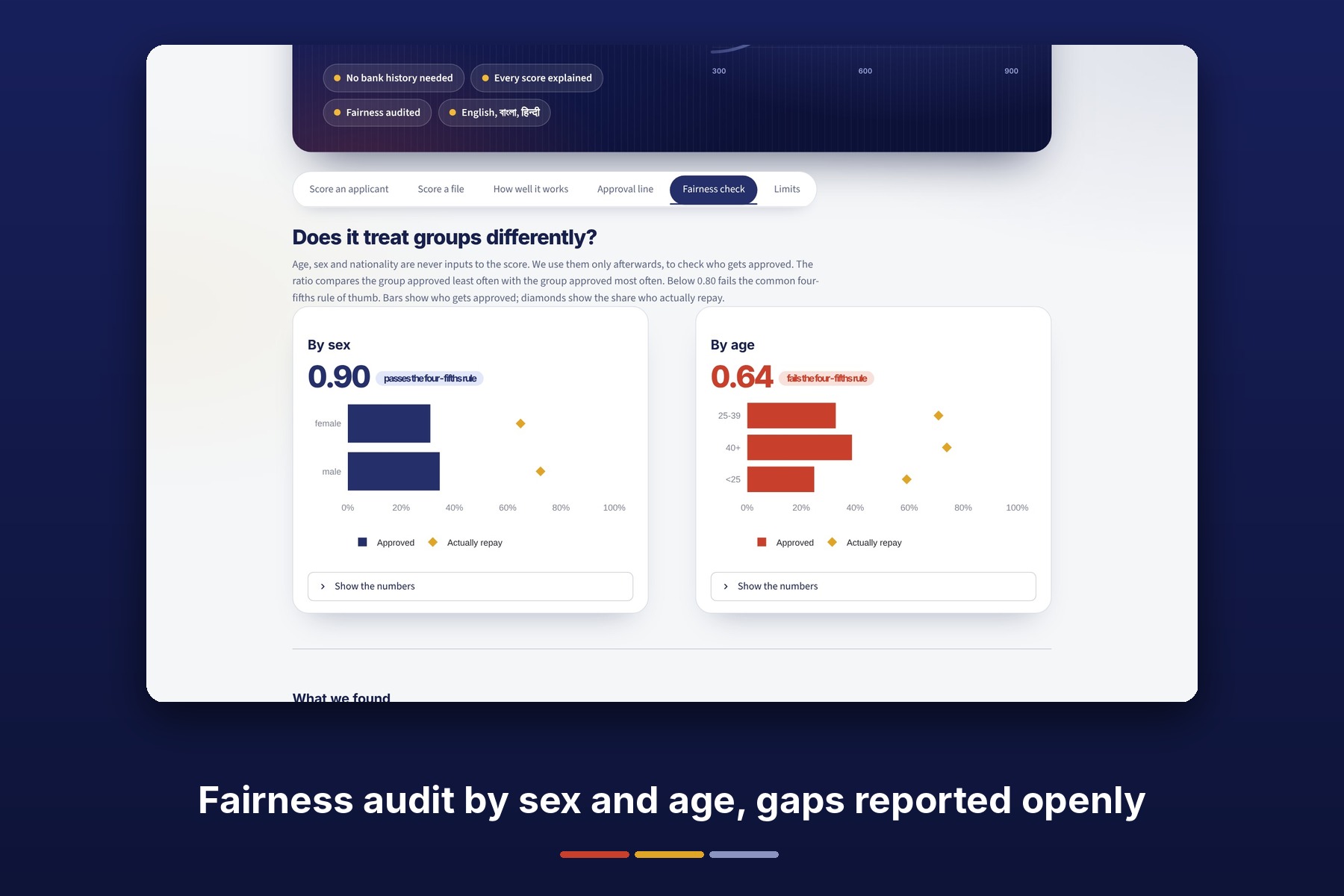
Fairness audit: sex passes the four-fifths rule (0.90), age does not (0.64). The gap is reported, not hidden.
-
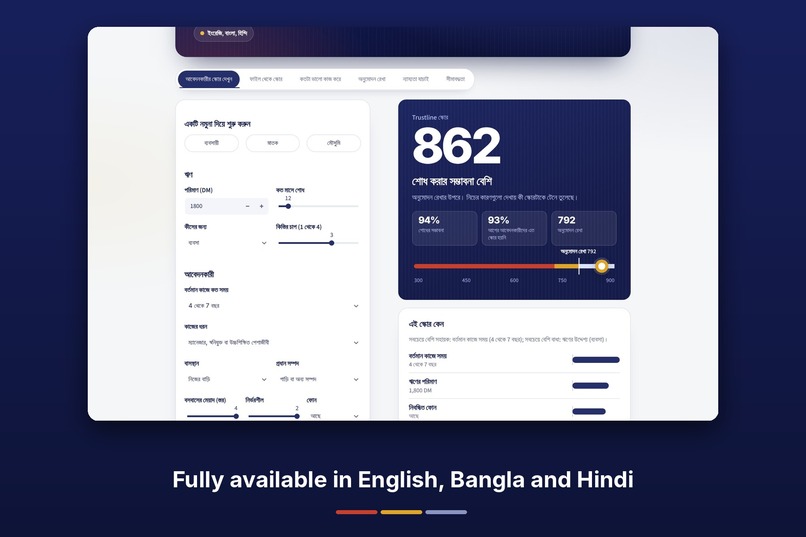
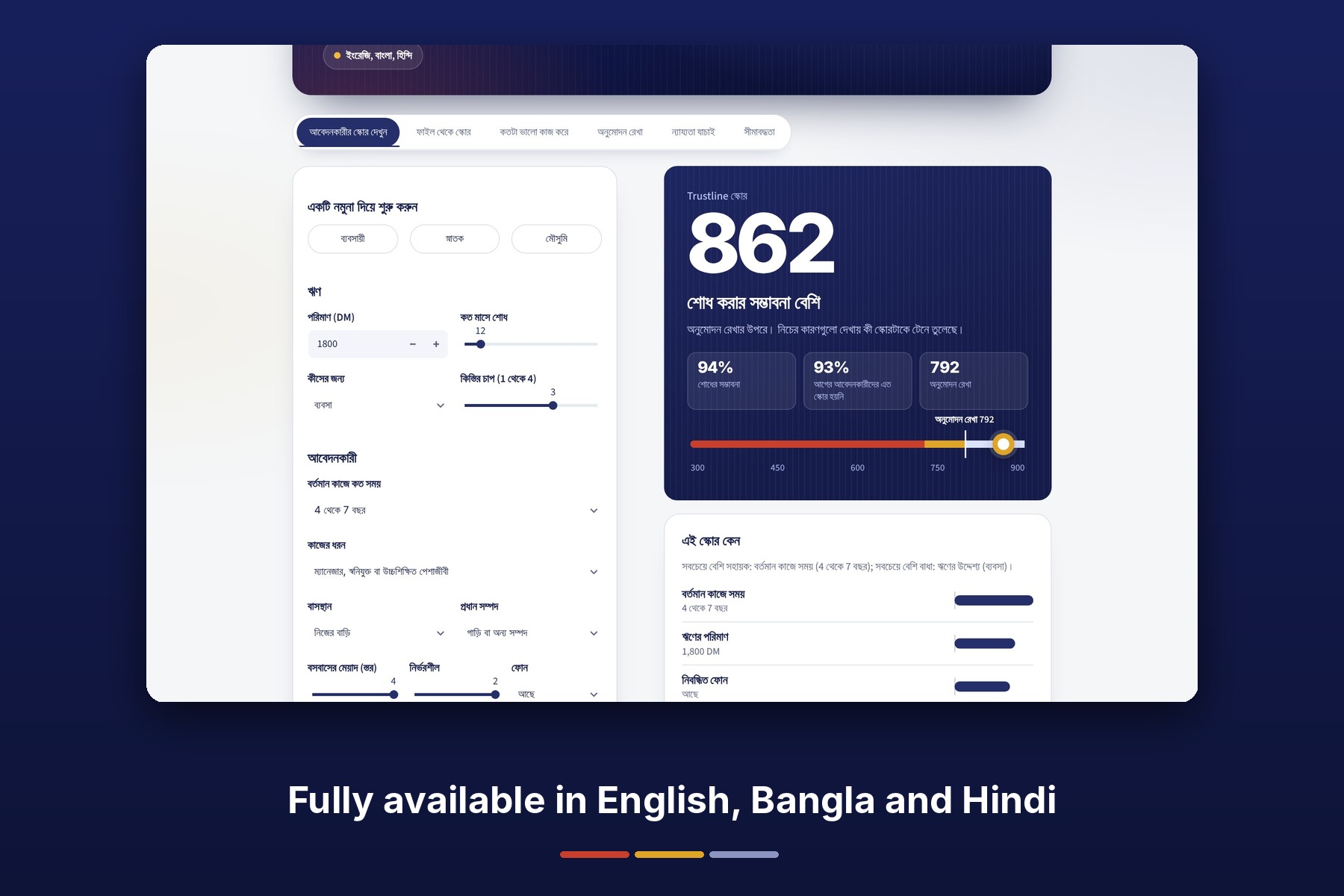
“Fully available in English, Bangla and Hindi”।
Inspiration
Millions of reliable borrowers are declined only because no bank has ever recorded them. No bank record means no score. We asked a concrete question: how much of a person's repayment likelihood can be recovered without any bank-history data, and can every score be explained and audited?
What it does
Trustline estimates how likely an applicant is to repay a loan using only signals a thin-file person can provide: employment stability, housing, main asset, phone, residence, job type, loan purpose, amount and duration. It then:
- shows a 300–900 score with plain-language reasons for every applicant (SHAP)
- offers "what would move it" scenarios, such as a shorter or smaller loan
- scores a whole CSV file and lets you download the results
- lets you move the approval line and see bad loans approved, good applicants turned away and total cost change
- checks that the model's percentages are calibrated
- downloads a one-page report per applicant
- runs a fairness audit by sex and age
- works fully in English, বাংলা and हिन्दी
How we built it
Python, pandas, scikit-learn and LightGBM on the Statlog German Credit dataset (1,000 loans). We simulate a thin-file setting by withholding the six bank-history columns, and use the full-data model only as a reference upper bound. Age, sex and nationality are never inputs; they are used only to audit approval rates. The decision threshold uses the dataset's official 5:1 cost matrix and is chosen on training out-of-fold predictions only. The app is built with Streamlit and Plotly.
Challenges we ran into
Real unbanked lending data is not public, so we simulated the setting and say so clearly. With only 1,000 rows, every number has wide error bars. We also found a real fairness gap: age is not an input, but job tenure and housing act as proxies. The age disparate-impact ratio is 0.64, which fails the four-fifths rule. Dropping proxy features closed the gap only by also removing legitimate signals, so we report it instead of hiding it.
Accomplishments that we're proud of
- Alternative data reaches CV ROC-AUC 0.70 (chance is 0.50), against 0.79 with bank history, so the value of alternative data is measured, not assumed.
- Honest reporting: LightGBM's edge over logistic regression is within one standard deviation, and we do not claim a significant win.
- A trilingual, explainable, auditable app with CSV scoring, an approval-line simulator and calibration check.
What we learned
Alternative data carries real signal but is clearly weaker than bank history, so this works as a screening aid for human review, not an automatic decision-maker. Fairness has to be measured on outcomes, because removing protected inputs does not remove proxies.
What's next for Trustline
Validate on real thin-file lending data, add a fairness-constrained training method, have the Bangla and Hindi text proofread by native speakers, and pilot with a microfinance partner.## Inspiration
What it does
How we built it
Challenges we ran into
Accomplishments that we're proud of
What we learned
What's next for Trustline
Built With
- lightgbm
- matplotlib
- numpy
- pandas
- plotly
- python
- scikit-learn
- shap
- streamlit
