-
-
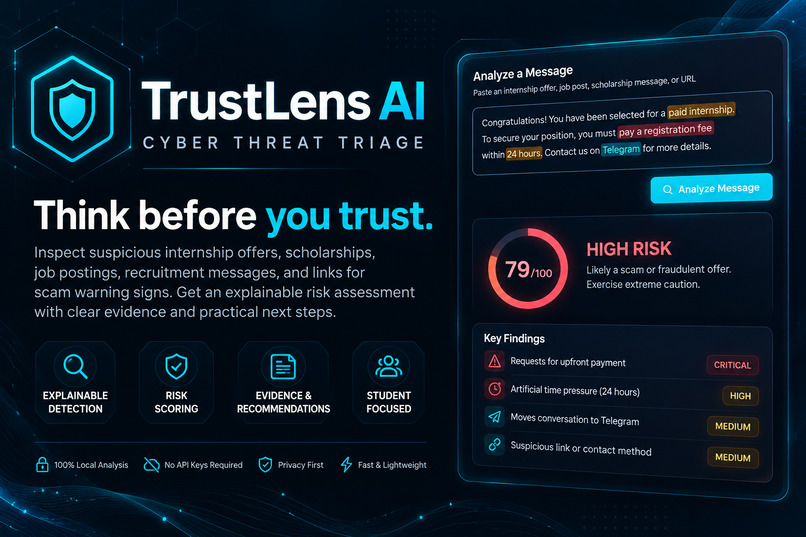
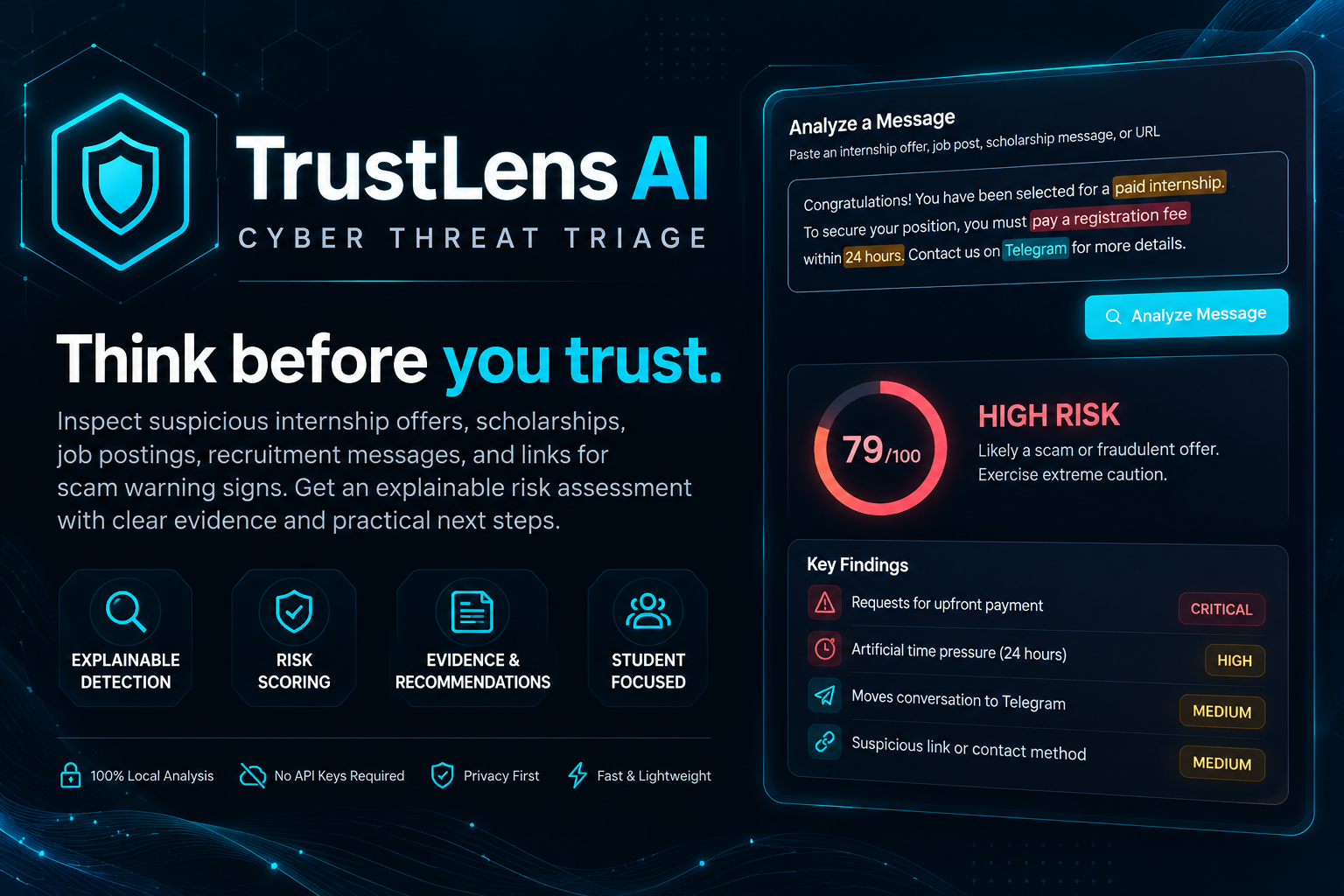
TrustLens AI interface and project overview.
-
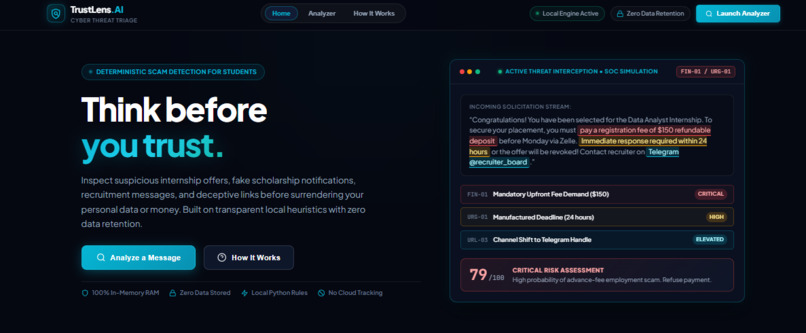
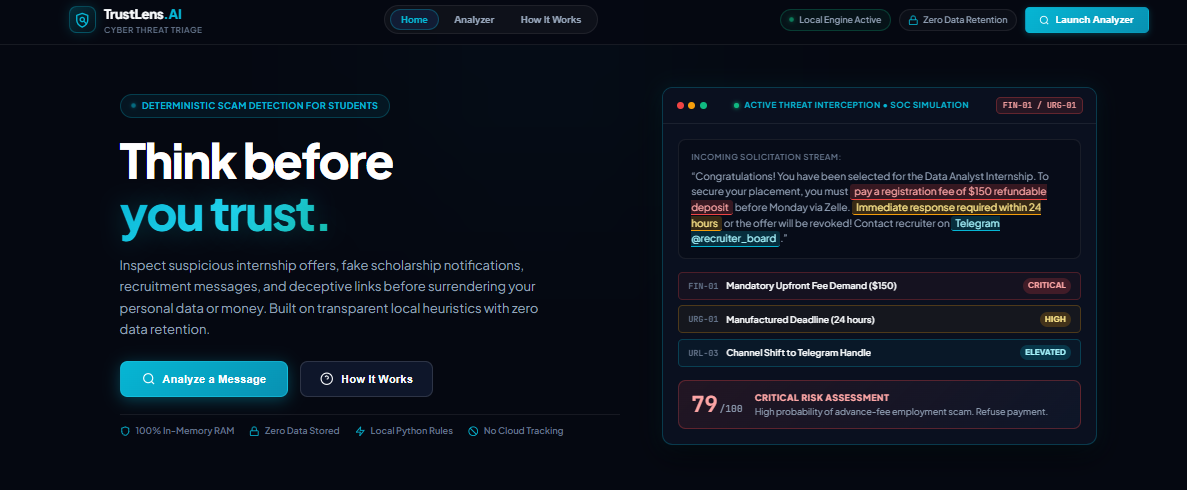
TrustLens AI homepage — explainable, privacy-first scam detection.
-
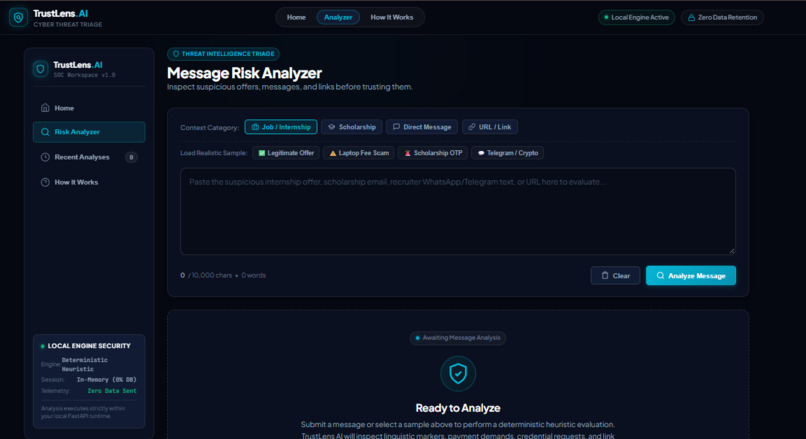
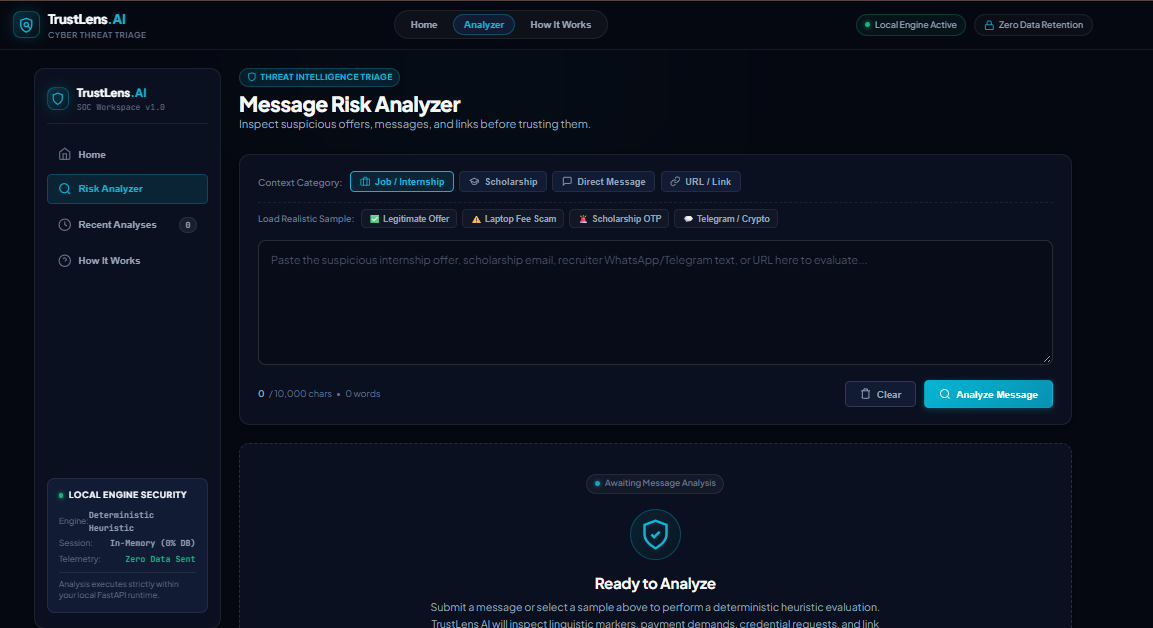
Message Risk Analyzer — inspect suspicious offers and review risk indicators.
-
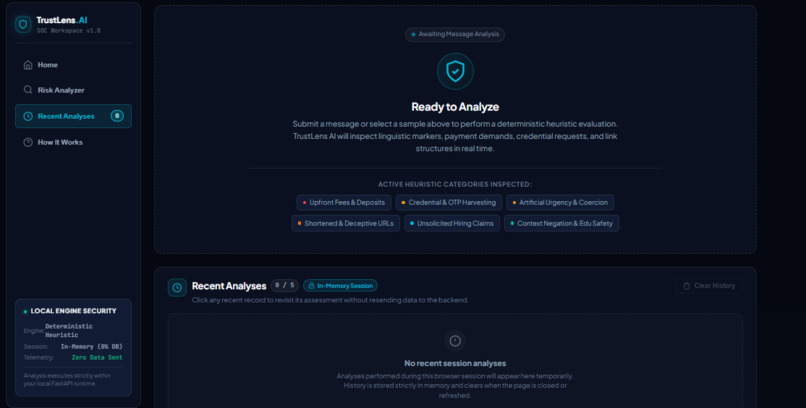
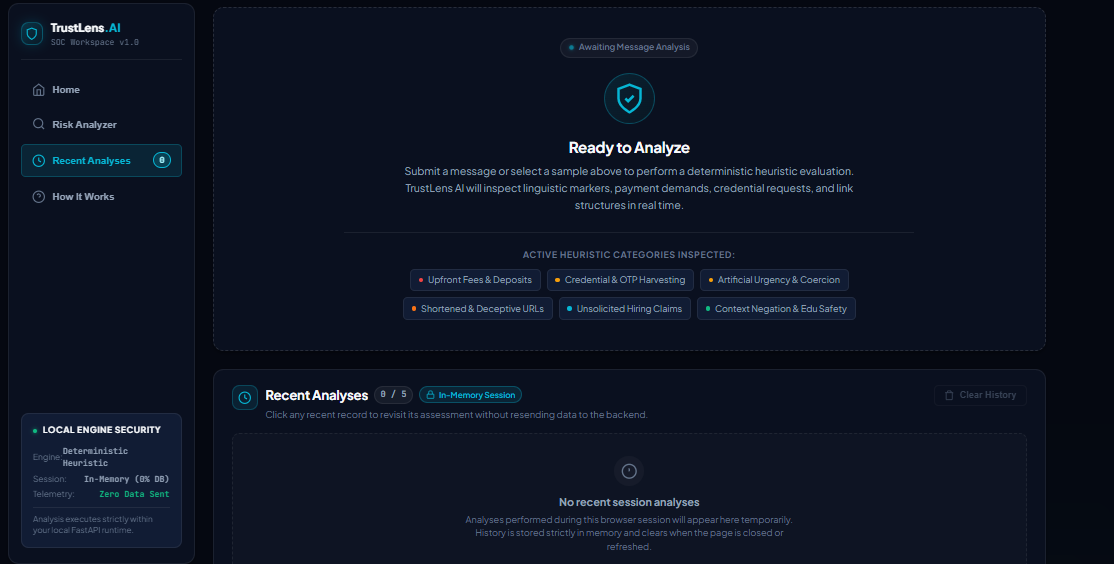
Recent Analyses — revisit assessment reports stored in the browser session.
Inspiration
Students regularly encounter suspicious internship offers, fake scholarships, fraudulent job postings, and recruitment messages that attempt to obtain money or personal information. These scams can be difficult to identify when they use convincing language, artificial urgency, or professional-looking messages.
TrustLens AI was created to help students inspect suspicious messages before trusting them.
What it does
TrustLens AI is a local-first cybersecurity tool that analyzes suspicious internship offers, scholarships, job postings, URLs, and forwarded messages. It produces an interpretable risk score, identifies warning signs, explains the evidence behind its assessment, and recommends practical next steps.
How we built it
The project uses Python, FastAPI, Pydantic, and a browser-based interface built with HTML, CSS, and JavaScript. Its deterministic rule-based analysis engine evaluates suspicious patterns and contextual signals, then generates structured findings and recommendations.
The baseline application does not require an external AI API key.
Challenges we faced
A major challenge was making risk assessments explainable rather than simply labeling a message as suspicious. The system needs to identify specific warning signs, reduce duplicate evidence, and account for context so that legitimate educational messages are not automatically treated as scams.
What we learned
We explored explainable risk scoring, API development, input validation, frontend-backend integration, privacy-conscious design, and automated testing.
What's next
Future improvements could include broader scam-pattern coverage, additional language support, stronger evaluation against labeled examples, and optional integrations with trusted threat-intelligence sources.
Our goal
TrustLens AI encourages students to pause, inspect the evidence, and verify opportunities through official channels before sharing money, credentials, or personal information.


Log in or sign up for Devpost to join the conversation.