-
-
-
-
-
-
-
-
-
-
-
-
-
-
-
-
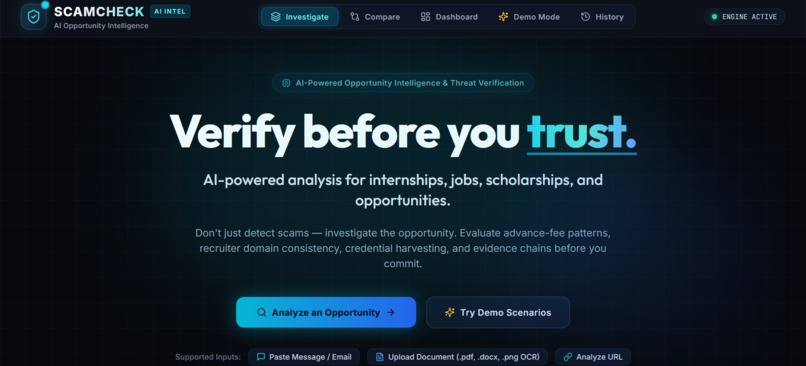
Landing Page
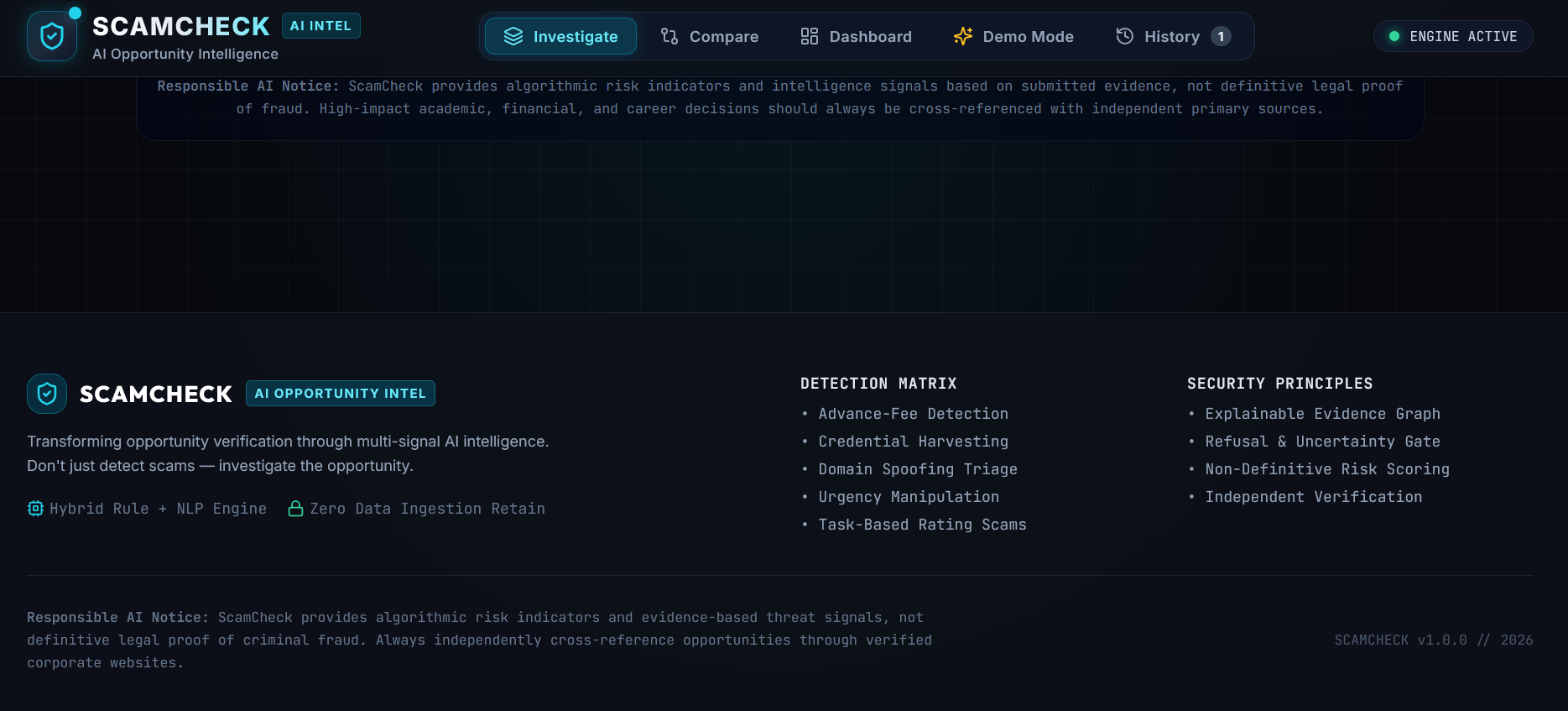
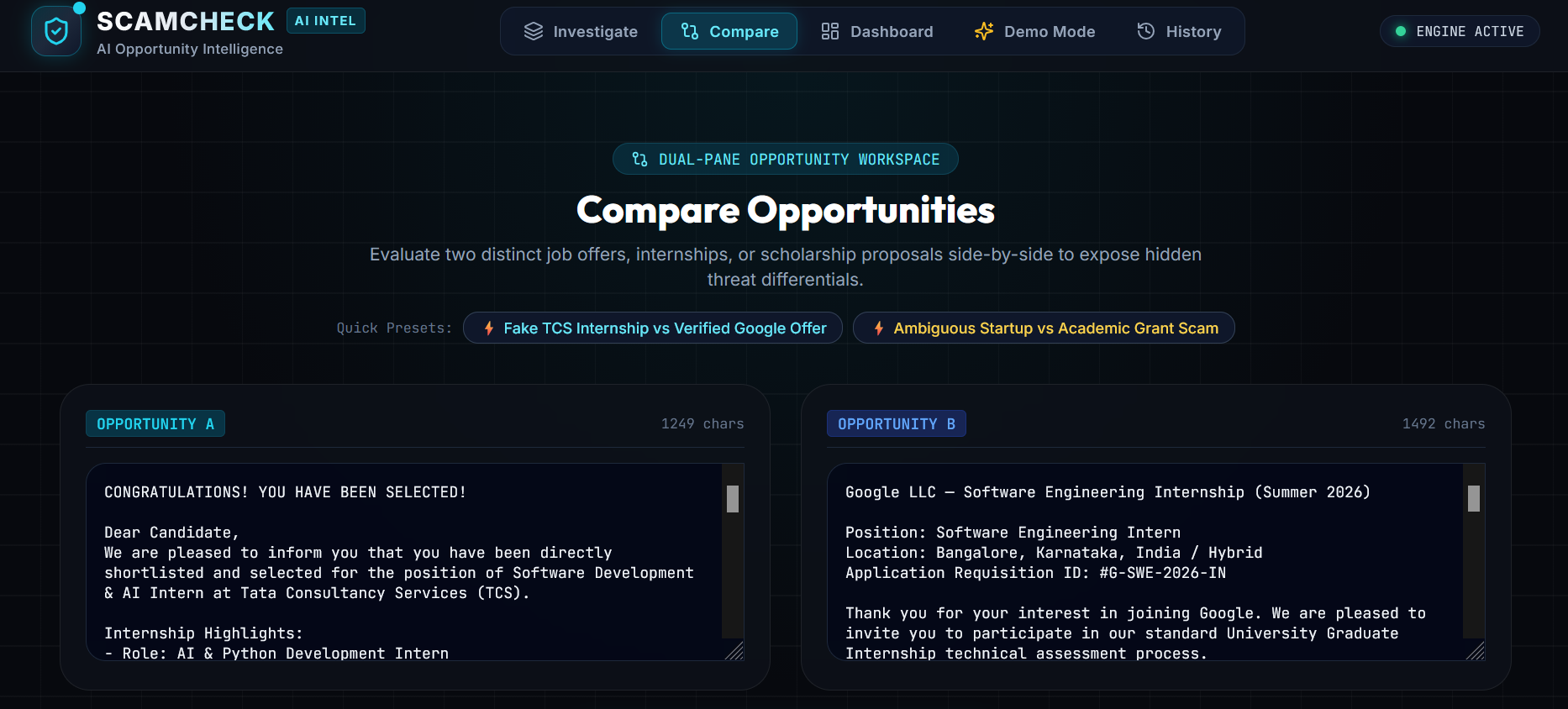
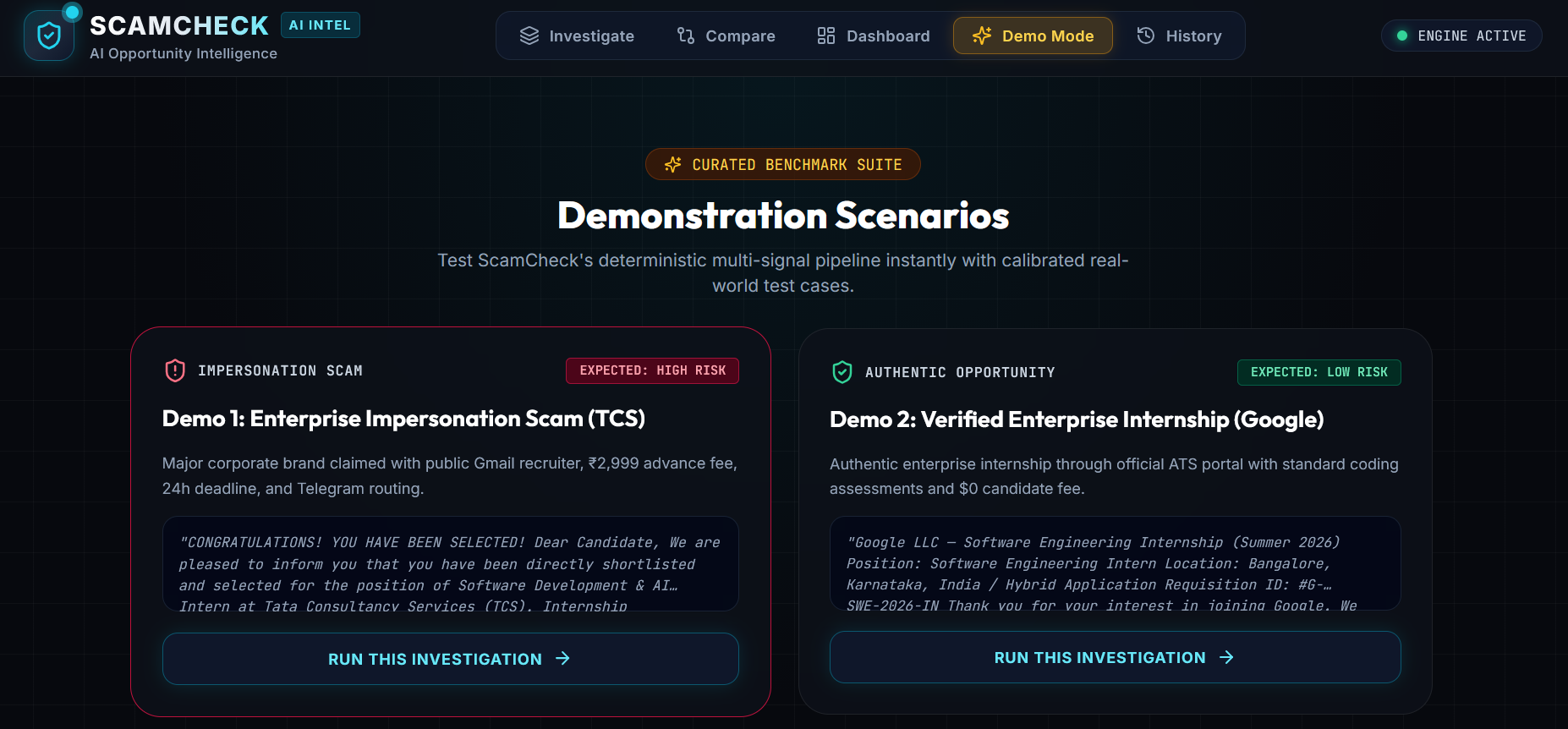
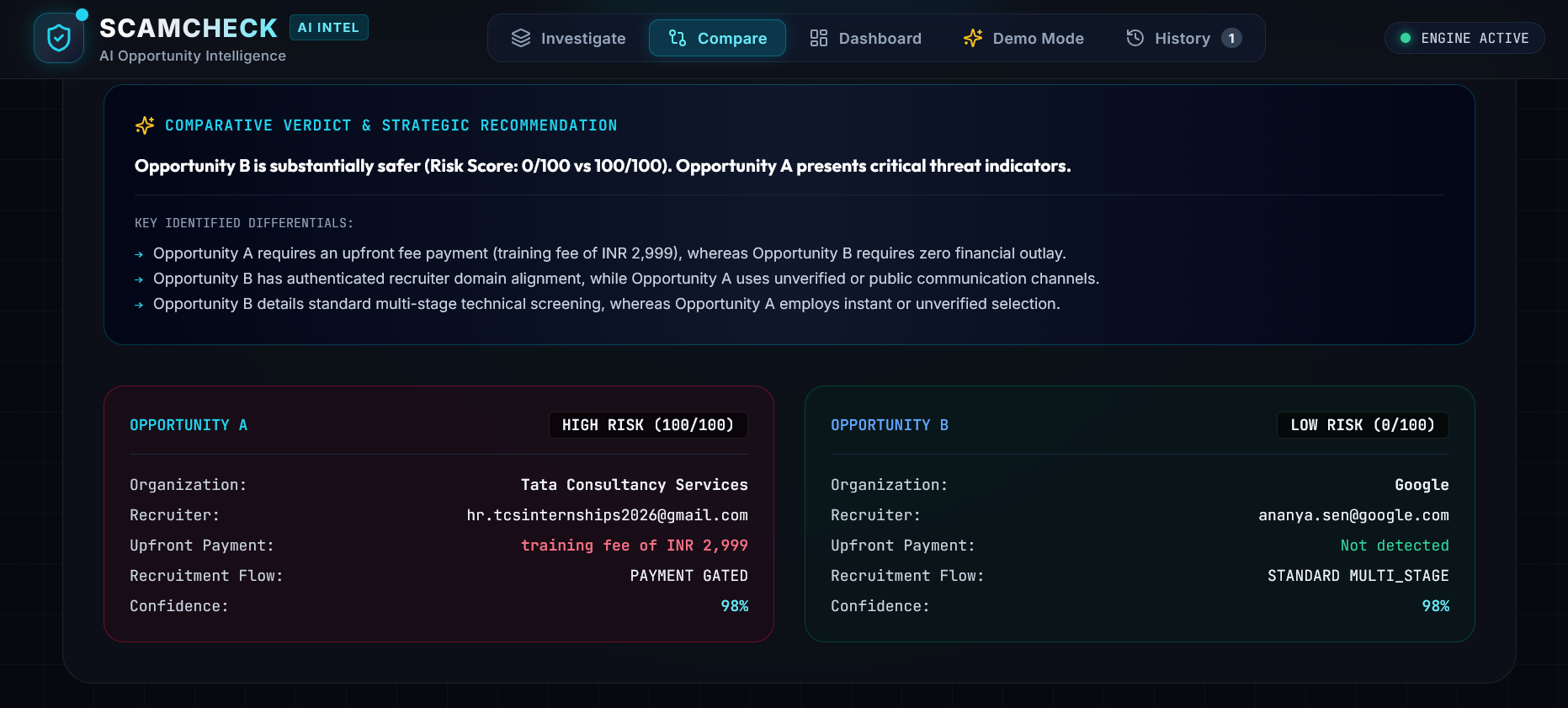
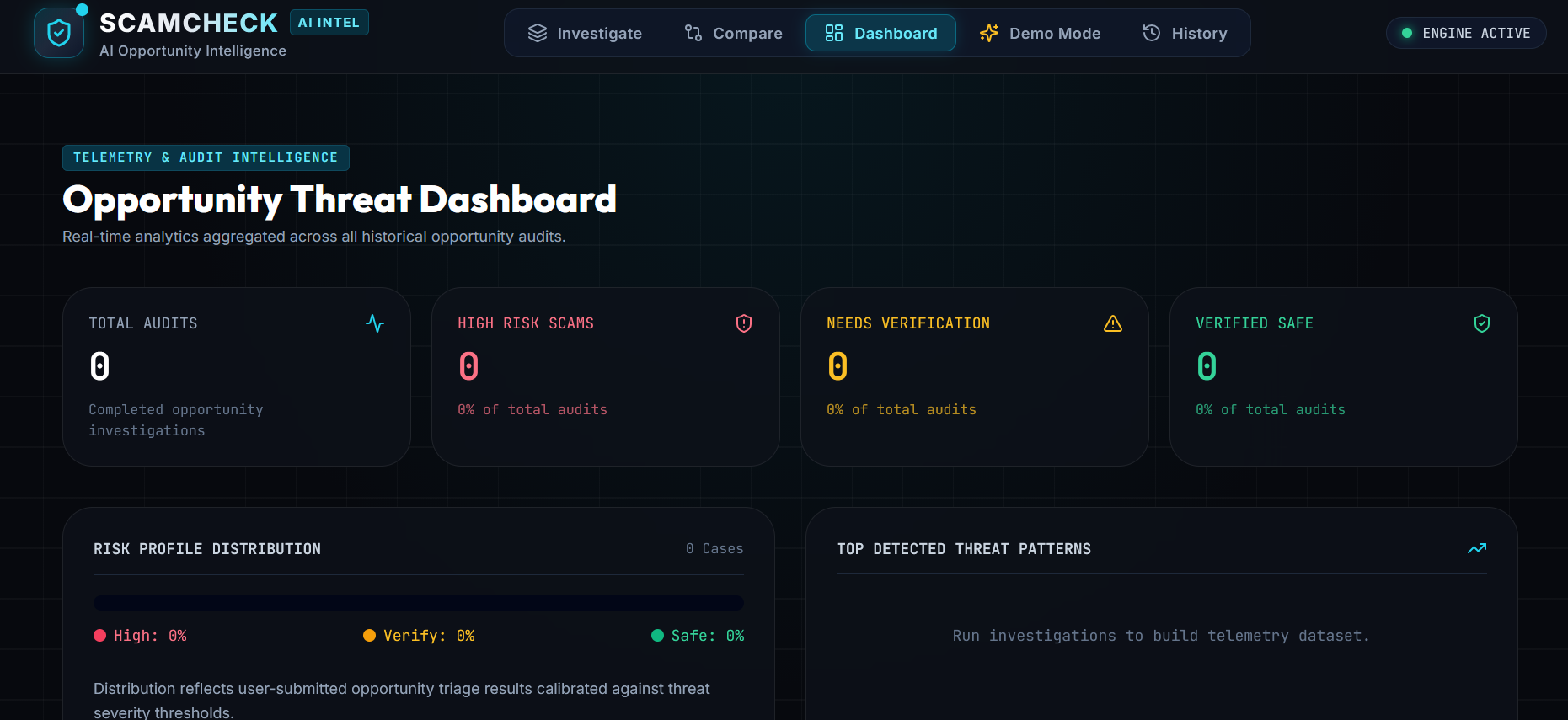
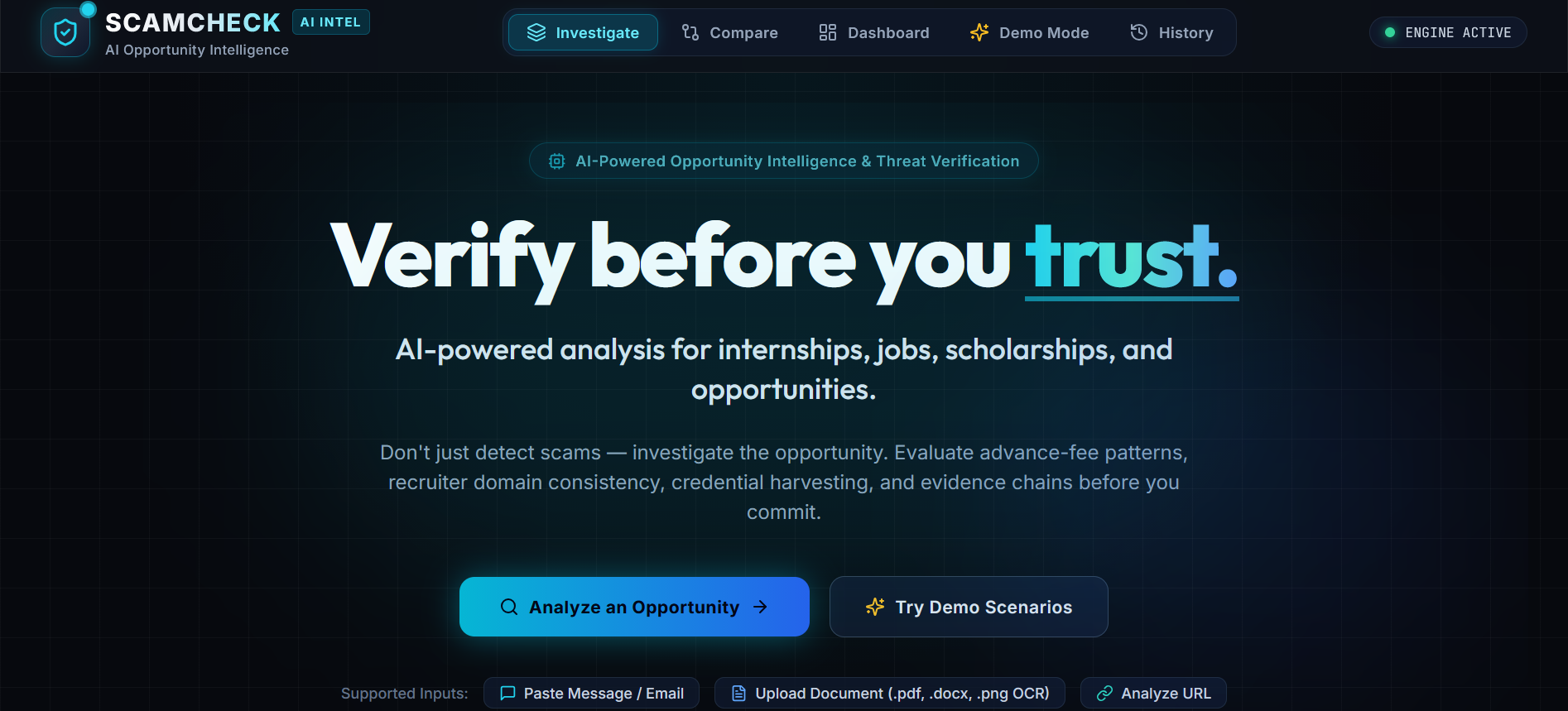
Inspiration
We were inspired by a simple but increasingly common problem: students and job seekers receive internship offers, job messages, scholarships, and other online opportunities through email, WhatsApp, Telegram, PDFs, and social media, but it can be difficult to know what is trustworthy.
Existing scam checkers often reduce a complex situation to a simple "safe" or "scam" label. We wanted to build something more responsible—something that explains why an opportunity looks risky and tells users what they should verify before taking action.
What We Built
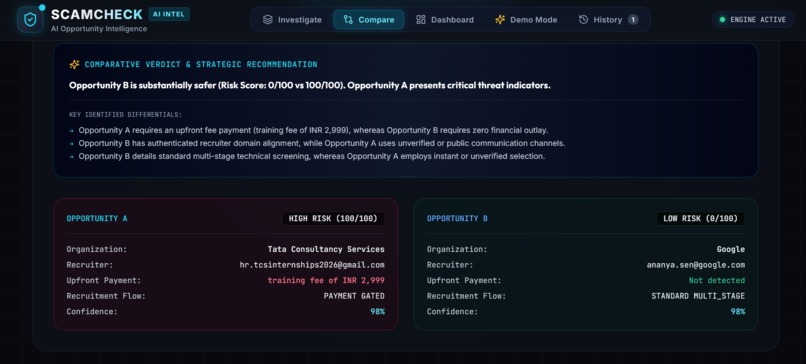
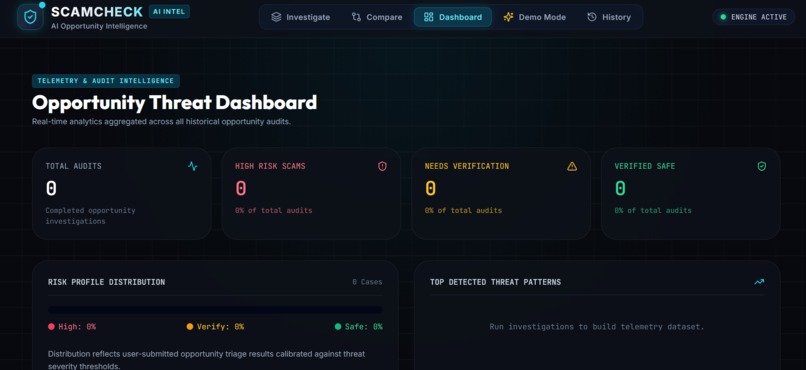
TrustLens AI is an AI-powered opportunity verification platform that analyzes messages, screenshots, documents, and URLs to identify suspicious patterns and inconsistencies.
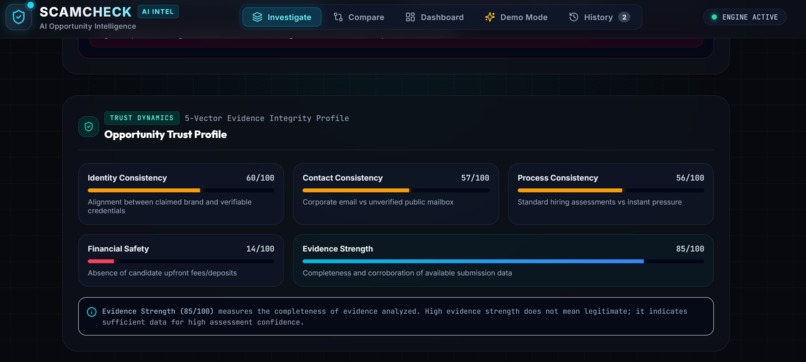
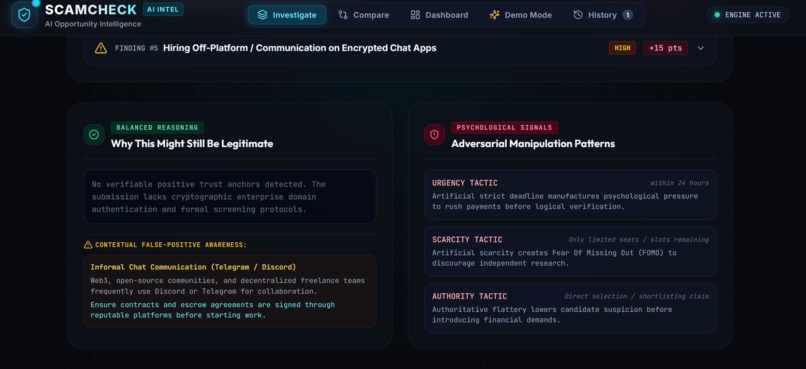
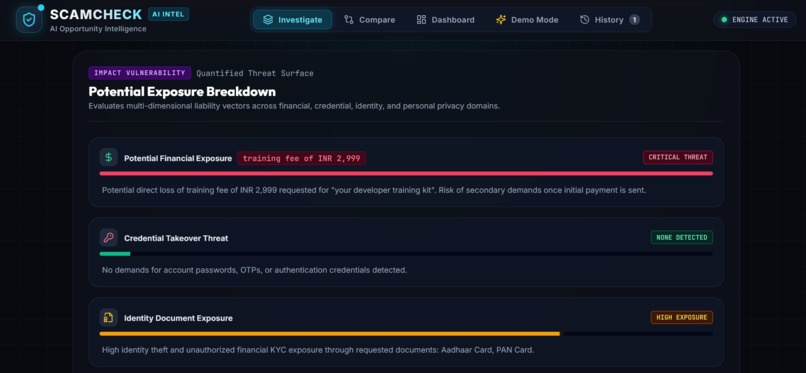
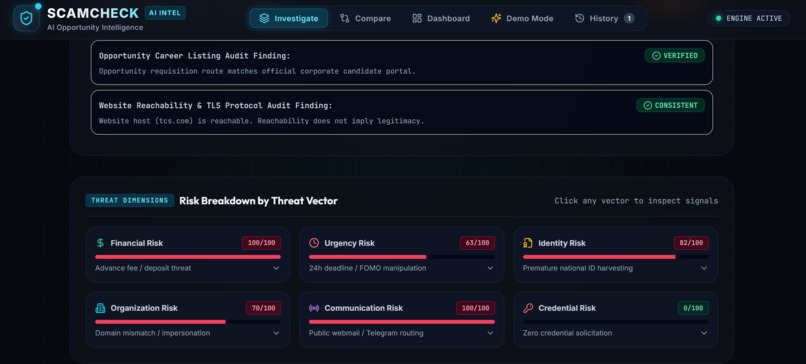
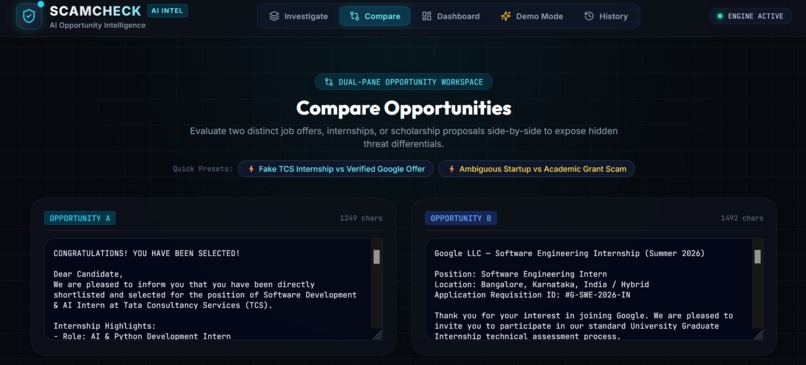
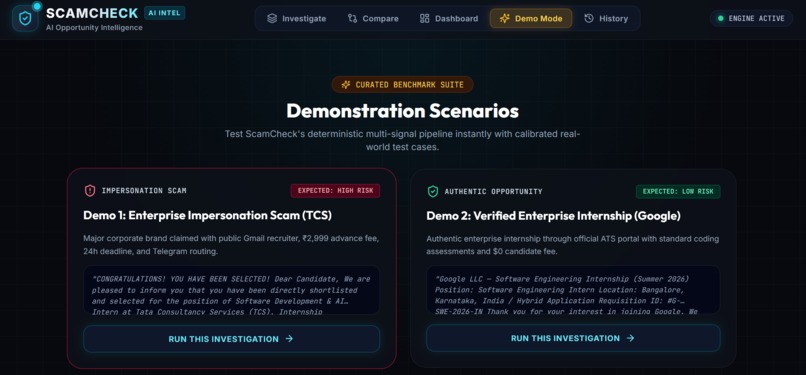
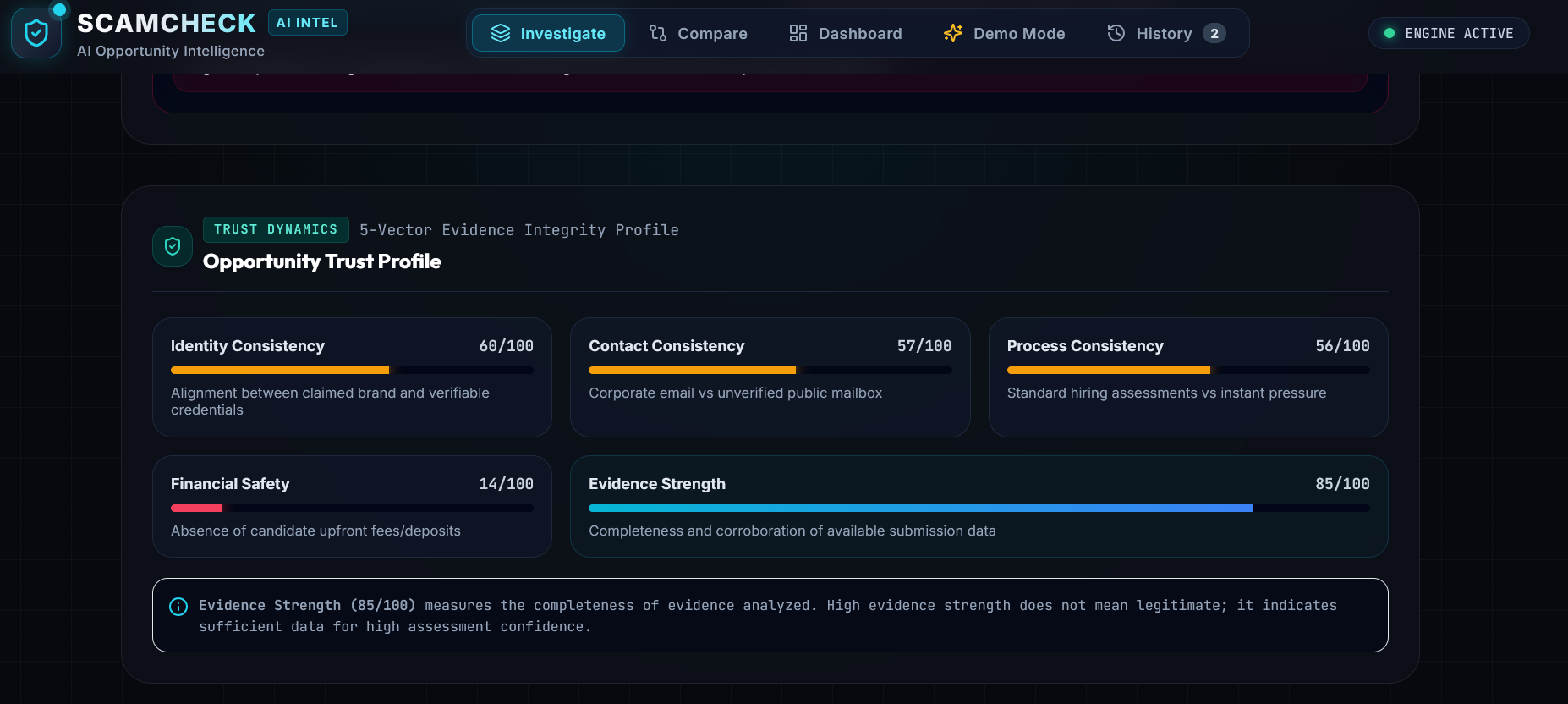
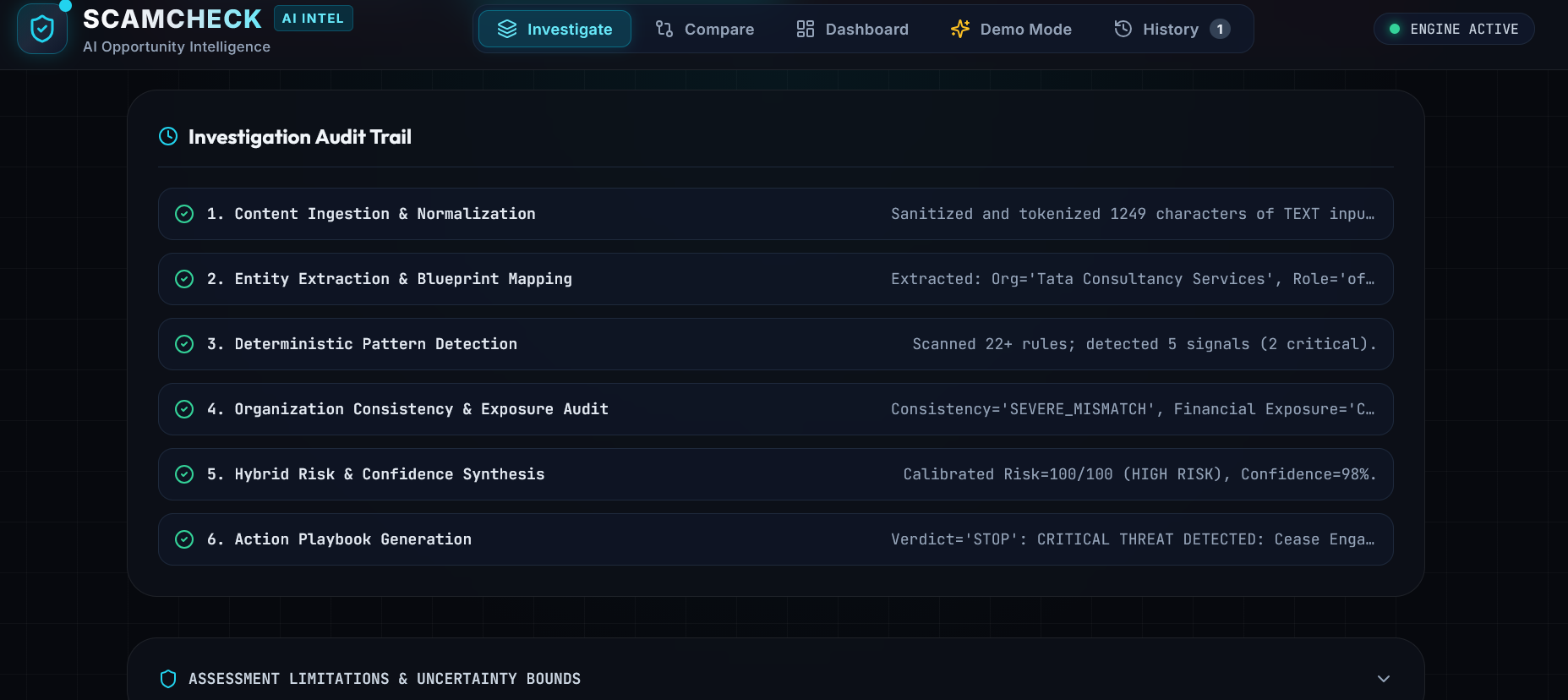
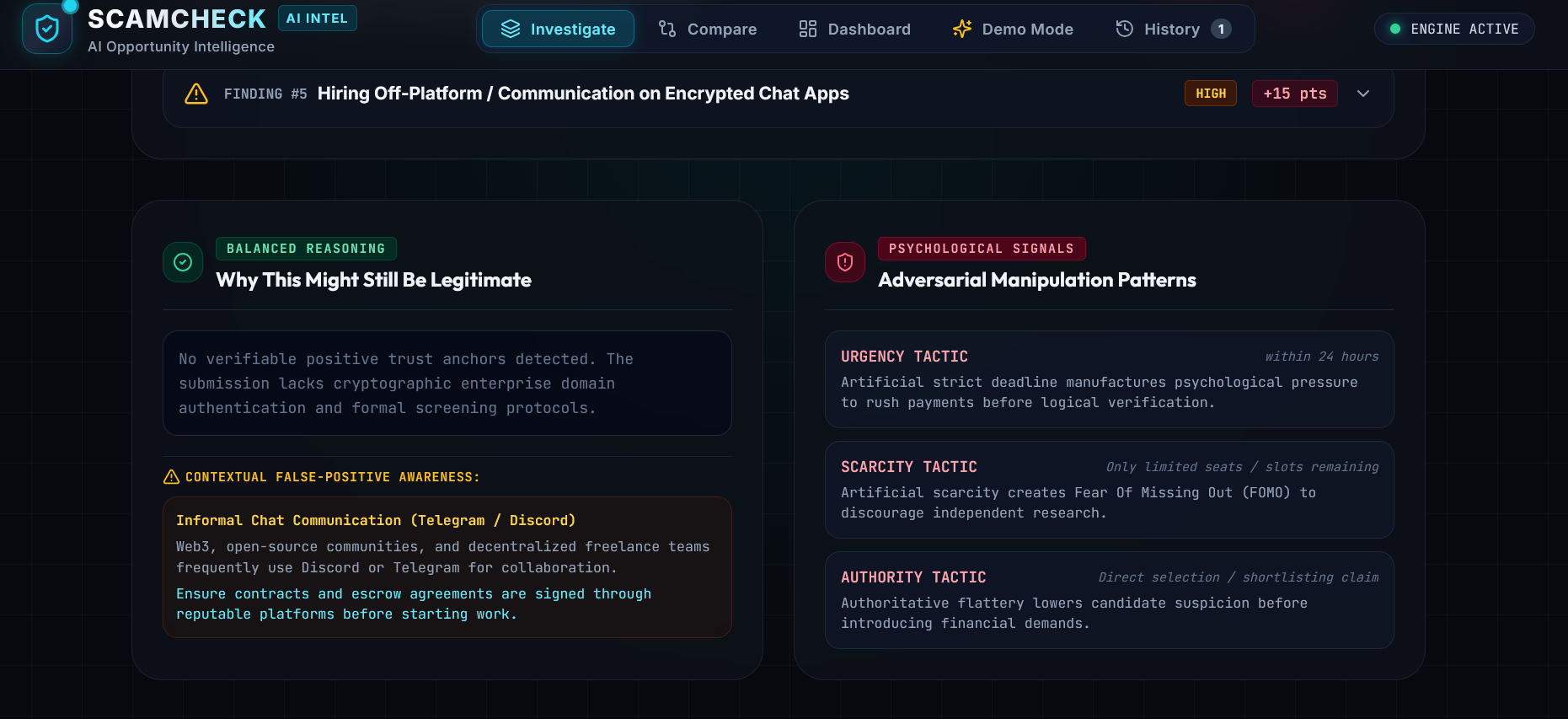
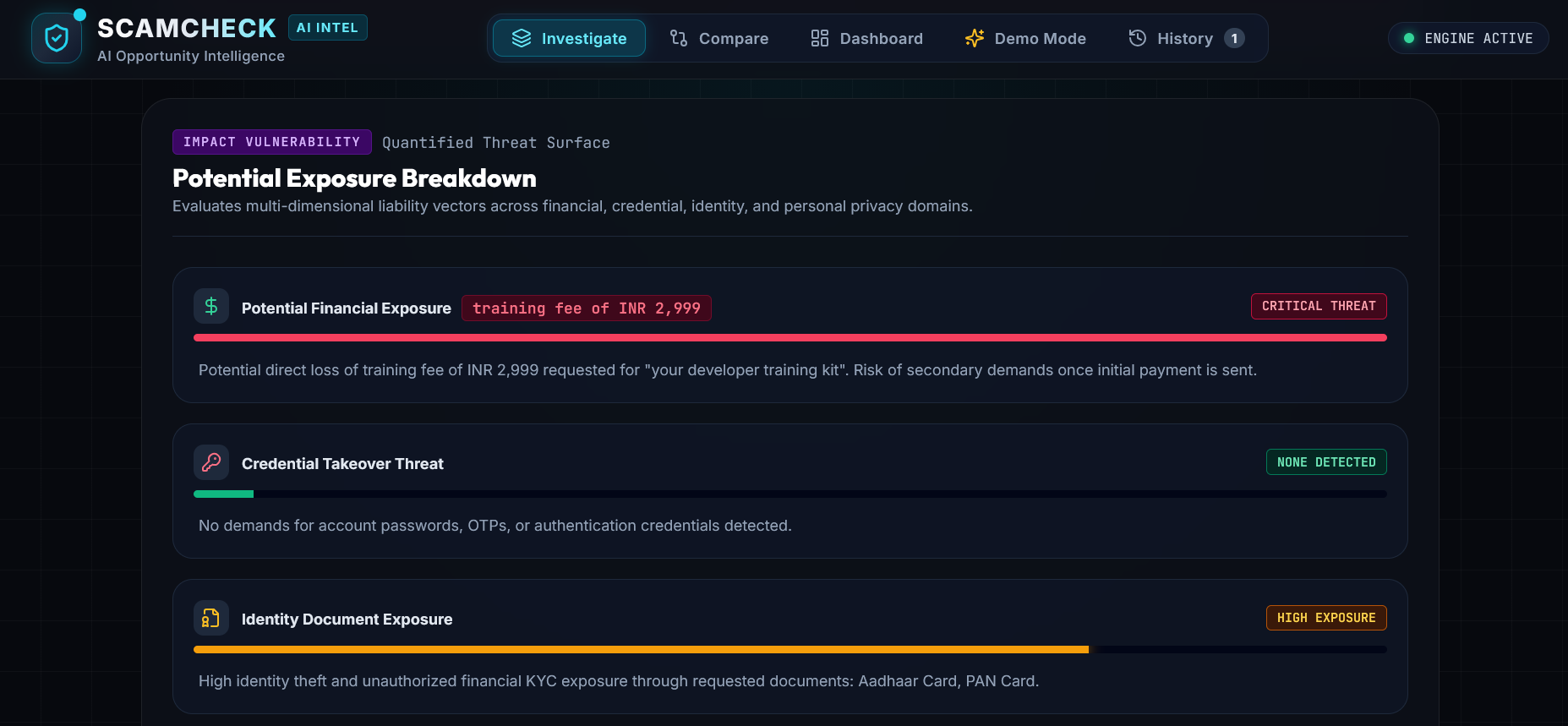
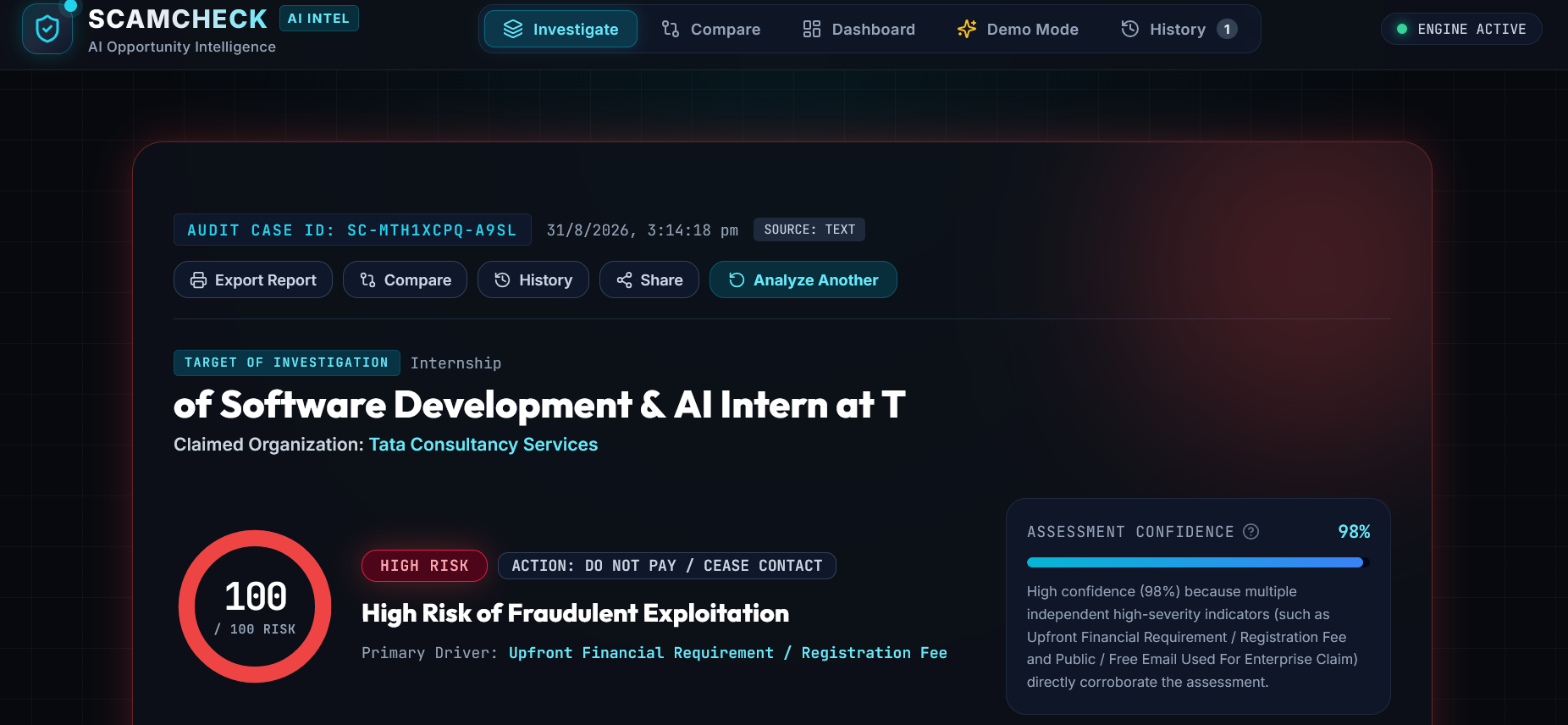
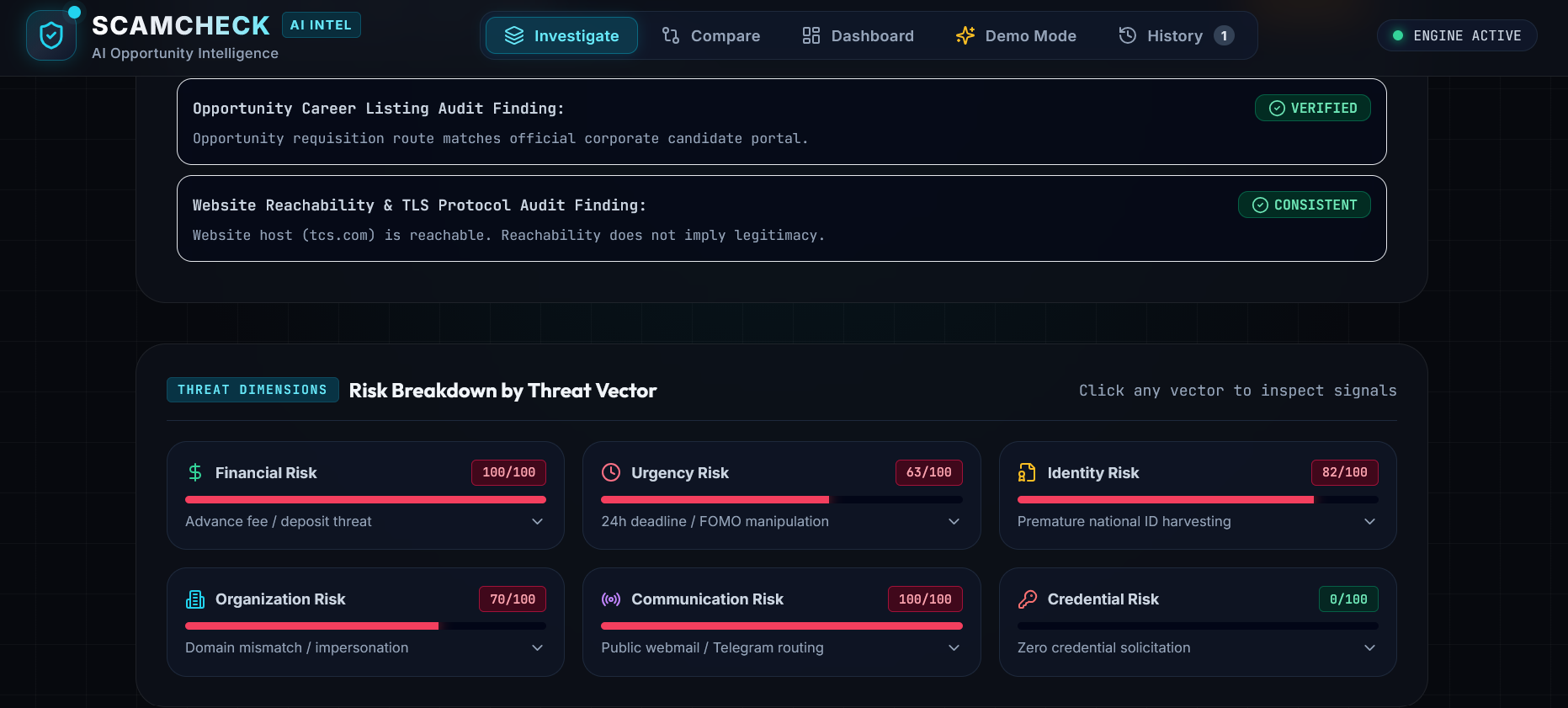
The system extracts important entities such as companies, recruiters, contact details, fees, deadlines, and hiring claims. It then evaluates multiple signals including payment requests, impersonation patterns, suspicious domains, credential requests, artificial urgency, and contradictions between different claims.
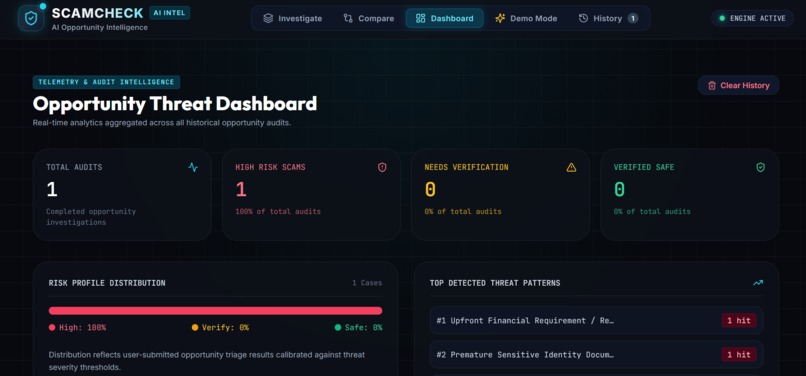
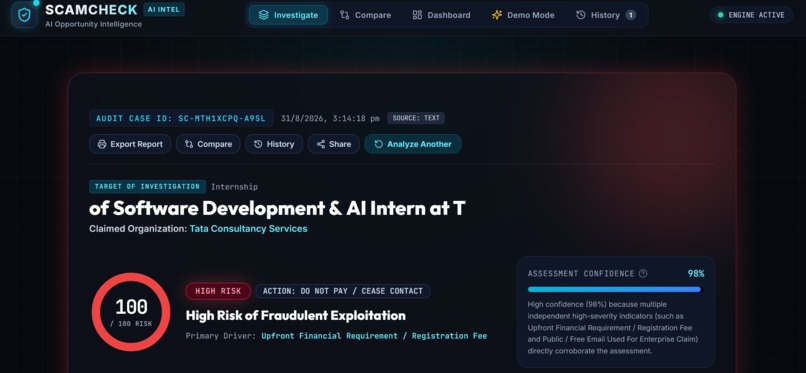
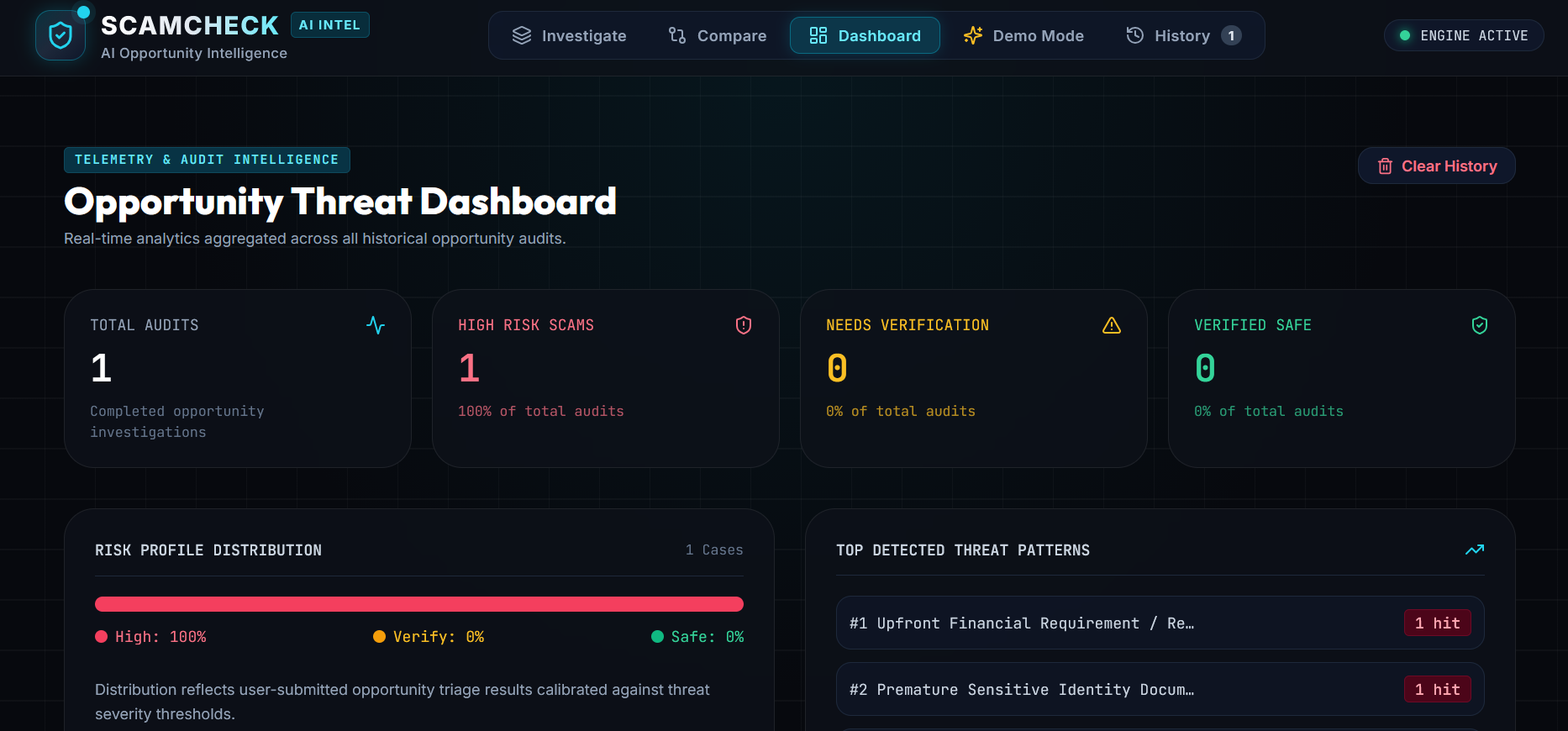
Instead of simply producing a binary prediction, TrustLens AI provides an explainable risk assessment, supporting evidence, confidence level, and actionable verification steps.
How We Built It
We built TrustLens AI using a full-stack architecture:
- Frontend: React, TypeScript, Vite, and Tailwind CSS
- Backend: Node.js, Express, and TypeScript
- Document Analysis: PDF, DOCX, and text extraction
- OCR: Screenshot-to-text analysis
- AI/Risk Engine: Entity extraction, threat heuristics, evidence correlation, contradiction detection, and bounded risk scoring
- Security: Input validation, upload restrictions, SSRF protection, prompt-injection handling, and security testing
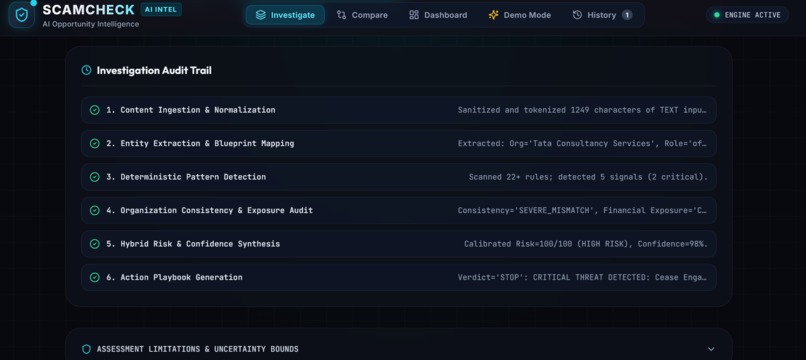
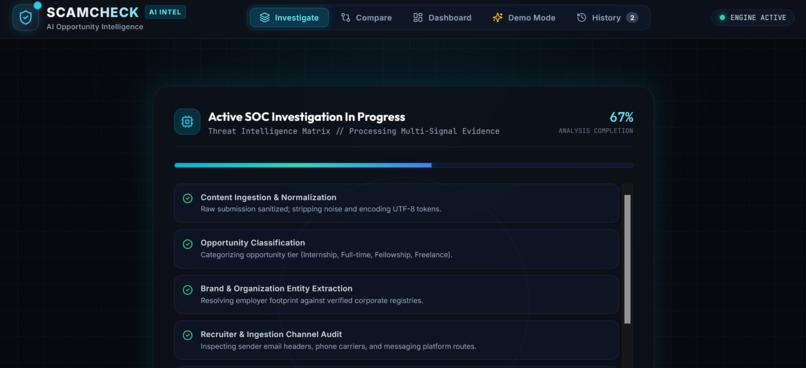
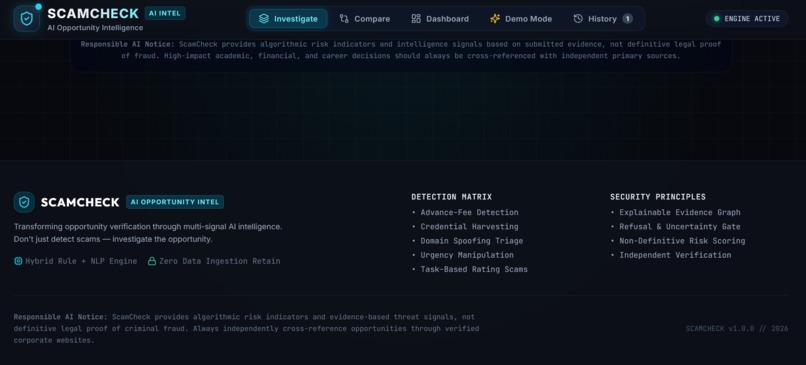
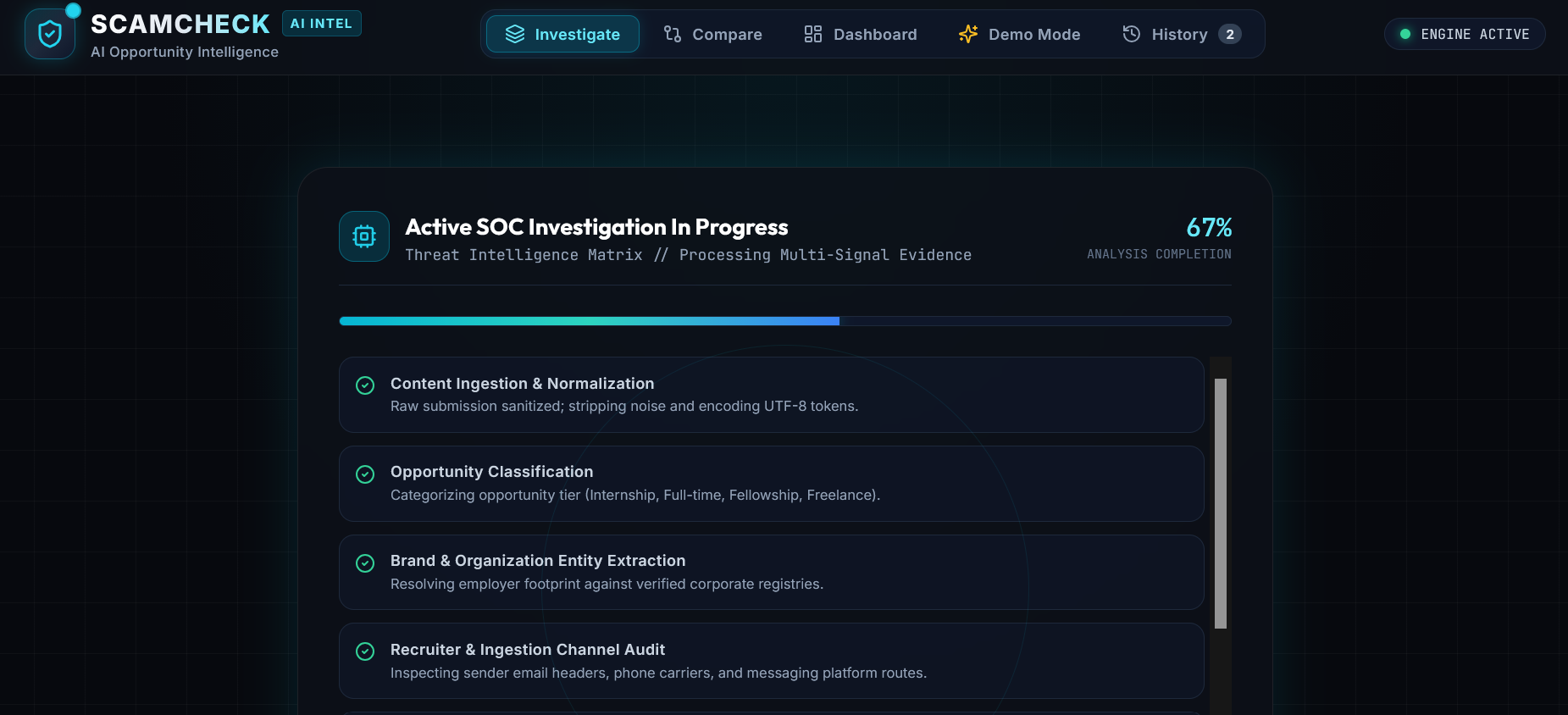
The analysis follows a five-stage pipeline:
EXTRACT → DETECT → CORRELATE → SCORE → RECOMMEND
This allows every major risk assessment to be connected to observable evidence rather than an unexplained score.
What We Learned
Building TrustLens AI taught us that responsible AI is not only about achieving high accuracy. For security-related decisions, explainability, uncertainty, evidence, and safe failure modes are equally important.
We also learned how to combine AI-assisted analysis with deterministic security rules, multimodal data processing, full-stack development, and automated testing to create a practical system.
Challenges
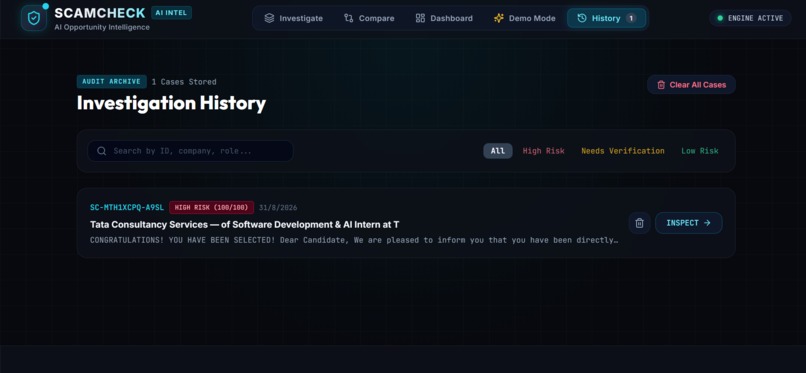
One of our biggest challenges was avoiding false certainty. A missing piece of information does not necessarily mean an opportunity is fraudulent. To address this, we separated risk from confidence and introduced a NEEDS VERIFICATION state for cases where the available evidence is insufficient.
Handling screenshots and documents was another challenge because extracted text can be incomplete or poorly formatted. We added normalization and validation steps before running the analysis.
Security was also a major consideration because users may submit untrusted URLs, files, and messages. We therefore designed the system with input restrictions, sandboxed processing, request timeouts, and protection against malicious inputs.
The Goal
TrustLens AI is designed to help people pause, understand the evidence, and verify before they trust, pay, or share sensitive information.
Don't just detect the risk. Explain it. Verify it. Act safely.
Built With
- ai
- analysis
- css
- cybersecurity
- document
- explainableai
- express.js
- learning
- machine
- natural-language-processing
- node.js
- ocr
- processing
- react
- risk
- tailwind
- typescript
- vite


Log in or sign up for Devpost to join the conversation.