Inspiration
Online scams are becoming increasingly convincing, and anyone can fall for a message that creates urgency, promises rewards, or impersonates a trusted organization. We wanted to build a tool that helps people pause, recognize warning signs, and make informed decisions before clicking a link or sharing sensitive information.
What it does
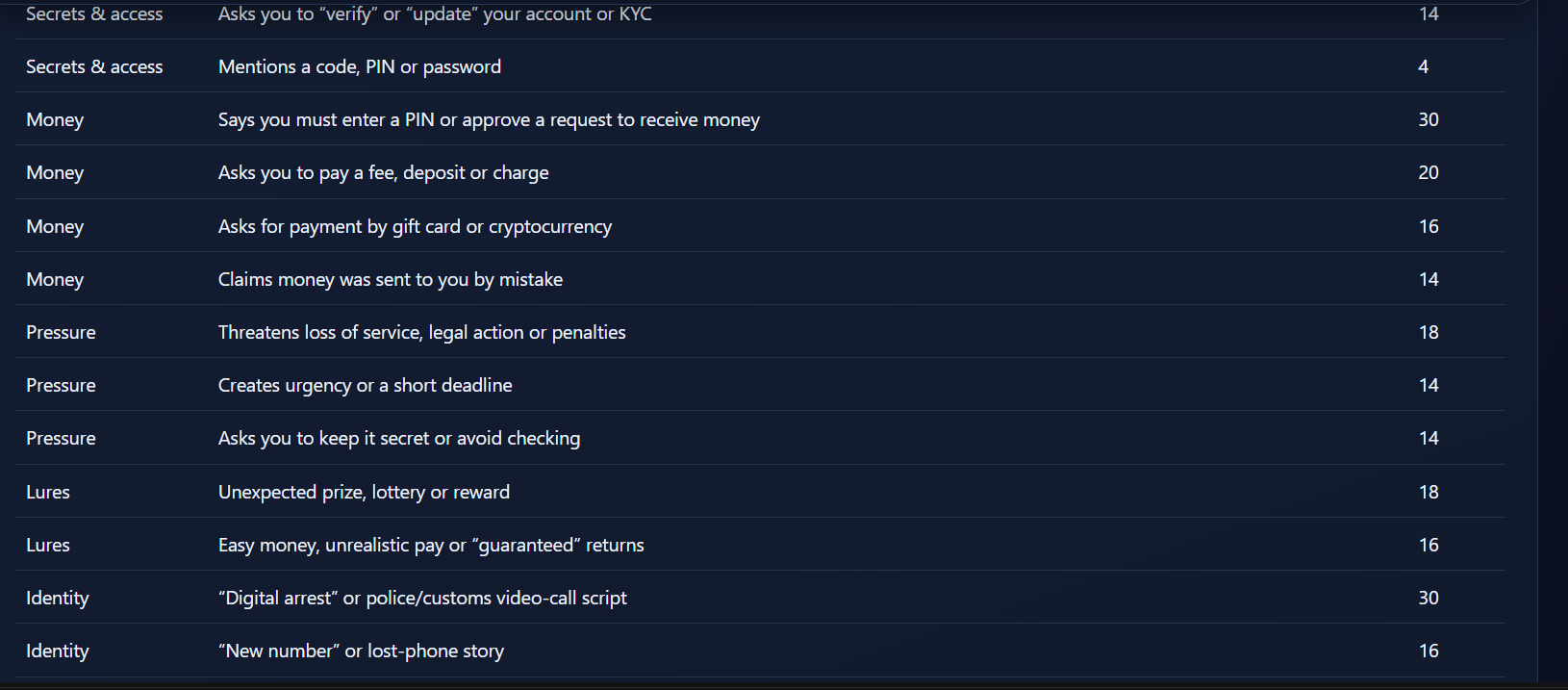
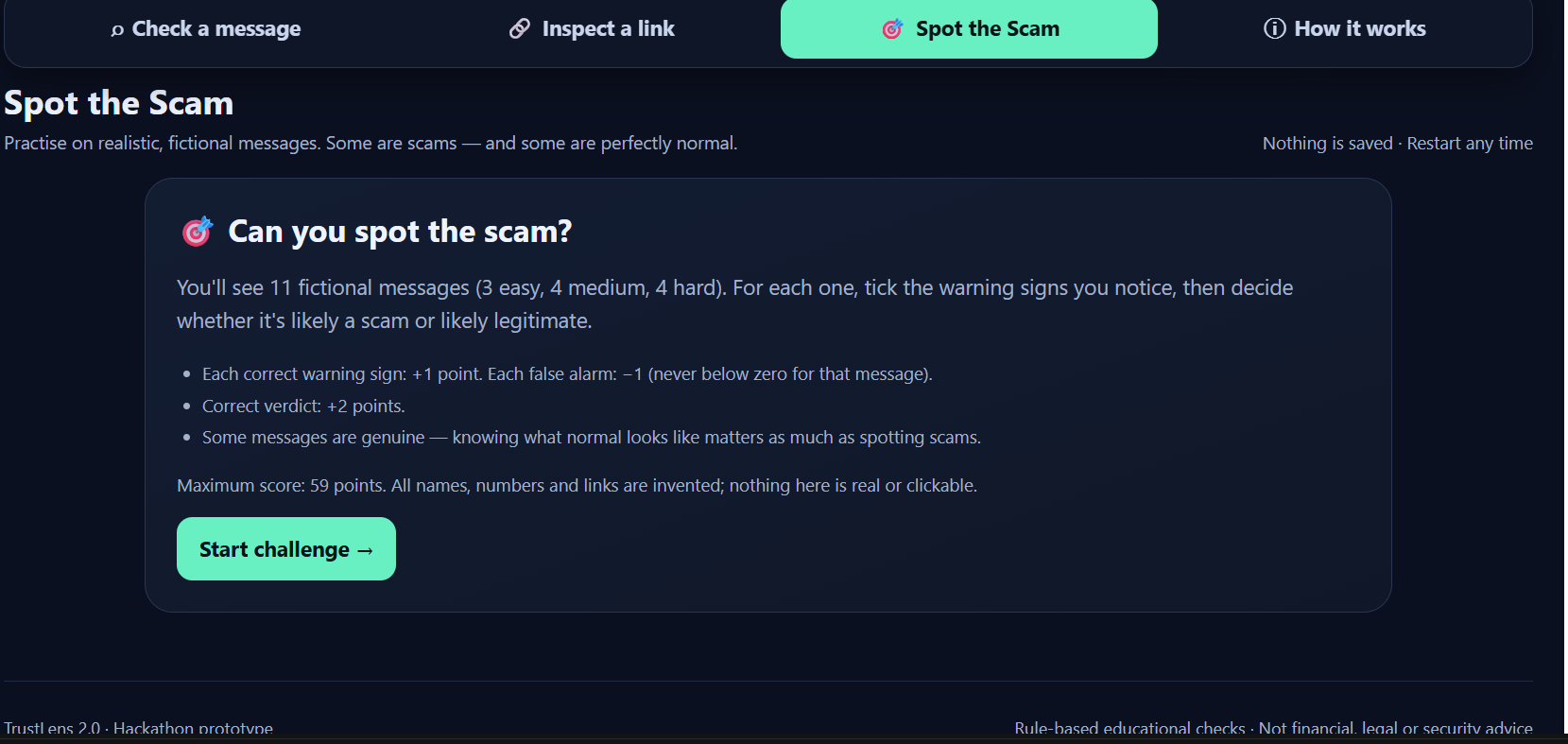
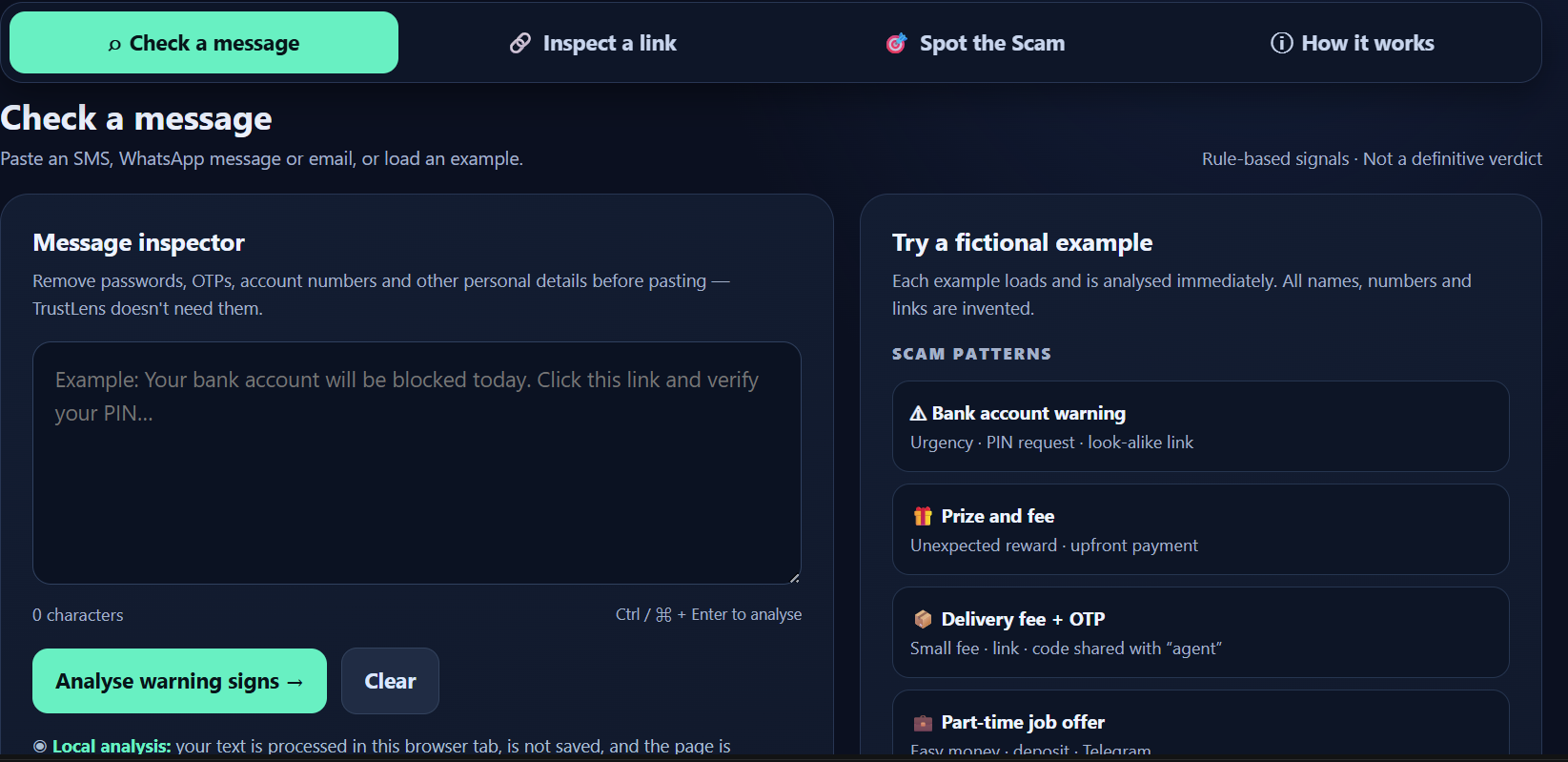
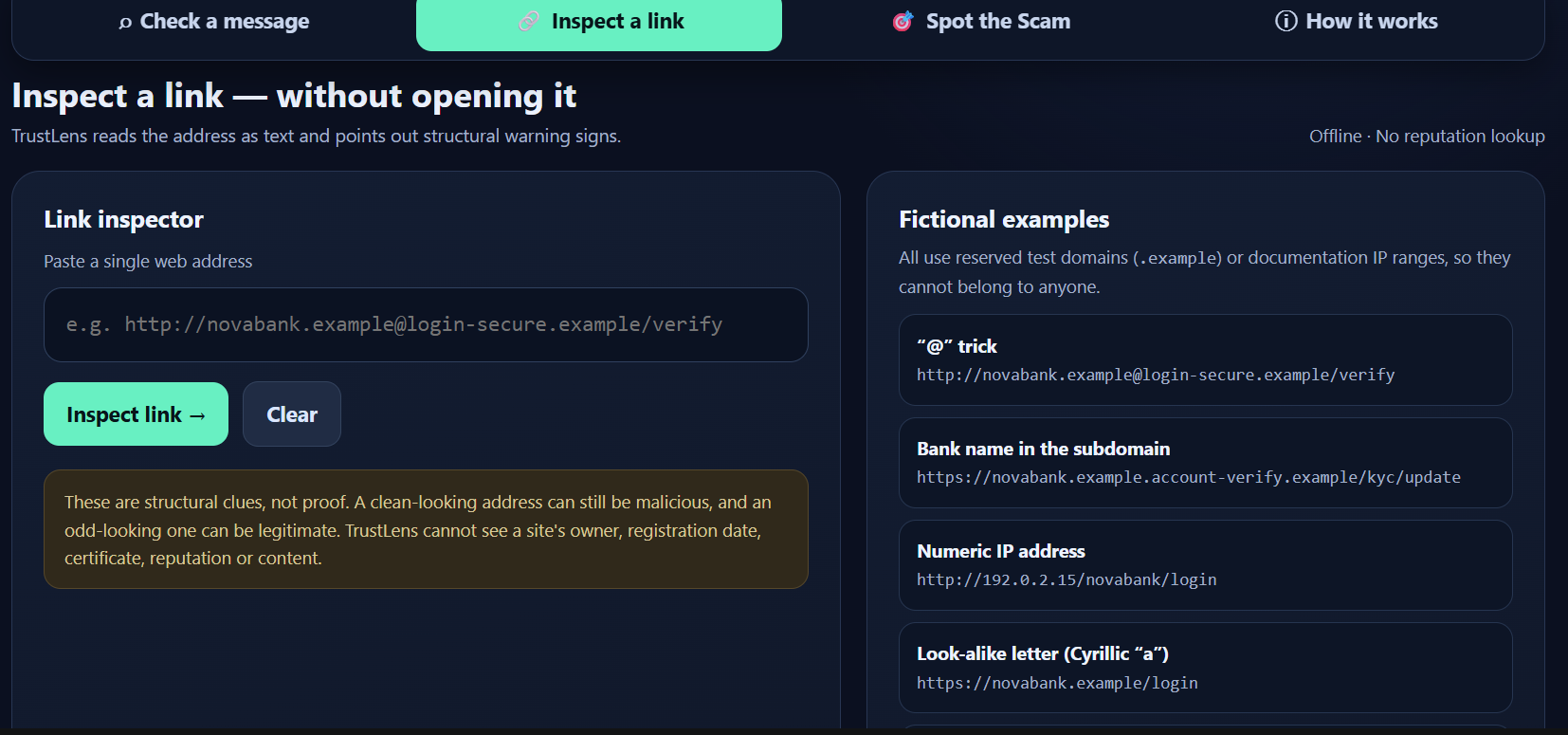
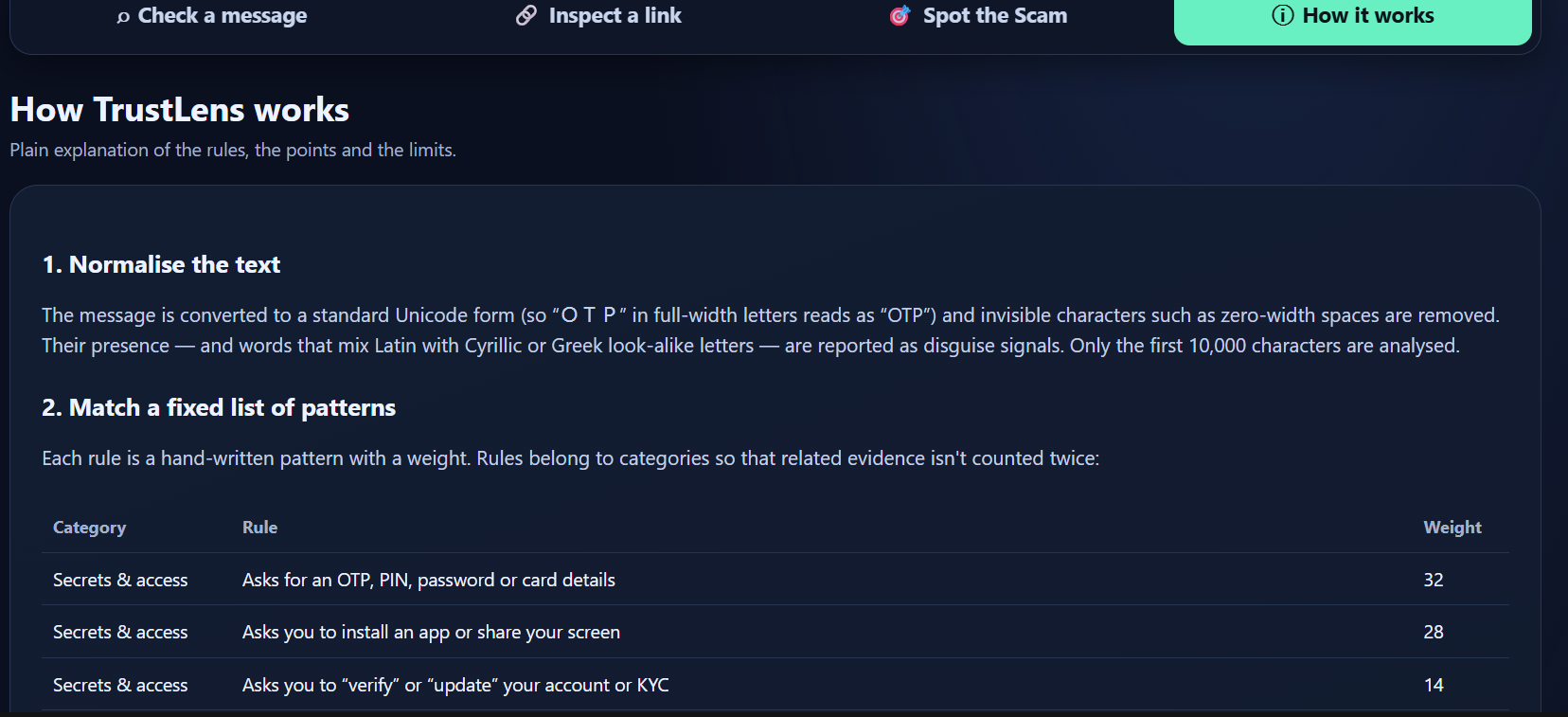
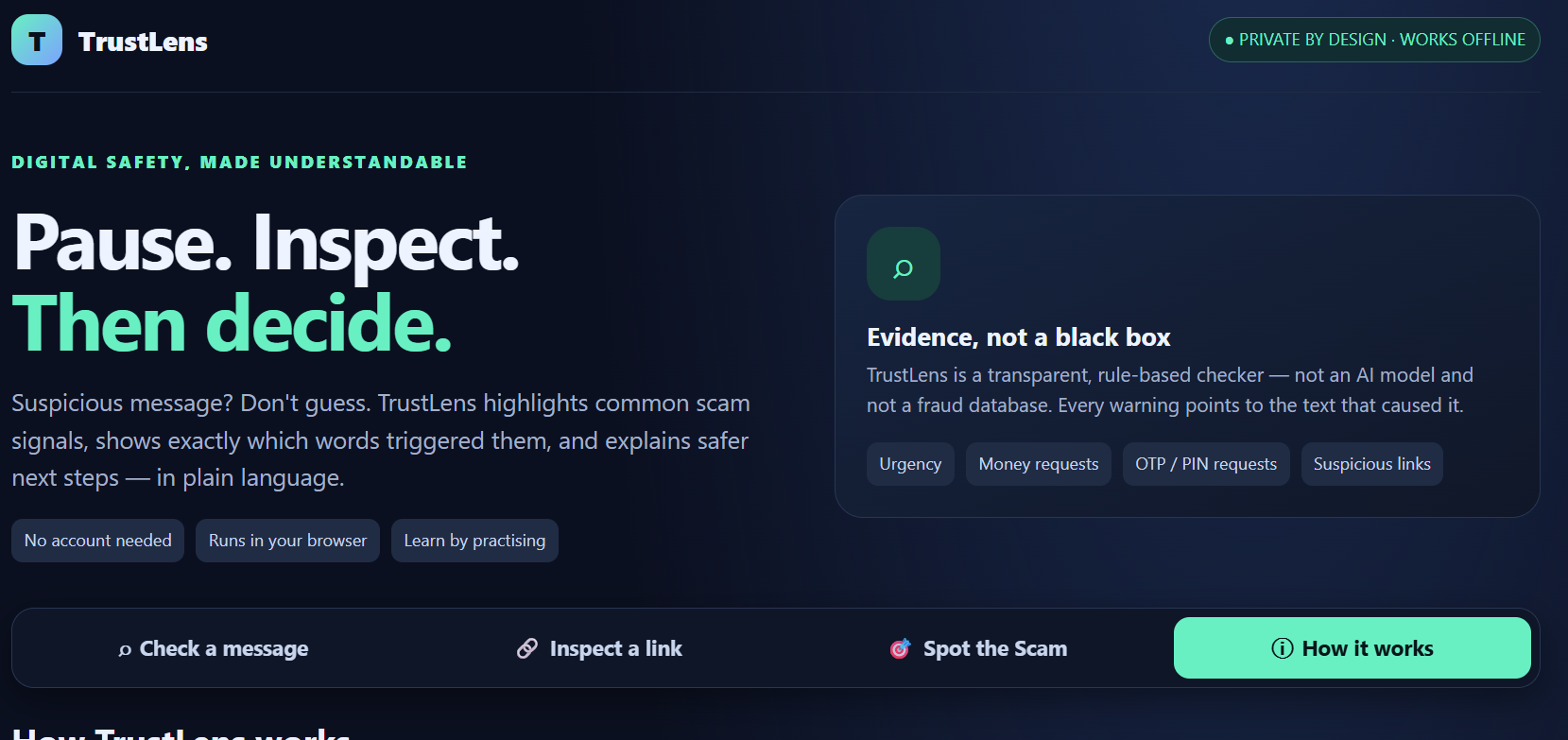
TrustLens is a scam-awareness tool that analyzes suspicious messages and helps users understand potential warning signs. It explains why certain phrases or patterns may be risky and suggests practical next steps. It also aims to make cybersecurity awareness more engaging through interactive learning challenges and URL inspection, helping users build safer digital habits.
How we built it
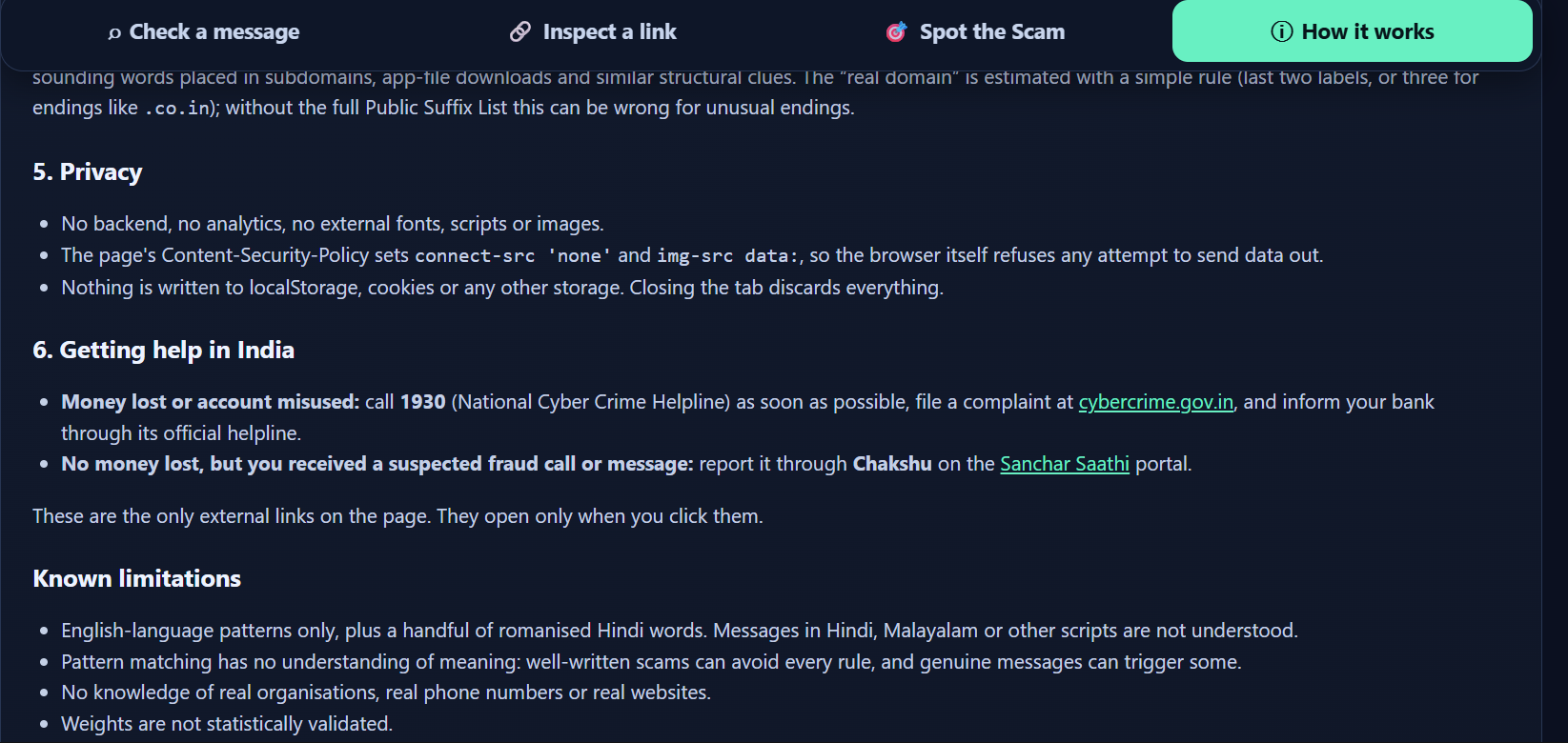
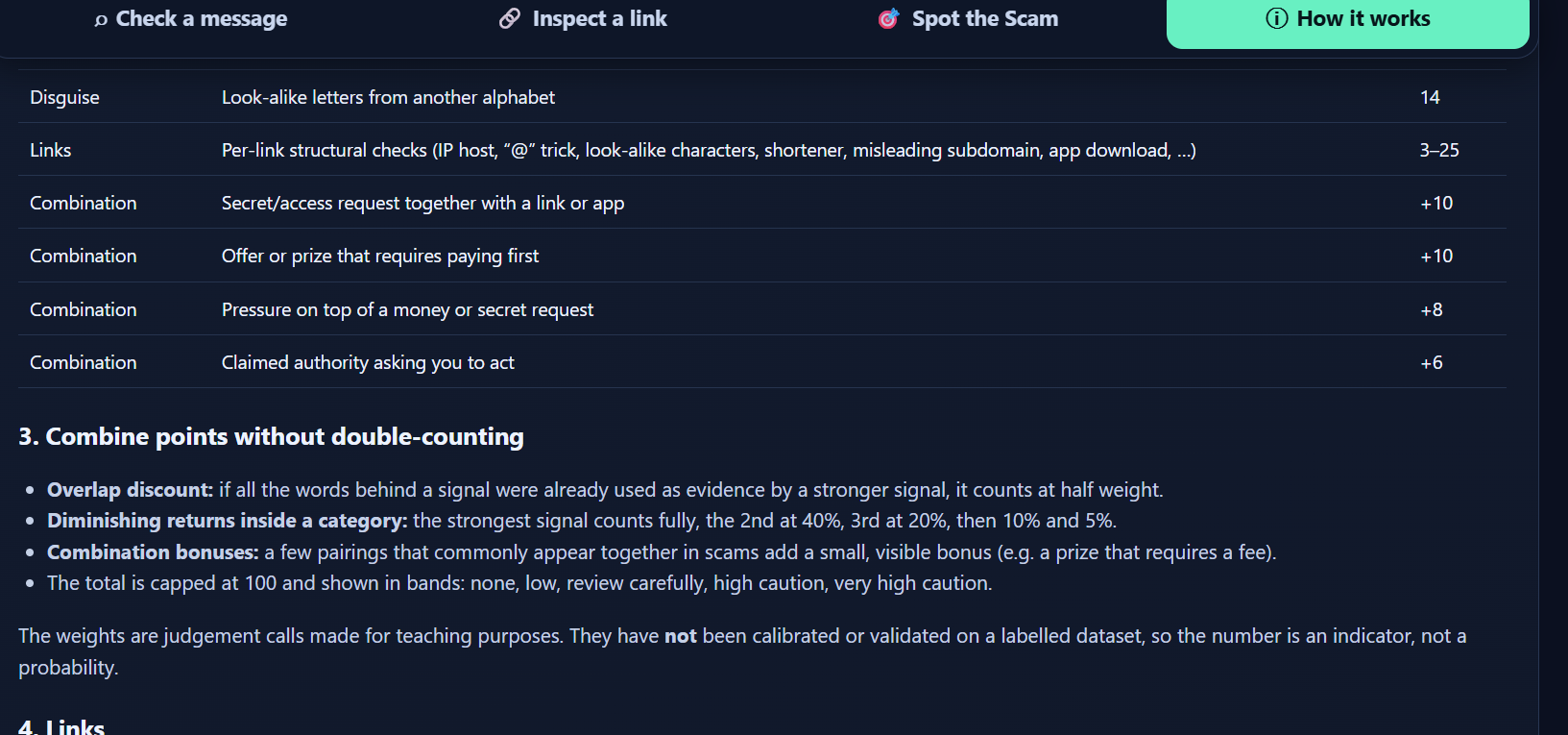
TrustLens is built using HTML, CSS, and JavaScript, with a responsive interface designed for everyday users. Its approach focuses on rule-based pattern detection and clear explanations rather than relying on an external AI service. The project prioritizes offline-first functionality, privacy, and accessibility.
Challenges we ran into
One major challenge was designing an analyzer that could identify suspicious patterns without treating every unusual message as a scam. We also had to balance useful explanations with a simple interface, handle different types of messages, and make security advice understandable to users without technical knowledge.
Accomplishments that we're proud of
We’re proud to have turned a practical cybersecurity problem into an interactive, user-focused project. TrustLens emphasizes understandable warning signs, actionable safety guidance, and privacy-conscious analysis. Our goal is not just to flag suspicious content, but to help people learn how to recognize risks themselves.
What we learned
We learned that cybersecurity tools should explain their reasoning instead of simply displaying a result. We also learned the importance of privacy, transparent limitations, clear user experience, and testing edge cases. Most importantly, we saw how interactive learning can help people develop safer online habits.
What's next for TrustLens
We plan to improve detection rules, expand the library of realistic scam and legitimate-message examples, and develop interactive scam-awareness challenges. Future improvements may include more detailed URL analysis, multilingual support, and accessibility enhancements—all while keeping privacy and transparency central to the experience.

Log in or sign up for Devpost to join the conversation.