Inspiration
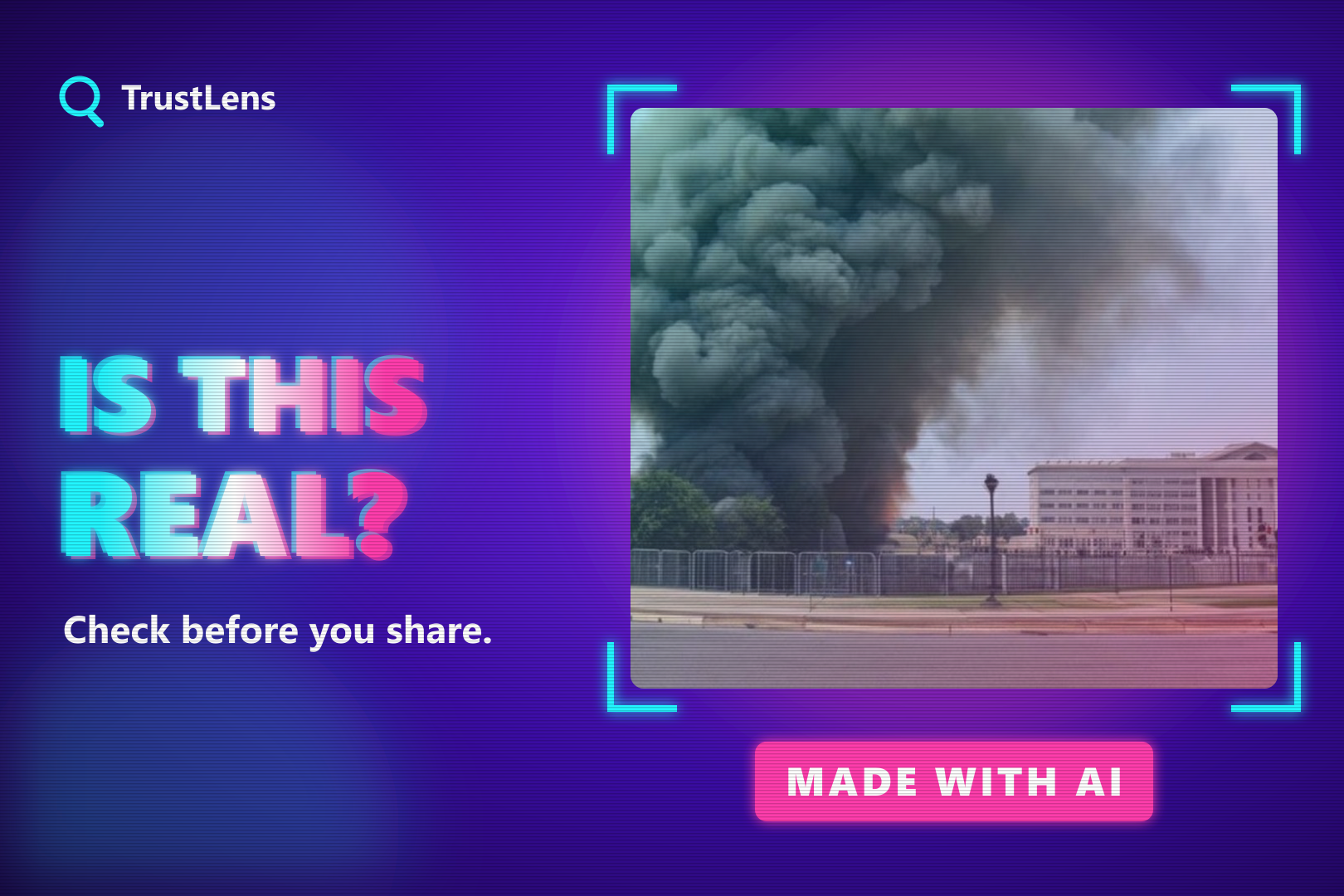
Present-day media is becoming increasingly difficult to distinguish between what is AI-generated and what is real. Even users with high internet literacy can fall victim to falsified media, while those with lower internet literacy, such as senior citizens, may face an even greater challenge identifying misleading or manipulated content. We wanted to create a tool that makes media verification simple and accessible, allowing focused user groups to easily verify the validity of what they see online.
What it does
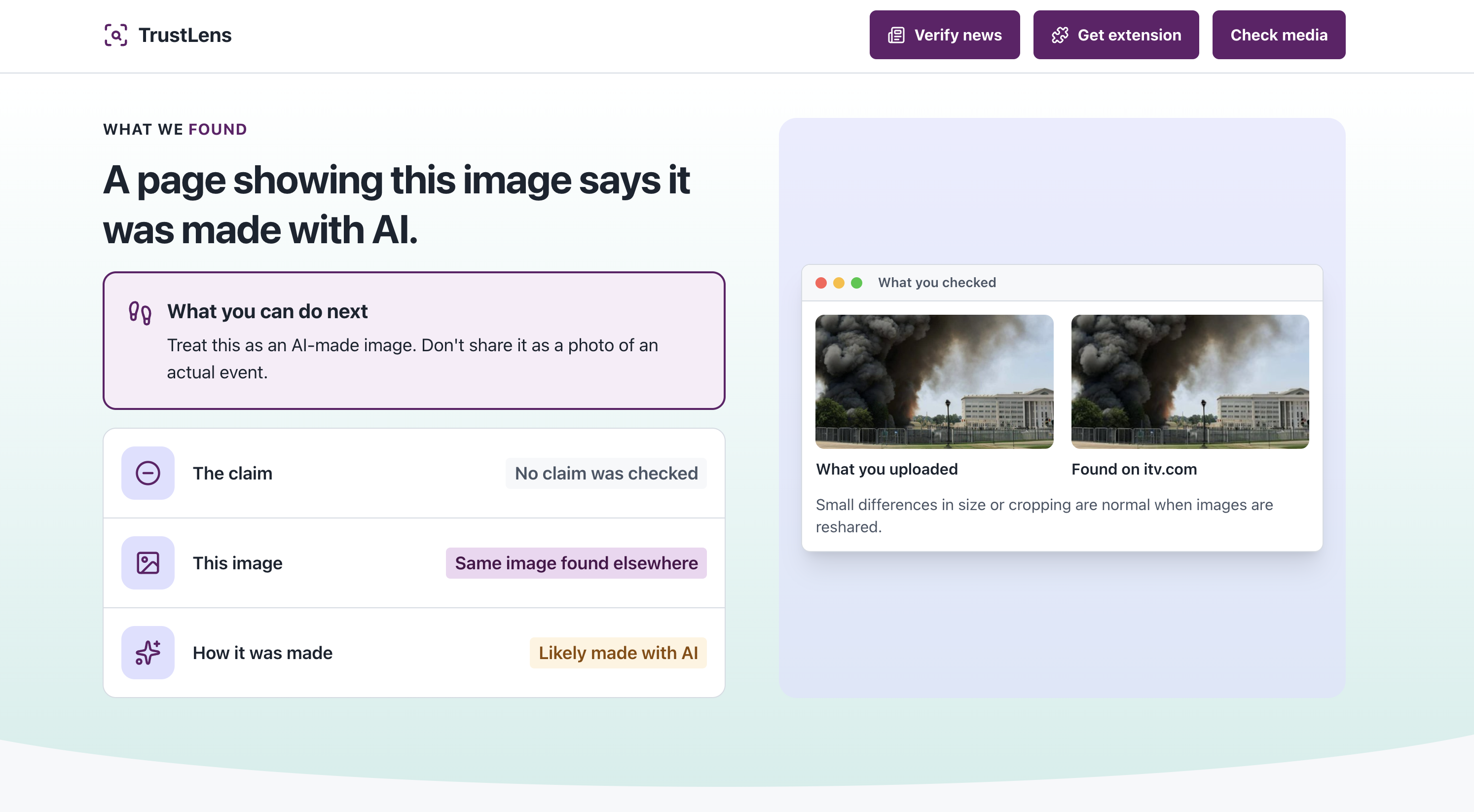
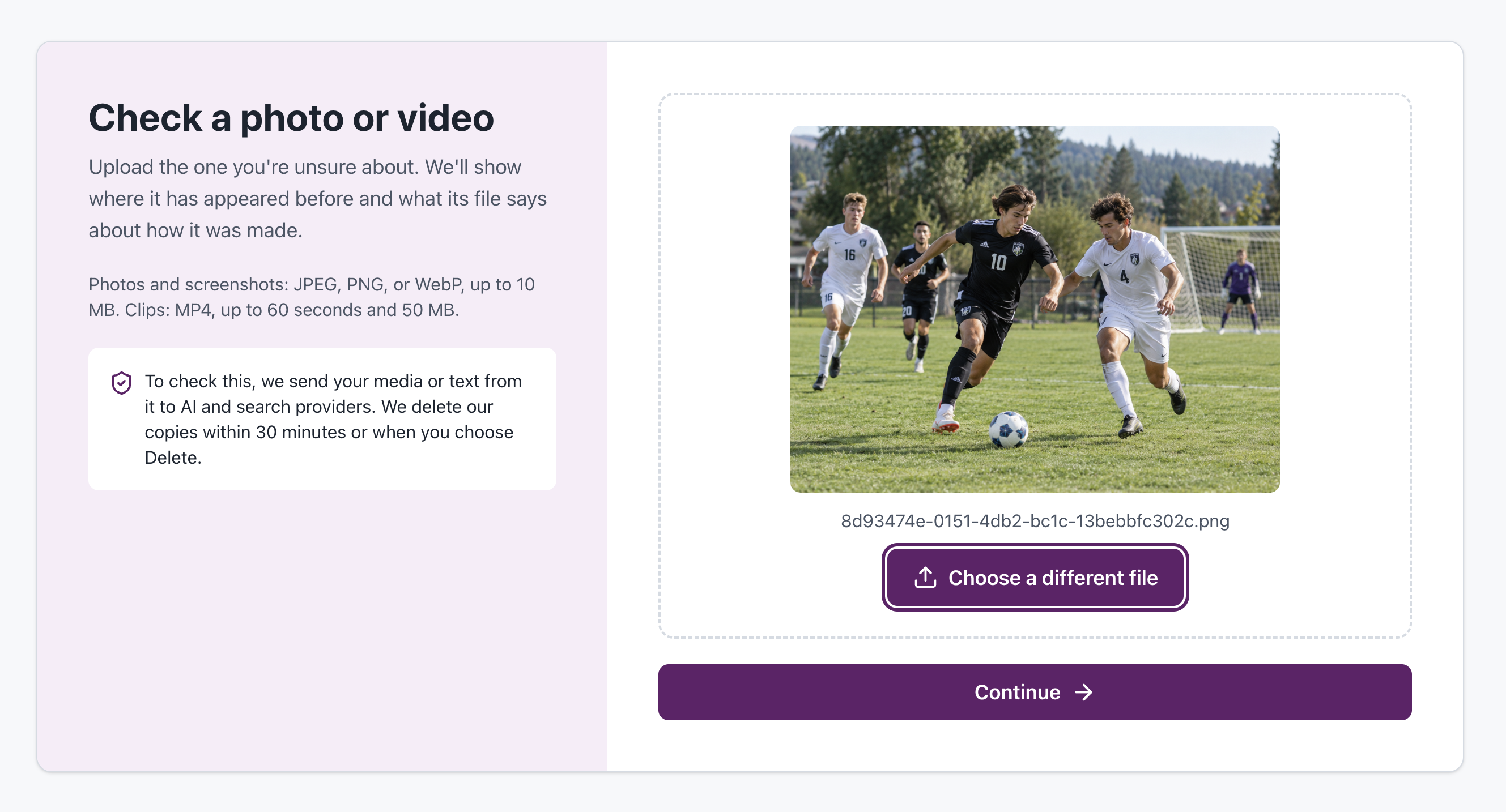
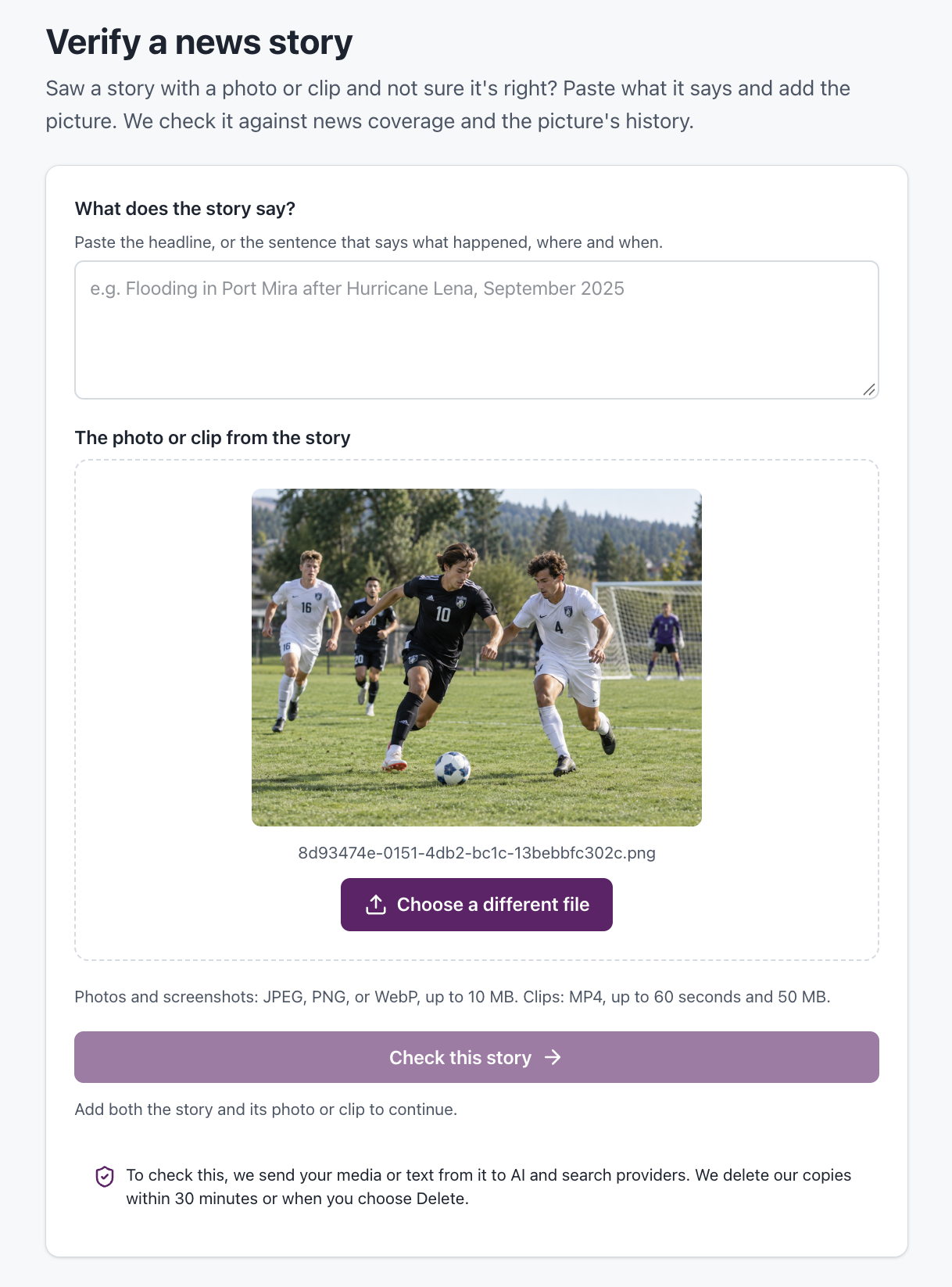
Users can upload media they want to verify to the TrustLens website. TrustLens analyzes a variety of factors, such as sources, content credentials, and fact-checks to consolidate the available evidence and produce an informed assessment of the media’s authenticity.
How we built it
We built TrustLens as a web application with a modular investigation pipeline. Uploaded media passes through multiple verification stages, each evaluating a different source of evidence. We integrated Content Credentials (C2PA) to identify available media provenance, Google Fact Check to surface relevant existing fact-checks, and additional media analysis to evaluate the content itself. We designed the system so that each source contributes evidence rather than relying on a single detector to determine whether media is authentic.
Challenges we ran into
One of our biggest challenges was determining how to communicate uncertainty. Media authenticity is rarely as simple as “real” or “fake,” so we needed to ensure TrustLens did not overstate what any individual piece of evidence could prove. We also had to account for missing metadata, unavailable fact-checks, malformed media, and other situations where the system simply could not reach a definitive conclusion.
Another challenge was building a system that could incorporate multiple verification methods without making the user understand the technical process happening behind the scenes.
Accomplishments that we're proud of
We are proud of building TrustLens around an evidence-based approach rather than relying on a single AI detector. The system brings together different forms of evidence and presents them in a way that is understandable to non-technical users.
We are also proud of creating a modular architecture that allows additional verification methods to be added without redesigning the entire investigation pipeline.
What we learned
We learned that building a trustworthy AI product is not just about getting an accurate result, it is also about communicating uncertainty and explaining why the system reached its assessment. We found that providing users with understandable evidence can be more valuable than presenting them with a simple confidence score.
We also learned the importance of designing for users who may not have technical knowledge. A powerful verification system is only useful if people can understand and act on its results.
What's next for TrustLens
The next thing that we want for TrustLens is to expand upon the browser-based extension portion, this way users don't have to access the website and upload media, they can simply add the extension to Chrome and verify the accuracy of what they see from the page itself.


Log in or sign up for Devpost to join the conversation.