-
-
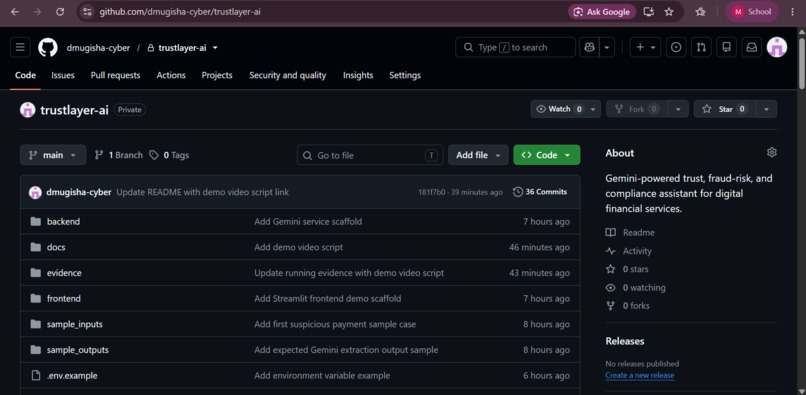
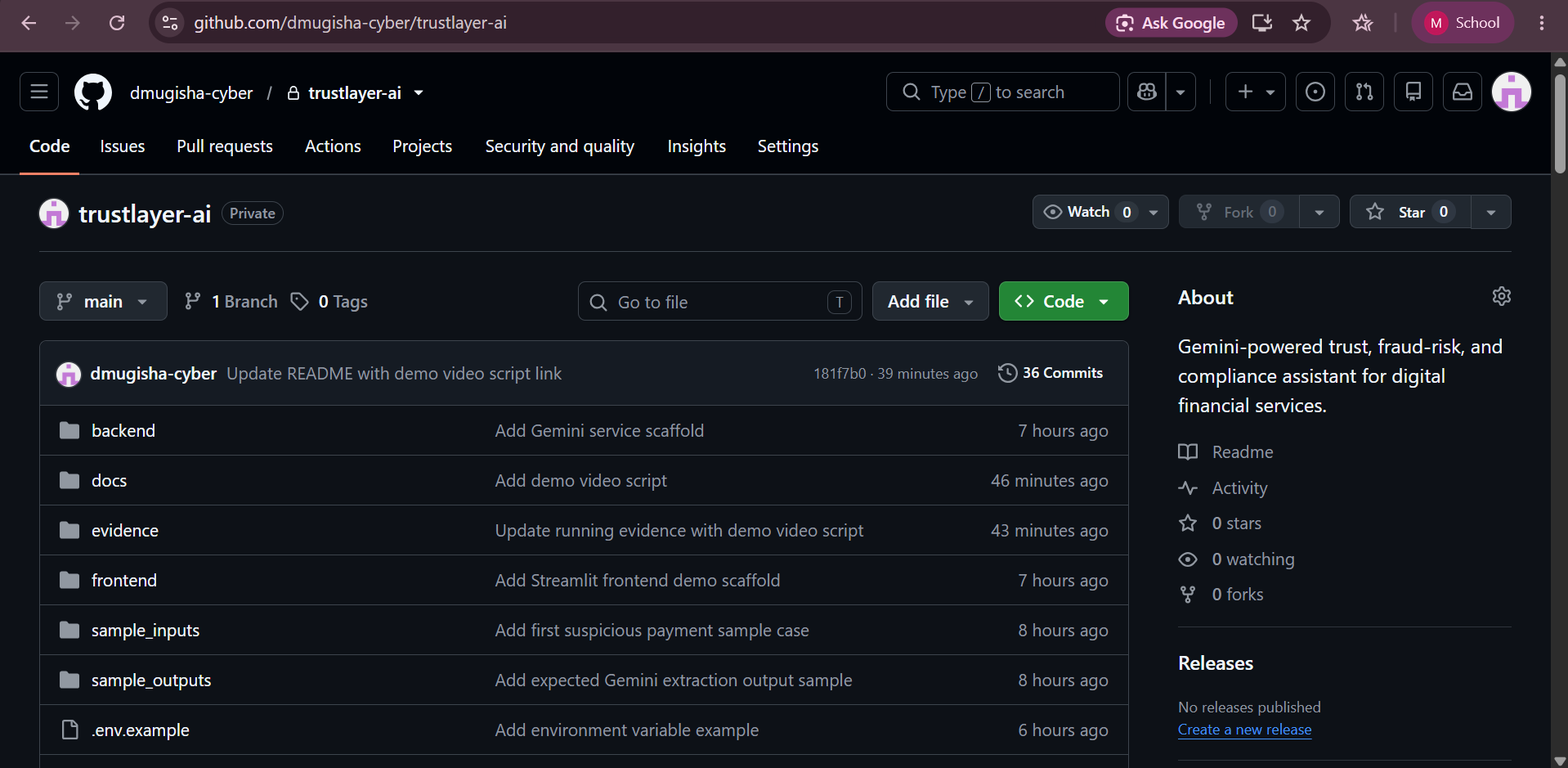
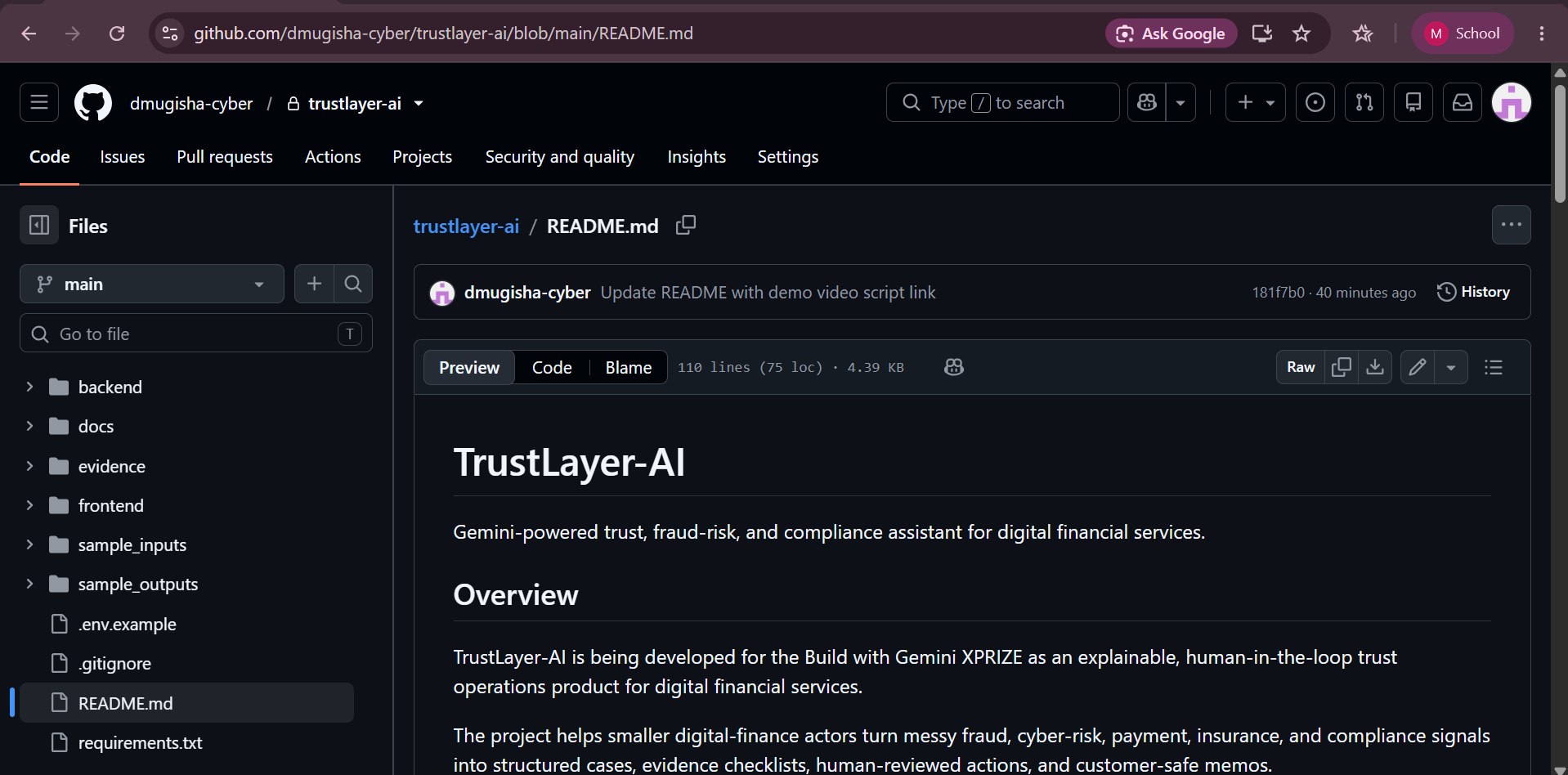
TrustLayer-AI GitHub repository showing project structure, commits, README, and public evidence for review.
-
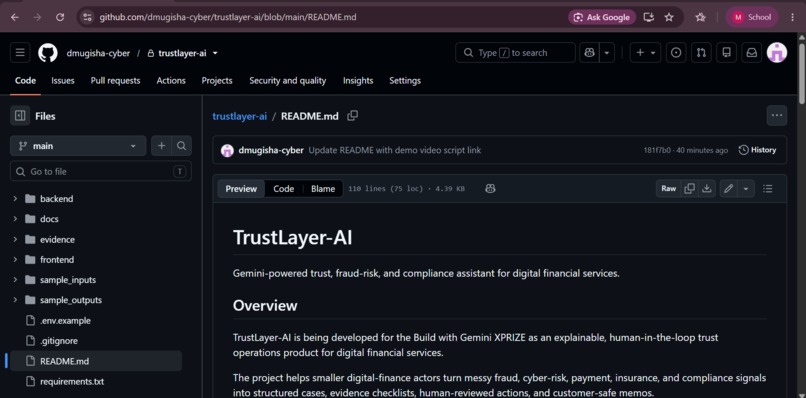
README overview explaining TrustLayer-AI purpose, problem, solution, repository structure, and review links.
-
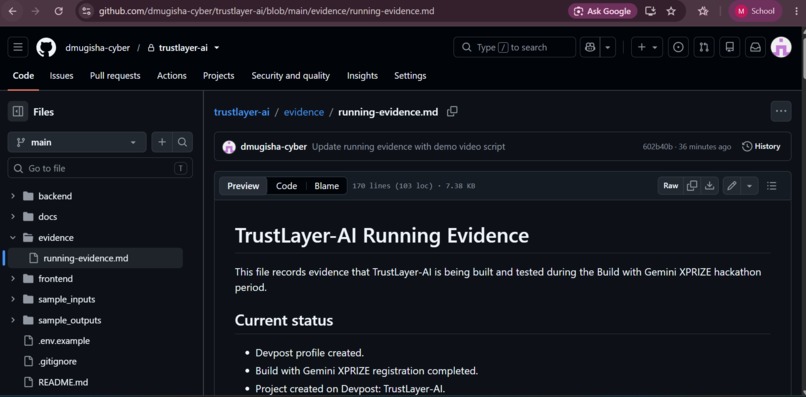
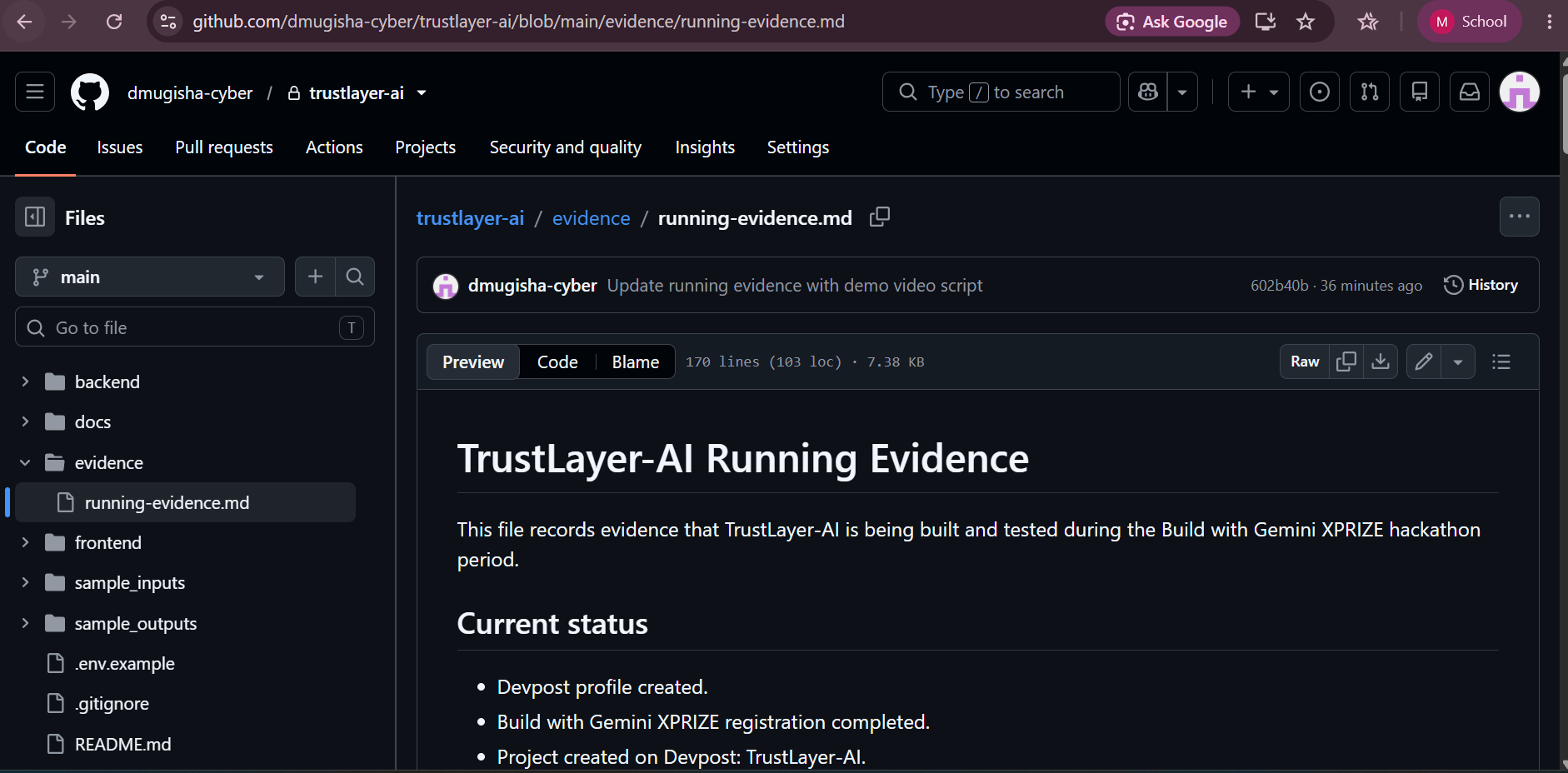
Running evidence file documenting TrustLayer-AI build progress, milestones, commits, and review readiness.
-
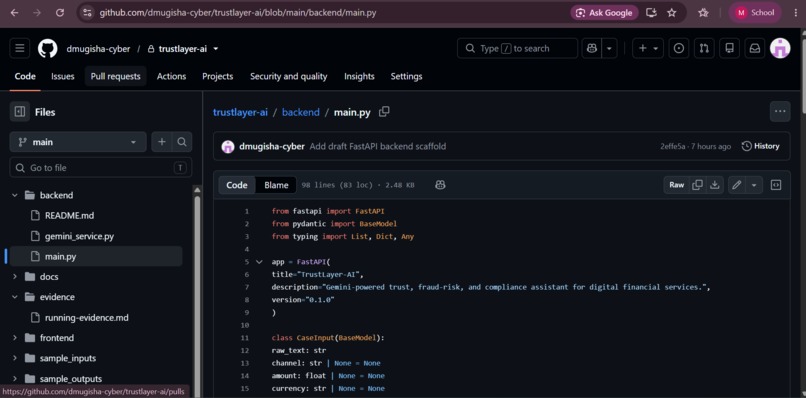
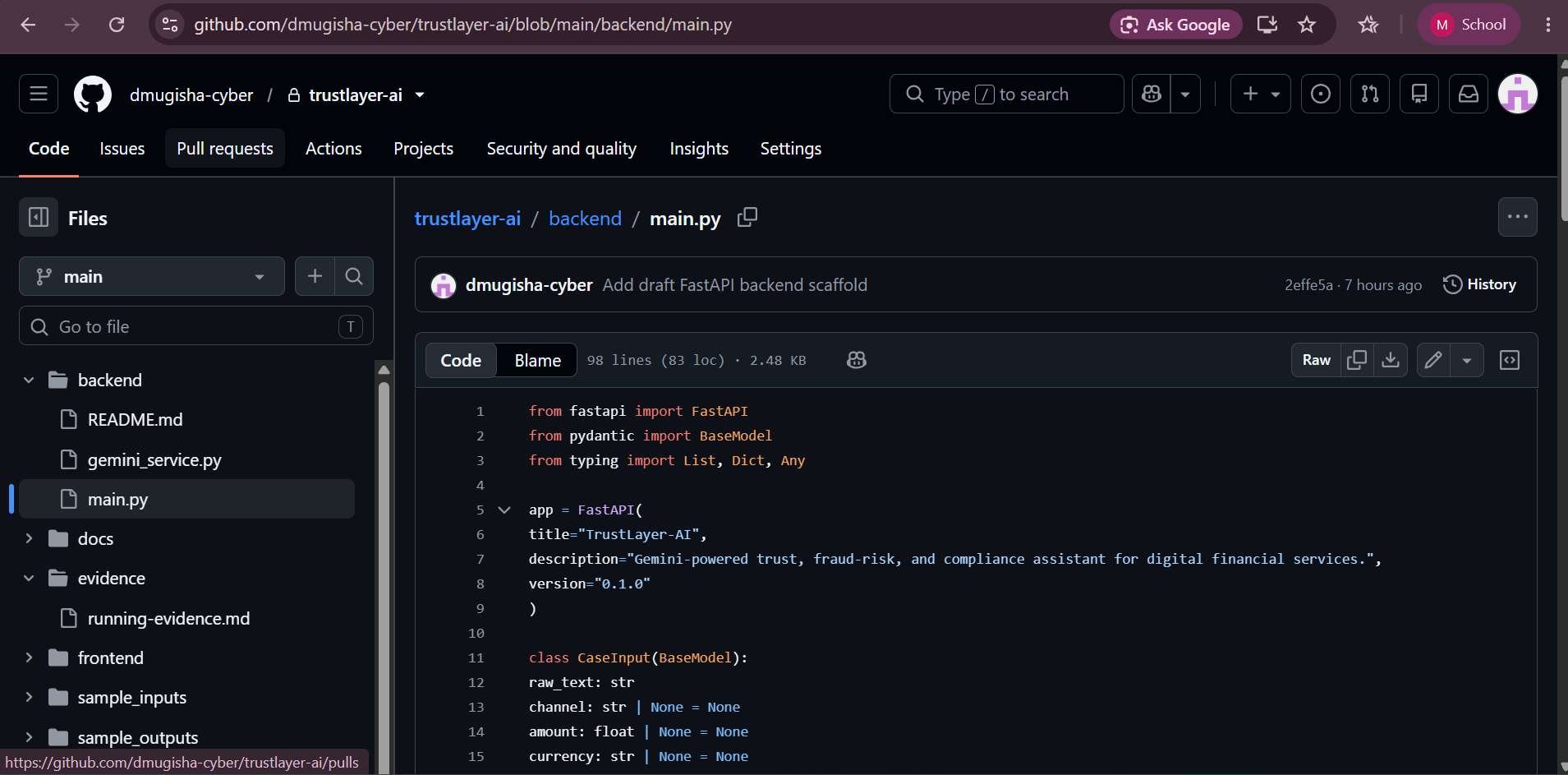
FastAPI backend scaffold defining TrustLayer-AI API structure and case input model for fraud-risk signals.
-
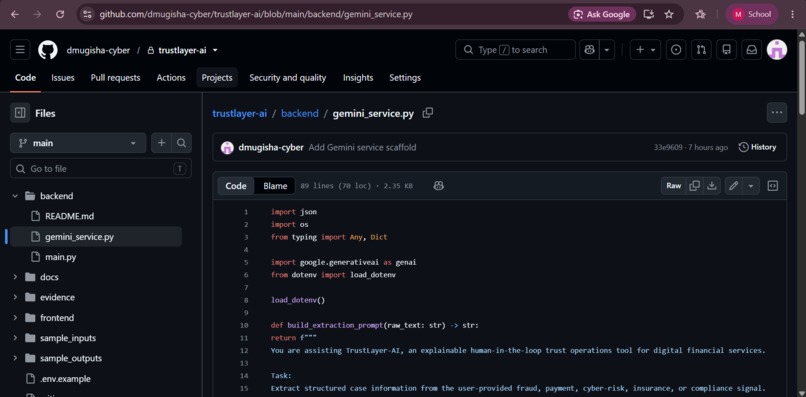
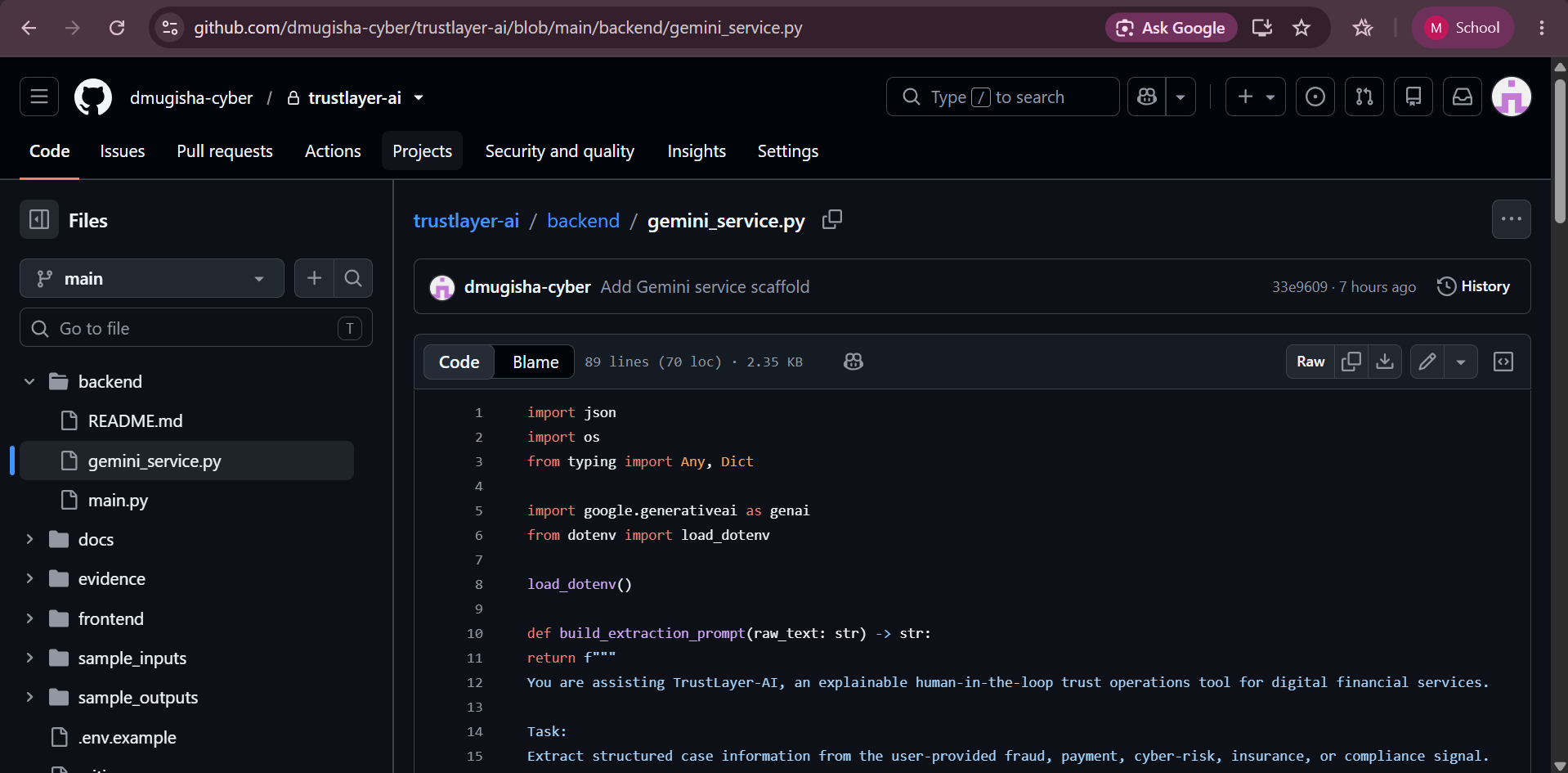
Gemini service integration showing structured extraction logic for fraud, payment, cyber-risk, and compliance signals.
-
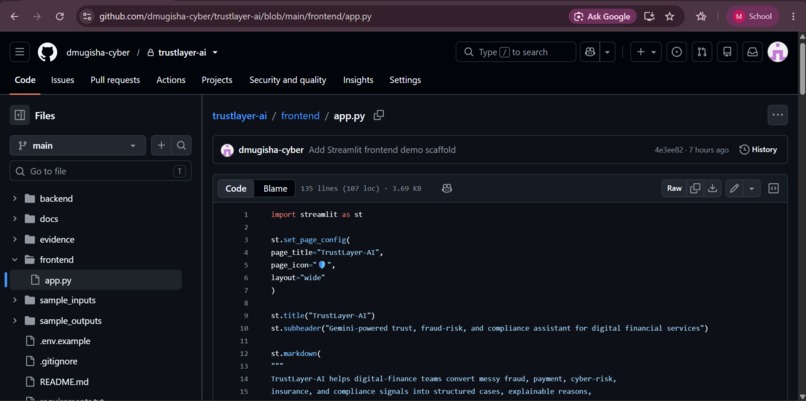
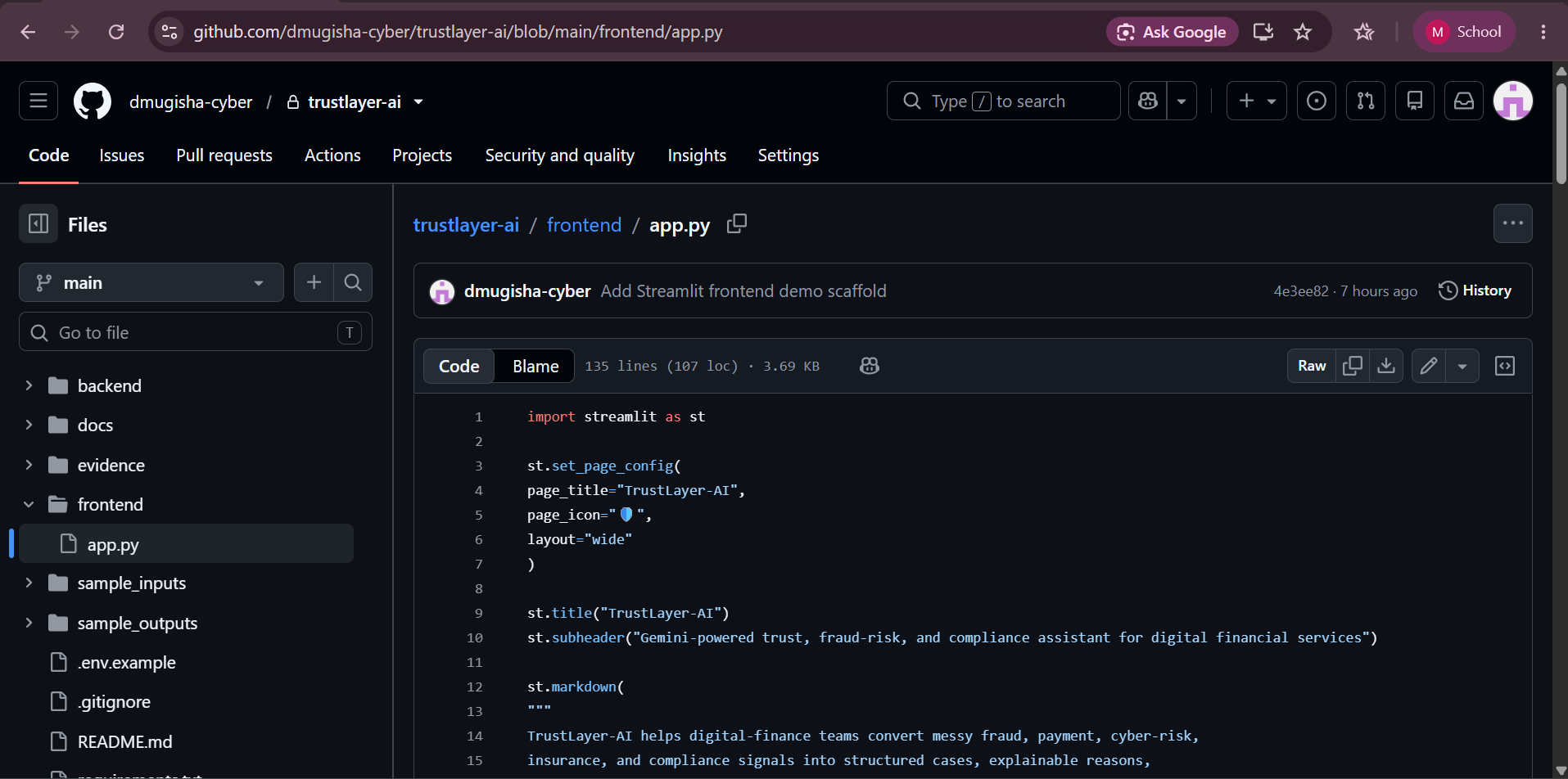
Streamlit frontend demo scaffold showing TrustLayer-AI user interface code for the review workflow.
-
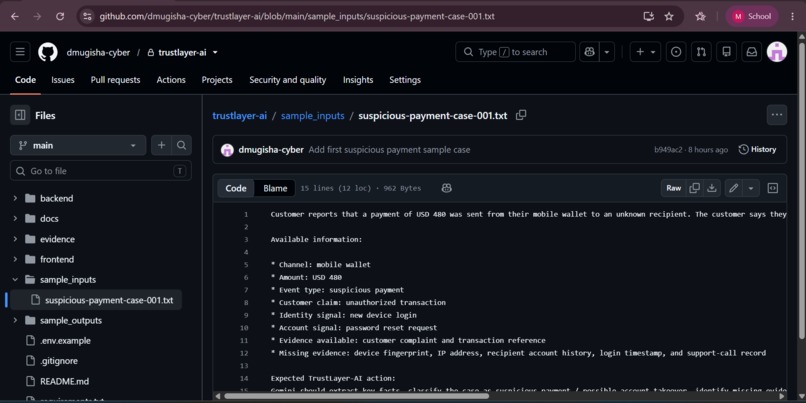
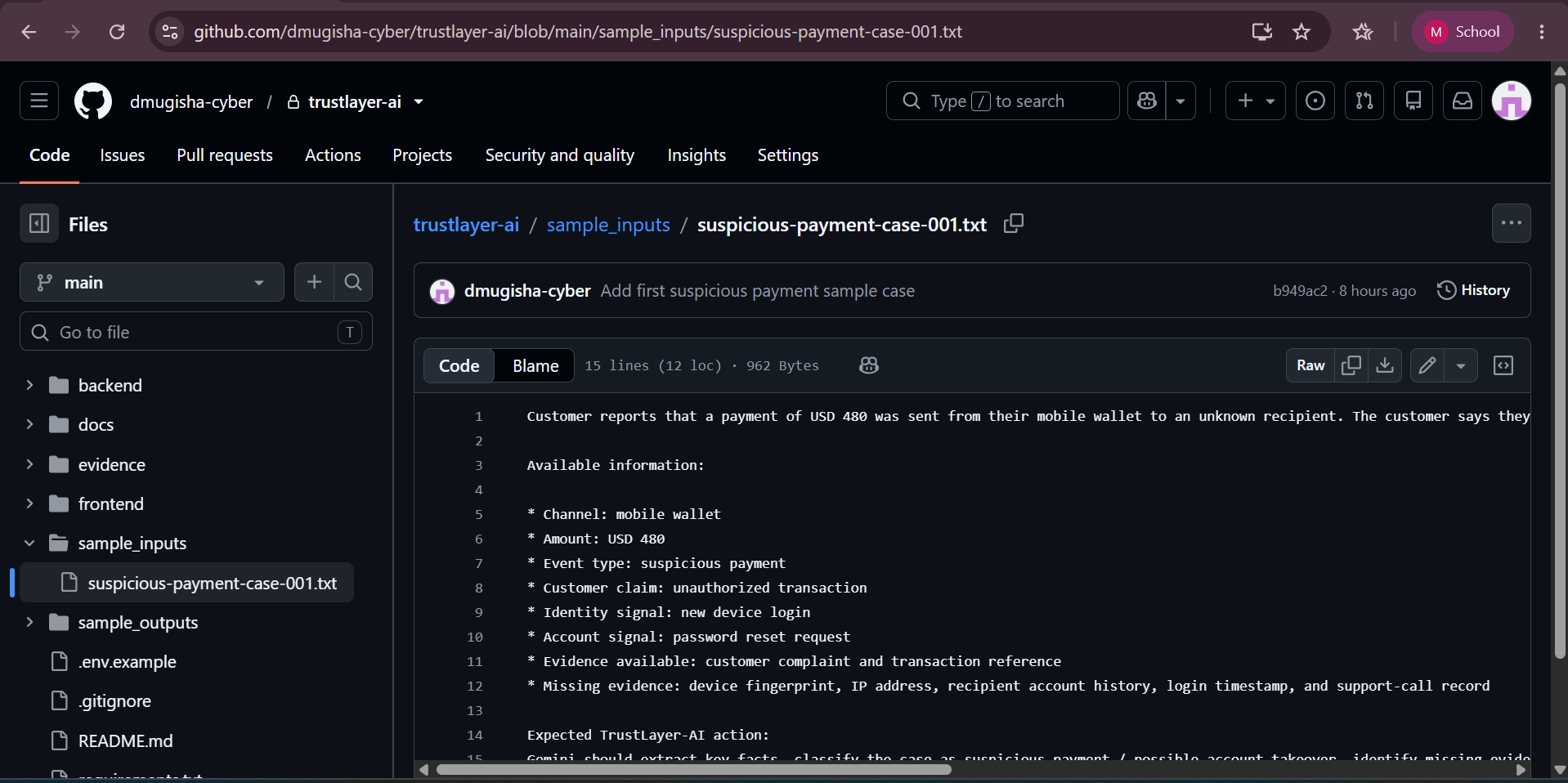
Sample suspicious payment case used to test TrustLayer-AI extraction, missing-evidence, and risk-review workflow.
-
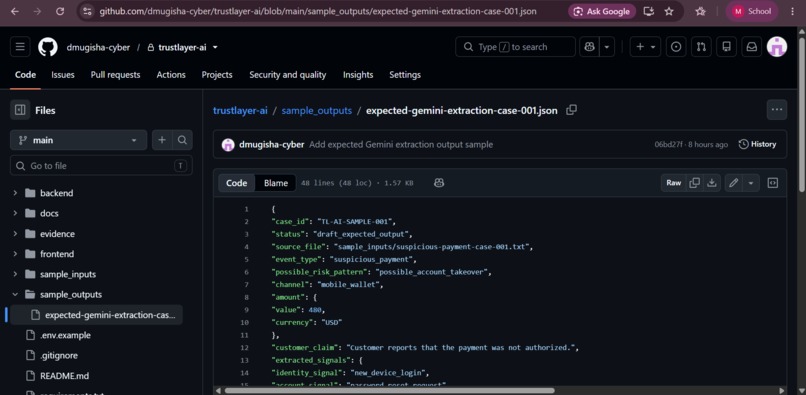
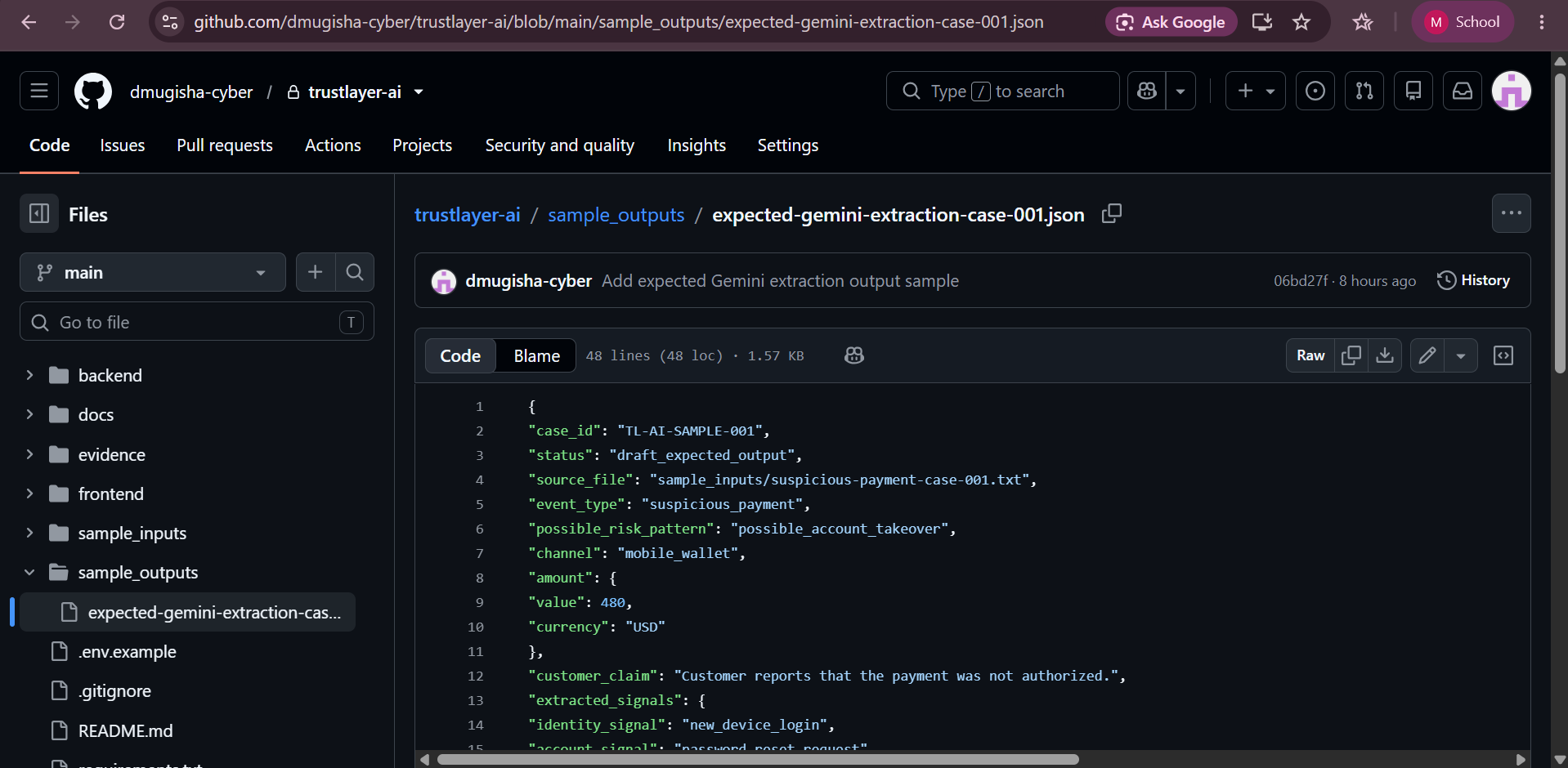
Expected structured Gemini output showing case ID, risk pattern, extracted signals, evidence gaps, and review fields.
-
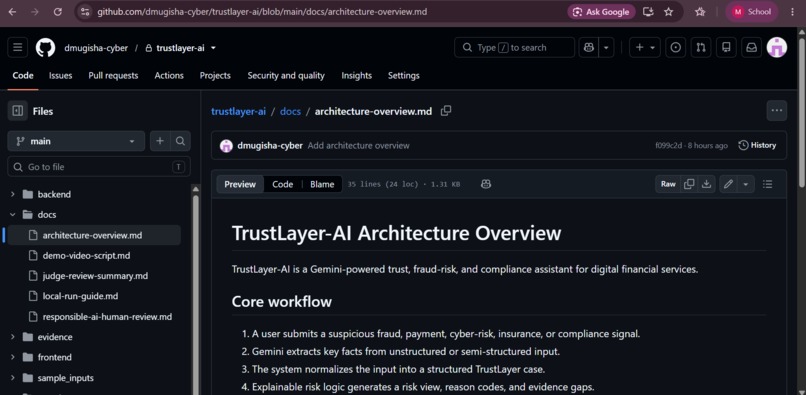
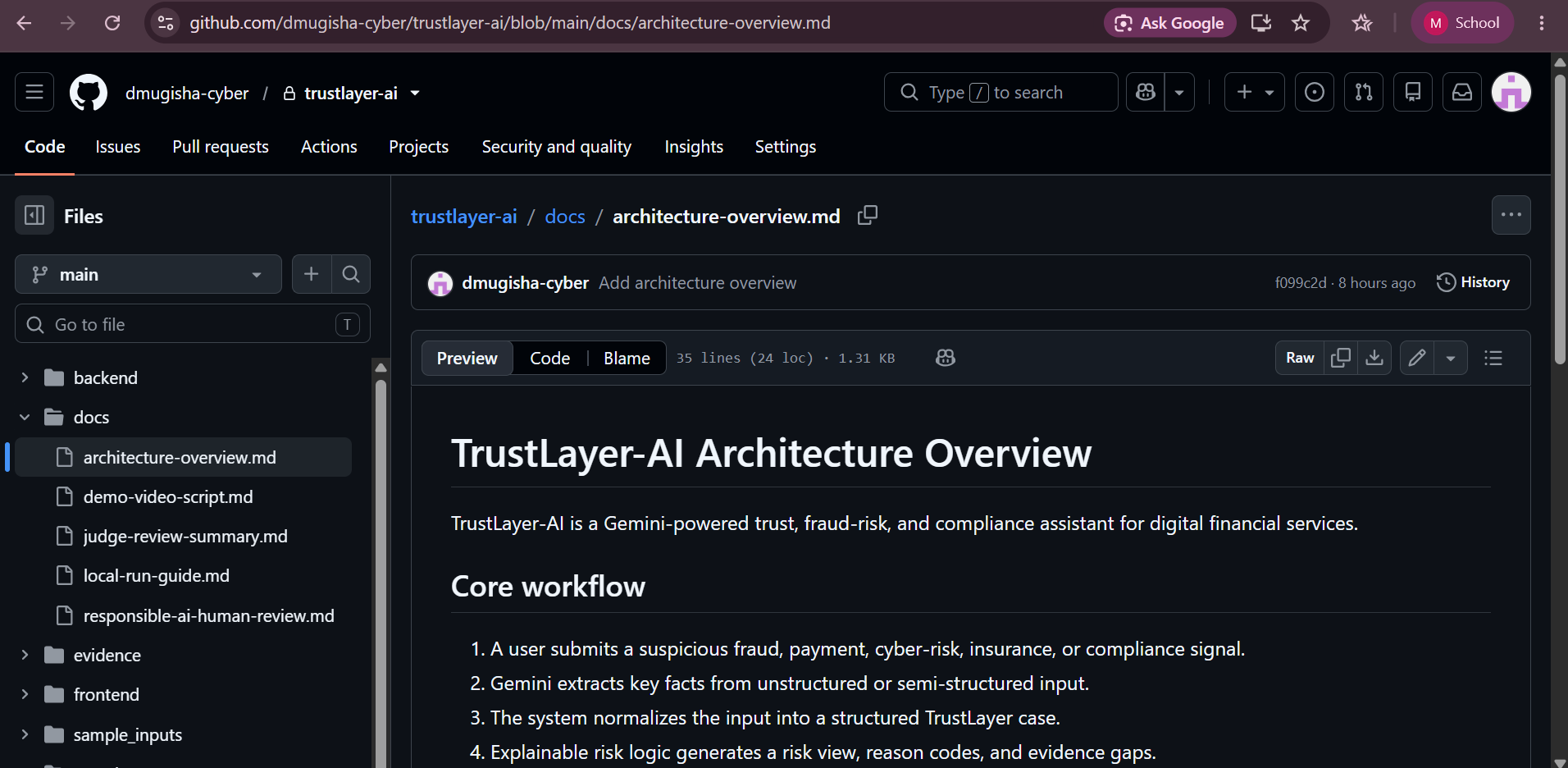
Architecture overview showing the TrustLayer-AI workflow from user signal to Gemini extraction and human review.
-
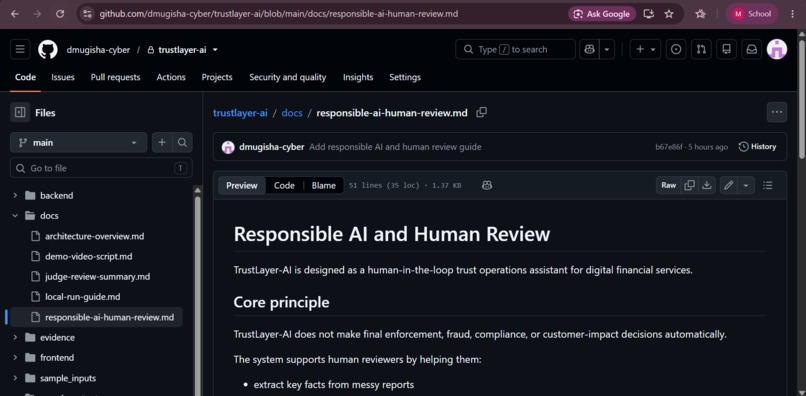
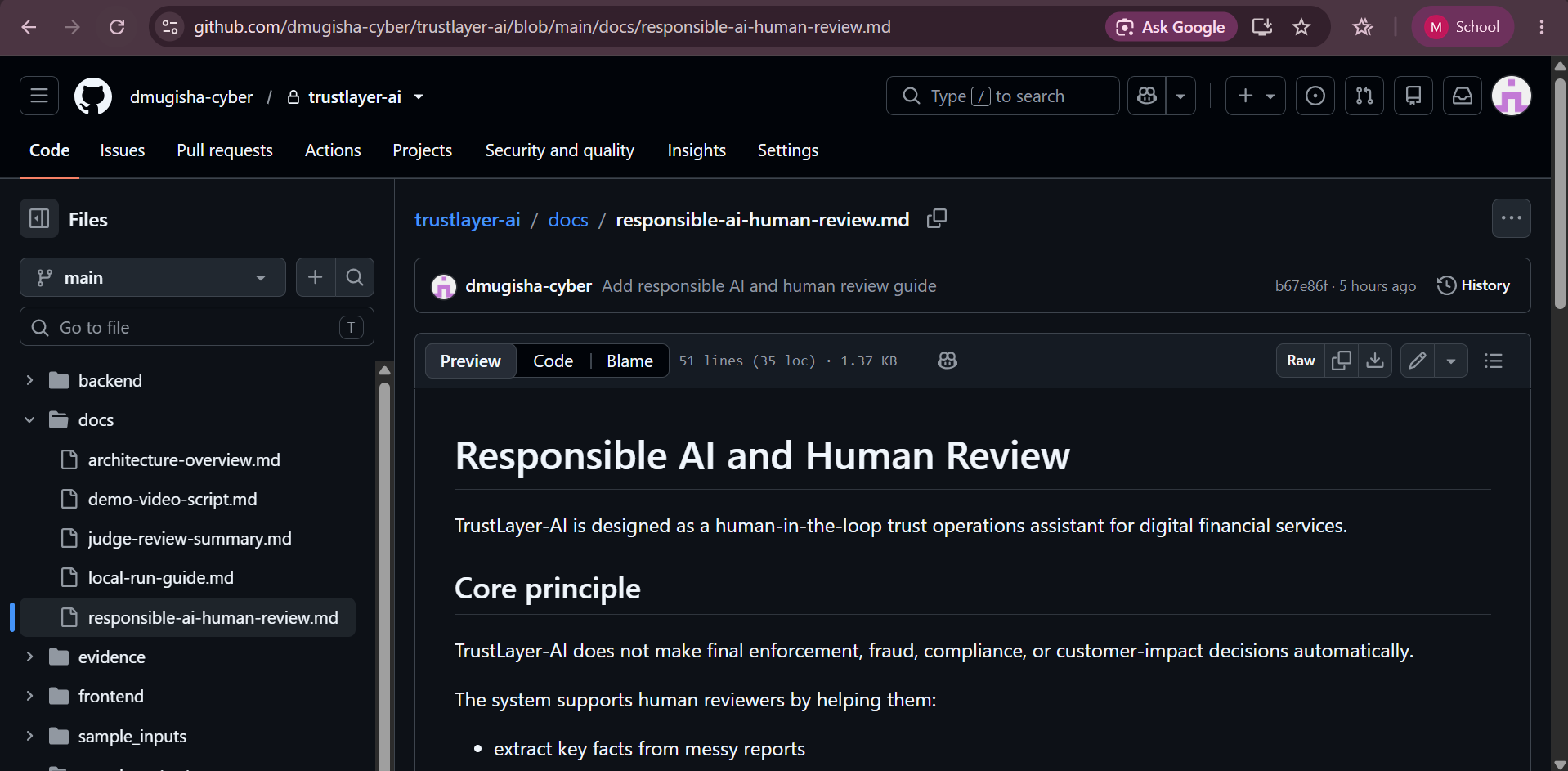
Responsible AI and human review guide confirming that TrustLayer-AI supports reviewers but does not make final decisions.
-
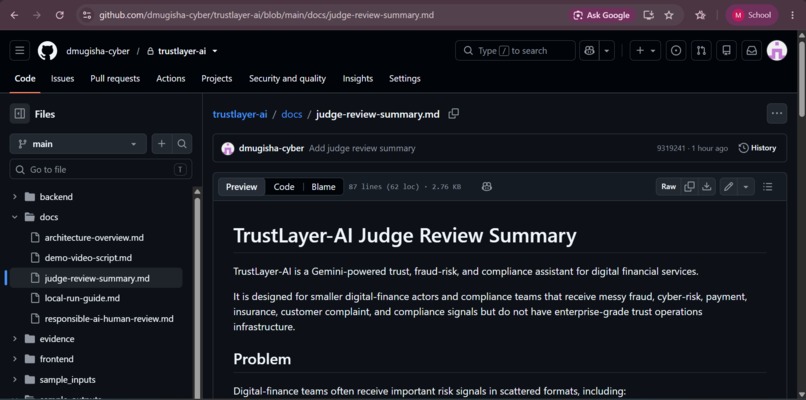
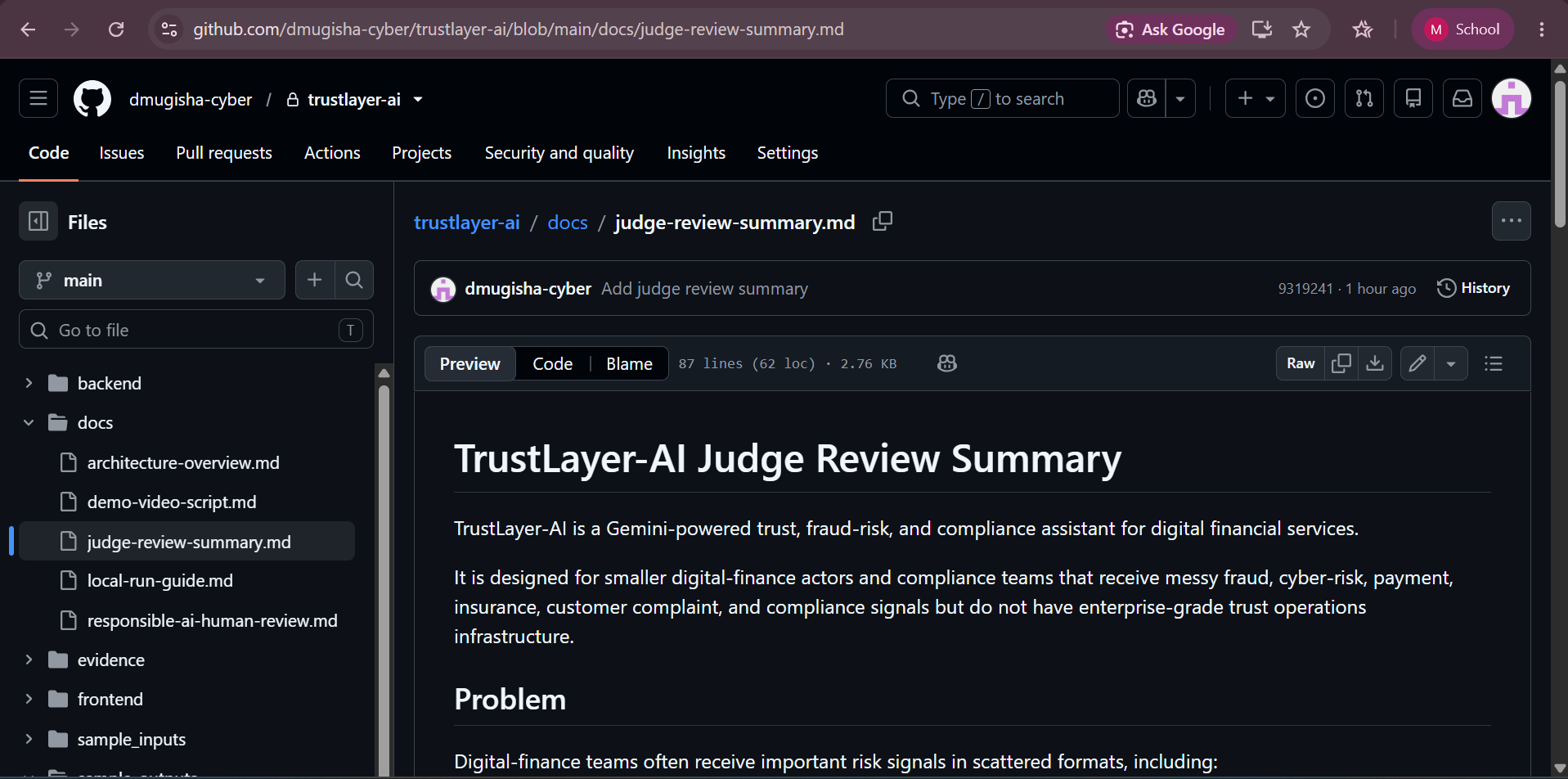
Judge review summary explaining the project problem, solution, Gemini use, human review, and review-ready files.
-
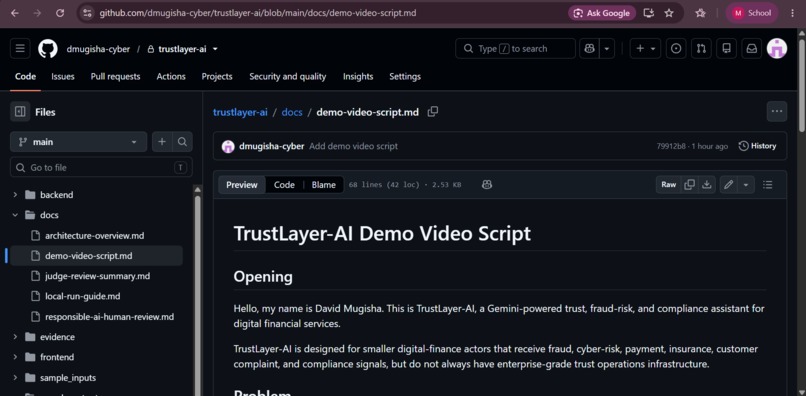
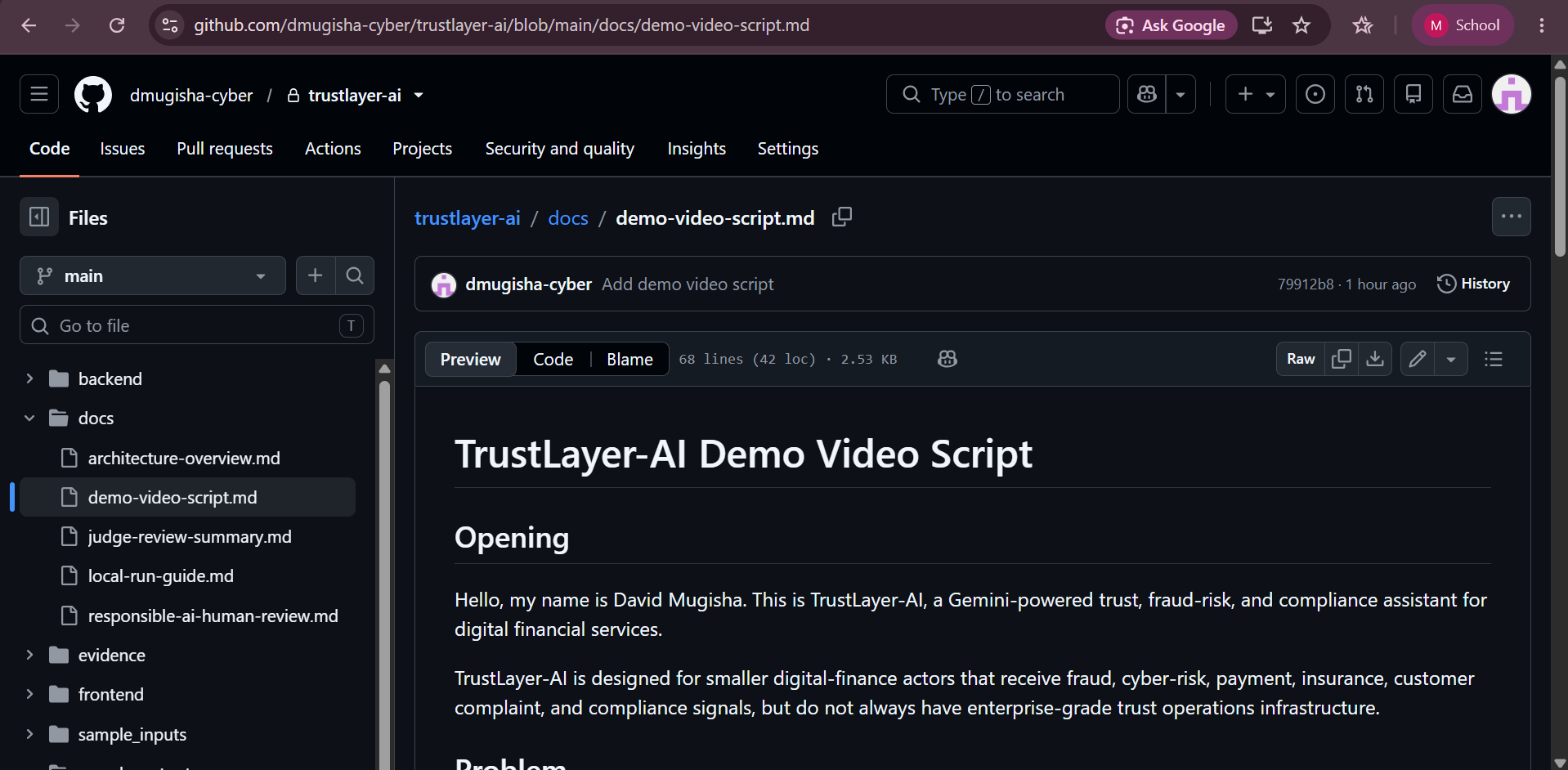
Demo video script prepared to explain TrustLayer-AI clearly during the Build with Gemini XPRIZE submission.
-
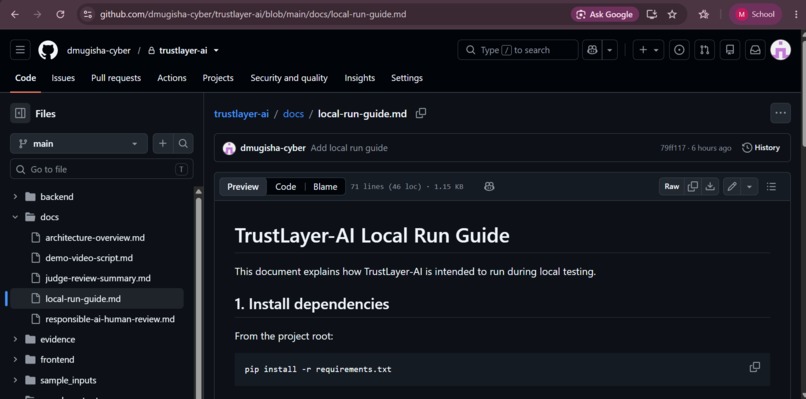
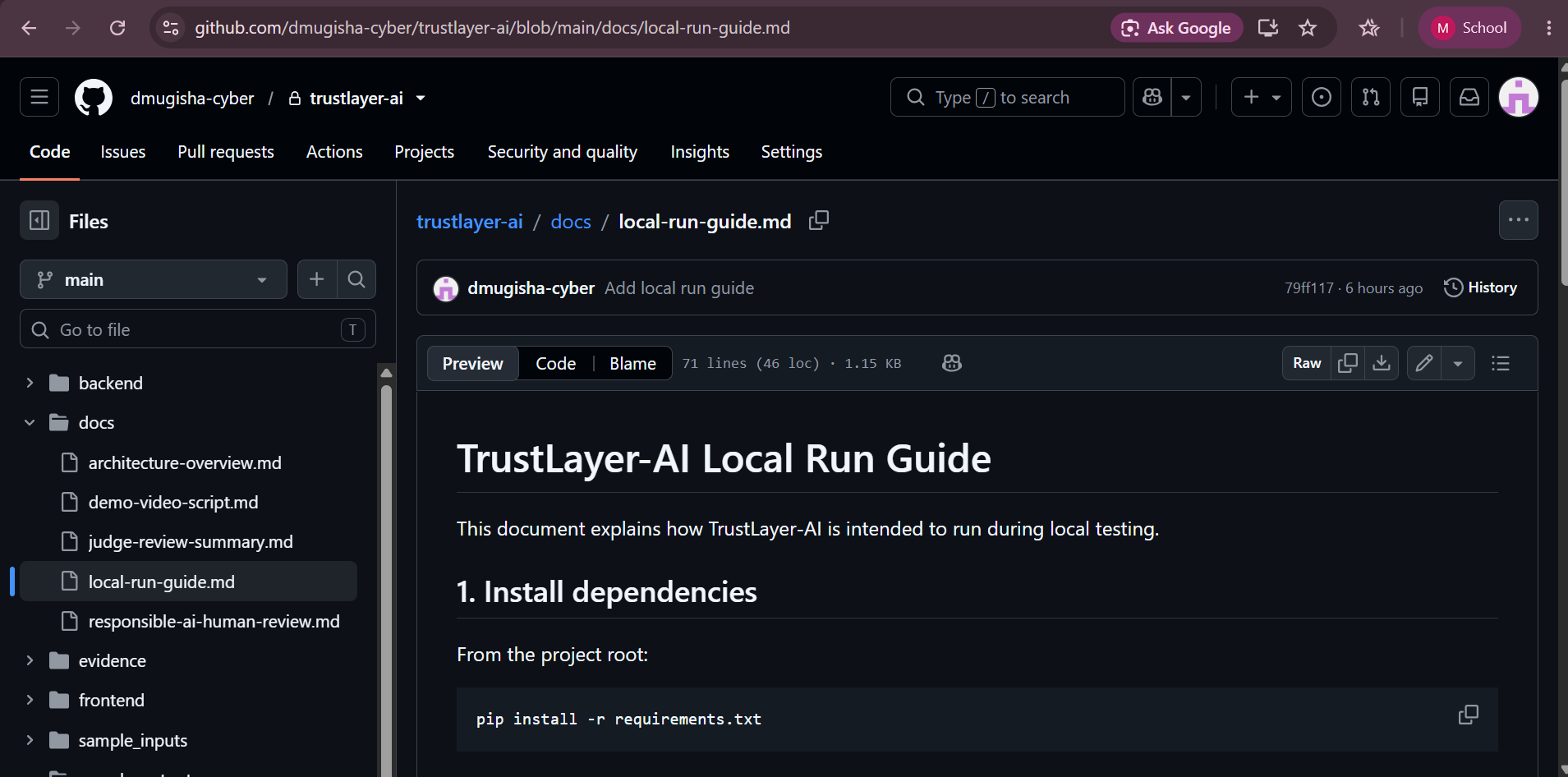
Local run guide showing installation, backend launch, frontend launch, API testing, and responsible AI notes.
-
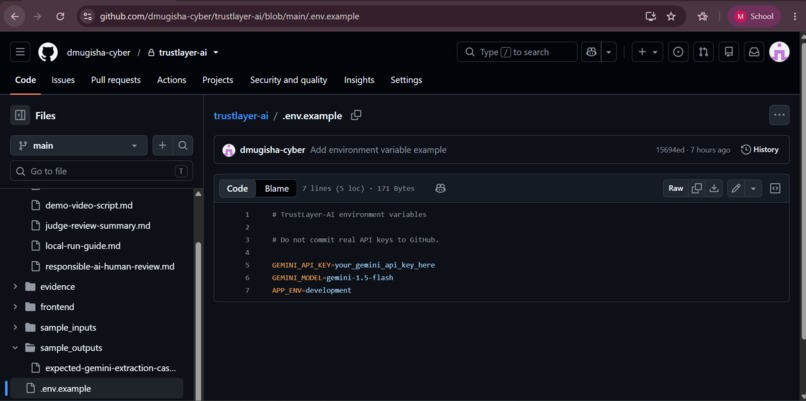
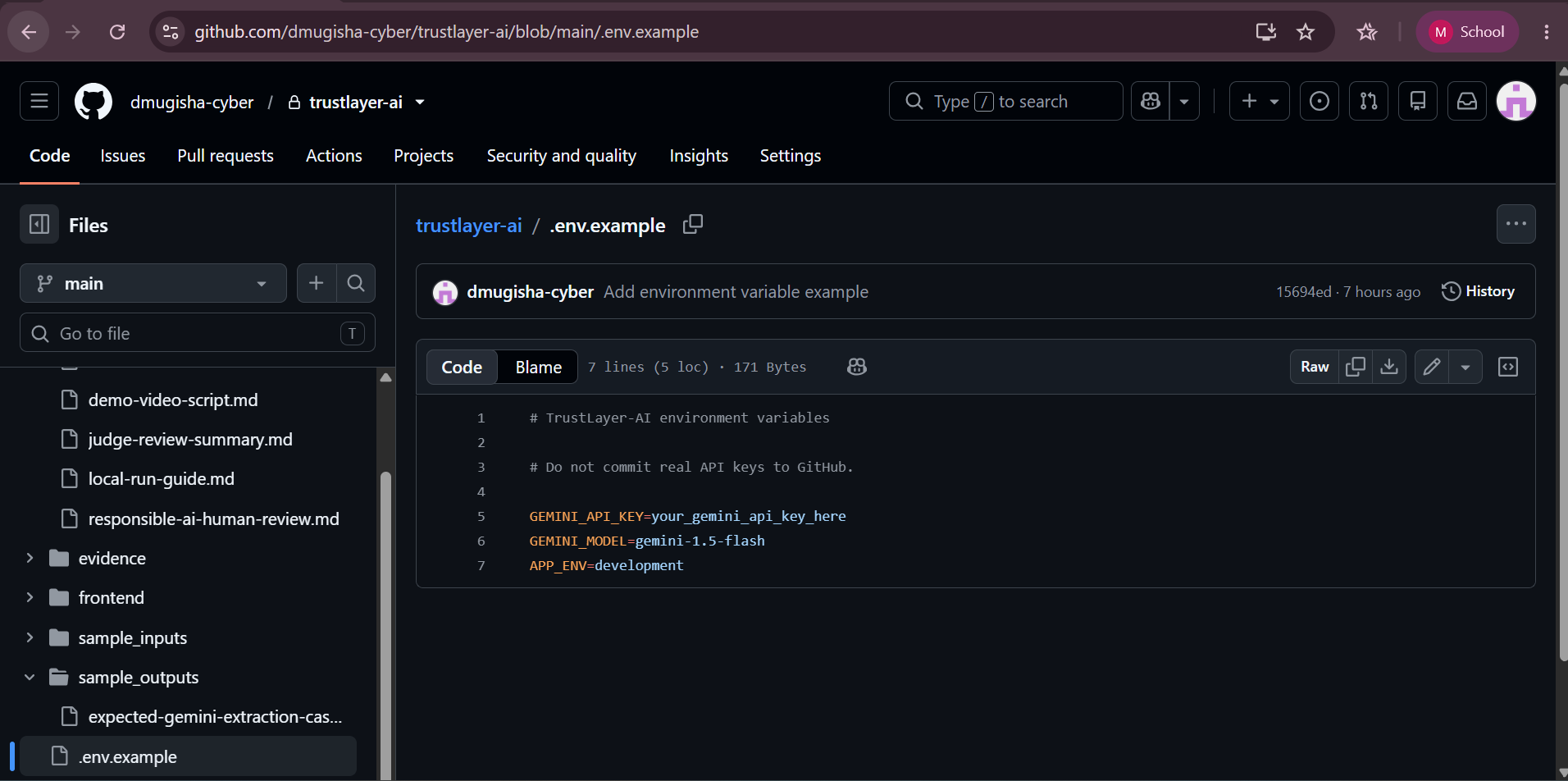
Environment example file showing safe Gemini API configuration without exposing real secrets or API keys.
-
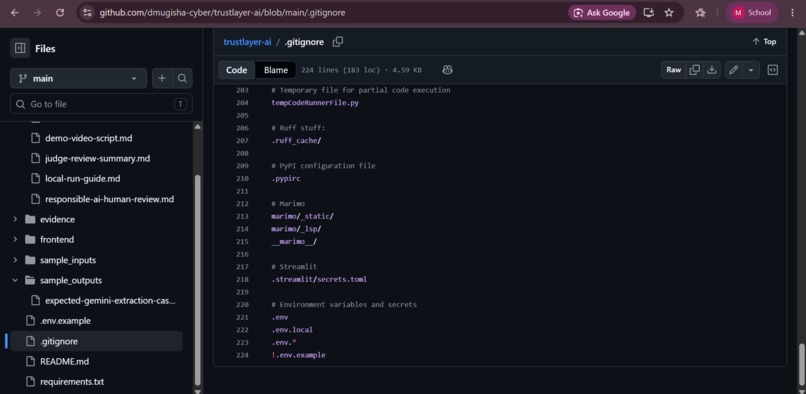
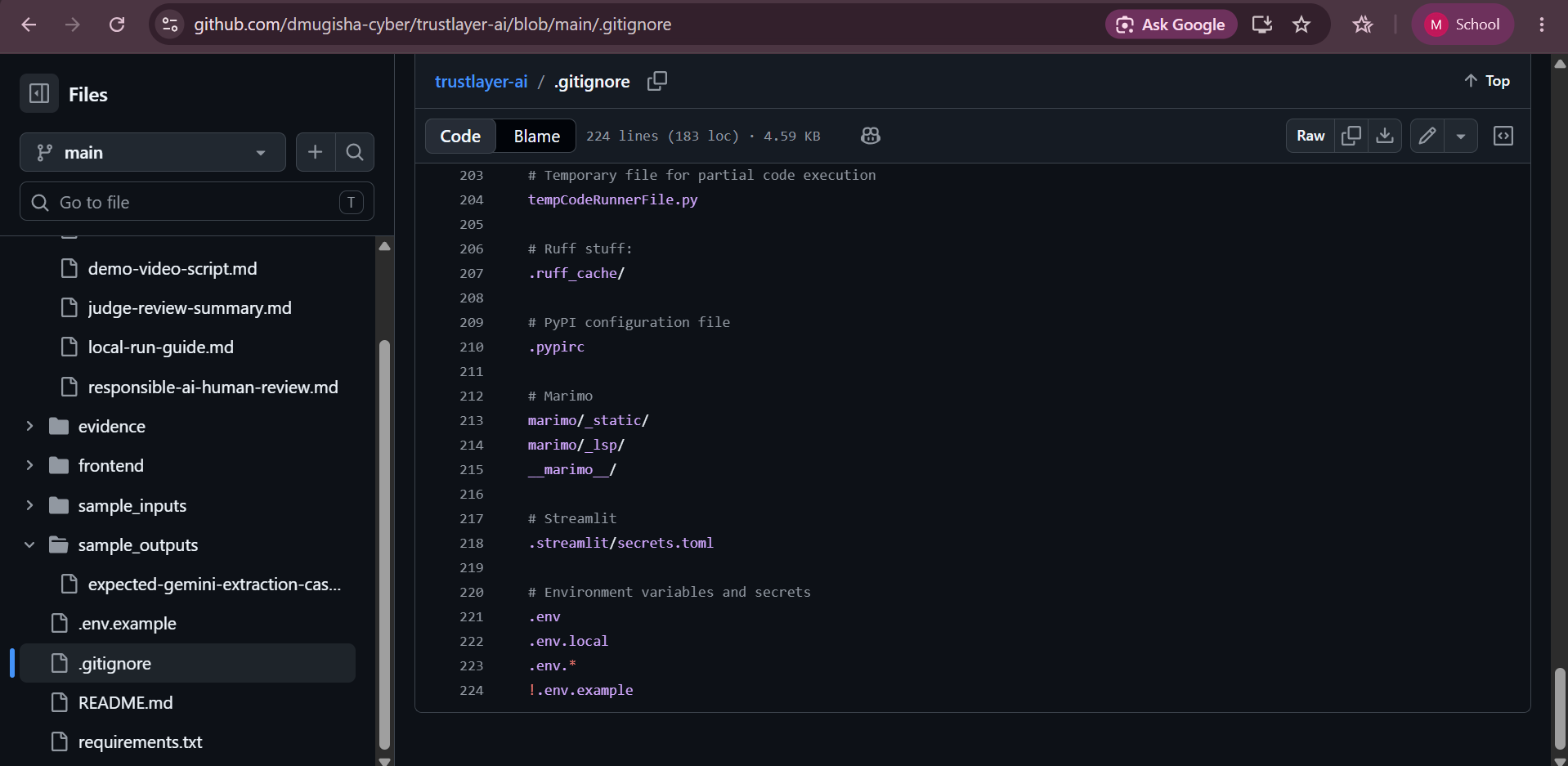
Gitignore file showing protection of environment variables, secrets, caches, and local development files.
Inspiration
Digital financial services are expanding faster than the operational trust layer needed to keep them safe. Small fintechs, payment agents, digital insurers, microfinance operators, remittance teams, and compliance advisors often receive fraud reports, suspicious payment notes, customer complaints, PDFs, spreadsheets, cyber-risk alerts, and compliance findings in fragmented formats.
The problem is not only lack of tools. The deeper problem is lack of coordinated, explainable, evidence-ready workflows that turn scattered risk signals into safe business action.
TrustLayer-AI was inspired by this gap. The goal is to make fraud-risk, compliance, and evidence-readiness support more accessible to smaller digital-finance actors while keeping humans in control of final decisions.
What it does
TrustLayer-AI is a Gemini-powered trust, fraud-risk, and compliance assistant for digital financial services.
A user can submit a suspicious payment, fraud report, digital-insurance anomaly, compliance concern, cyber-linked risk signal, or free-text case note. Gemini helps extract key facts, classify the event, identify missing evidence, and normalize the input into a structured TrustLayer case.
The platform then applies explainable risk logic to generate a severity view, reason codes, and an evidence checklist. Human reviewers remain in control. They can monitor, request enrichment, escalate, draft a memo, or close the case. The system supports audit logs, reviewer notes, customer-safe reports, and dashboard summaries.
How we built it
TrustLayer-AI is being built as an AI-native full-stack product using:
- FastAPI for backend case intake and workflow logic
- Streamlit for rapid prototype interaction
- Gemini API for event extraction, classification, missing-field detection, explanation drafting, and memo generation
- Google Cloud Run for deployment
- Firestore or Cloud SQL for structured case and audit records
- Human-in-the-loop review to keep decisions explainable, accountable, and safe
The architecture separates AI assistance from final decision-making. Gemini helps structure, explain, and draft. Human reviewers validate evidence and approve action.
Challenges we ran into
The main challenge is balancing speed, trust, privacy, and accountability. Financial-risk and compliance workflows cannot rely on black-box automation alone. TrustLayer-AI is therefore designed around explainable outputs, evidence checklists, audit logs, and human approval.
Another challenge is building something useful for smaller financial-service actors without requiring expensive enterprise SOC, RegTech, or compliance infrastructure.
Accomplishments that we're proud of
We are proud of shaping TrustLayer-AI as a focused product, not just a prototype. The project connects AI extraction, explainable risk logic, human review, auditability, and customer-safe reporting into one coordinated trust-operations workflow.
We are also proud of keeping the design responsible: Gemini supports extraction, classification, explanation, and drafting, while humans remain responsible for final interpretation and action.
What we learned
We learned that the strongest value of AI in financial-risk and compliance workflows is not autonomous decision-making. The stronger value is coordination: turning messy inputs into structured cases, identifying missing evidence, explaining risk clearly, and helping human reviewers act faster and more consistently.
We also learned that smaller digital-finance actors need practical trust infrastructure that is affordable, explainable, and easy to adopt.
What's next for TrustLayer-AI
Next steps include completing the live demo, adding Gemini execution logs, deploying on Google Cloud, testing with pilot users, collecting feedback, and preparing a clear business evidence package for the XPRIZE submission.
We will continue improving the product toward a usable AI trust desk for fintechs, payment agents, digital insurers, microfinance operators, compliance advisors, and other digital-finance teams.
Built With
- ai/llm-integration
- audit-logs
- cloud-logging
- cloud-run
- cyber-threat-intelligence
- cybersecurity
- dashboarding
- digital-forensics
- explainable-ai
- fastapi
- fintech
- firestore
- gemini-api
- github
- google-cloud
- human-in-the-loop-ai
- postgresql
- prompt-engineering
- prototype
- python
- regtech
- rest-apis
- sqlite
- streamlit
- suptech

Log in or sign up for Devpost to join the conversation.