TrustLayer
Inspiration
TrustLayer was inspired by a real problem many immigrants, international students, and families face after coming to the United States: scam messages are getting more sophisticated, but the tools to understand them are still too technical or too limited.
Scammers often take advantage of language barriers, fear of authorities, unfamiliarity with American systems, and pressure tactics. A fake IRS message, job offer, bank alert, or delivery notice can make someone panic and respond before they realize it is a scam.
Existing tools like spam filters may catch obvious junk, but they often do not explain why something is dangerous, what the user should do next, or provide support in the user’s language.
We built TrustLayer to fix that.
Our goal is simple:
Help immigrants, families, and communities detect, understand, and share scam warnings before harm happens.
What It Does
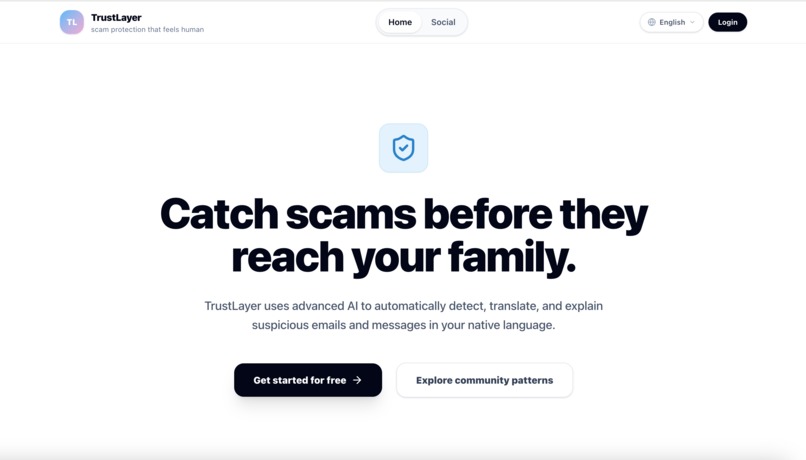
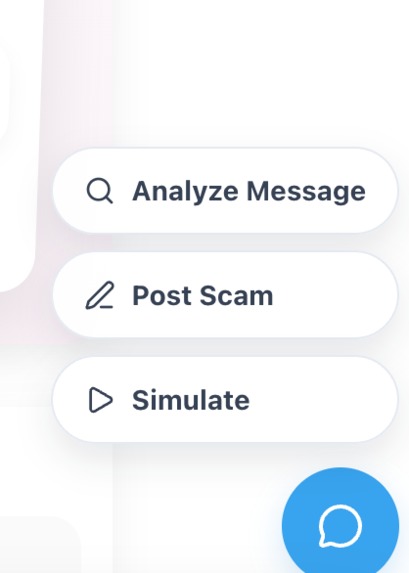
TrustLayer is a multi-channel scam detection platform designed for immigrants, international students, and families.
Users can paste suspicious messages from different sources, including:
- SMS
- Phone call scripts
- Social media messages
- Job postings
TrustLayer gives users an instant scam analysis with:
- A risk level, such as High Risk, Suspicious, or Safe
- A confidence score
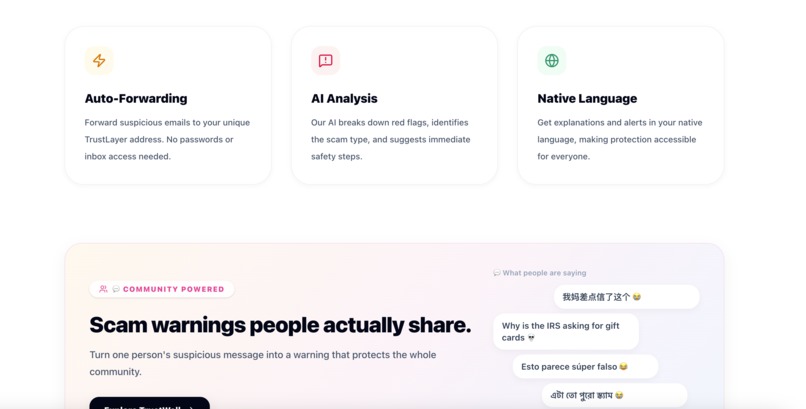
- A plain-language explanation of why the message may be dangerous
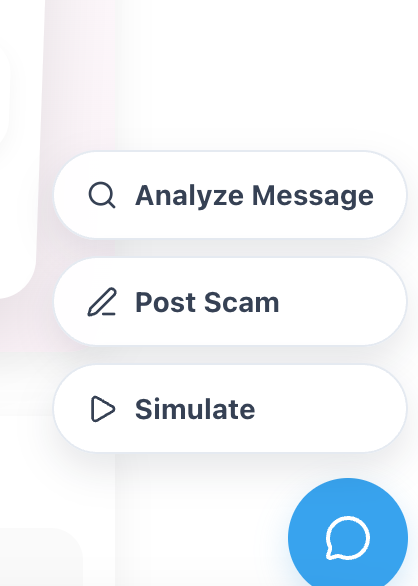
- Specific next steps, such as block the sender, avoid clicking links, or report the scam
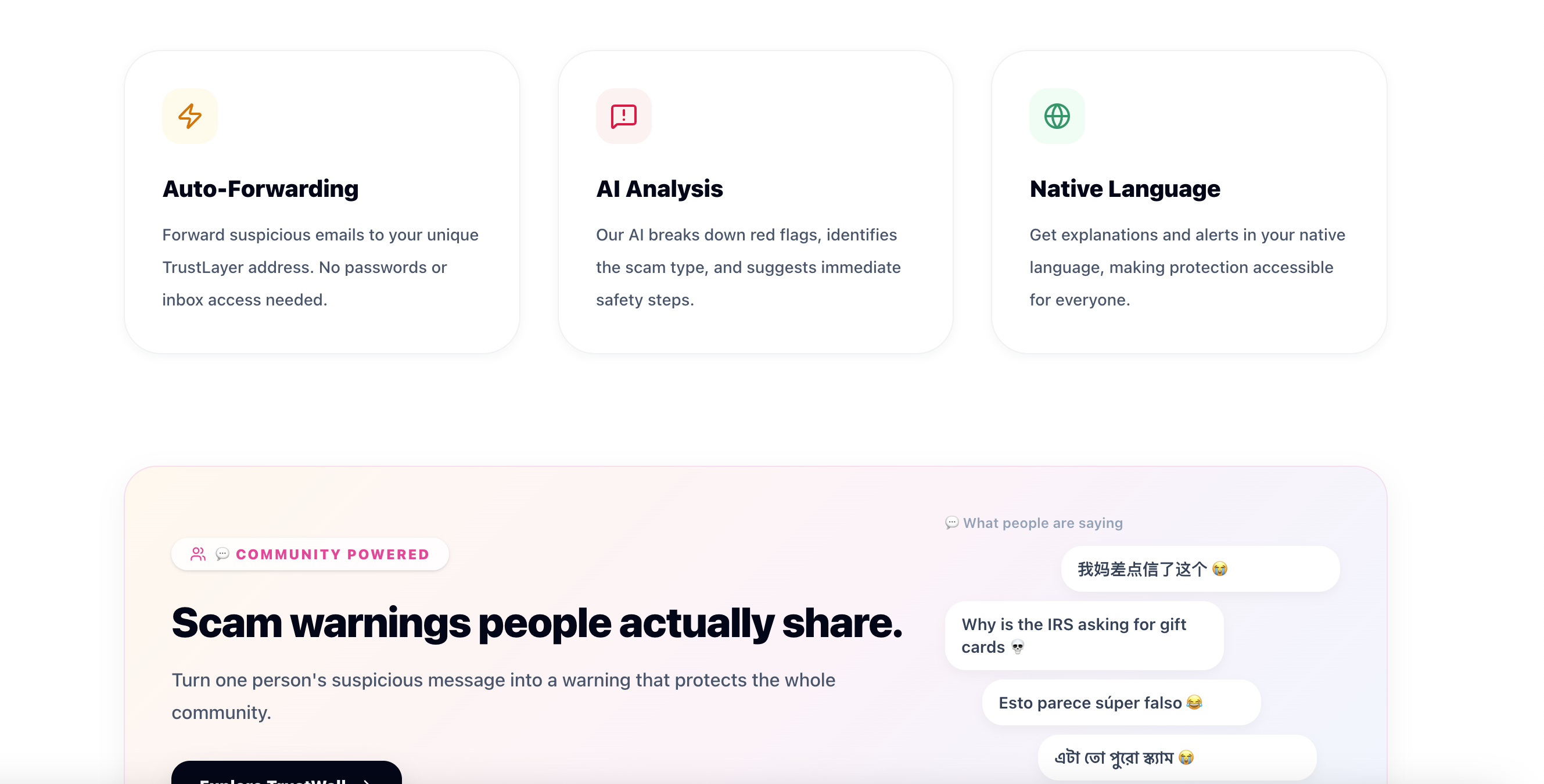
- Multilingual support in English, Spanish, Mandarin, Bengali, and Haitian Creole
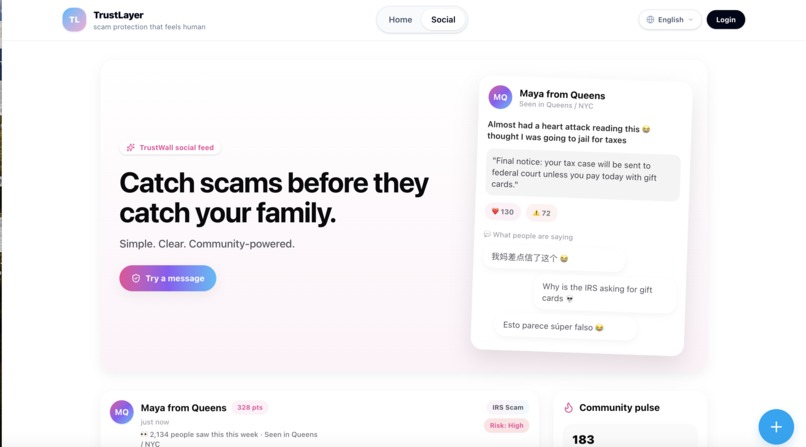
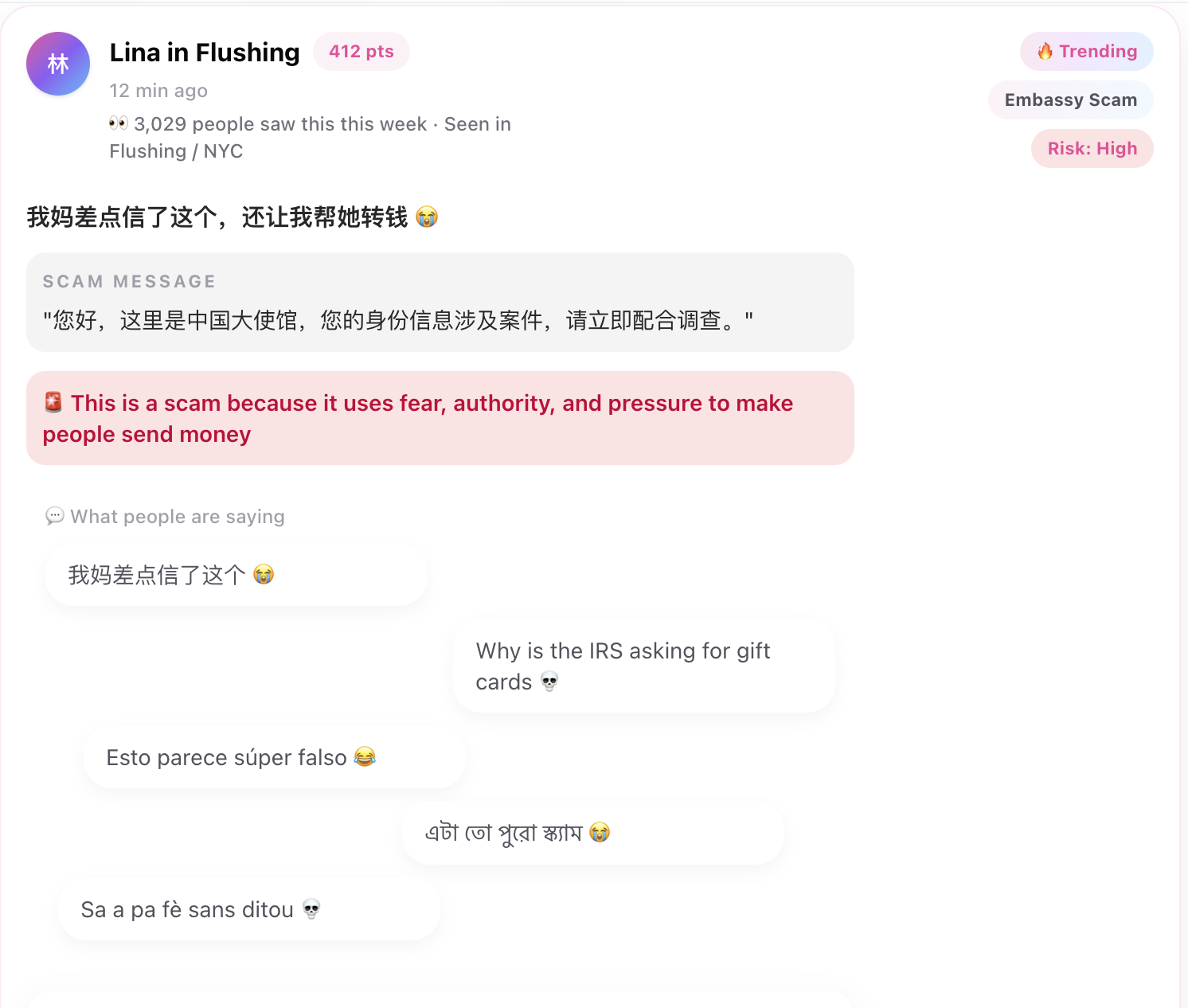
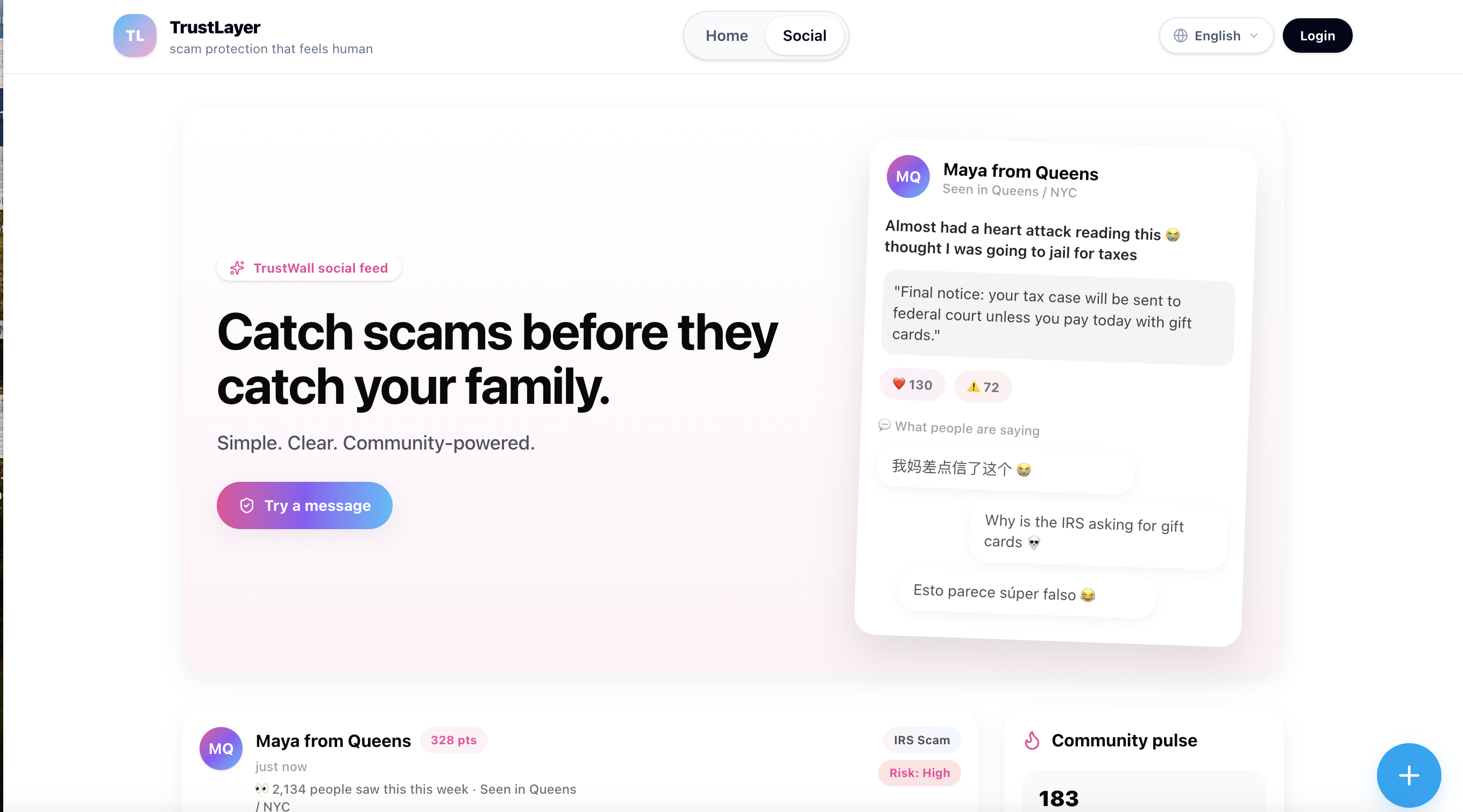
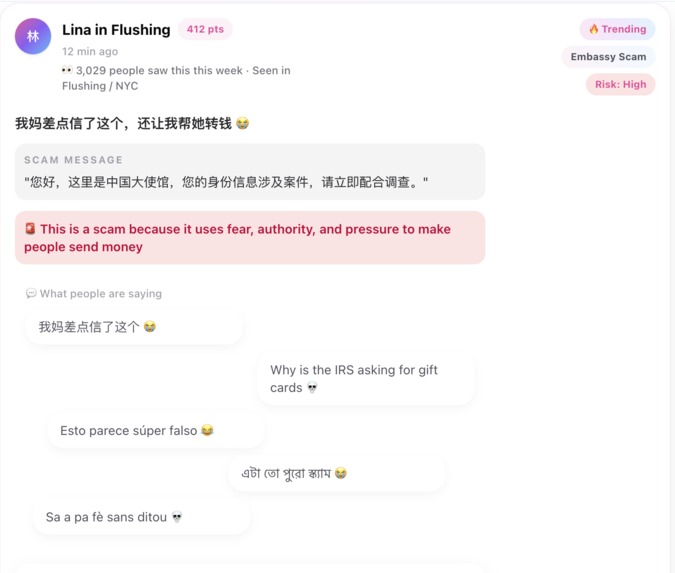
TrustLayer also includes TrustWall, a community feed inspired by the way immigrant communities already share warnings in WhatsApp and WeChat groups. Users can post scam messages they receive, and others can react with “Got this too!” to confirm common scam patterns.
This turns one person’s warning into community protection.
We also added a Spot the Scam quiz game, where users can learn scam patterns, earn points, and level up from Newcomer to Guardian.
How We Built It
We built TrustLayer as a full-stack web application.
Our technology stack includes:
- Next.js 16 and TypeScript for the frontend and backend structure
- Tailwind CSS for a clean and responsive user interface
- Next.js API routes for request validation, channel routing, and response formatting
- Hugging Face fraud detection models for scam classification
- Claude API for multilingual explanations and action steps
- Vercel for deployment
The key architectural decision was to separate detection from communication.
The machine learning models handle scam detection and produce a fraud probability score. Then Claude turns that score into a clear, culturally aware explanation in the user’s selected language.
For example, instead of only saying “High Risk,” TrustLayer explains:
This message is suspicious because government agencies like the IRS do not request payment through gift cards or threaten immediate arrest by text message.
At a high level, TrustLayer evaluates scam risk using signals like:
$$ Risk = f(Urgency, MoneyRequest, FakeAuthority, SuspiciousLinks, PersonalInfoRequest) $$
This allows the platform to detect both obvious scams and more subtle social engineering attempts.
Challenges We Faced
One challenge was working quickly as a team while multiple people pushed code to the same repository. We had to resolve merge conflicts, handle rebasing, and keep the demo stable.
Another challenge was keeping our scope realistic. We had many ideas, but we had to focus on the features that best showed the core value of TrustLayer during the hackathon.
We also had to make multilingual output feel natural, not machine-translated. Scam explanations need to be clear, calm, and culturally relevant because the users may already feel nervous or confused.
A final challenge was balancing real machine learning model integration with hackathon time limits. We integrated models for the demo and designed the architecture so more specialized models can be added later.
Accomplishments We Are Proud Of
We are proud that TrustLayer is more than a simple keyword checker or one-time AI prompt.
Some accomplishments include:
- Real machine learning model inference for scam detection
- Multilingual scam explanations in five languages
- A community protection layer through TrustWall
- A gamification system that encourages users to report and learn from scams
- Multi-channel detection across SMS, email, phone scripts, social media, and job postings
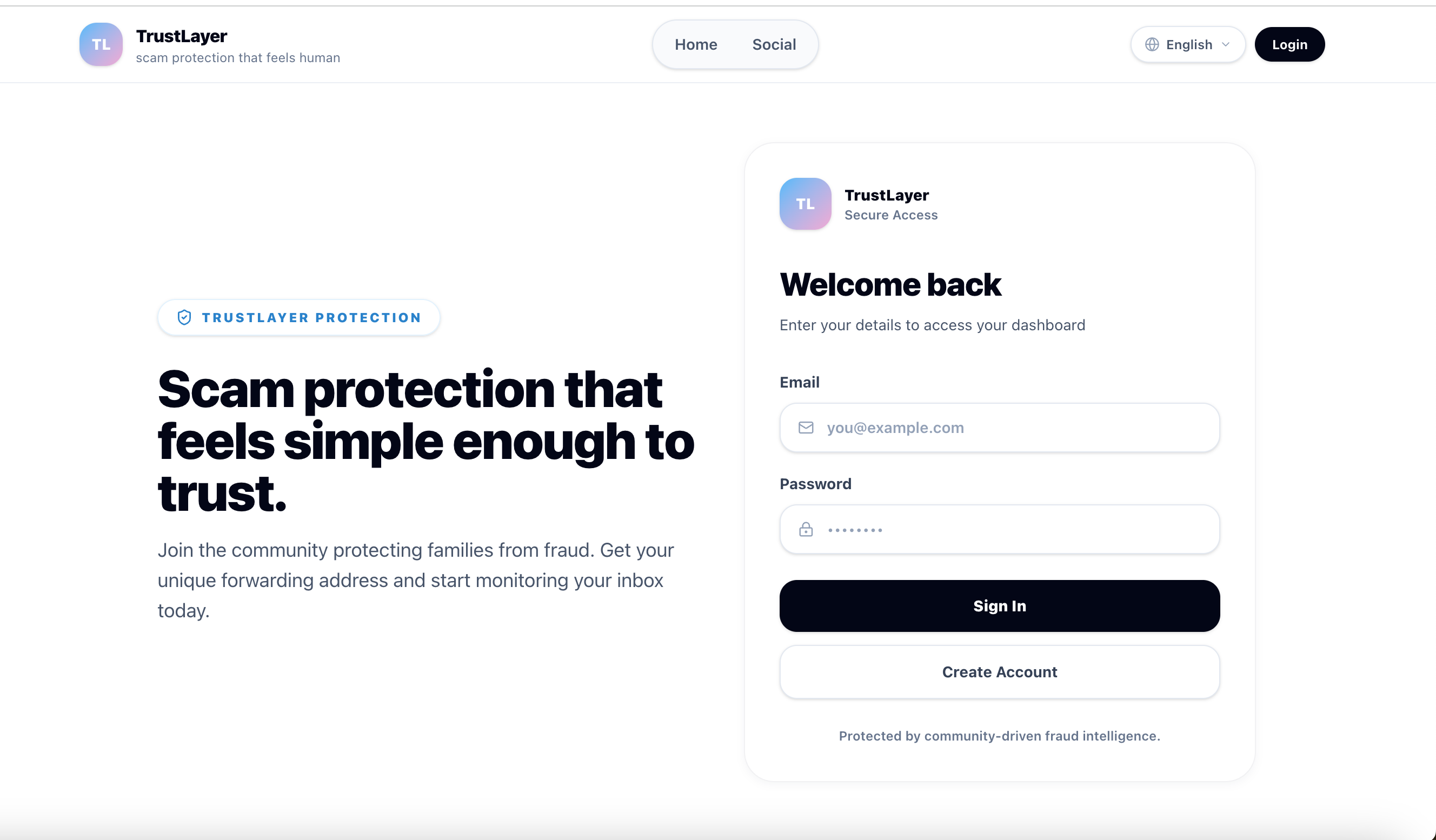
- A user interface designed to feel simple, trustworthy, and human
What We Learned
We learned that scam detection is not only a technical problem. It is also a communication and trust problem.
A risk score alone is not enough. Users need to understand why a message is suspicious and what action to take next.
We also learned that immigrants and students already protect each other through group chats and community networks. TrustLayer formalizes that behavior and makes it easier to share scam warnings safely.
One major product lesson was:
Detection helps, but explanation prevents harm.
Community validation also matters. When users see that many other people received the same scam message, they are more likely to trust the warning and avoid falling for it.
What’s Next
Next, we want to expand TrustLayer into a stronger real-world safety tool.
Future features include:
- A browser extension that scans Gmail and Outlook messages in real time
- SMS forwarding, where users can text a suspicious message to TrustLayer and receive a reply
- Real-time call detection for scam patterns during phone calls
- Community-powered retraining, where TrustWall reports become labeled training data
- Partnerships with immigrant community centers, legal aid organizations, and ESL programs
- More language support, including Arabic, Hindi, Tagalog, Korean, and Vietnamese
Final Reflection
TrustLayer is built around one belief:
Scam protection should feel human.
We built TrustLayer to help people feel safer, more informed, and less alone when they receive suspicious messages.
By combining AI detection, multilingual explanations, and community reporting, TrustLayer turns individual scam experiences into shared protection for families and communities.
Built With
- claude-api
- hugging-face-fraud-detection-models
- next.js-16
- next.js-api-routes
- supabase-ready
- tailwind-css
- typescript
- vercel


Log in or sign up for Devpost to join the conversation.