The Problem: Freelance Work Needs More Than Payments
Freelancing gives people the freedom to work with clients around the world, but it also creates challenges that ordinary payment tools don't solve.
Projects can suffer from unclear requirements, changing expectations, delayed feedback, missed deadlines, and disagreements over whether work has actually been completed. Freelancers may lose payment for work they have delivered, while clients may pay for deliverables that don't meet the agreed requirements.
We wanted to build something that makes freelance projects more transparent, accountable, and fair for both sides.
Introducing TRUSTLANCE
TRUSTLANCE – AI-Powered Freelance Trust Platform helps clients and freelancers create clearer agreements, track project progress, verify deliverables, manage changes, and handle milestone payments more fairly.
Our guiding idea is simple:
Work delivered. Payments deserved.
Instead of treating a freelance project as just a payment transaction, TRUSTLANCE manages the entire journey—from the initial agreement to the final delivery.
What Makes TRUSTLANCE Different?
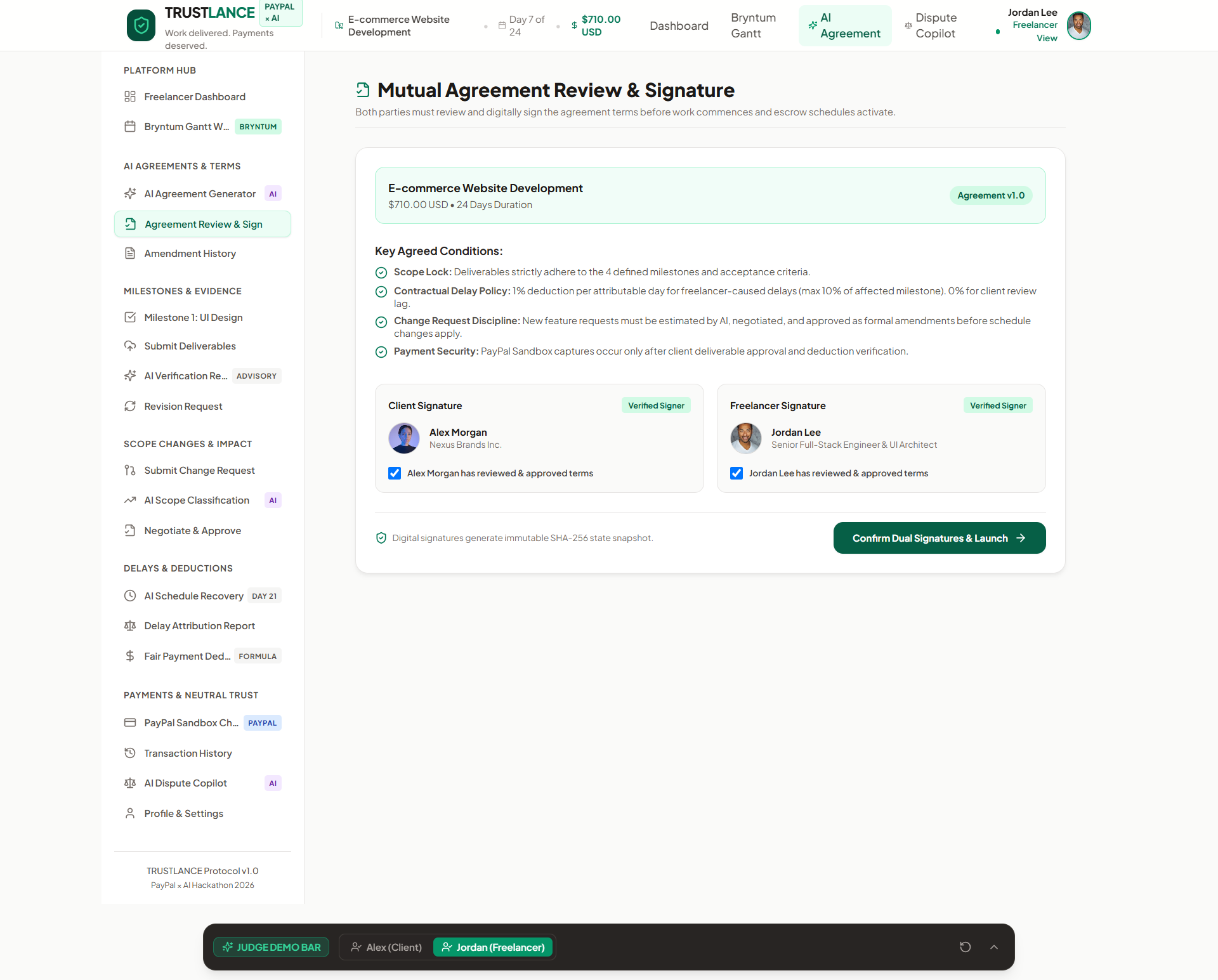
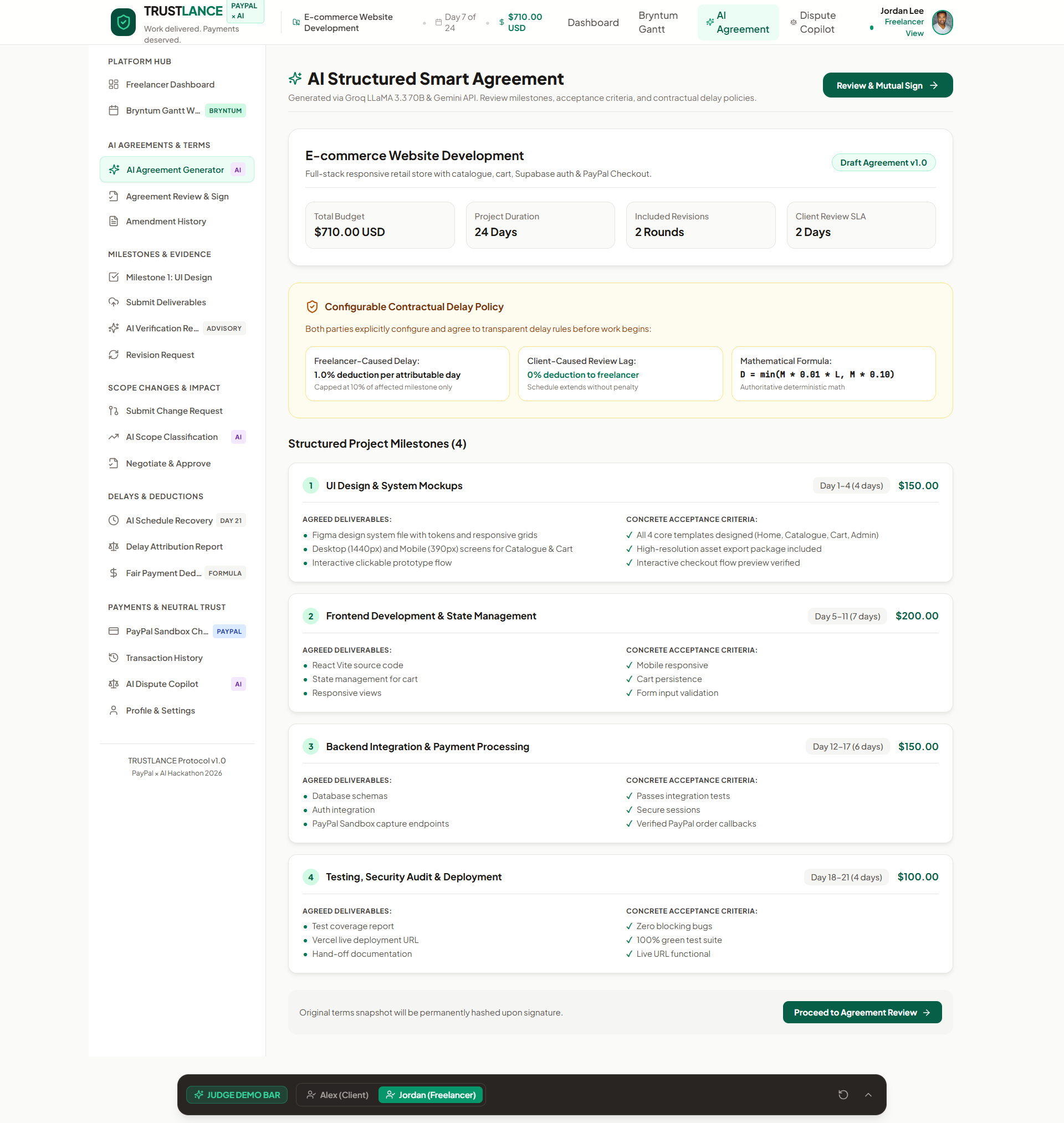
1. AI-Powered Smart Agreements
A client describes a project in natural language. AI converts that description into a structured agreement containing:
- Deliverables and milestones
- Deadlines and payment allocations
- Acceptance criteria
- Review periods and revision limits
Both parties can review and approve the agreement before work begins.
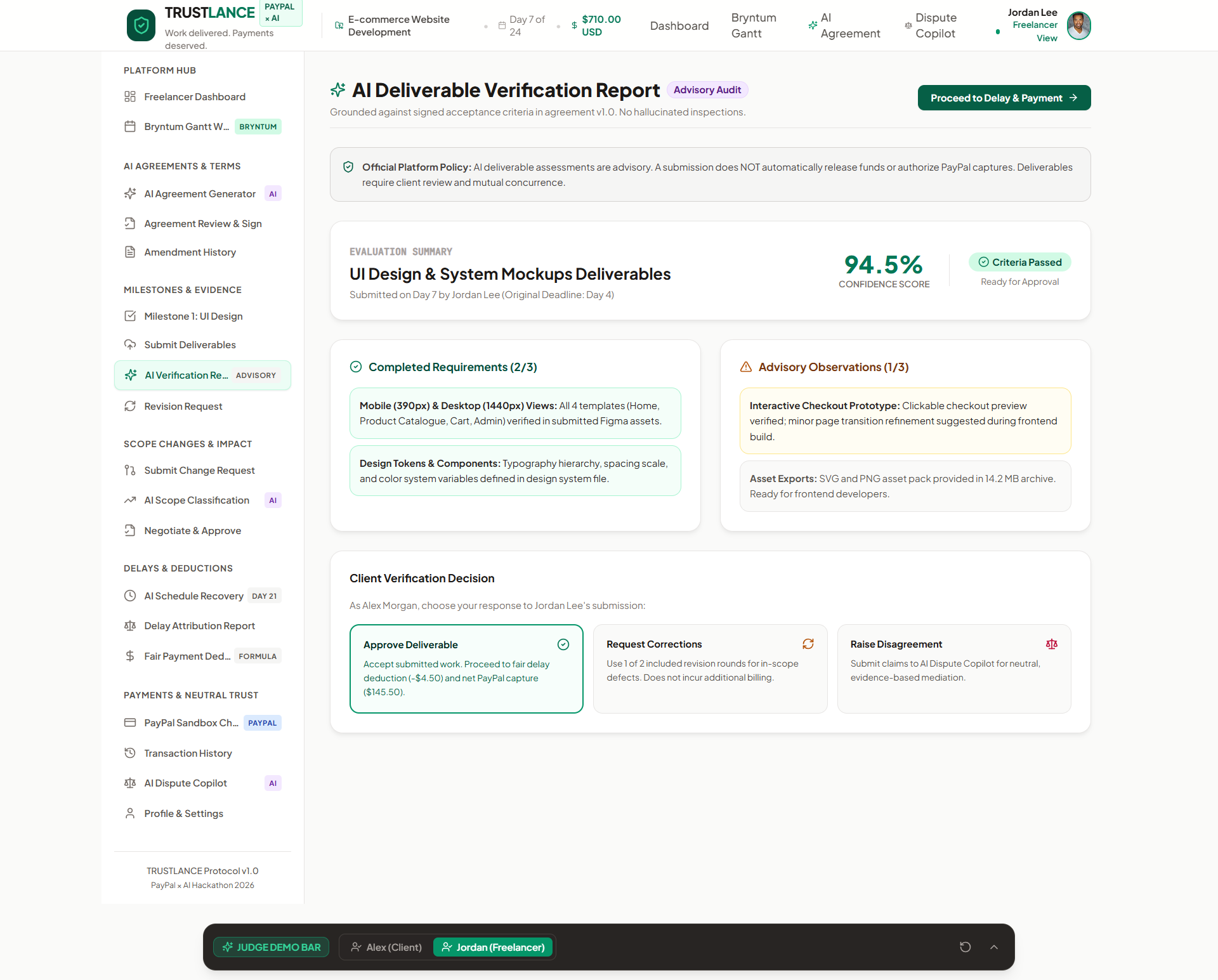
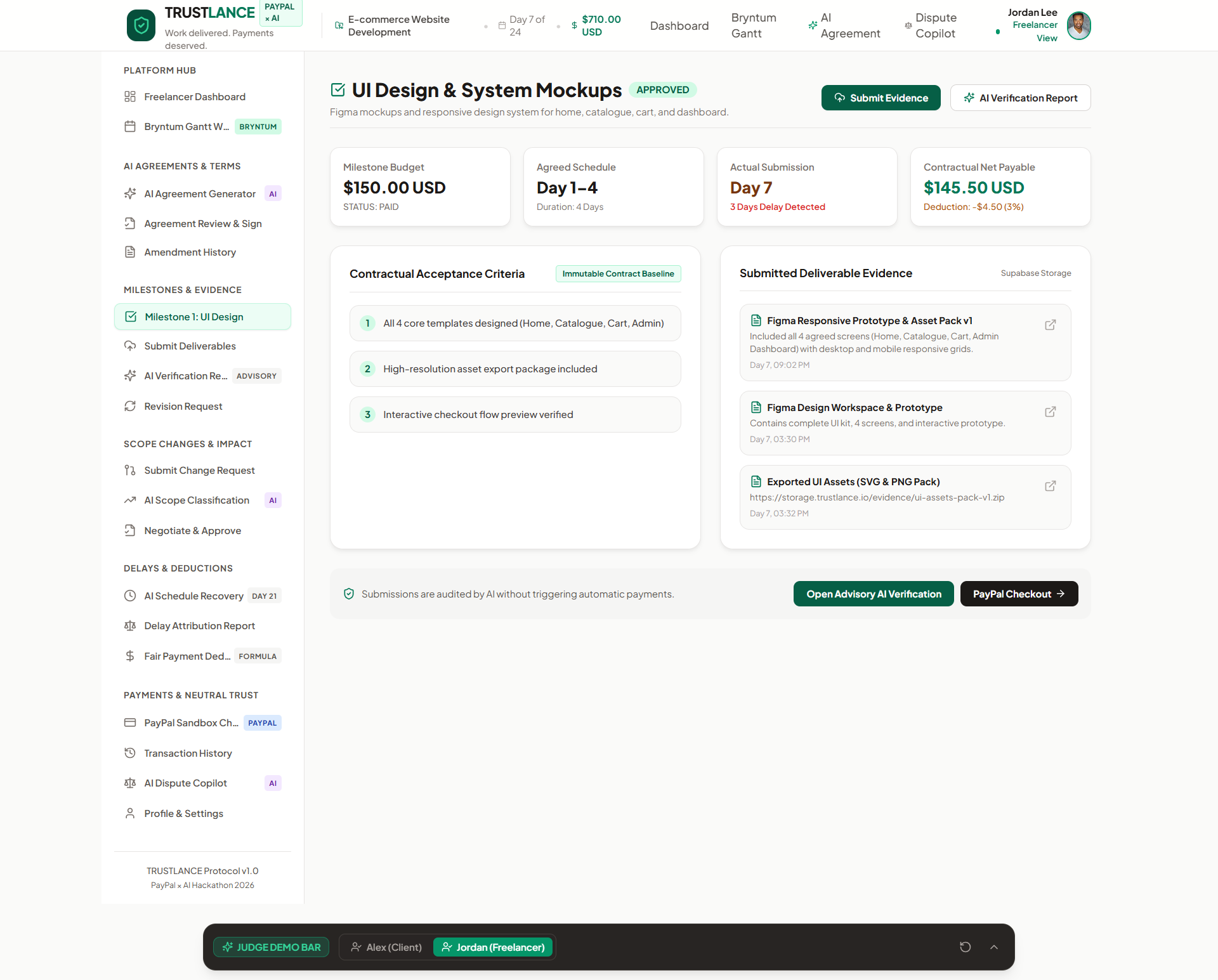
2. Evidence-Based Deliverable Verification
When a freelancer submits work, they can attach supporting evidence such as documents, screenshots, files, or project links.
AI compares the available evidence against the original acceptance criteria and identifies requirements that appear completed, partially completed, or missing.
The goal is to help both parties understand what has been delivered—not to let an AI make an unquestionable payment decision.
3. AI Change Request Protection
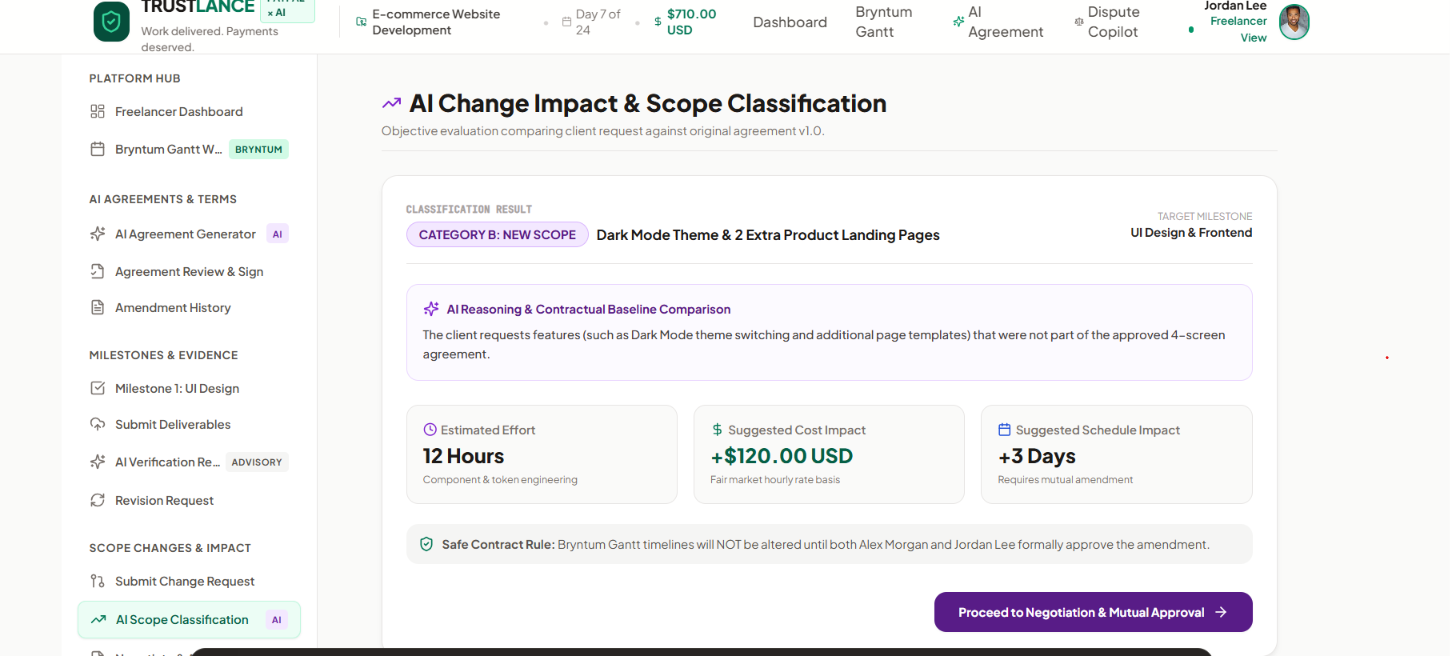
One of the biggest problems in freelancing is scope creep: a client requests additional work that was never part of the original agreement.
TRUSTLANCE compares new requests with the approved scope and helps distinguish between:
- Corrections to existing agreed work
- New requirements or additional scope
- Changes that affect cost or deadlines
Both parties can discuss and approve an amendment. The original agreement remains available in the project history.
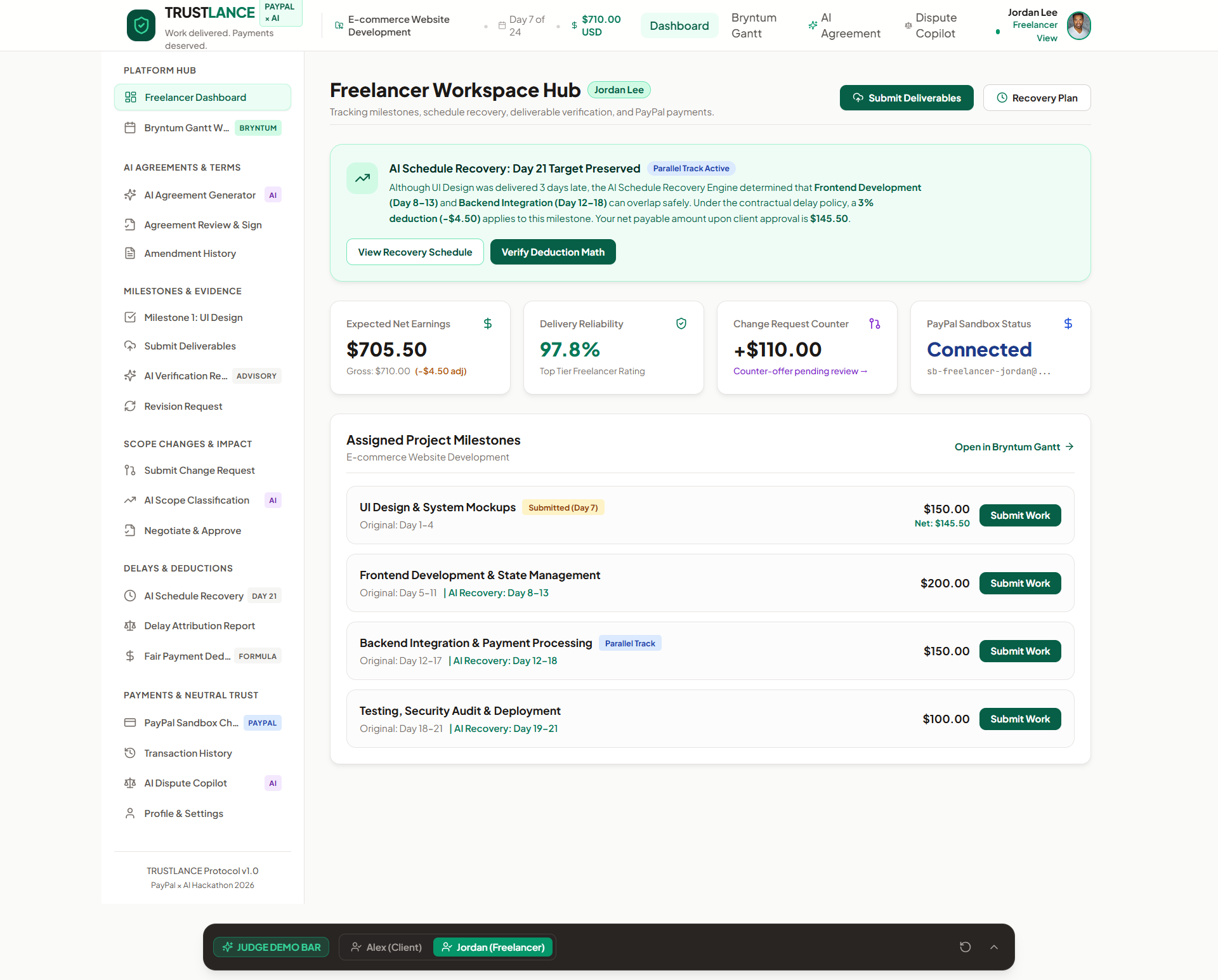
4. Intelligent Deadline Recovery
A delayed milestone should not automatically mean that the entire project deadline must move.
TRUSTLANCE analyzes task dependencies, remaining work, and available time to suggest a realistic recovery schedule. It aims to preserve the original final deadline whenever feasible without ignoring quality or essential dependencies.
If the deadline cannot realistically be maintained, the platform can suggest alternatives such as adjusting scope, adding resources, or agreeing on a revised deadline.
5. Fair Delay Attribution and Payment Adjustments
Not every delay is the freelancer's fault. A client may provide feedback late, change requirements, or fail to supply essential information.
TRUSTLANCE analyzes the project timeline, submissions, feedback, approved changes, and other available records to help identify whether a delay is freelancer-caused, client-caused, shared, or disputed.
Any proposed payment adjustment follows the policy agreed by both parties. AI provides an explanation and supporting timeline; it does not independently decide guilt or deduct money.
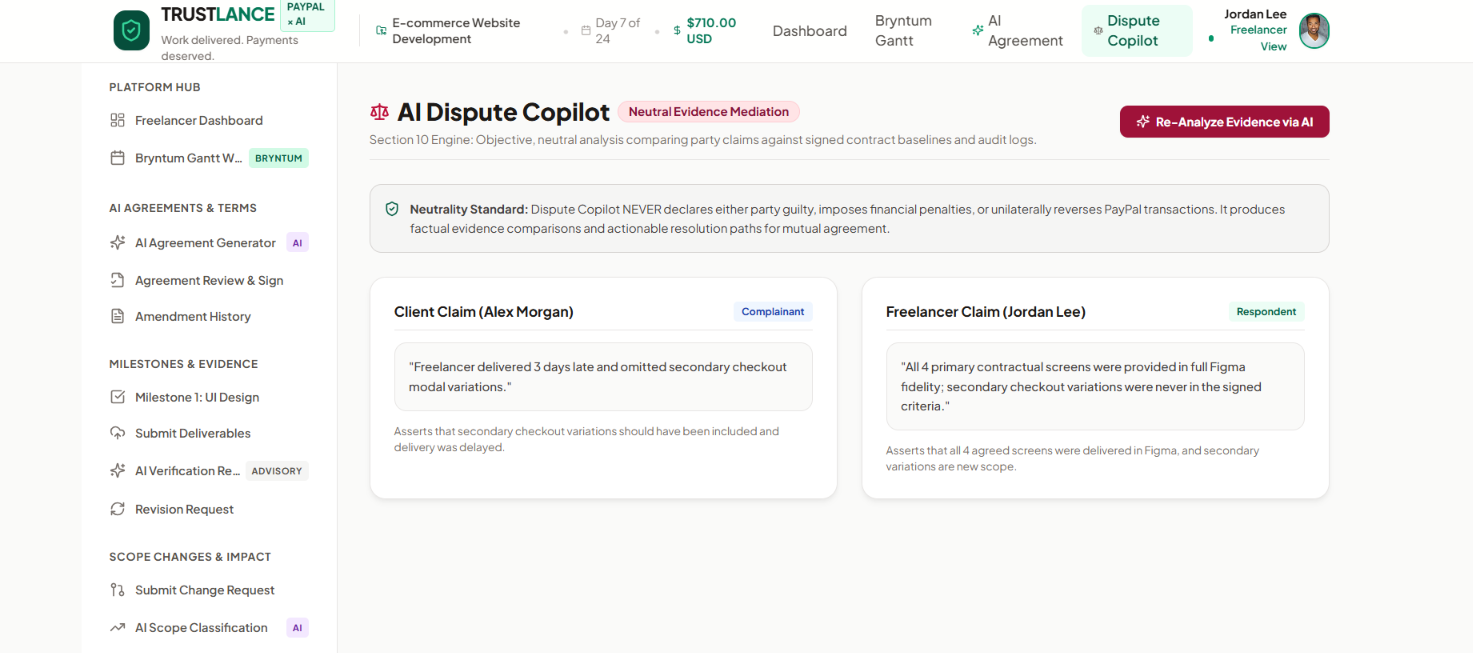
6. AI Dispute Copilot
When disagreements occur, TRUSTLANCE brings together the original agreement, approved amendments, submitted evidence, feedback, and project history to generate a neutral summary.
This helps both parties understand what was agreed, what changed, what was delivered, and where the disagreement started.
7. PayPal-Powered Milestone Payments
PayPal Developer Sandbox integration supports the payment workflow for eligible milestone transactions.
Clients can make milestone payments through PayPal, while the platform records relevant payment status and transaction history alongside project progress.
The purpose is to connect project accountability with real payment operations—not simply display a simulated payment screen.
How We Built It
TRUSTLANCE is designed around a modern web application architecture:
- React.js and Vite for the frontend.
- Tailwind CSS and Lucide for the interface.
- Supabase for authentication, database, file storage, and backend functions.
- AI integration for agreement generation, deliverable analysis, scope comparison, schedule recovery, delay attribution, and dispute summaries.
- PayPal Developer Platform for Sandbox payment operations.
- Bryntum for interactive project scheduling, milestones, task dependencies, and timeline visualization.
The architecture keeps sensitive API credentials on the server side and uses backend functions for protected operations.
Challenges and What We Learned
One of our biggest design challenges was making AI useful without allowing it to make unfair decisions.
For example, a missed deadline does not automatically mean a freelancer is responsible. A client may have delayed feedback, changed the requirements, or failed to provide necessary resources. We therefore designed the system to consider the project history and distinguish between proposed AI assessments and decisions approved by the people involved.
Another challenge was schedule recovery. Simply moving every deadline forward after a delay is not intelligent project management. TRUSTLANCE instead considers task dependencies and remaining work to determine whether the original final deadline can still be achieved.
We also learned that payment integration needs to be handled carefully. A payment being authorized, captured, refunded, or paid out represents a different transaction state. The application must reflect actual PayPal operations rather than treating all payment statuses as interchangeable.
Our Vision
We believe trust should not depend on guesswork, long message histories, or one party having more power than the other.
TRUSTLANCE aims to make freelance work more transparent by connecting agreements, evidence, deadlines, changes, and payments in one accountable workflow.
Because fair freelance work means protecting both the person paying and the person delivering.
Built With
- ai
- application
- artificial
- bryntum
- css
- developer
- freelancing
- gemini
- generative
- groq
- intelligence
- javascript
- paypal
- platform
- postgresql
- project
- react
- supabase
- tailwind
- vite
- web
