TrustGuard — Investigate Before You Trust
Inspiration
Scam messages can look convincing and create panic by claiming that a bank account will be blocked, a delivery will be cancelled, or an internship requires an urgent registration fee. People may act quickly without checking the warning signs.
We built TrustGuard to help people pause, examine suspicious messages, and make safer decisions before responding.
What It Does
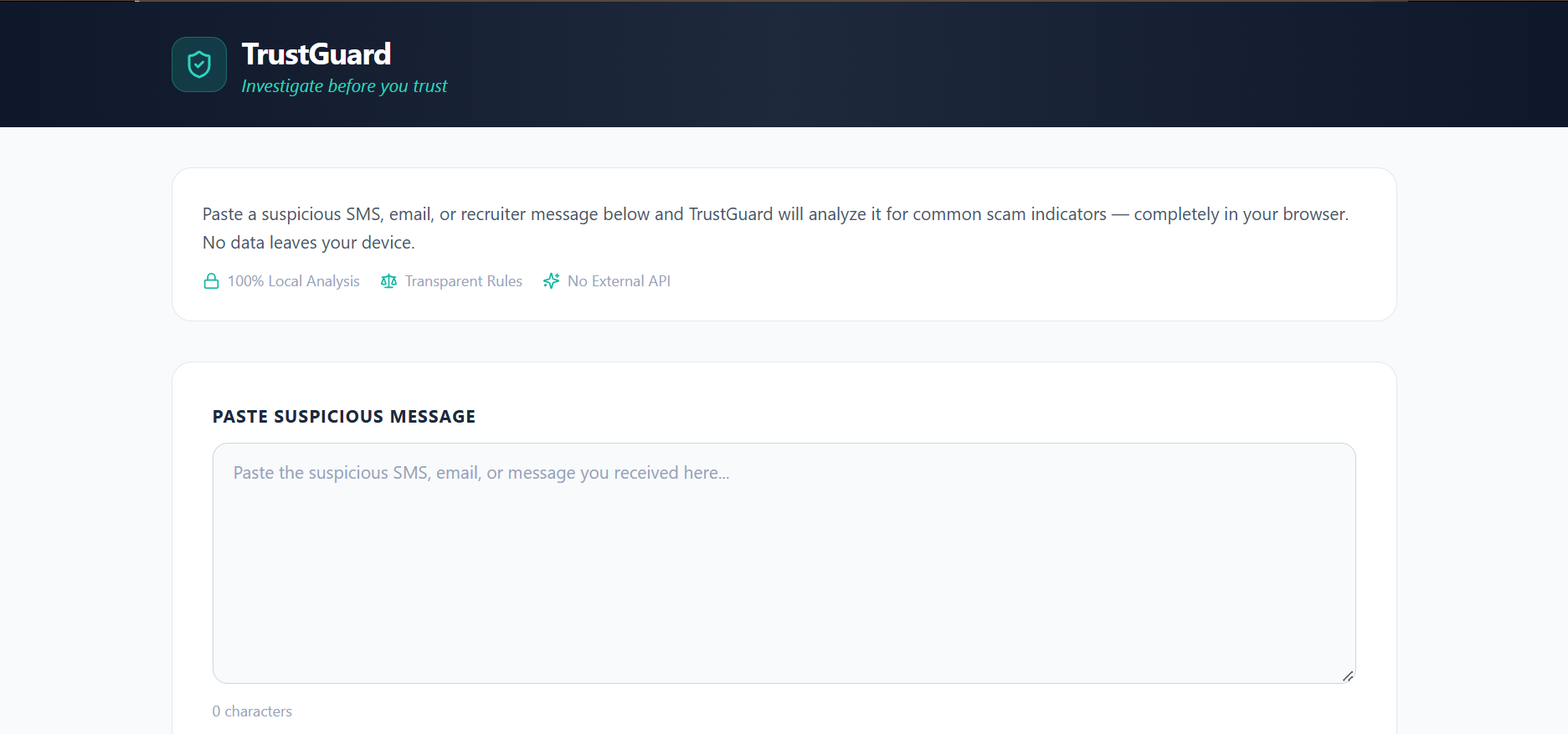
TrustGuard is a browser-based scam-awareness tool that analyzes SMS messages, emails, and recruiter messages for common scam indicators.
Users can:
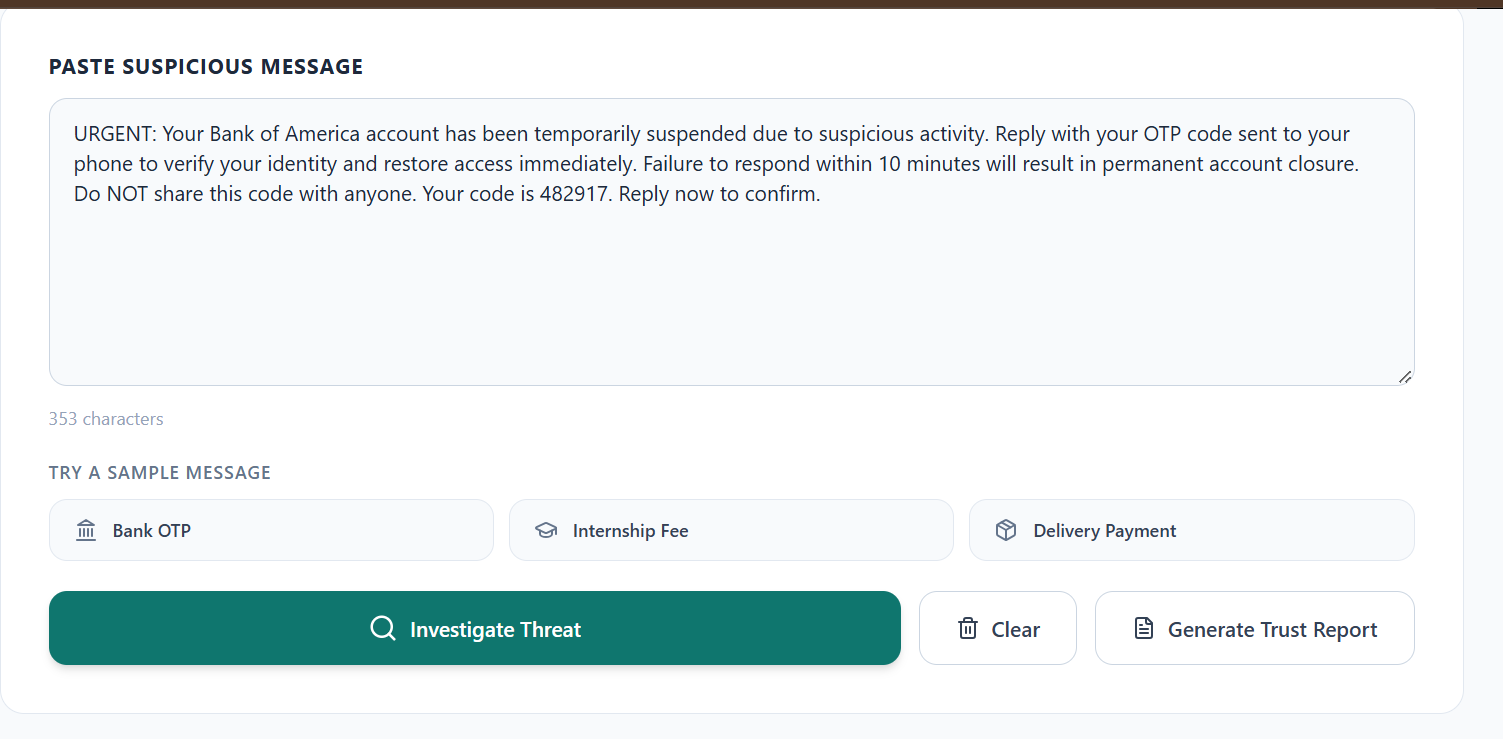
- Paste a suspicious message and investigate it.
- Test sample scenarios involving bank OTPs, internship fees, and delivery payments.
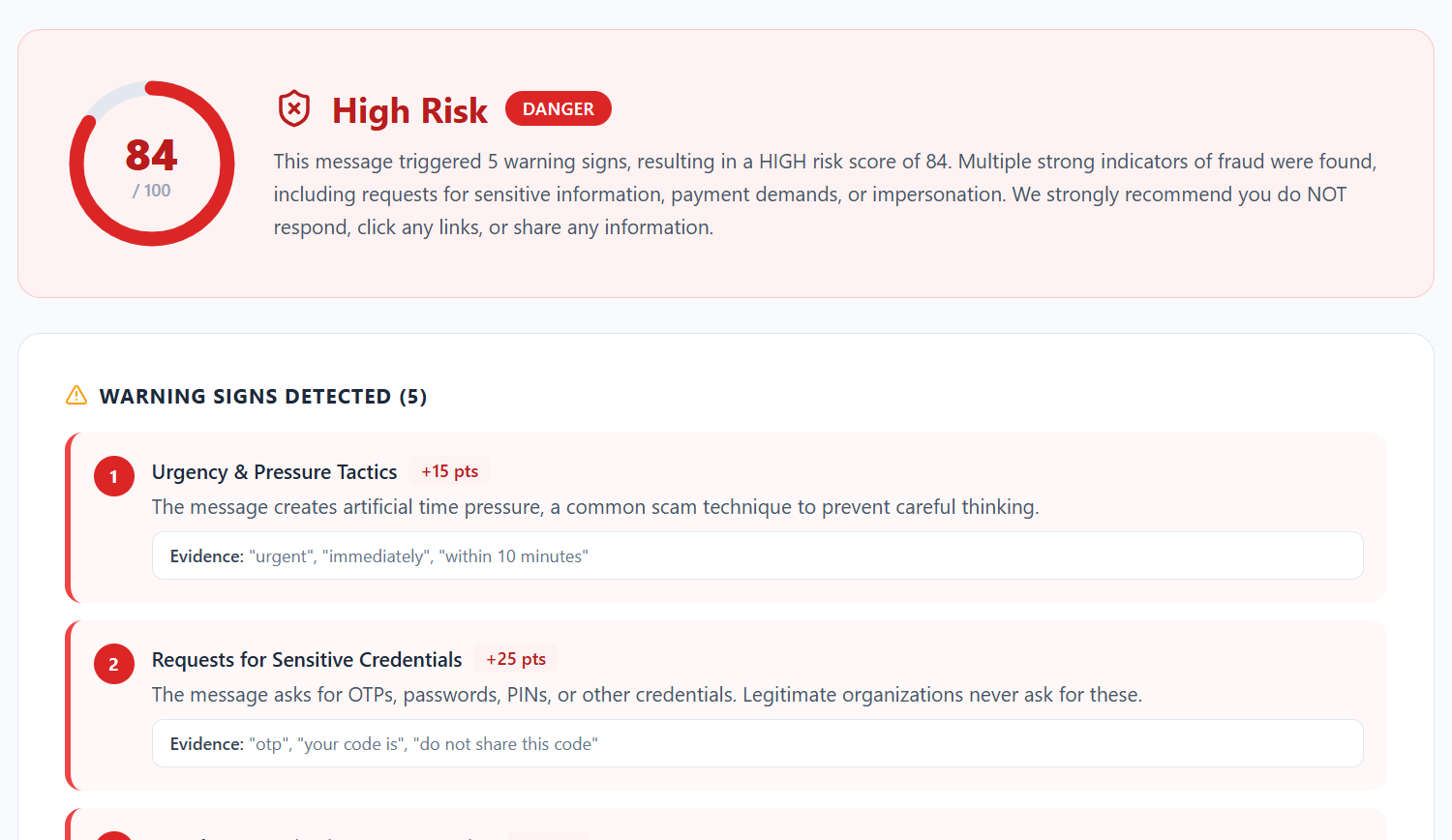
- View a risk score and risk category.
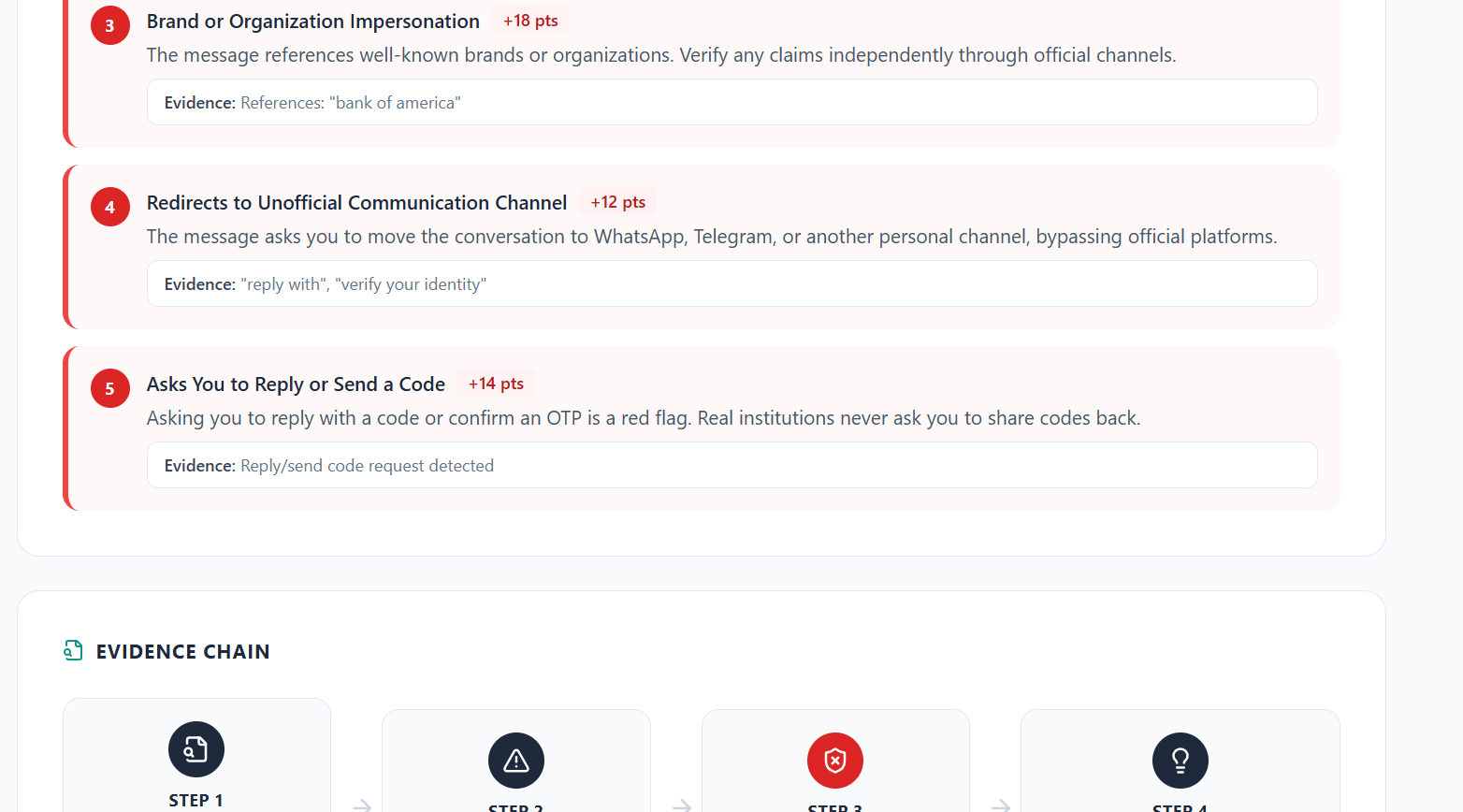
- See detected warning signs and supporting text evidence.
- Follow an evidence chain from the submitted message to the recommended action.
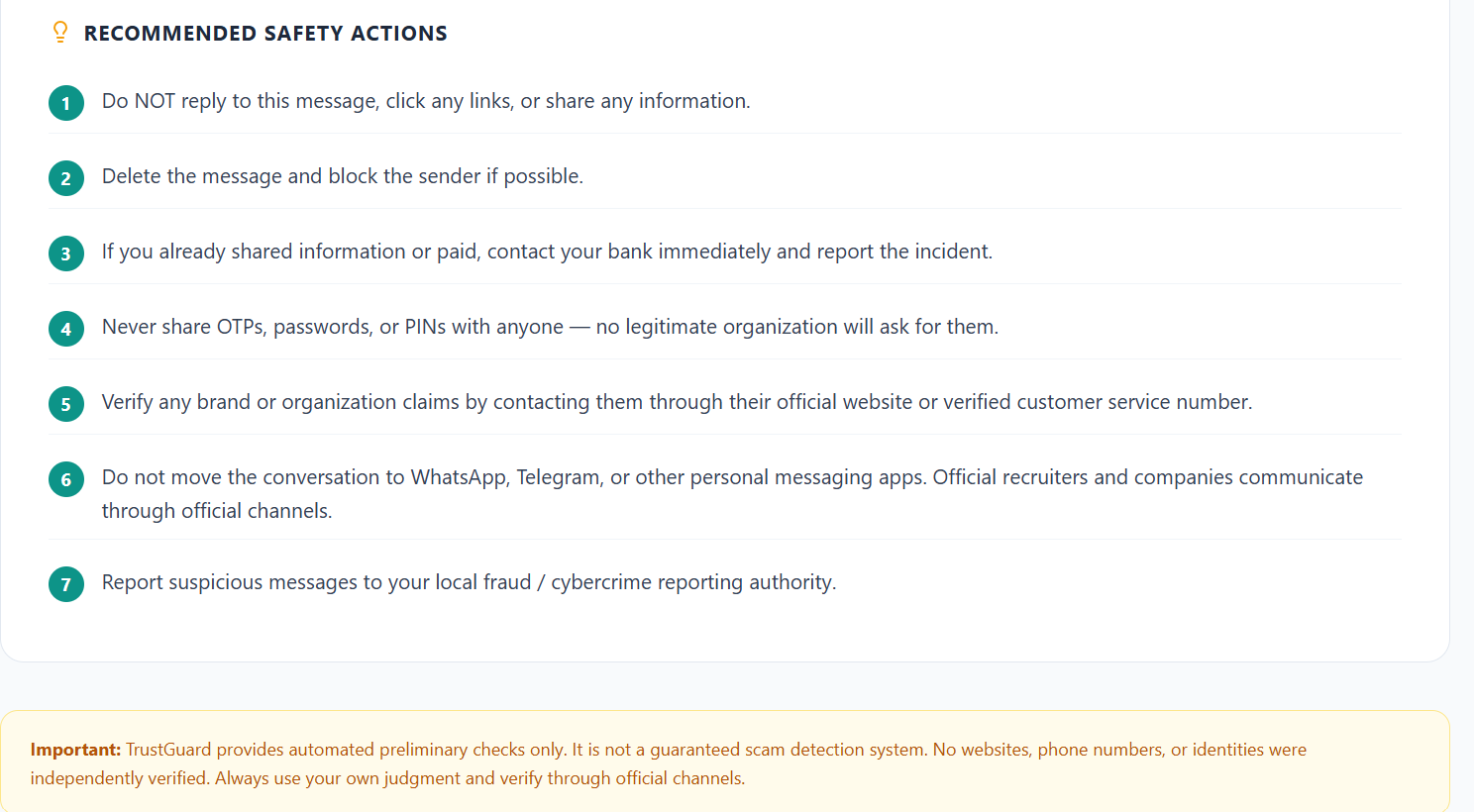
- Review practical safety recommendations.
- Generate a trust report.
How We Built It
TrustGuard was developed using a browser-based application-building platform. Its current prototype uses local JavaScript rules to identify common warning signs, such as urgency, payment demands, suspicious links, and possible brand impersonation.
The analysis runs in the browser without sending the submitted message to an external analysis API. The application presents its findings through a dashboard, evidence chain, risk assessment, and recommended safety actions.
Challenges We Faced
One challenge was turning the idea into a working application within a limited development time. We also needed to ensure that the investigation button produced results, that the risk findings were understandable, and that users could distinguish warning signs from independently verified facts.
We tested the application using suspicious bank, internship, and delivery messages, as well as a safe everyday message.
What We Learned
We learned how to build an interactive cybersecurity application, use rule-based text analysis, present risk indicators clearly, and translate security findings into practical recommendations. We also learned the importance of transparency: a risk score is an initial assessment, not proof that a message is fraudulent.
Future Improvements
Future versions could incorporate securely integrated AI-assisted analysis, trusted external reputation sources, multilingual message analysis, and improved detection of impersonation and emerging scam techniques.
Limitations
TrustGuard provides automated preliminary checks and may produce false positives or miss sophisticated scams. It does not independently verify identities, phone numbers, or websites. Users should verify important claims through official channels.
TrustGuard — Investigate before you trust.
Built With
- app
- browser-based
- css
- cybersecurity
- html
- javascript
- react
- web

Log in or sign up for Devpost to join the conversation.