-
-
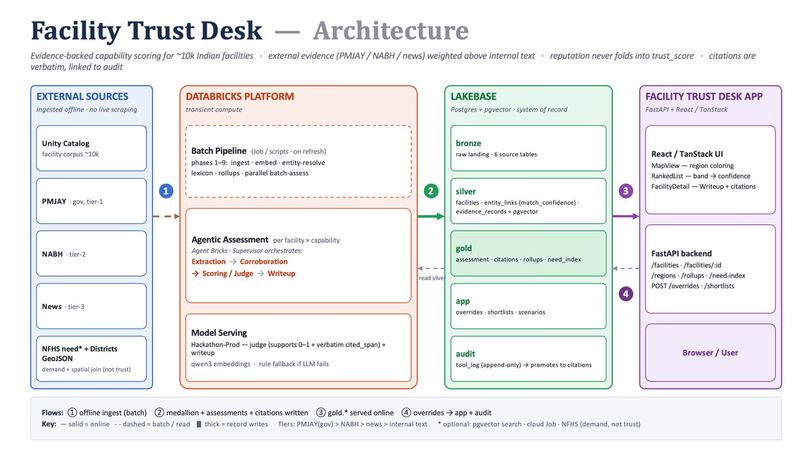
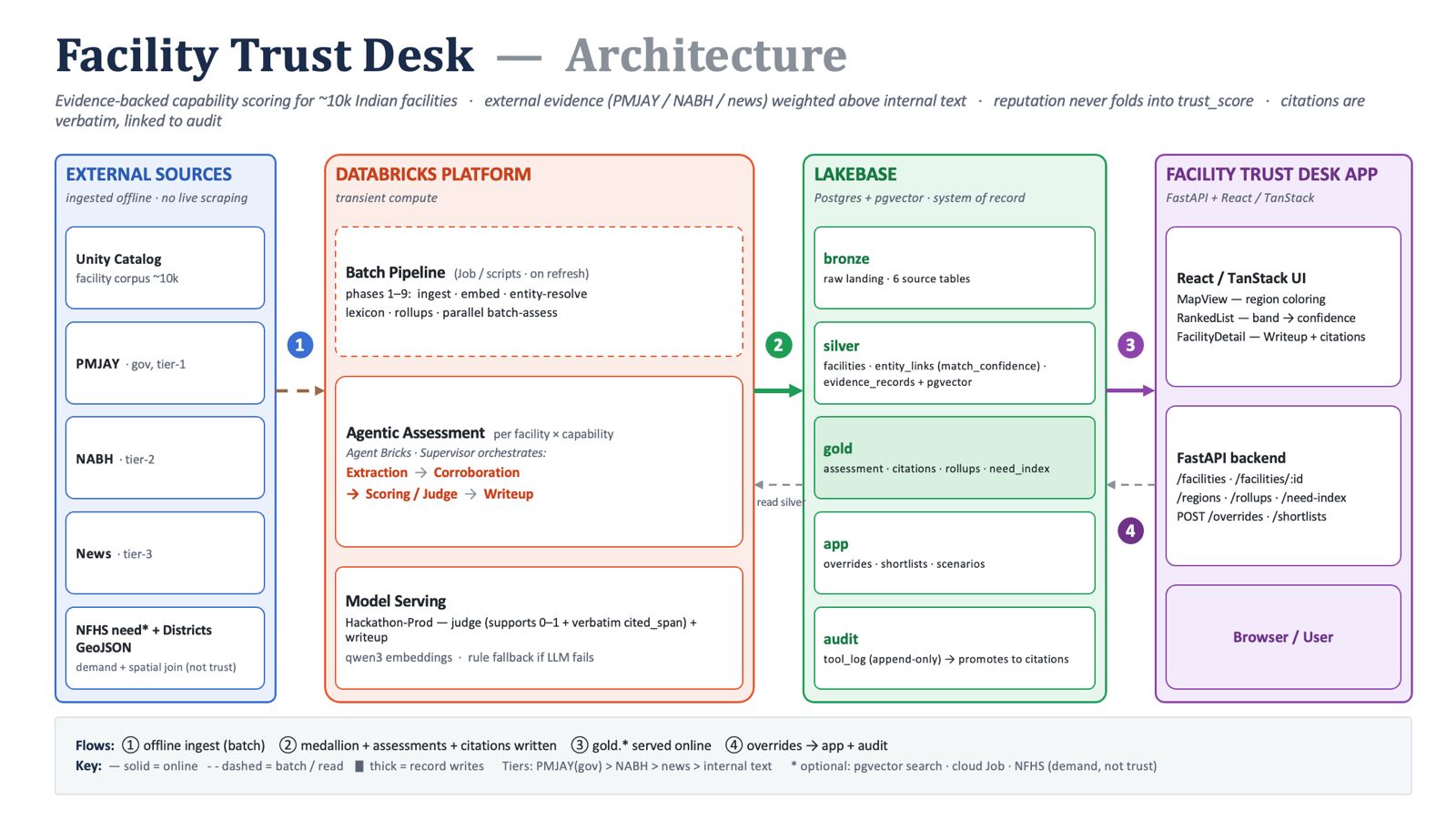
Architectural Diagram of how the ranking works
How we built it
We used Databricks free edition to build the app, Python notebook and Pyspark to clean the data to some extent and Lakebase as the database.
Challenges we ran into
- Data was not clean
- We could not get hold of more recent data
- Latitude and Longtiude information were not accurate for all facilities
- The free API we used to verify address stopped working after we exceeded the API limits.
- Corroboration for claims data was large, and free edition could not handle it in a timely manner
Accomplishments that we're proud of
- Learned more about the good work the Virtue Foundation is doing in the developing countries.
- Learned about Lakebase and other Databricks' products and its capabilities
What we learned
- How data quality affects trust and decision-making.
- How recommendations can affect perceptions
- Importance of keeping humans in the loop
What's next for TrustGrid
- By cleaning up the data, we can increase the number of facilities we rank using our app.
- We can add sentiment analysis and include it to the trust score
Built With
- databricks-apps
- databricks-cli
- databricks-jobs
- databricks-model-serving-(hackathon-prod-/-gpt-5-nano
- databricks-qwen3-embedding-0-6b)
- databricks-sdk
- databricks-sql-warehouse
- databricks-workspace
- fastapi
- geopy
- lakebase-(postgres)
- nabh
- pgvector
- pmjay
- python
- react
- tanstack-start
- typescript
- unity-catalog
- virtue-foundation-dataset-(uc)
- vite

Log in or sign up for Devpost to join the conversation.