-
-
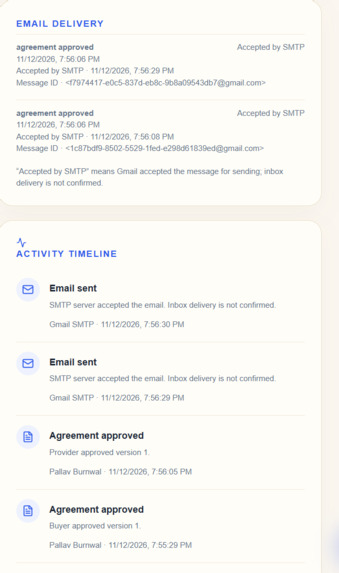
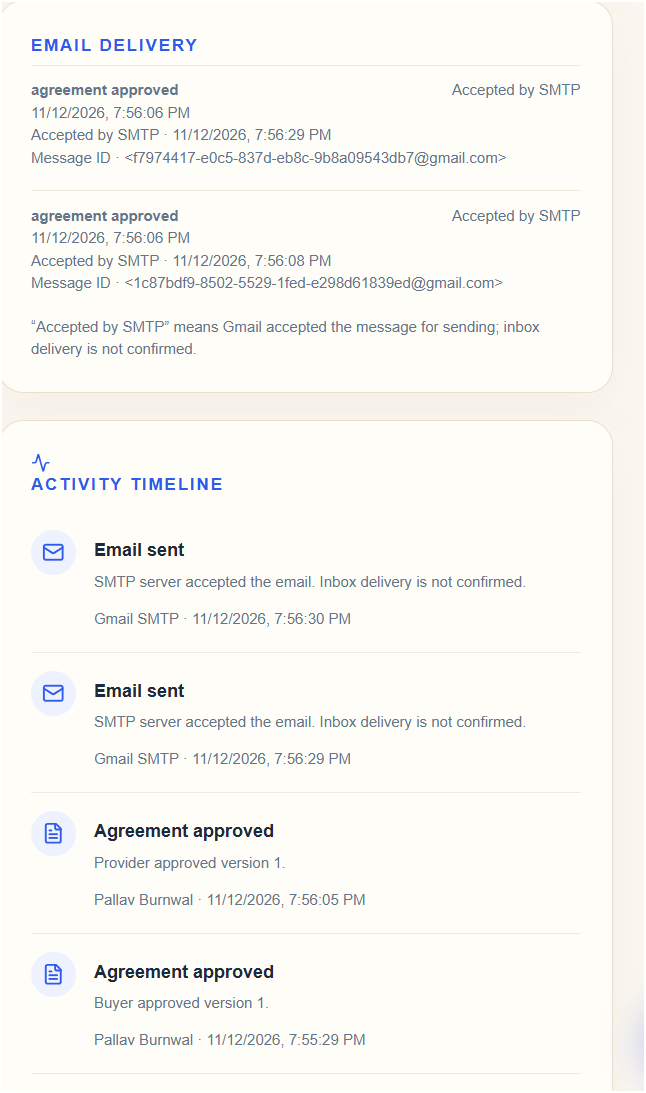
Email Verification and Real Time Tracking
-
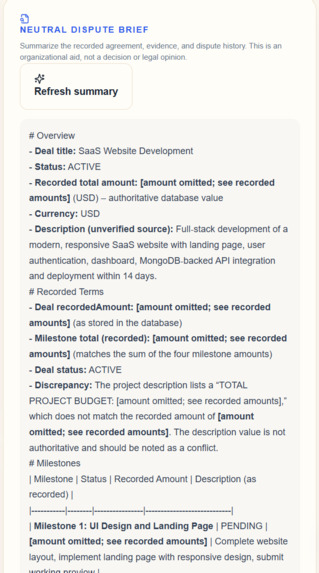
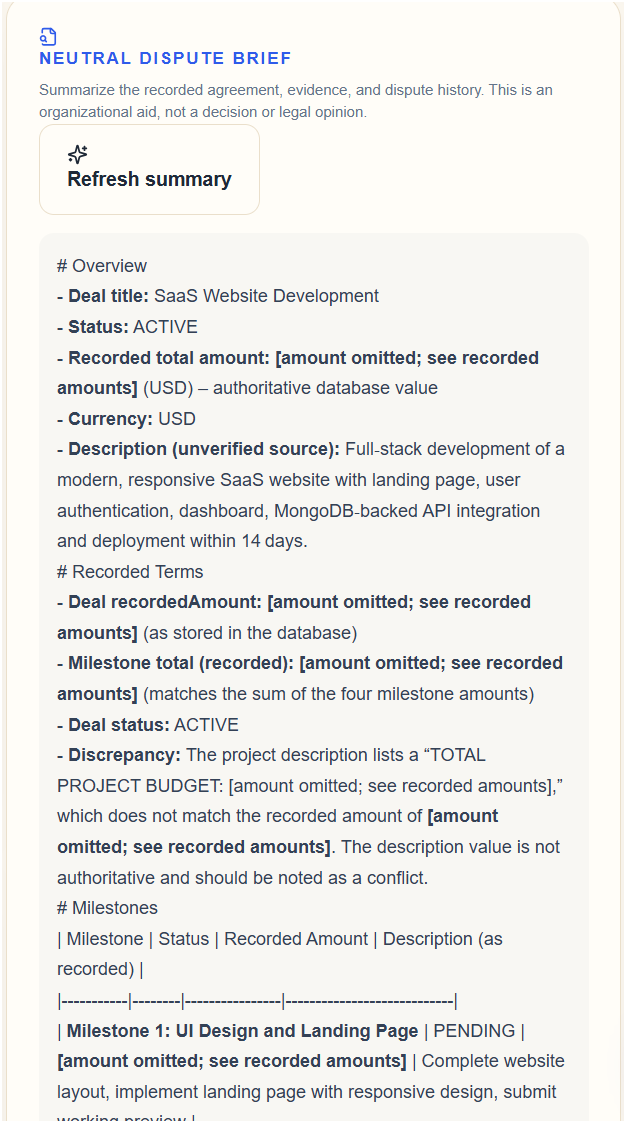
AI solving the Dispute between the Client and the Freelancer for the project Handlings
-
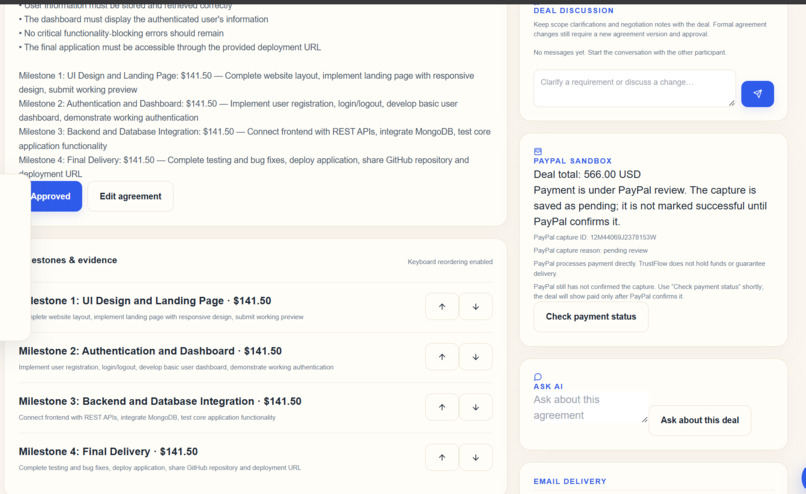
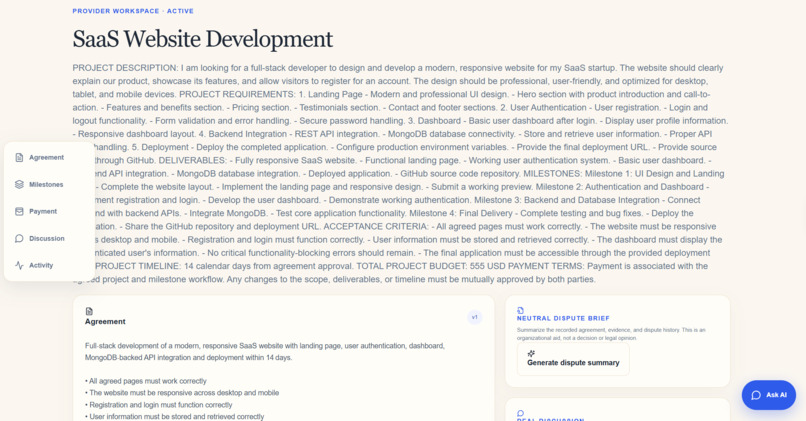
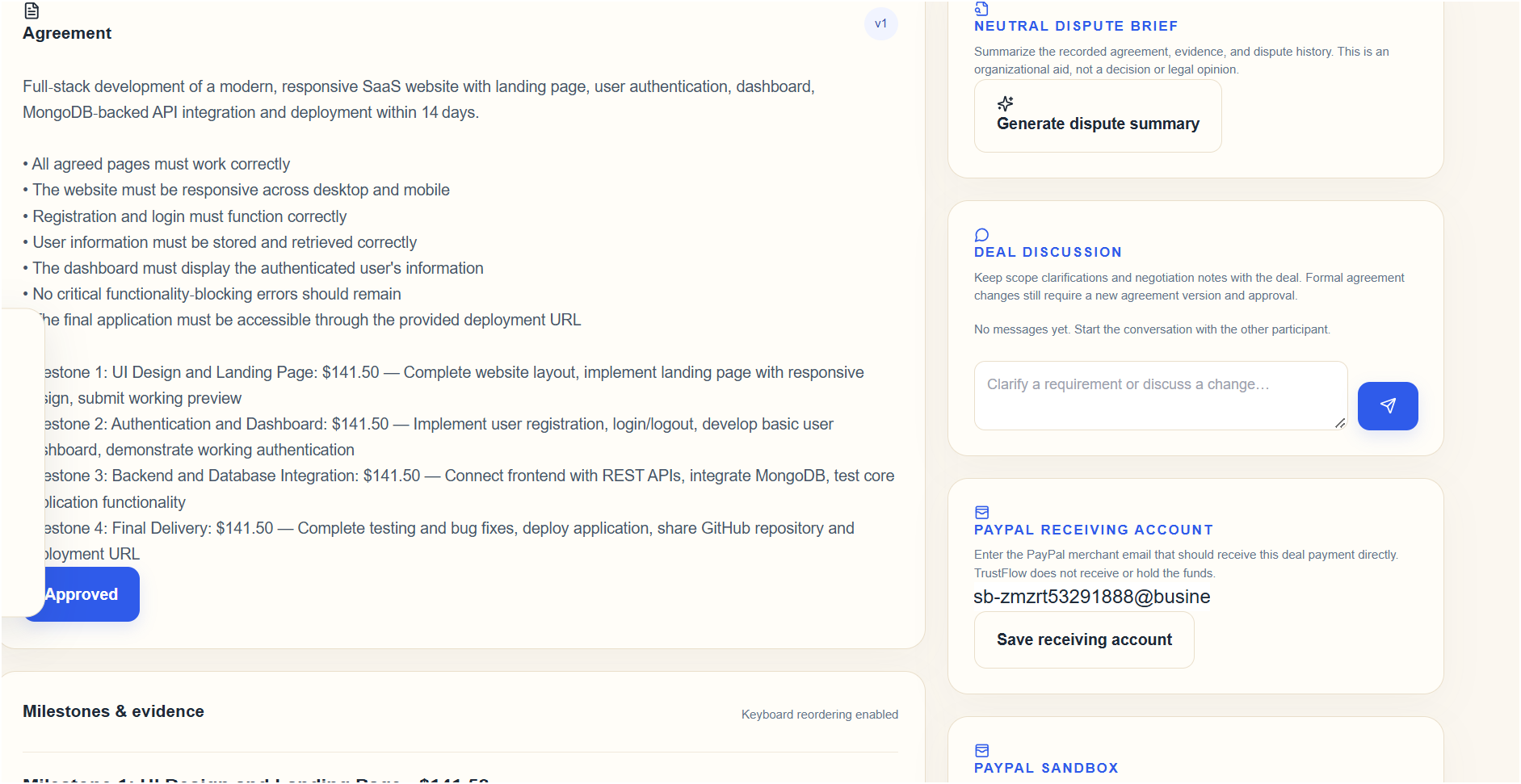
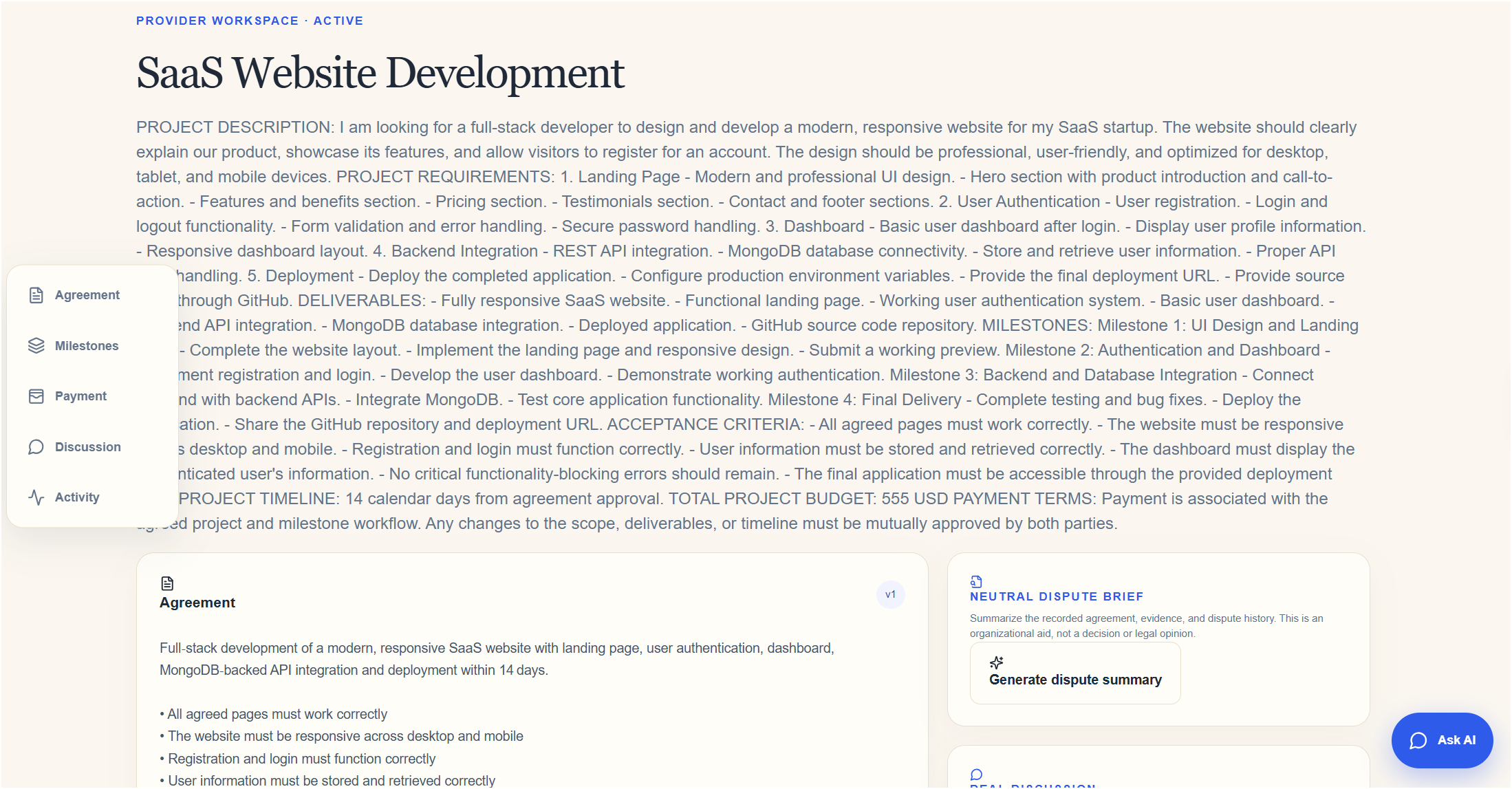
From the Client Side the Deliverables and Agreements of the Project
-
-
Inspiration
Freelancers, clients, and independent service providers often face misunderstandings about project scope, deadlines, deliverables, and payments. Agreements are frequently informal, requirements are unclear, and proving whether work has been completed can become difficult.
We wanted to build a platform that makes digital agreements more transparent and helps both parties establish trust before starting a project.
That inspired TrustFlow AI — an AI-powered agreement and payment workflow designed to bring clarity, accountability, and transparency to digital transactions.
What it does
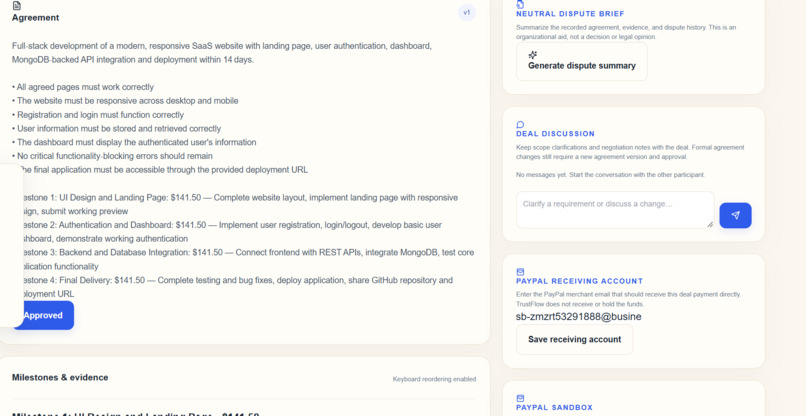
TrustFlow AI transforms a simple project description into a structured agreement with clearly defined deliverables, milestones, acceptance criteria, and potential risks.
Its key capabilities include:
- AI-Powered Agreement Generation: Converts plain-English project requirements into structured agreements.
- Risk Analysis: Uses AI to identify unclear requirements, missing details, and potential risks before an agreement is approved.
- Mutual Agreement Approval: Allows both parties to review and approve the same agreement version.
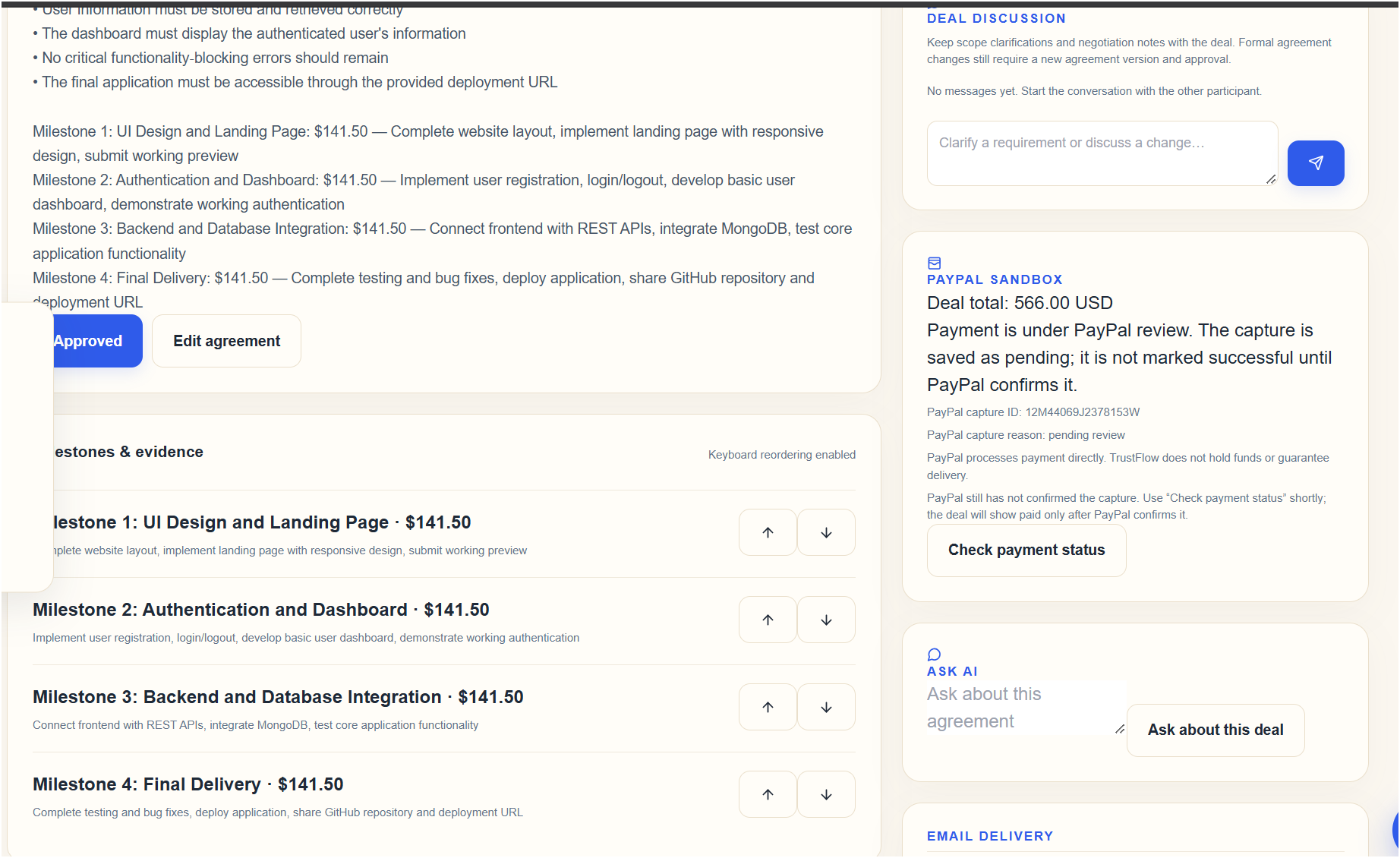
- PayPal Integration: Integrates PayPal Checkout to initiate and capture payments through PayPal's payment infrastructure.
- Evidence Submission: Enables service providers to submit evidence of completed milestones.
- AI Evidence Verification: Uses AI to evaluate submitted evidence against the agreed deliverables and acceptance criteria.
- Dispute and Revision Support: Helps identify mismatches between expected and submitted work and supports further clarification.
- Activity Tracking: Provides a timeline of important agreement, approval, and payment-related activities.
The goal is to make project transactions more structured and reduce misunderstandings between clients and service providers.
How we built it
We built TrustFlow AI using a modern full-stack architecture:
- Frontend: Next.js, React, TypeScript, and Tailwind CSS.
- Backend: Next.js API routes for application logic and server-side operations.
- Database: MongoDB Atlas with Prisma ORM for managing users, agreements, milestones, evidence, and transaction records.
- AI: Groq-powered language models for agreement generation, risk analysis, and evidence evaluation.
- Embeddings: OpenAI embedding models for semantic representation and retrieval of relevant agreement information.
- Payments: PayPal Checkout and Orders API for payment order creation and capture.
- Deployment: Vercel for hosting the application.
The workflow connects AI-generated agreements with milestone-based project tracking and PayPal payment operations. Payment status is handled through server-side verification rather than relying only on frontend confirmation.
Challenges we ran into
One of our biggest challenges was connecting AI-generated agreements with a reliable payment workflow.
Some of the challenges included:
- Converting unstructured project descriptions into clear, structured agreements.
- Making AI evaluations consistent with the actual deliverables and acceptance criteria.
- Maintaining agreement version consistency when both parties review and approve a deal.
- Integrating PayPal Checkout, payment capture, and webhook-based status updates.
- Handling sandbox payment limitations and regional payment restrictions during testing.
- Designing a database structure that maintains relationships between users, agreements, milestones, evidence, and payments.
- Making the platform useful without presenting AI-generated evaluations as guaranteed legal or financial decisions.
These challenges helped us focus on building a more reliable and transparent workflow rather than simply adding AI features.
Accomplishments that we're proud of
We are proud to have developed a working full-stack prototype that brings agreement management, AI assistance, milestone tracking, and PayPal payment integration into one platform.
Some accomplishments include:
- Building an AI-powered workflow that transforms plain-English requirements into structured agreements.
- Integrating AI-based risk analysis and evidence evaluation into the project lifecycle.
- Implementing a mutual agreement approval workflow.
- Connecting PayPal payment operations with the agreement workflow.
- Creating a centralized workspace for managing deals, milestones, and activity.
- Building the application with a scalable architecture using Next.js, MongoDB, Prisma, and AI services.
Most importantly, we are proud of the idea behind TrustFlow AI: making digital work relationships more transparent and helping both sides understand exactly what they have agreed to.
What we learned
Throughout this project, we learned that integrating AI into a real-world financial workflow requires much more than connecting an LLM to an application.
We learned how important it is to:
- Structure unstructured information into reliable data.
- Design AI prompts around measurable acceptance criteria.
- Validate payment operations on the server side.
- Handle asynchronous payment events and webhook verification.
- Maintain consistency across agreement versions and milestone records.
- Design systems that account for real-world payment regulations and limitations.
- Treat AI as a decision-support tool rather than an unquestionable authority.
We also gained practical experience integrating PayPal's developer capabilities into an AI-powered product.
What's next for TrustFlow AI?
Our vision is to evolve TrustFlow AI into a more comprehensive trust and agreement management platform for freelancers, agencies, independent professionals, and businesses.
Our next steps include:
- Improving AI-based agreement analysis and risk detection.
- Making evidence verification more accurate and explainable.
- Expanding milestone management and revision workflows.
- Improving payment status tracking and PayPal webhook reliability.
- Adding more comprehensive dispute-resolution and communication tools.
- Introducing analytics that help users understand project progress and transaction history.
- Exploring additional payment integrations where supported by local regulations.
- Strengthening security, privacy, and production readiness.
Our long-term goal is simple: make every digital agreement clearer, every deliverable more accountable, and every transaction more transparent.
Built With
- github
- groq
- mongodb
- next.js
- openai
- paypal
- react.js
- tailwindcss
- typescript
- vercel

