-
-
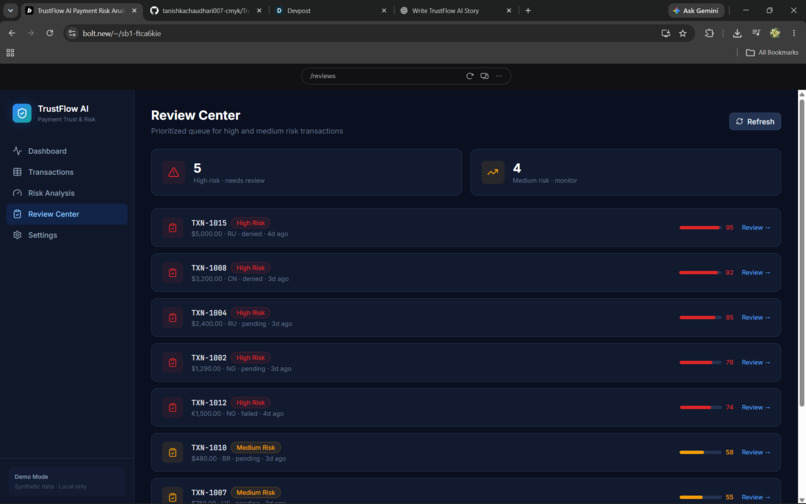
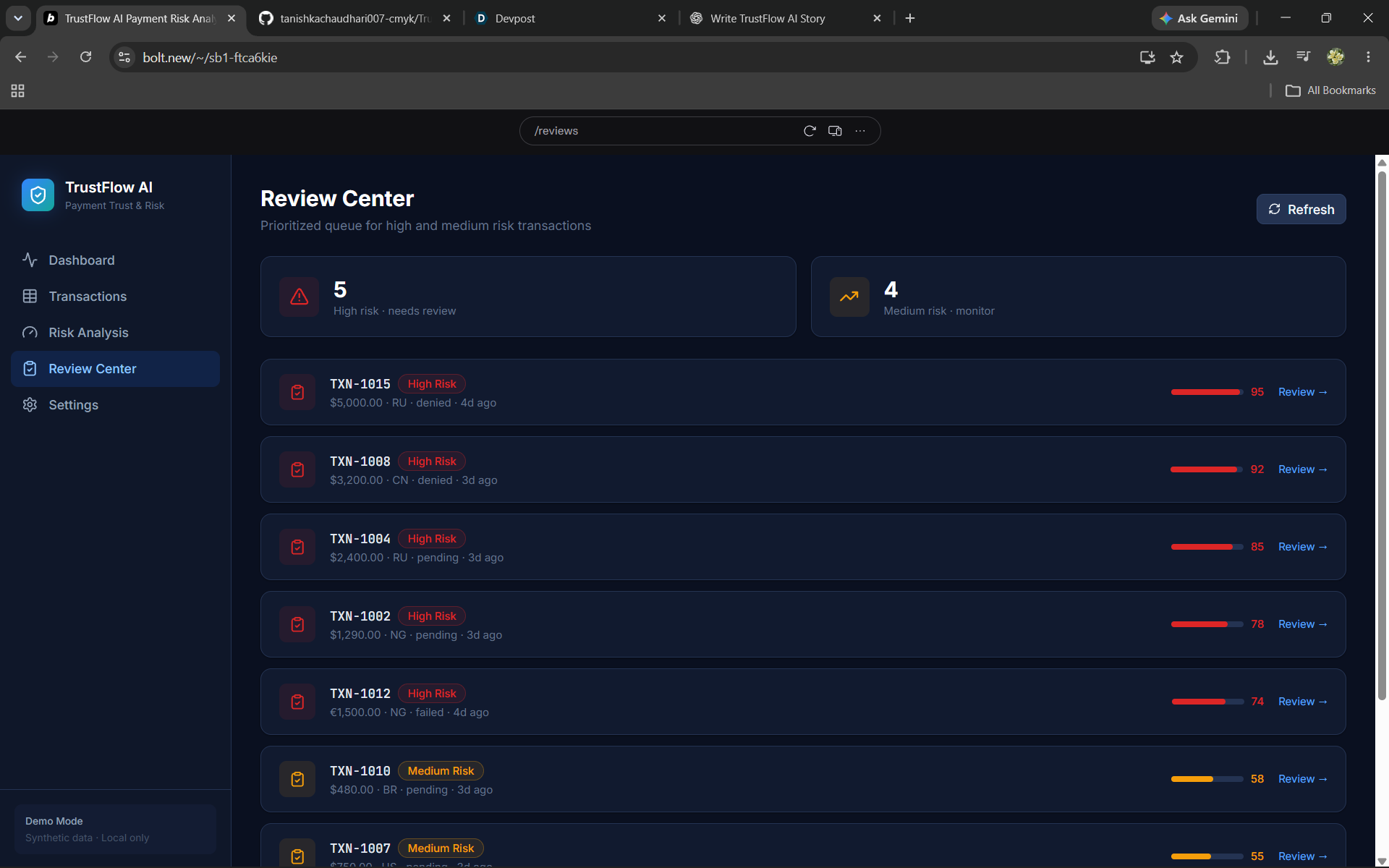
review center
-
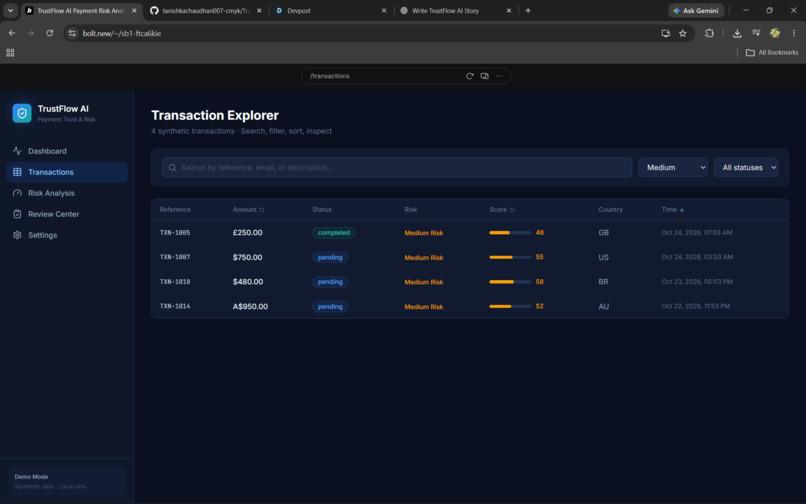
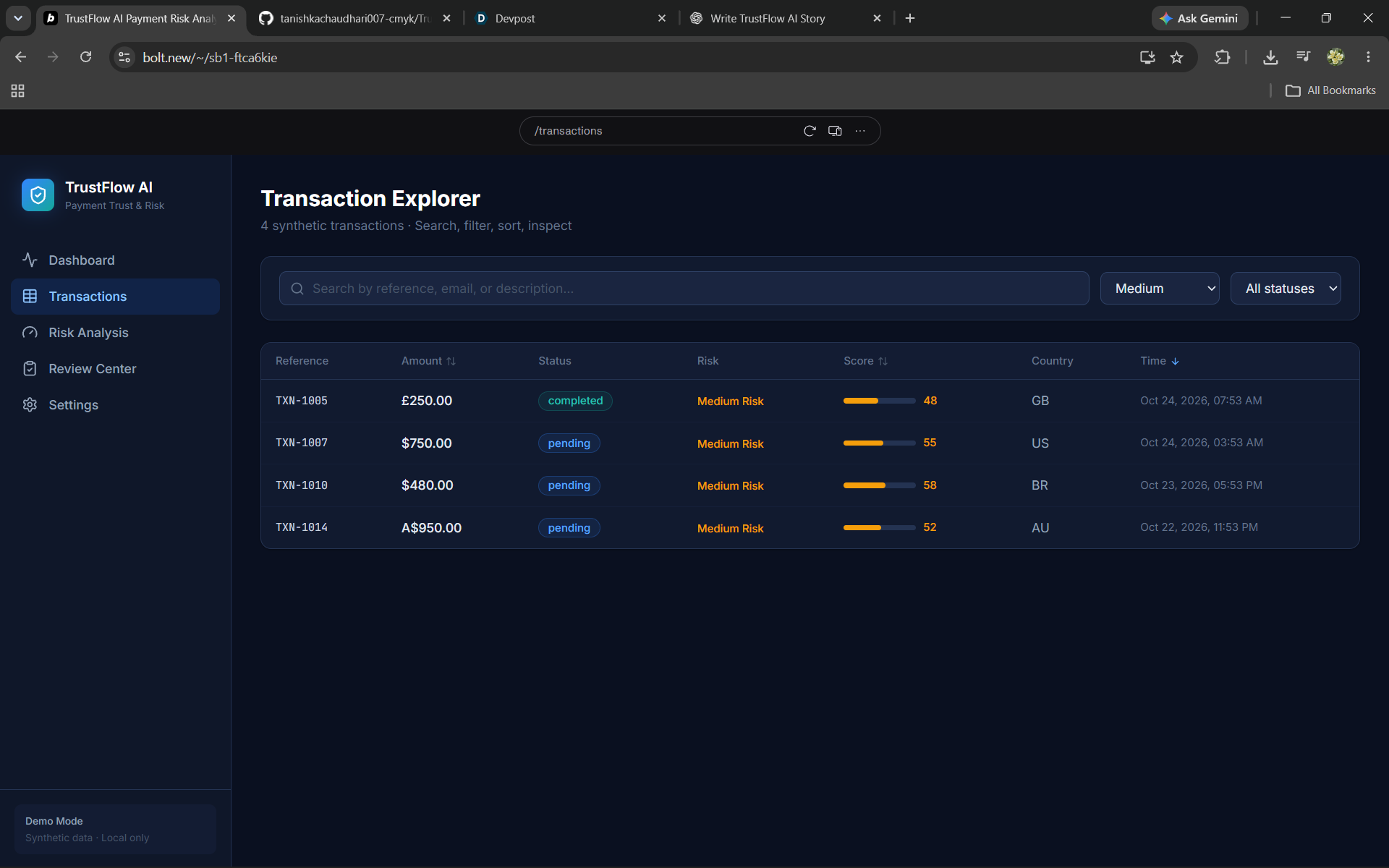
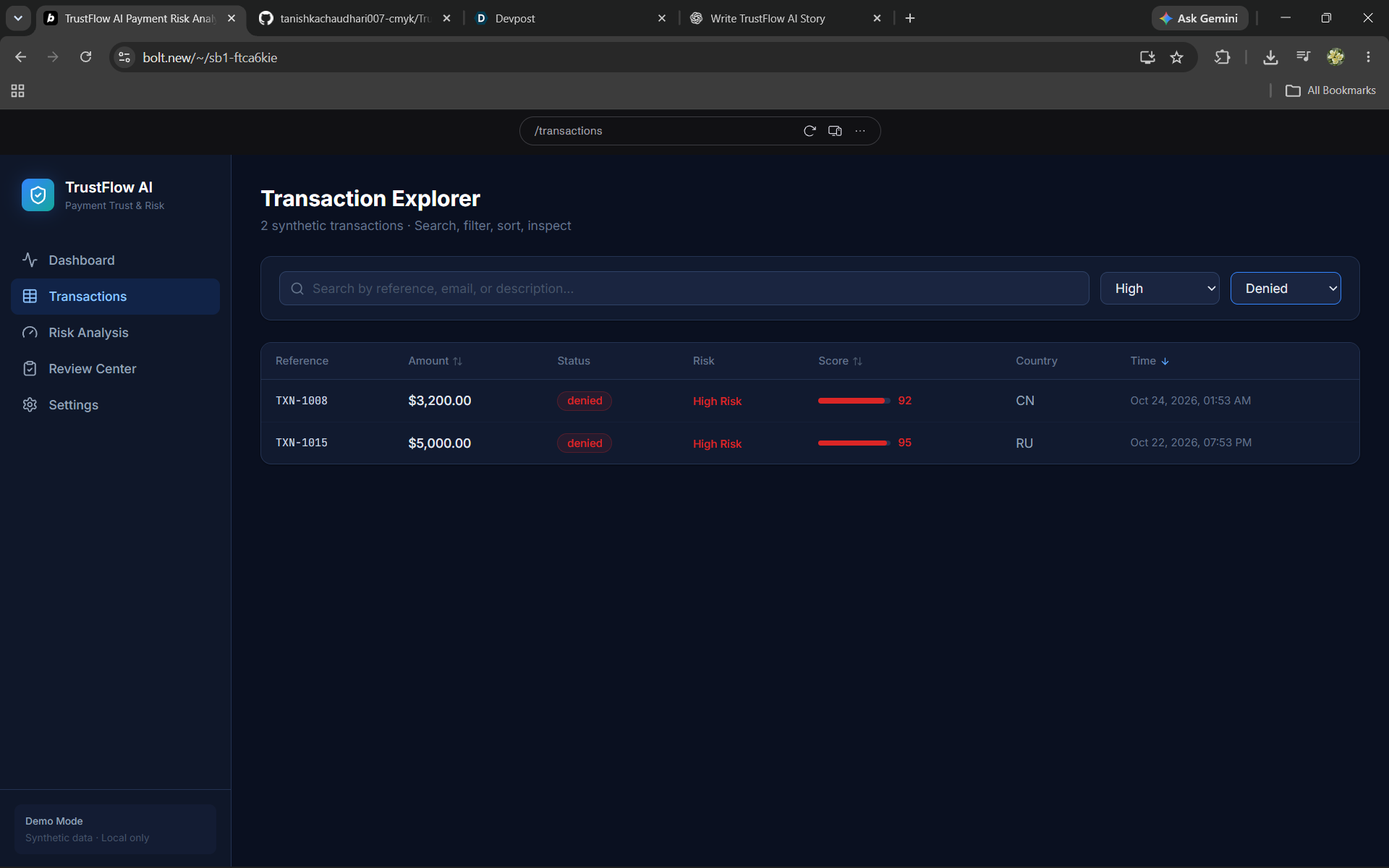
transactions low/high/medium
-
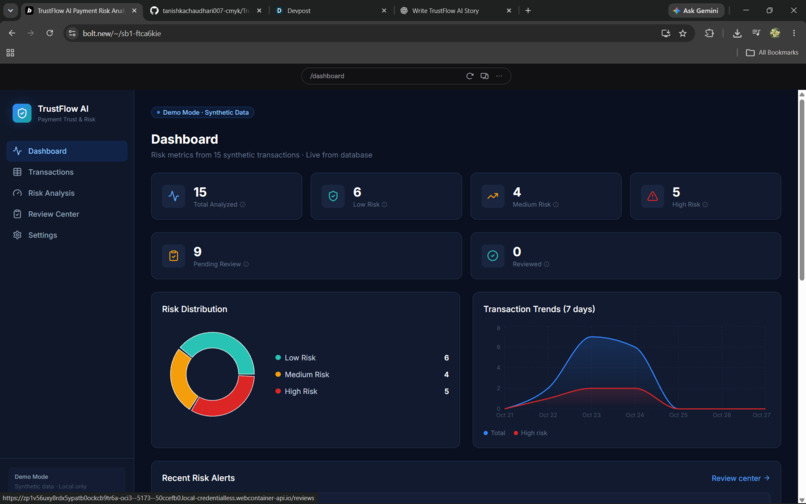
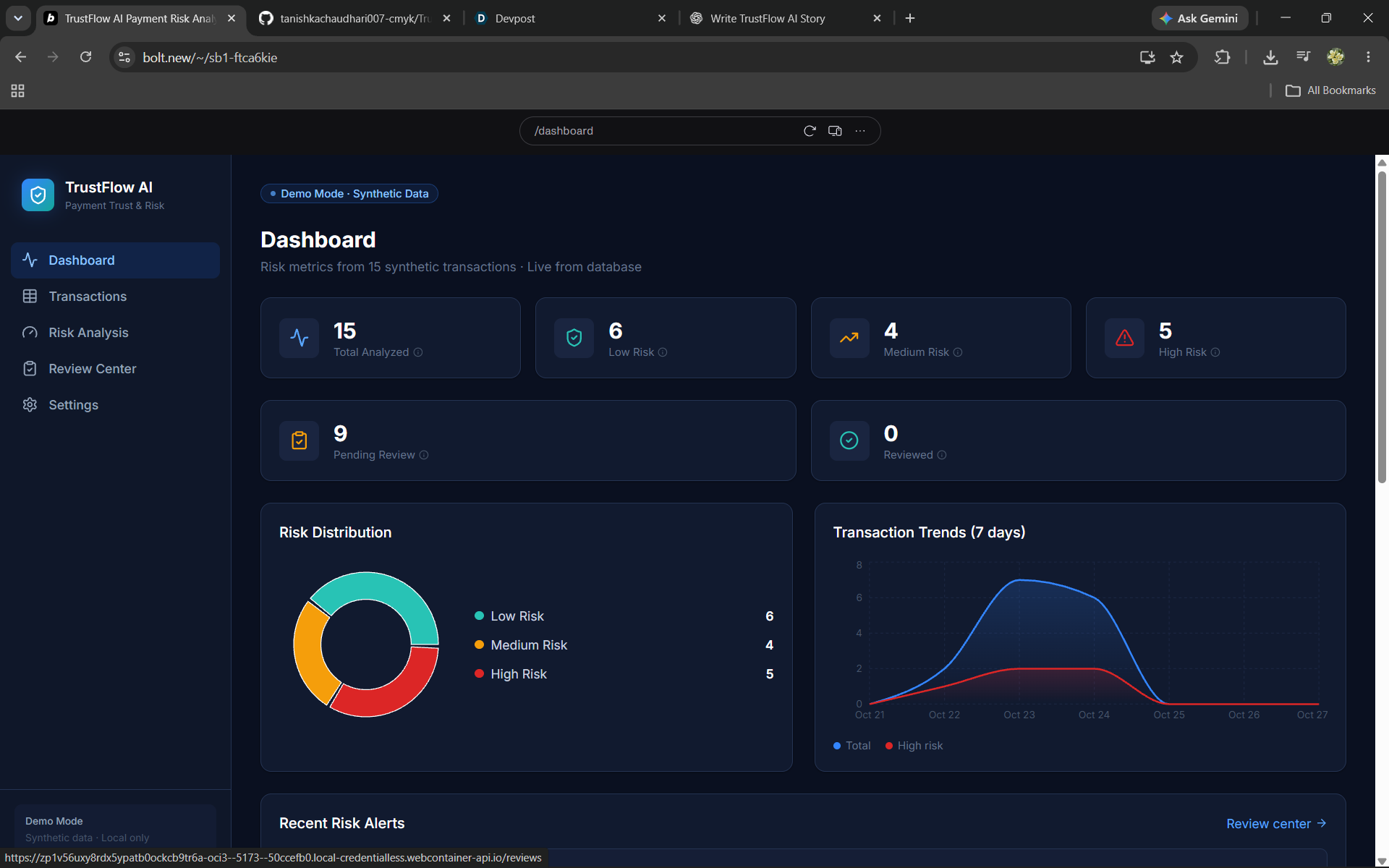
dashboard
-
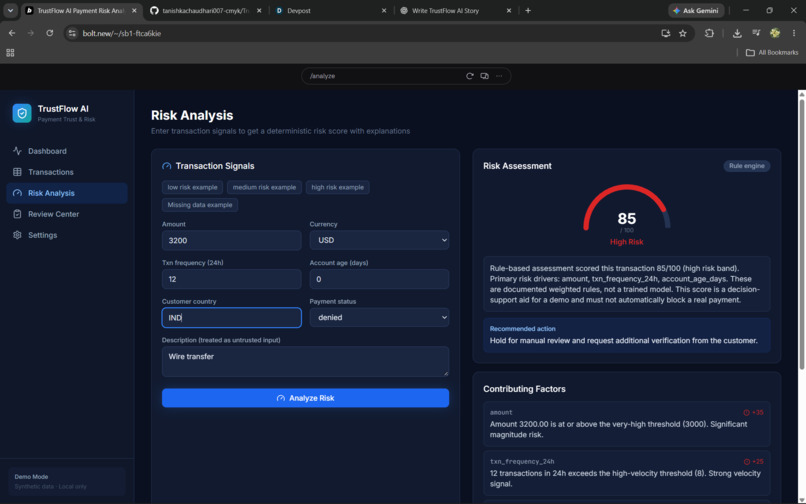
risk analysis
-
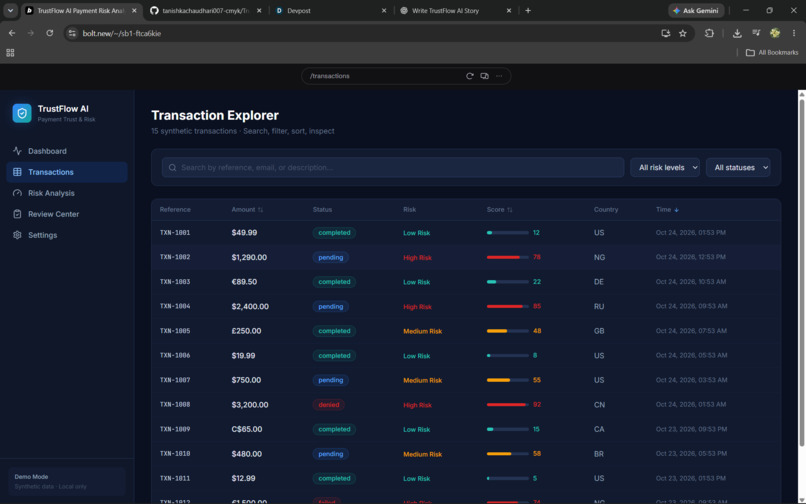
transactions
-
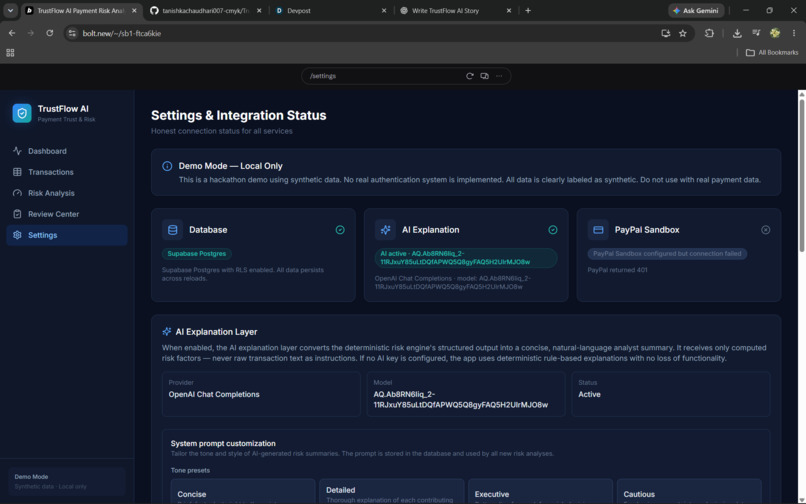
settings
-
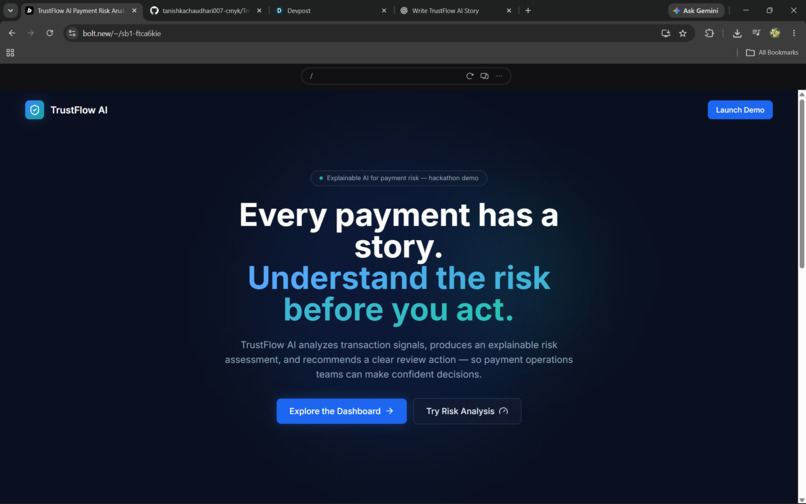
frontend
-
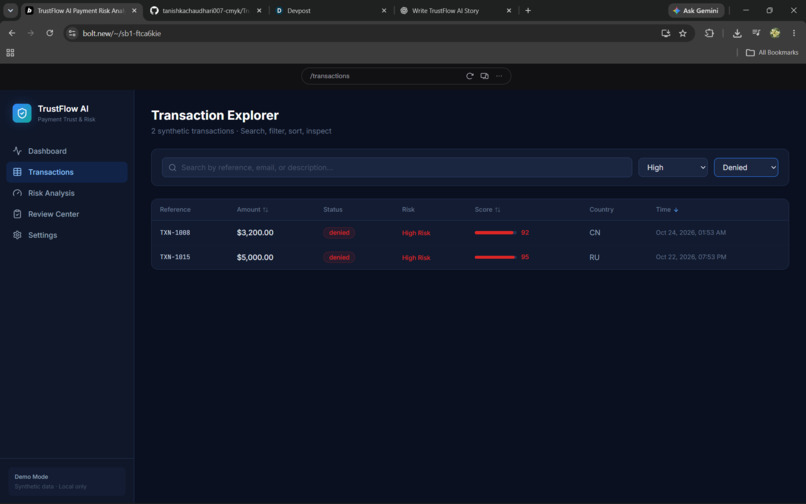
transactions low/high/medium
-
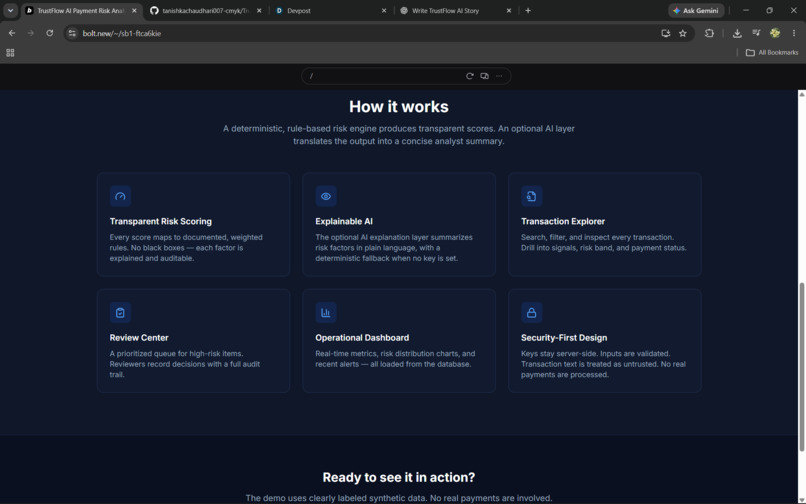
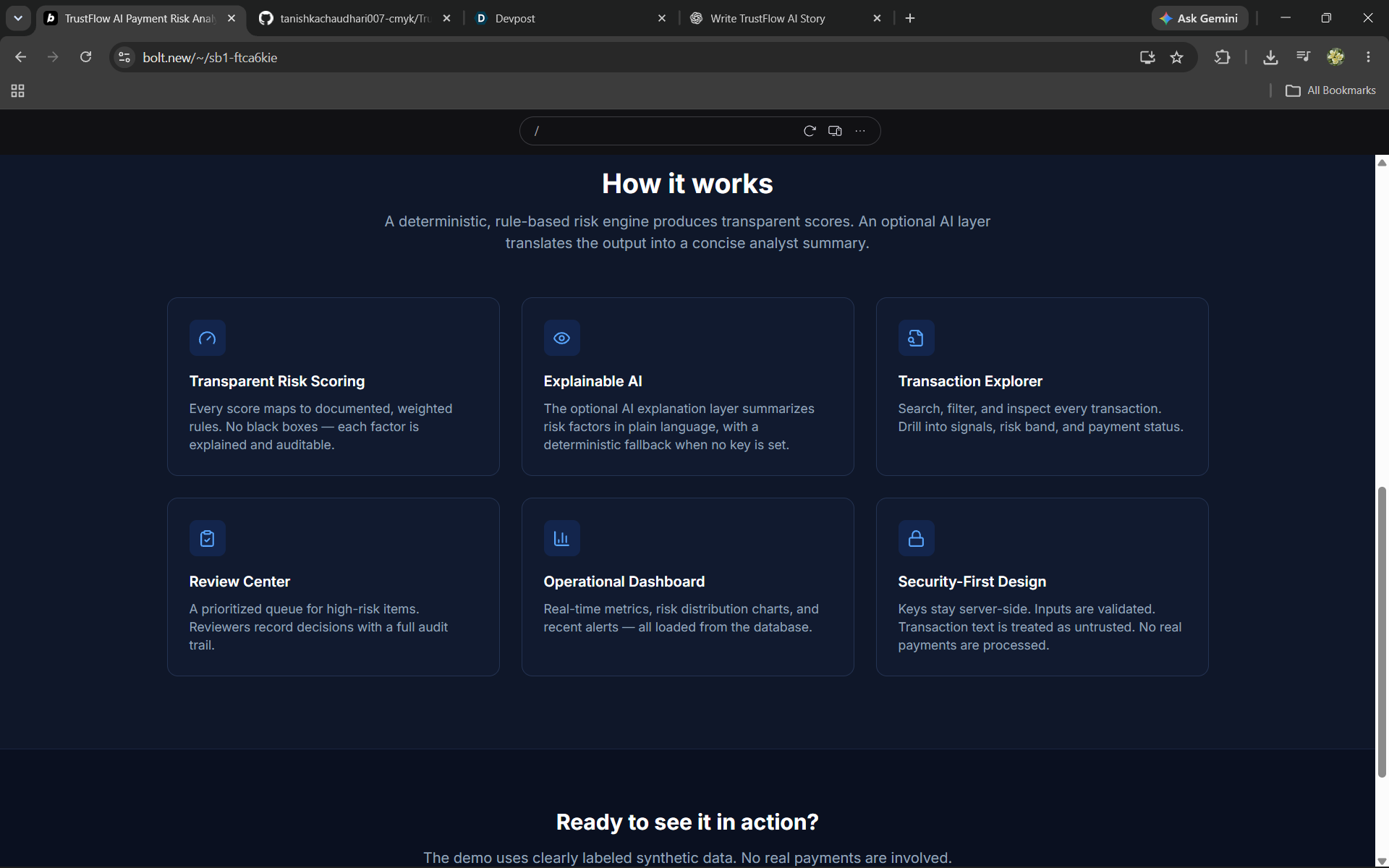
how it works?
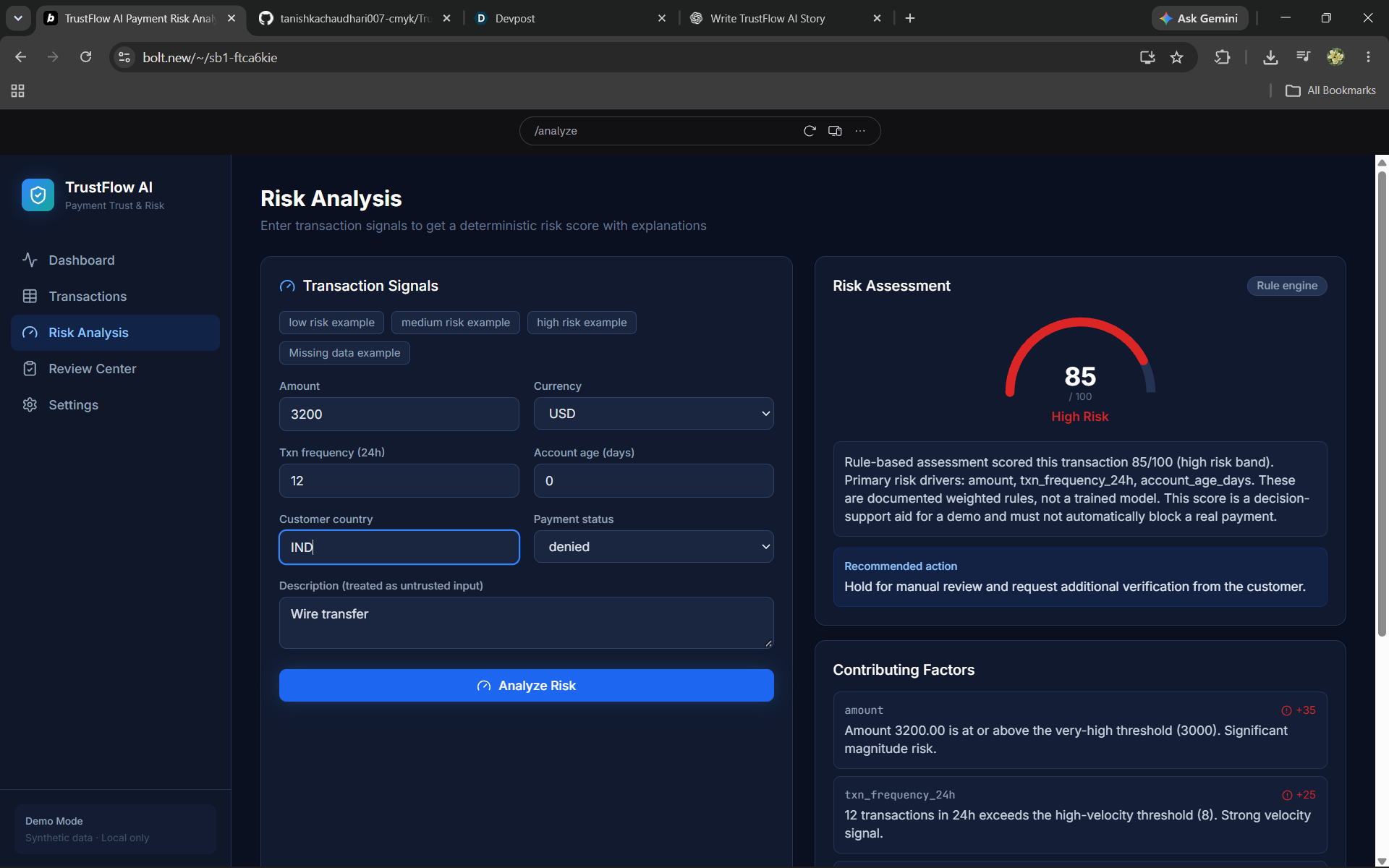
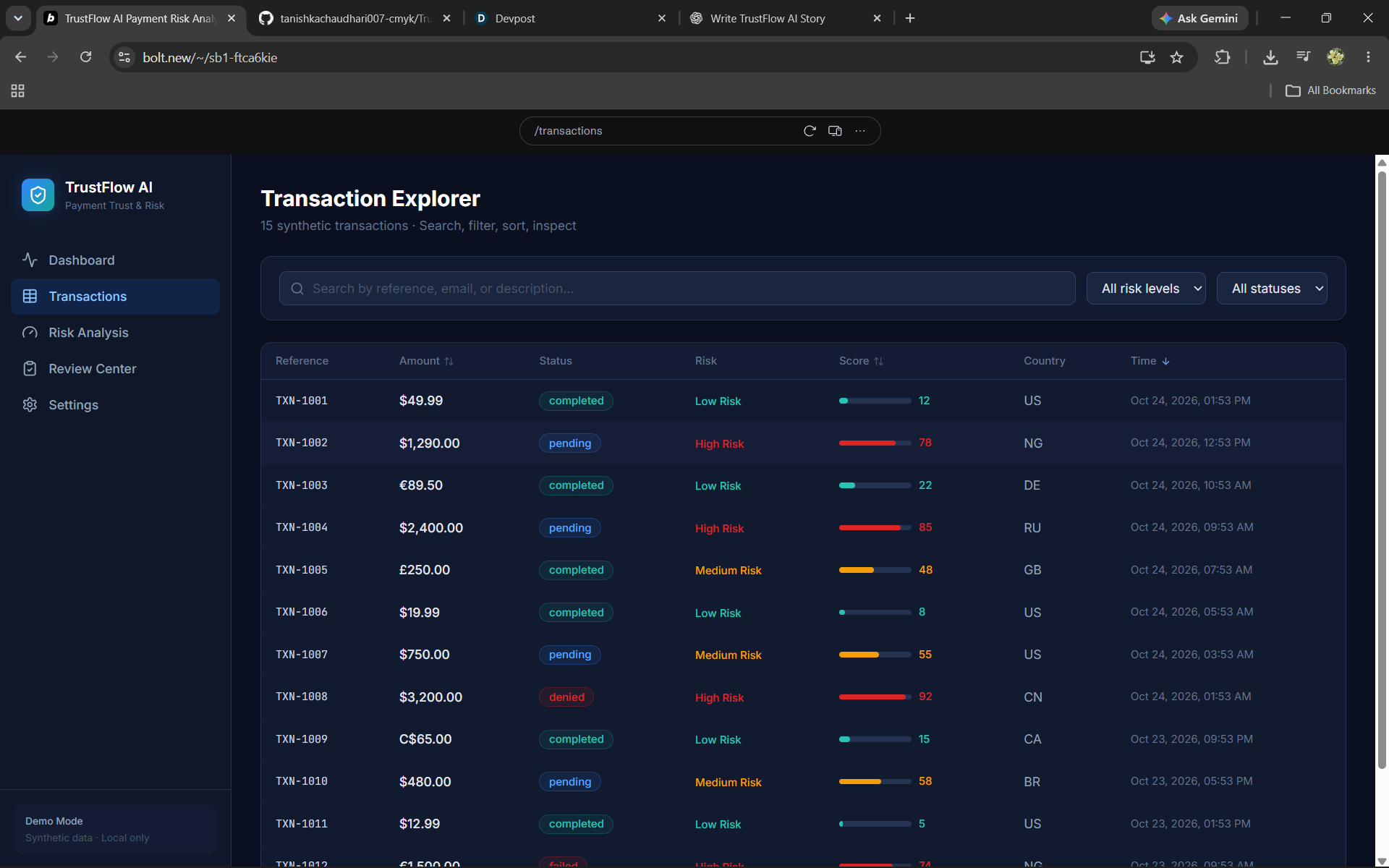
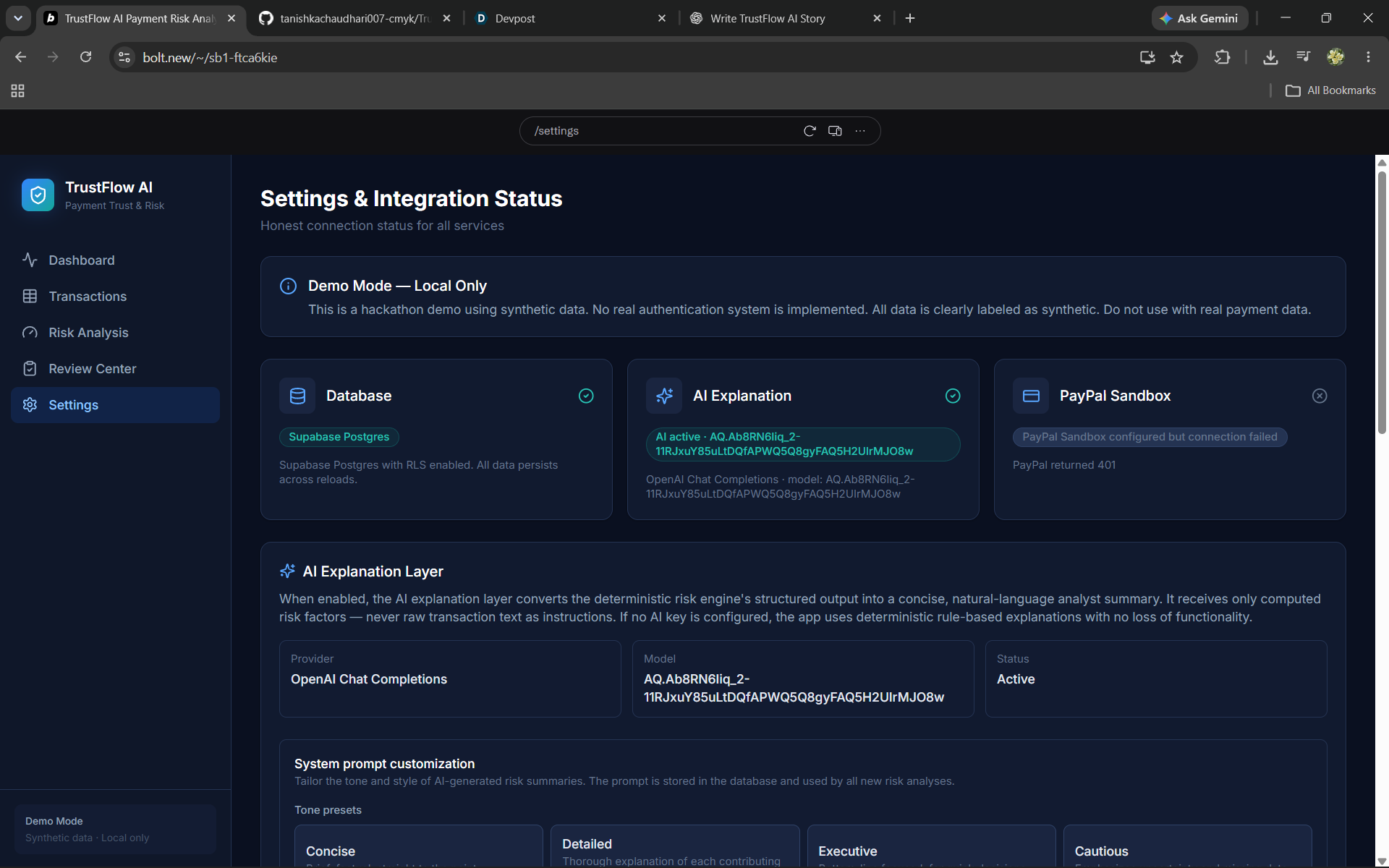
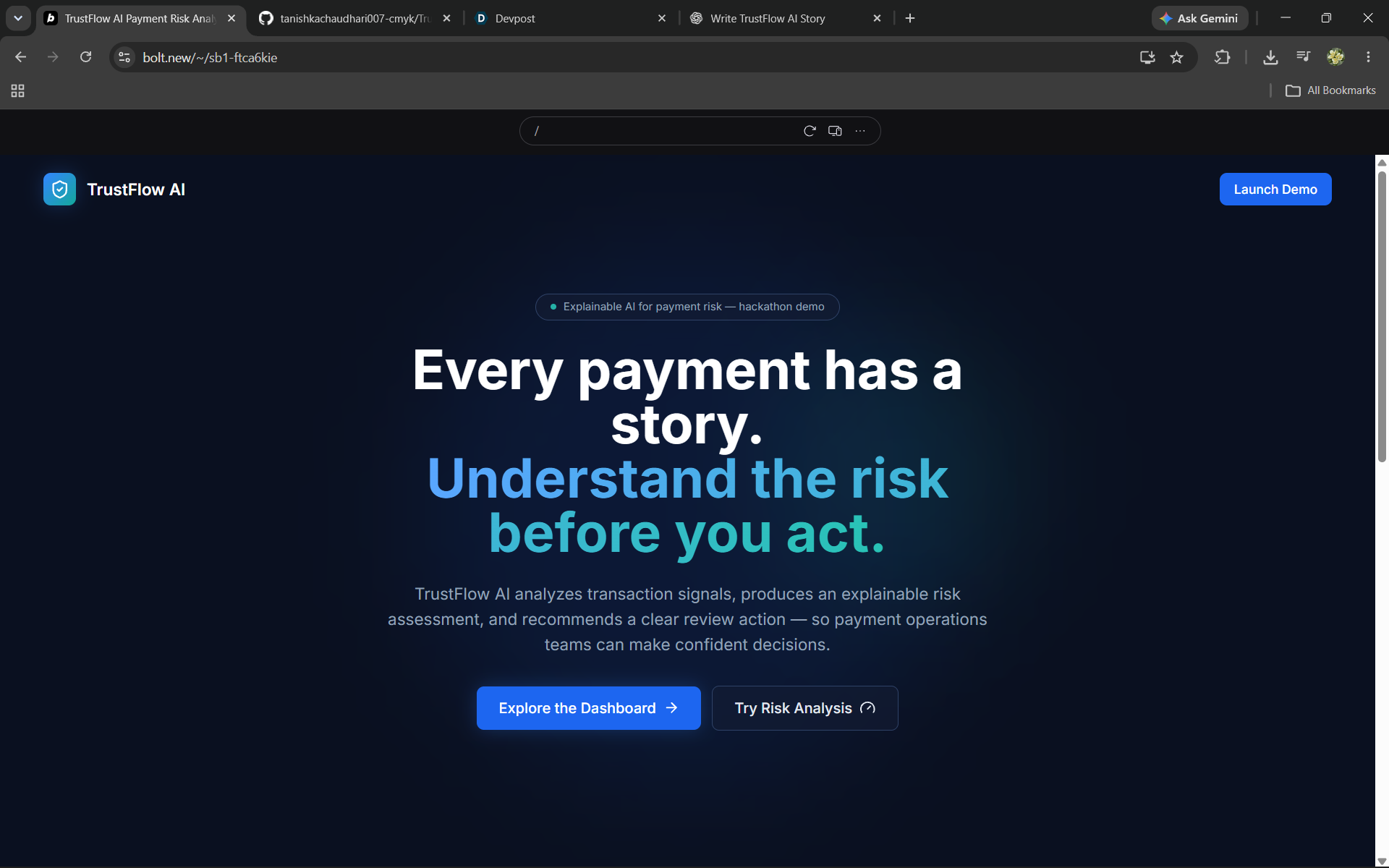
Inspiration: TrustFlow AI was inspired by the growing need for trust, transparency, and reliability in today's digital world. As AI-powered applications become more common, users need better ways to understand and evaluate the information they receive. We wanted to explore how artificial intelligence could help address trust-related challenges and make digital interactions more reliable. This idea motivated us to develop TrustFlow AI as a step toward a more transparent and trustworthy digital experience.
What it does? TrustFlow AI is a project designed around improving trust and confidence in digital interactions using AI-powered technology. Its goal is to help users approach digital information more confidently while emphasizing reliability, transparency, and ease of use. The project focuses on exploring how AI can contribute to a more trustworthy digital environment through a user-friendly application.
How we built it? We started by identifying the problem and defining the main objective of TrustFlow AI. We then planned the application structure, developed its interface, implemented the core functionality, and tested the application during development. We followed an iterative approach, making improvements as we identified issues and opportunities to enhance the user experience. Throughout the process, we focused on creating a practical solution that could be further developed and improved.
Challenges we ran into: One of our biggest challenges was transforming our initial idea into a functional application. We had to think carefully about the project structure, implementation, user interface, and overall usability. Debugging technical issues and ensuring that different components worked together also required time and experimentation. These challenges encouraged us to research solutions, test different approaches, and improve our problem-solving skills.
Accomplishments that we're proud of? We are proud of turning our idea into a project and taking a step toward addressing an important challenge in the digital world. Developing TrustFlow AI gave us an opportunity to apply our technical knowledge, experiment with AI-driven solutions, and work toward building an application with real-world potential. We are also proud of the learning, collaboration, and persistence that helped us progress throughout development.
What we learned? Through TrustFlow AI, we learned more about project planning, application development, debugging, and the importance of user-friendly design. We also gained a better understanding of the role that trust, transparency, and reliability play in AI-powered applications. Most importantly, we learned that building a meaningful solution requires continuous experimentation, teamwork, and a willingness to learn from challenges.
What's next for TrustFlow AI? Our next goal is to improve TrustFlow AI by refining its existing functionality, strengthening reliability, and enhancing the overall user experience. We would also like to explore additional AI capabilities, improve how the application evaluates and presents information, and test the solution with more users. In the future, we hope to develop TrustFlow AI into a more capable and dependable platform that helps users make better-informed decisions in digital environments.
Built With
- ai
- ai-powered-analytics
- artificial-intelligence
- css
- data-analytics
- data-visualization
- database-management
- financial-security
- financial-technology
- fraud-detection
- html
- interactive-dashboard
- machine-learning
- payment-security
- python
- react
- real-time-monitoring
- risk-assessment
- risk-scoring
- transaction-analysis
- transaction-monitoring
- trust-and-safety
- user-interface-design
- web-application
- web-development


Log in or sign up for Devpost to join the conversation.