TrustDNA AI is an evidence-bound Digital Identity Platform that builds a living Identity Genome and an intelligent Digital Twin capable of personalized reasoning.
The inspiration behind this project came from a simple observation: today's AI assistants are powerful, but they don't truly know who you are. They either rely on temporary conversation history or make unsupported assumptions. I wanted to build a system that reasons only from verified, user-consented evidence while remaining completely transparent about what it knows, what it infers, and what it doesn't know.
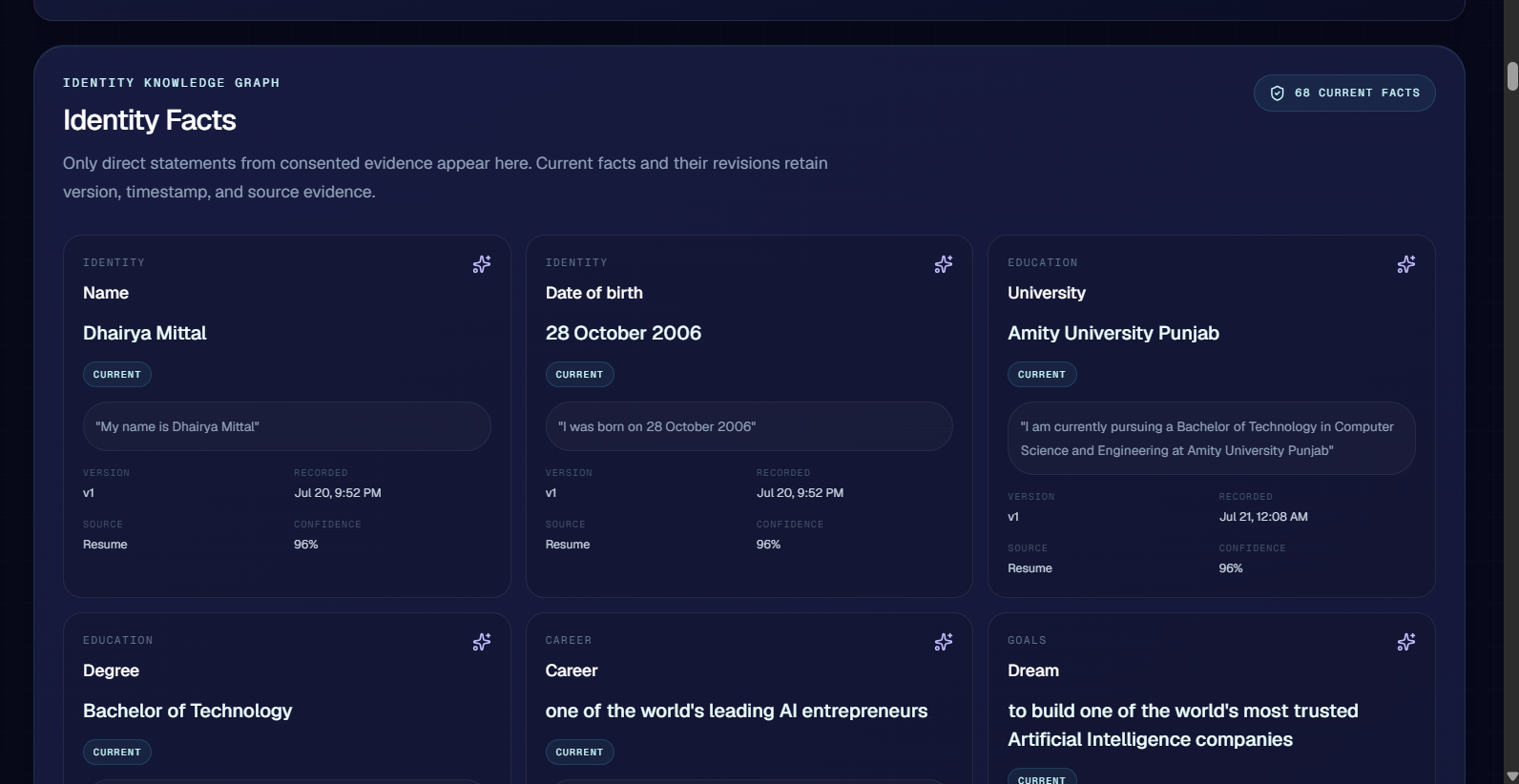
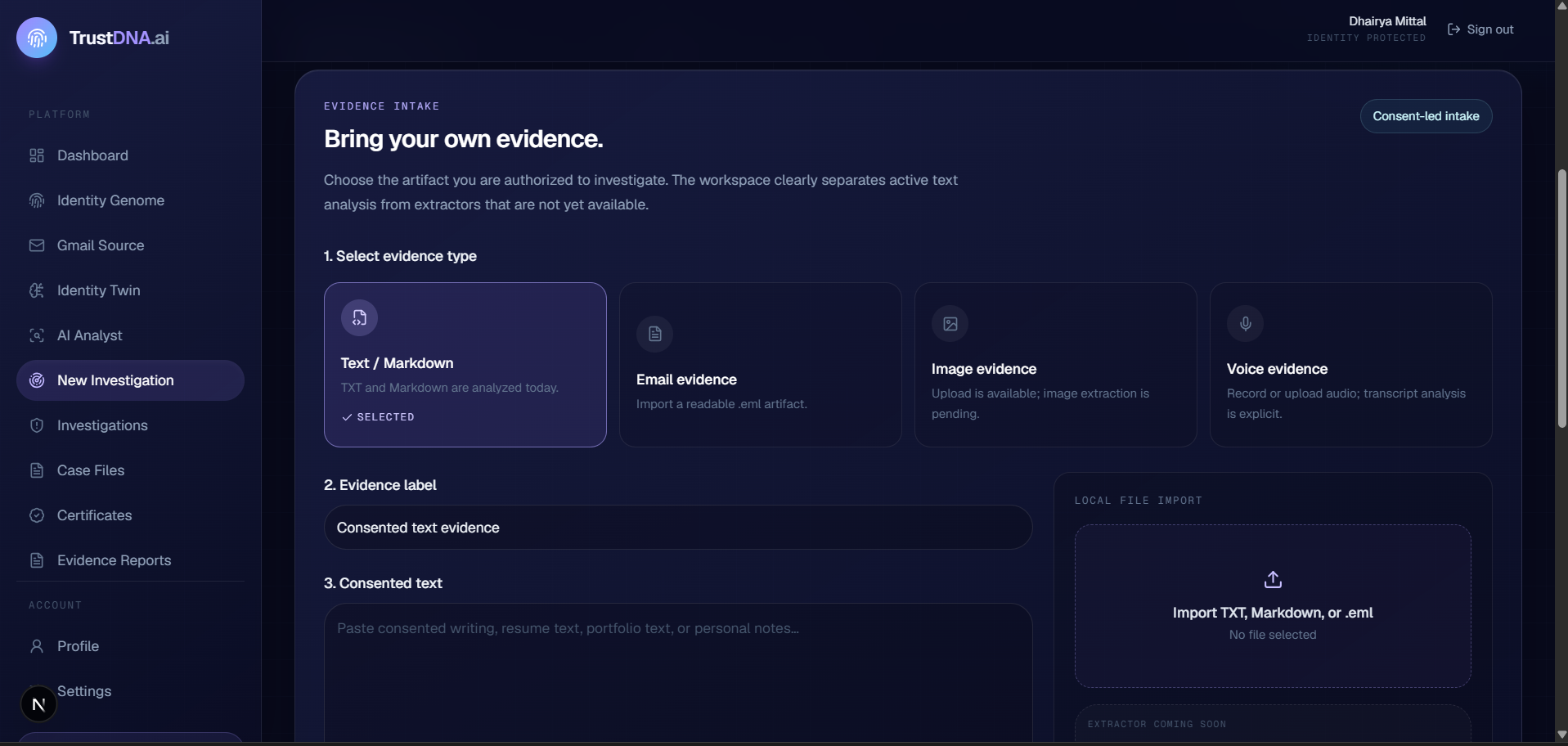
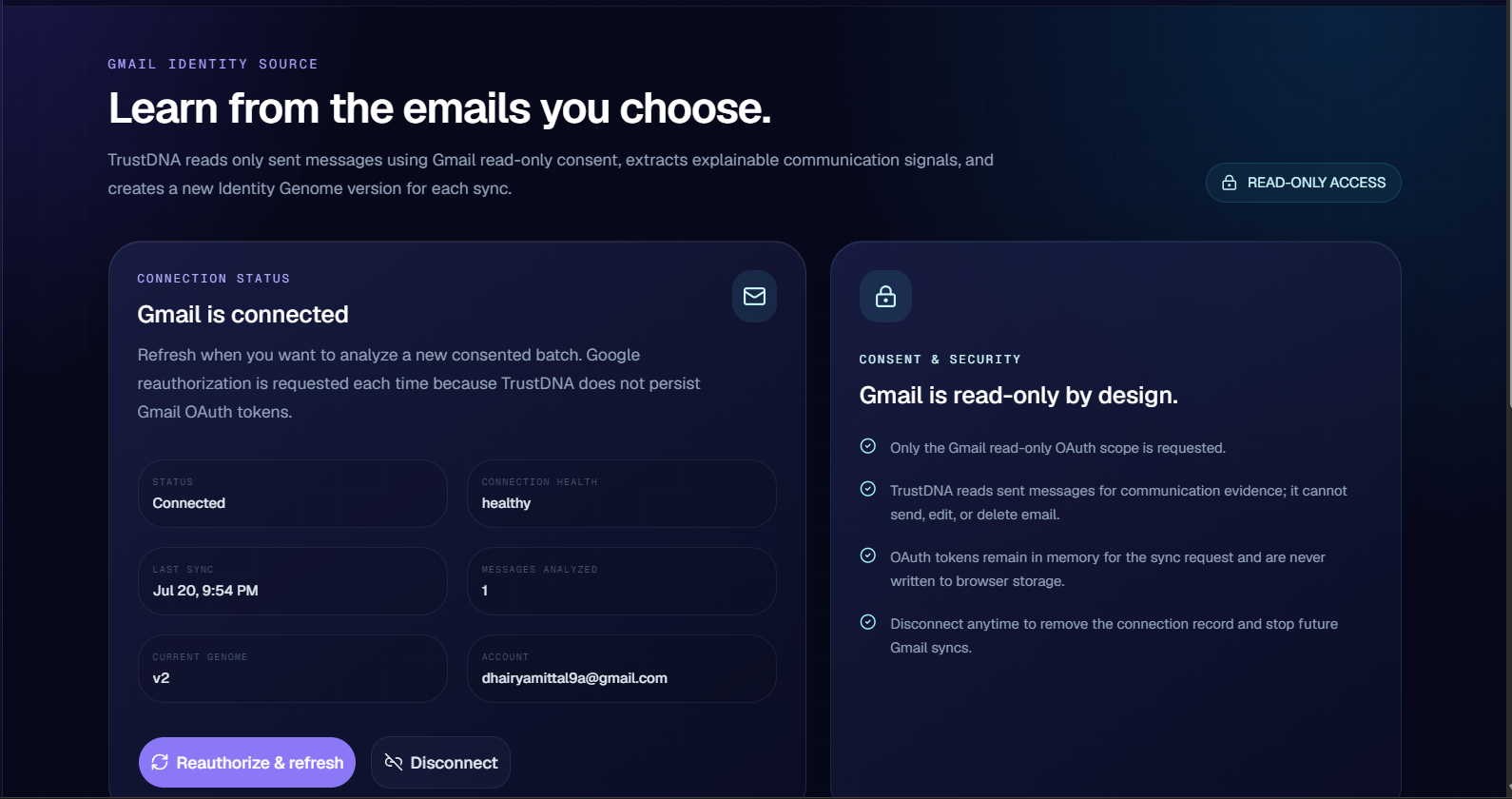
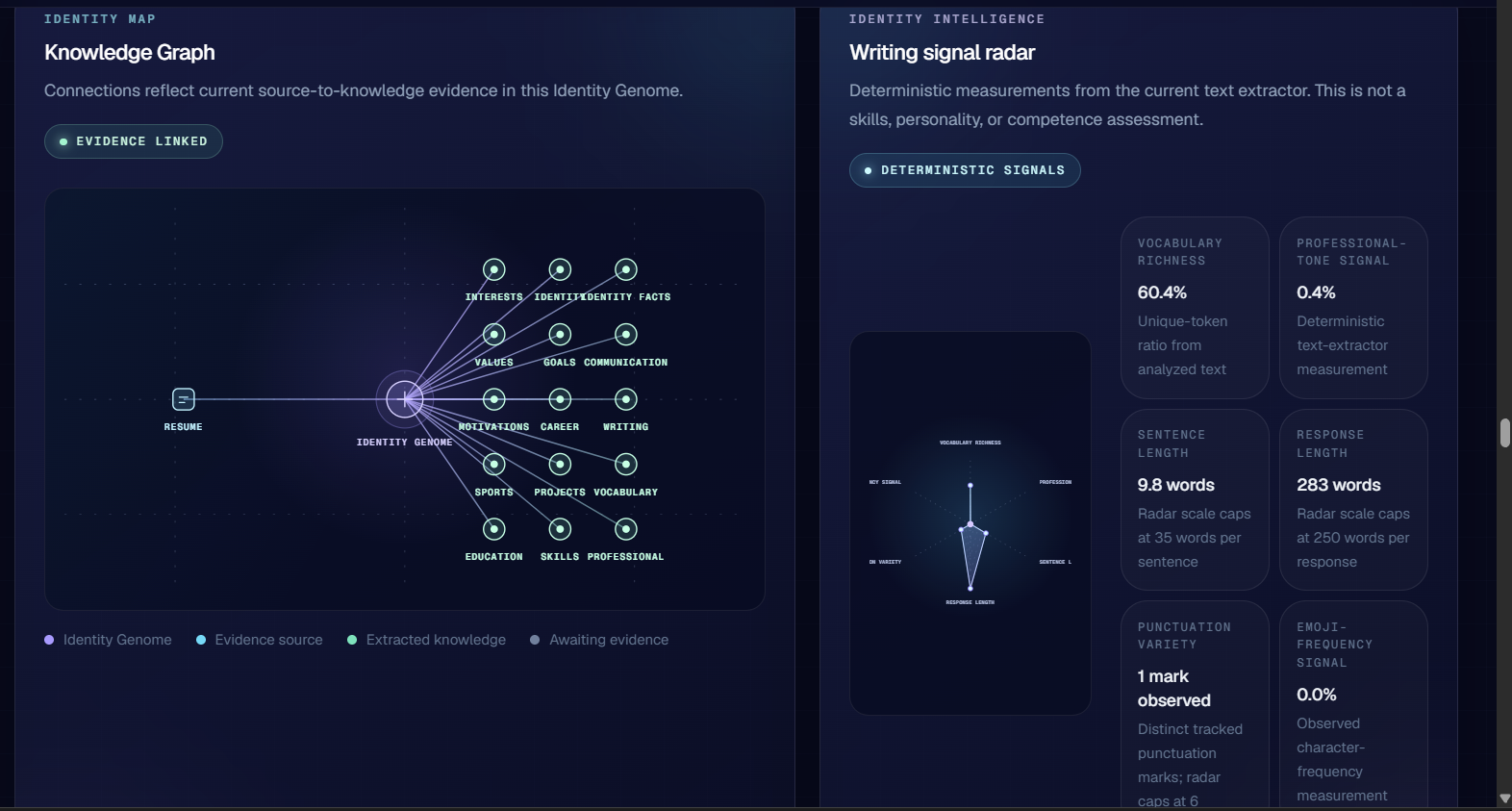
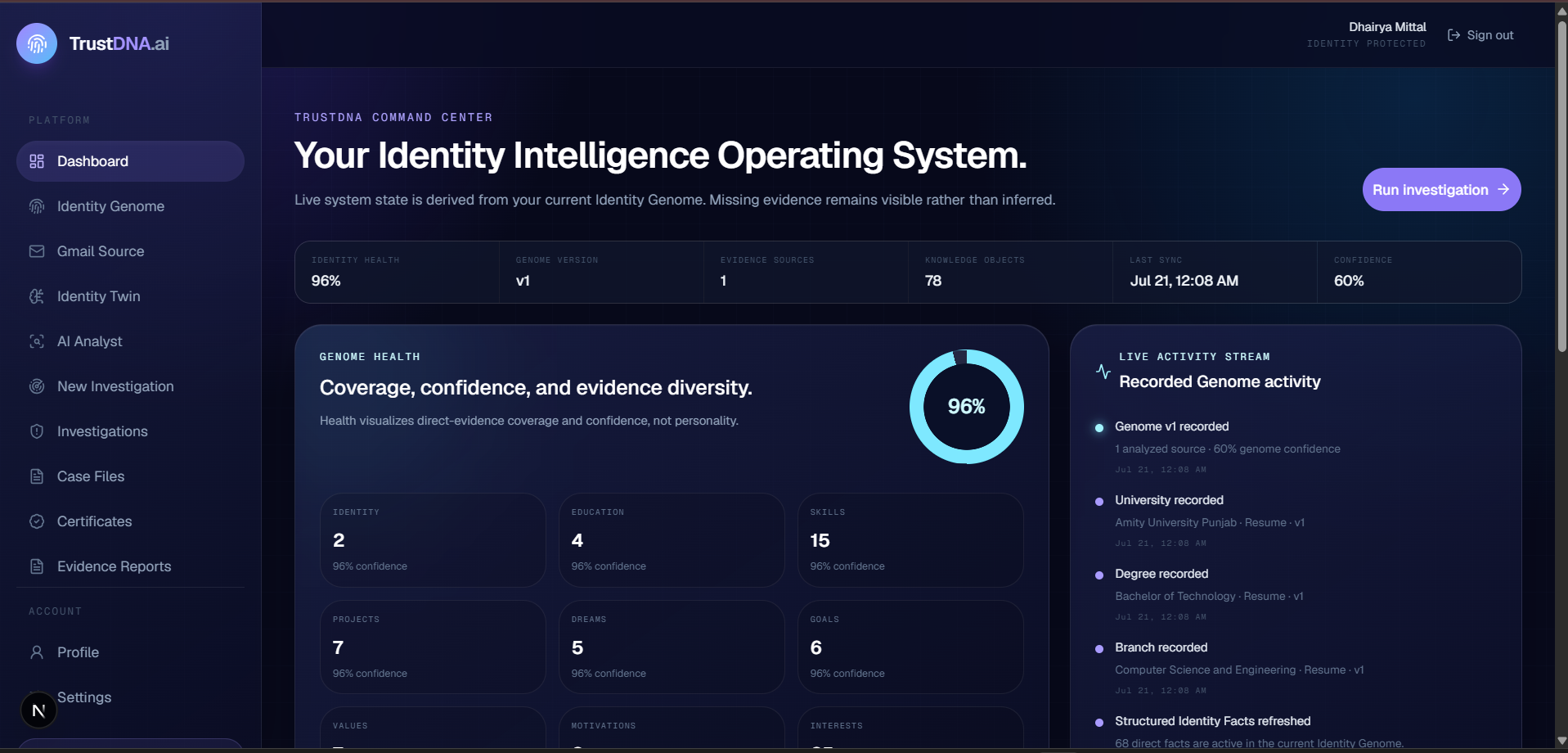
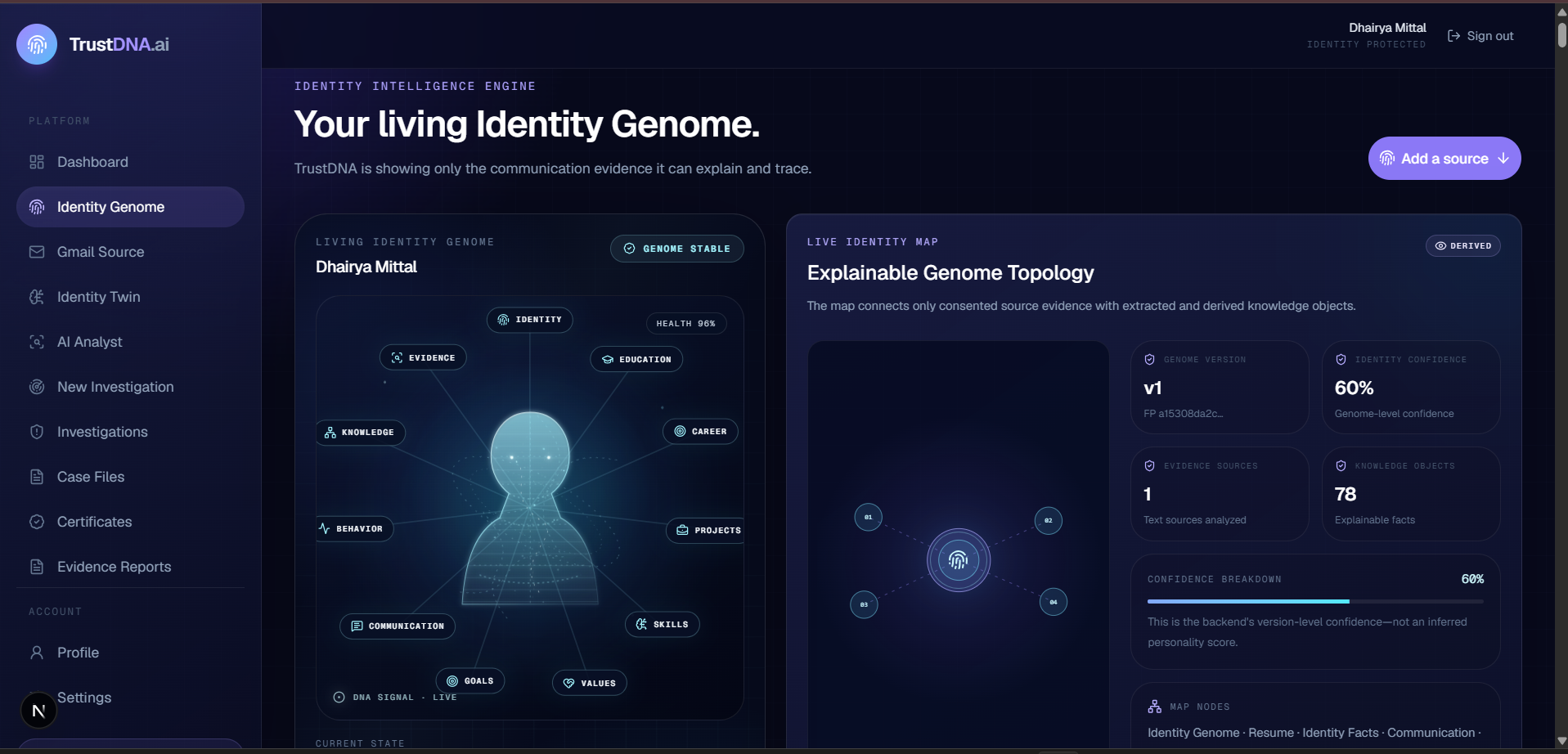
TrustDNA AI first creates an Identity Genome by extracting structured Knowledge Objects from user-approved sources such as resumes, Gmail, portfolios, and personal notes. These Knowledge Objects include identity, education, projects, skills, goals, dreams, motivations, values, interests, communication patterns, and behavioral signals. Every fact is versioned, linked to its original source, and can be traced back to the evidence that created it.
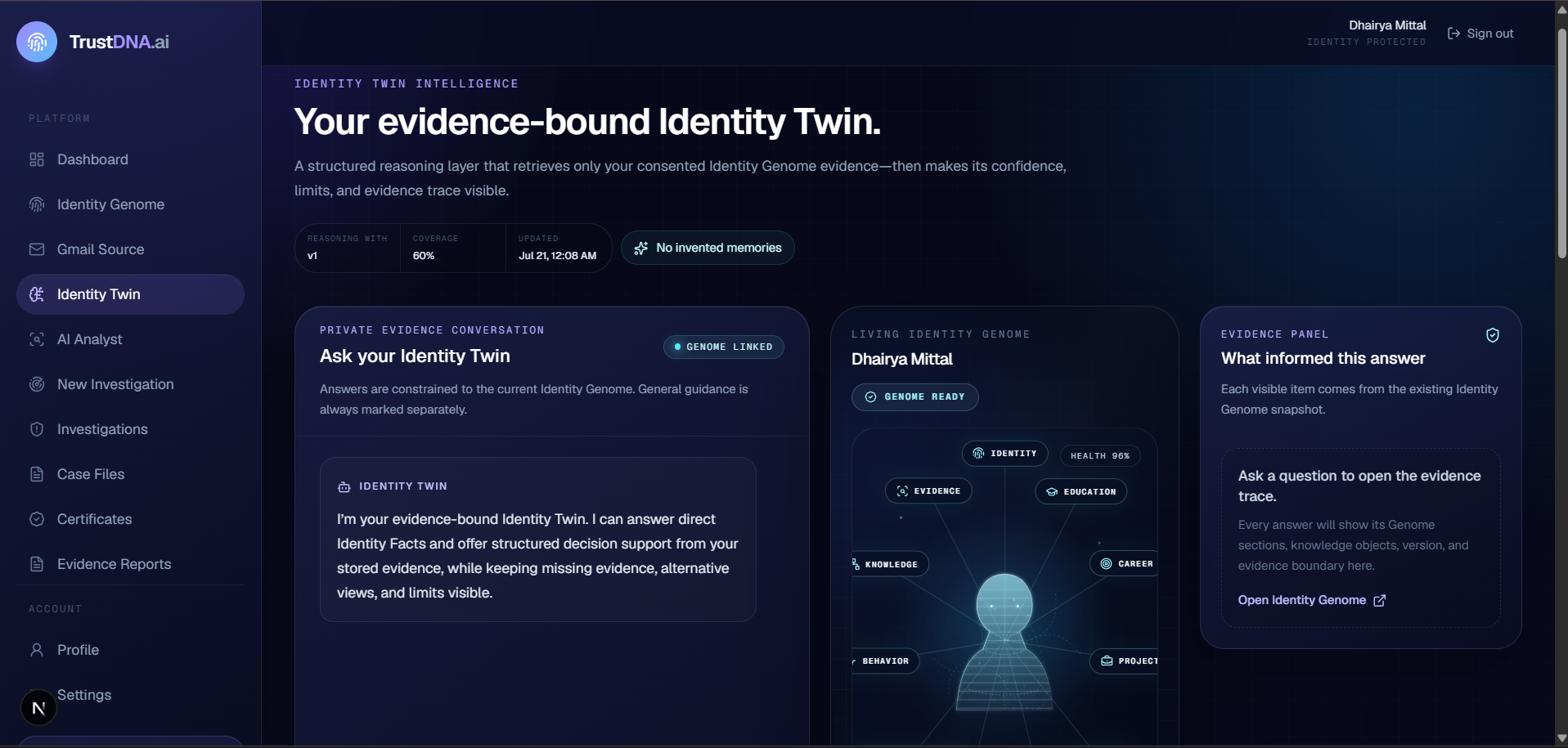
On top of the Identity Genome sits the Identity Twin. Every question passes through a deterministic reasoning pipeline that classifies the query, retrieves relevant evidence, performs identity alignment, adds clearly labeled general guidance when appropriate, generates an evidence-informed persona simulation, and explicitly identifies unknowns. This allows the Twin to provide transparent, explainable responses without fabricating memories or personal facts.
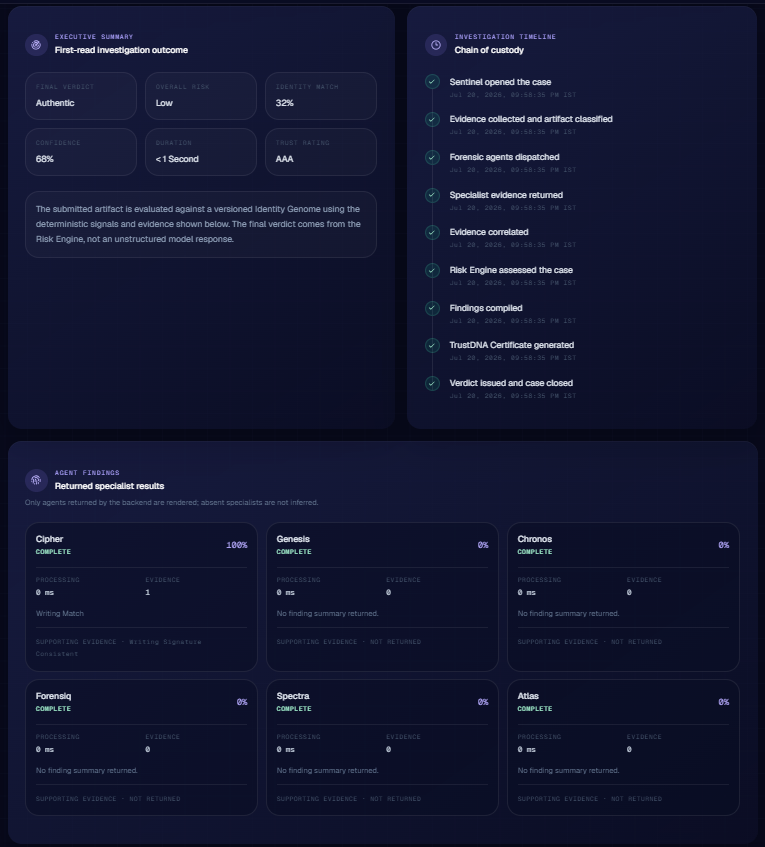
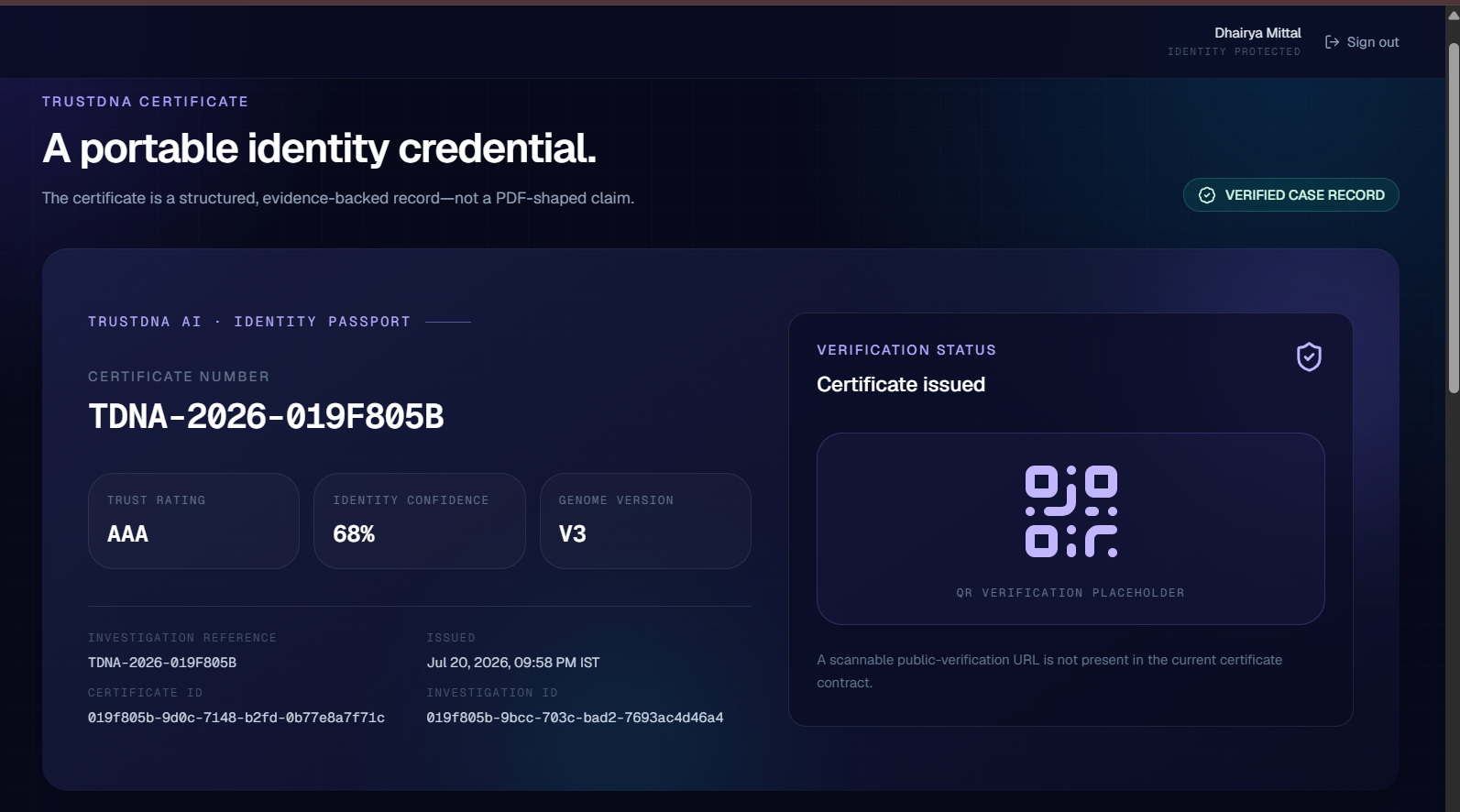
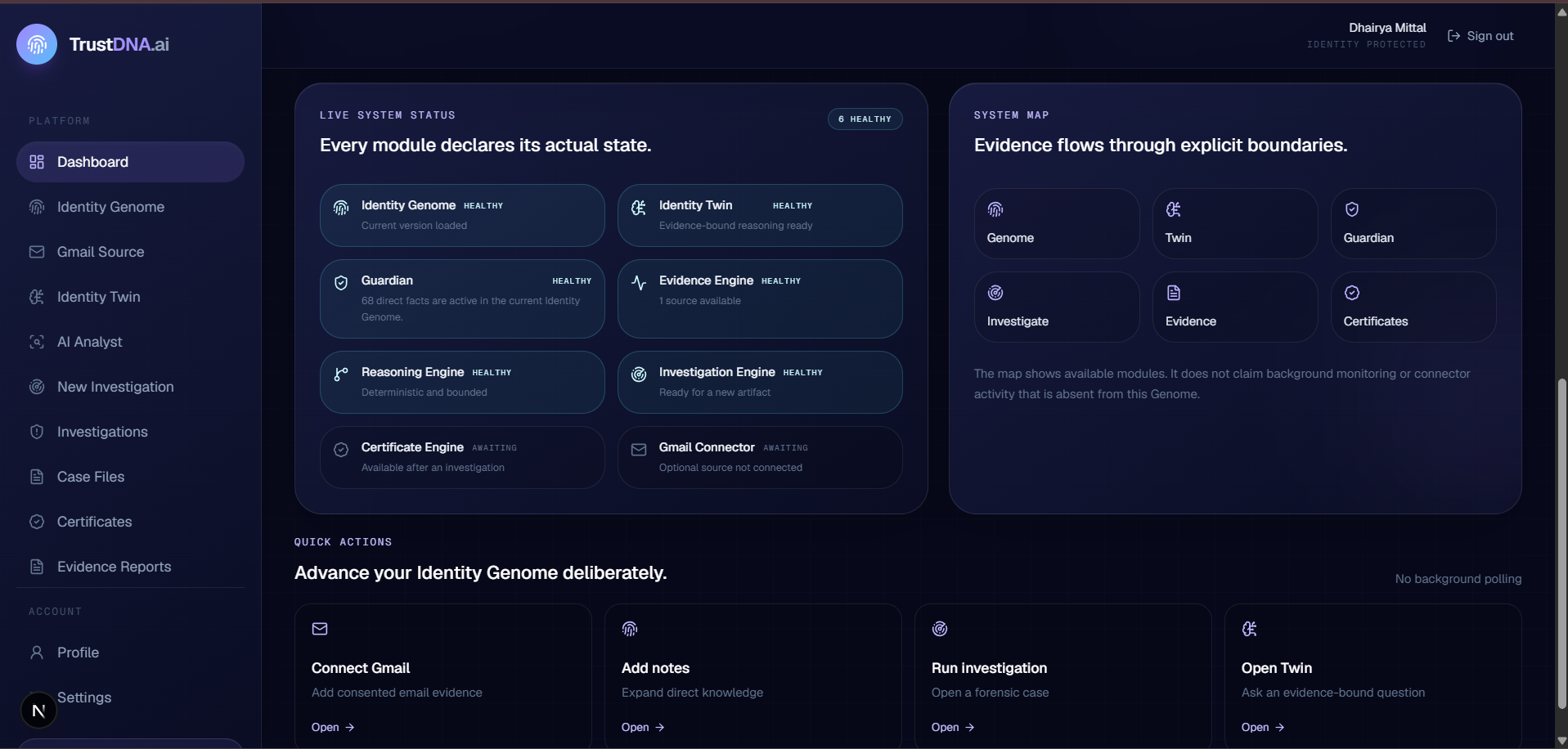
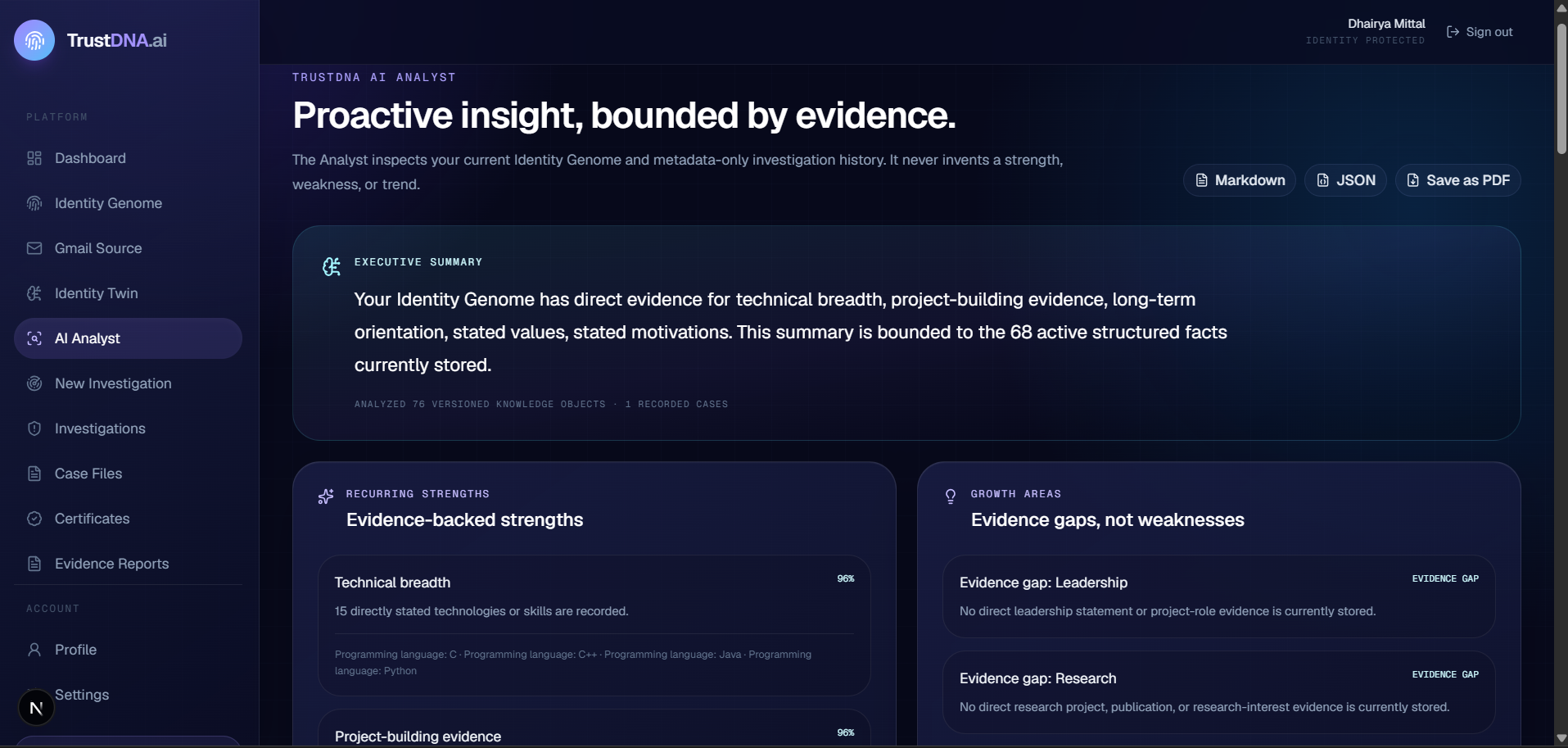
The platform also includes Gmail evidence ingestion, AI Analyst, Investigation Engine, Evidence Reports, Identity Timeline, Knowledge Graph visualization, Genome versioning, and an Admin Dashboard for managing users, evidence, and platform health.
TrustDNA AI was built using Next.js, React, TypeScript, Tailwind CSS, FastAPI, and Python.
GPT-5.6 played a major role in designing the Identity Genome architecture, deterministic reasoning pipeline, response synthesis, and Digital Twin logic. Codex significantly accelerated development by generating production-ready TypeScript, implementing deterministic knowledge extraction, expanding reasoning capabilities, fixing complex bugs, refactoring modules, improving performance, and validating the project through linting, type checking, and production builds.
One of the biggest challenges was building an AI system that remains useful without hallucinating personal information. This required designing deterministic knowledge extraction, evidence validation, confidence scoring, transparent reasoning traces, duplicate detection, and strict evidence boundaries. Instead of hiding uncertainty, TrustDNA clearly communicates what is supported by evidence, what is inferred, and what remains unknown.
Through this project, I learned that trustworthy AI requires more than powerful language models. Transparency, explainability, deterministic reasoning, and evidence traceability are equally important for building AI systems that people can genuinely trust.
In the future, I plan to expand TrustDNA with additional data connectors, richer Identity Genome visualization, multimodal evidence support, enterprise integrations, and organizational Digital Twins capable of reasoning over verified team knowledge while maintaining the same evidence-first principles.


Log in or sign up for Devpost to join the conversation.