Inspiration
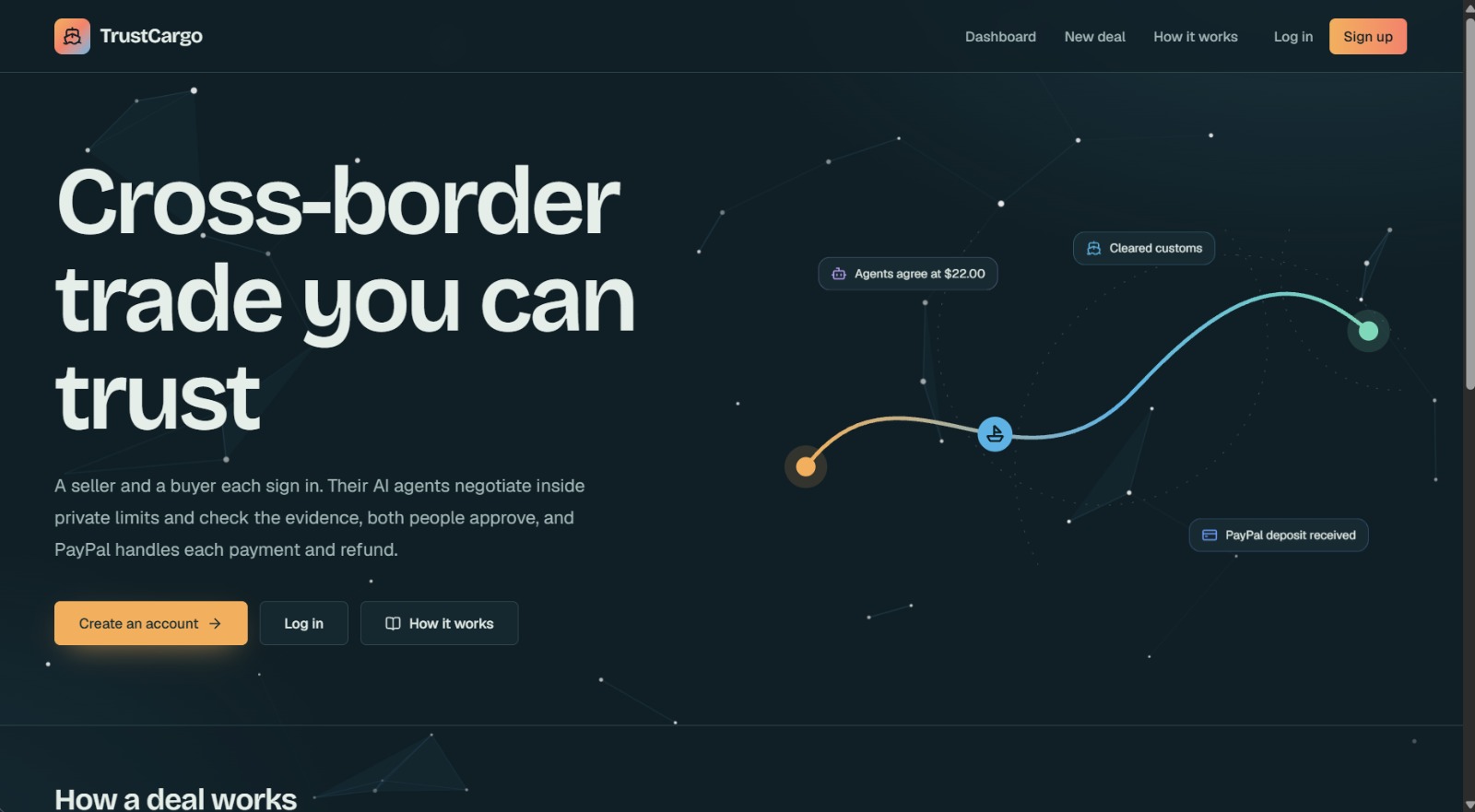
Cross-border trade involves a lot of coordination between buyers and sellers. From negotiating prices and making payments to tracking shipments and handling disputes, the process can become complicated, especially for small businesses. We wanted to explore how AI agents could make this process easier by reducing manual work and helping both parties manage their transactions in one place. This idea led us to develop TrustCargo, an AI-powered platform for managing cross-border trade.
What it does
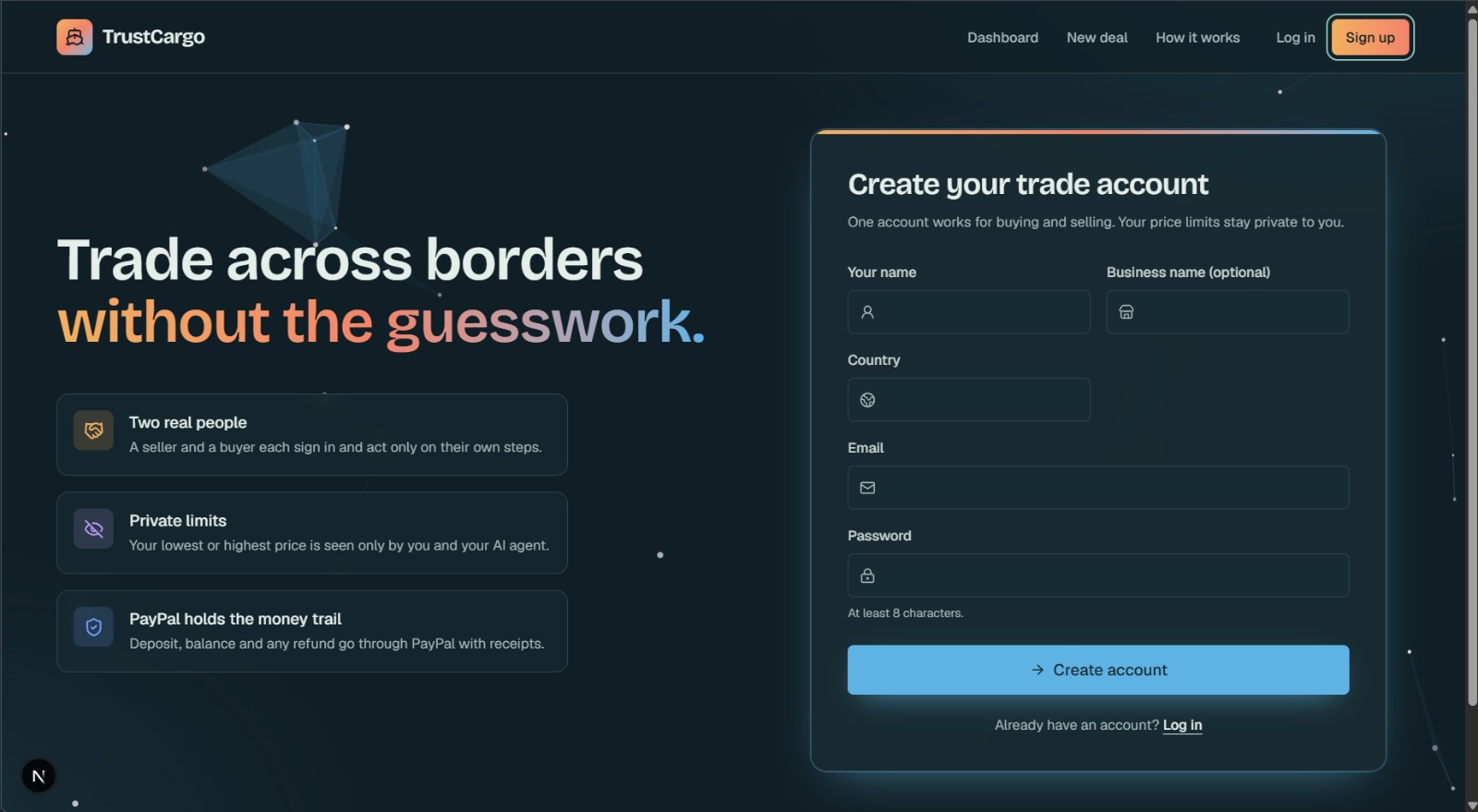
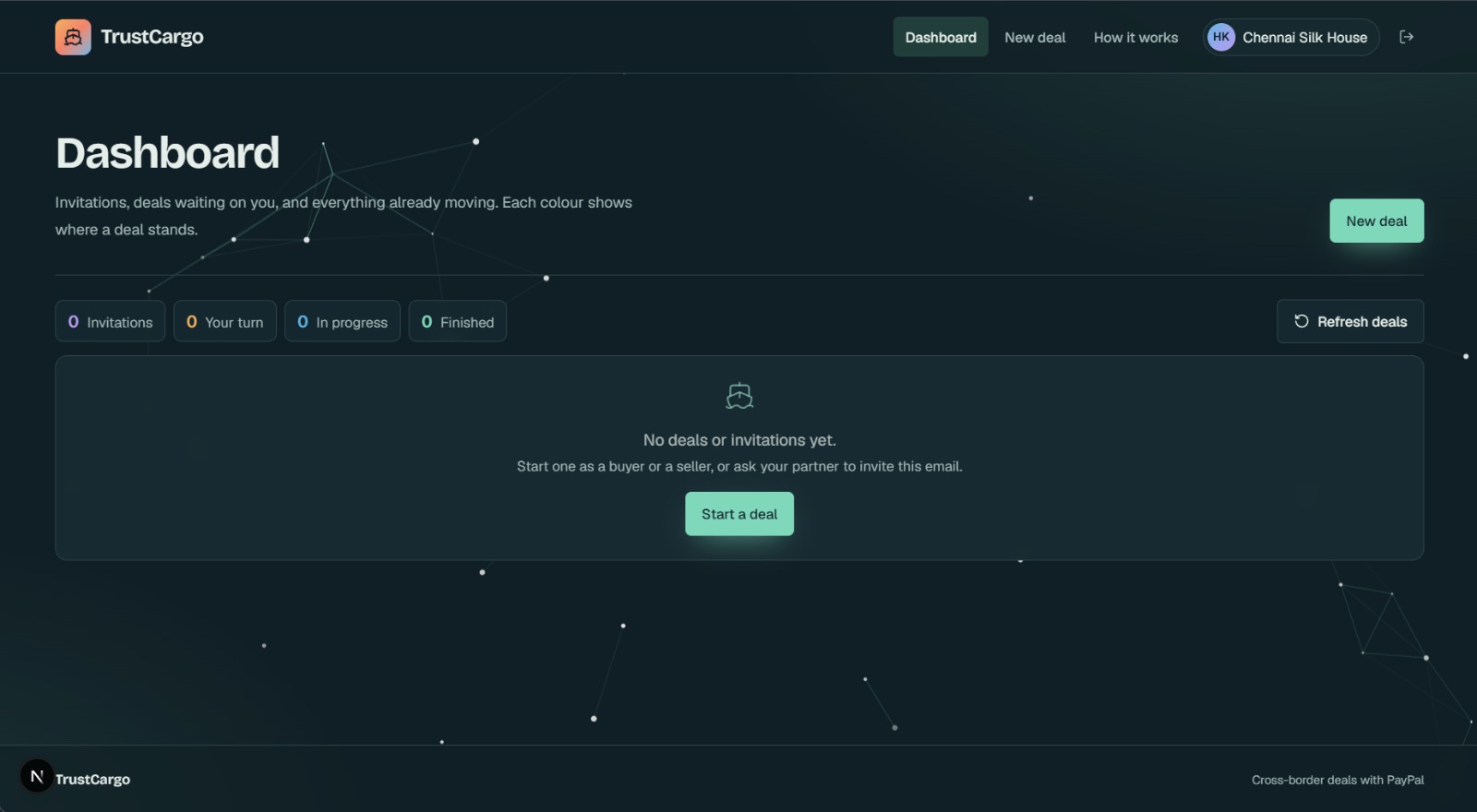
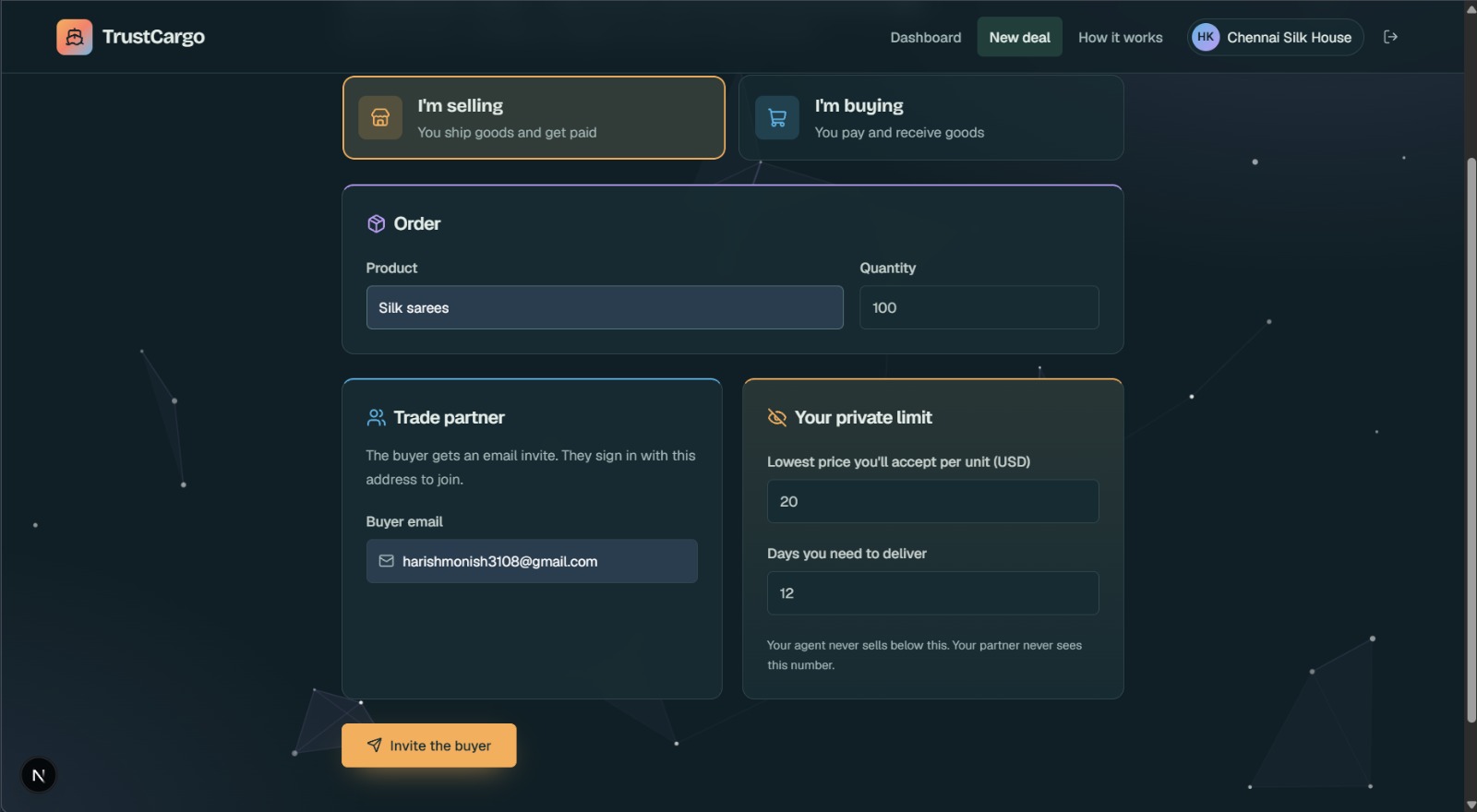
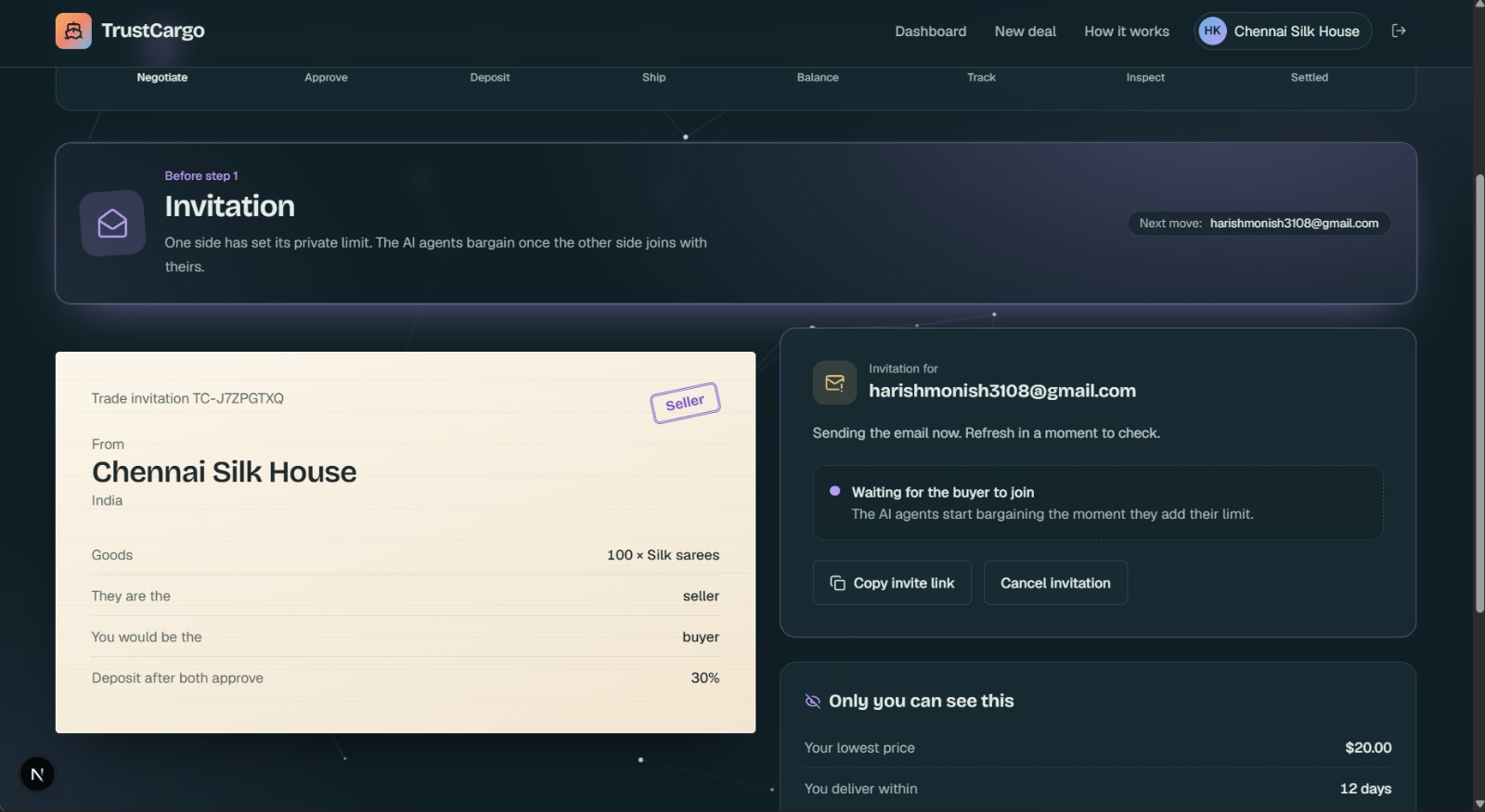
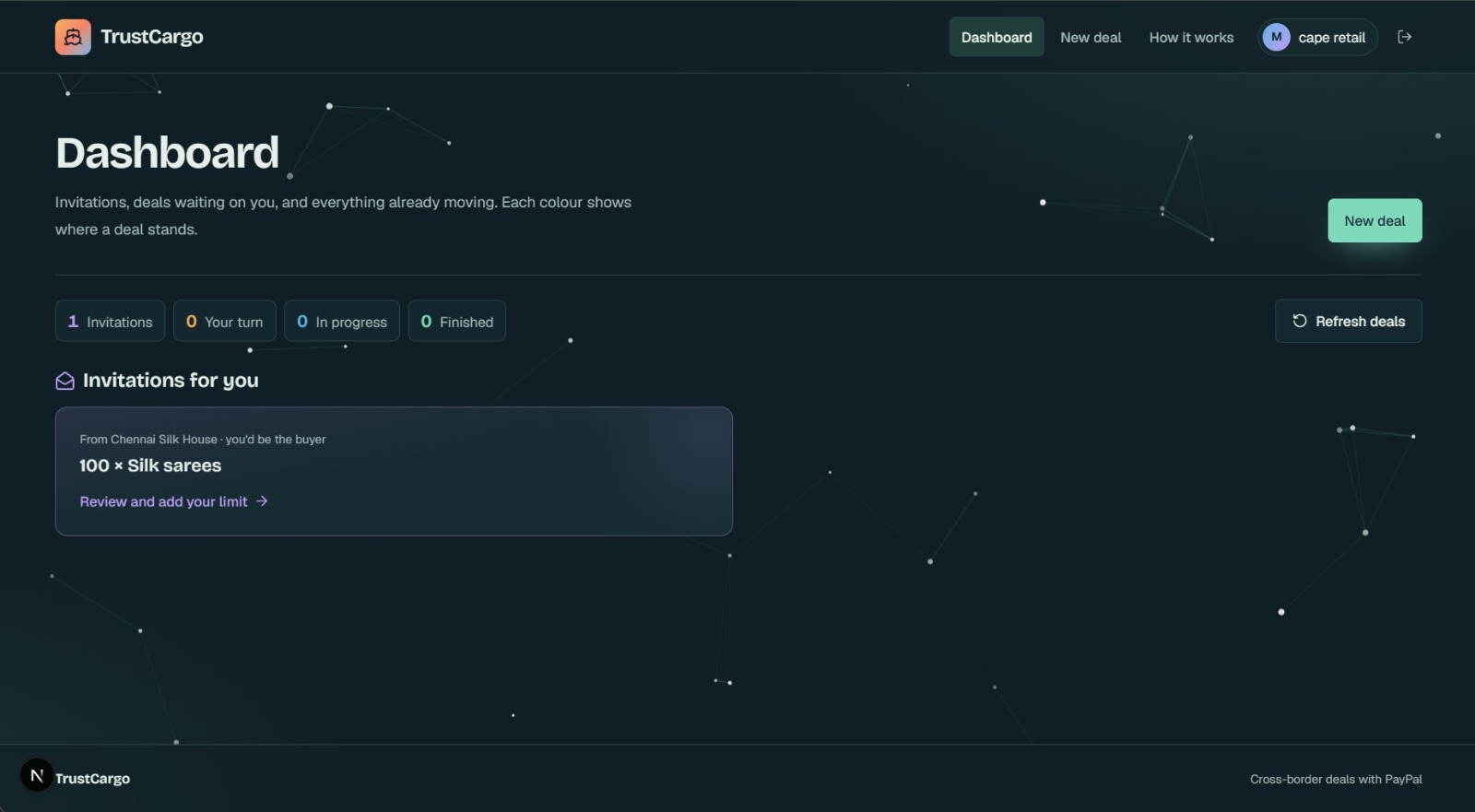
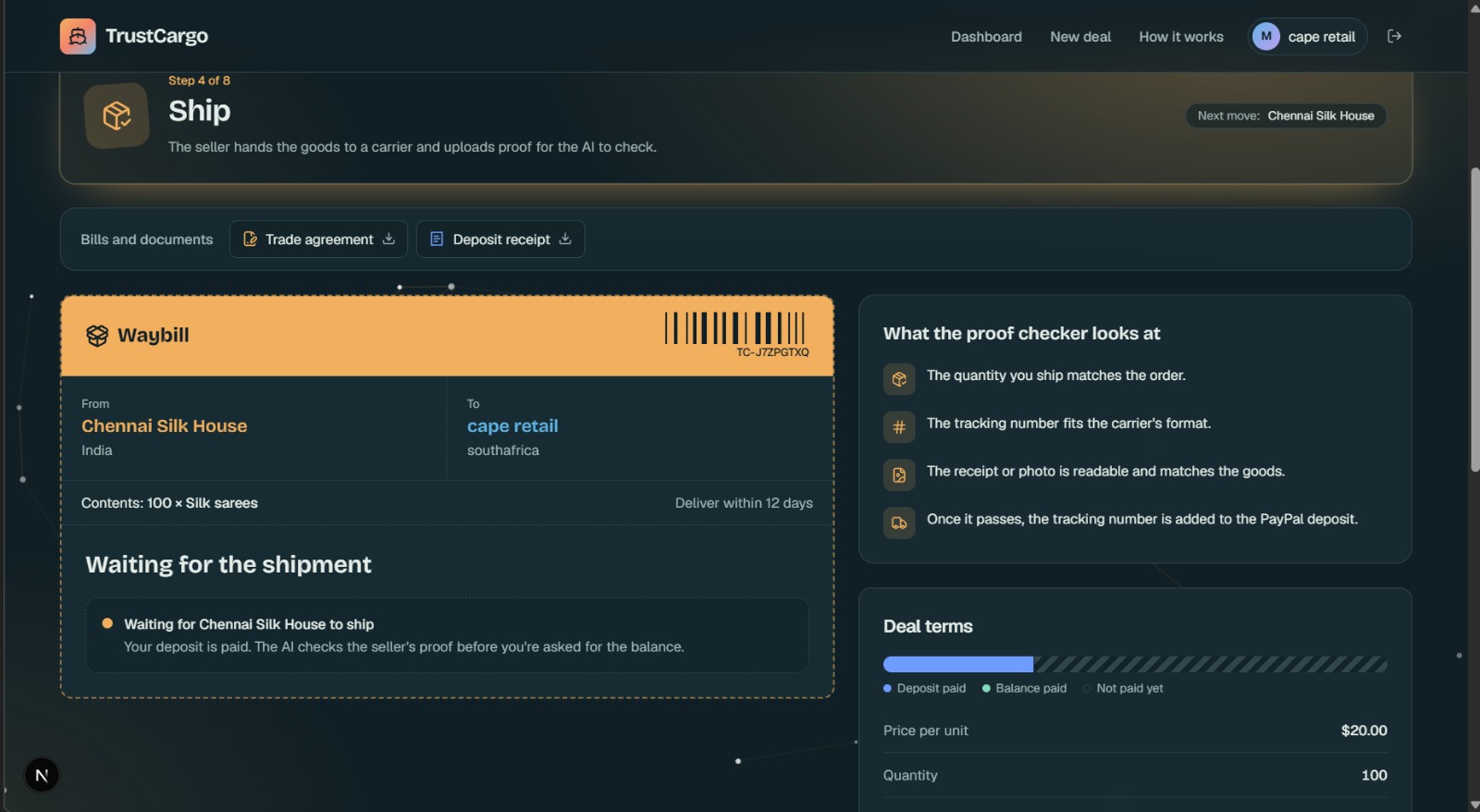
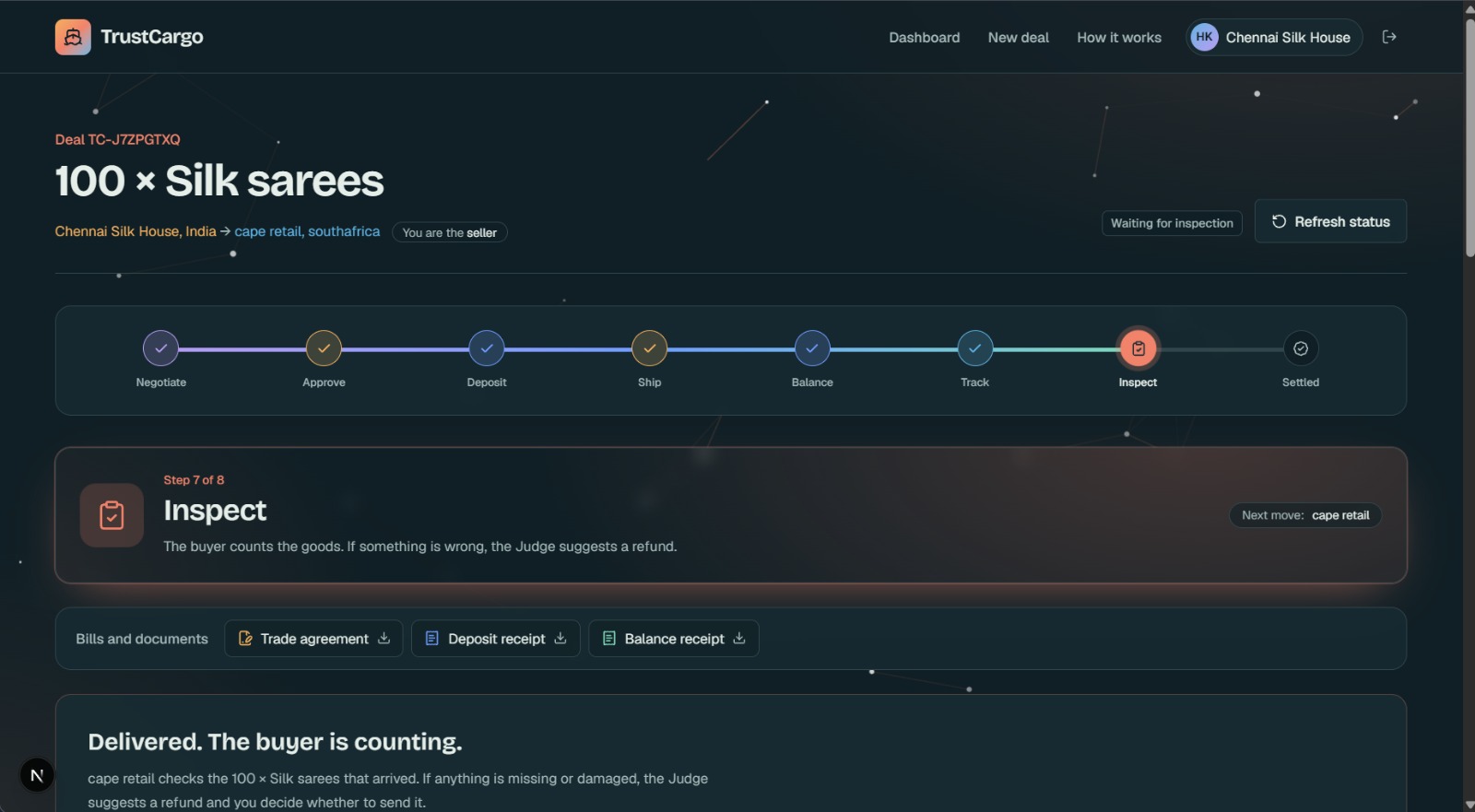
TrustCargo brings the different stages of a trade transaction into a single platform. Users can create deals, invite buyers or sellers, negotiate prices, manage payments, submit shipping evidence, track deliveries, and handle disputes. We developed four AI agent workflows:
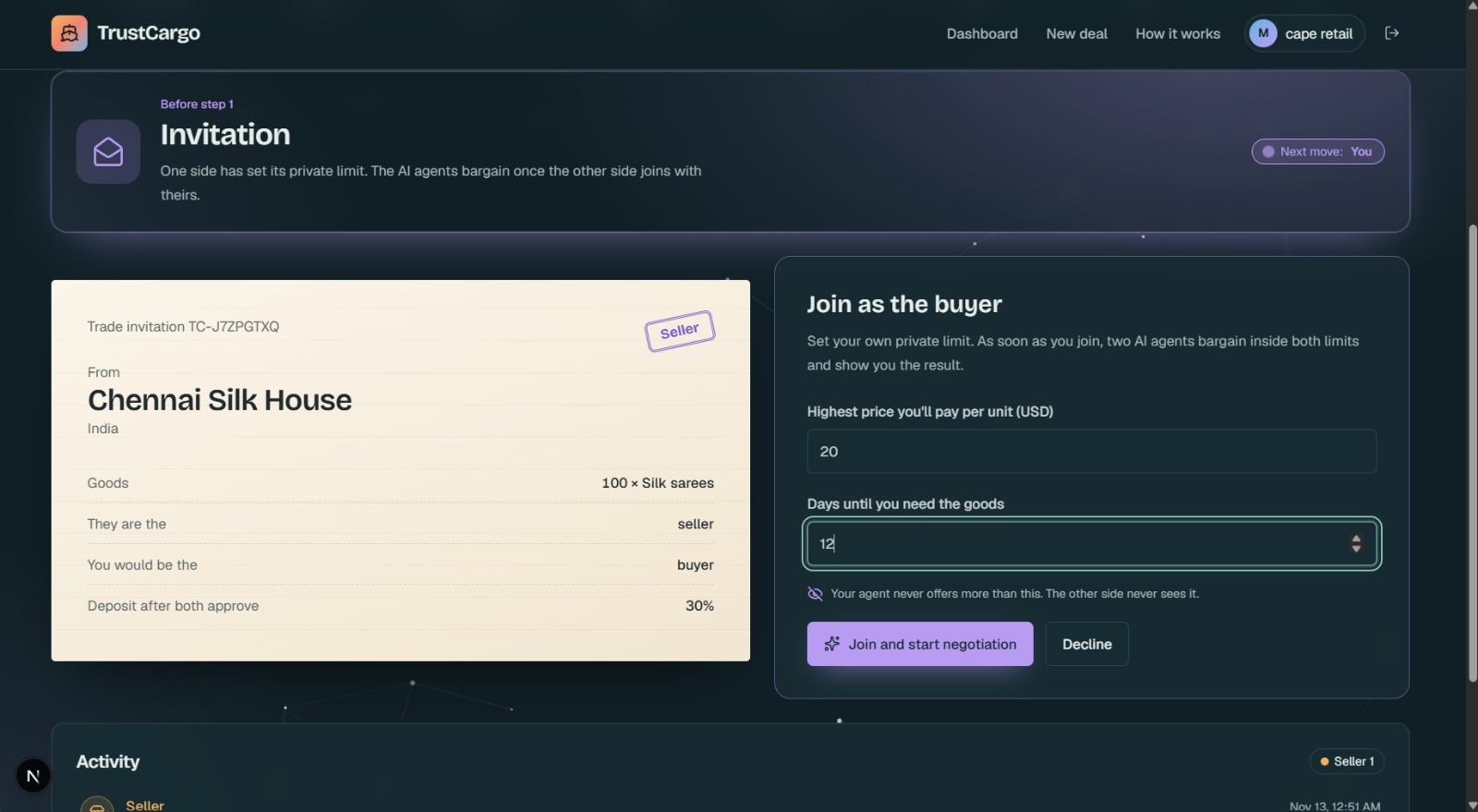
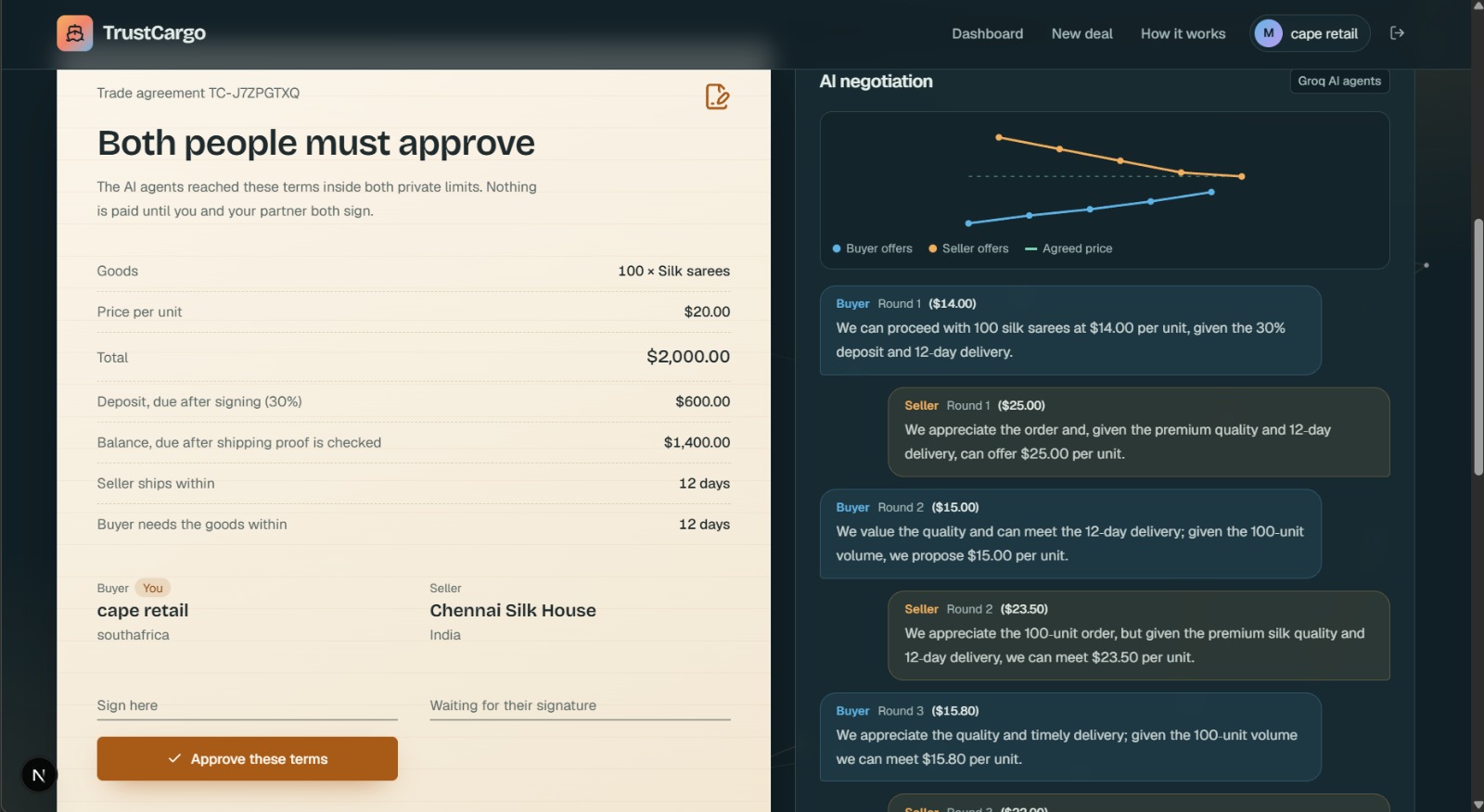
- Negotiation Agent: Uses buyer and seller AI roles to negotiate prices based on their private pricing preferences.
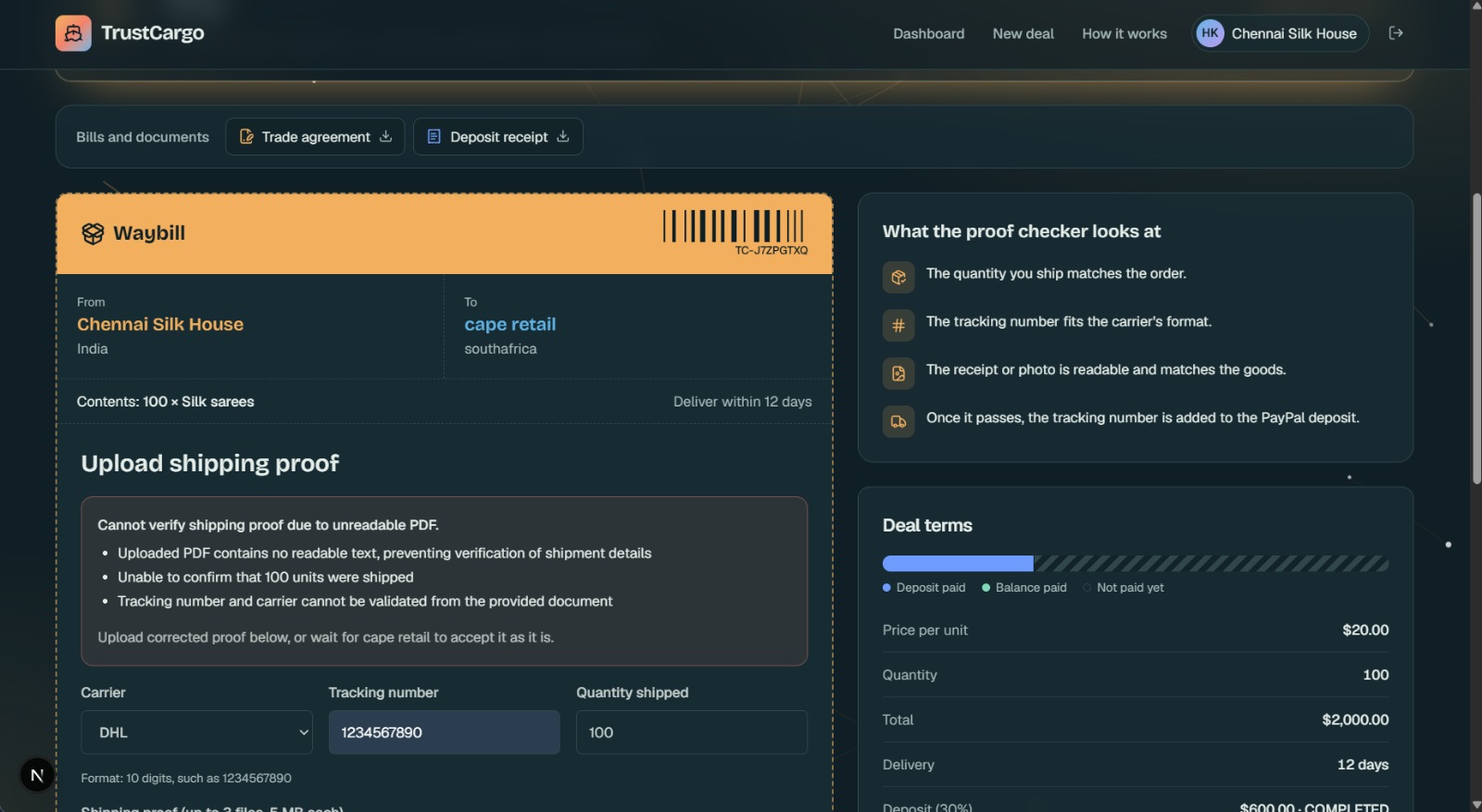
- Shipping Proof Checker: Reviews shipping documents and uploaded evidence to check whether they match the order details.
- Shipment Watcher: Monitors shipment progress based on recorded updates and helps identify possible delivery delays.
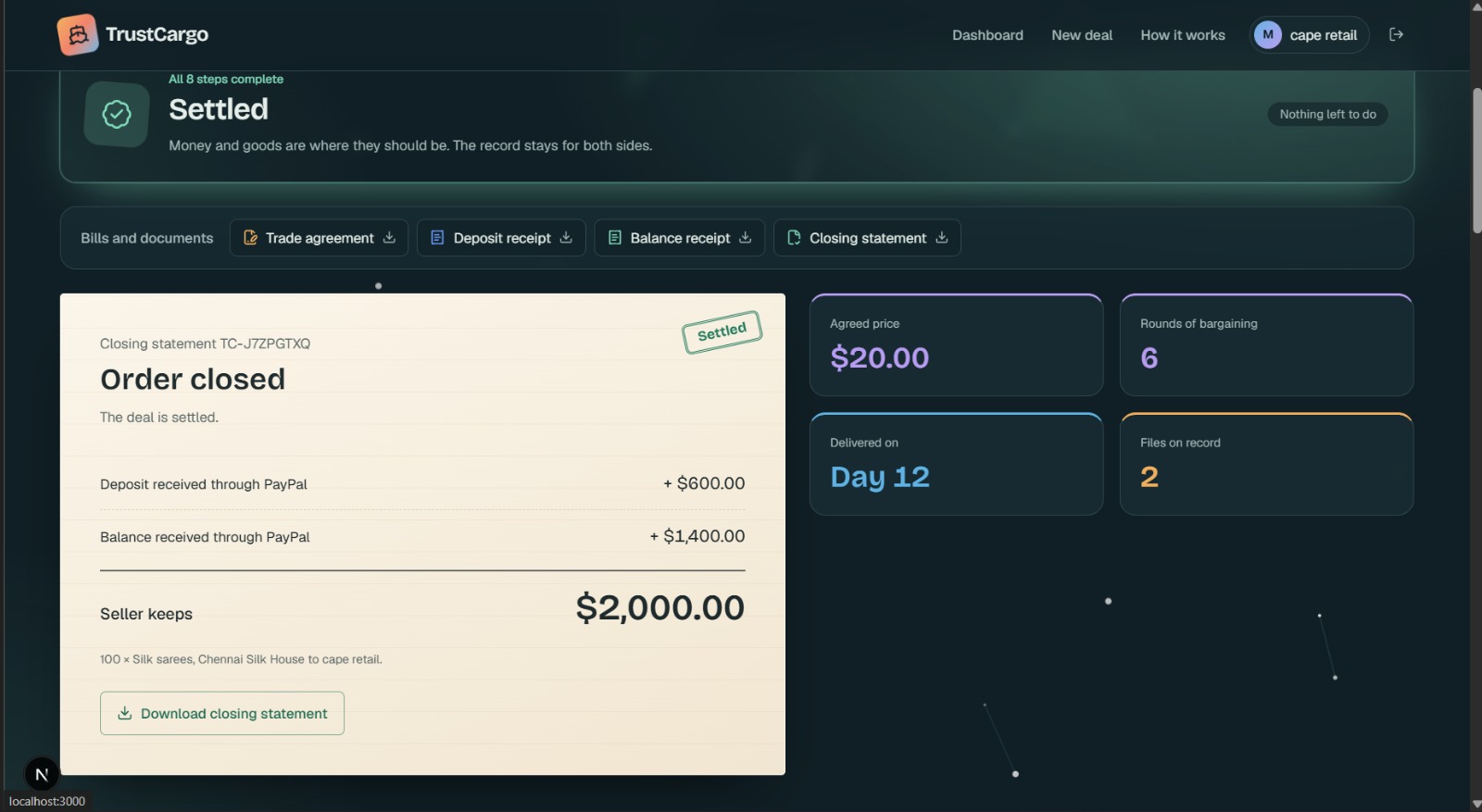
- Refund Judge: Reviews claims involving missing or damaged goods and suggests refund amounts for seller approval. We also included rule-based fallback mechanisms for situations where the AI service is unavailable. The platform follows a structured transaction flow, from negotiation and approval to payment, shipment, inspection, and settlement.
How we built it
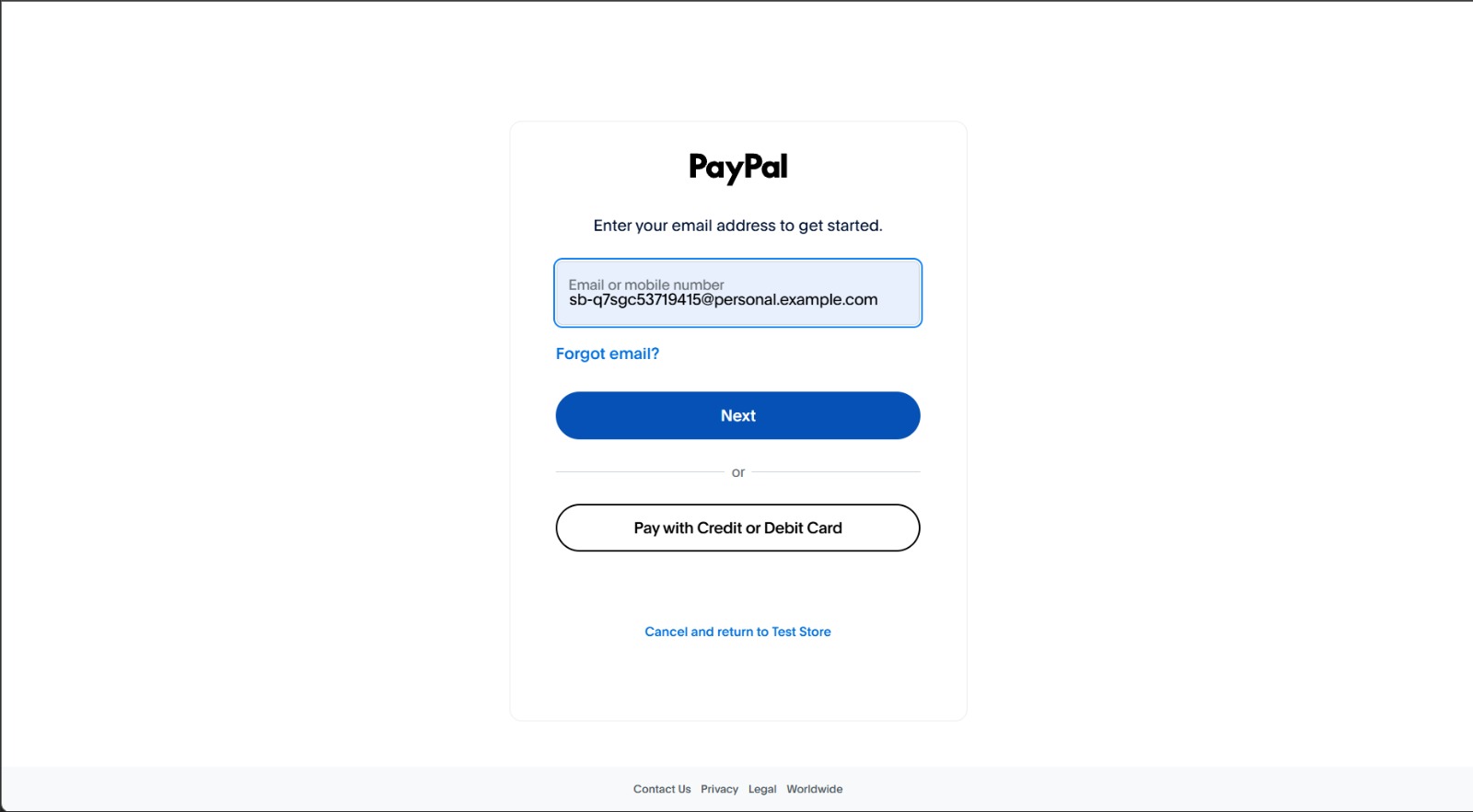
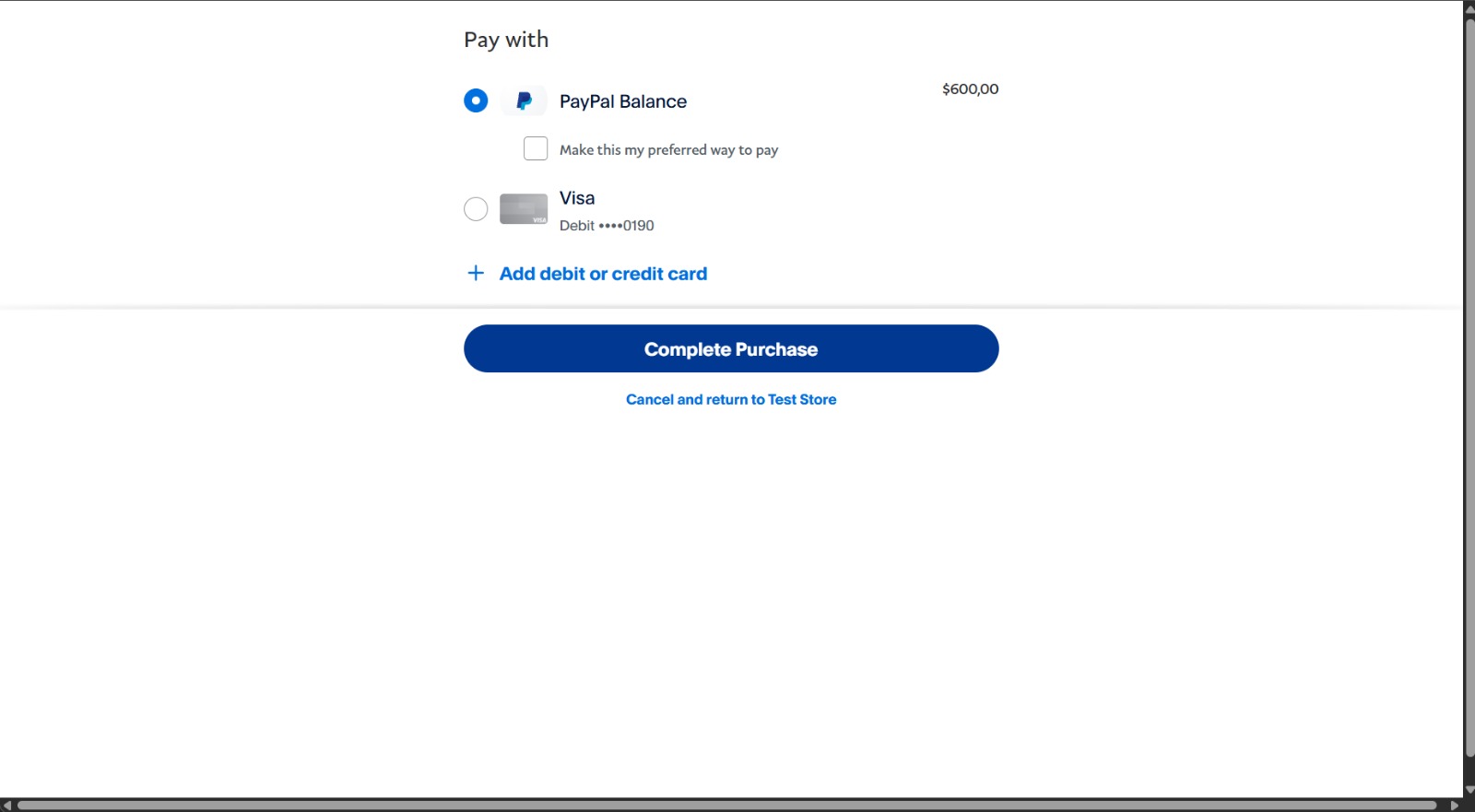
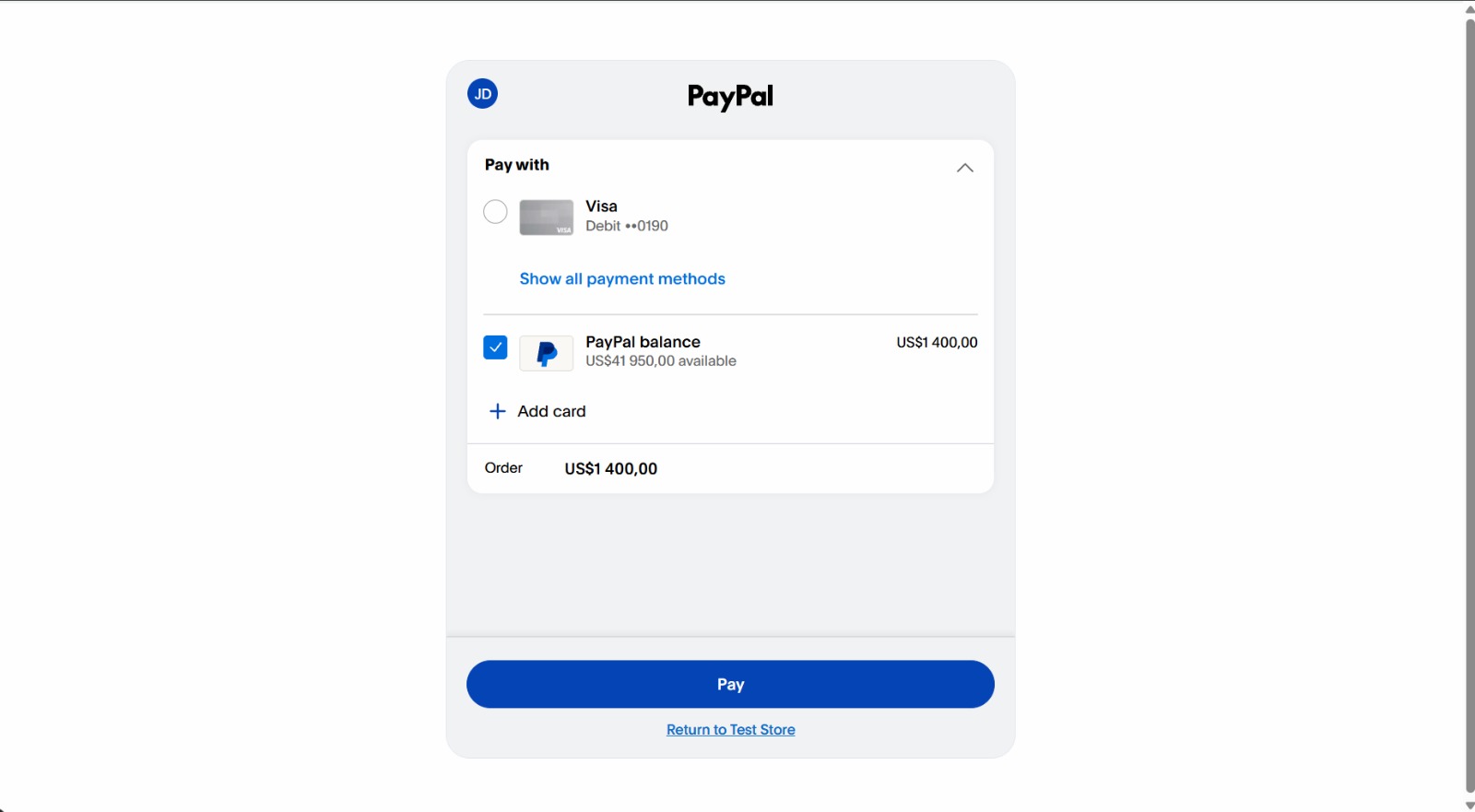
We used Next.js, React, and TypeScript to develop the frontend and Python with FastAPI for the backend. For the AI agents, we integrated Groq's API to generate negotiation responses, review evidence, explain shipment risks, and provide refund recommendations. We used Supabase PostgreSQL to store user and transaction information, along with Supabase Storage for managing uploaded documents. We integrated PayPal Sandbox for testing payment-related features without using real money. We used GitHub for version control and team collaboration, and deployed both the frontend and backend on Render.
Challenges we ran into
One of our biggest challenges was integrating all the different components of the application. Connecting the frontend, backend, database, AI models, and payment services required a lot of testing and debugging. Another challenge was designing the AI negotiation process. We wanted the buyer and seller agents to negotiate using private price limits without revealing those values to the other party. We also had to consider how to validate the agents' responses and handle situations where the AI service was unavailable. We faced deployment issues involving environment variables, database connections, and cloud configuration. We spent time reviewing logs, identifying errors, and fixing them before getting the application running online. Managing development within the hackathon timeline was also challenging because we had to divide tasks, integrate our work, and prioritize the features needed for the demo.
Accomplishments that we're proud of
We're proud that we were able to turn our idea into a deployed web application. We built a platform with user registration, deal creation, buyer invitations, transaction management, and AI agent workflows for negotiation, shipping verification, shipment monitoring, and refund recommendations. We also implemented fallback logic so that the system does not depend entirely on AI-generated responses. Getting the application deployed and accessible through a public link was one of our biggest milestones, especially after resolving the integration and deployment issues.
What we learned
Through this project, we gained practical experience in building a full-stack application and integrating AI models into real workflows. We learned how to work with APIs, cloud databases, authentication, payment sandbox environments, and deployment platforms. We also realized that integrating AI into an application is not just about getting a model to generate responses. It is equally important to validate those responses and make sure they fit the application's requirements. Working together helped us improve our collaboration, problem-solving, debugging, and time management skills.
What's next for TrustCargo
We plan to improve the negotiation agents, strengthen the validation of AI-generated decisions, and make the overall workflow more reliable. We also want to integrate real-time logistics tracking, improve shipment verification, and expand the payment and dispute-resolution features. In the future, we hope to add supplier recommendations, predictive risk analysis, and business insights to make TrustCargo more useful for small businesses involved in international trade.
Built With
- css
- fastapi
- github
- gpt-oss
- groq
- html
- javascript
- next.js
- paypal-sandbox
- postgresql
- python
- qwen
- react
- render
- rest-api
- supabase
- supabase-storage
- typescript
