-
-
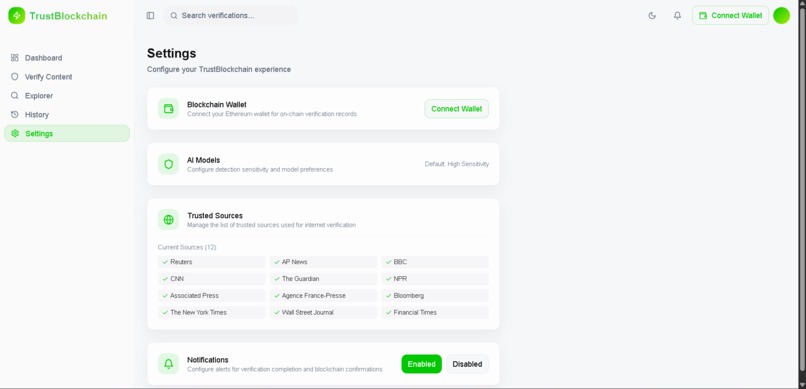
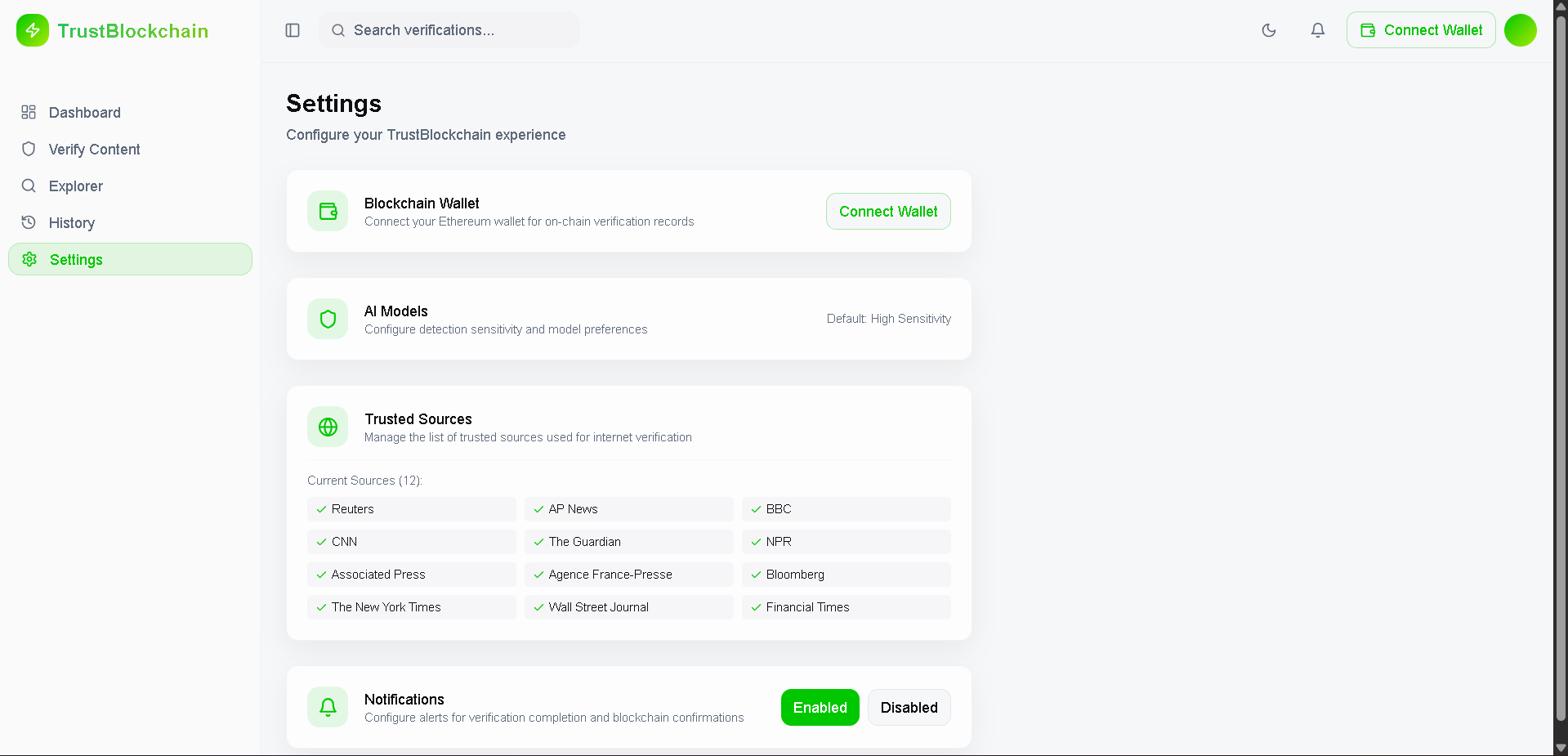
settings
-
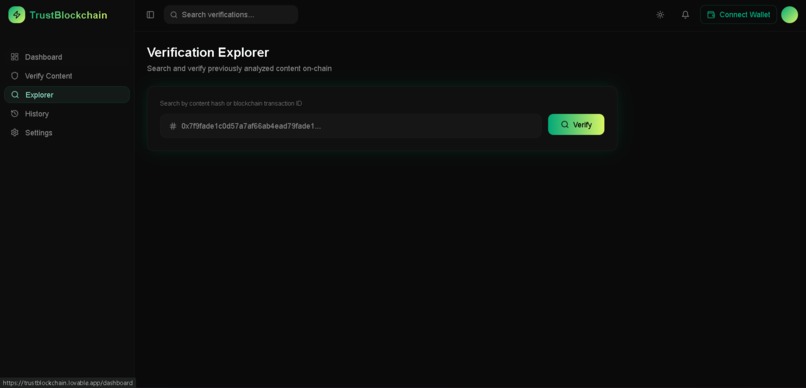
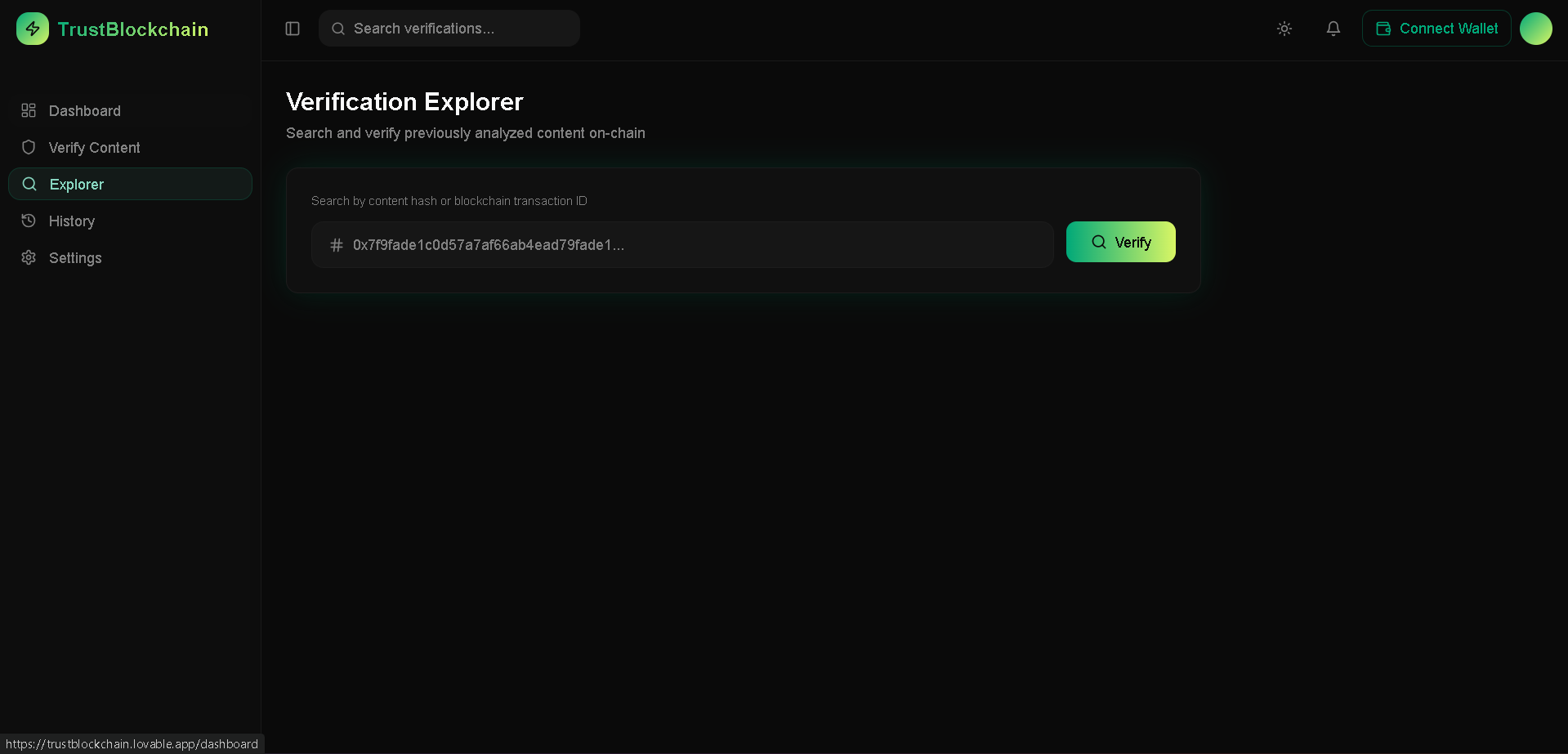
verification explorer
-
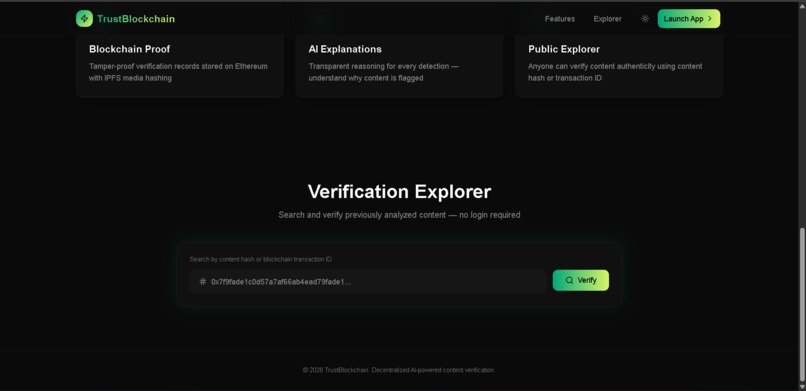
public verification with hash code
-
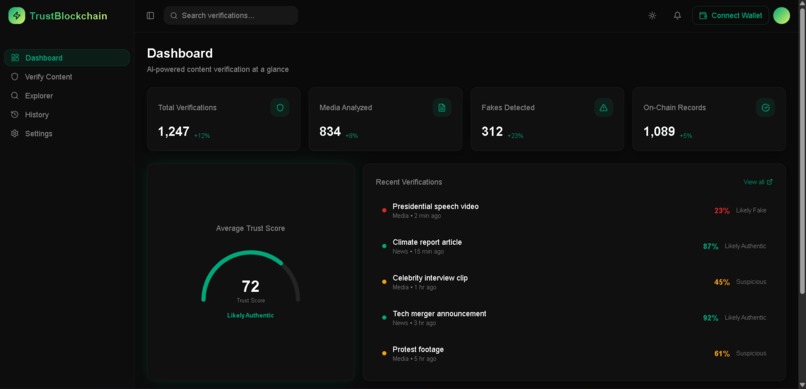
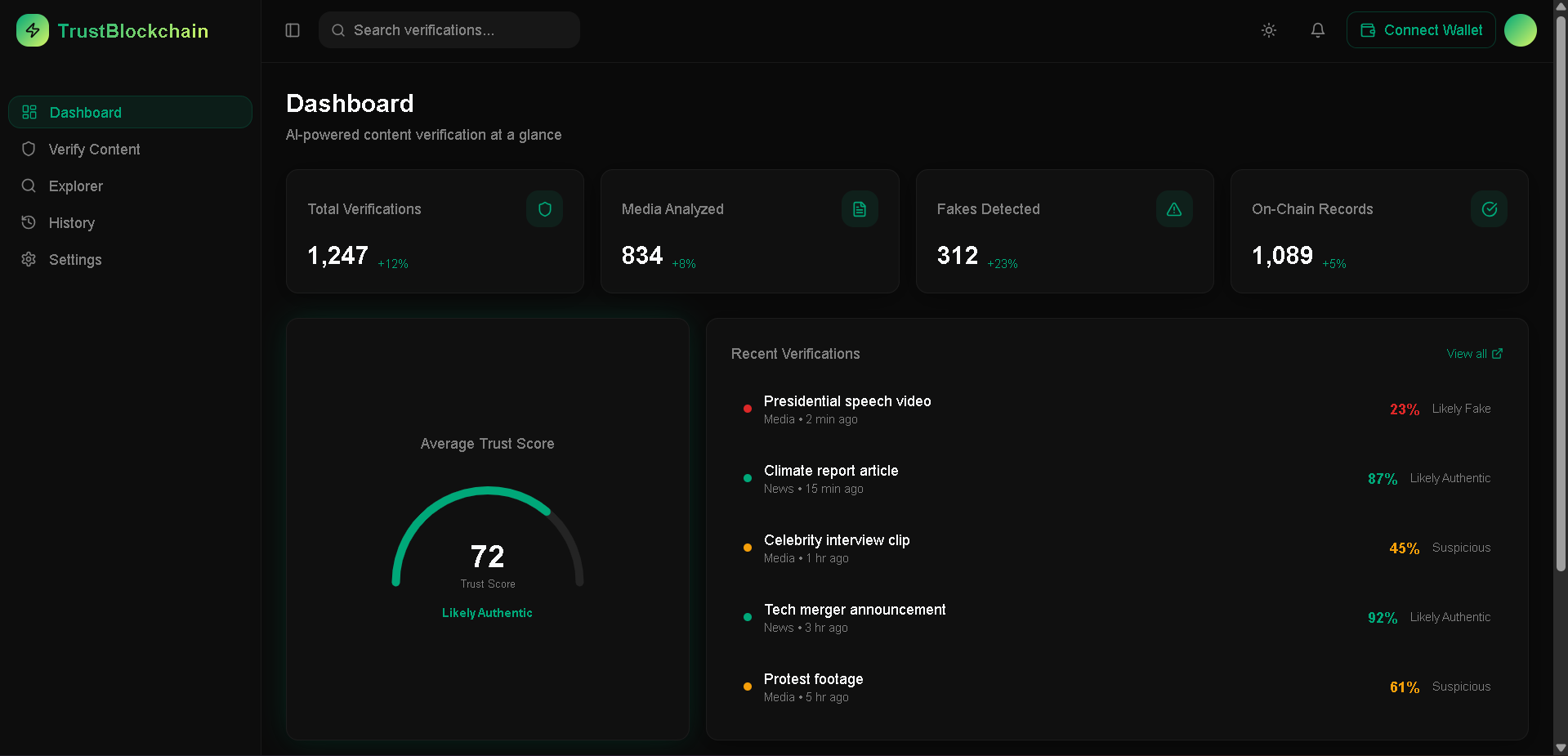
landing page after launching app
-
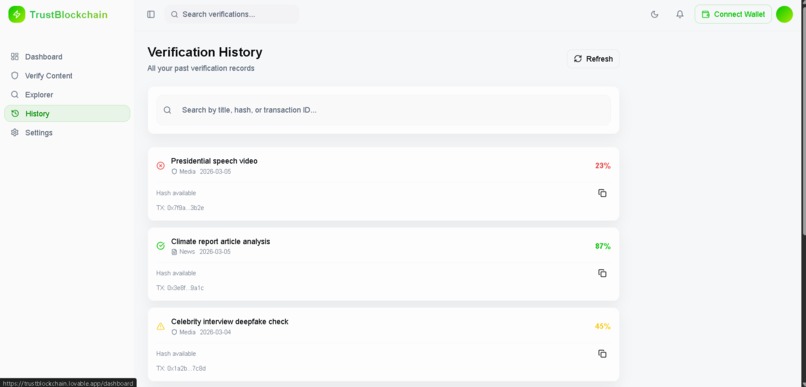
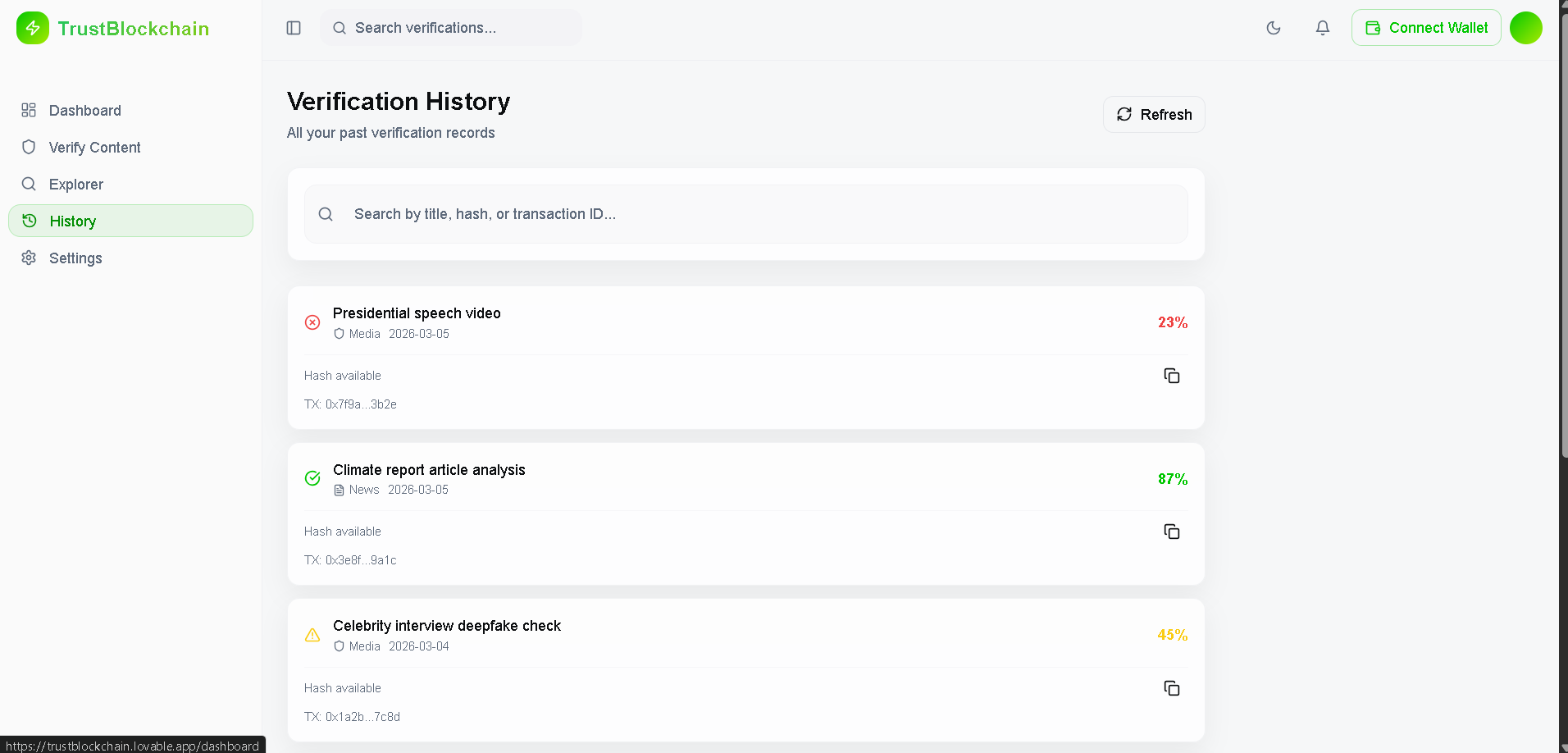
verification history in light theme
-
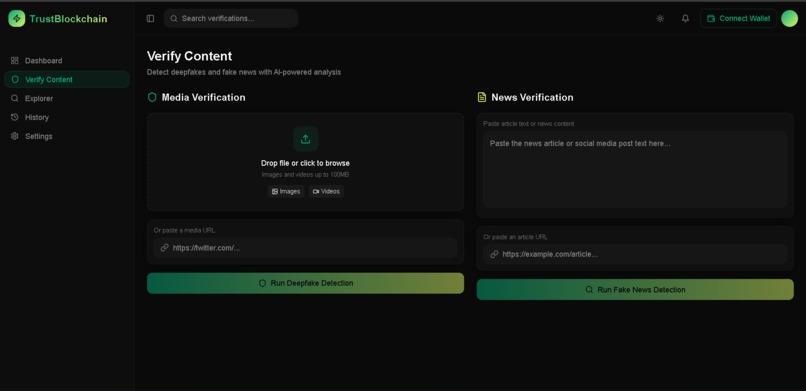
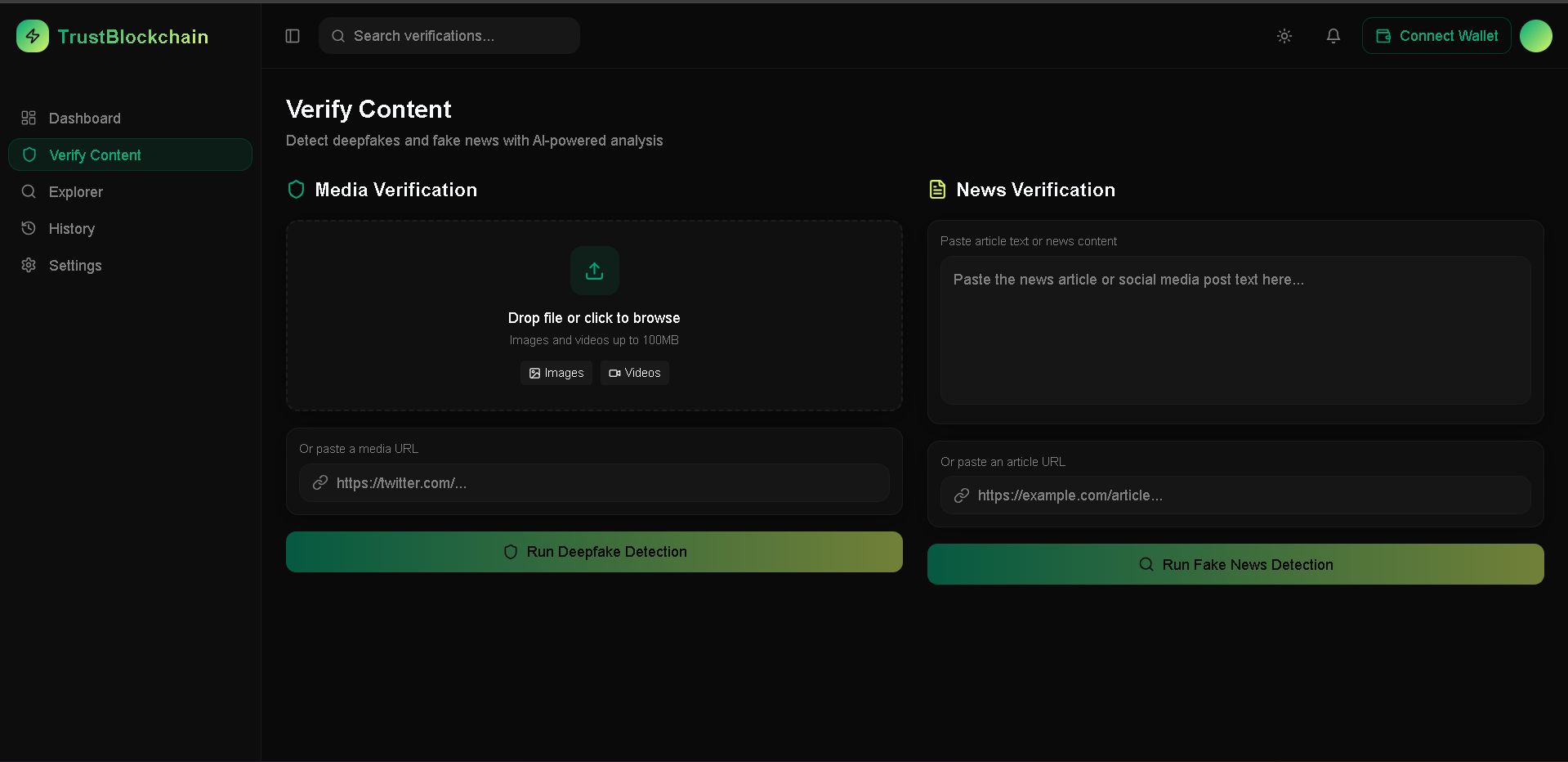
media and text verification
-
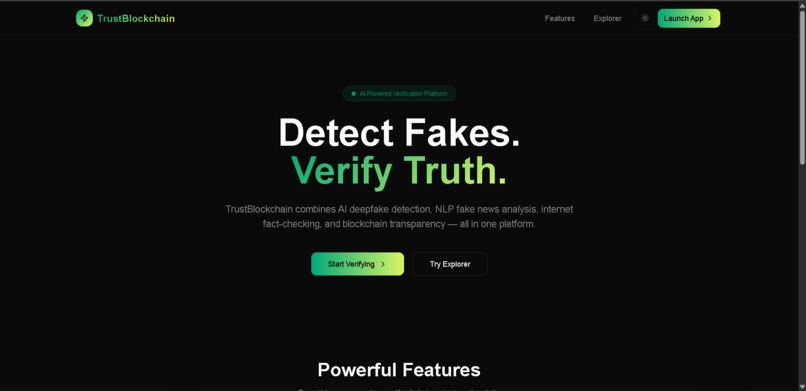
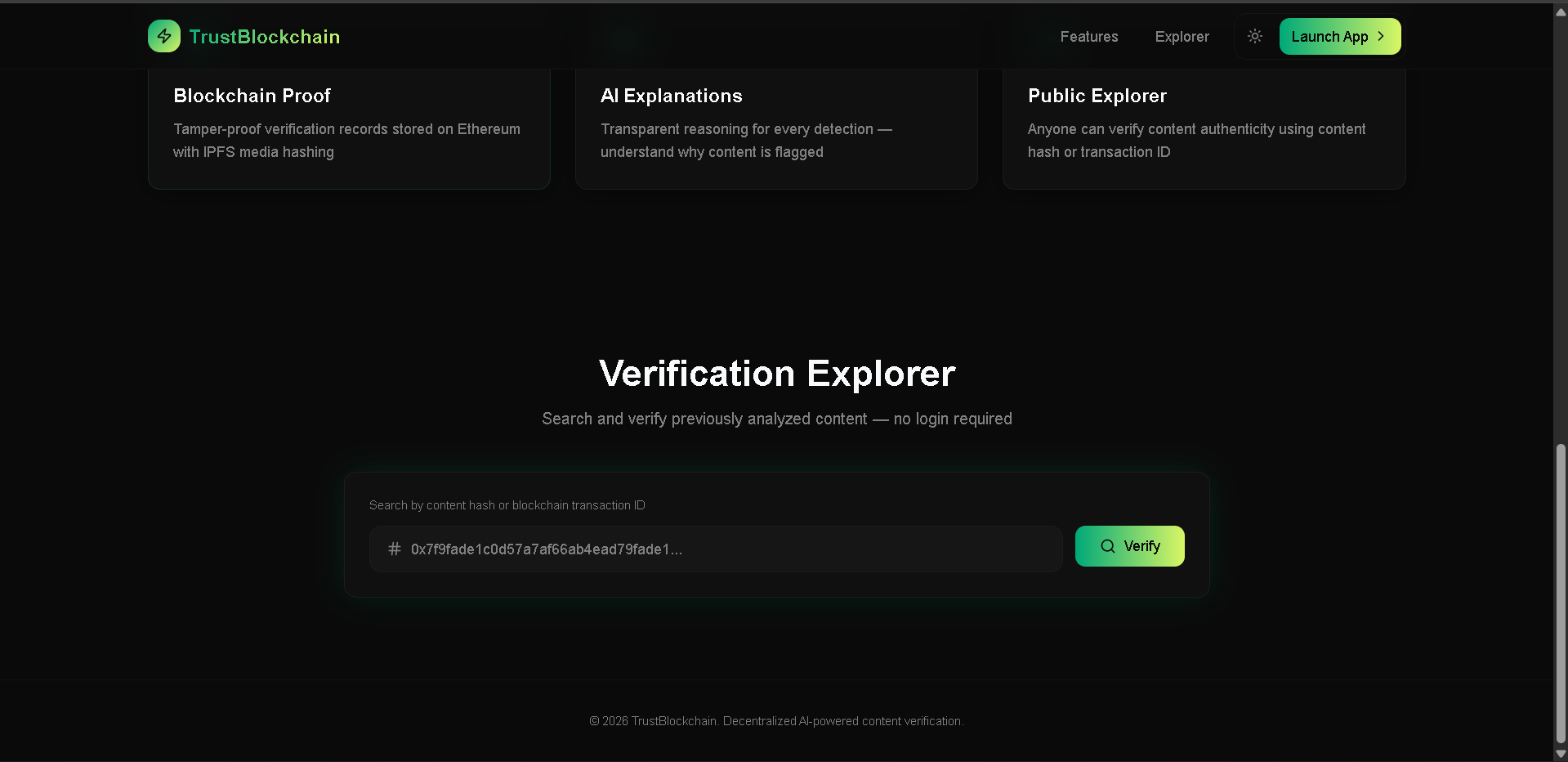
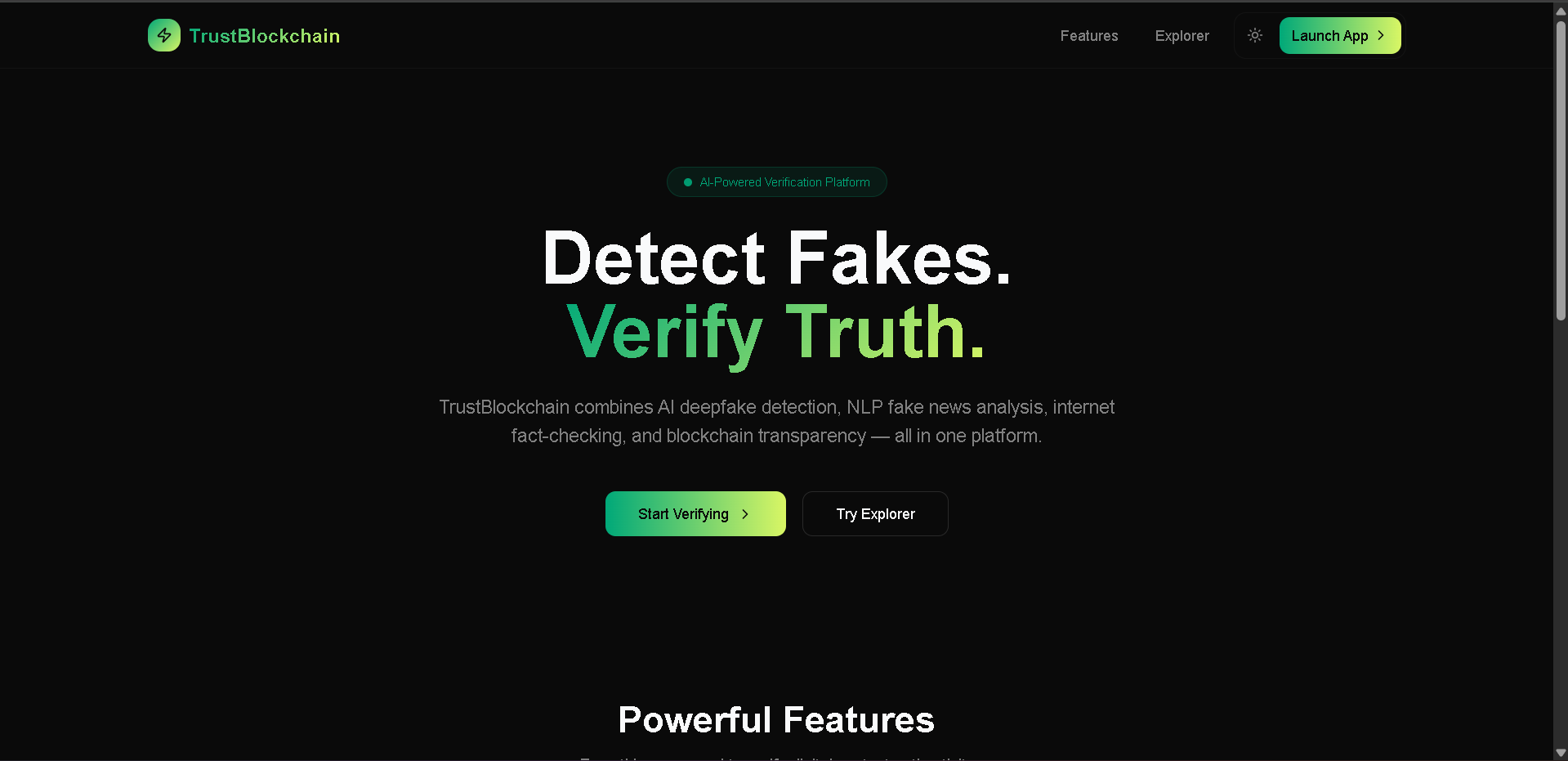
landing page
-
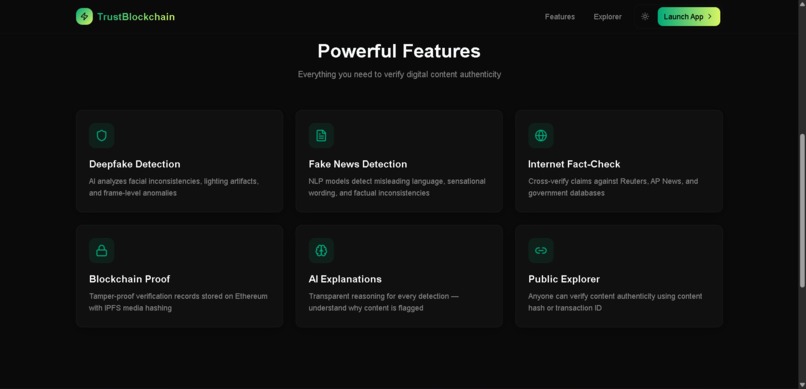
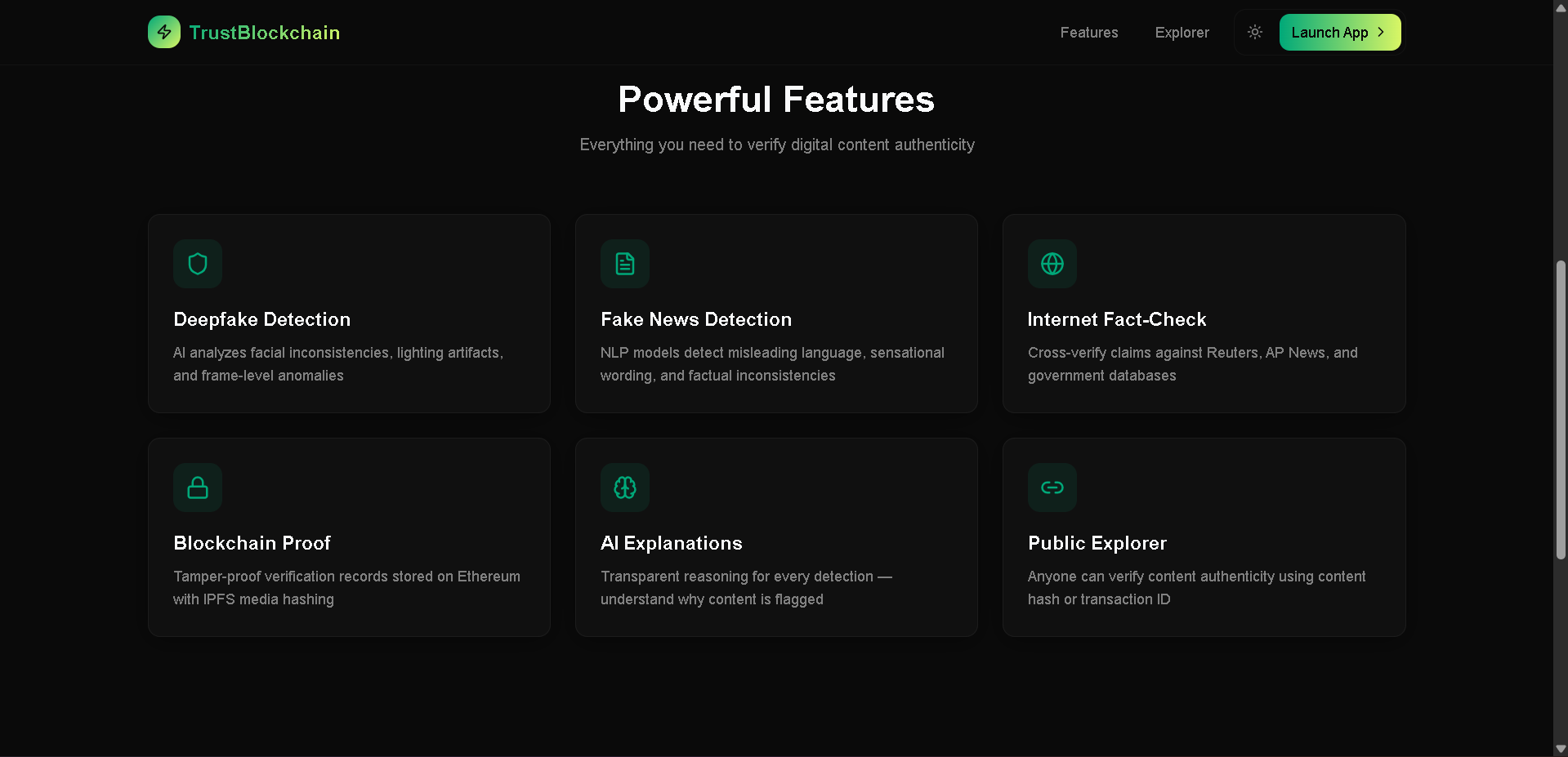
features
Inspiration
We’re living in a time where seeing is no longer believing. With the explosion of deepfakes and AI-generated content, the line between reality and manipulation has blurred to a point that’s honestly a bit scary. Misinformation doesn't just sit there—it moves fast, often swaying public opinion long before anyone thinks to double-check the facts.
TrustBlockchain was born out of a simple necessity: we need a "source of truth" that isn't controlled by a single entity. We wanted to combine the analytical brain of AI with the unbreakable memory of blockchain to create a place where anyone can verify what they're seeing and finally trust their feed again.
What it does
At its core, TrustBlockchain is a high-tech filter for the digital world. It scans for deepfakes and fake news, then locks those findings onto a blockchain so the results can’t be tampered with later.
Here’s how a user interacts with it:
- Upload: Drop in an image, video, snippet of text, or a news link.
- Analyze: Our AI gets to work spotting deepfake artifacts or logical inconsistencies in text.
- Cross-Check: The system scans trusted global outlets like the BBC, Reuters, and AP to see if the story holds water.
- Score & Explain: You don't just get a "true" or "false" grade; you get an authenticity score and a clear explanation of why the AI reached that conclusion.
- Record: The final verdict is stored on the blockchain, creating a permanent, audit-ready proof of verification.
How I built it
I wanted the experience to feel as modern and fluid as the AI powering it. I built the platform as a full-stack web application using a stack designed for speed and type-safety:
- Frontend: React and Vite for a lightning-fast build.
- Logic: TypeScript to keep the codebase clean and predictable.
- Styling: Tailwind CSS and shadcn/ui to give it that sleek, professional "SaaS" aesthetic.
Challenges I ran into
The biggest hurdle was the "Confidence Gap." AI models can be incredibly confident even when they’re wrong. I realized early on that relying on AI alone wasn't enough, which is why I had to layer in external fact-checking and source validation to create a "checks and balances" system.
Another puzzle was the blockchain integration. Blockchain is great for trust but can be slow and expensive. I had to think carefully about how to store verification proofs in a way that provided a paper trail without slowing the entire user experience to a crawl.
I faced challenges in:
- Making AI "Human-Readable": Designing an interface that explains complex AI logic simply.
- The User Journey: Striking the right balance between a deep technical scan and a simple, one-click workflow.
- Tech Synthesis: Getting three very different worlds—AI, Web3, and traditional news APIs—to talk to each other seamlessly.
Accomplishments that I'm proud of
I’m incredibly proud of the fact that TrustBlockchain isn't just a single-tool solution; it’s an ecosystem.
- The Trifecta: Successfully merging AI detection, live fact-checking, and blockchain transparency into one dashboard.
- The Prototype: Moving from a "what if" idea to a functional platform that can actually flag a deepfake.
- Explainability: Creating a UI that doesn't just say "This is fake," but actually helps educate the user on the red flags it found.
- Proof of Concept: Proving that blockchain has a practical, everyday use case as a global "registry of truth."
What I learned
This project was a massive learning curve. I walked away realizing that Explainable AI is just as important as the detection itself—if people don't understand the "why," they won't trust the "what." I also learned that while AI is powerful, it’s much more reliable when it has "ground truth" (like reputable news archives) to lean on.
On the technical side, I leveled up my skills in React and TypeScript, especially when it comes to managing the complex states required for a full-stack product workflow.
What's next for TrustBlockchain
This is just the beginning. I want to turn TrustBlockchain into a universal layer for the internet. On the roadmap:
- Social Integration: Verifying posts on X (Twitter) or Facebook in real-time.
- Browser Extension: A "check-engine light" for your browser that alerts you to suspicious content while you surf.
- Deepfake Forensics: Advanced tools to pinpoint exactly which pixels or frames were manipulated.
- Community Verification: Letting users participate in the process through decentralized voting.
Built With
- lovable
- react
- shadcn-ui
- tailwindcss
- typescript
- vite

Log in or sign up for Devpost to join the conversation.