-
-
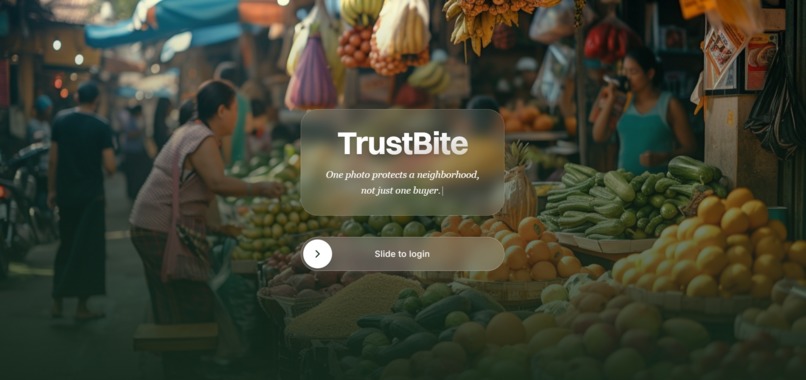
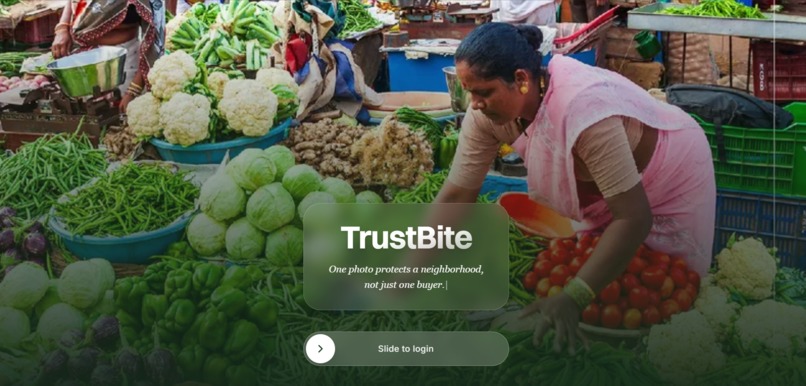
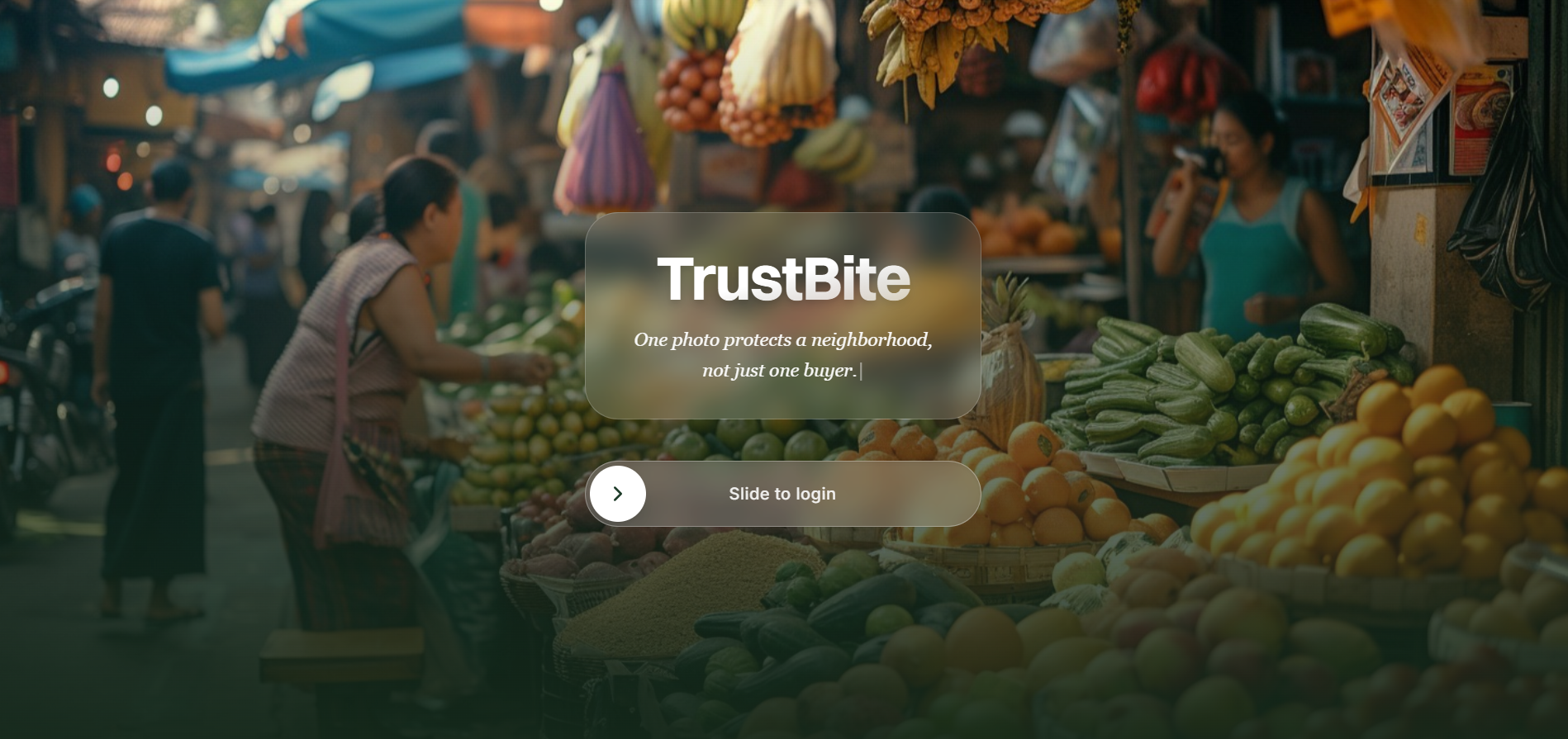
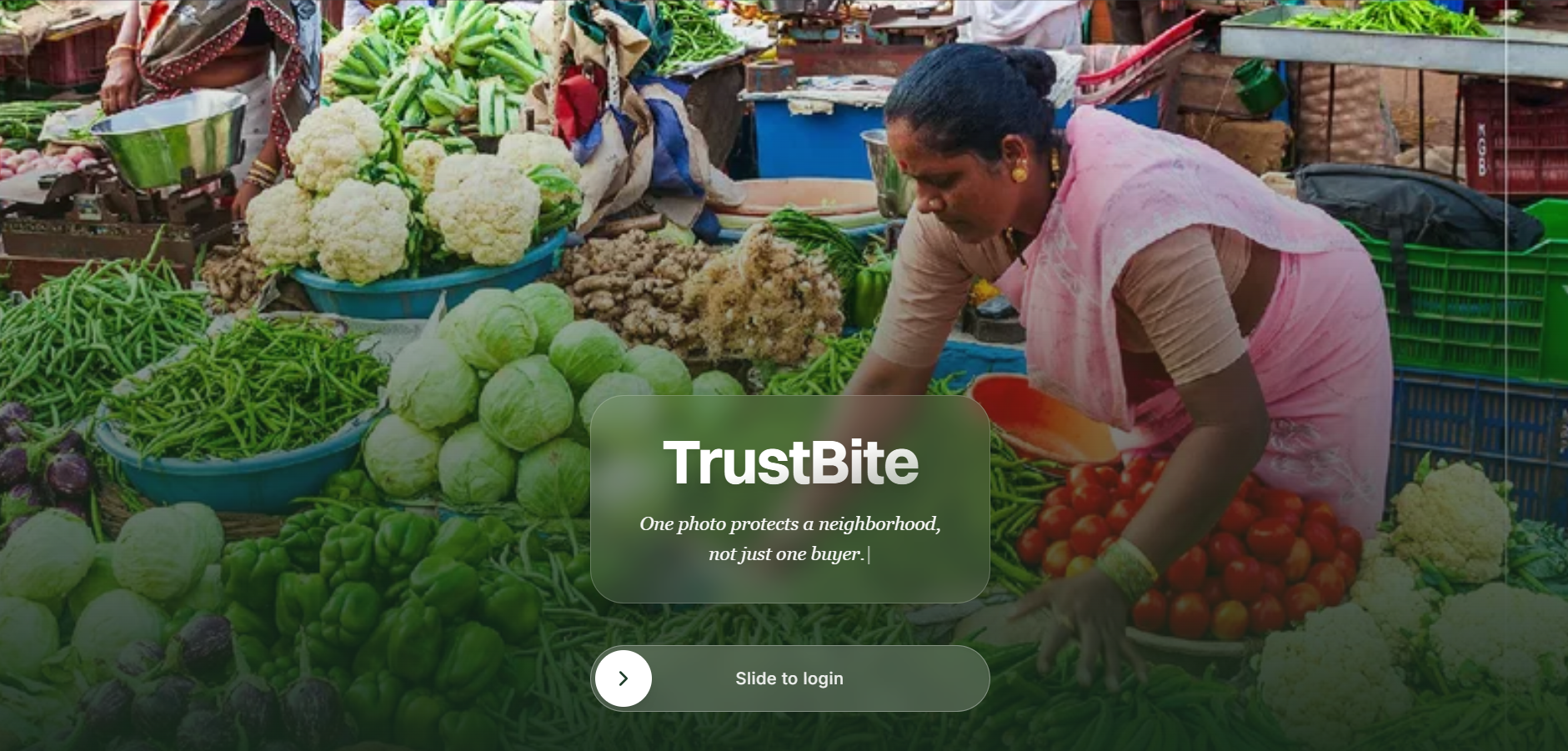
Login screen -"Real market photography sets the tone from the first screen — no stock UI, no generic onboarding."
-
Who's checking- "Just a name and locality. No passwords, no friction — the app should be as accessible as the markets it's built for."
-
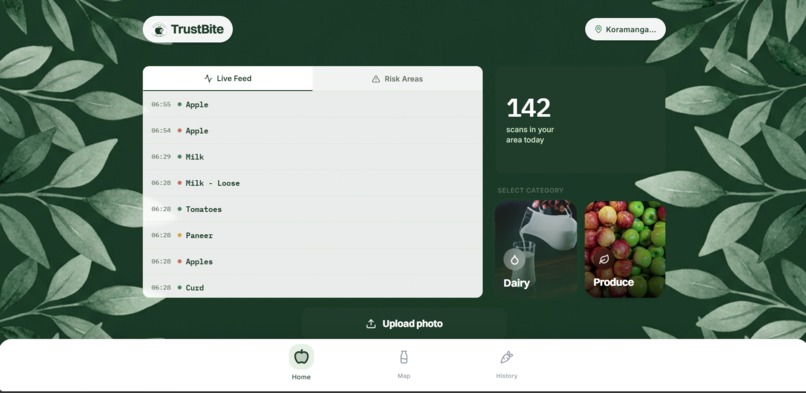
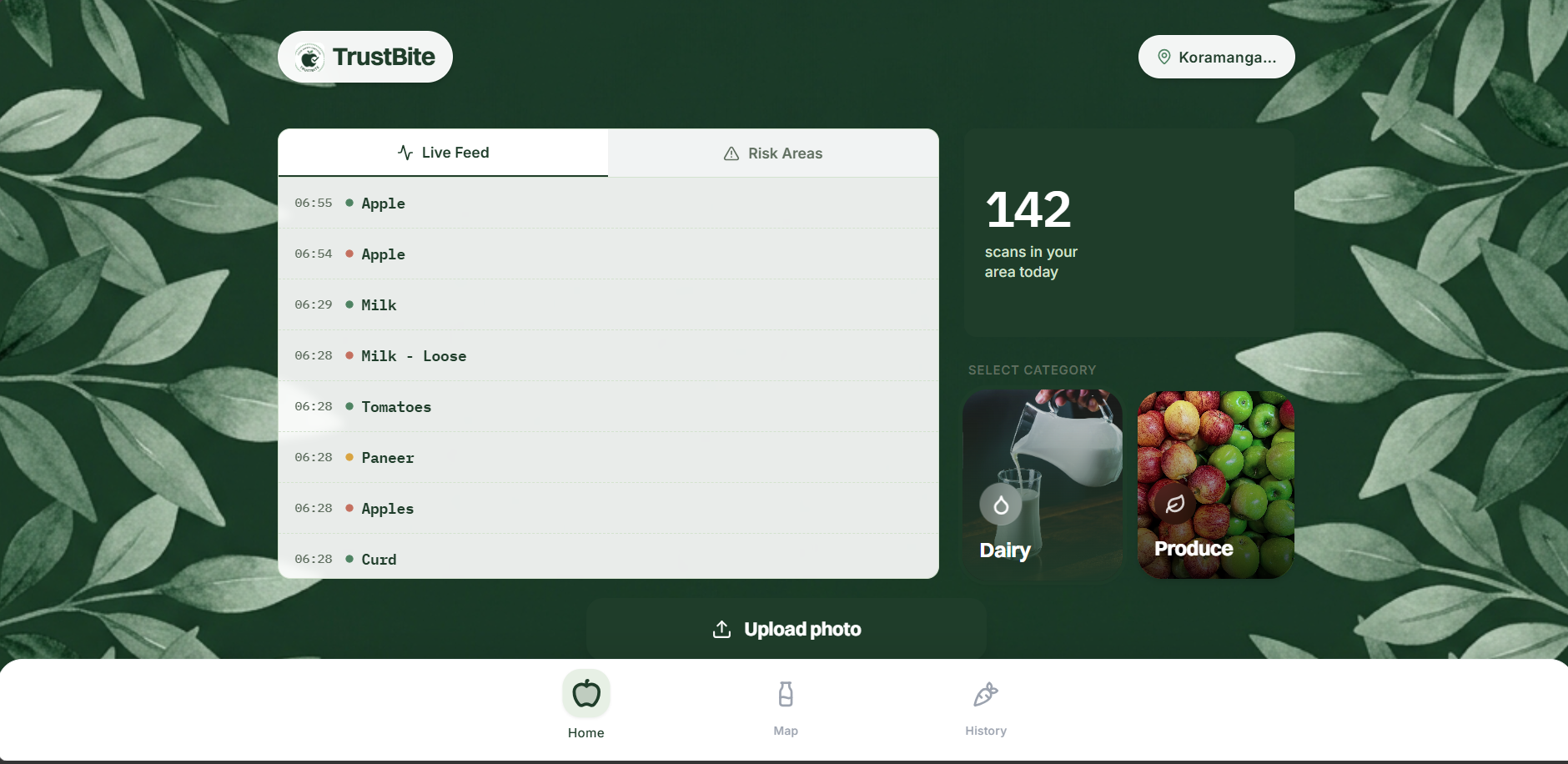
Home — Live Feed "A live, real-time feed of community scans, alongside today's local activity , visible from the moment you open the app."
-
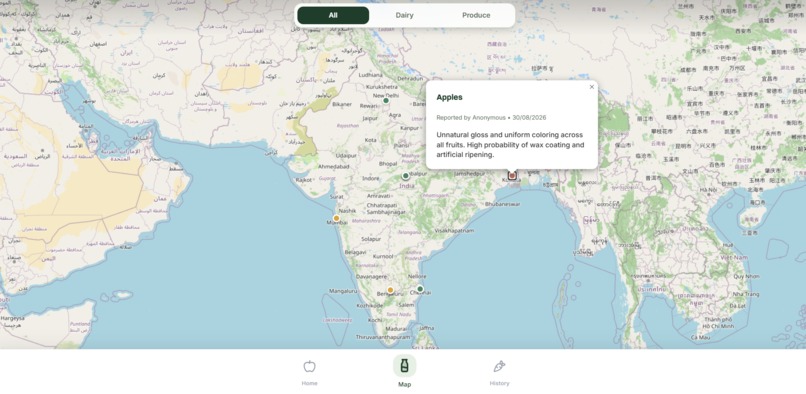
Home — Risk Areas "Flagged localities at a glance."
-
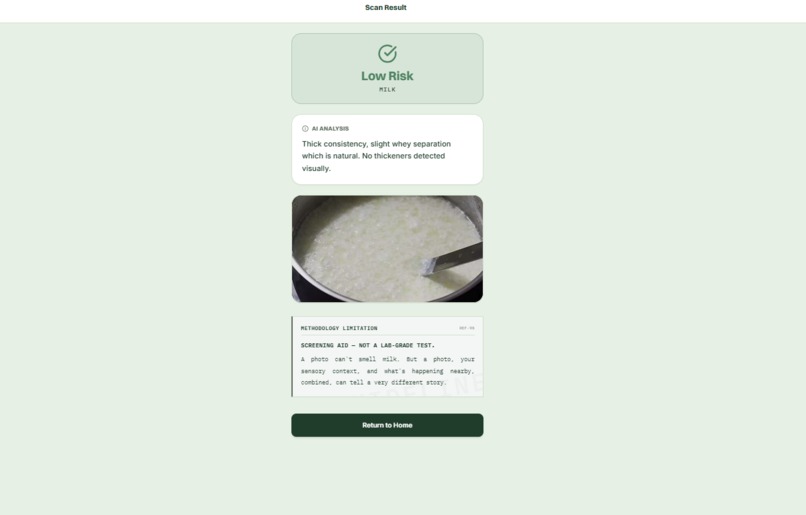
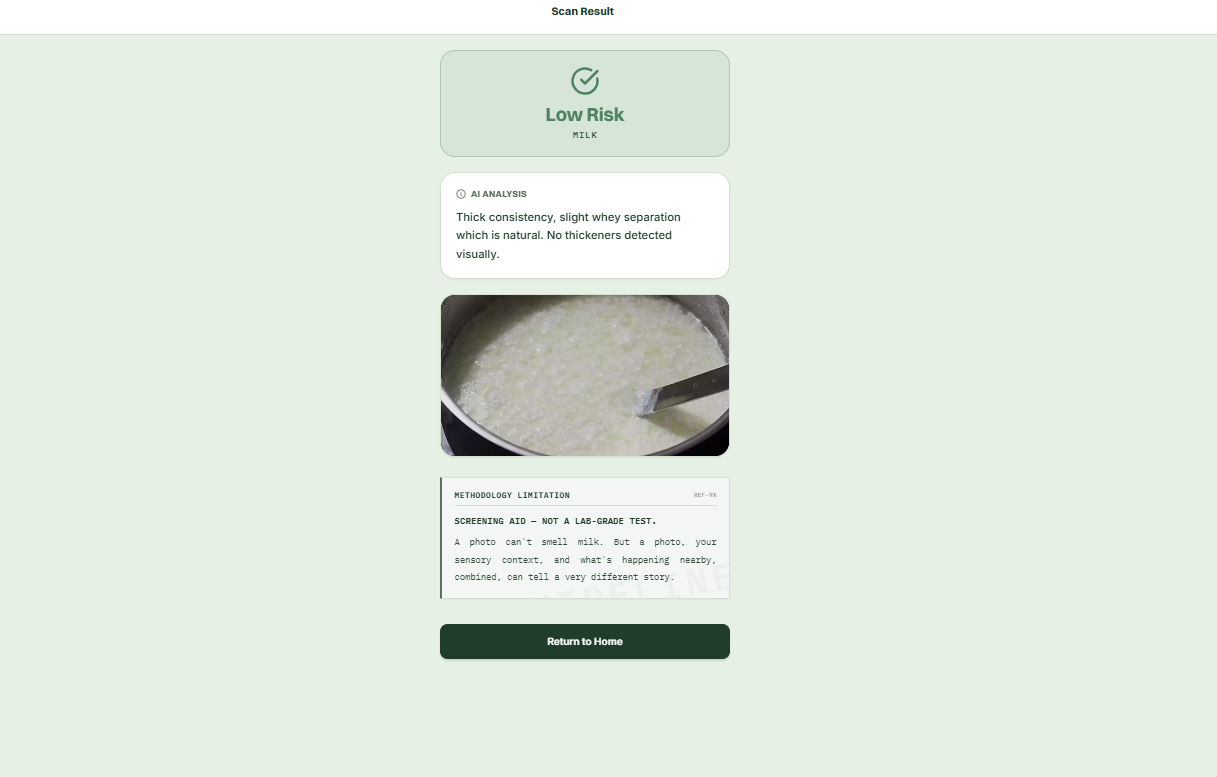
Scan result- "Every result is labeled honestly: a screening aid, not a lab-grade test. AI analysis plus a clear disclaimer, every time."
Inspiration
It started with a scenario, not a stat: someone buying milk from their regular vendor, noticing it smells a little off, and having absolutely no way to know if that's just their batch — or if half the neighborhood has run into the same thing that week.
Local and unorganized markets make up most food commerce for a huge share of households, and almost none of it comes with any accessible way to verify quality. Lab testing is slow and out of reach. Word-of-mouth warnings rarely travel past one street. We kept coming back to one question: what if the app was honest about what it couldn't prove, and built its real value around the thing it actually could?
That constraint — not overclaiming — became the whole design philosophy.
What it does
TrustBite is a food-safety screening and community-intelligence app for dairy and fruits/vegetables, built on a principle we say out loud in the product itself: a photo can't smell milk. No single image can prove adulteration. So instead of pretending otherwise, we built three layers that each do a small, honest job:
- Screening — photograph an item, answer 2-3 quick sensory questions (smell, texture, time since purchase), and get an AI-assisted read, always labeled as a screening aid, not a lab-grade test.
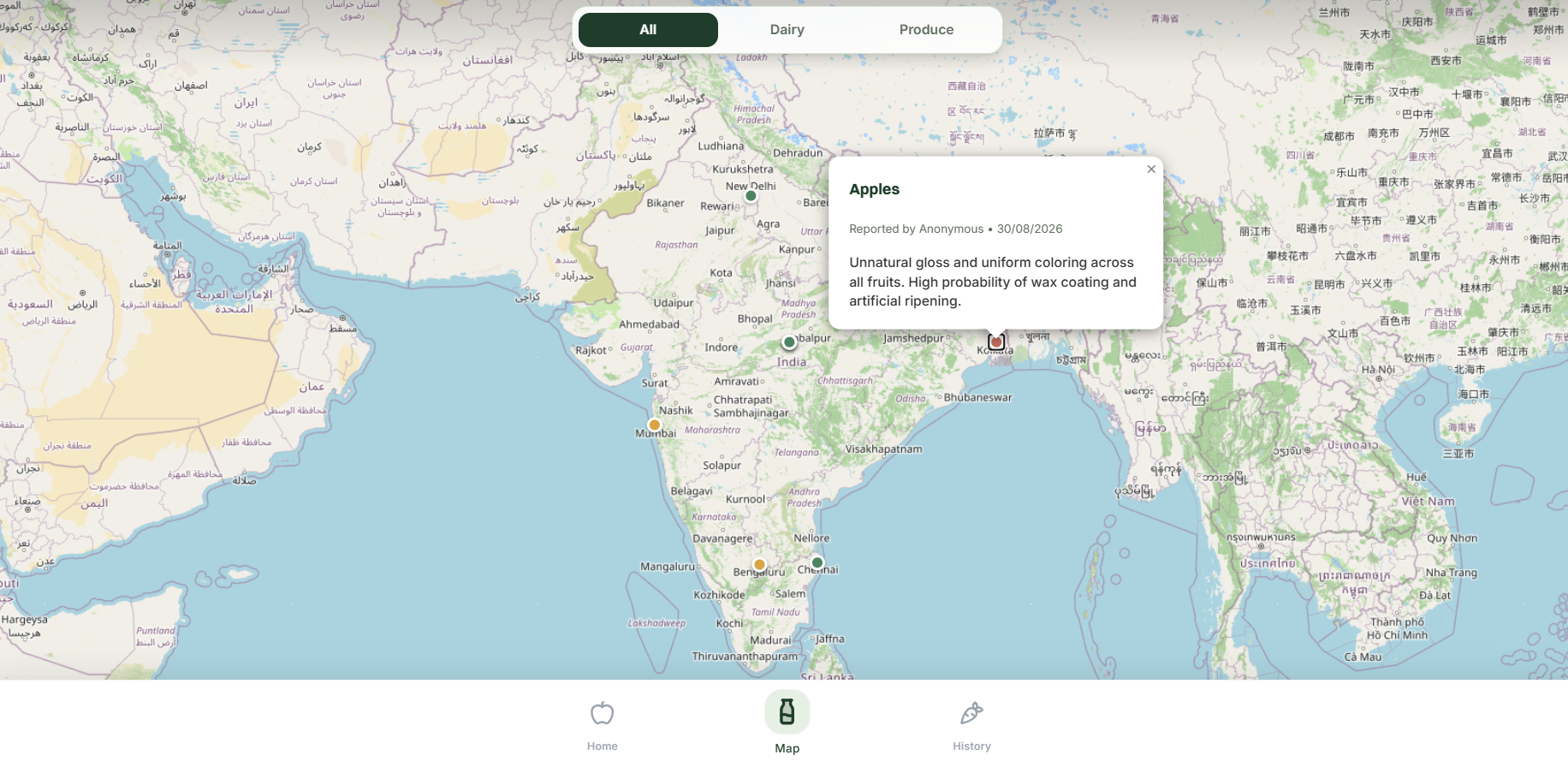
- Aggregation — every scan is geo-tagged and logged. See how many reports have come from your area in the last 7 days, and browse a live map of flagged localities across India.
- History & context — track your own past scans, and see risk patterns emerge by locality, not just by individual item.
One scan alone is a guess. A pattern across dozens of scans from the same area is a signal worth acting on.
How we built it
- Frontend: React (via Vite) + Tailwind CSS, with React Router for navigation, Leaflet/React-Leaflet for the interactive India map, Lucide React for icons, and dotLottie-React for lightweight motion.
- Backend: Node.js + Express, with Multer handling image uploads and SQLite3 as a lightweight relational store for scans and reports.
- AI layer: a vision-capable LLM analyzes uploaded photos for category-specific adulteration cues (wax coating on produce, curdling/discoloration in dairy), combined with the user's questionnaire answers into a single risk read.
- Design system: we deliberately built a custom visual language rather than defaulting to template components — an asymmetric "bento grid" home screen, illustrated slatted-crate category selectors, receipt-styled community feed entries with dashed dividers, and a real-photo login backdrop — all against a locked, muted green palette instead of generic AI-app gradients.
- Deployment: hosted end-to-end on Render (Express server + React static build).
Challenges we ran into
The hardest problem wasn't technical — it was resisting the urge to overclaim. Early on, we considered pitching TrustBite as "AI detects adulterated food," and it took a hard look in the mirror (and some pointed self-critique) to recognize that a single photo genuinely can't prove contamination, and that pretending it could would be both dishonest and easy for any judge to poke a hole in.
That reframe changed the entire architecture: the real intelligence had to live in the aggregation layer — the pattern across many weak signals — not in any one clever AI call. Once we accepted that, features like the "reports near you" counter and the Risk Areas map stopped being nice-to-haves and became the actual core of the product.
We also went through several rounds of UI iteration that, frankly, looked generic and templated — centered layouts with dead space, default icon toggles standing in for illustrated components, raw unstyled map embeds. Getting from "this looks like every other AI-generated hackathon UI" to something with an actual point of view (the bento grid, the illustrated crates, the receipt-styled feed) took real back-and-forth and a willingness to reject drafts that didn't meet the bar.
Accomplishments that we're proud of
- A product that's honest about its own limitations in its own UI copy, not just in the pitch deck.
- A genuinely custom design system — no off-the-shelf component library look, built around a considered color and typography language from the ground up.
- A working three-layer architecture — screening, aggregation, and locality context — that actually ties together end to end, from photo upload to a live map of flagged areas.
What we learned
The biggest lesson was about credibility: the strongest defense against "any AI can do that" isn't a flashier AI feature — it's transparency about what AI can't do, paired with real systems work (geo-clustering, aggregation, pattern detection) that most teams skip in favor of a single impressive-looking demo moment.
What's next for TrustBite
- Expanding beyond dairy and produce into grains, spices, and packaged goods
- A municipal/authority dashboard so verified hotspots can route to real food-safety inspections
- SMS/IVR reporting for users without smartphones
- Regional language support, since the households this is built for are often underserved by English-only apps
Built With
- ai
- artificial
- express.js
- intelligence
- node.js

Log in or sign up for Devpost to join the conversation.