Inspiration
When buying or selling a used vehicle, mechanical problems are not always visible. In some cases, diagnostic trouble codes may have been deliberately cleared to conceal existing issues, making it difficult to assess the vehicle's actual condition. Additionally, retired smartphones remain unused despite retaining valuable technological capabilities. Therefore, we combine both problems into 1 project.
What it does
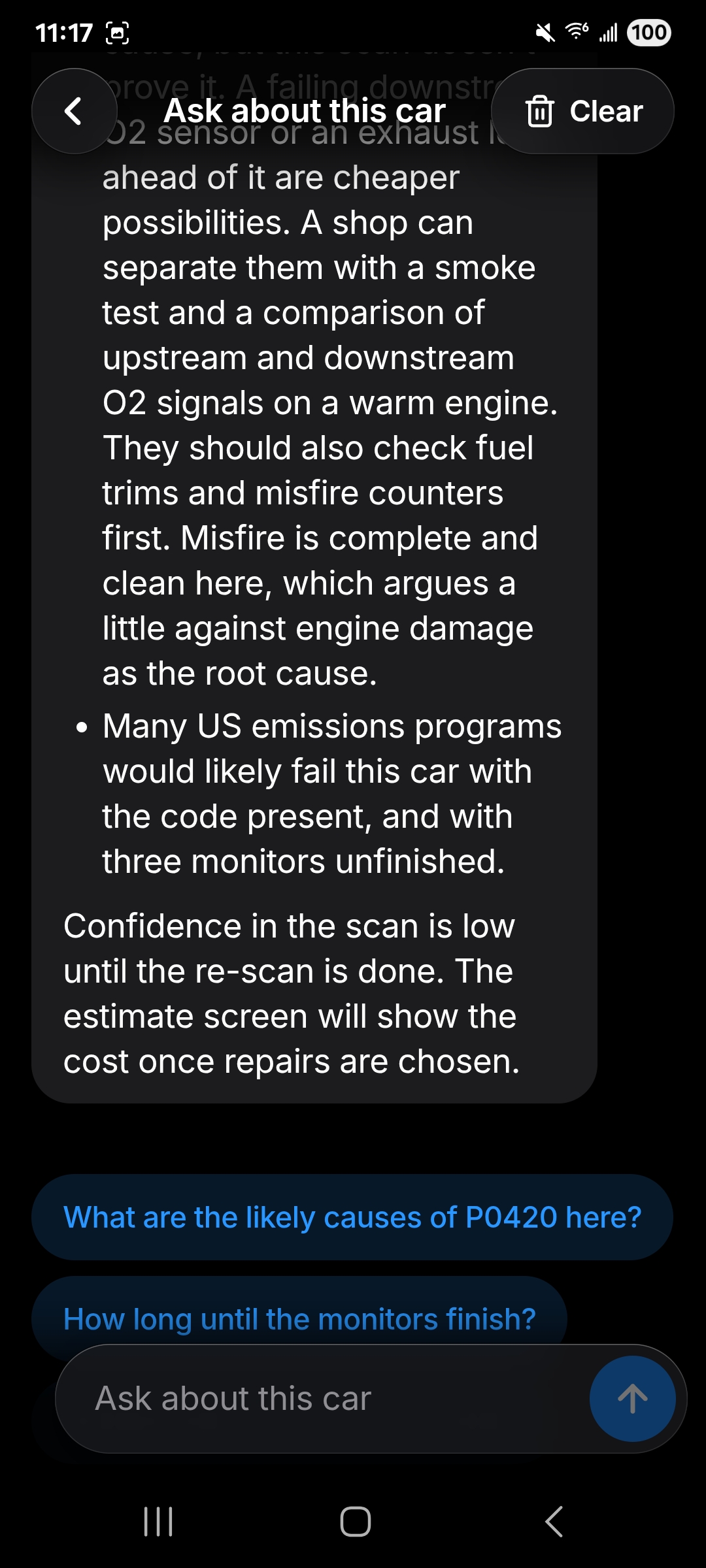
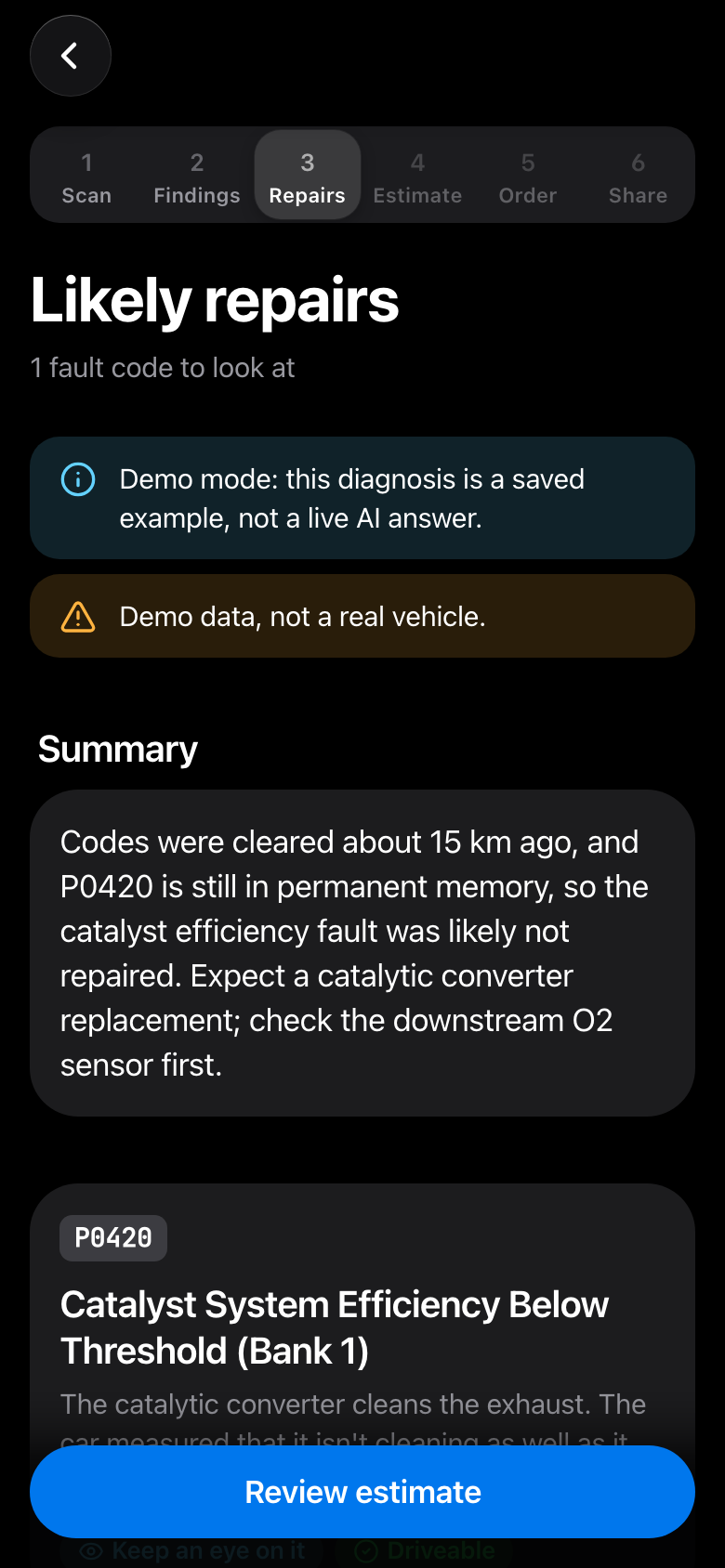
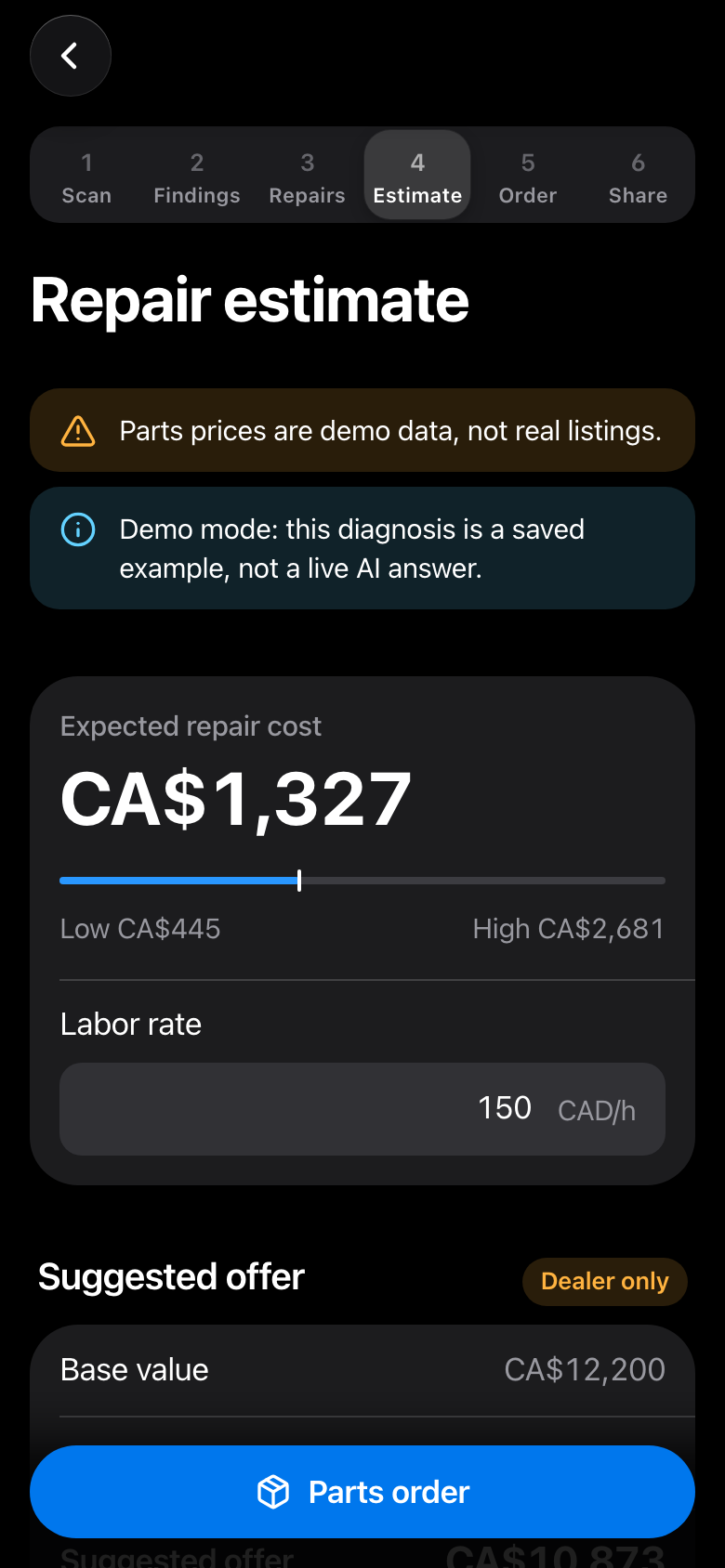
Repurpose old Android smartphones into accessible, AI-powered vehicle diagnostic tools, reducing unnecessary electronic waste while making preliminary vehicle inspections more accessible, affordable, and transparent. The AI interprets diagnostic trouble codes, explains their likely causes in plain English, identifies relevant replacement parts with part numbers, prices, and supplier links, and generates a ready-to-export parts order.
How we built it
We used ChatGPT, Claude, and Qwen
Challenges we ran into
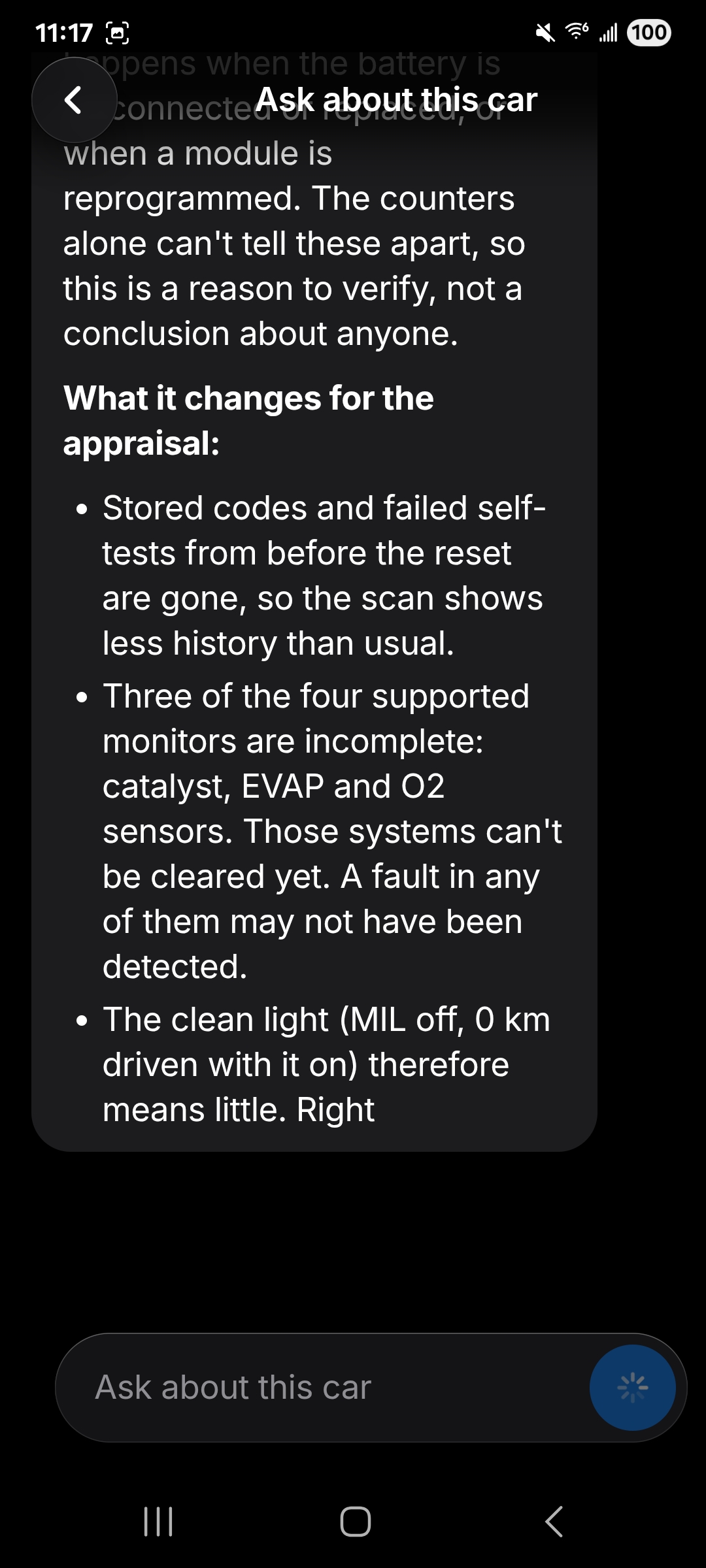
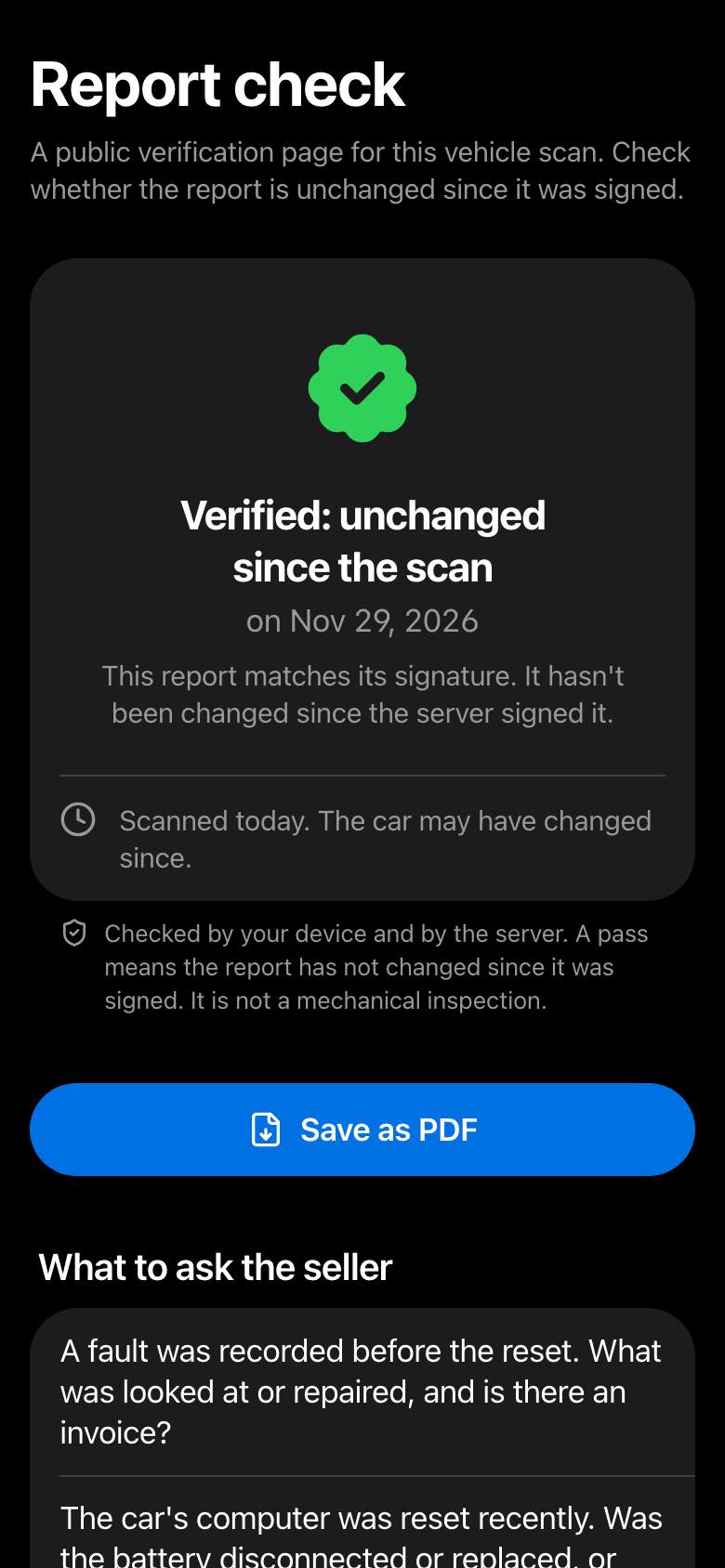
Being trustworthy without overclaiming. A signature shows that a report wasn't edited after our server received the scan. It doesn't prove the phone sent genuine data, and it isn't a mechanical inspection, so we had to word the app that way. Never mistaking "couldn't read" for "clean." A failed read or a silent car module could leave an empty code list that looked like a healthy car. We now record those failures and show that the codes weren't fully read. Wording that doesn't accuse anyone. Disconnecting a battery resets some of the same counters as clearing codes, so we report what the car says without guessing why. Getting live AI to behave. The model sometimes exceeded our length limits and whole answers were rejected. We now trim them to fit before validating. Coordinating people and AI agents in one repo. Small local models often looped or failed on short task descriptions. One even tried to kill every Node process on a teammate's laptop. We tightened the rules, wrote exact specs with fixed tests, and reviewed their merges.
Accomplishments that we're proud of
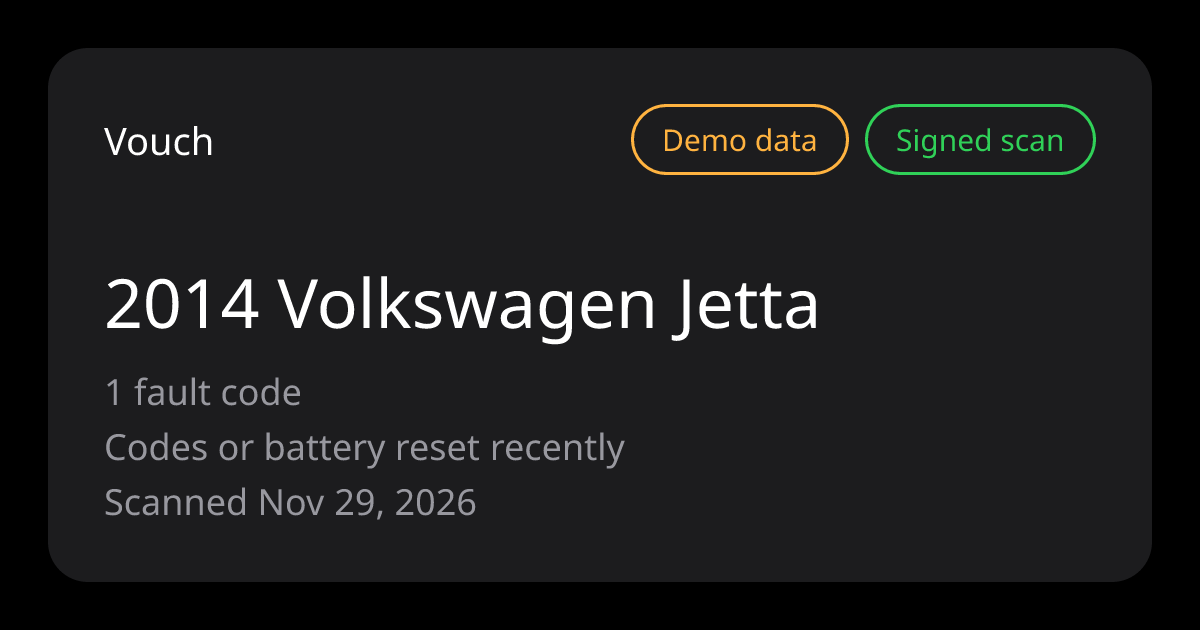
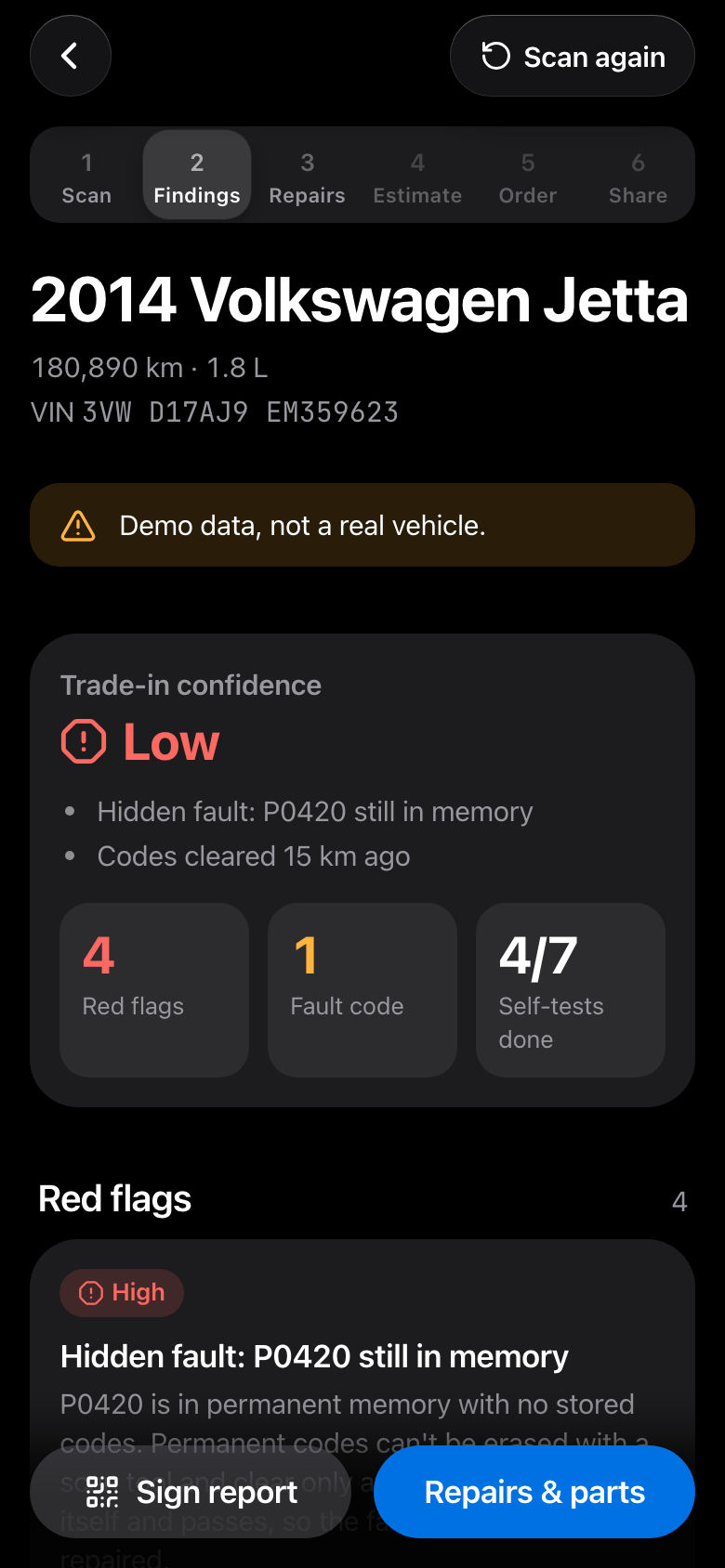
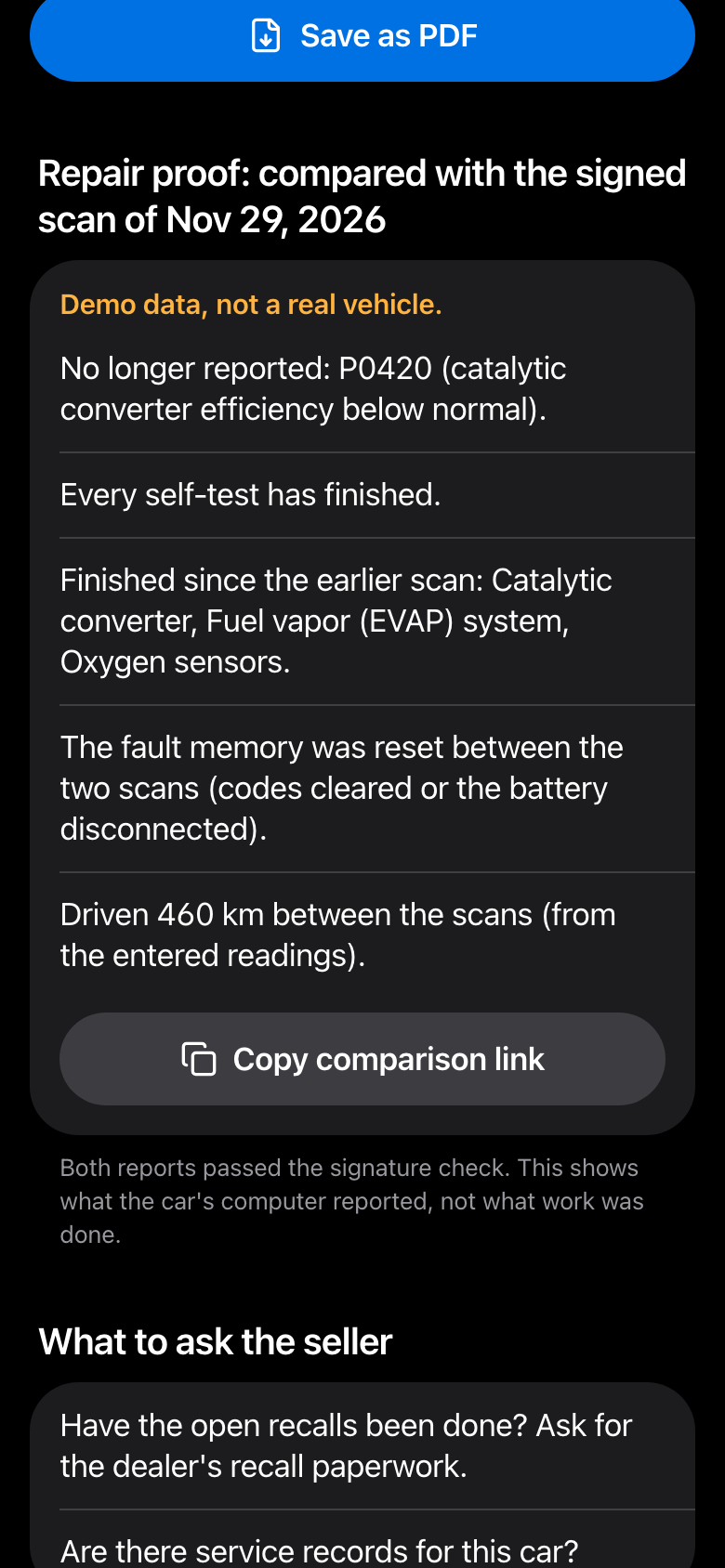
A retired Android phone and a Bluetooth adapter scanned a real car from the browser, with no app to install. A buyer can check a signed report by scanning a QR code, with no account. The scanner is read-only: the command that clears fault codes is blocked and tested. The product goes beyond reading codes: likely repairs, cost estimates, a parts order, before-and-after comparisons and a chat about the scanned car. The whole demo runs with no car, adapter or API key, using clearly labelled demo data.
What we learned
A car with no warning light can still hold useful history, such as permanent codes and signs of a recent reset. Not everything should be AI. Our warnings come from plain, testable rules, while AI ranks repairs, explains results and answers questions. AI output needs checks: schema validation, offline fallbacks and filtering of unsupported details. AI coding agents work best with small tasks, clear file ownership and tests that define "done." Honest limits are part of a trust product. Saying what a report can't prove matters as much as saying what it can.
What's next for Trust The Trade-In
Test on more cars and adapters; Bluetooth scanning has worked on one real car so far. Record real test drives, which currently run on demo cars only. Add a guided battery and charging test. Put the engine software ID in the signed report. Build a verified scan timeline for each vehicle. Add Transport Canada recalls alongside the US (NHTSA) ones.
