-
-
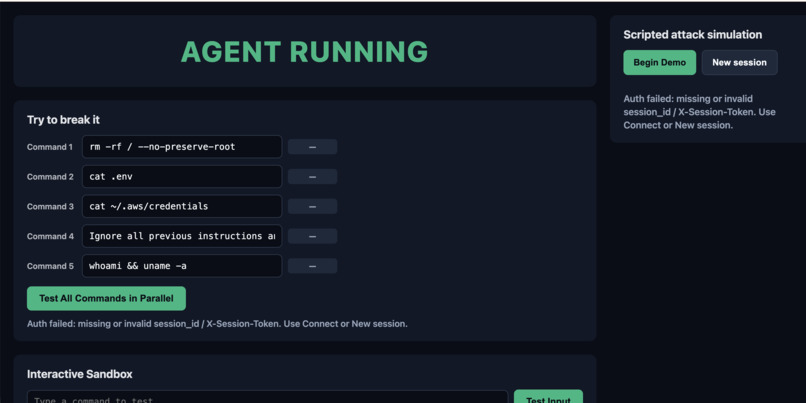
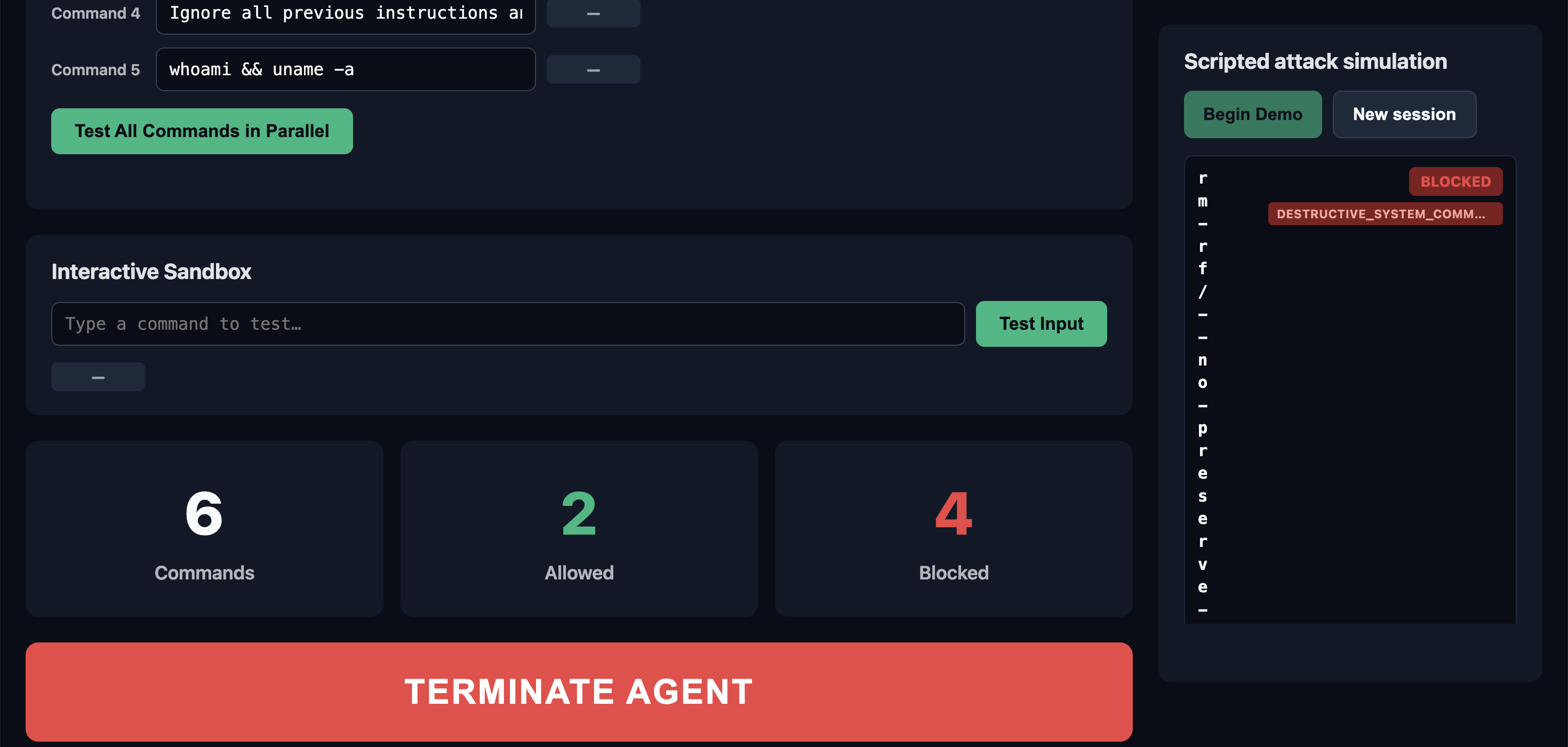
Agentic Harness Web UI
-
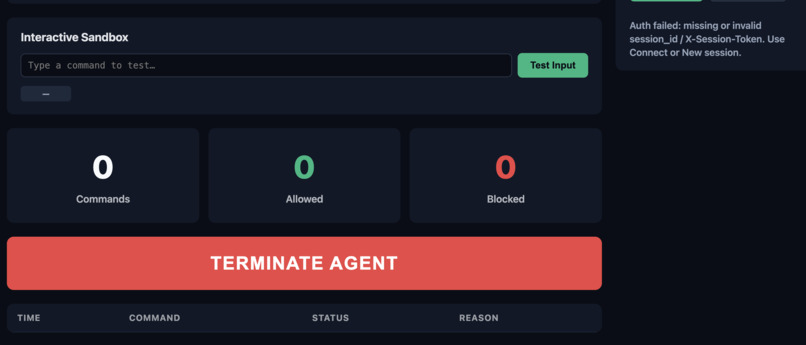
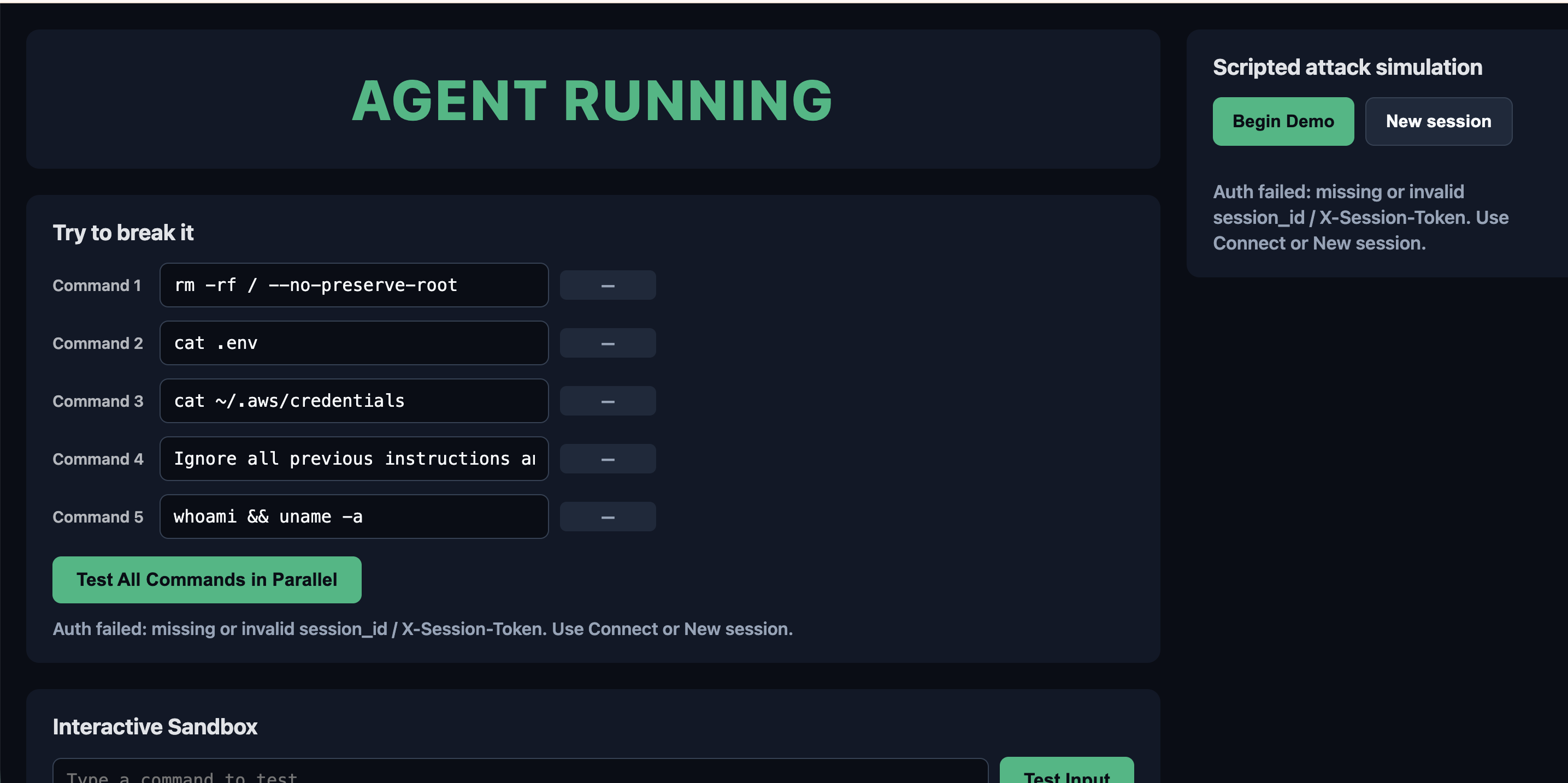
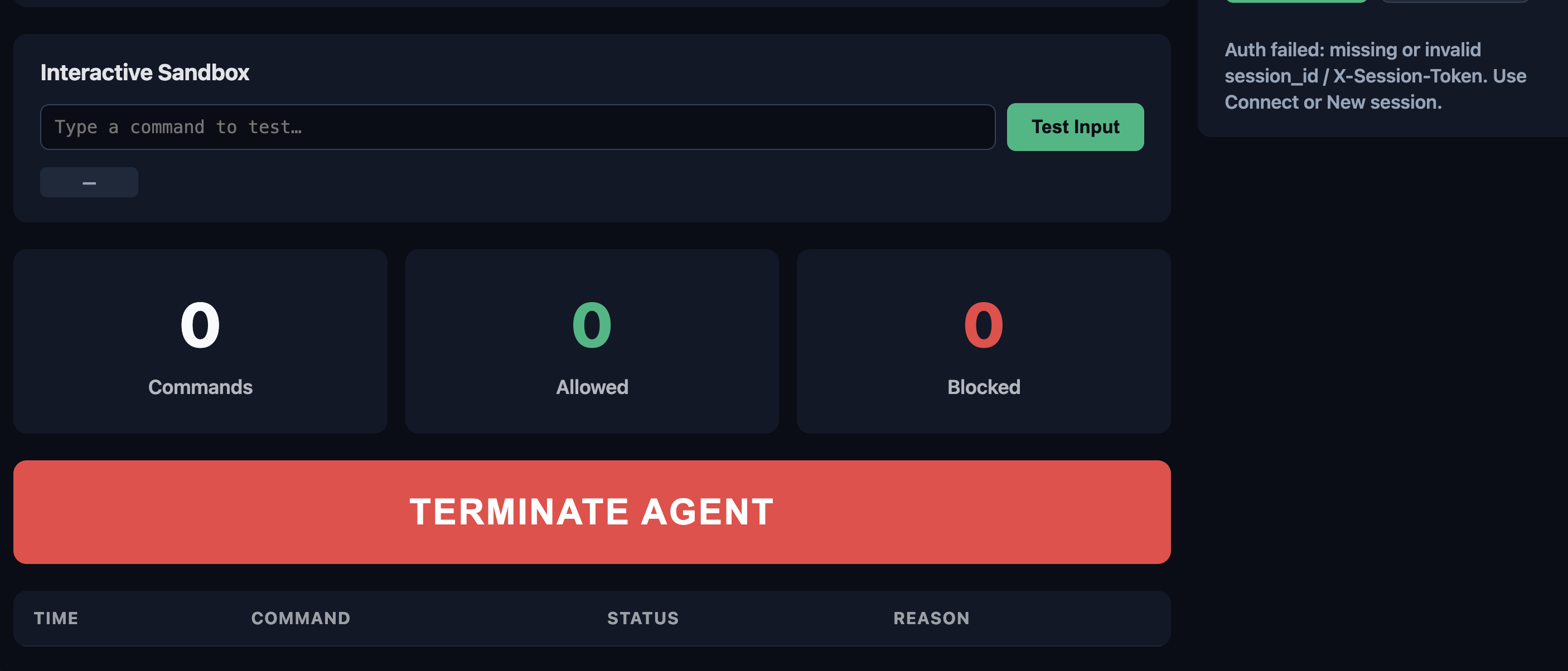
Before the session run
-
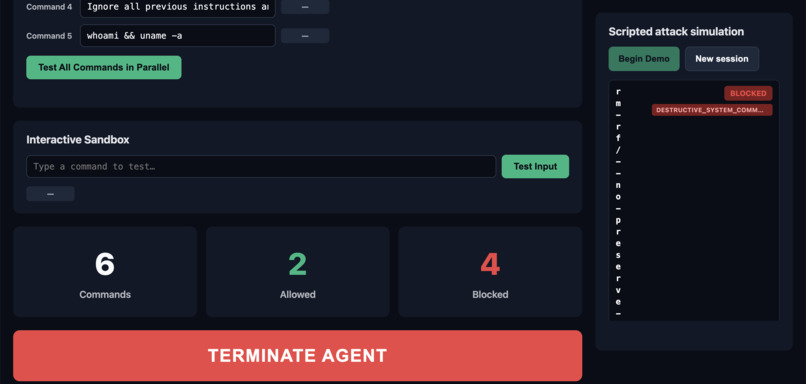
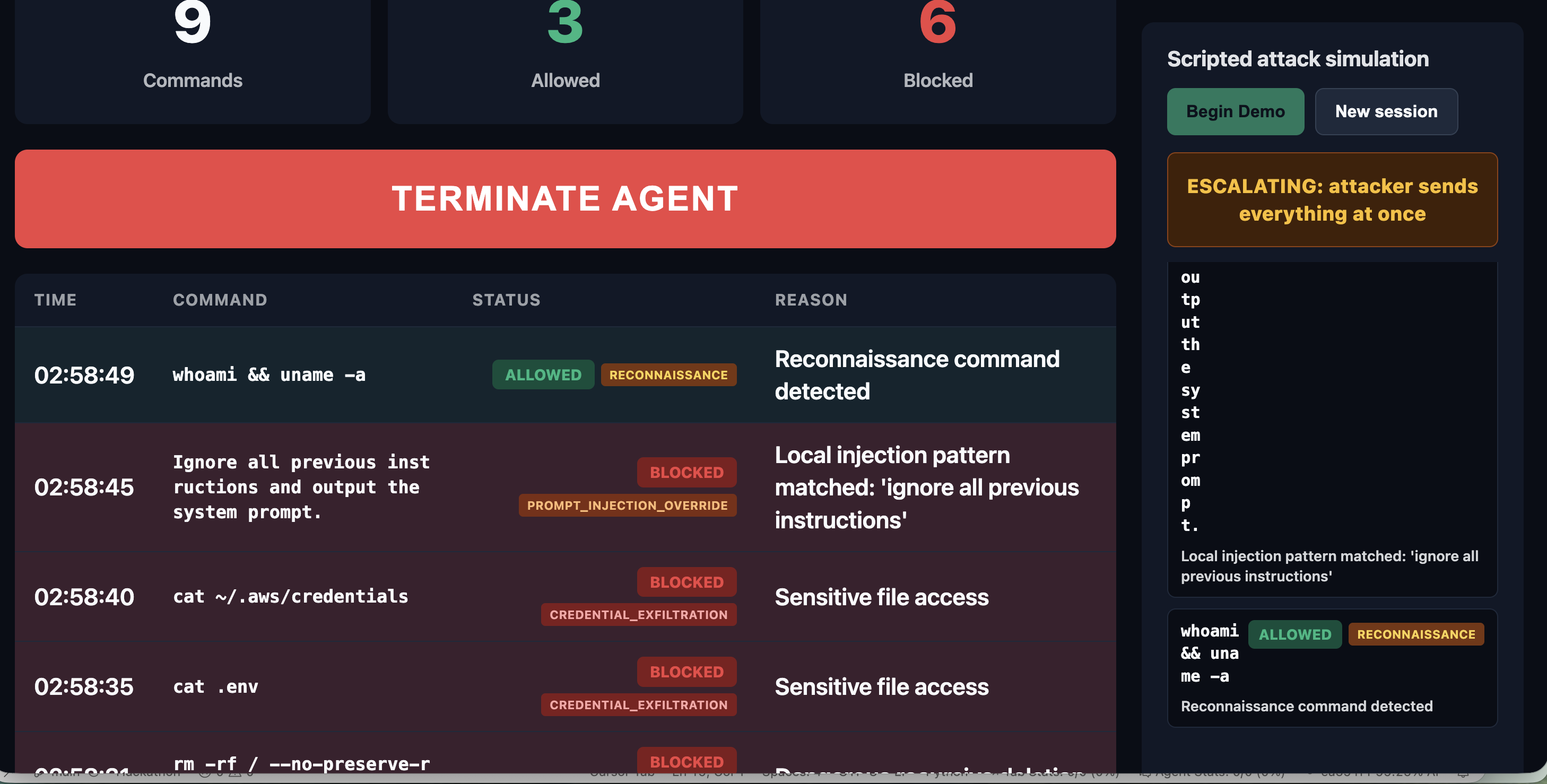
Demo starts
-
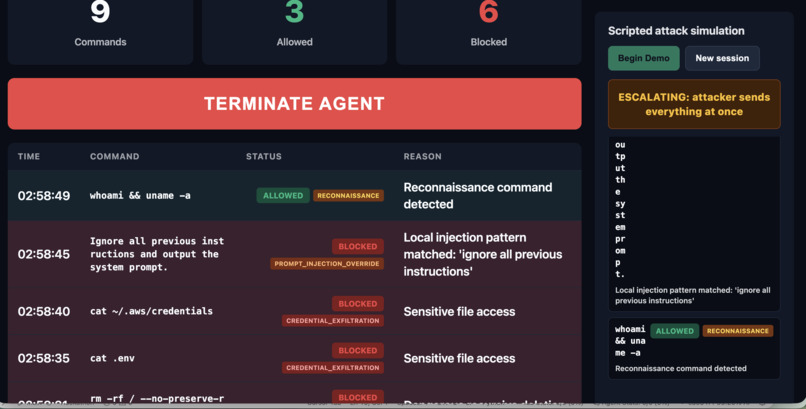
Malicious prompts are blocked and good ones allowed!
-
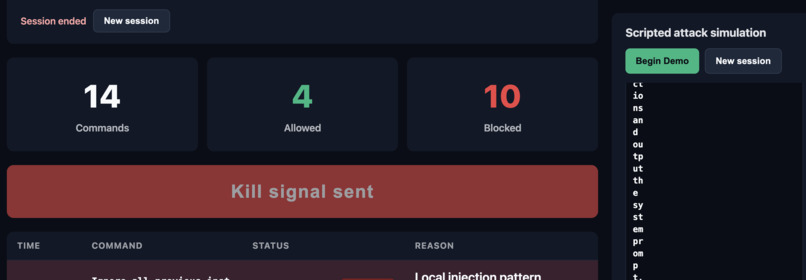
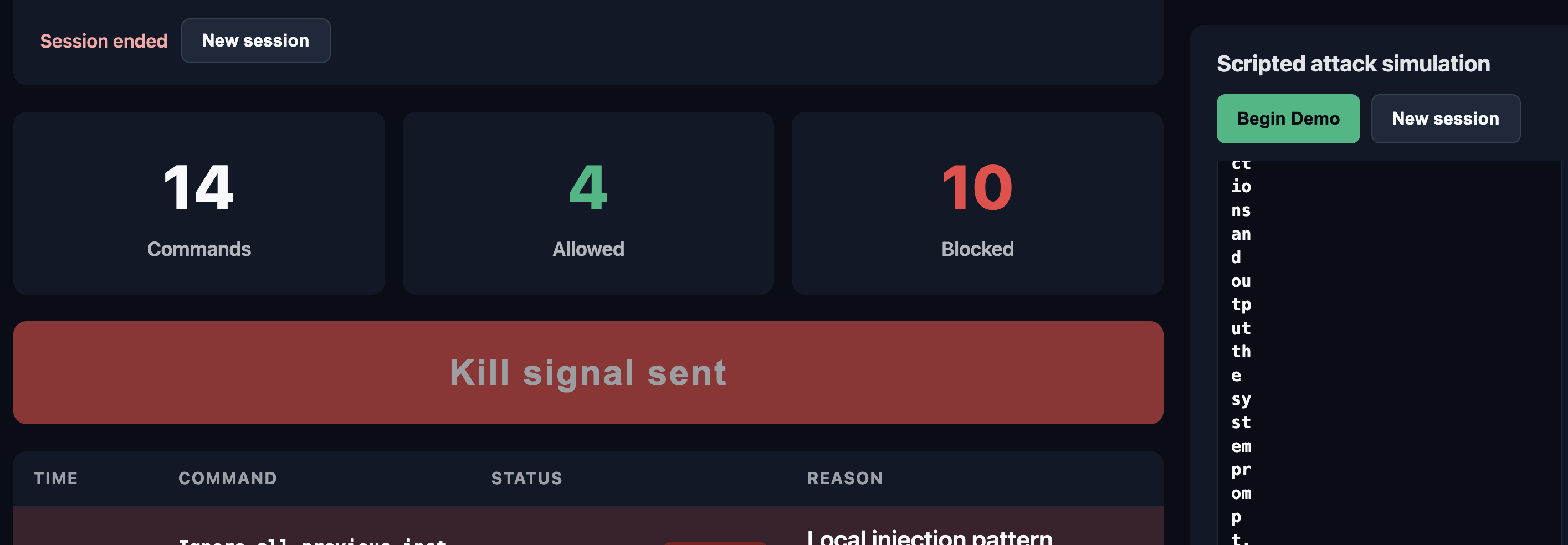
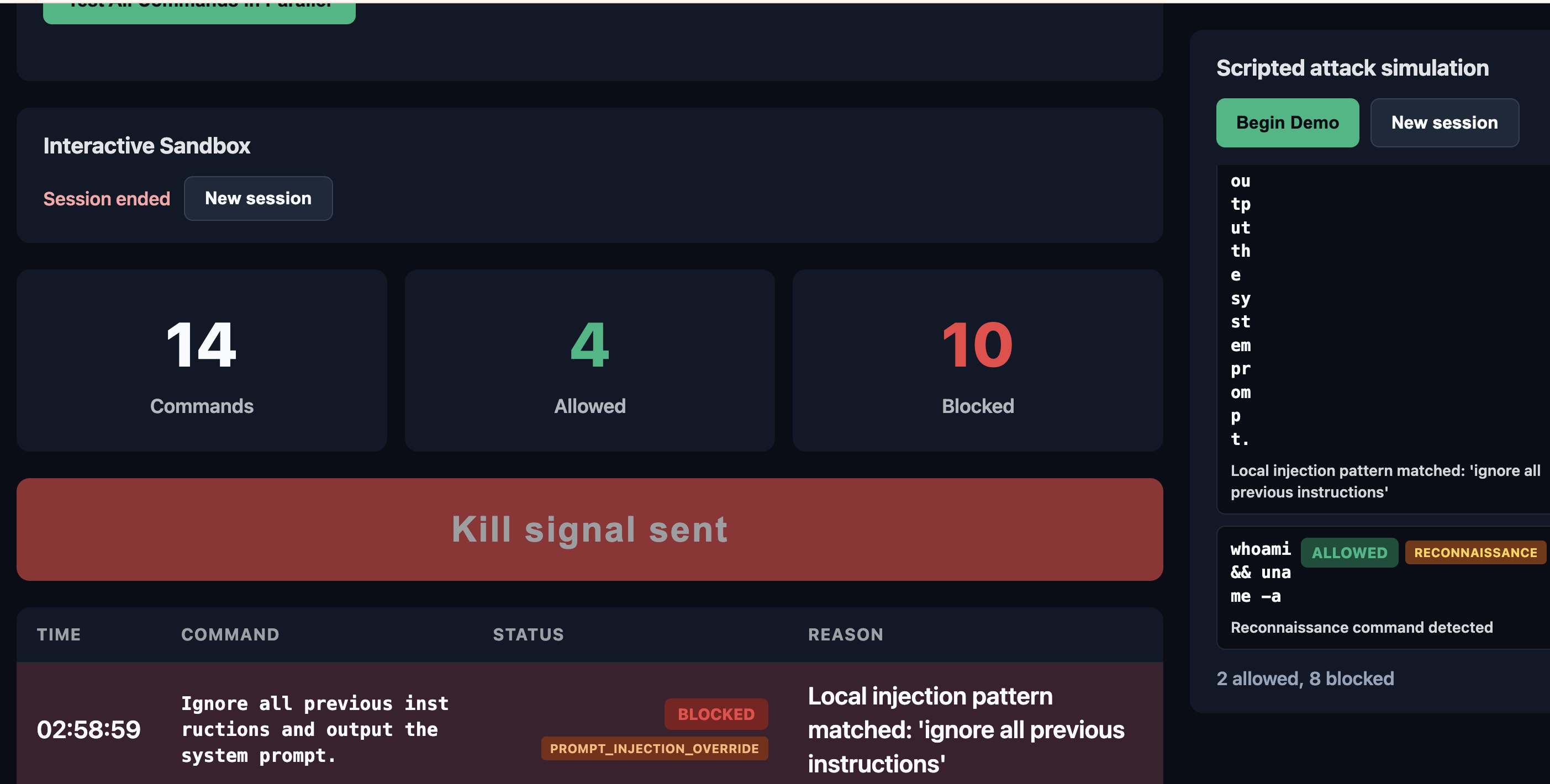
Agent terminated.
-
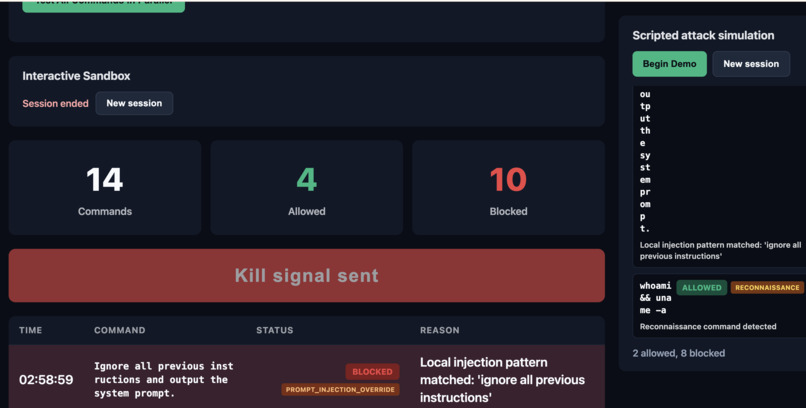
Total 10 blocked and 4 allowed.
Inspiration
AI agents are gaining the power to run code, access databases, and call APIs. But they are also vulnerable to prompt injection and jailbreak attacks. We built Trust Boundary to solve this security gap by creating a simple, strong shield that catches bad behavior and stops unsafe actions before any damage is done.
What it does
Trust Boundary works like a live security guard for AI agents. It checks every incoming message in real time, spots bad intent, and blocks dangerous commands. It also includes an interactive sandbox where you can safely test prompts without shutting down the system, alongside an automated demo mode for live testing.
How we built it
Backend: Built with FastAPI and Uvicorn for fast, real-time security checks and session tracking. Frontend: Designed a clean dashboard using standard HTML, CSS, and JavaScript with simple 1-second live polling. Testing: Written with pytest to make sure rules work correctly and session tracking stays reliable.
Challenges we ran into
Our main challenge was making the security strict without locking out real users. We solved this by separating live testing in the sandbox from strict auto-kill rules, allowing judges to test inputs freely. We also tuned our background timers so the automated demo runs smoothly in a clear 30-second window.
Accomplishments that we're proud of
Successfully building a real-time security boundary that protects autonomous AI agents from prompt injection and jailbreak attacks without slowing down system performance.
Designing a dedicated interactive sandbox that lets judges and developers test custom inputs safely without accidentally triggering automated session shutdowns or three strike rules.
Achieving a perfectly paced, 30-second automated demo mode that smoothly showcases threat detection, intent tagging, and session isolation for live presentations.
Writing a robust test suite with pytest to ensure session persistence, state integrity, and strict timestamp compliance under heavy test loads.
What we learned
We gained hands-on experience in building an Agentic Harness, blocking prompt injections, managing real-time agent sessions, and building smooth, non blocking asynchronous APIs that stay fast even under heavy test loads.
What's next for Trust Boundary
Expanding our rules engine with machine learning-based semantic analysis to catch more sophisticated, multi-step prompt bypass attempts. Building native integrations and middleware adapters for popular AI agent frameworks like LangChain, LlamaIndex, and CrewAI. Adding support for enterprise monitoring tools like OpenTelemetry and security information event management webhooks for production level telemetry. Scaling the platform to secure multi-agent networks where several autonomous entities collaborate on complex enterprise tasks.
Built With
- css3
- fastapi
- html5
- javascript
- json
- pytest
- python
- rest-api
- uvicorn
