-
-
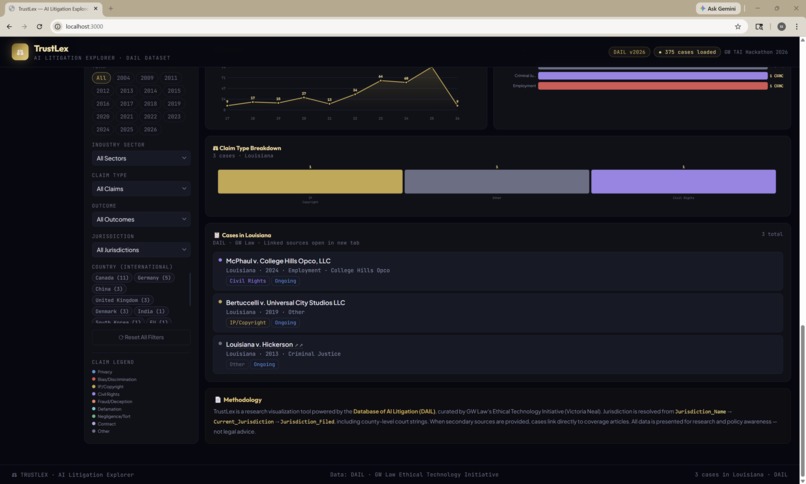
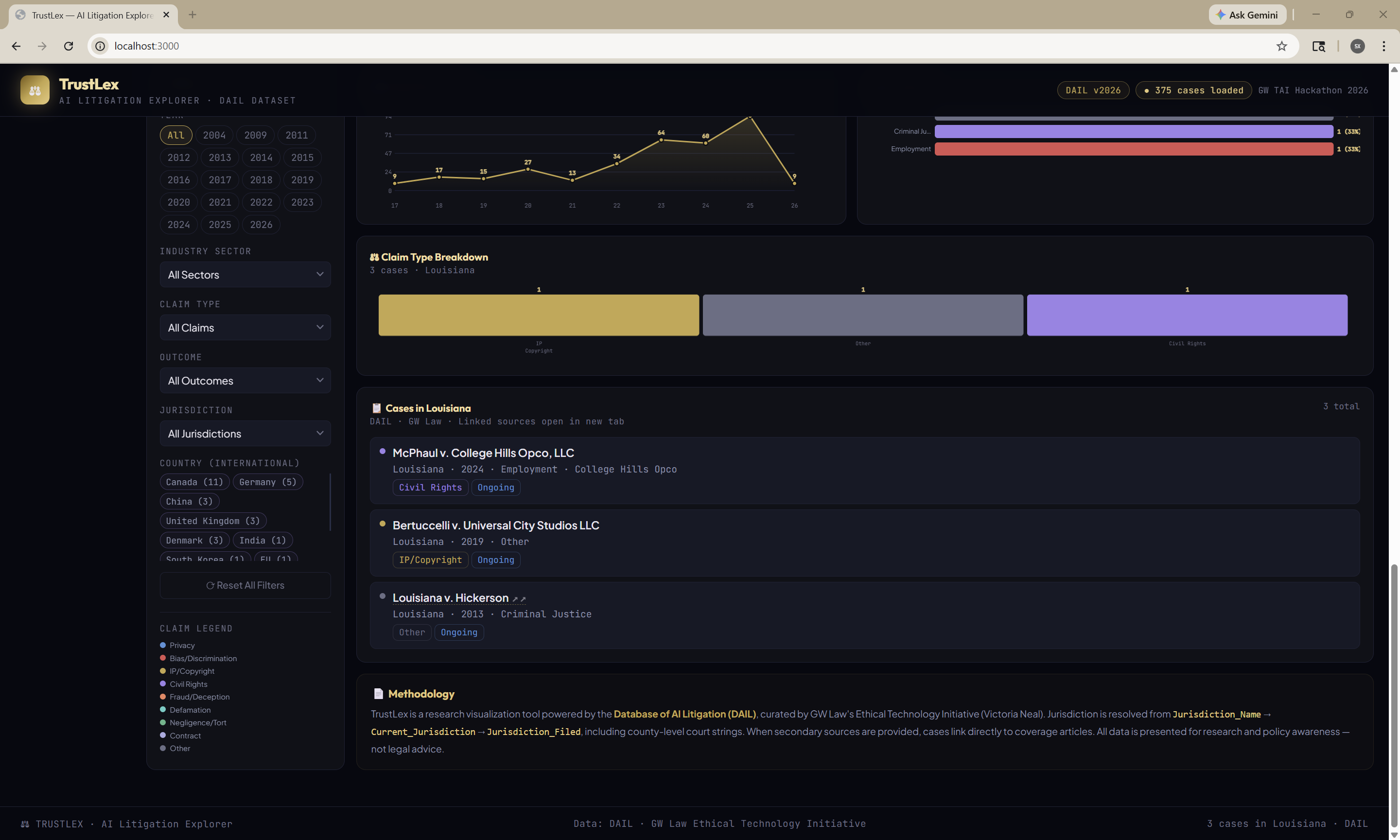
Metrics and categorization when checked for a state like Louisana
-
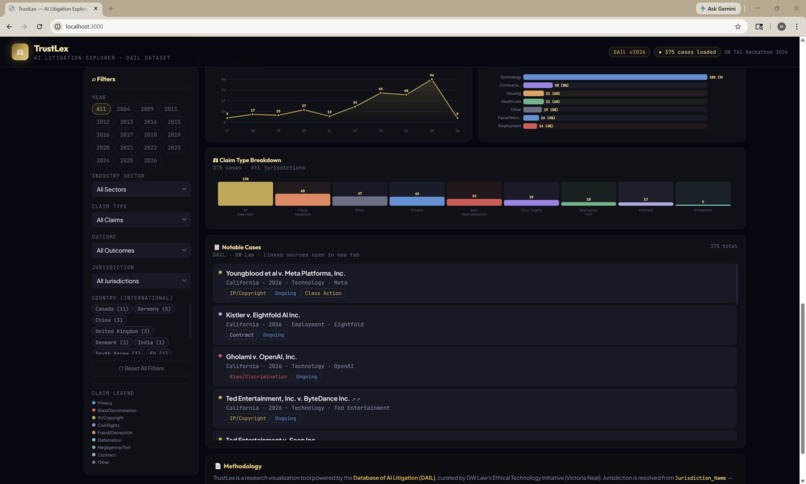
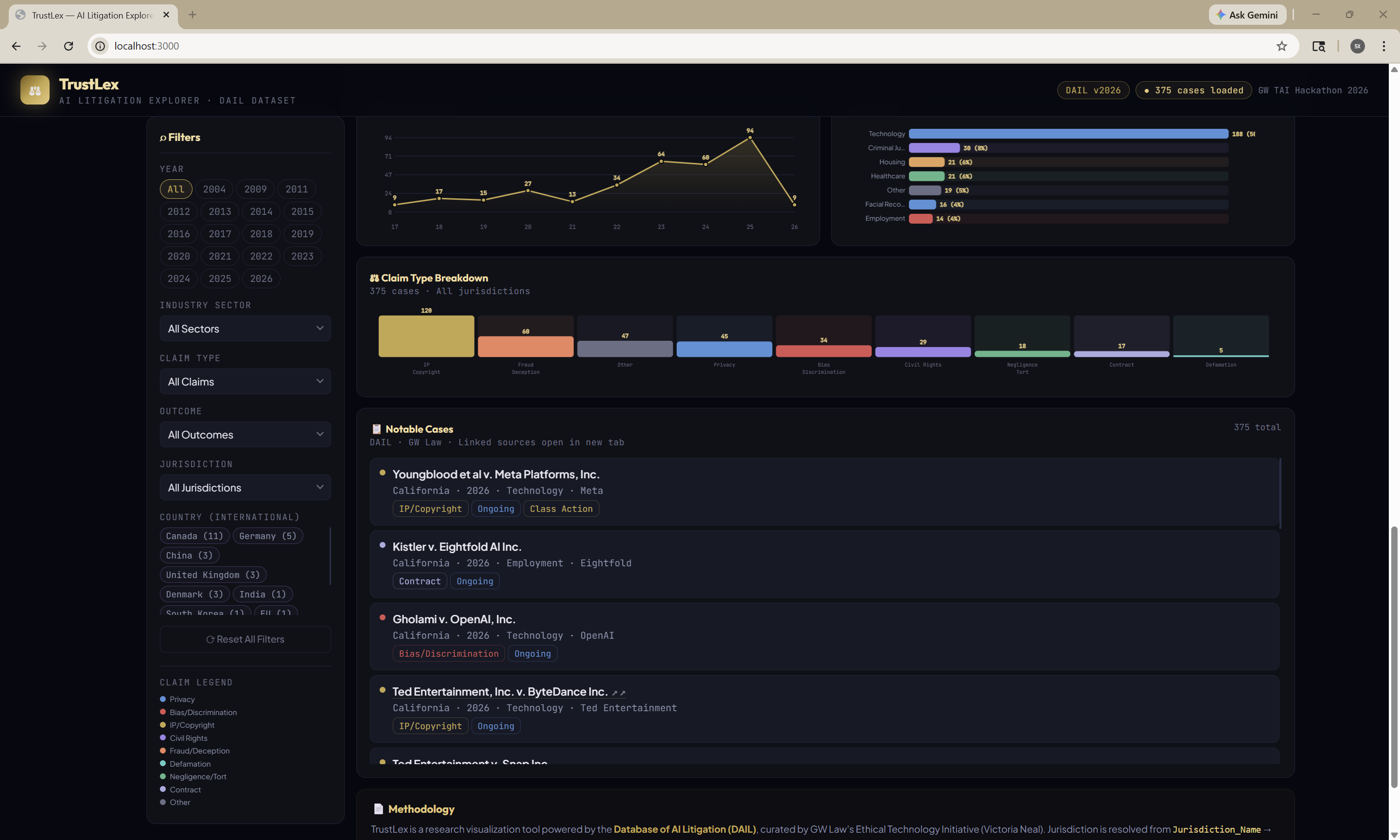
Metrics and categorization
-
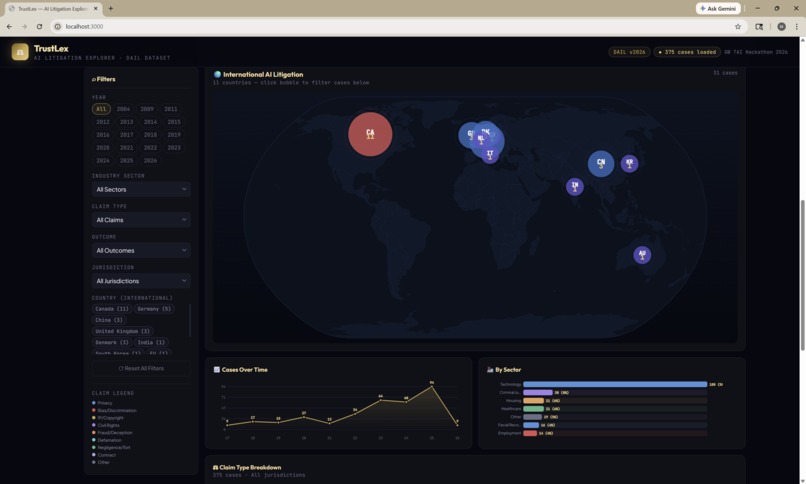
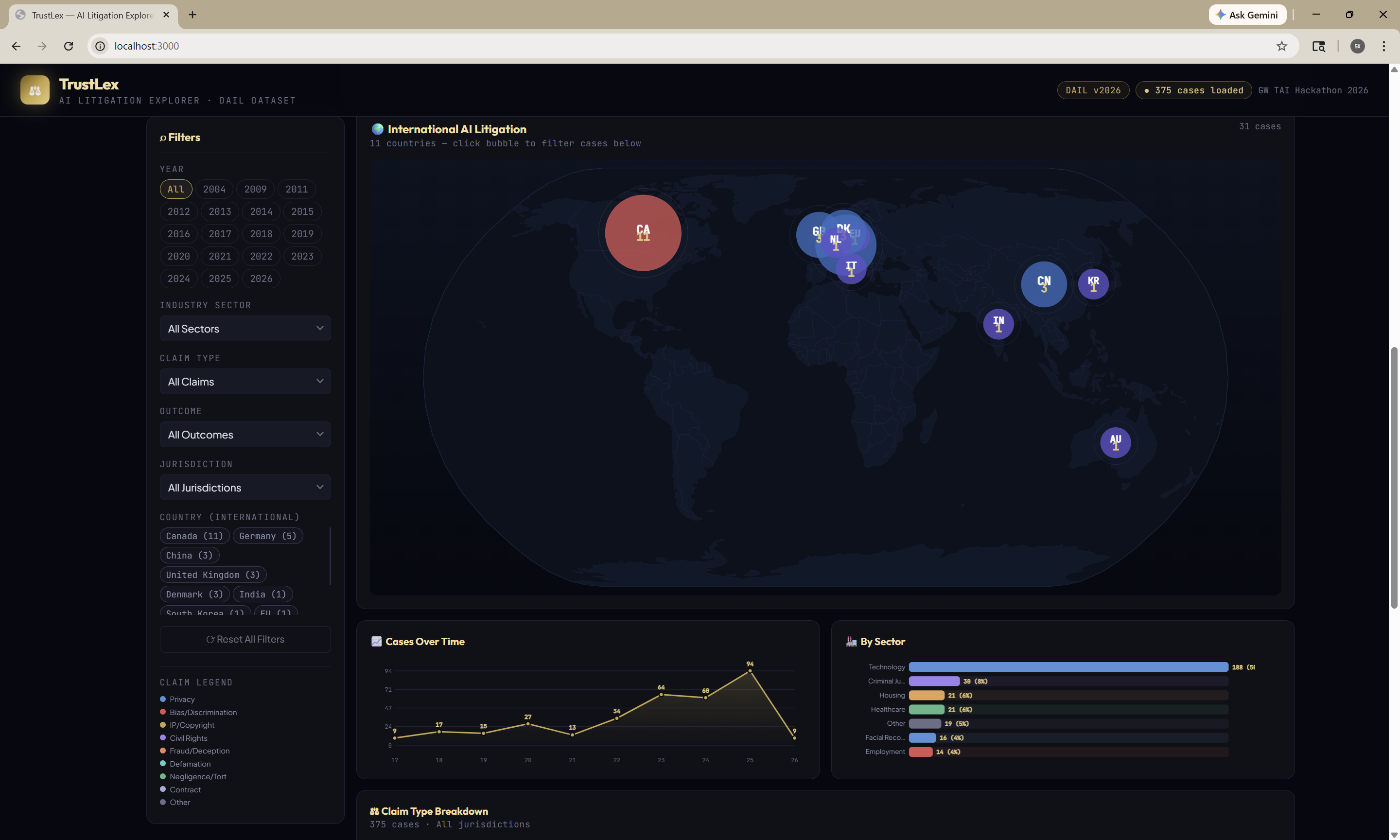
Dashboard ensuring data visualization for other countries
-
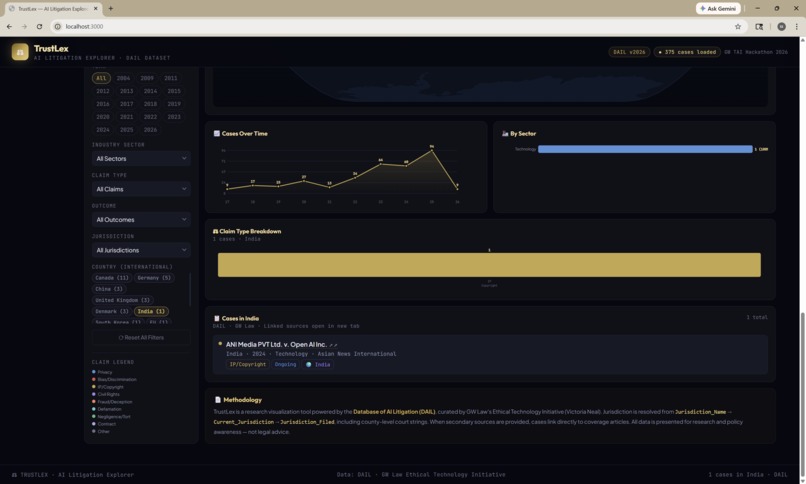
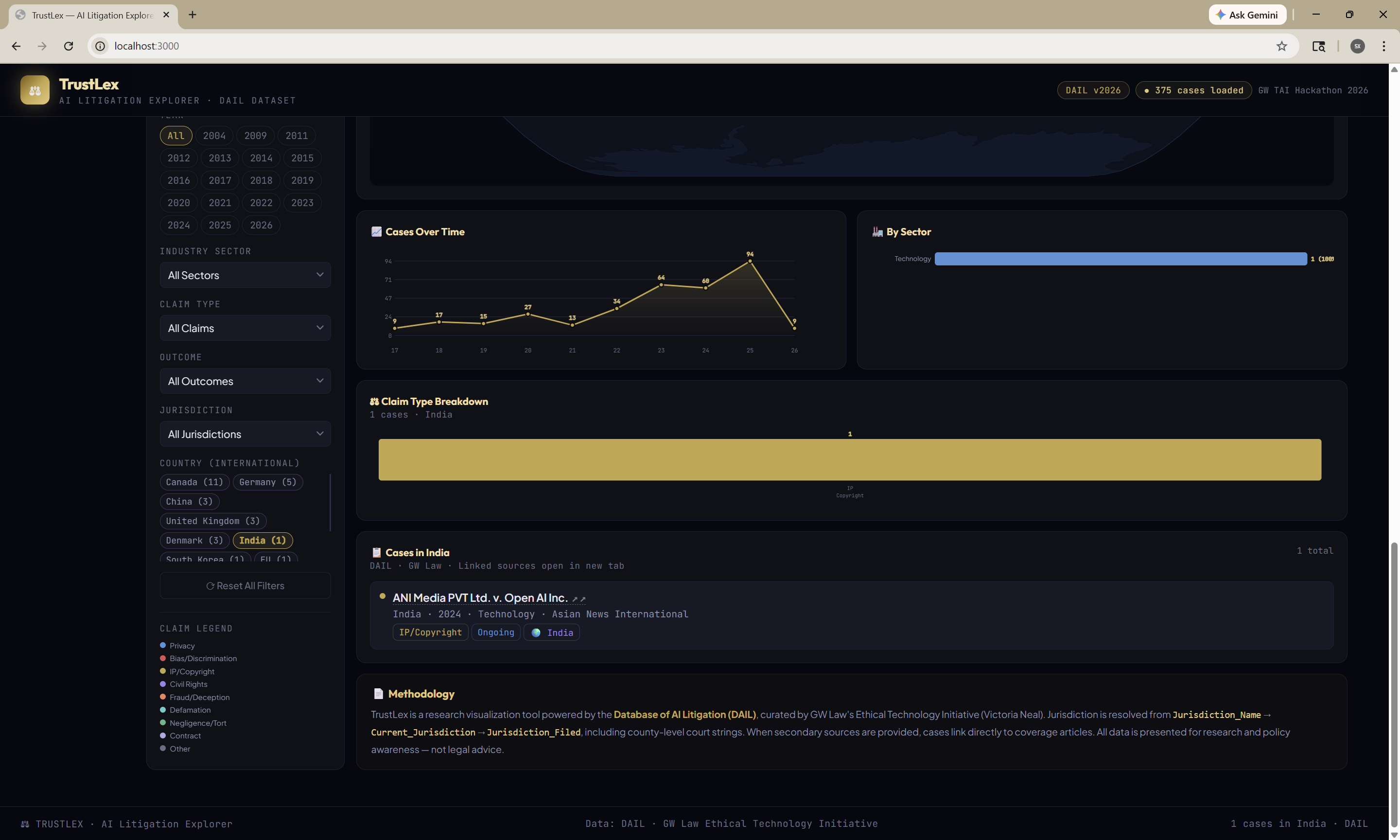
Metrics and categorization when checked for a country like India
-
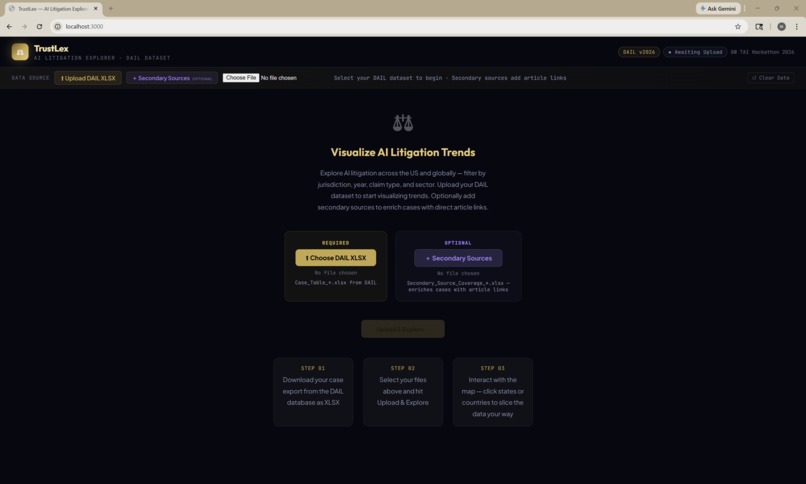
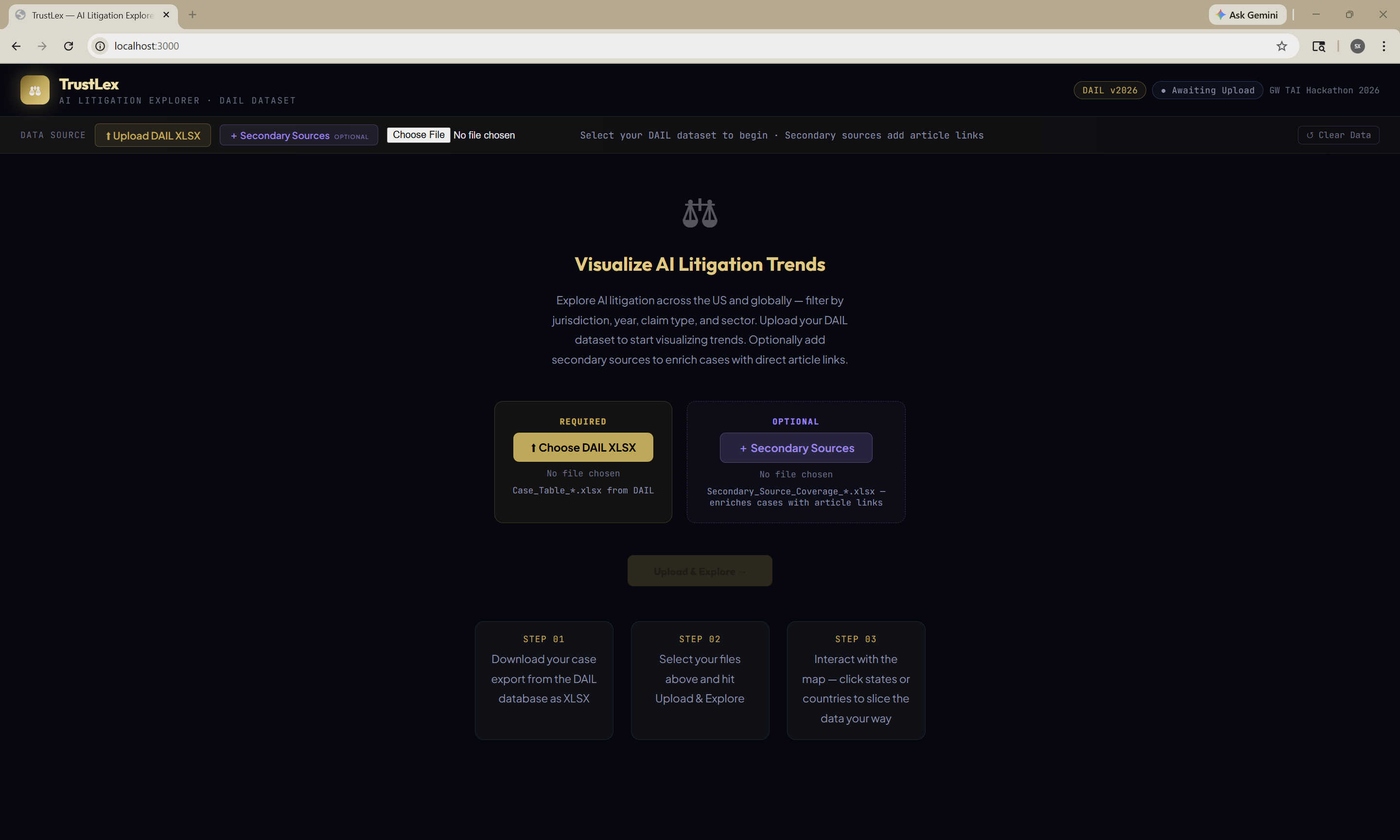
Homepage to upload files we want to query about
-
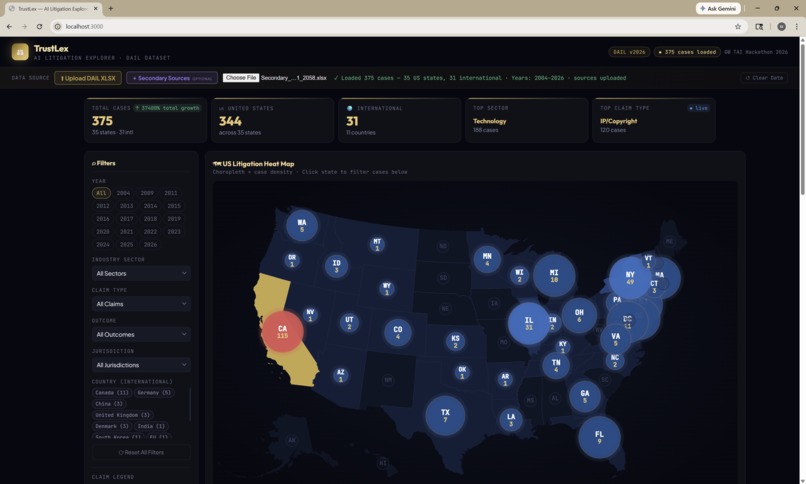
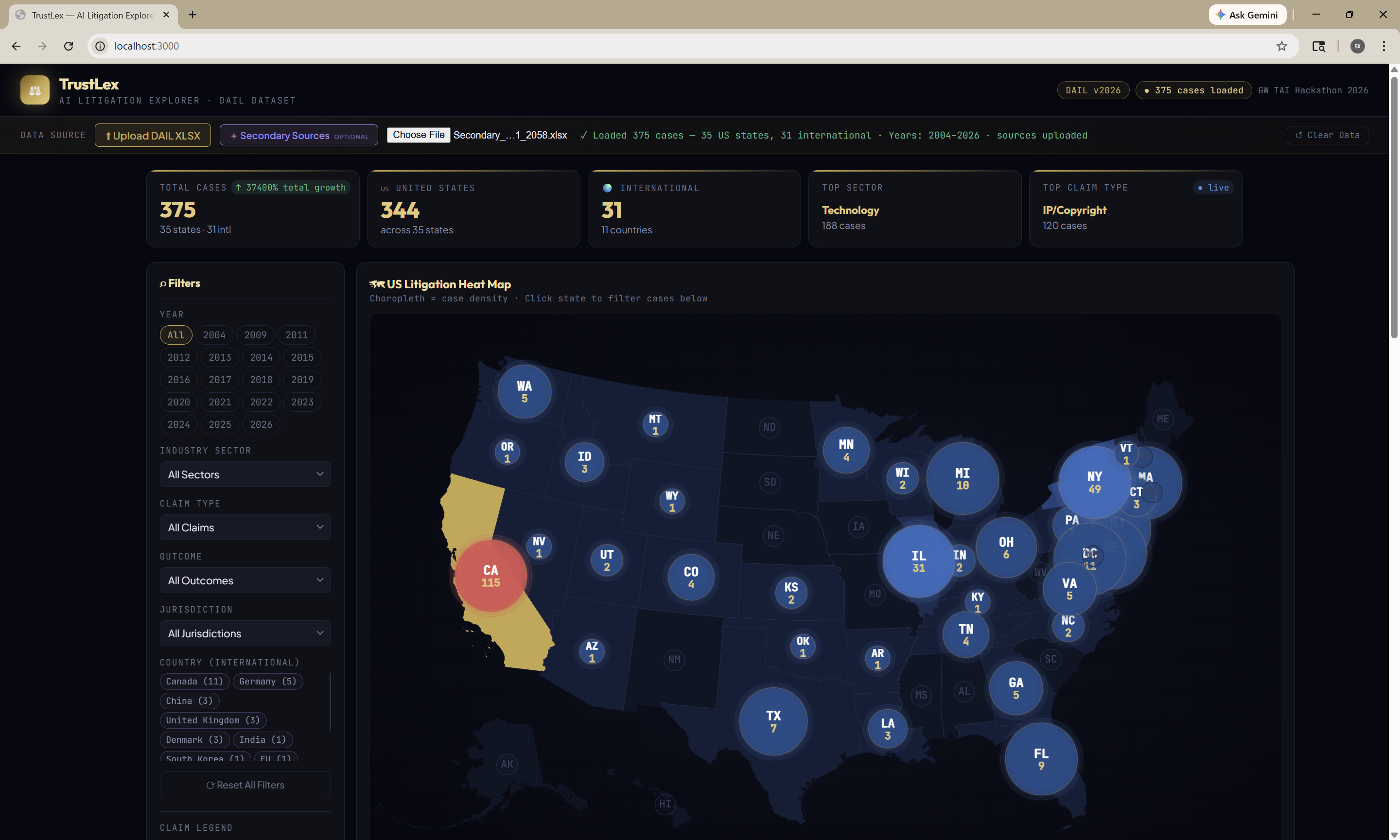
Dashboard ensuring data visualization for US states
-
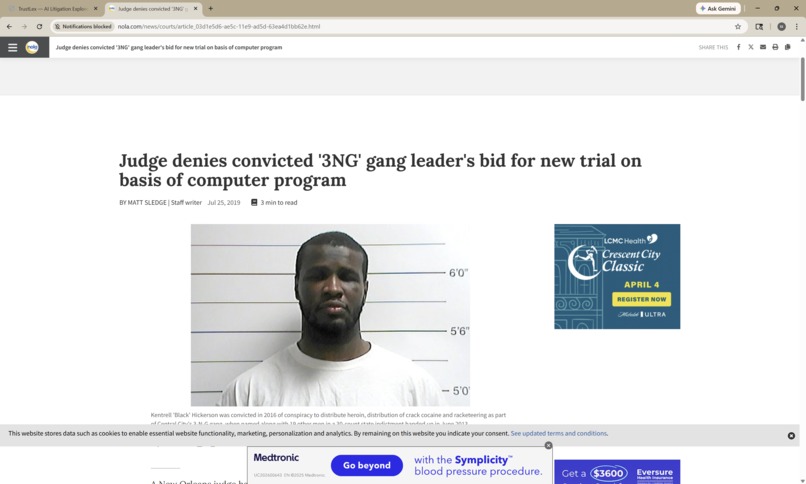
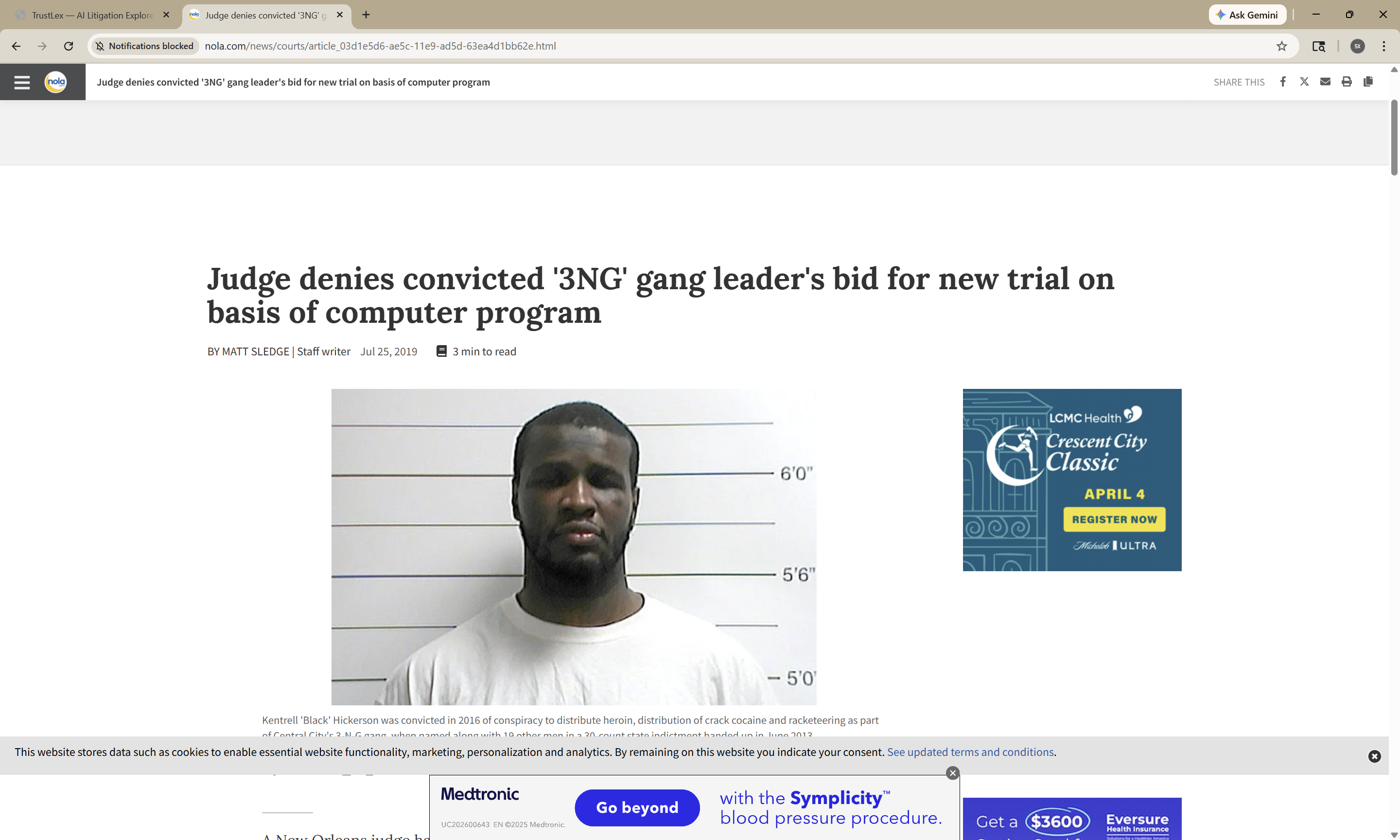
When clicked on notable case specific for Louisiana (hyperlink)
Inspiration
What it does
How we built it
Challenges we ran into
Inspiration
We built TrusLex to transform fragmented AI litigation records into a structured, queryable system for geospatial and temporal legal analysis.
What it does
TrusLex is an interactive litigation analytics platform that visualizes AI-related lawsuits across jurisdictions, industries, timelines, and claim categories.
How we built it
We built it by creating a normalized legal-data pipeline, mapping case metadata into a searchable schema, and surfacing it through a web-based geospatial dashboard with dynamic filters.
Challenges we ran into
The biggest challenges were cleaning inconsistent case data, defining reliable taxonomies for legal claims, and ensuring the analytics layer did not distort complex legal context.
Accomplishments that we're proud of
We built a functional legal-intelligence prototype that converts raw case records into an accessible analytics engine for rapid trend discovery and policy-facing insight.
What we learned
We learned that effective legal-tech products depend on strong data modeling, careful classification logic, and transparent visualization of uncertainty in evolving datasets.
What's next for TrusLex
Next, we plan to expand the ingestion pipeline, improve classification accuracy, add case-level drilldowns, and scale the analytics stack for broader AI litigation monitoring.


Log in or sign up for Devpost to join the conversation.