-
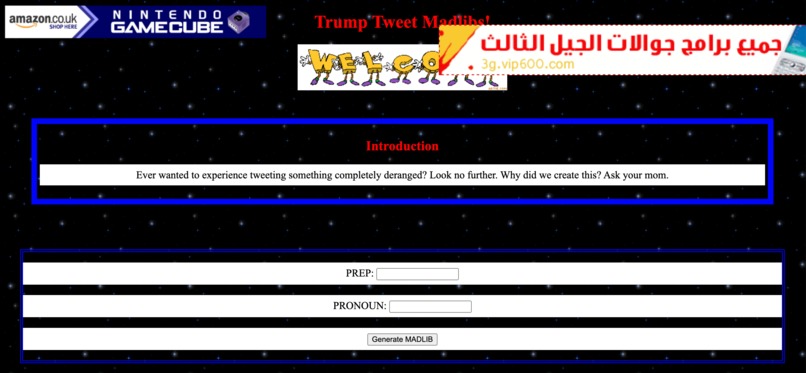
Initial website
-
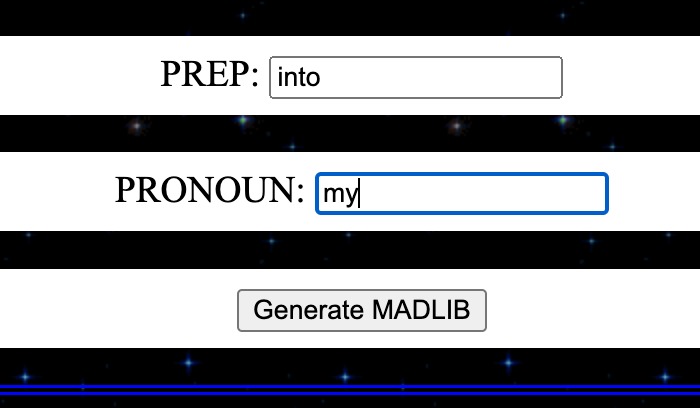
madlib entry
-

Output!

Inspiration
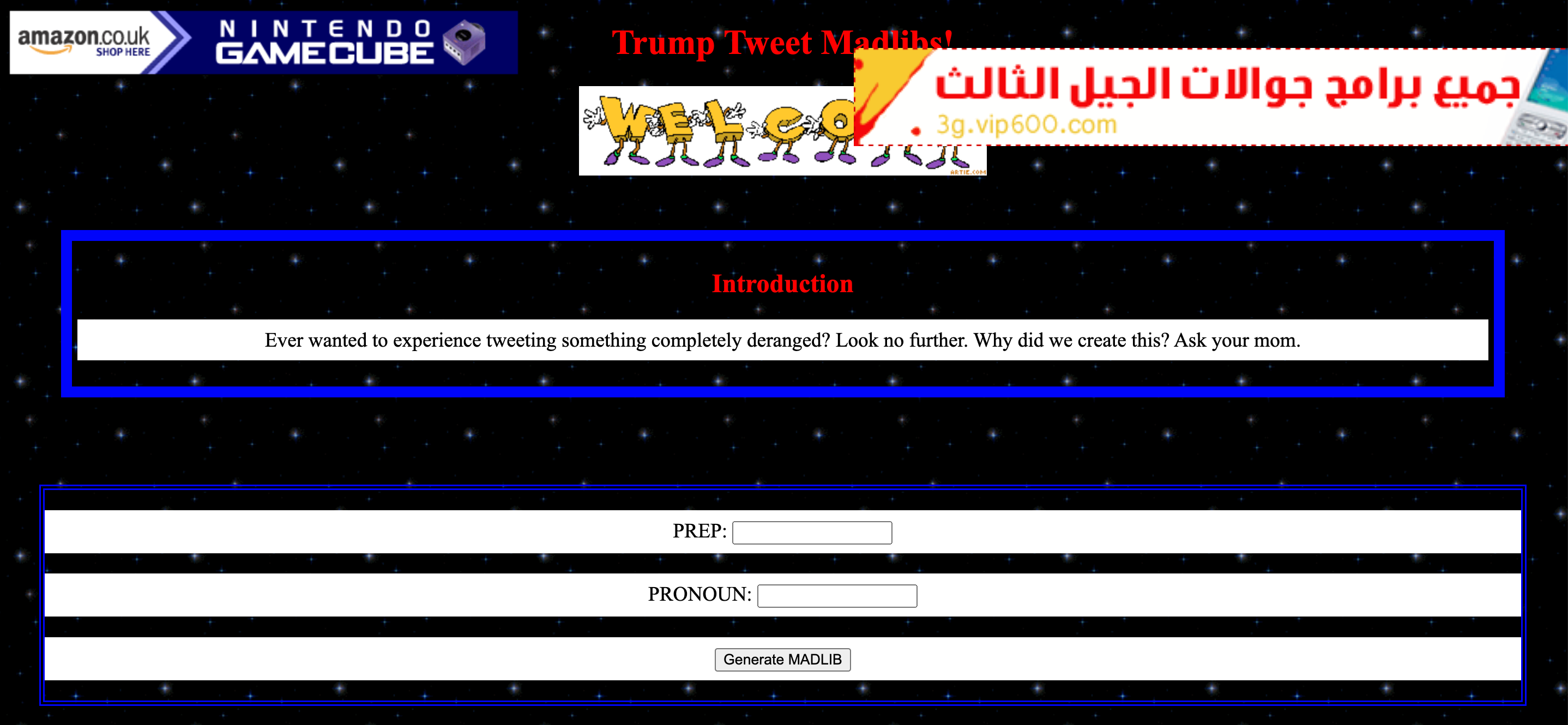
We wanted to do a project with some NLP involved. Our original idea was to train a Word2Vec model and generate poetry using most_similar_words and the Gutenberg poetry database — however, we decided that since our schedule was somewhat busy this weekend, we would aim for something somewhat less ambitious this time. This was somewhat inspired by the fake parody tweets that have occurred during the past few days on Twitter, as well as the former president's history of perpetuating lies and sowing discord online. In our project, nothing is real, and our user is forced to take place in creating the falsehood. And while our front end may appear to be humorous and 90s-esque at first, we placed fake advertisements throughout the page and jingoistic banners as a reminder of the other side of the internet that hides beneath the surface.
What it does
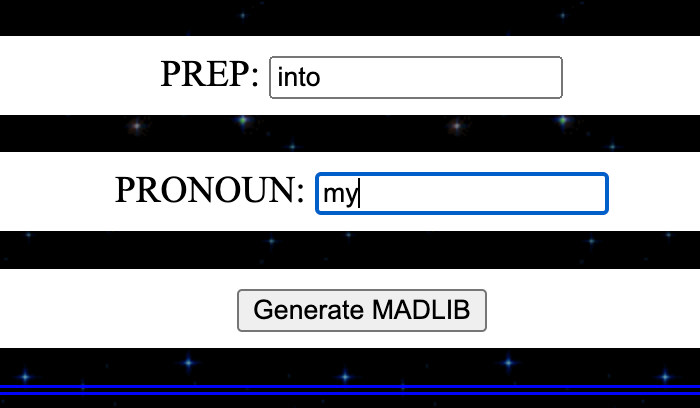
Our user is prompted to give two words that correspond with English parts-of-speech generated randomly from the initial text. These words are then reattached to the sentence and the user is given the new, edited Tweet.
How we built it
The front-end was created by Victoria using HTML/CSS. The back-end was created by Cheryl and created using the Python Spacy library as well as a pretrained model (en_core_web_sm). The full-stack and form was created by both Cheryl and Victoria and was implemented with Python Flask.
Challenges we ran into
It took a while to relearn Flask (both of us were pretty rusty on this!) and it wasn't quite as simple as we expected it to be.
Accomplishments that we're proud of
Relearning Flask! Also getting the Spacy to work.
What we learned
NLP technology is a lot more approachable for beginners than we thought!
What's next for Trump Tweet Madlibs
Expanding beyond just Trump Tweets to creating and processing datasets so that Madlibs is playable with pretty much any input.

Log in or sign up for Devpost to join the conversation.