-
-
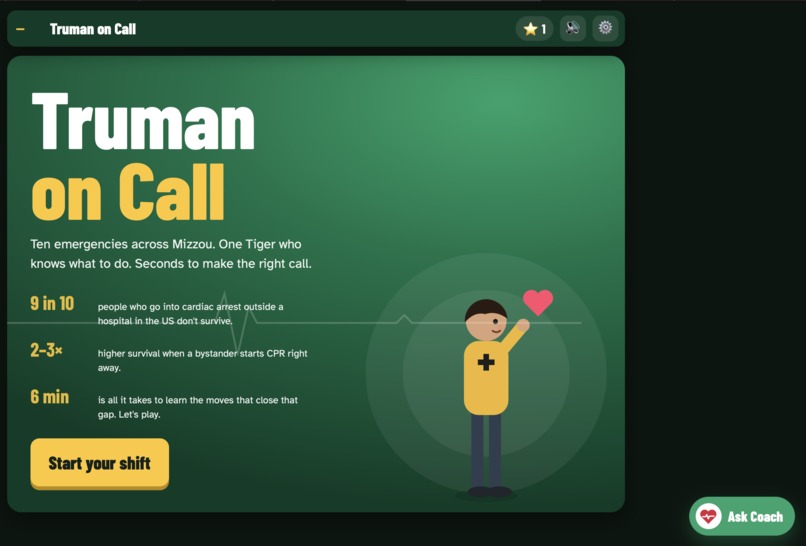
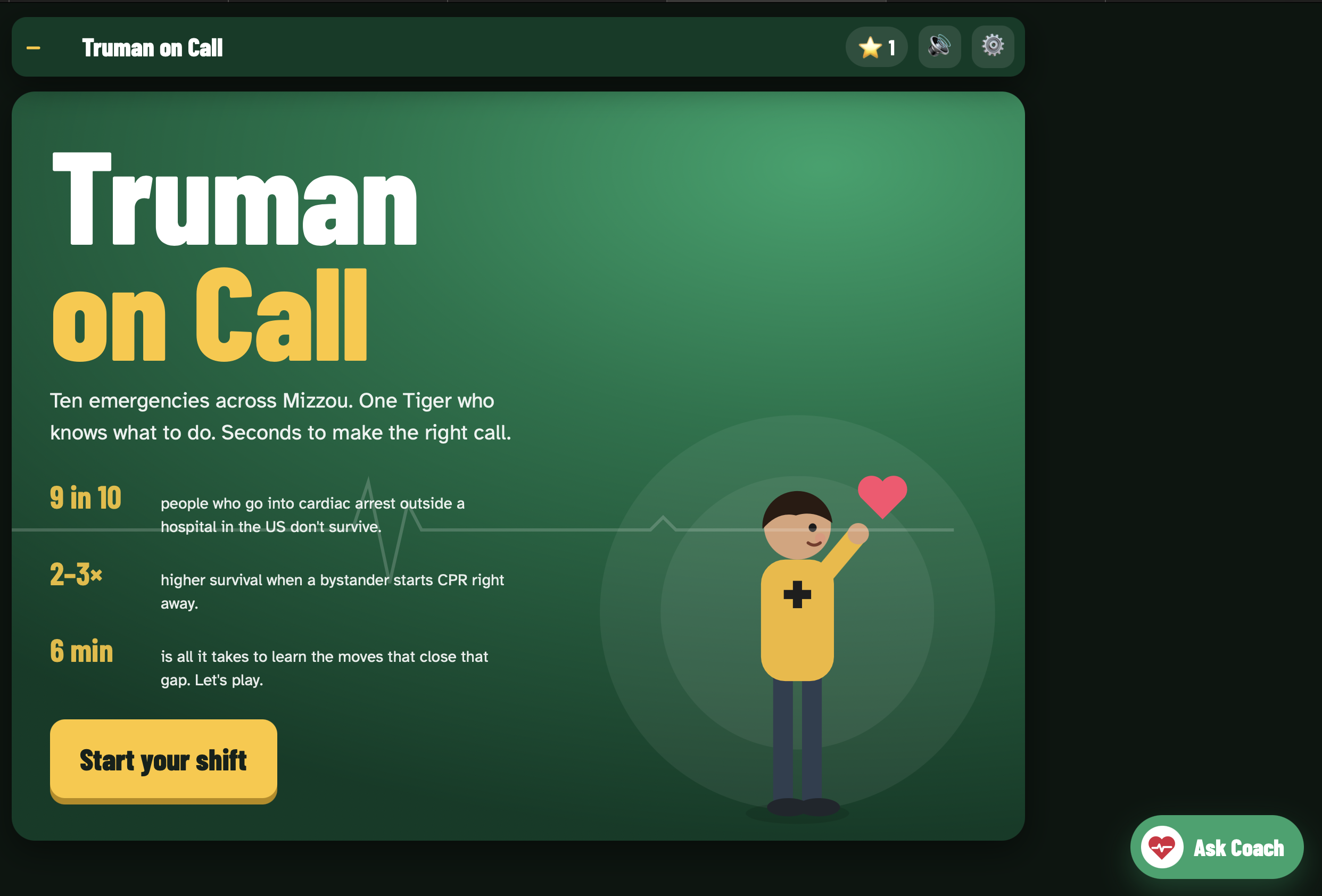
home page
-
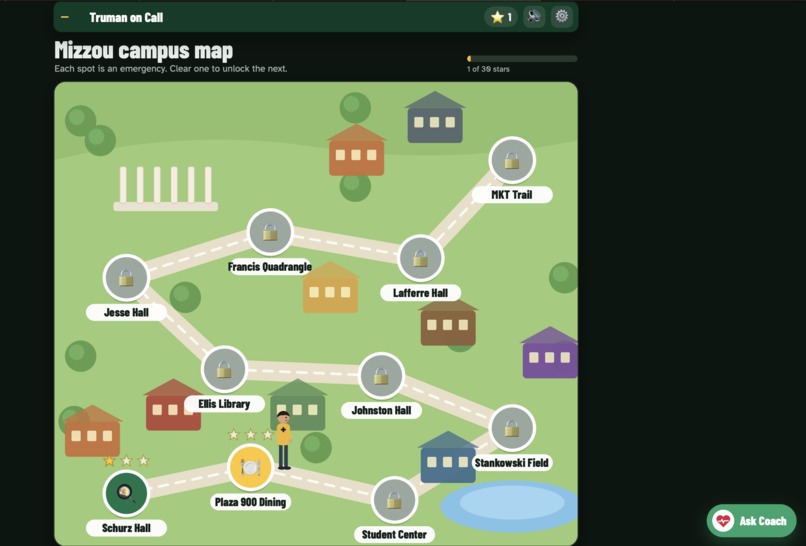
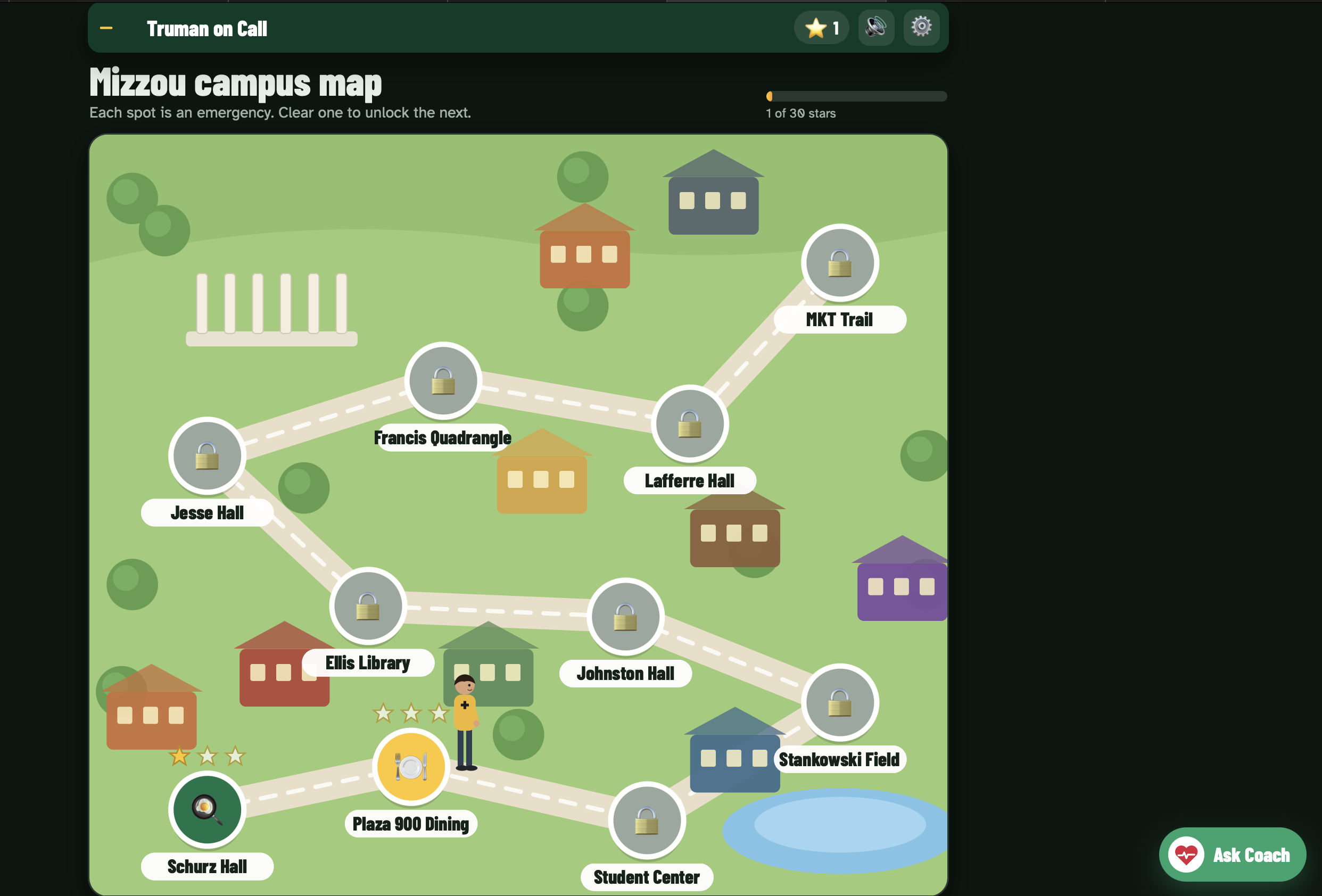
campus map, locations where incidents happen
-
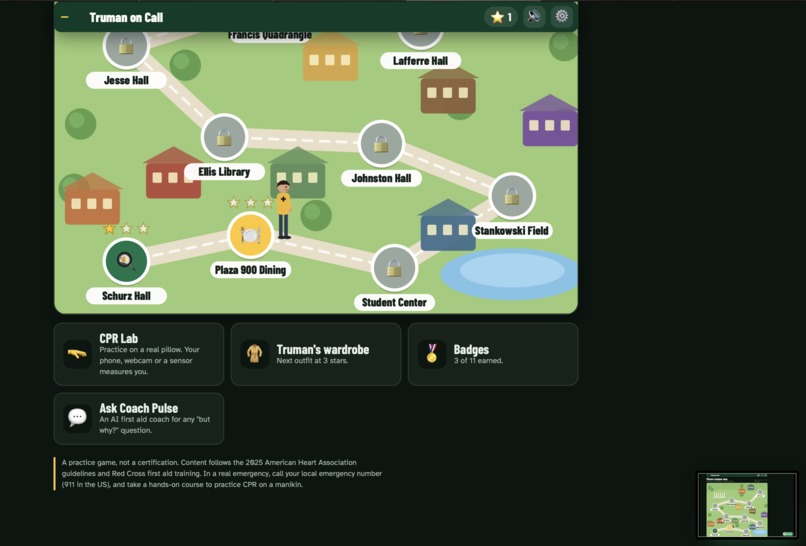
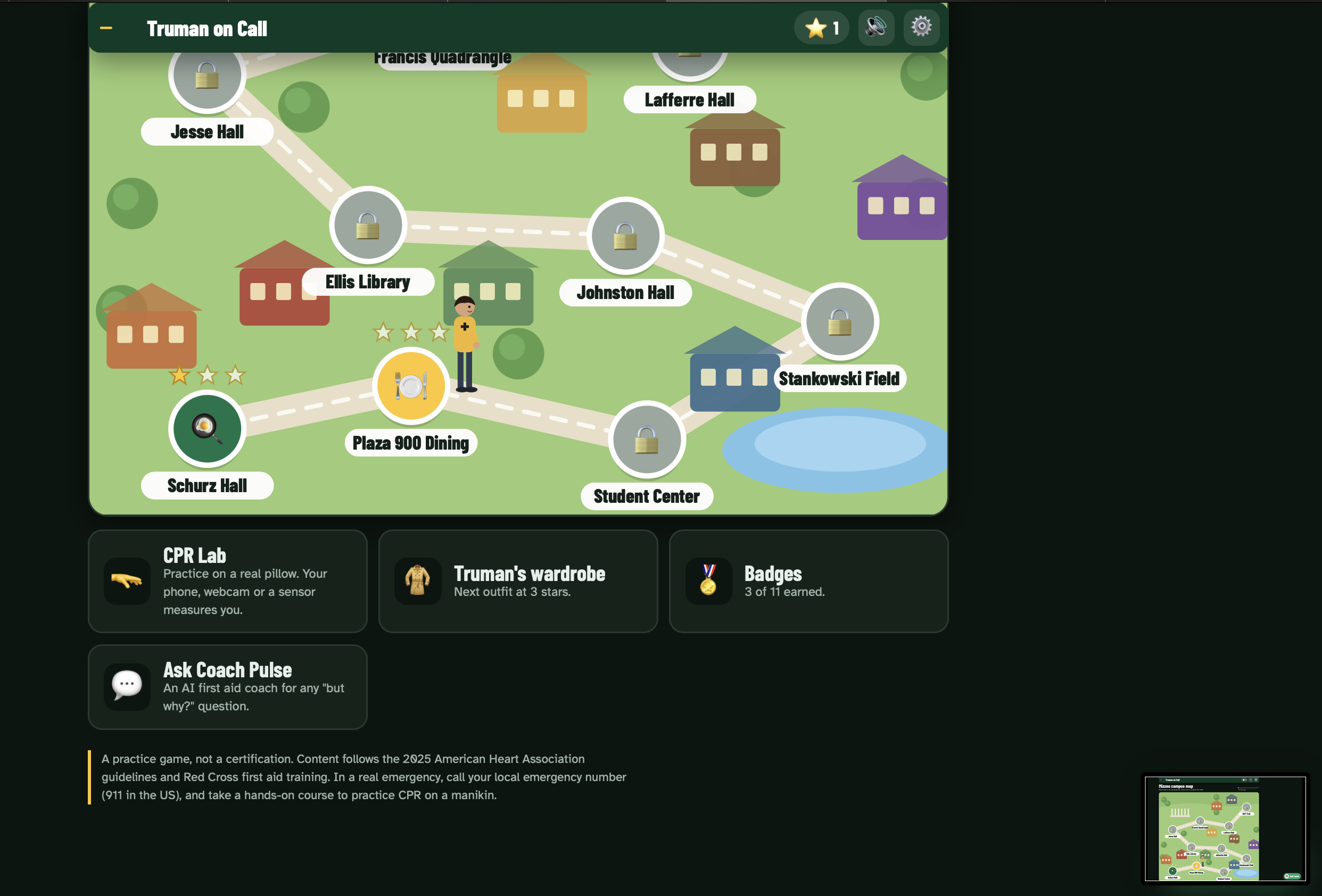
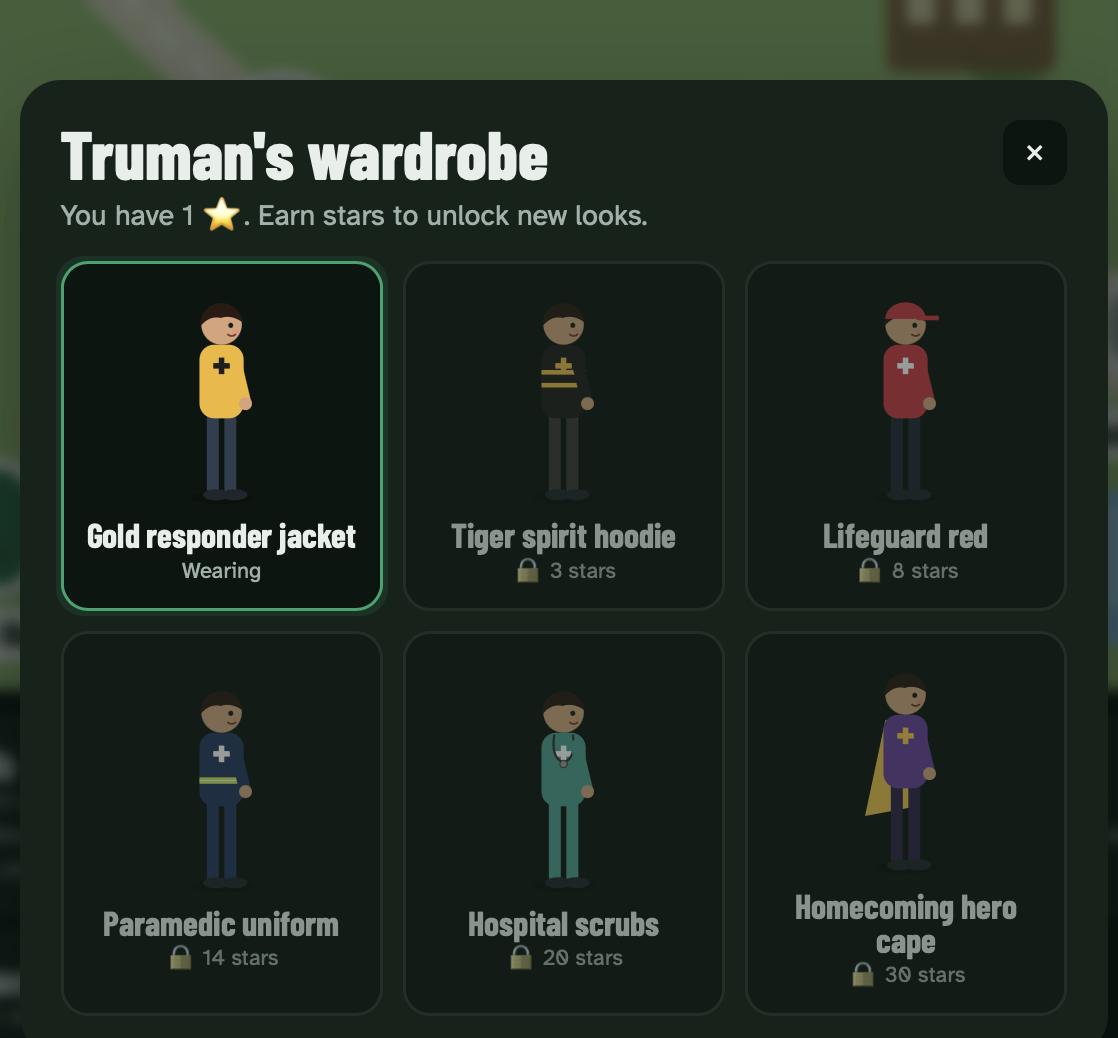
extra features such as Truman's wardrobe, Badges, Ask Coach Pulse
-
-
-
-
-
-
Inspiration
Picture this: someone collapses in Ellis Library. Everyone freezes. Nobody knows what to do.
That's the real problem. About 9 in 10 people who go into cardiac arrest outside a hospital don't survive, and CPR from a bystander can double or triple their chances. Most students have never practiced. The ones who took a class forgot it by the next semester. We wanted first aid practice you'd actually open on a Tuesday night, set in places you walk past every day.
What it does
Truman on Call turns 10 spots on the Mizzou campus into emergencies:
- Kitchen burn in Schurz Hall
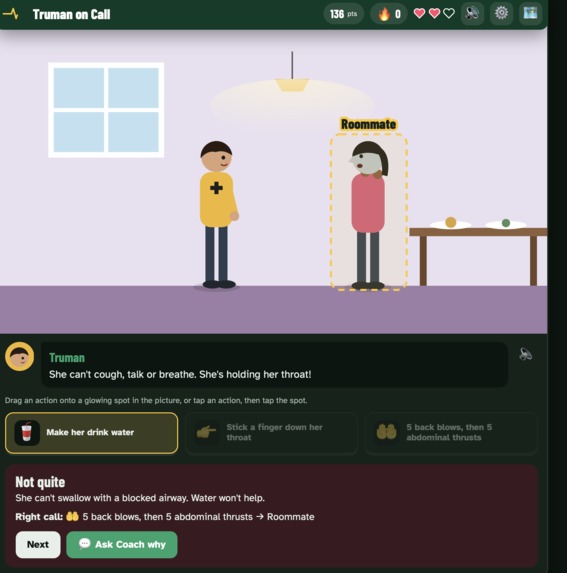
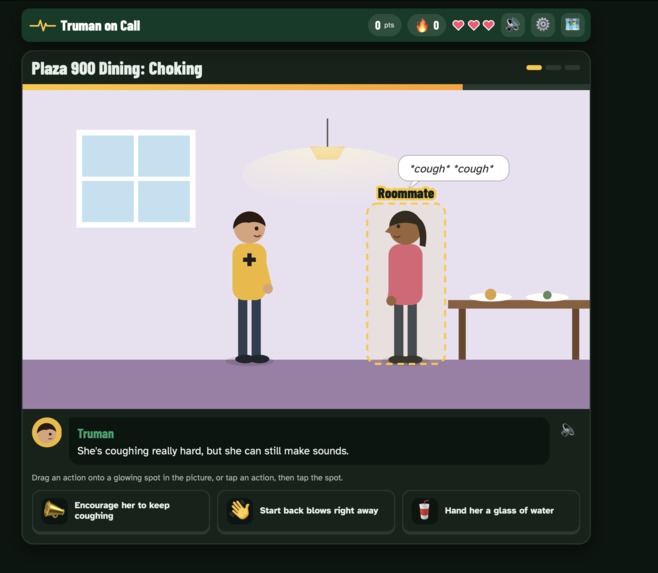
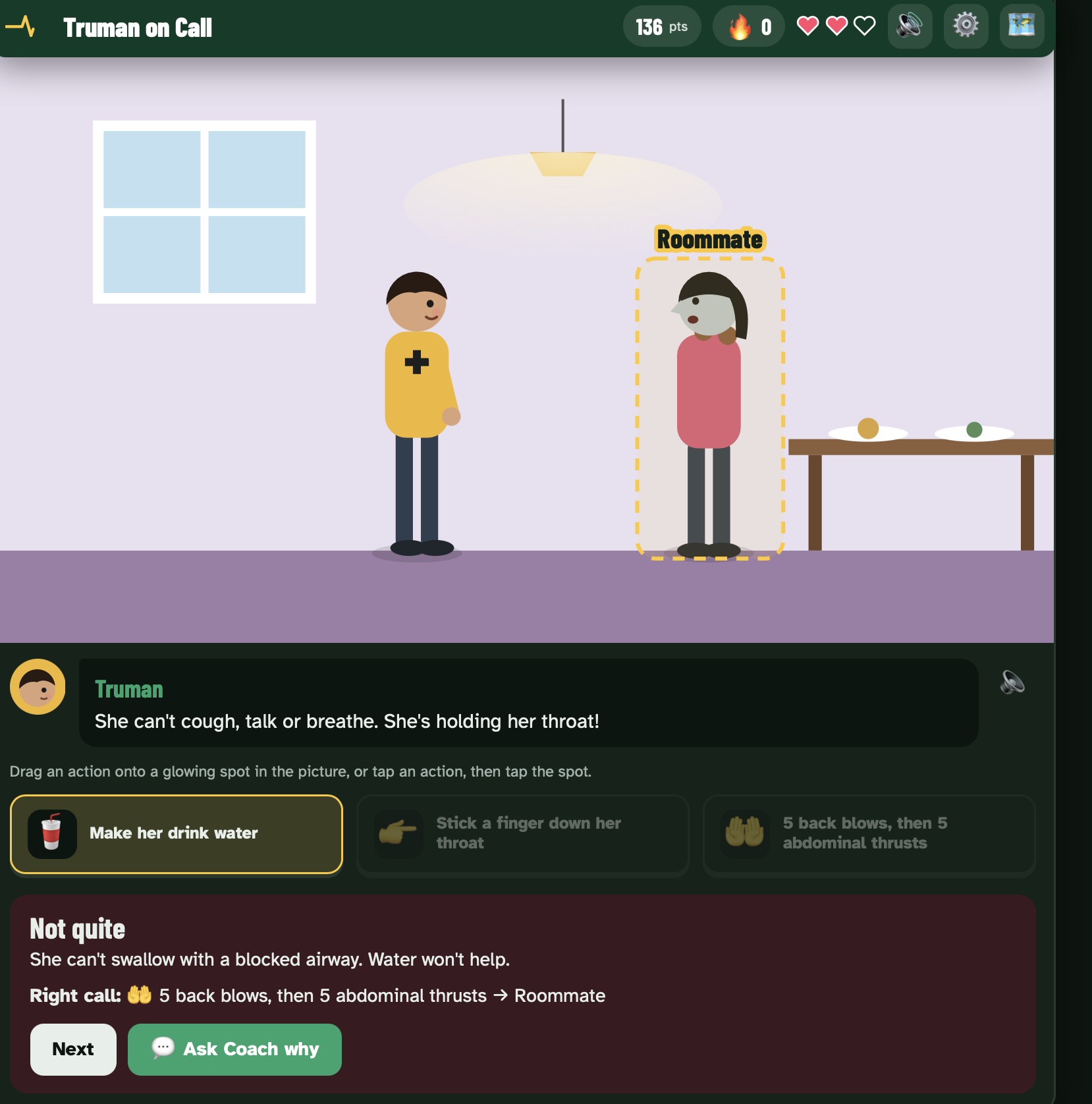
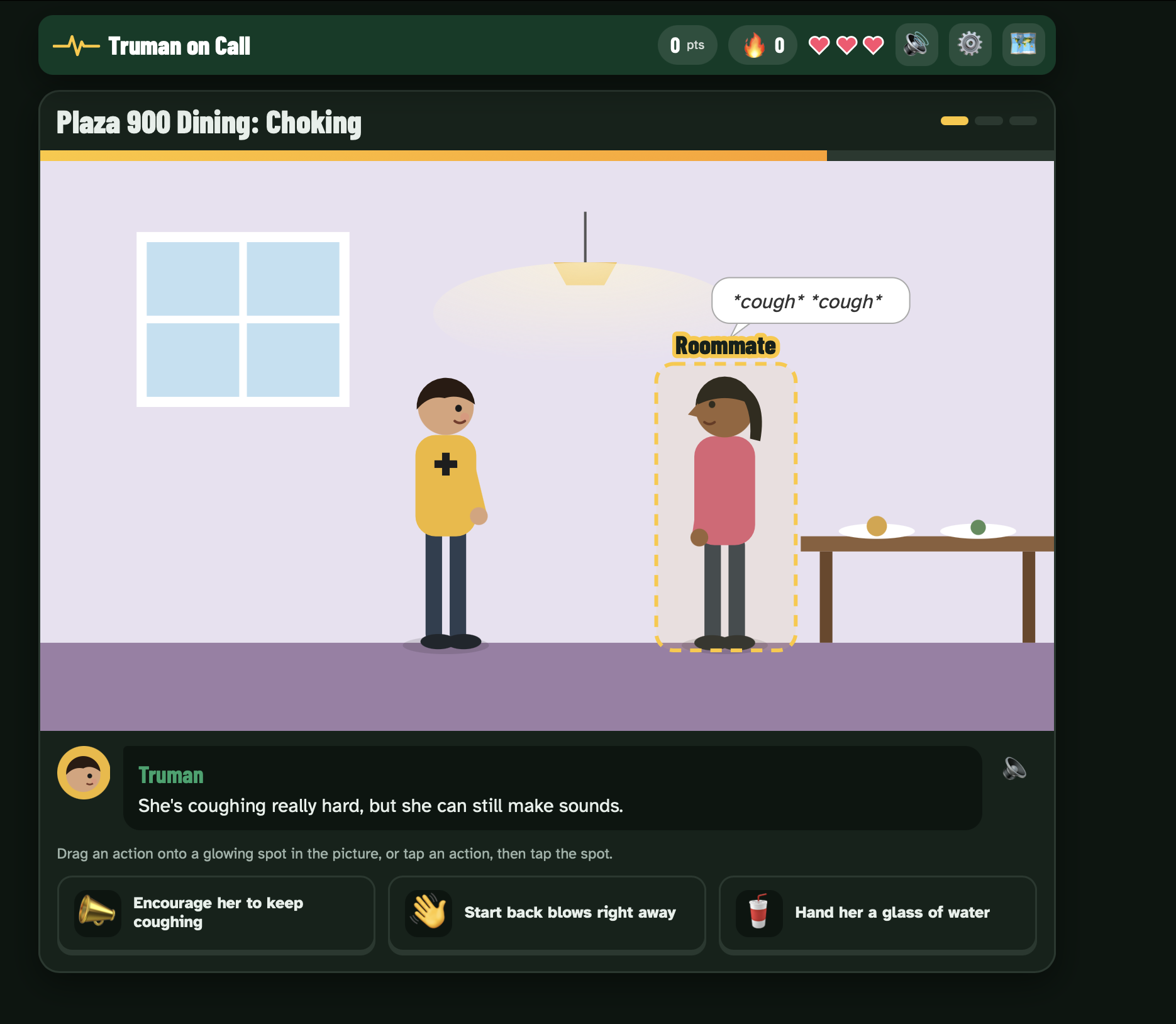
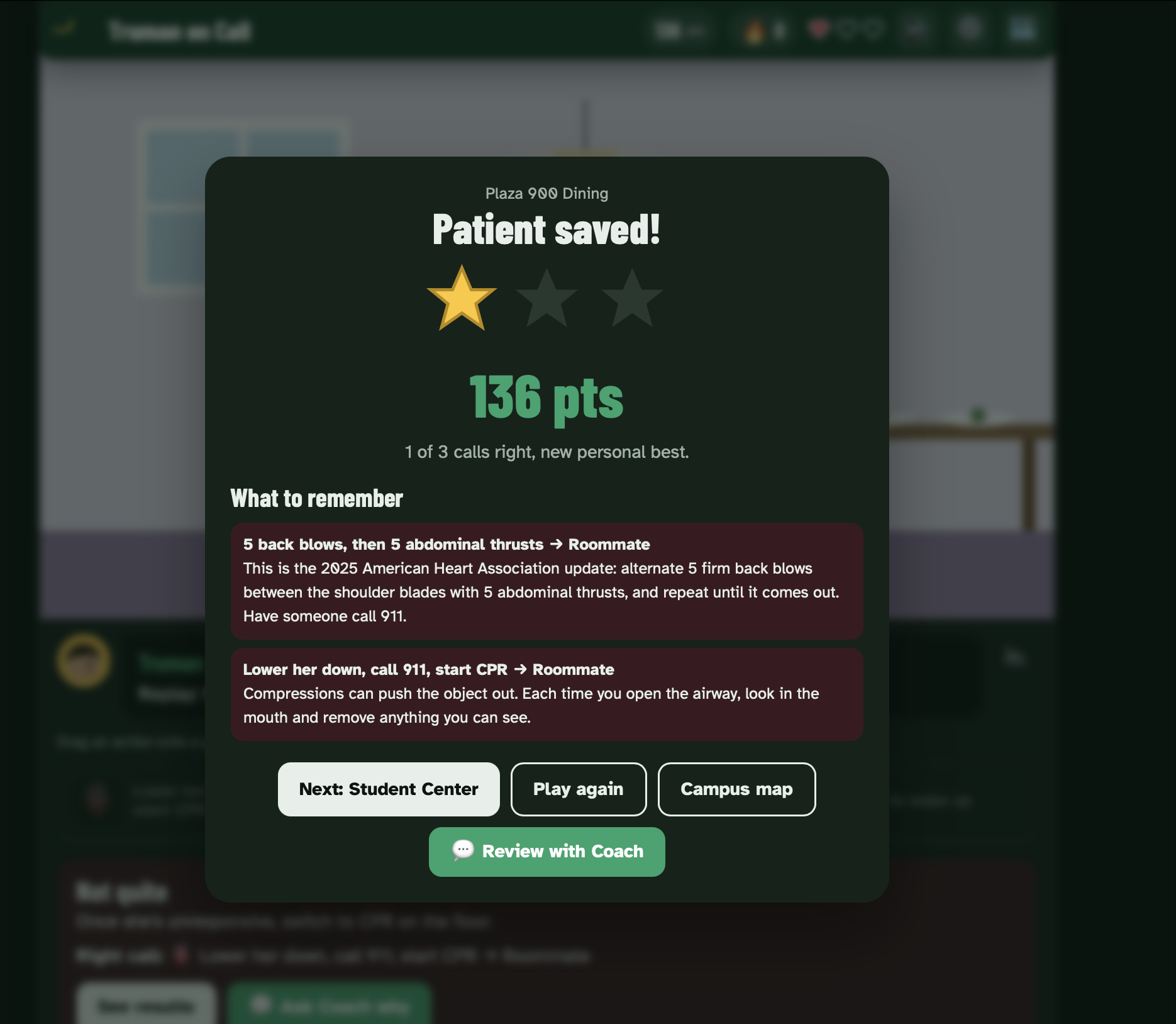
- Choking at Plaza 900
- Allergic reaction at the Student Center
- Cardiac arrest in Ellis Library
- Stroke on Francis Quad
- Severe bleeding in Lafferre Hall
- …and more
You don't read answers, you do them. Drag hands onto the chest (not the stomach!), the EpiPen onto the outer thigh, the tourniquet above the wound. Get it wrong and you'll see why, instantly. Every myth we could find is in there as a trap card: butter on burns, tilting your head back for a nosebleed, a pen in the mouth during a seizure.
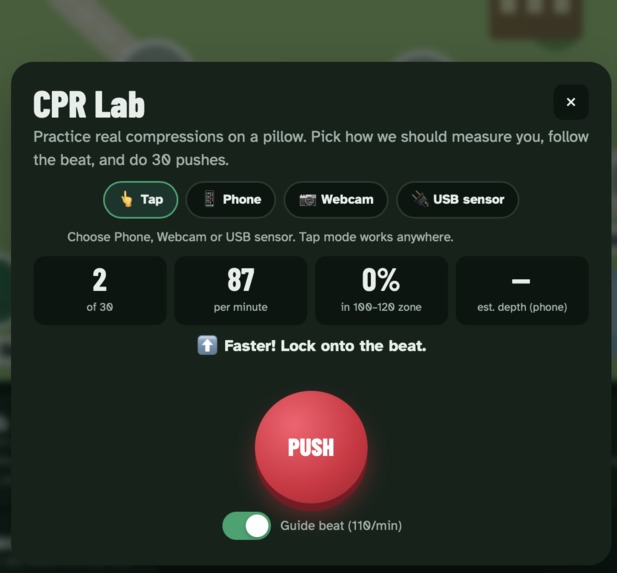
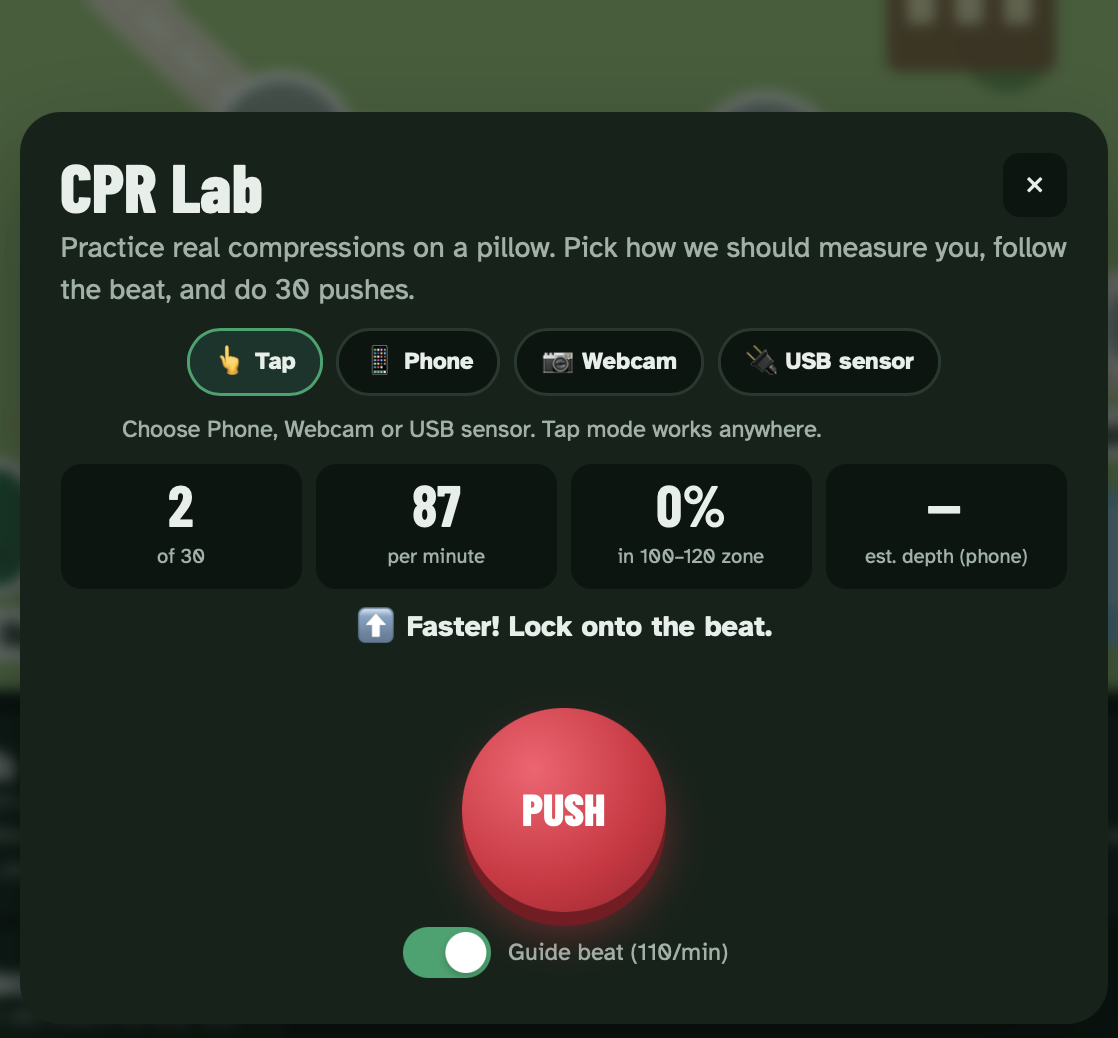
Real CPR, not just tapping. In the CPR Lab you push on an actual pillow while your phone's accelerometer, your webcam, or a $10 Arduino force sensor measures your rate live. The phone even estimates depth from the motion:
$$d \approx \frac{a}{\omega^2}$$
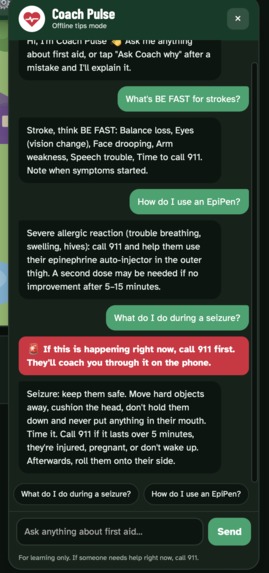
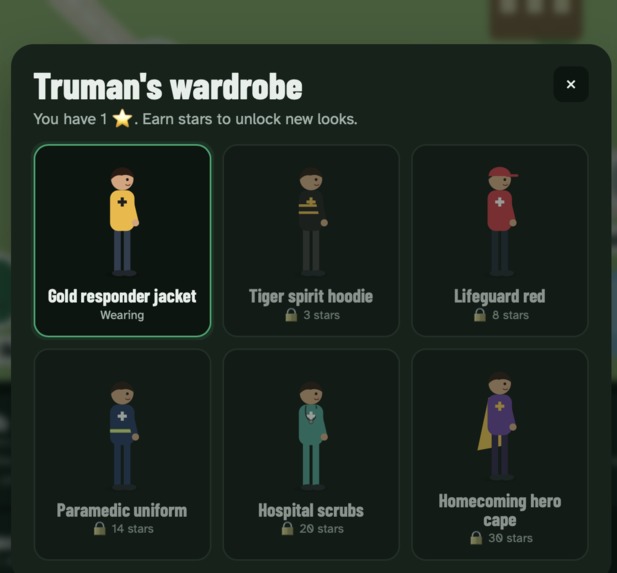
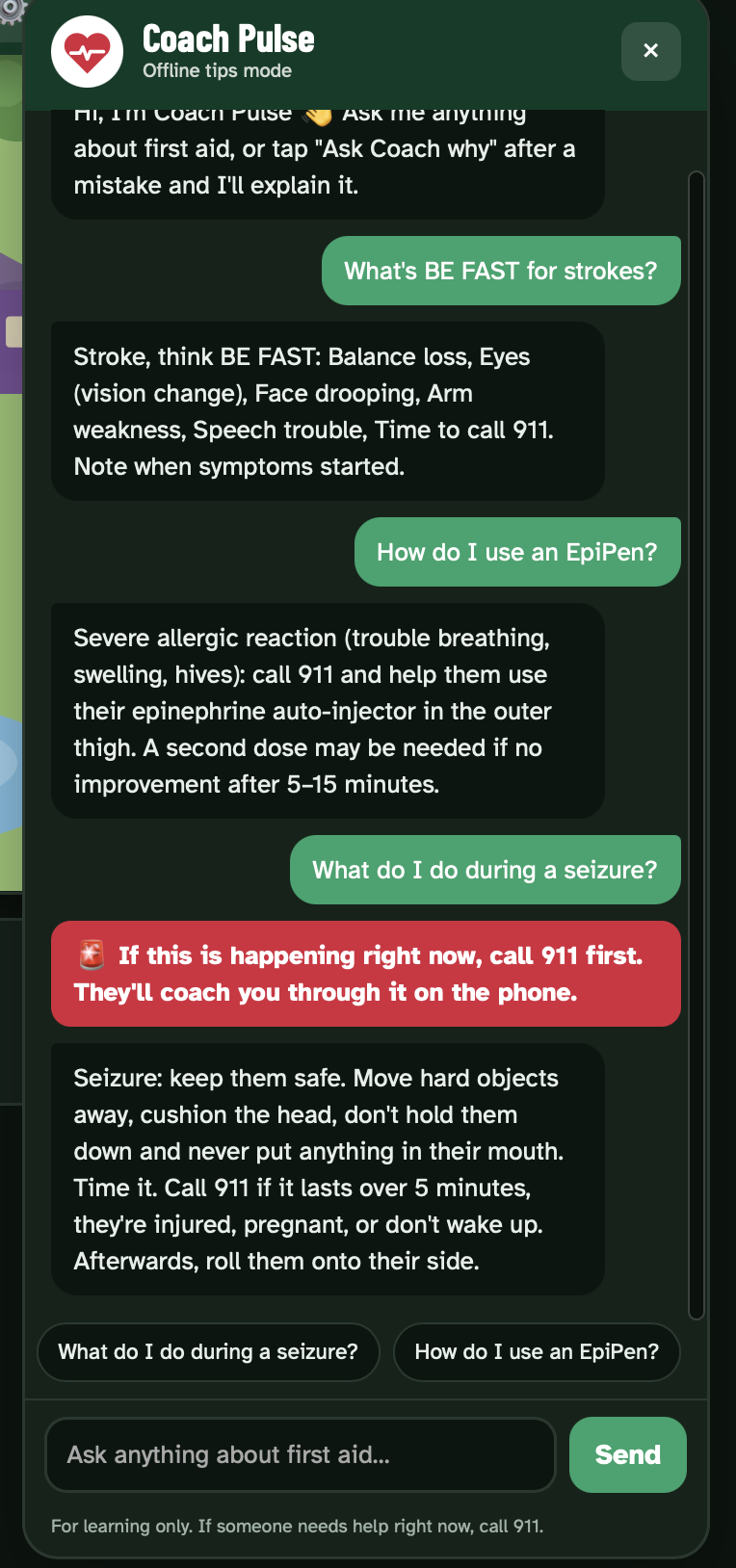
Coach Pulse, our AI coach, explains every mistake like a friend would. Stars unlock outfits for Truman, and badges like M-I-Z!, Show-Me skeptic, and Homecoming hero keep you coming back.
How we built it
- Game: plain HTML, CSS and JavaScript, with every scene hand-drawn in SVG and every sound generated live with the Web Audio API. No image or audio files.
- Backend: Node.js + Express, hosted on Vultr.
- Tiger Data: every answer and every single chest compression lands in time-series tables. Continuous aggregates power a live dashboard of the myths players fall for most and campus-wide CPR quality.
- Snowflake Cortex: runs Coach Pulse.
- ElevenLabs: gives Truman a real voice.
- Solana: writes a tamper-proof training certificate to devnet when you finish a level.
- Hardware: a phone accelerometer, a webcam, or an Arduino force sensor, all feeding one compression detector.
Challenges
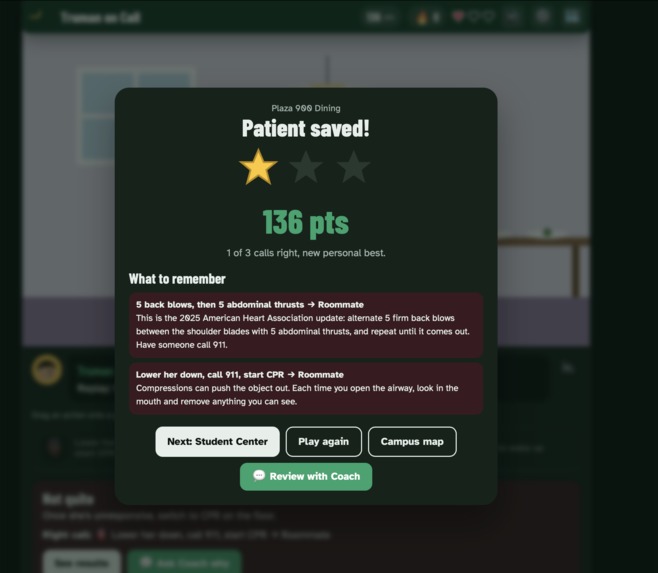
- Medical accuracy. Mid-hackathon we found that the 2025 American Heart Association guidelines had changed how to help a choking adult, and added new guidance for opioid overdoses. We rewrote those levels on the spot.
- Webcam CPR. Turning a wobbly video into "one compression just happened" meant tracking up-and-down motion frame by frame and building a detector that ignores noise.
- Making it fun without making it wrong. Every animation and joke had to sit on top of correct guidance.
What we learned
Most first aid mistakes aren't about not knowing, they're about freezing. Practice under a ticking timer beats reading a pamphlet. And the myths people believe are surprisingly consistent, which is exactly what our data shows.
What's next
- A daily 60-second drill so skills don't fade
- Partnering with campus CPR courses
- Real depth measurement with a distance sensor
Truman on Call is a practice tool, not a certification. Take a hands-on CPR class. It's worth it.


Log in or sign up for Devpost to join the conversation.