-
-
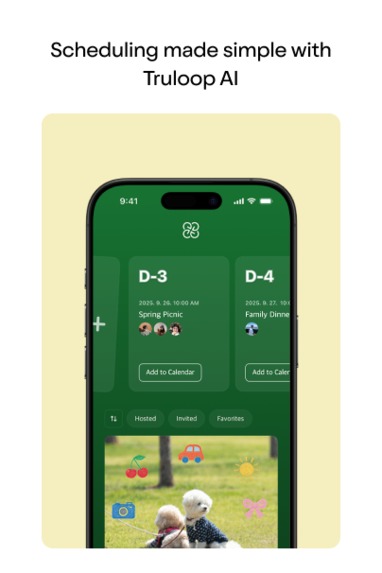
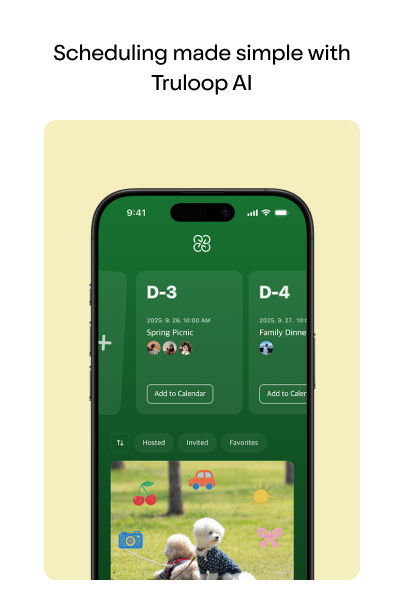
Scheduling made simple with Truloop AI
-
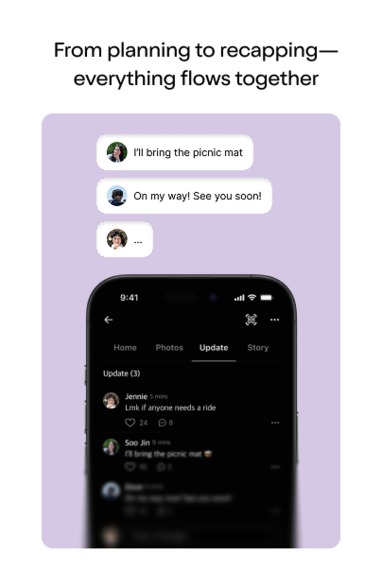
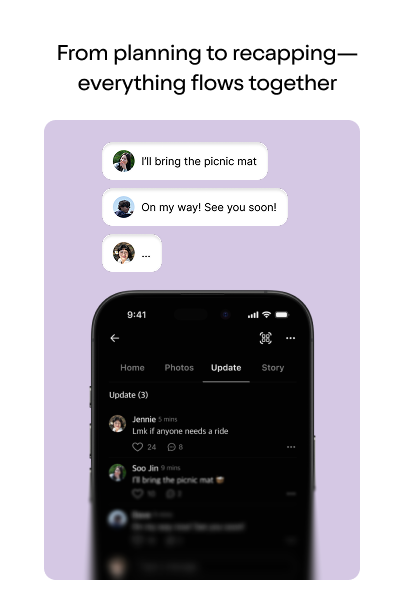
From planning to recapping—everything flows together
-
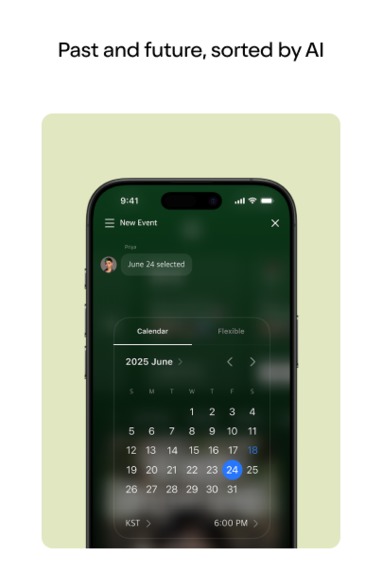
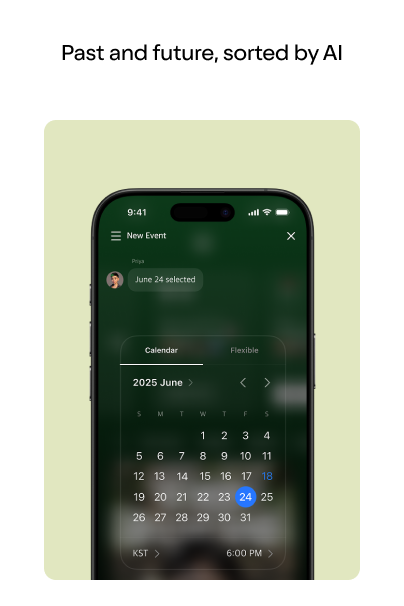
Past and future, sorted by AI
-
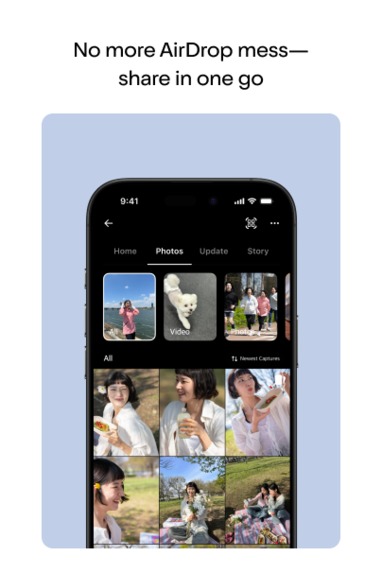
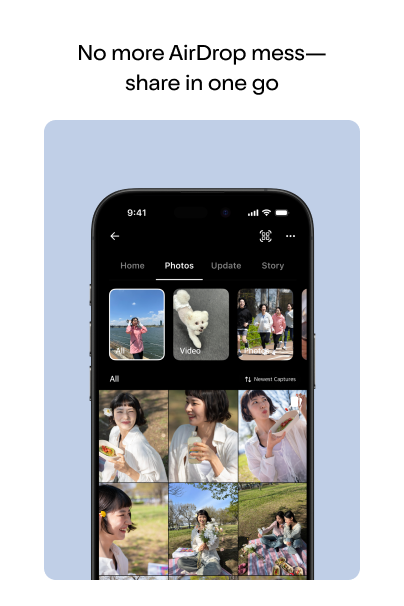
No more AirDrop mess— share in one go
-

Your photos. Your memories. Your way.

truloop - AI Native Social App
Inspiration
After building NAVER BAND to 20M users within less than 2 years, founder Suman Park noticed a global shift away from public posting toward private sharing. He envisioned that the everyday act of four friends meeting for a meal and conversation could be transformed if AI helped from scheduling the gathering to creating a recap afterward — making it possible to popularize an AI-powered social app specialized for small-group meetups.
The goal was to create a safe, private, yet personal space where small groups can gather, share, and design memories together.
What it does
Problem
People juggle hundreds of group chats but only meet a few groups regularly. According to surveys, 79% use collaboration tools, yet 41% still struggle with coordination.
Solution – truloop solves this with:
- Scheduling → Loops: AI assistant organizes group plans, collects availability, and generates a D-day card with calendar integration.
- Private photo space: Each member can contribute and also remove photos that include their own face for safety.
- AI-powered creativity: One-tap poster templates and auto-generated Loop Stories.
- Personalized memory design: Each member sets their own Loop cover, reflecting their perspective.
- Cross-market support: Localized in Korean, English, and Japanese; available in KR/US/JP stores.
How we built it
Tech stack:
- Swift (iOS), Kotlin (Android), React Native (shared UI)
- Firebase (auth, storage), AWS (media + AI services)
- Firestore (real-time sync), PostgreSQL (wallet & entitlements)
- RevenueCat (subscriptions & consumables), OpenAI + custom ML (AI posters/stories), Kakao API (invites), Google Calendar/iCal integration
Monetization model:
- LPY coins (consumables): pay-as-you-go for AI services.
- Premium subscription: unlimited loops/scheduling, original uploads/downloads, subscriber-only templates, + 1,000 LPY monthly stipend.
- RevenueCat is used as the backbone for subscription + consumable management across iOS and Android.
Challenges we ran into
- Synchronizing entitlement logic across iOS and Android while keeping UX consistent.
- Designing adaptive paywalls for different markets (KR/US/JP).
- Creating and syncing LPY (internal currency) was difficult due to lack of prior experience in virtual economy design.
- Managing automated monthly LPY grants and wallet balance logic.
Accomplishments that we're proud of
- Successfully synchronized entitlement logic across iOS and Android.
- Automated monthly LPY grants and wallet balance management.
- Integrated adaptive paywalls across different markets (KR/US/JP).
- Learned about RevenueCat’s Virtual Currency feature, which was a perfect fit for us. By adopting it, we dramatically reduced development time.
- Validated that leveraging well-provided SaaS is advantageous for early-stage products, saving both time and complexity.
What we learned
- Cross-platform monetization is possible with careful entitlement + consumable design.
- AI-native social apps thrive when safety and personalization are prioritized.
- RevenueCat’s centralized setup allowed testing offers and prices across markets efficiently.
- Trust features (like face-based photo removal) are crucial in private sharing contexts.
- Well-designed SaaS solutions (e.g., RevenueCat Virtual Currency) can accelerate early-stage product development.
What’s next for truloop
Shipathon demo focus:
- Remote-config paywalls & offers by market.
- Automated LPY grants with engaging in-app moments.
- Restore purchases seamlessly across devices/platforms.
- Link revenue dashboards with in-app creation behaviors.
Future expansion:
- Deeper AI-powered travel/leisure flows.
- Scale to a global audience starting with the US.
- Continue refining monetization experiments to drive sustainable growth.


Log in or sign up for Devpost to join the conversation.