-
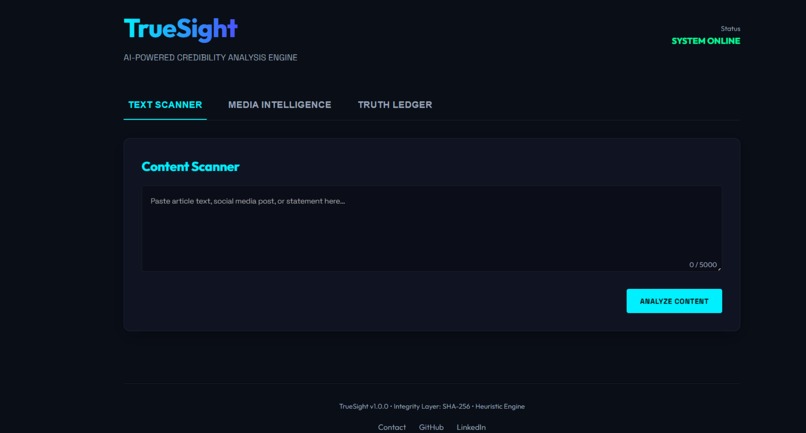
PAGE TO SCAN TEXT
-
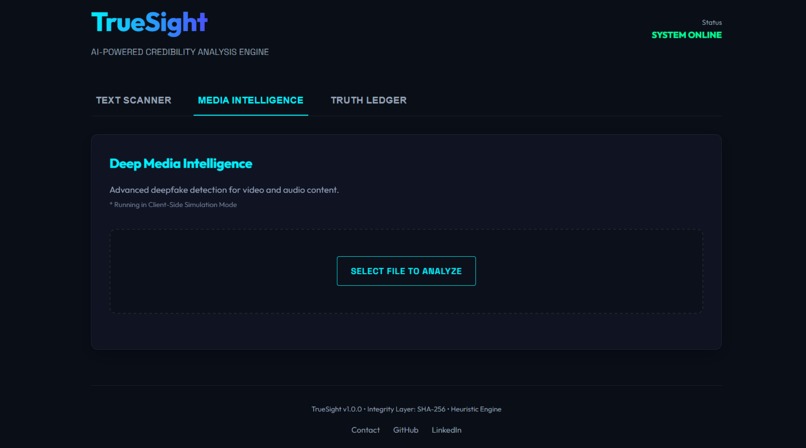
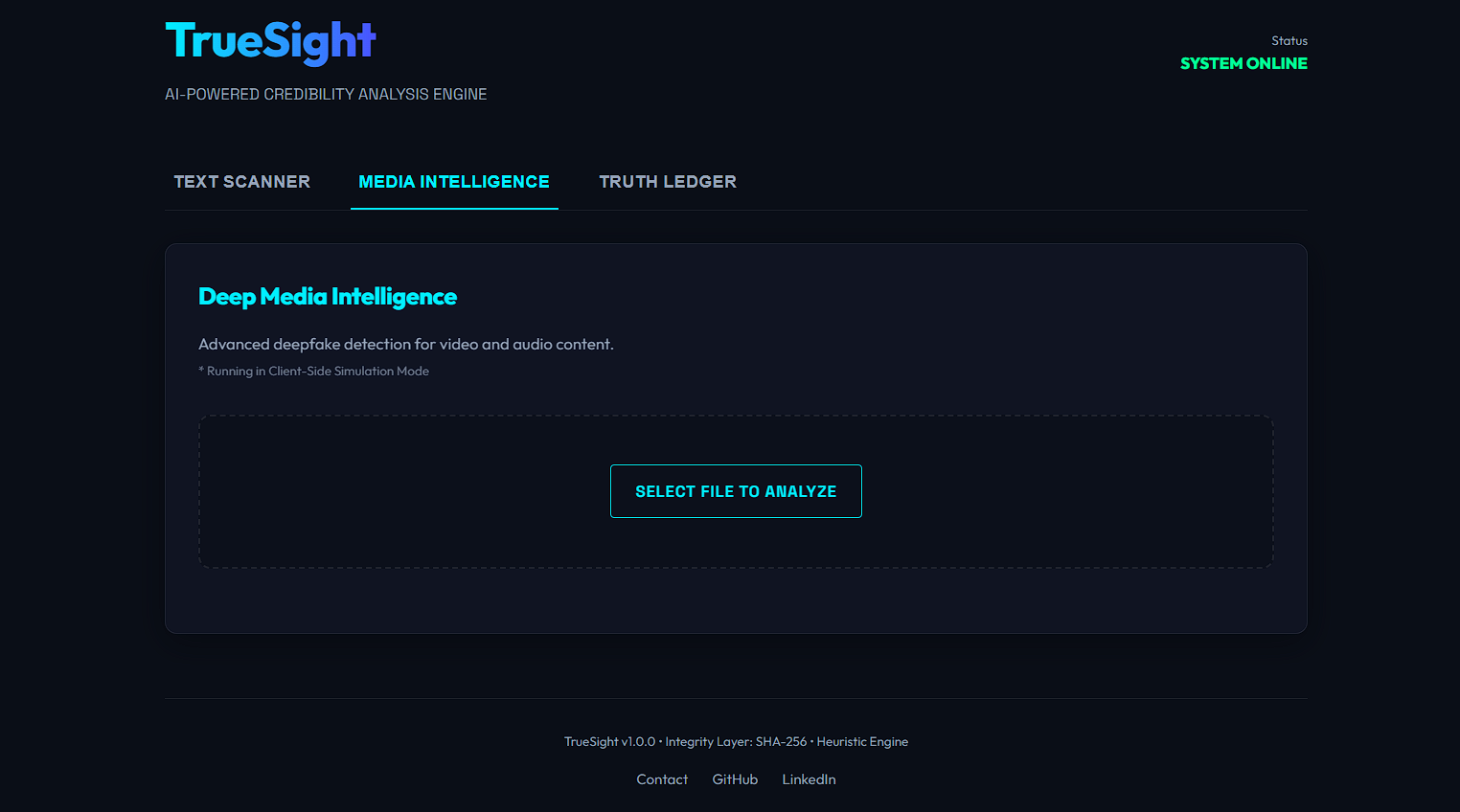
DEEPFAKE AND AUDIO SCANNER
-

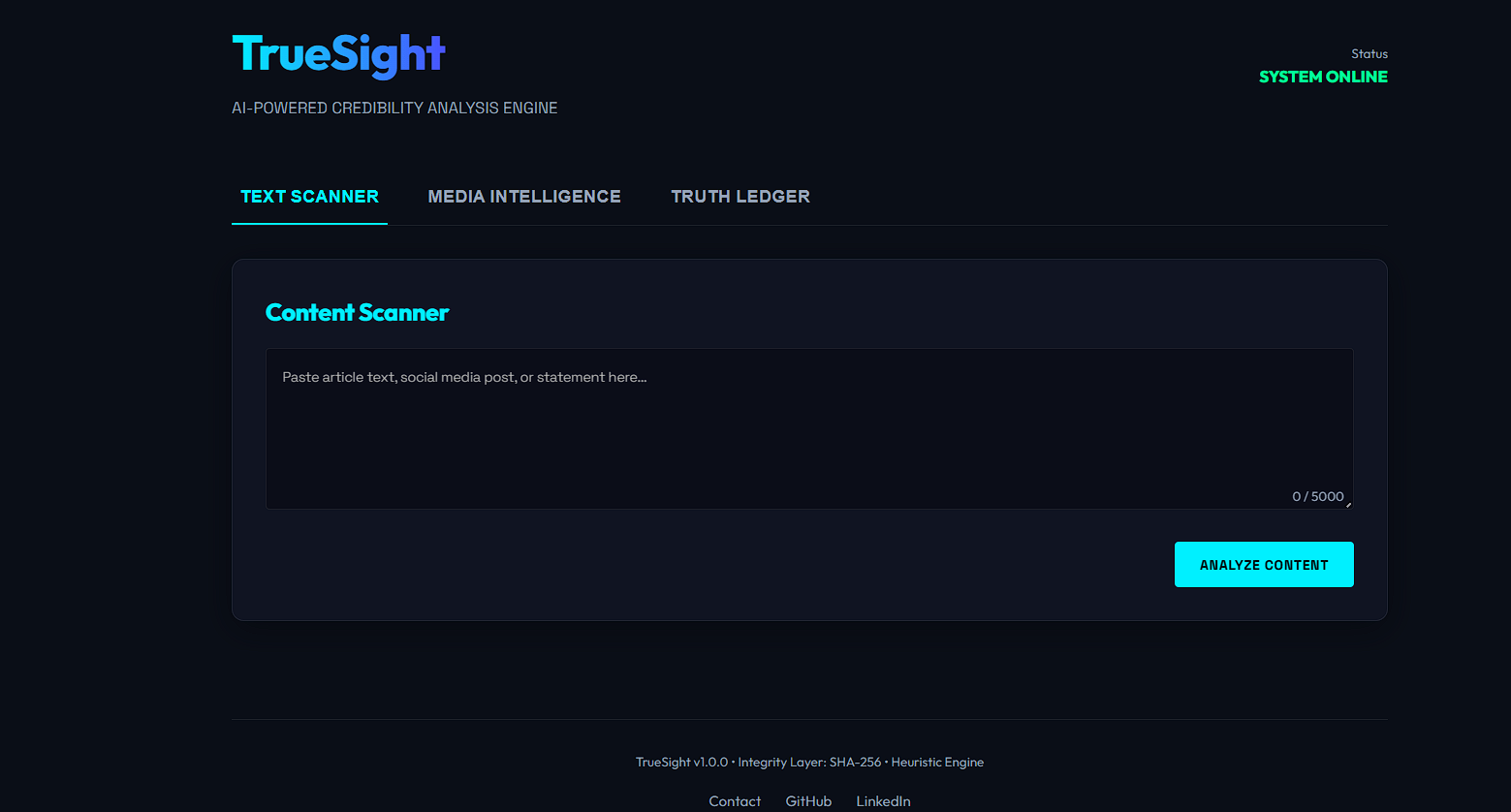
here the starting interface TRUESIGHT
-
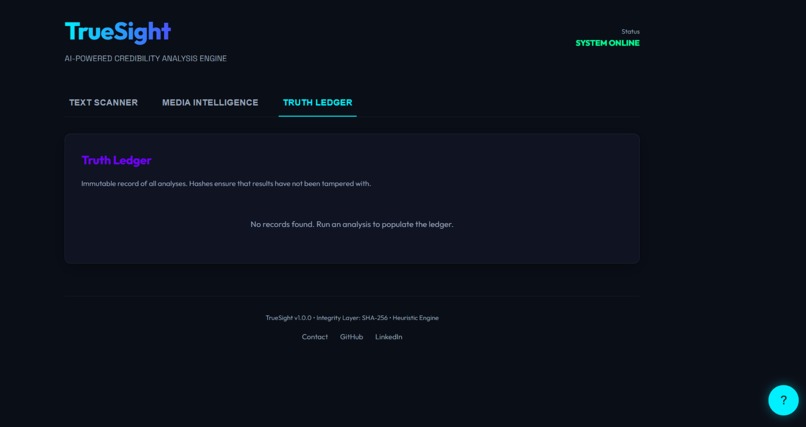
FINAL RESULT IN%

Inspiration
The motivation behind TrueSight comes from a simple observation: most systems claiming to detect misinformation oversimplify a deeply complex problem. Truth on the internet is rarely binary, yet many tools reduce it to a misleading true/false output.
What it does
TrueSight analyzes user-provided text and surfaces credibility signals through structured reasoning. Instead of claiming certainty, it:
scans text for linguistic red flags and manipulation patterns
highlights weak reasoning and logical inconsistencies
presents confidence ranges rather than absolute judgments
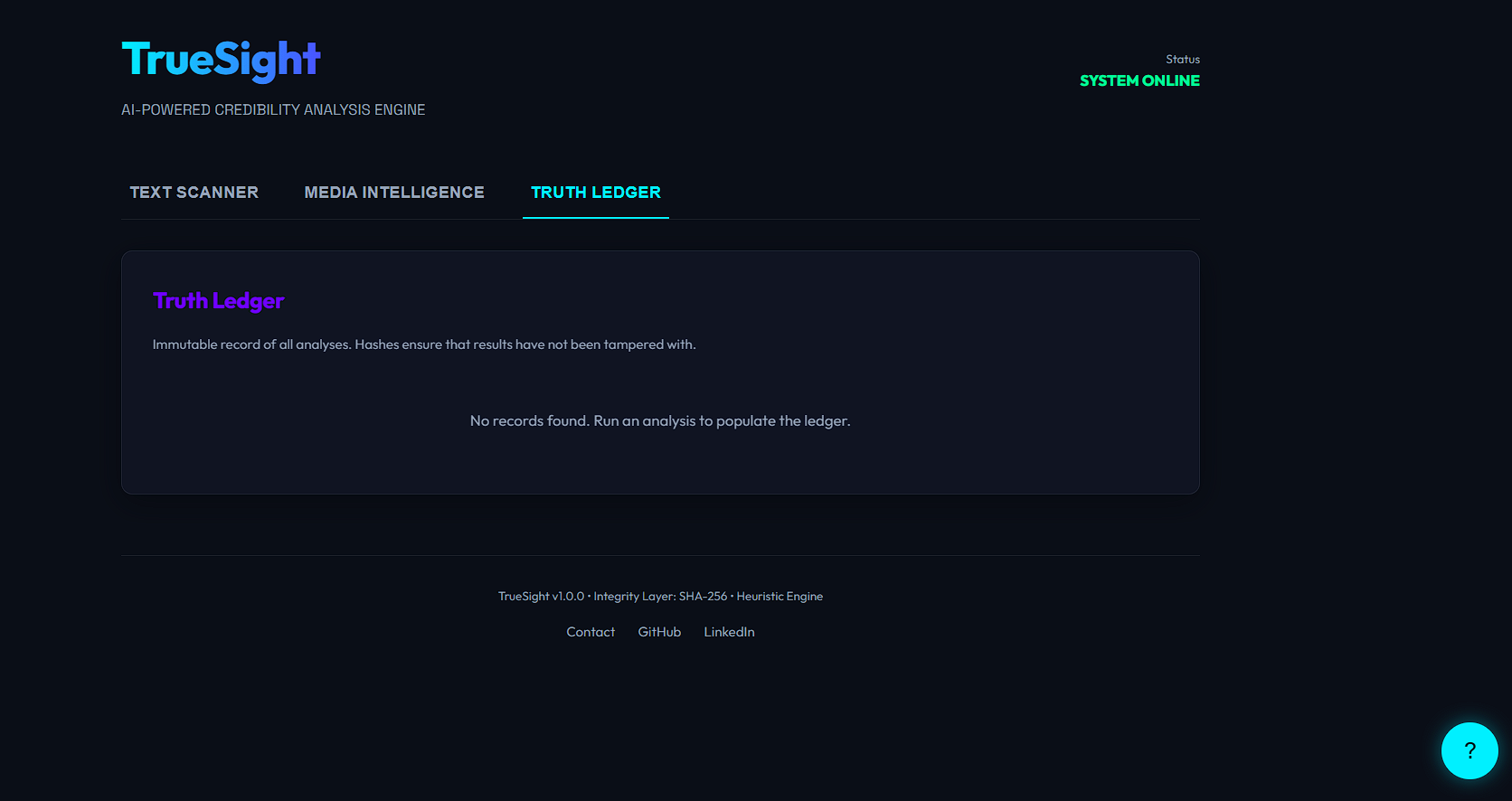
records each analysis in a transparent, tamper-aware Truth Ledger
The goal is not to declare truth, but to support informed judgment.
How we built it
TrueSight was built as a modular, frontend-driven system with future extensibility in mind:
A component-based UI separates scanning, analysis visualization, and history tracking
A lightweight analysis pipeline processes text in stages instead of black-box decisions
A custom hashing utility generates deterministic identifiers for each analysis
A clean project structure ensures the system can later integrate real NLP models or APIs
Every design decision prioritized clarity, explainability, and realism over hype.
Challenges we ran into
Avoiding fake AI claims: It is tempting to label everything as “AI-powered,” but we deliberately avoided overpromising accuracy.
Designing explainable outputs: Presenting reasoning clearly is harder than returning a single score.
Balancing scope: Building something meaningful without turning it into an unfinishable research project required strict boundaries.
Integrity without blockchain nonsense: Demonstrating traceability without unnecessary complexity was a conscious design challenge.
Accomplishments that we're proud of
Built a system that respects the limitations of AI instead of hiding them
Designed a transparent analysis flow that can be explained end-to-end
Created a portfolio-grade architecture rather than a tutorial demo
Maintained a strong separation between UI, logic, and utilities
What we learned
Truth assessment is a reasoning problem, not a classification shortcut
Explainability matters more than raw prediction scores
Good architecture makes future intelligence possible
Overengineering is just as dangerous as underengineering
What's next for TrueSight
Phase 1: AI Integration (The "Real Brain") Currently, TrueSight uses a heuristic engine (rules-based). The next step is connecting it to actual LLMs.
Integration with Gemini/GPT API: Replace the linguistic.js rule engine with a real-time call to an LLM. Prompt: "Analyze this text for logical fallacies and return a JSON score." Benefit: Much higher accuracy and distinct explanation of why something is a fallacy. Fact-Checking Database: Connect to Google Fact Check Tools API to verify specific claims against known debunks.
🔗 Phase 2: Decentralized Truth Ledger (Web3) Currently, ledger.js uses local storage and simple SHA-256.
Blockchain Integration: Store the SHA-256 hashes on a low-cost blockchain (Polygon or Solana) or a decentralized storage (IPFS/Arweave). Why?: This makes the "Immutable Record" truly public and verifiable by anyone in the world, not just the local user. Perfect for a "Global Truth Registry."
🕵️ Phase 3: Browser Extension Chrome/Edge Extension: Instead of copy-pasting text into the website, the user highlights text on any website (Twitter, CNN, etc.) and right-clicks "Verify with TrueSight." Overlay UI: A small popup shows the credibility score directly over the social media post.
📹 Phase 4: Real Media Forensics Currently, MediaScanner.js is a simulation.
Built With
- css3
- hashingapi
- html5
- javascript
- vite

Log in or sign up for Devpost to join the conversation.