TrueSeal
Inspiration
QR codes have become part of everyday life. We use them to access websites, make payments, register for events, and share information. However, there is one problem: not every QR code is trustworthy.
A QR code can look completely legitimate while leading someone to a fake website, a misleading payment page, or an altered destination. We wanted to build something that could make scanning QR codes safer and help people feel more confident about what they are interacting with.
That idea inspired TrueSeal: a platform designed to bring more trust and transparency to QR code interactions.
What It Does
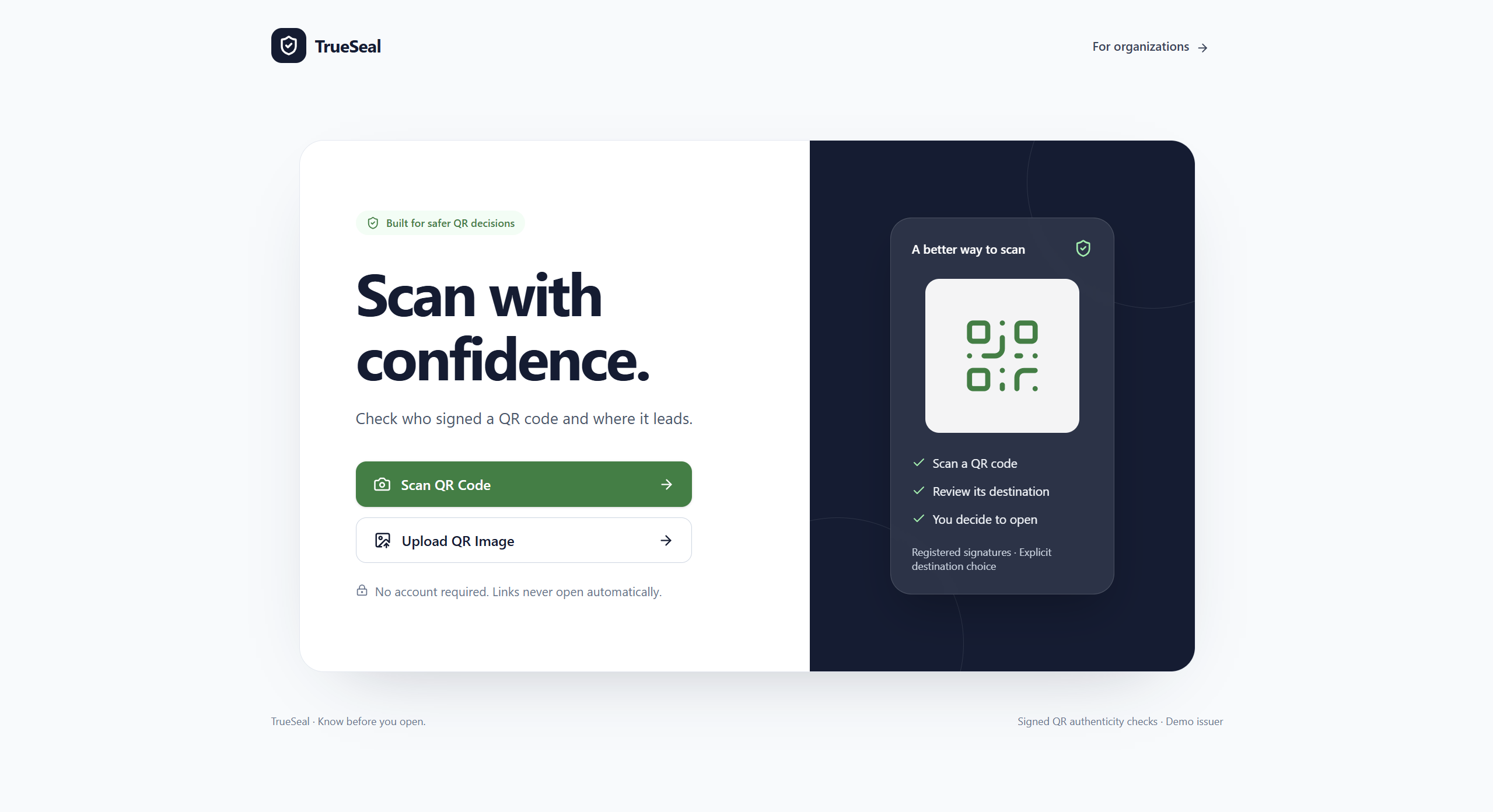
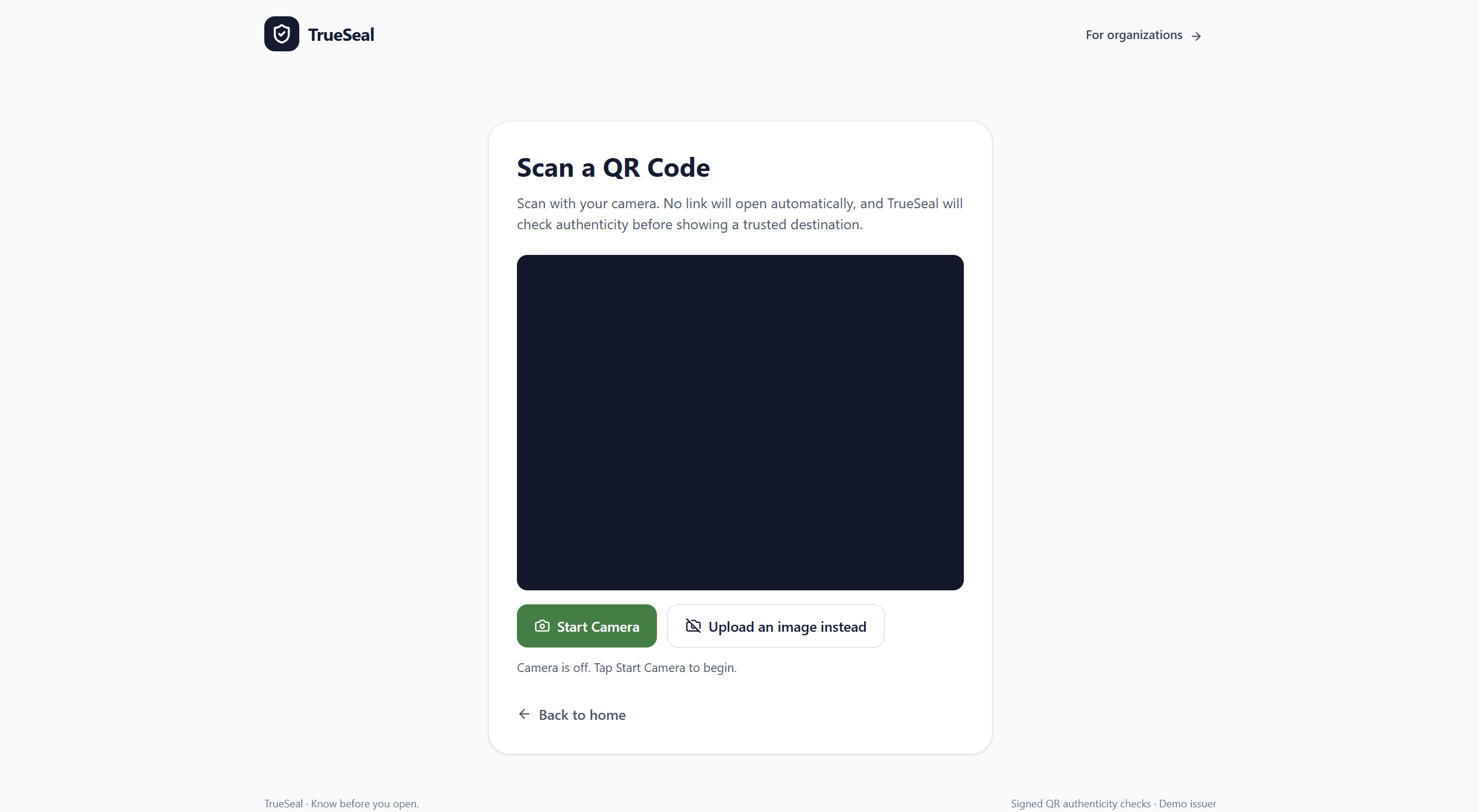
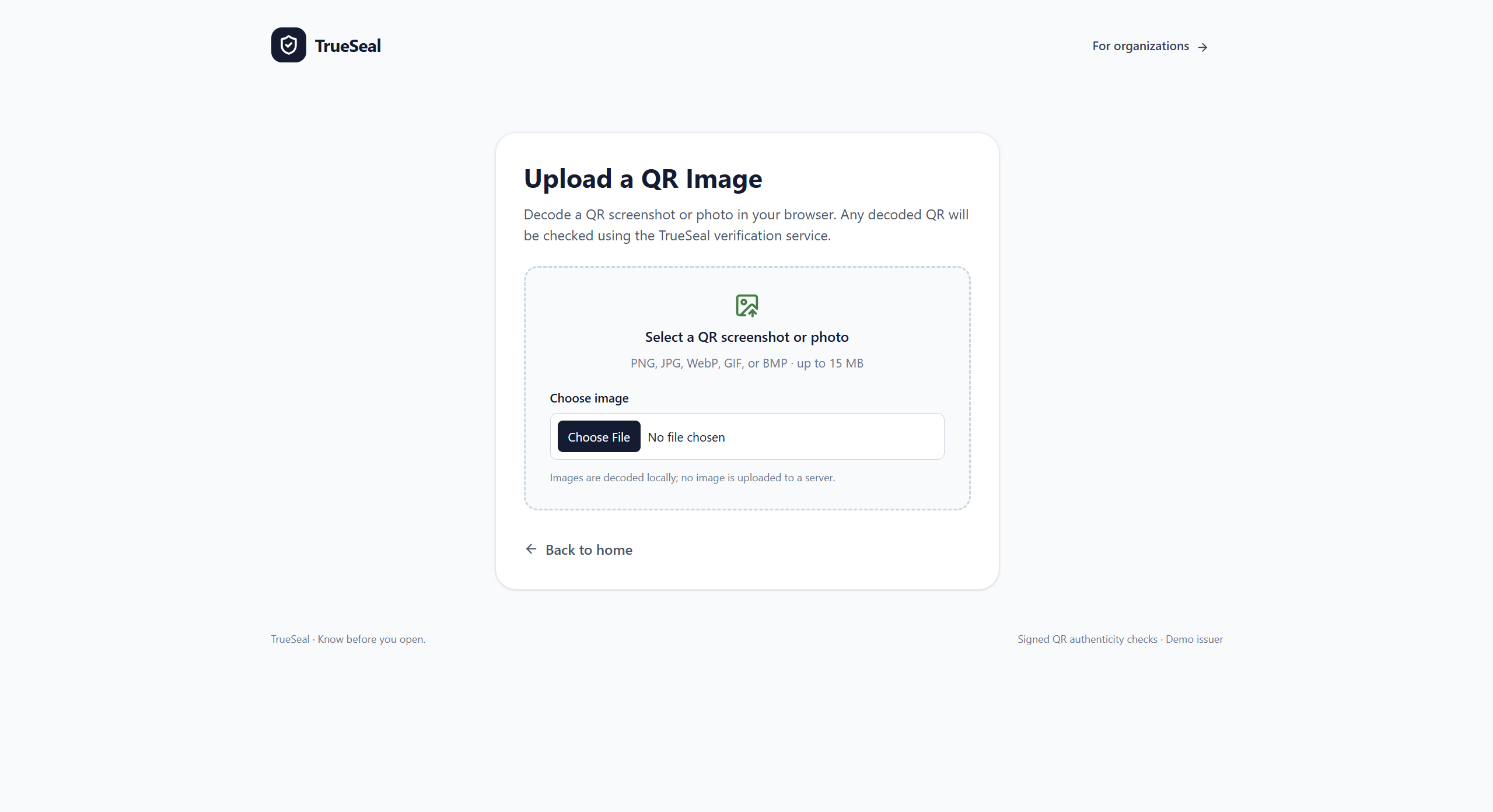
TrueSeal makes working with QR codes simple while adding an extra layer of awareness and security. Users can generate QR codes, scan them using their camera, or upload an image containing a QR code. The platform displays the decoded content so users can review where a QR code leads before deciding what to do next.
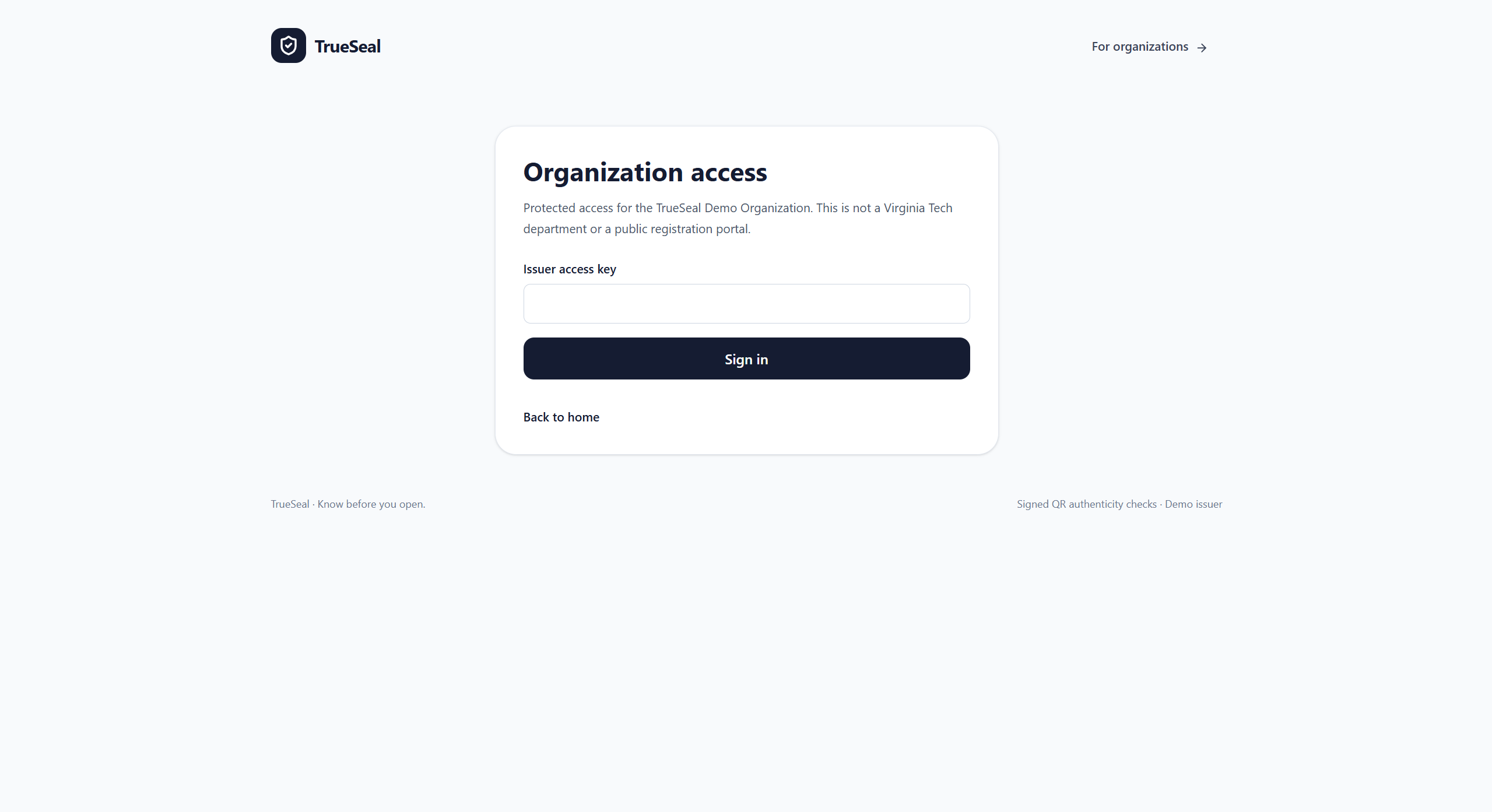
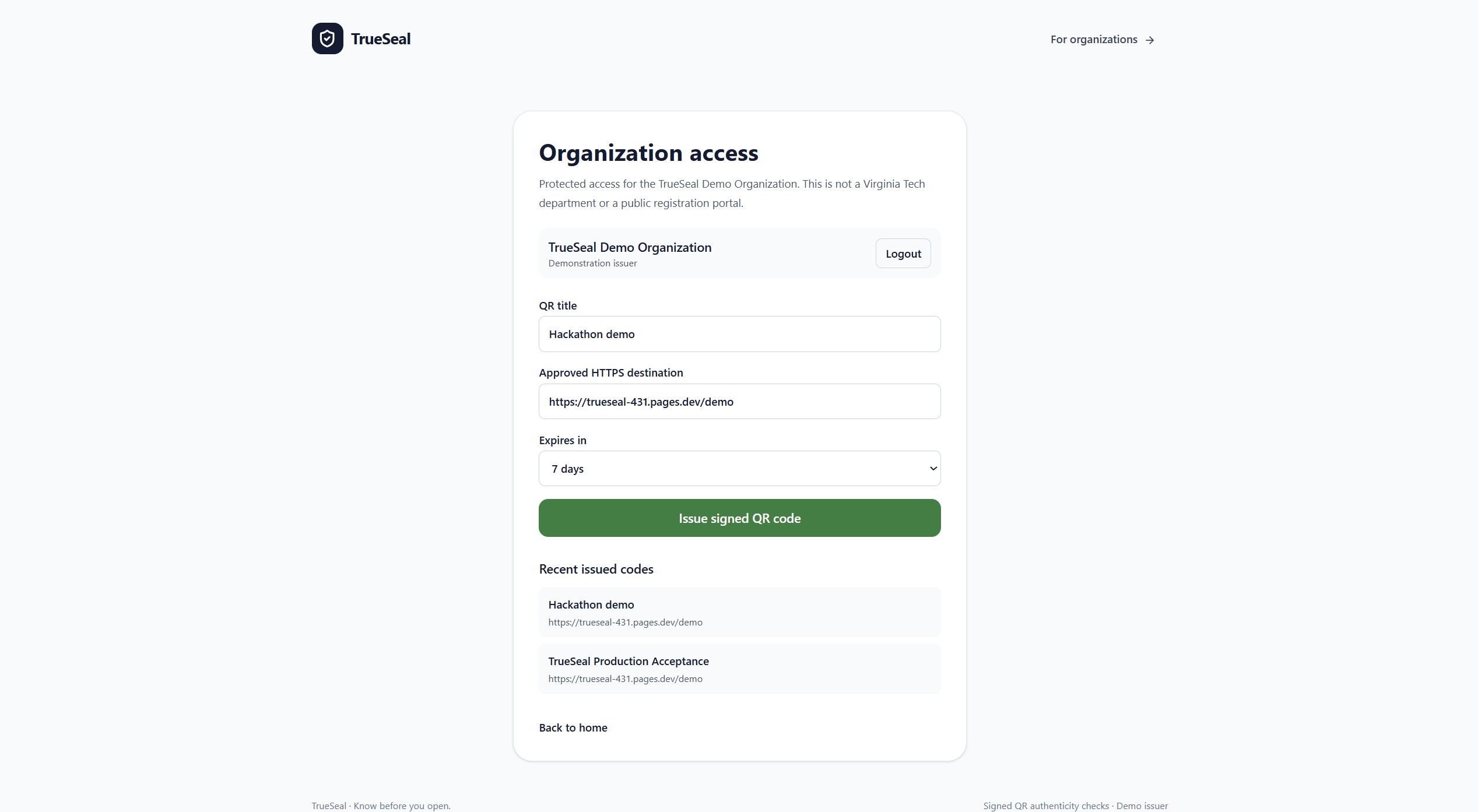
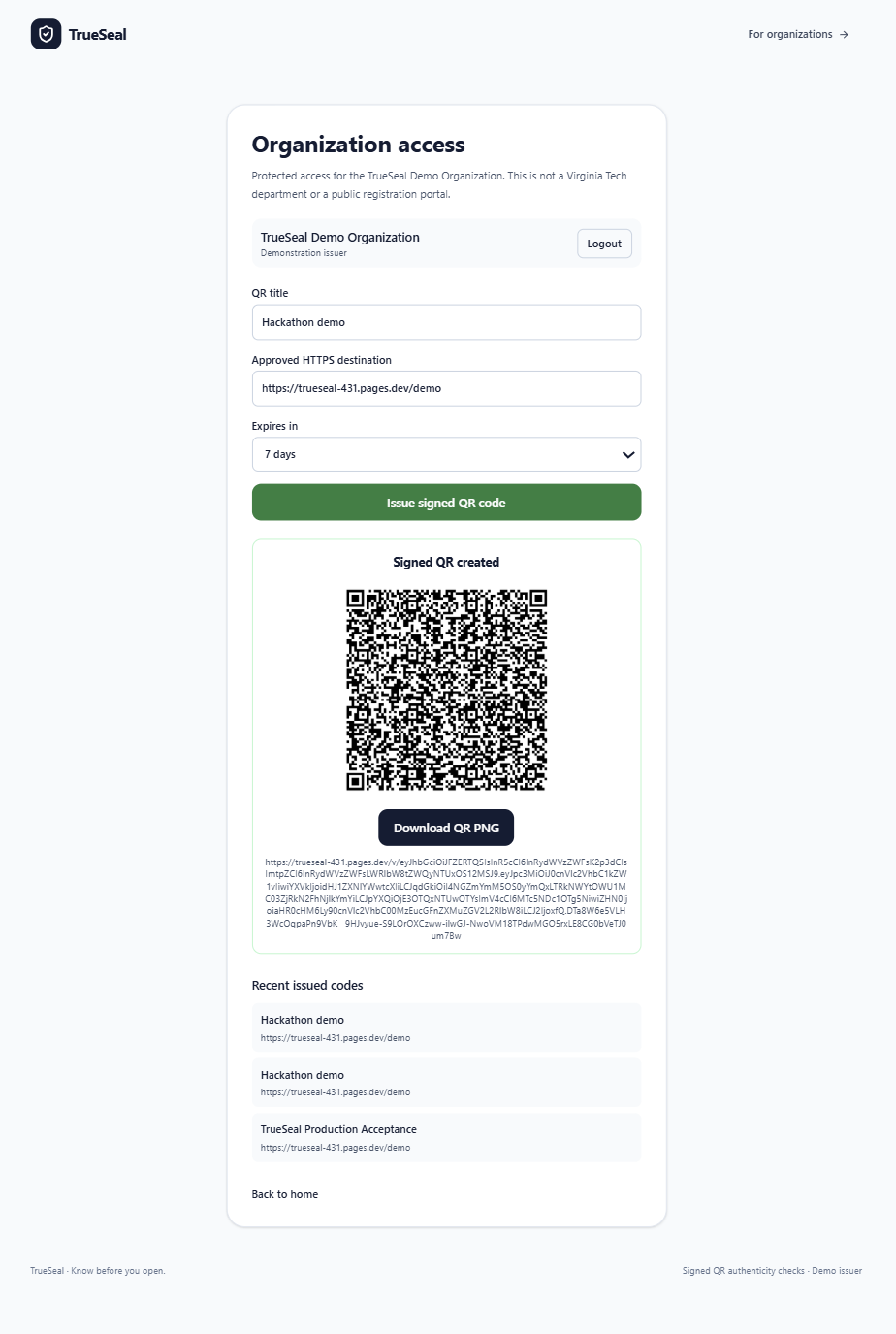
Our bigger vision is to help organizations issue recognizable, trustworthy QR codes and give users a way to distinguish legitimate codes from suspicious or altered ones.
Rather than encouraging people to scan and immediately trust, TrueSeal encourages them to pause, review, and verify.
How We Built It
We built TrueSeal as a web application with a clean, accessible interface and a focus on making QR code interactions straightforward.
Our technology stack includes:
- React — Building the interactive user interface.
- TypeScript — Keeping the code organized and improving reliability through type checking.
- Vite — Providing a fast development environment and build process.
- Tailwind CSS — Creating a responsive and consistent design.
- Python and Cloudflare Pages Functions — Supporting backend functionality.
- SQLite — Supporting structured data storage.
- QRCode — Generating QR codes from text and URLs.
- ZXing — Reading and decoding QR codes from camera input and uploaded images.
- Git and GitHub — Managing source code and collaborating throughout development.
We focused on making the experience easy to understand, even for someone who has never used a QR security tool before. We also made sure scanned links are displayed for review rather than automatically opening them.
Challenges We Faced
One of our biggest challenges was balancing security with simplicity. We wanted TrueSeal to provide useful security features without making the experience confusing or overwhelming.
Another challenge was getting QR generation and scanning to work reliably across different inputs. Supporting camera access, image uploads, and different QR code contents required careful testing and troubleshooting.
We also had to think beyond simply reading a QR code. Decoding its contents is only the first step; building a system that can establish whether a code is genuinely trustworthy requires additional verification logic and careful handling of data.
Working through these challenges helped us better understand how frontend and backend components interact and why security needs to be considered throughout the development process.
What We Learned
Building TrueSeal taught us that even a familiar technology like QR codes has security concerns that are easy to overlook.
We gained experience working with React, TypeScript, QR code generation and decoding, backend functionality, and collaborative software development. We also learned the importance of testing individual features, handling errors, organizing a codebase, and designing around the needs of actual users.
Most importantly, we learned that a useful security tool does not need to be complicated. Sometimes, helping someone make a more informed decision before clicking a link can make a meaningful difference.
What's Next
We see TrueSeal as a starting point for a more trustworthy QR code ecosystem. Our goal is to continue developing organization-based QR registration, authenticity verification, and clearer warnings when a QR code cannot be trusted.
TrueSeal is built around one simple idea: you should know what you're scanning before you trust it.
Built With
- cloudflare
- css
- d1
- ed25519
- javascript
- json
- jws
- node.js
- react
- sqlite
- tailwind
- typescript
- vite
