-
-
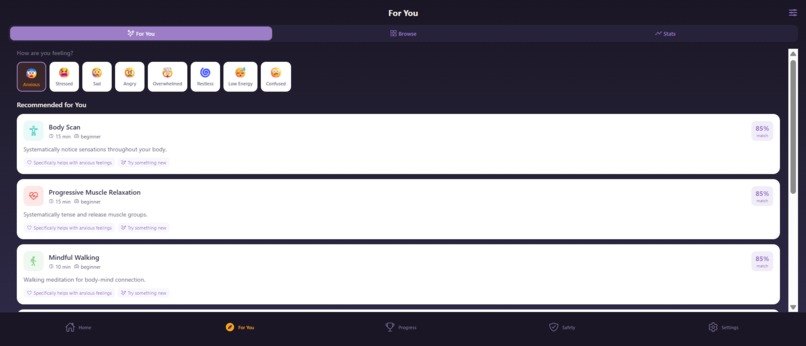
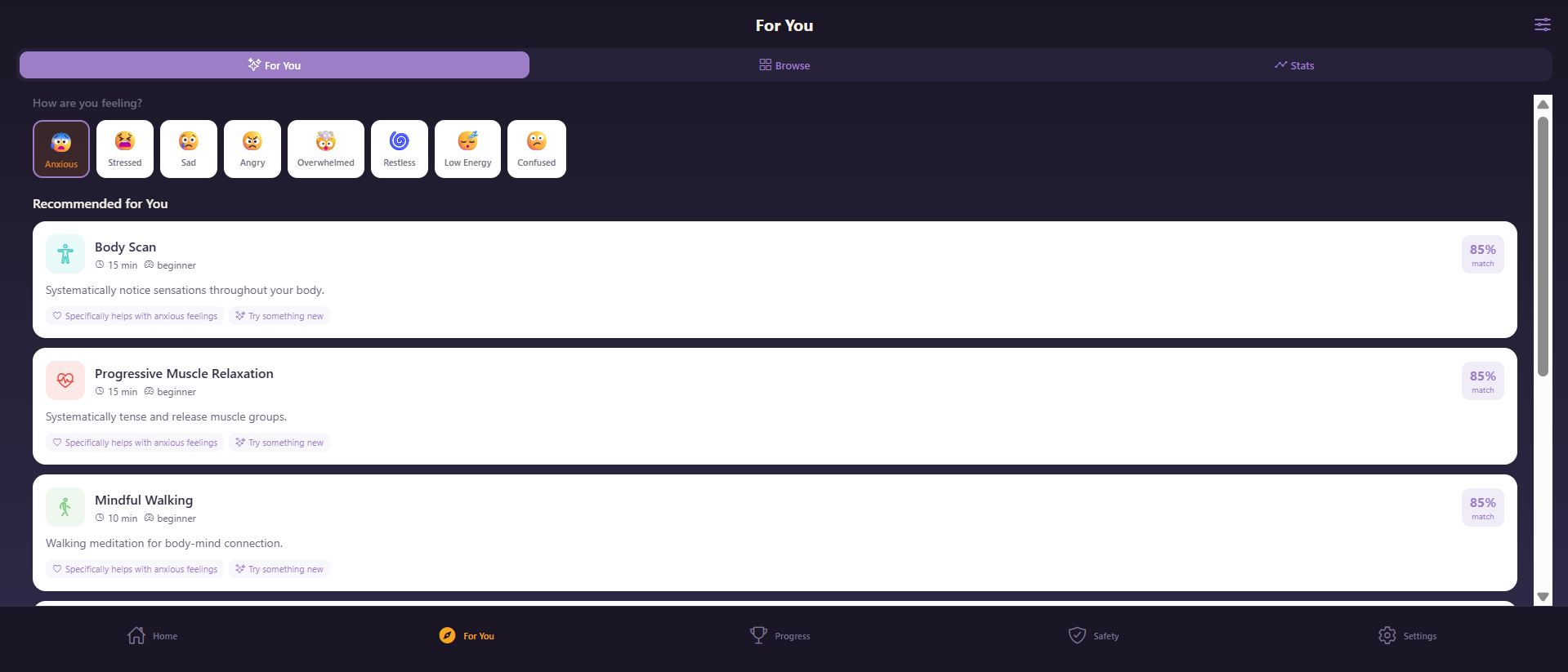
For You Page
-
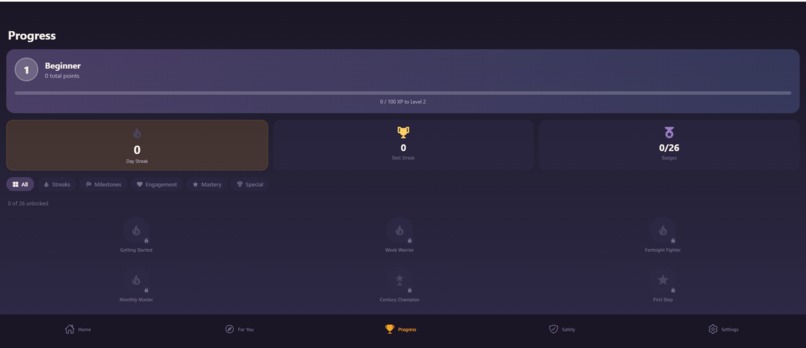
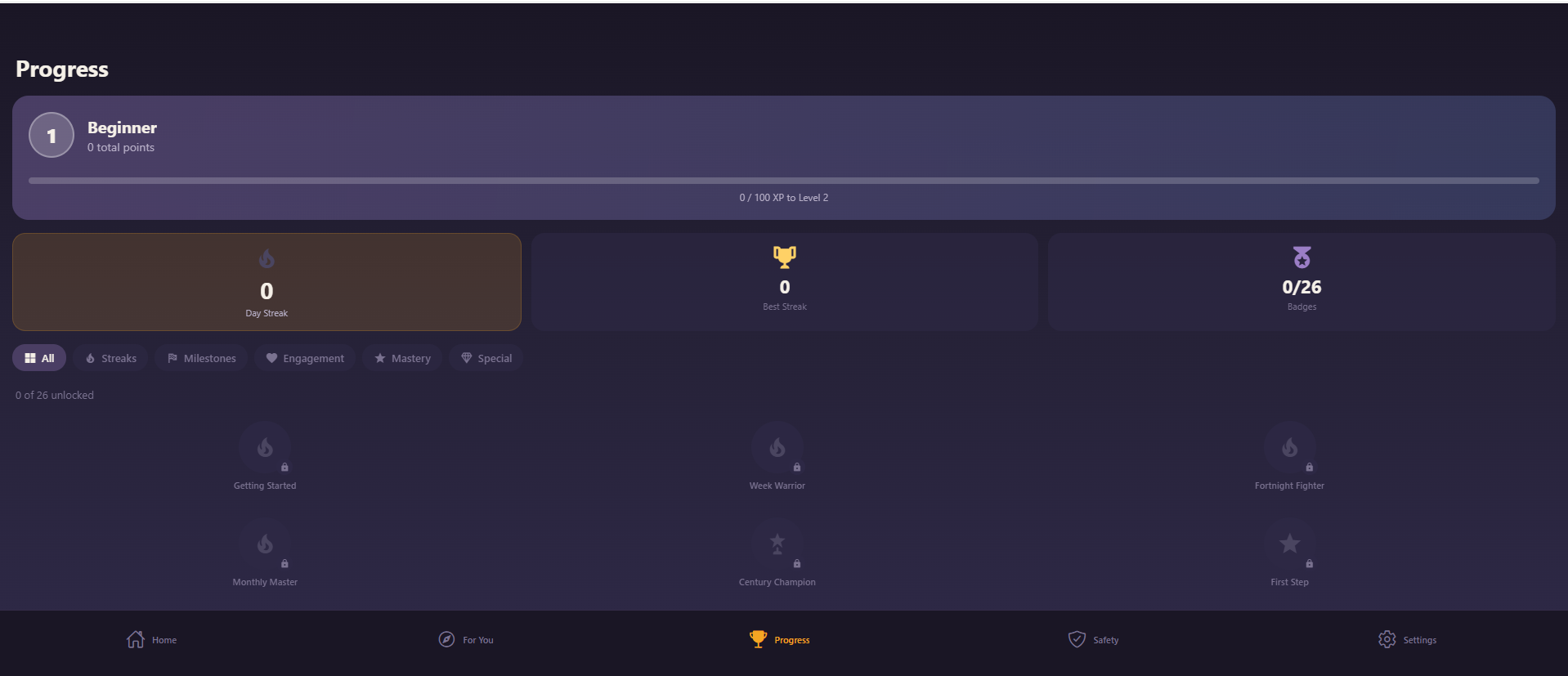
Progress Page
-
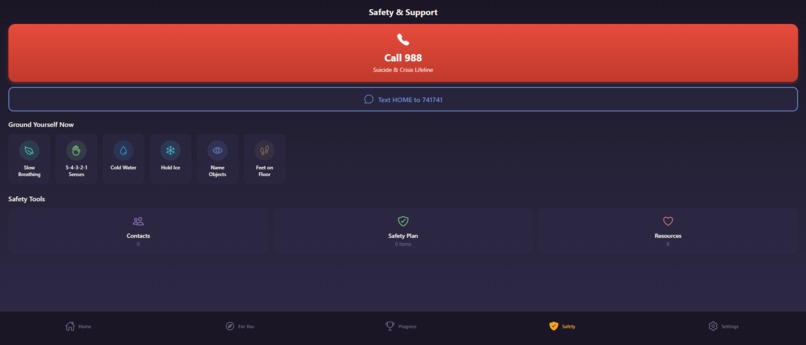
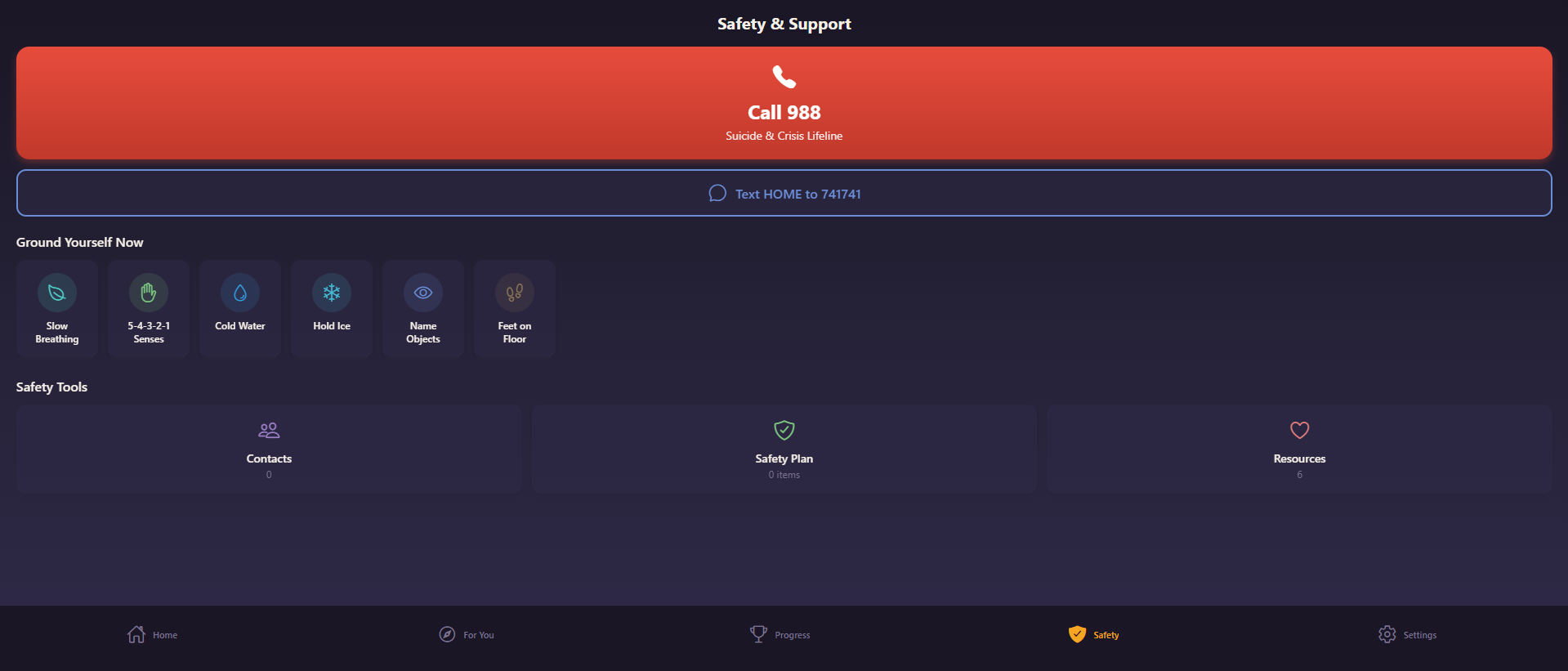
Safety Page
-
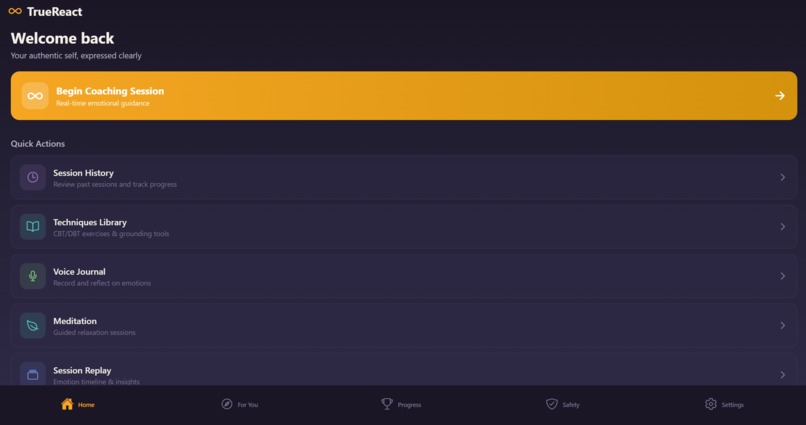
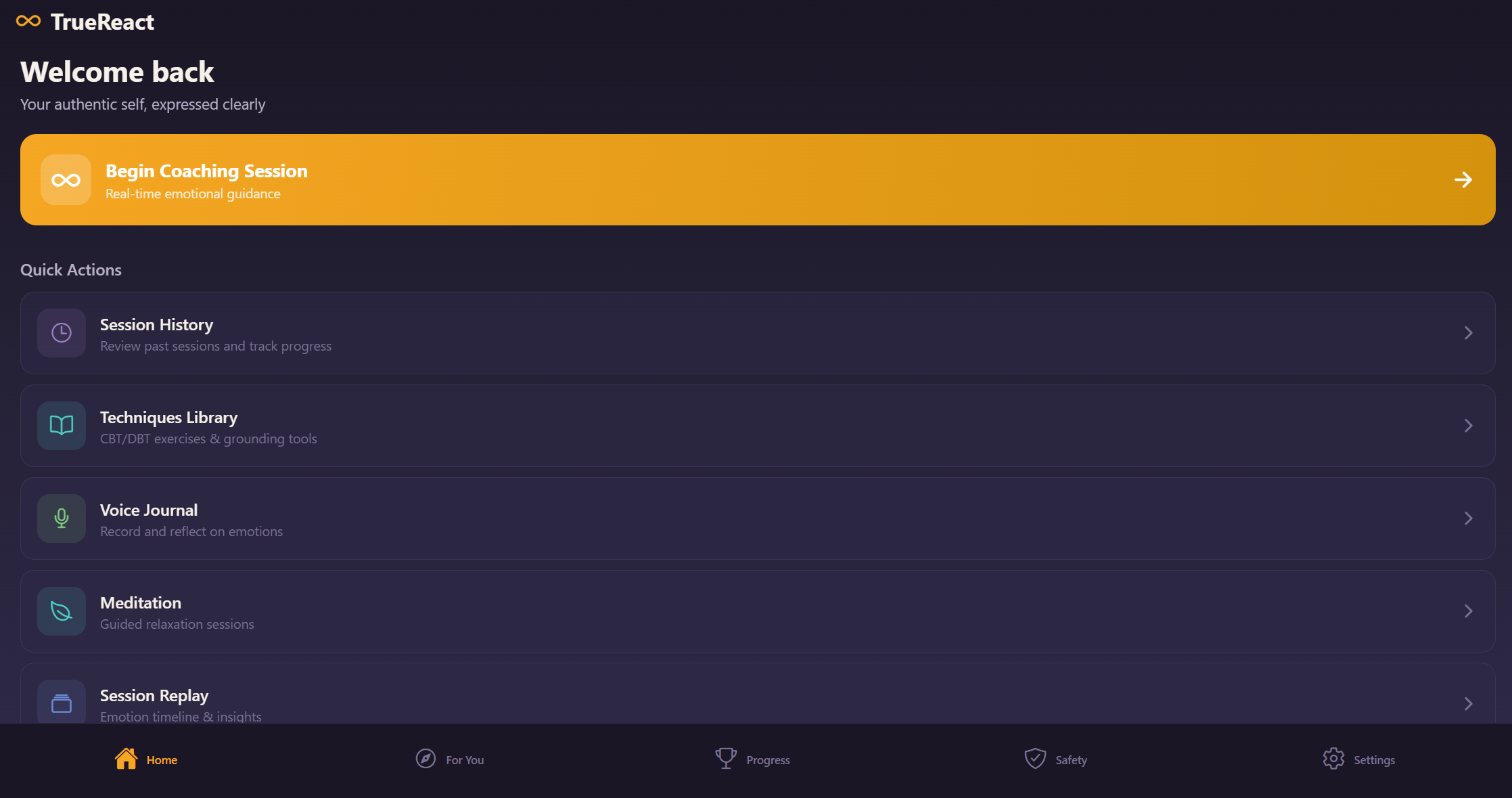
Home Page
-
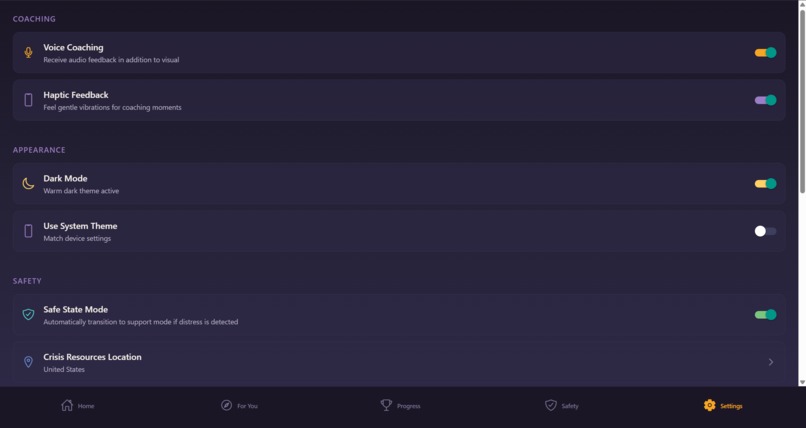
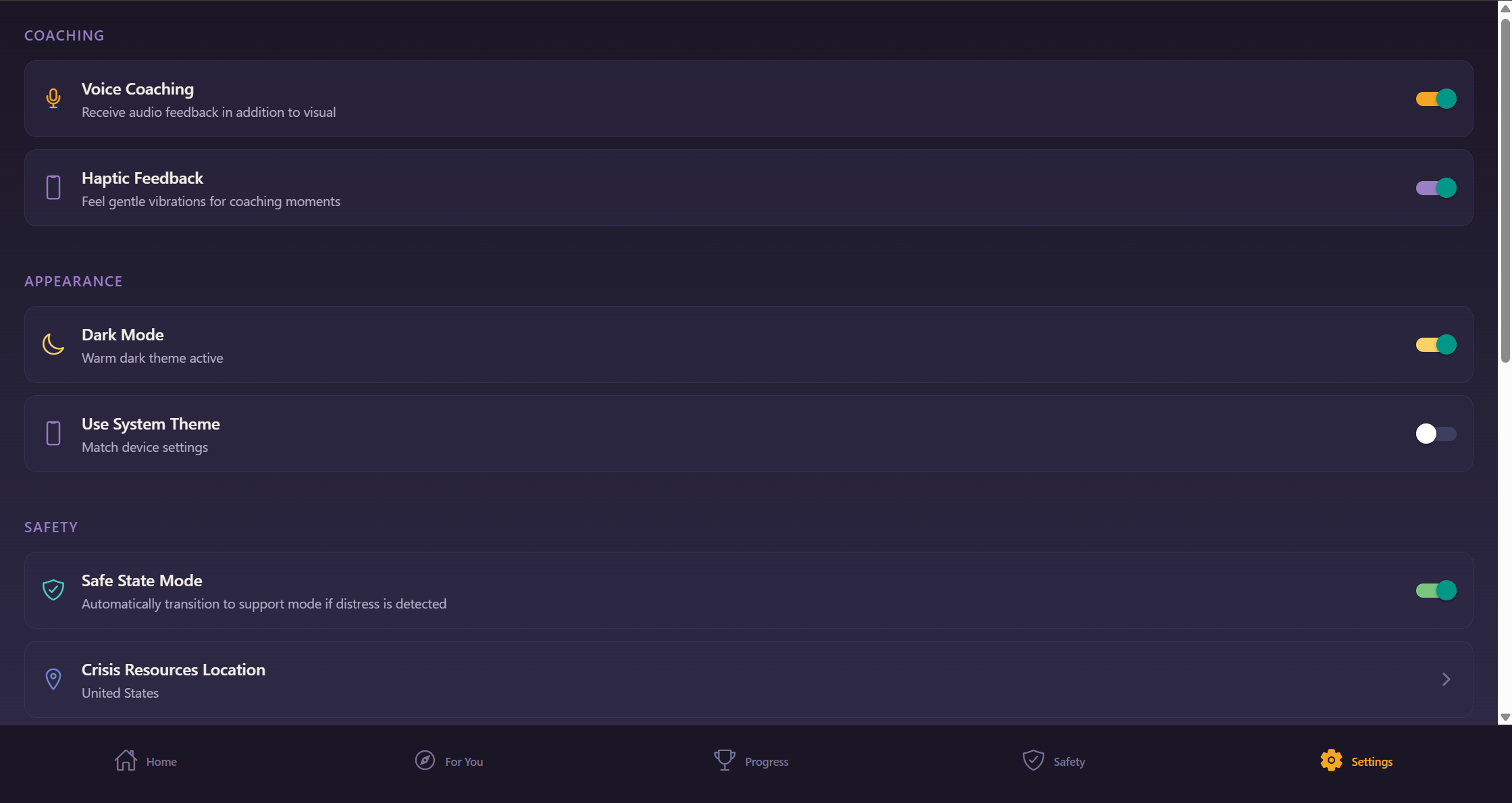
Settings Page
-
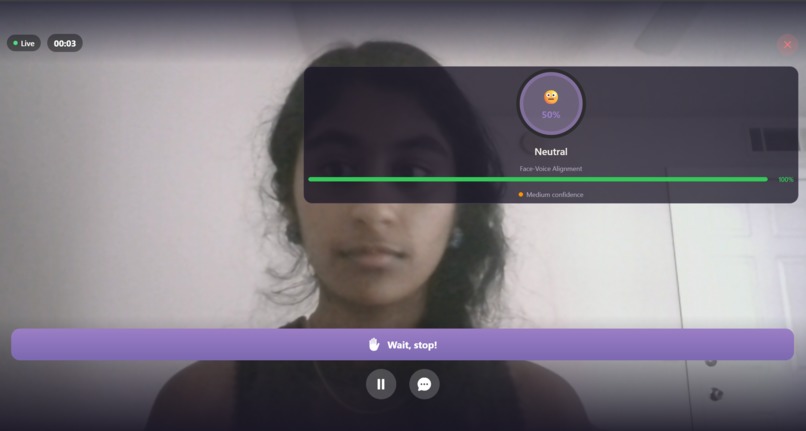
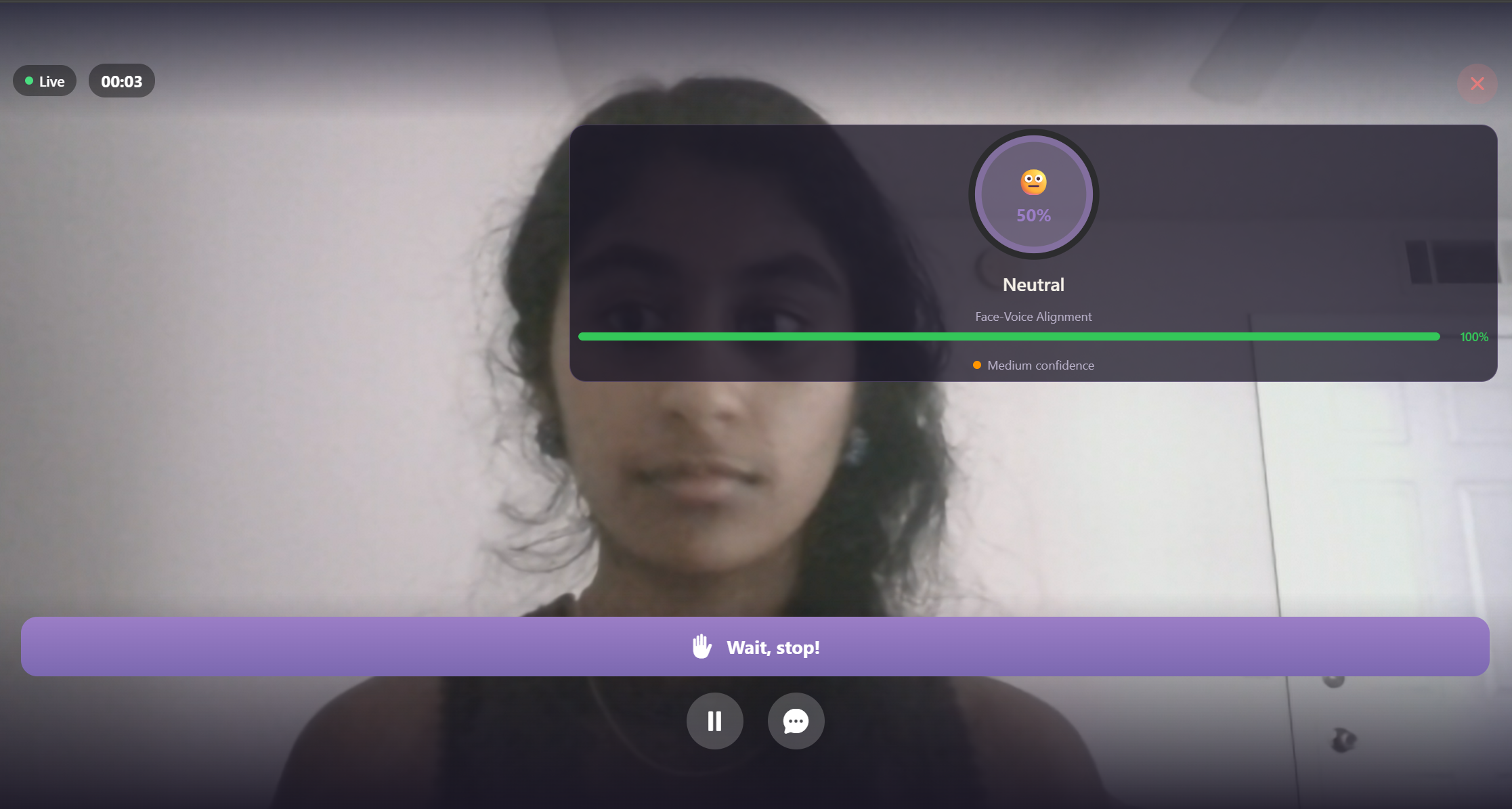
Active Session
About the Project
Inspiration
TrueReact was inspired by a simple but painful gap: many people — especially neurodivergent users — know what they want to communicate internally but struggle to express it externally in real time.
We wanted to build something that feels less like a chatbot and more like a supportive live coach that can notice tone, pacing, and expression, then respond with grounded, compassionate guidance in the moment.
Instead of reflecting after a conversation, TrueReact helps users navigate the social moment while it’s happening.
How We Built It
We built TrueReact as a real-time multimodal system composed of four major layers:
Frontend experience for live sessions (mobile + web)
Low-latency backend orchestration for session flow and safety logic
Gemini-powered live multimodal reasoning
Grounding + cloud deployment stack (Vertex AI, Cloud Run, Cloud Build, Terraform, Firebase)
The core interaction loop works like this:
Capture user signals (voice, tone, and interaction context)
Analyze emotional state and potential distress signals
Ground suggestions in evidence-based communication techniques
Return actionable coaching feedback instantly
We treated coaching quality like a control system, where feedback must be timely, interpretable, and safe.
Conceptually:
Effective Support ∝ (Relevance × Safety) / Latency
If latency increases, support quality drops quickly — even if the model is intelligent.
What We Learned
Real-time UX matters as much as model quality. Even a 1–2 second delay can make coaching feel disconnected.
Multi-agent decomposition improves reliability. Separating emotion analysis, safety checks, research grounding, and coaching logic made the system easier to debug and tune.
Safety must be first-class. Distress detection and safe-state logic require explicit pathways and fallback behaviors.
Grounding increases trust. Users respond better when suggestions are concrete and evidence-linked rather than generic.
Deployment automation saves hackathon time. Infrastructure-as-code and scripted deploys reduced last-minute operational risk.
Challenges We Faced
Balancing responsiveness vs. reasoning depth. Richer model analysis can increase latency, so optimization was critical.
Multimodal signal ambiguity. Tone and wording sometimes conflict, requiring confidence scoring and careful orchestration.
Cross-platform consistency. Keeping behavior aligned across web and mobile streaming sessions required additional synchronization.
Safety edge cases. Determining when to escalate into support mode without over-triggering interruptions.
Environment and integration friction. Coordinating API keys, cloud services, and local reproducibility across collaborators.
Why This Project Matters
TrueReact is our attempt to make emotional coaching more immediate, personalized, and practical.
Instead of relying only on post-conversation reflection, the system supports users during the social interaction itself, where confidence, clarity, and emotional awareness matter most.
Our goal is to make supportive communication tools accessible in the moment people need them — not just afterward.
Built With
- claude
- docker
- expo.io
- fastapi
- firebase
- firestore
- google-cloud
- google-cloud-build
- googleai
- python
- react-native
- terrform
- typescript
- uvicorn
- visual-studio


Log in or sign up for Devpost to join the conversation.