-
-
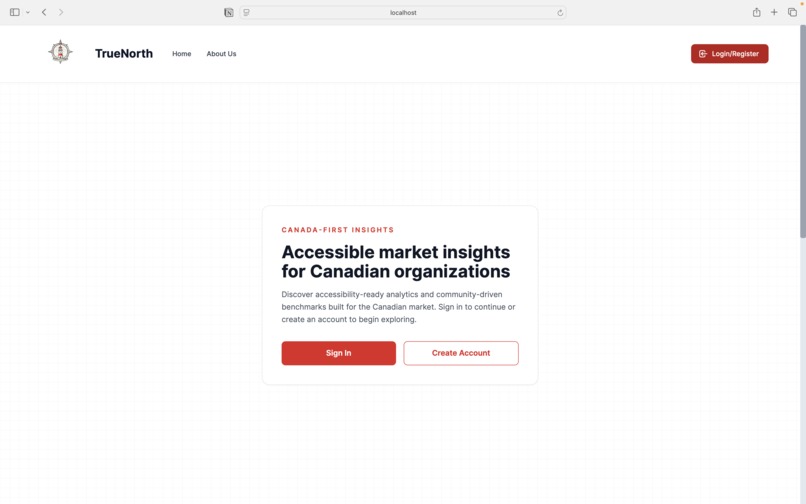
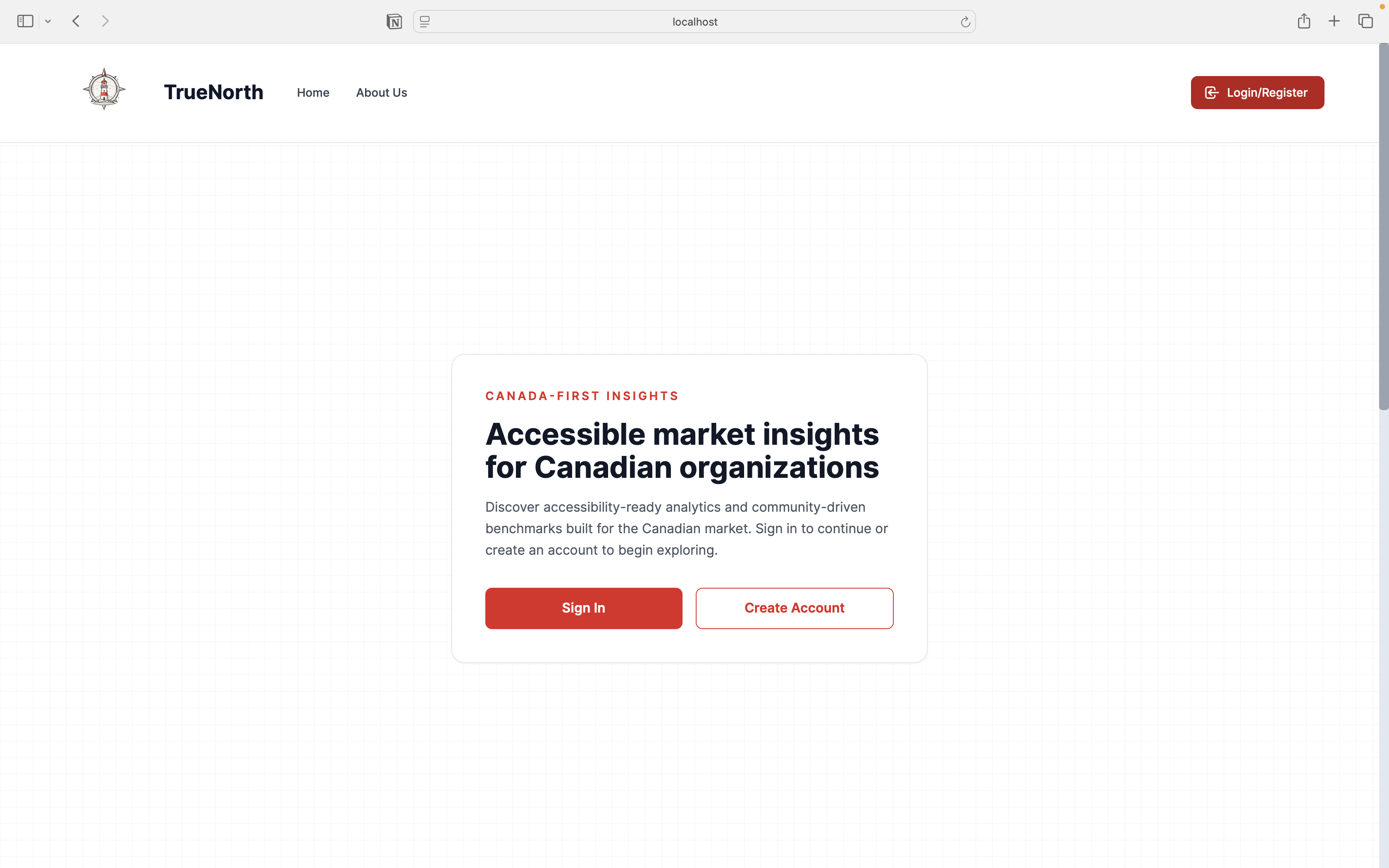
Landing Page
-
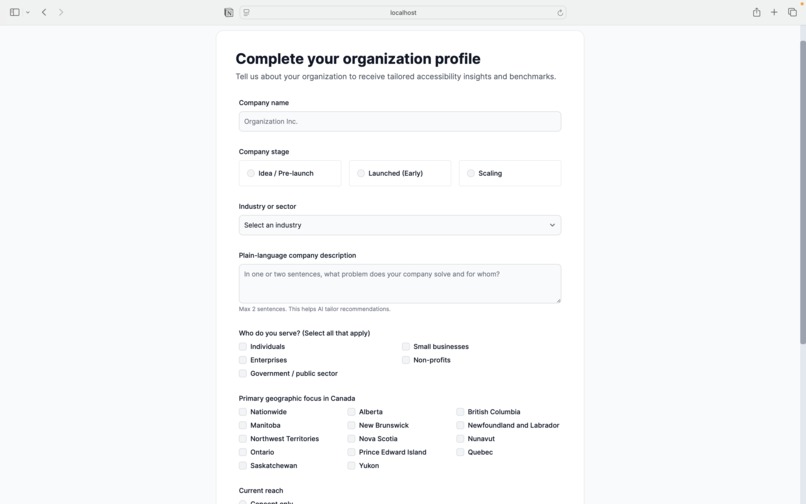
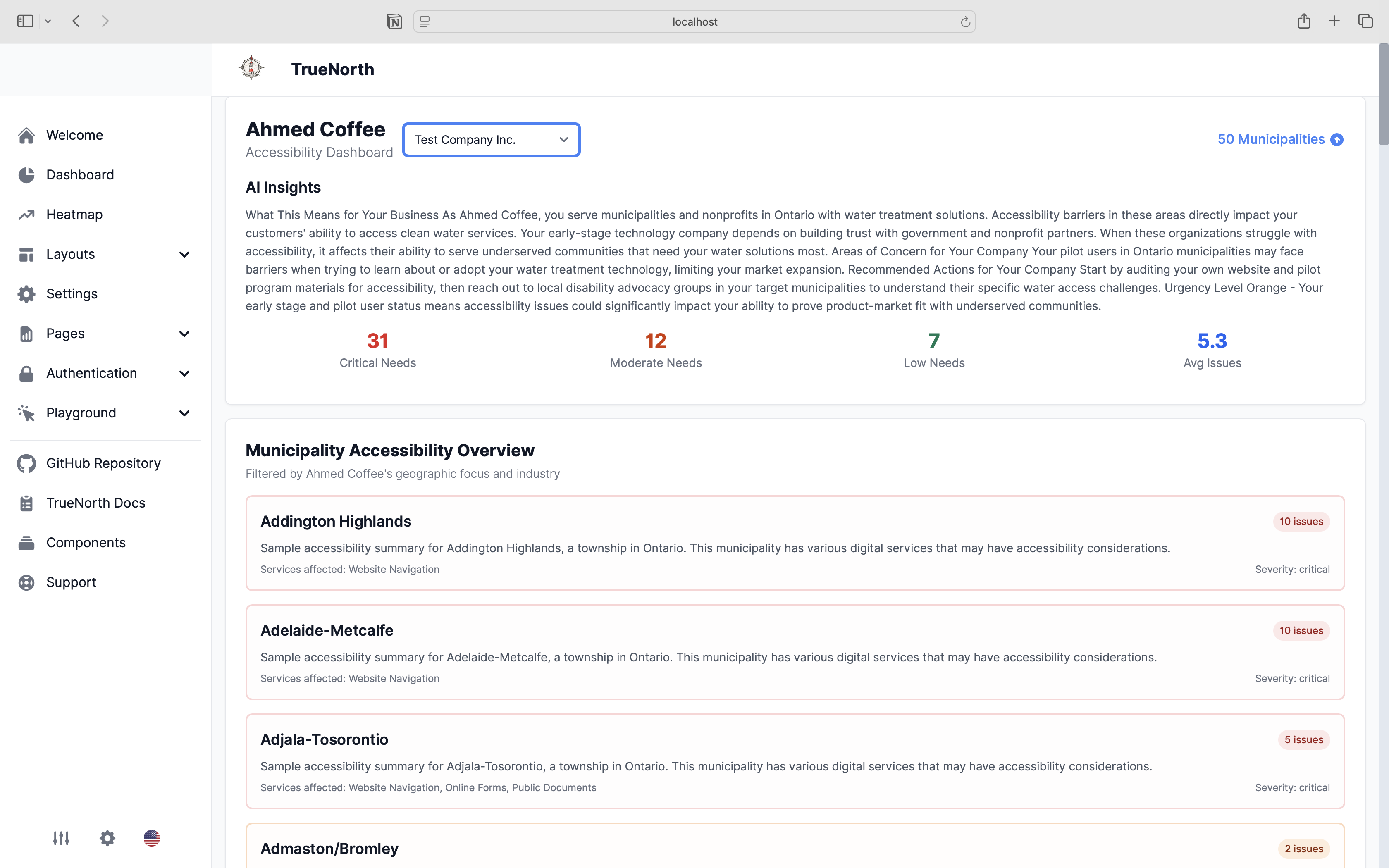
Getting information about companies
-
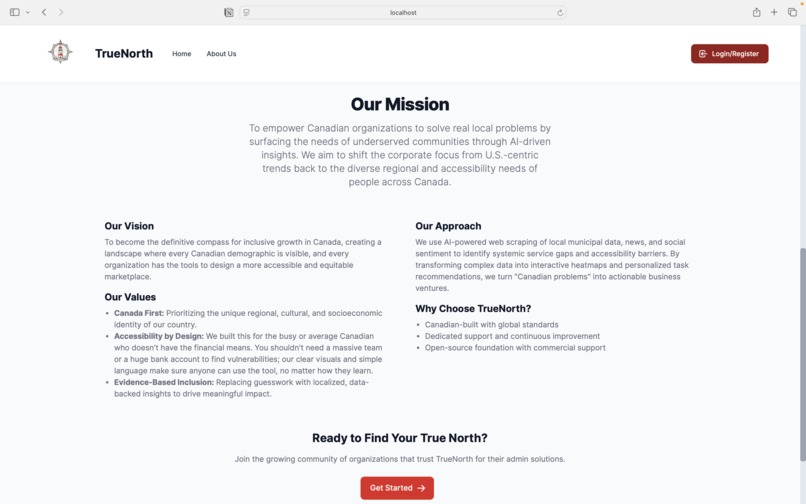
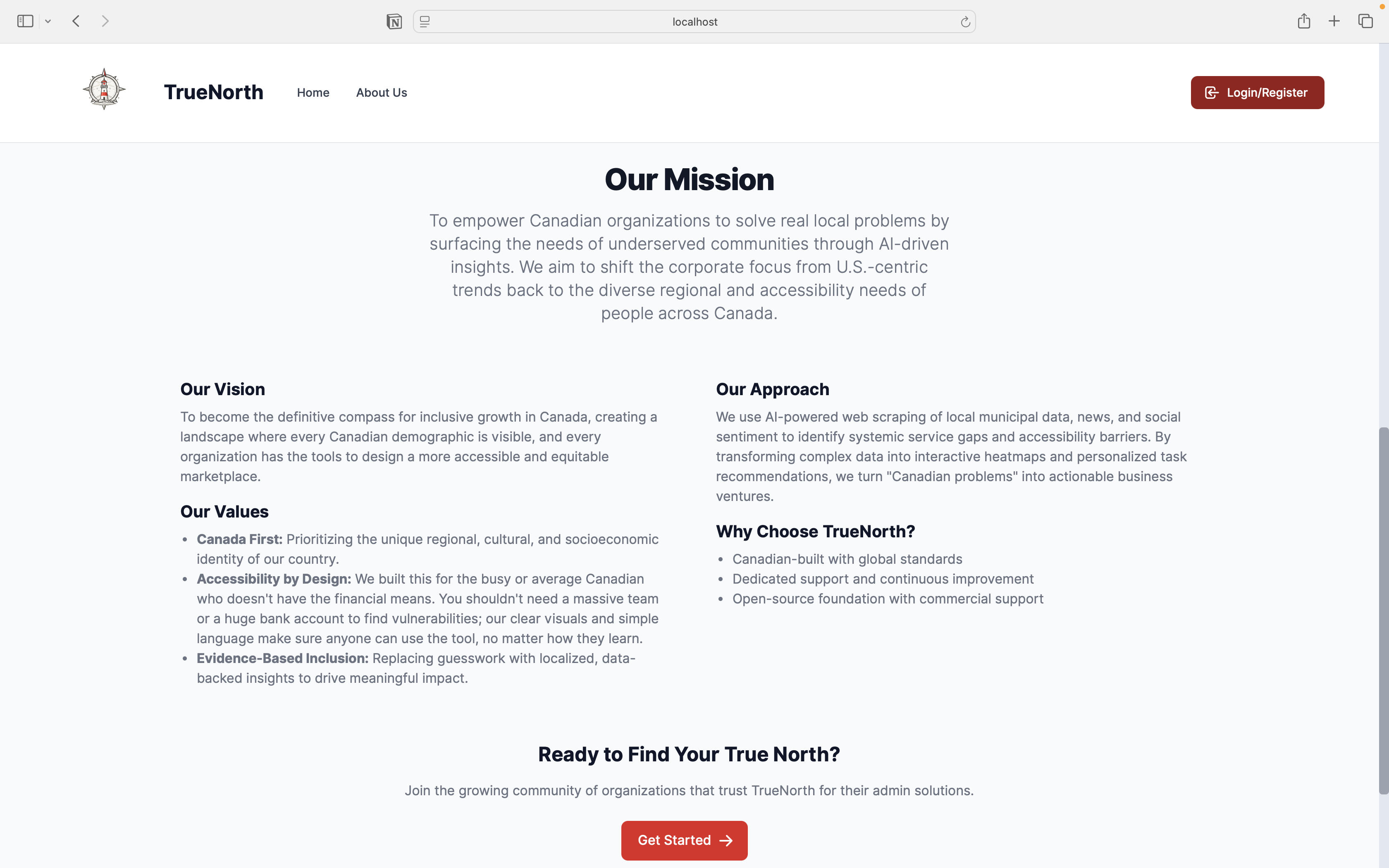
Our mission
-
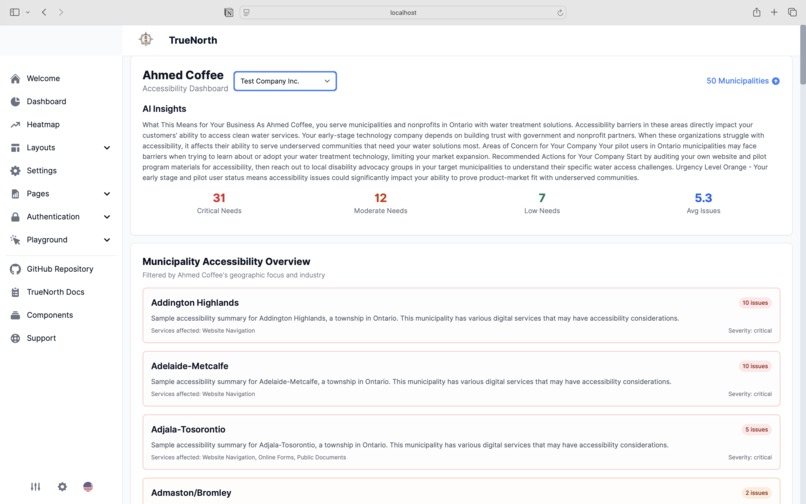
Company Overview
-
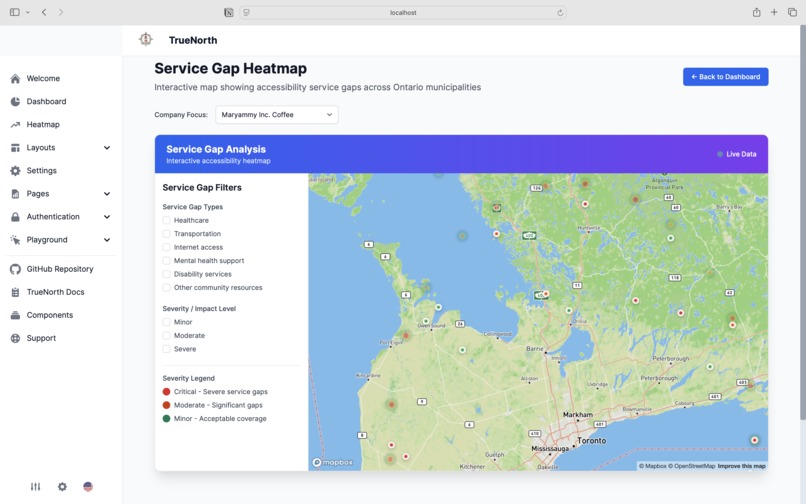
Heatmap

About the Project
TrueNorth is an AI-powered platform designed to help Canadian companies identify service gaps and accessibility challenges across Canada and translate those insights into actionable, business-specific recommendations. The project focuses on making underserved communities visible, while helping business ventures design more inclusive, accessible, and impactful solutions.
Background
A clear example of the problem TrueNorth addresses can be seen in Haliburton, Ontario.
Residents in Haliburton experienced consistently slow and unreliable fiber internet service from Bell that failed to meet the needs of a significant portion of the town. Over time, frustration surfaced publicly through Reddit threads and local Facebook groups, where residents shared complaints, performance issues, and a lack of meaningful response or improvement. For example, a Facebook post documents one resident’s experience and frustrations with the service.
Eventually, few residents switched to Starlink and reported significantly better results. This triggered a broader shift: as more residents followed suit, a large portion of the community migrated away from Bell’s service. As a result, Bell lost much of its local customer base to an external, U.S.-based provider not because of pricing or competition alone, but because it failed to recognize and address a localized service gap.
Now imagine if Bell had a tool to identify issues like this early before complaints escalated...
Inspiration
During the hackathon, we had the opportunity to speak with one of the sponsors, Simple Venture, whose company inspired us to think beyond just helping large businesses. Their perspective motivated us to design TrueNorth as a platform that not only empowers established Canadian companies but also supports startups with the tools to understand and serve communities across Canada effectively.
TrueNorth was inspired by the disconnect between how companies often define their markets and the lived realities of people across Canada. Many products are designed using generalized or U.S.-centric assumptions, which overlook regional differences in infrastructure, accessibility, and access to essential services.
We wanted to build a tool that shifts the question from “Who is our target user?” to “Who are we unintentionally excluding?” By grounding insights in real municipalities and accessibility challenges, TrueNorth helps companies better understand where their services fall short and why those gaps matter.
What it does
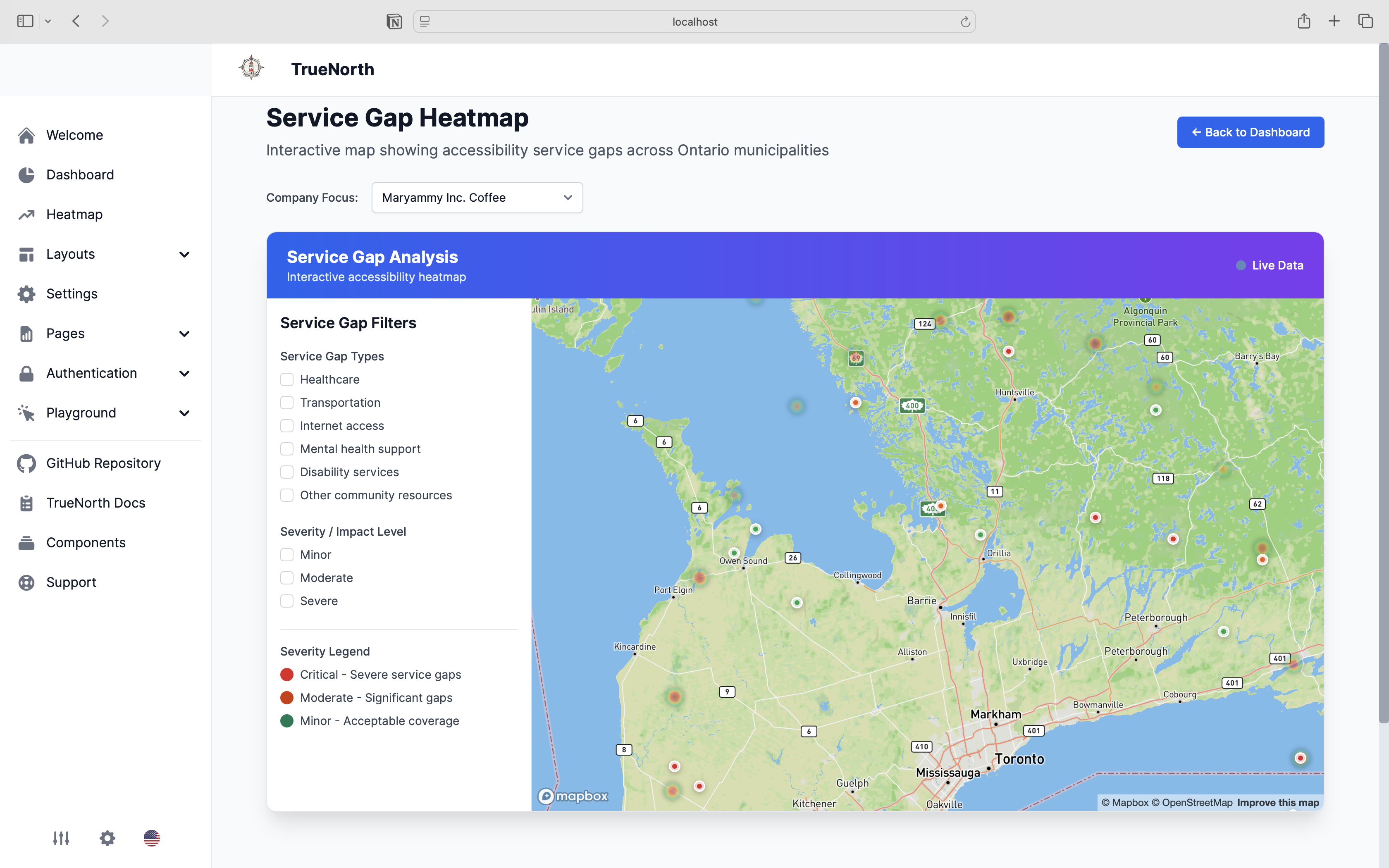
TrueNorth analyzes company profiles alongside municipality-level data to highlight underserved regions and unsolved problems across Canada. Through an interactive personalized heatmap and drill-down views, companies can explore:
- Areas experiencing significant problems (e.g., healthcare, transportation, internet access, mental health support, etc. )
- Who is affected and why
- Accessibility barriers involved (Why current solution they are given is inadequate)
- Data-backed explanations of the problem
For each identified issue, the platform generates personalized recommendations that are tailored to the company’s profile, including what the company does, its industry, stage, and target audience. TrueNorth not only highlights how the company’s services fall short in specific communities, but also provides actionable guidance on how to approach filling these gaps.
Additionally, the platform suggests metrics and KPIs to track progress, enabling companies to measure improvements in community outreach, accessibility, and service impact over time. This ensures that recommendations are both actionable and measurable, helping businesses make tangible, positive change in the communities they serve.
How we built it
TrueNorth was built using a modular, data-driven architecture:
- Webscraping and AI pipeline built to extract, analyze, and summarize city-level municipal community concerns.
- Structured JSON files store company profiles and municipality problems gap summaries
- Mapbox renders a geographically accurate, Canada-wide heatmap using real city coordinates
- Gemini AI generates plain-language problem summaries and company-specific recommendations
- Prompt constraints ensure AI outputs are scoped strictly to the selected municipality and company context
But, we started it all with an Astro web template ❤️
Challenges we ran into
One major challenge was ensuring the geographic accuracy of the heatmap. Early versions relied on inferred or placeholder coordinates, which led to misleading visualizations. We ultimately reset and rebuilt the map logic to use only verified municipality data and Mapbox geocoding.
Another major challenge was managing the scope and relevance of scraped data. Municipal websites contain vast amounts of information often spanning tens of thousands of URLs across council pages, bylaws, reports, public notices, and archives. Without careful control, web scraping at this scale can quickly become noisy, inefficient, and computationally expensive.
Given the limited time and resources available during the hackathon, we had to deliberately constrain crawl depth and page selection to focus only on content most likely to surface meaningful service gaps and accessibility issues. This required making thoughtful trade-offs between data coverage and signal quality, as well as designing logic to prioritize high-impact pages over exhaustive crawling.
Balancing technical ambition with limited hackathon time also pushed us to prioritize clarity, accessibility, and impact over unnecessary complexity.
Accomplishments that we're proud of
- Building a fully interactive, Canada-wide service gap heatmap
- Creating drill-down problem pages that explain complex issues in plain language
- Generating company-specific recommendations rather than generic insights
- Designing an accessibility-first system that centers underserved communities
- Successfully integrating AI while keeping outputs grounded and relevant
What we learned
Through TrueNorth, we learned that accessibility challenges are deeply contextual and cannot be addressed with one-size-fits-all solutions. We also learned the importance of constraining AI systems with clear structure and high-quality inputs to produce meaningful insights.
Additionally, we gained valuable experience working with geospatial data, prompt engineering, and designing systems that bridge social impact with business decision-making.
What's next for TrueNorth
Next, we plan to expand TrueNorth by:
- Adding real-time facebook and social media forums (Reddit, X, Instagram comments). This is really important as people often share more candid and unfiltered experiences on online forums than they would in formal settings in front of authorities.
- Allowing companies to track progress on accessibility commitments
- Expanding recommendation outputs into measurable KPIs and roadmaps
- Exploring partnerships with municipalities and advocacy organizations
Our goal is to help more Canadian companies design services that are not only profitable, but equitable, accessible, and inclusive by design.
Built With
- astro
- gemini
- git
- html/css
- javascript
- json
- mapbox
- tailwind
- typescript


Log in or sign up for Devpost to join the conversation.