-
-
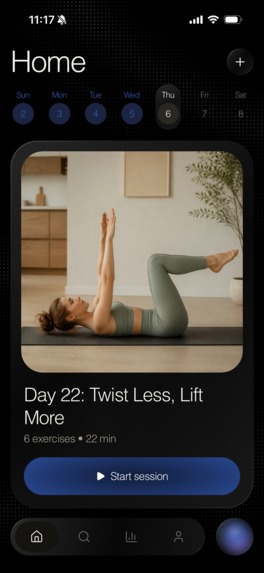
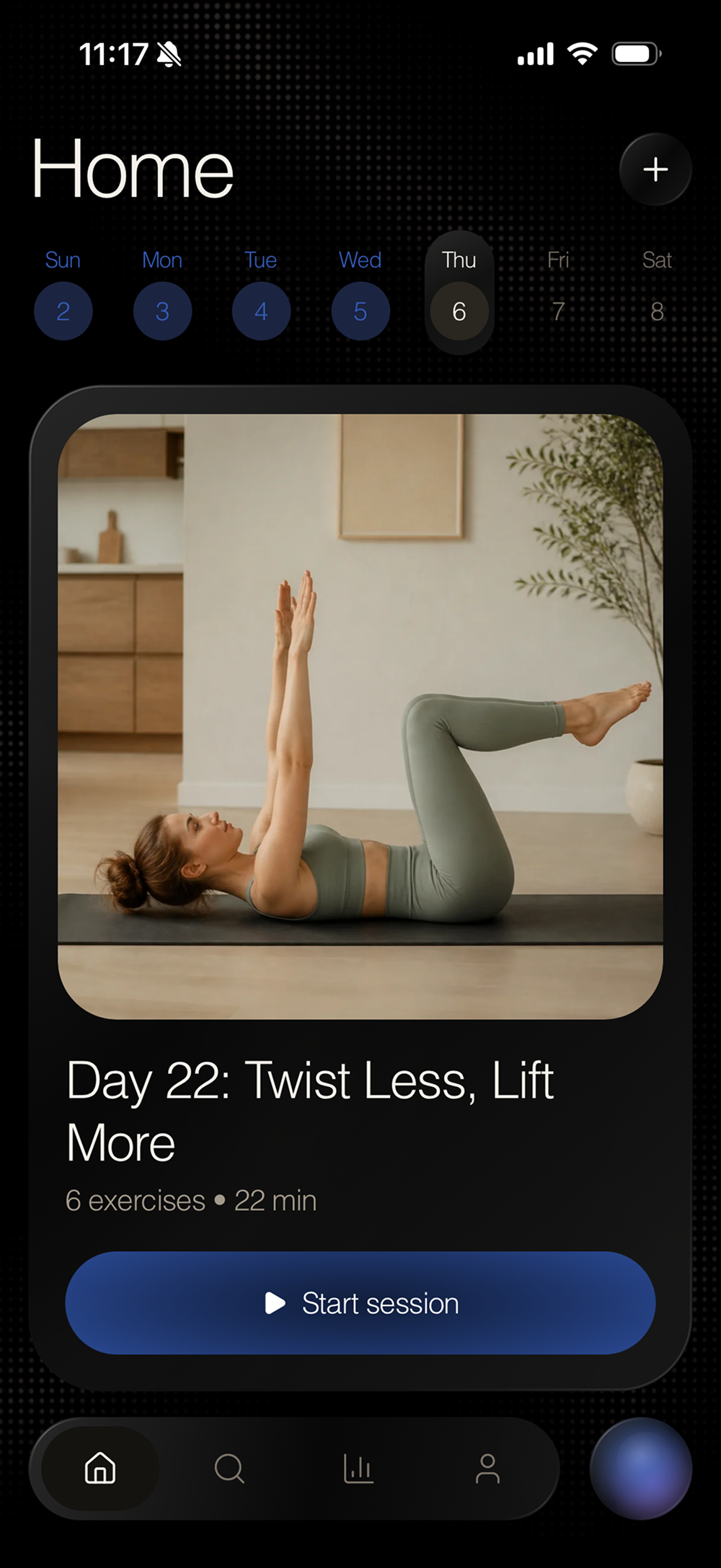
Home - view your active program and current day session
-
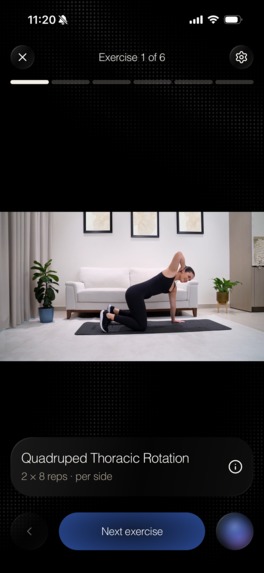
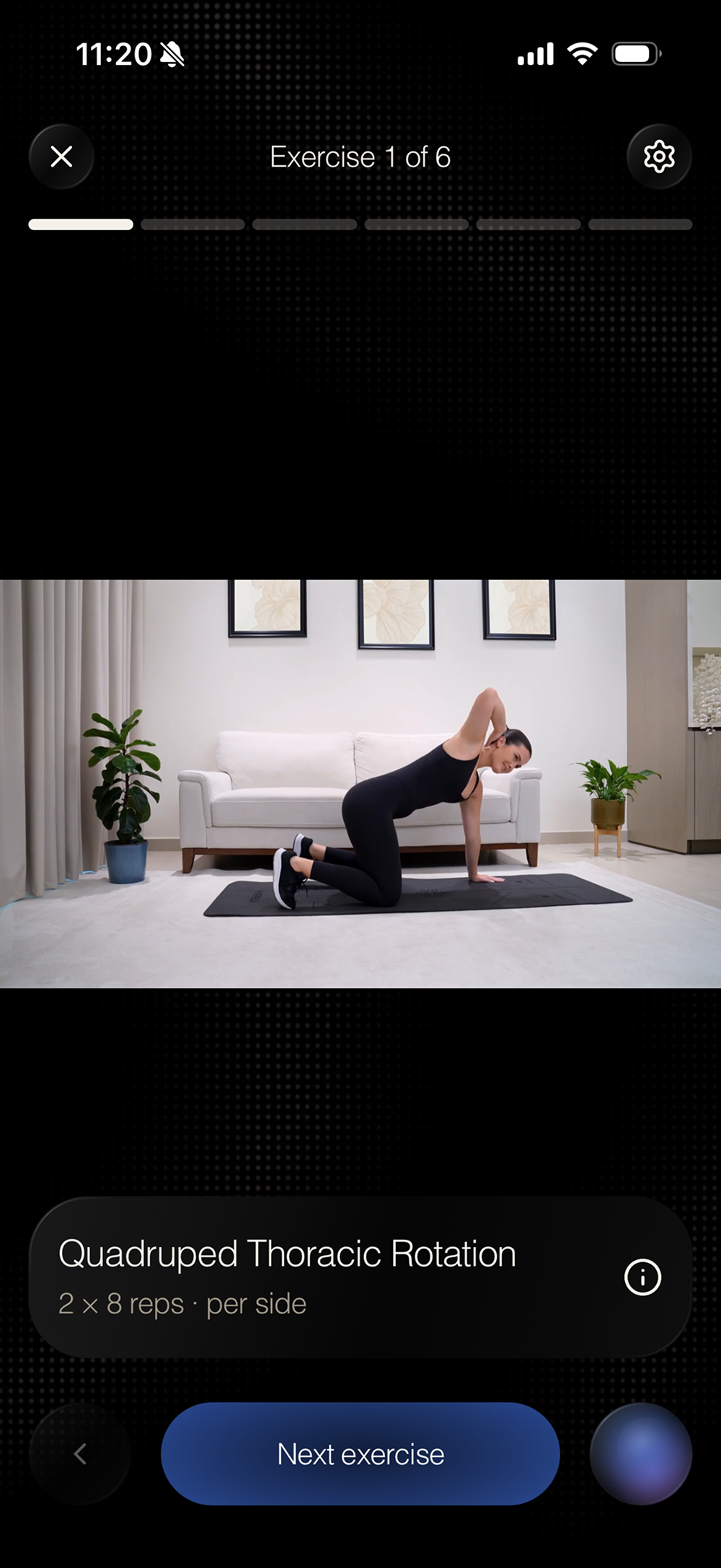
Session Player - view guided videos + instructions for the current day's session
-
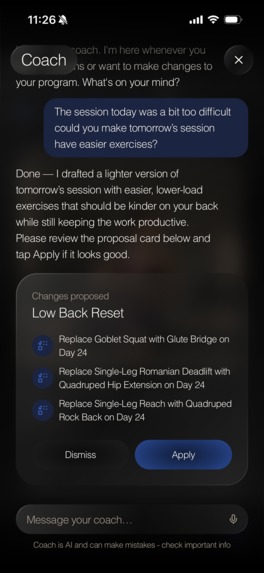
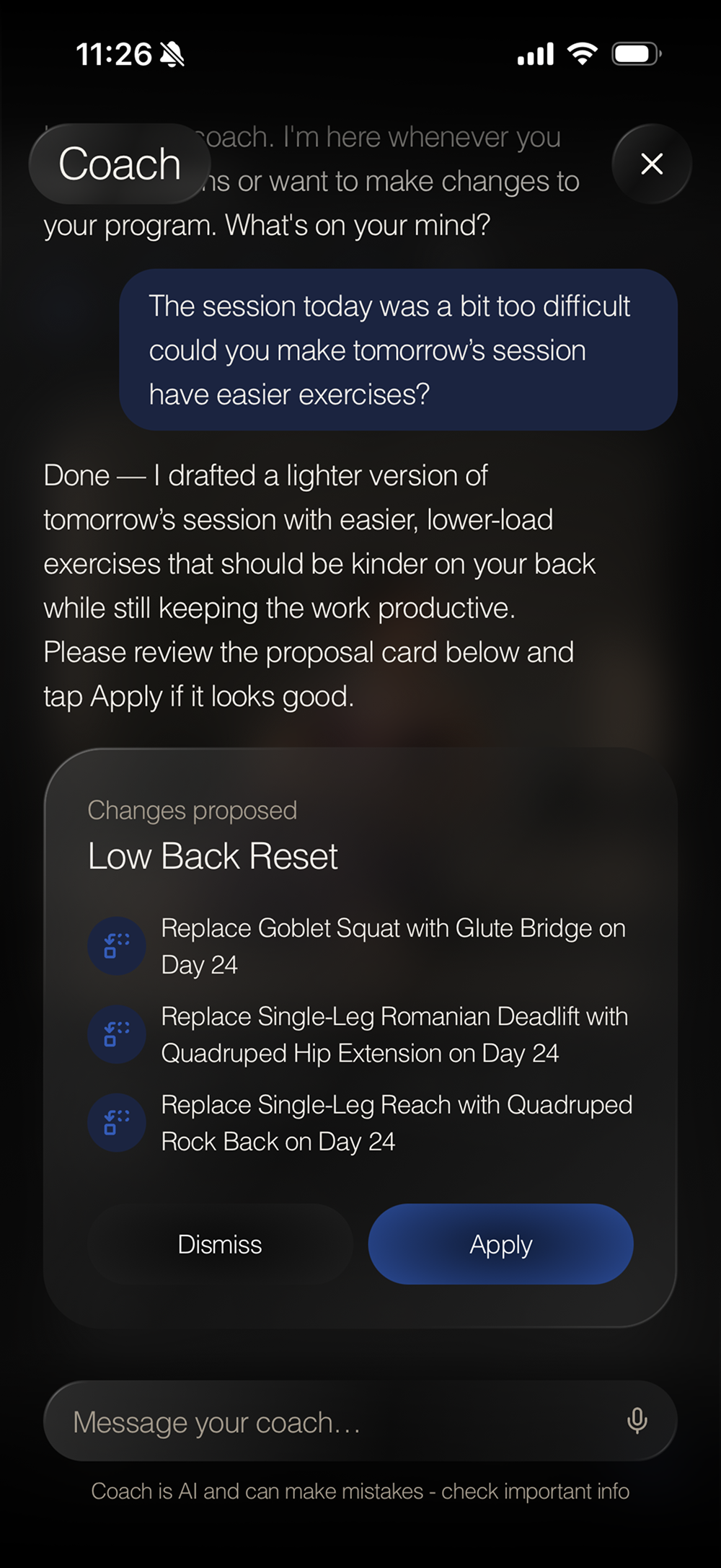
AI Coach - talk to the coach to make adjustments or ask questions on exercises
-
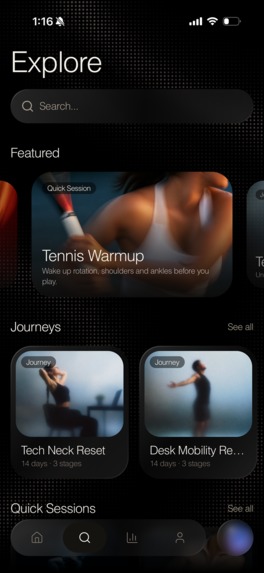
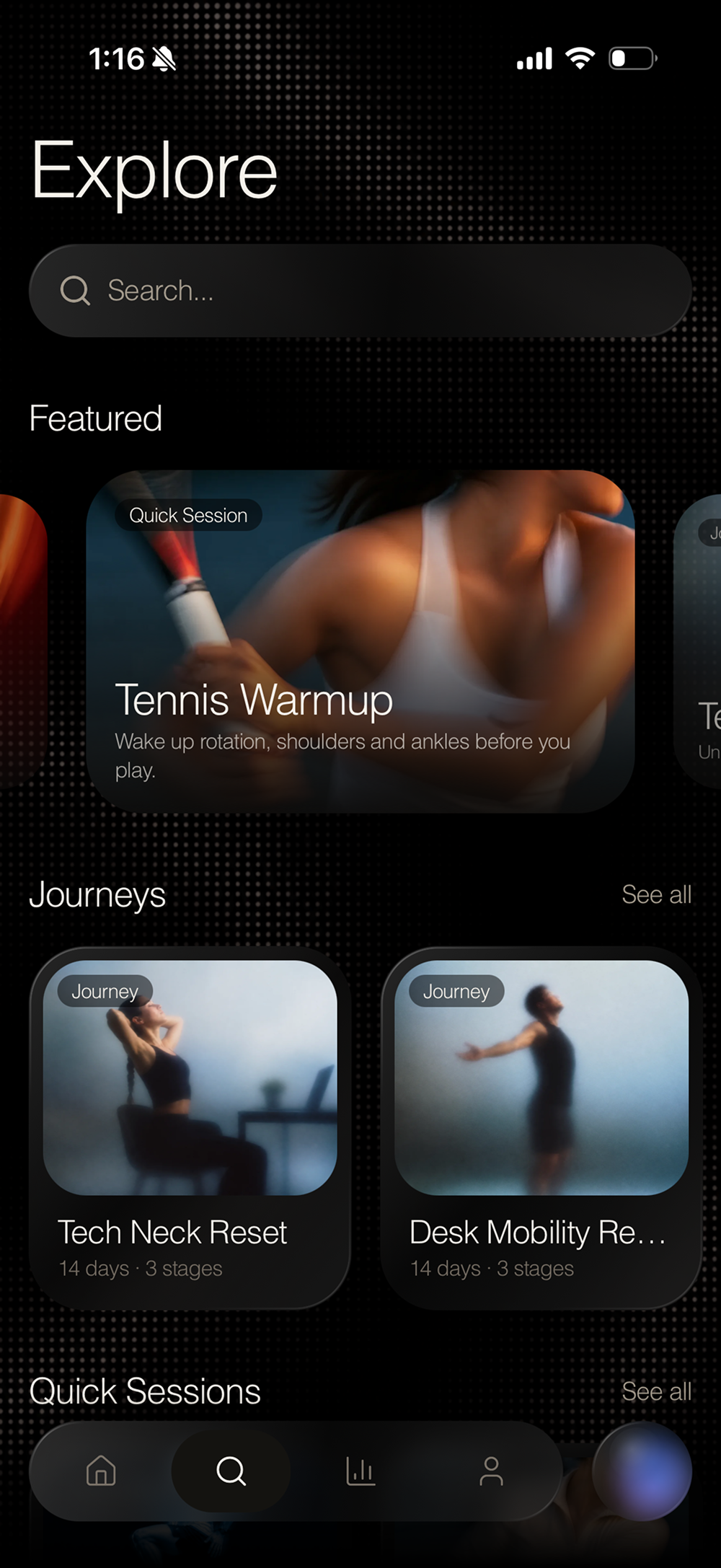
Explore - browse prebuilt programs and one-off sessions based on your interests & needs
-
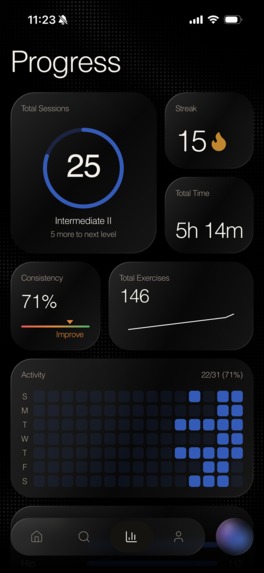
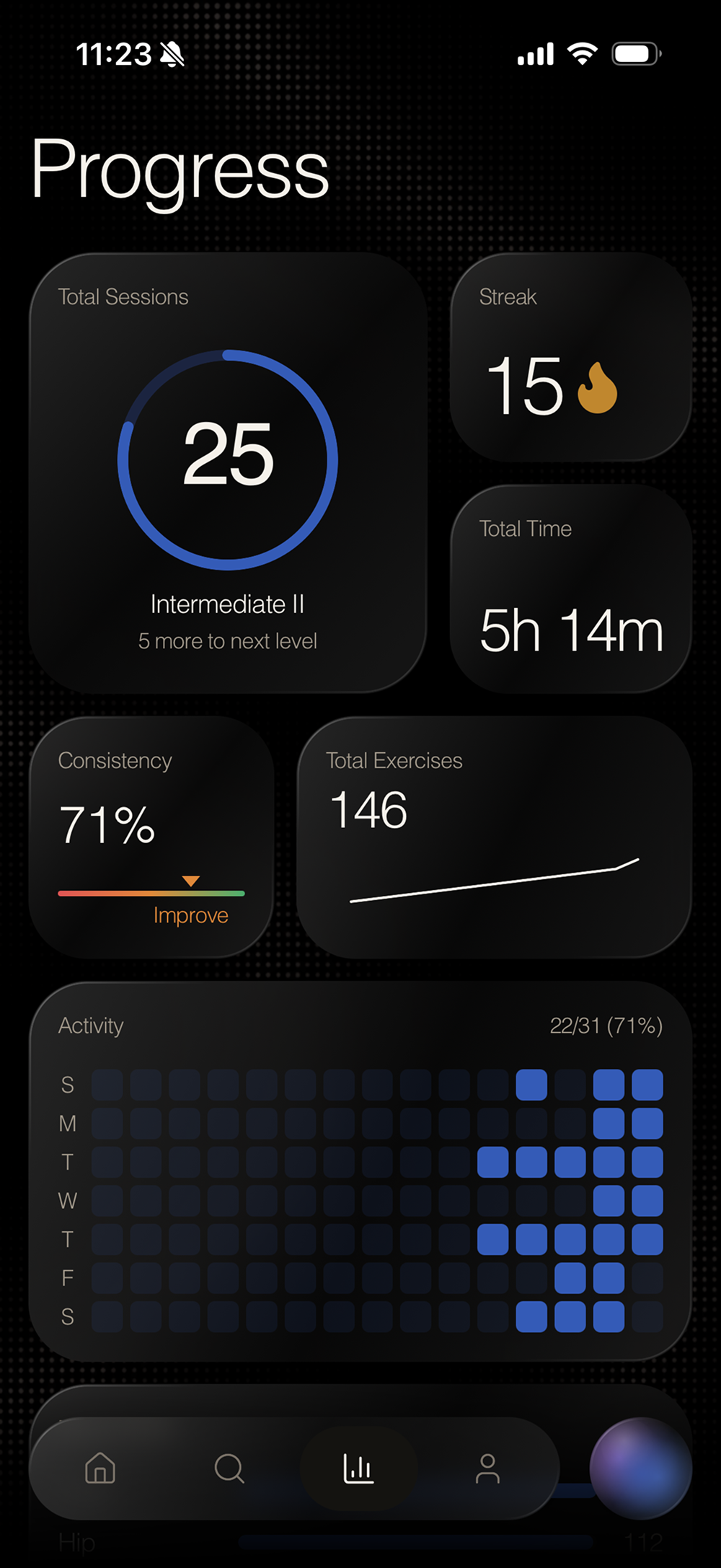
Progress - view your progress in a premium fitness aesthetic
-
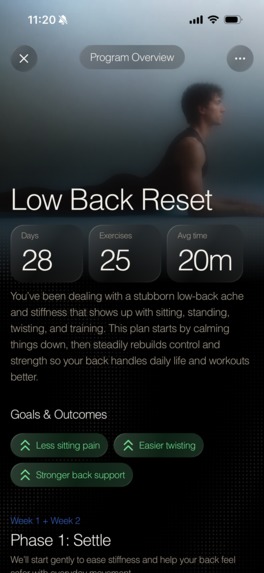
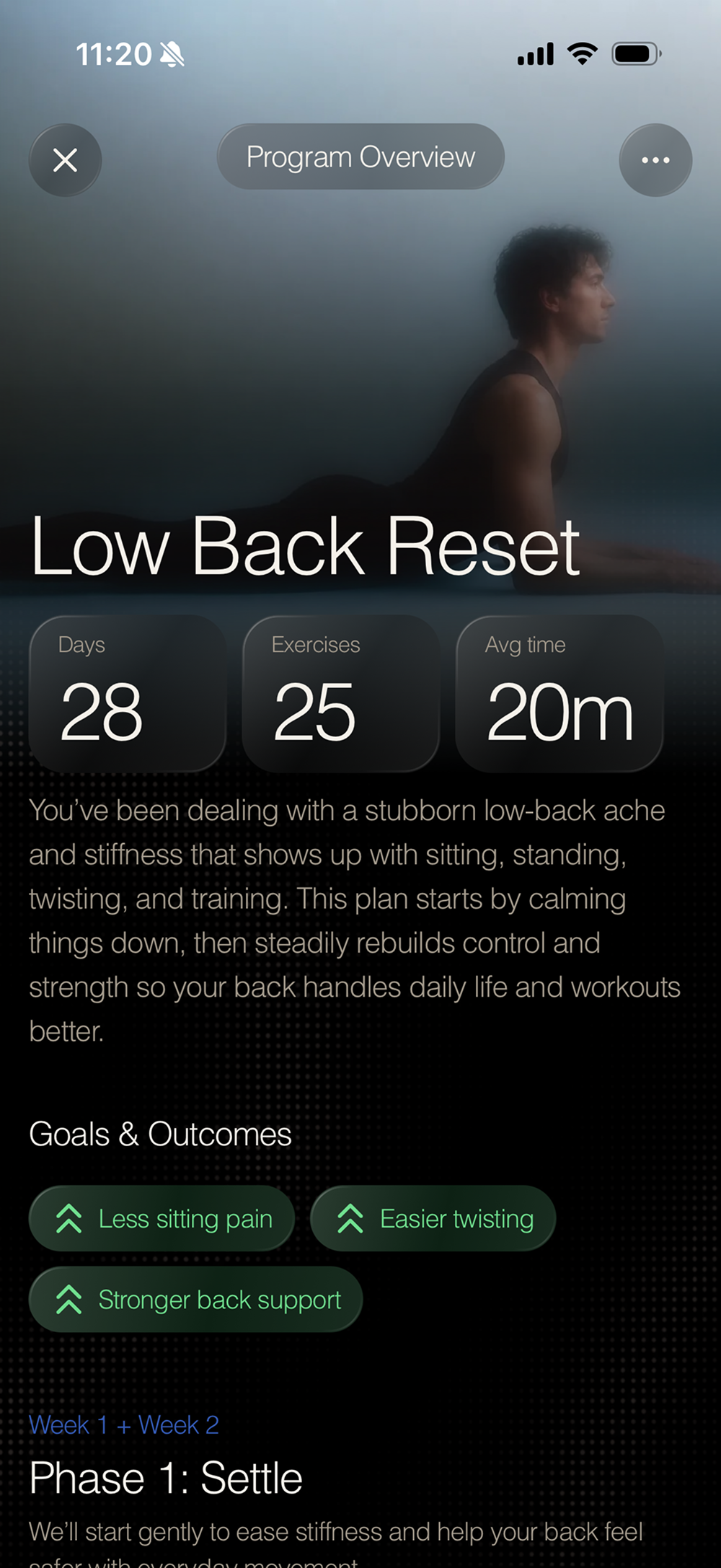
Program Overview - view the science and reasoning behind your generated program
-
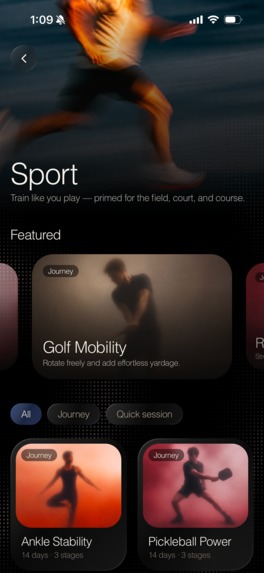
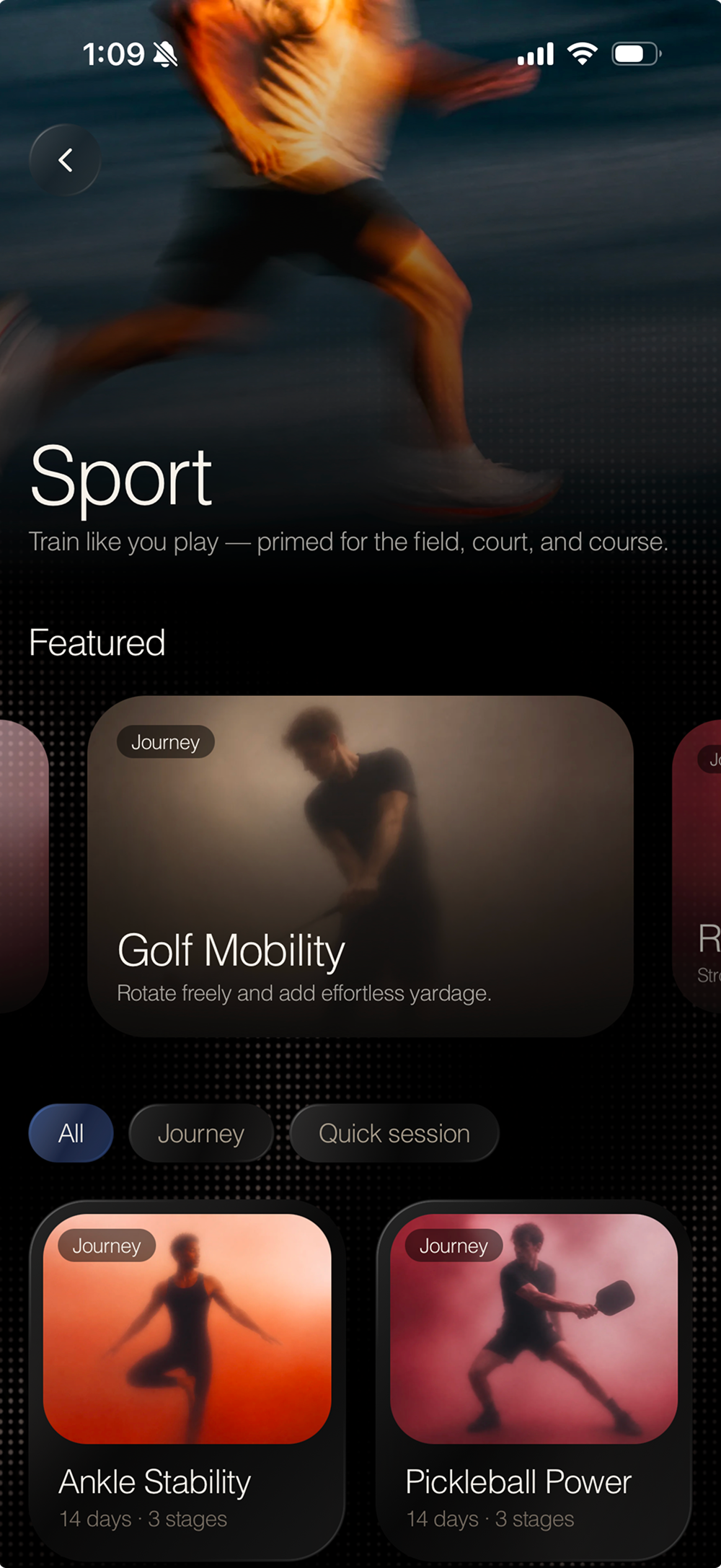
Categories - view prebuilt programs based on certain categories
-
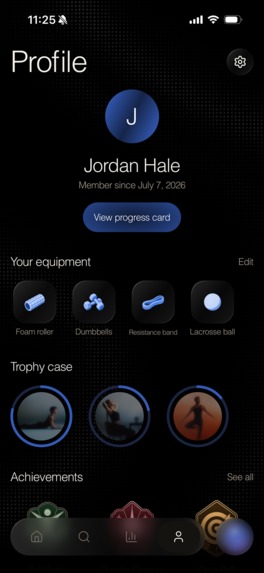
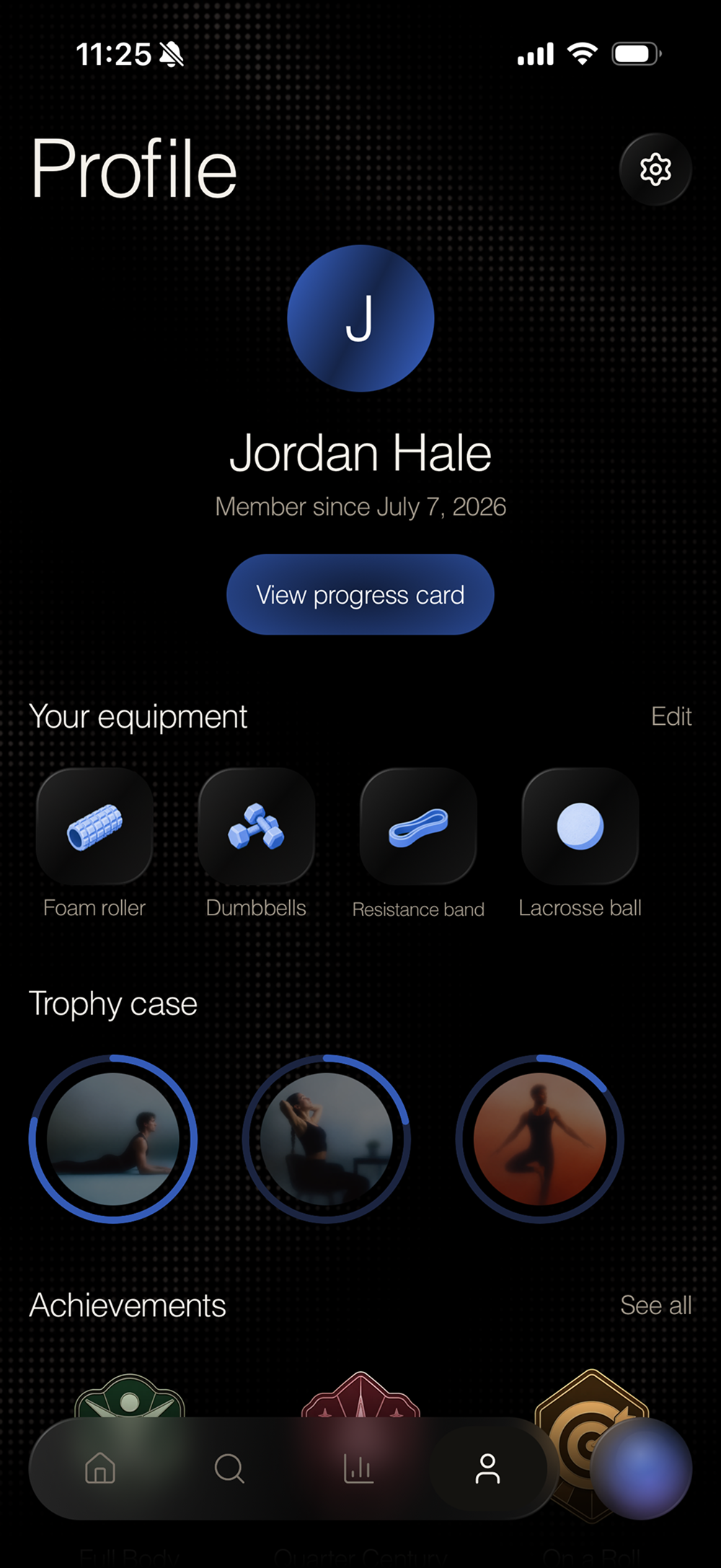
Profile - customize equipment so the AI coach knows what exercises to prescribe
-
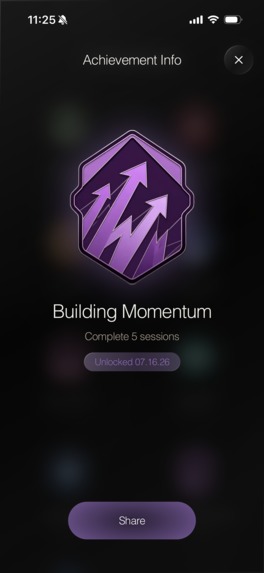
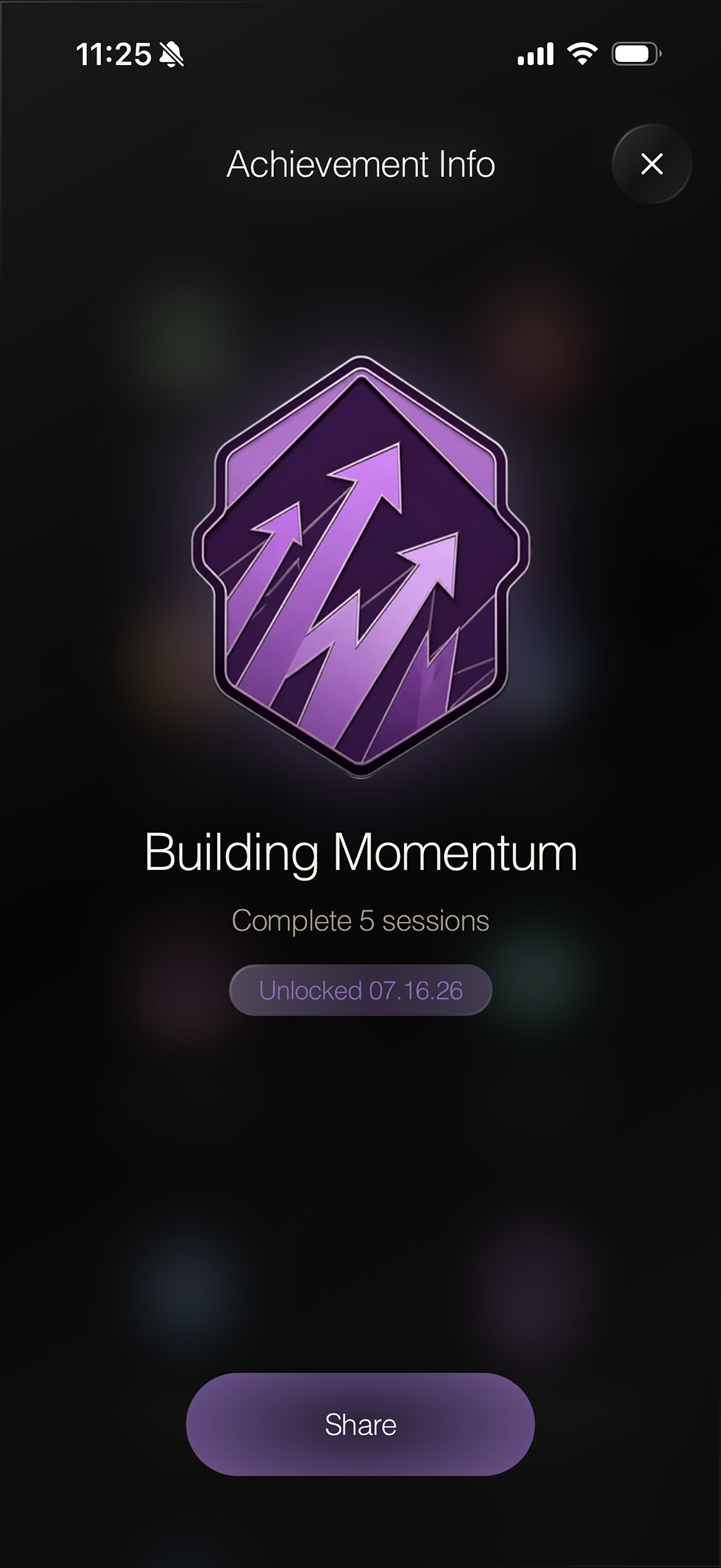
Achievements - earn achievements to keep you accountable to your goals
Inspiration
Trueform came from a problem we kept running into ourselves.
We, along with a lot of our close friends, kept dealing with aches, tightness, and mobility issues that were starting to get in the way of the things that we loved to do — shoulder or hip pain affecting lifting, back or ankle pain making running harder, or limited mobility getting in the way of golf and other activities.
At the same time, we knew the friction around actually fixing those problems was pretty high. Finding a physical therapist you like, going consistently, and paying for it can be a lot, so most people just end up doing nothing.
That led us to the idea behind Trueform: what if we could use AI to understand someone’s goals and build them an easy-to-follow stretching and mobility program that they could do from home?
That’s how Trueform came to be — an AI mobility coach built to help people move better, recover faster, and feel like themselves again.
What it does
Trueform is an AI mobility coach that builds personalized stretching programs around your goals, body, and the areas you want to focus on.
During onboarding, we ask a series of questions to understand the user’s goals, then use AI and our exercise library to create a personalized multi-day stretching and mobility program.
Every exercise includes a guided video, instructions, and coaching so the program is easy to follow even if you don’t know much about stretching or mobility.
You can also chat with the AI Coach at any point to make adjustments to your program or ask questions about any exercise.
The goal is to take something that can normally feel confusing and make it simple: tell Trueform what you want to improve, follow the plan, and feel better by the end.
How we built it
Trueform is built with React Native and Expo, with OpenAI powering the program generation and AI Coach.
We also built a library of more than 200 stretching and mobility exercises. To make the programs easy to follow, we worked with a creator on Fiverr to film custom videos for every exercise.
A lot of the work went into figuring out how to actually prescribe a good stretching and mobility program. We researched how exercises should be selected, sequenced, and progressed based on someone’s goals, then ran a lot of AI evals to improve the prompting and program-generation logic.
RevenueCat powers our subscriptions, and we use AppsFlyer to help understand where our users are coming from as we start testing different acquisition channels.
Challenges we ran into
One of the biggest challenges was figuring out what actually makes a good stretching and mobility program.
We relied on research and our own experience with physical therapy to structure programs around three phases: settling pain, rebuilding strength, and returning to the activity.
We then translated that structure into prompts and program-generation logic that could adapt to different goals, body areas, and user inputs. We ran AI evals to evaluate and improve on the generation logic.
Another challenge was building the exercise library itself. Filming more than 200 exercises took a lot of coordination, and we had to work closely with the Fiverr creator filming them to make sure every movement was demonstrated clearly and consistently.
Accomplishments that we're proud of
We’re proud that we were able to build a product in a category that was new to us and turn a fairly complicated idea into something that feels simple to use.
We’re especially happy with the personalized program experience, the 200+ exercise video library, and the AI Coach that lets users adjust their plan or ask questions along the way.
We haven’t focused heavily on scaling Trueform yet, but we’ve already gotten our first 5 paying users, which gave us some early validation that people are willing to pay for the experience.
What we learned
One of the biggest things we learned is how much domain knowledge matters when building an AI product. The AI is only as useful as the structure behind it, so we had to spend a lot of time understanding more about stretching and mobility.
We also learned how important it is to define your target audience before trying to scale distribution. We originally built Trueform for a very broad range of people, from younger athletes to older users who simply want to move and feel better, which made it harder to know who to target and how to position the product.
That’s pushed us to narrow down who gets the most value from Trueform before we invest more heavily in growth.
What's next for Trueform
Our main focus now is figuring out the right audience and distribution strategy for Trueform.
We want to narrow down which users get the most value from the product, then test different acquisition channels — including paid ads and organic UGC — to figure out the best way to reach them.
At the same time, we plan to keep iterating on the product through user feedback and A/B testing, especially around onboarding, pricing, and how we communicate the value of the personalized program.
Long term, we want Trueform to become the easiest way for someone to understand what their body needs, follow a plan built around them, and feel like themselves again.

Log in or sign up for Devpost to join the conversation.