Inspiration
Most people have no idea where their seafood really comes from. Labels are mostly confusing or even outright mislabeled, and consumers don’t know whether a farm follows sustainable, ethical, or safe practices. Beyond that, the fishing industry faces serious problems from overfishing and habitat destruction to illegal, unreported, and unregulated (IUU) fishing that undermines global sustainability efforts. Human rights abuses, including forced labor and trafficking, occur in parts of the supply chain, while pollution, climate change, and opaque quota systems further threaten fish populations and ecosystems. We wanted to build a tool that encourages transparency within this highly secluded industry and empowers people to make better choices for their health and for the planet.
What it does
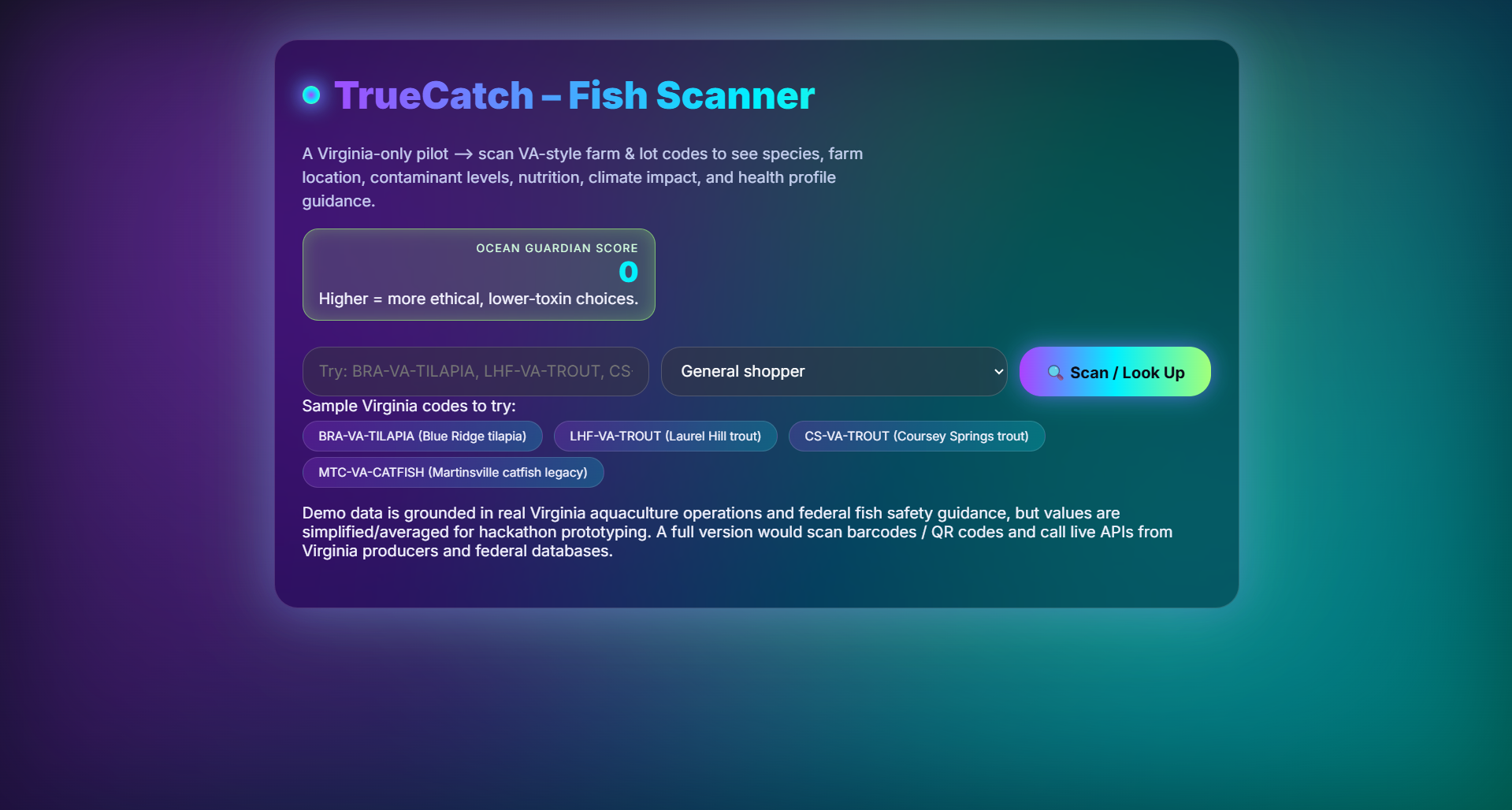
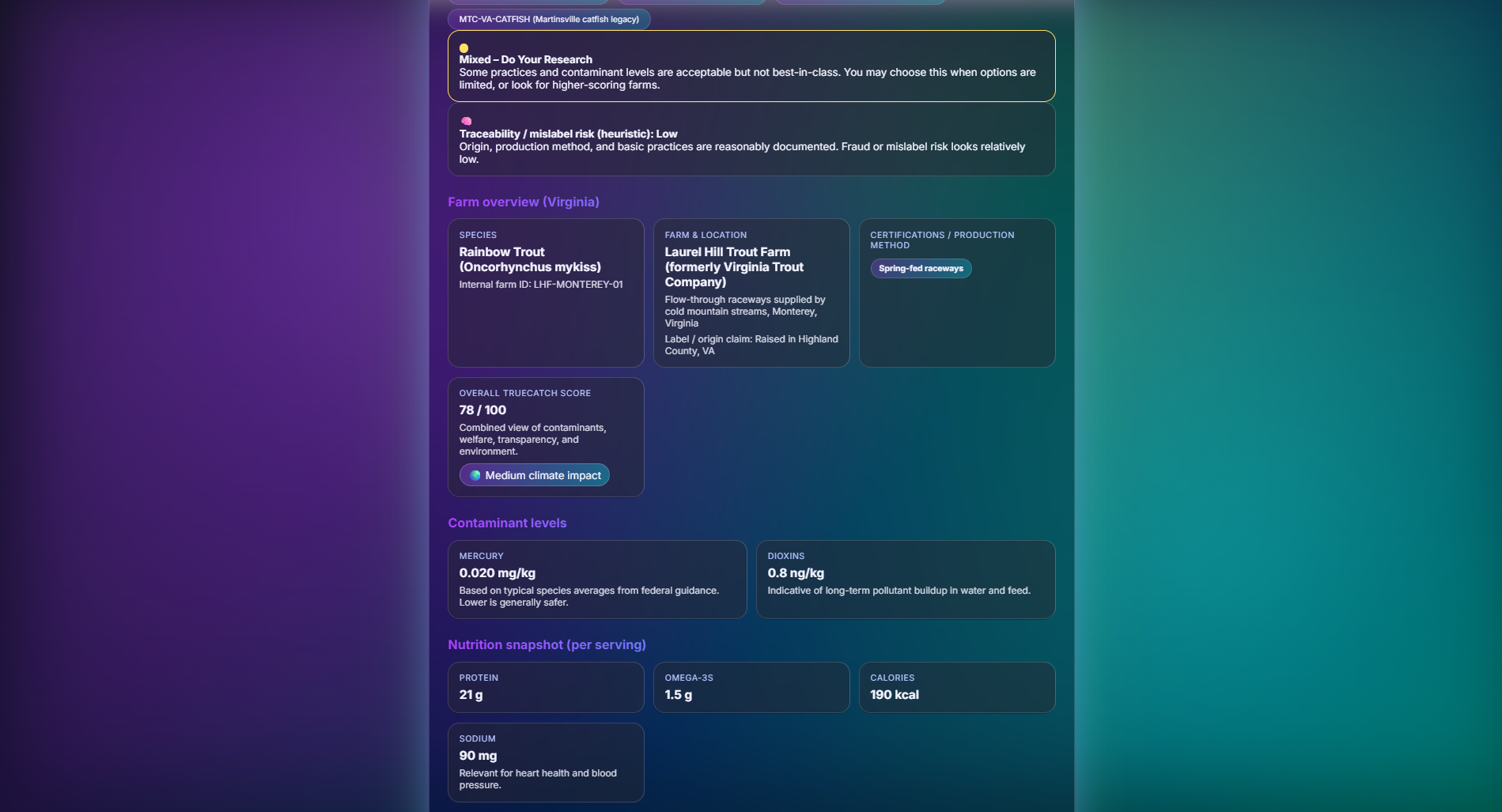
TrueCatch is a browser-based “fish label scanner” that helps shoppers make safer and more ethical seafood choices in seconds. It is a lightweight web app that lets users “scan” a fish package (or enter a batch code) and instantly see: Which fish farm it came from, Toxicity levels (mercury, dioxins, contaminants), Nutrient breakdown, and whether it is safe for specific dietary profiles such as pregnancy, childhood, heart health, or high-protein diets, The farm’s sustainability, animal-welfare, and labor policies, A clear recommendation score: Strongly Recommended, Mixed, or Not Recommended. For this prototype, TrueCatch is based in Virginia's aquaculture operations, allowing users to scan Virginia-style lot codes and receive accurate, locality-based insights that demonstrate how the system can scale to nationwide and global seafood traceability.
How we built it
We designed a simple front-end web app using OpenAi and HTML, and JavaScript. We created a demo “fish database” that stores species, nutrient data, toxicity data, and farm policies. When the user enters a code, the app: Looks up the code, pulls back structured data, generates a visual profile, and gives a recommendation based on toxicity + sustainability score.
Challenges we ran into
Challenges we ran into include designing a clean UI that actually feels like a scanner, figuring out the best way to structure the “farm policy” data, creating a recommendation system that makes sense, and making the app without a real database.
Accomplishments that we're proud of
We're proud of having put together a working interface that brought our niche environmental concern to light all under 24 hours.
What we learned
We learned a lot about how to model real-world sustainability and seafood safety data, how to communicate technical information simply, and have just gained a lot of knowledge in general in both the fishing industry and app design that involves access to significant and elusive datasets.
What's next for TrueCatch
We want to add real barcode/QR scanning, integrate open datasets (FAO, NOAA, MSC, Seafood Watch, EU Organic), add map-based farm traceability, build a real backend API to store farm records, and expand to wild-caught fish transparency.


Log in or sign up for Devpost to join the conversation.