Inspiration
As we sat down to brainstorm ideas for our next project, we were struck by a common thread that connected all of us. Each one of us had a family member who suffered from some form of visual impairment. It was a heart-wrenching reminder of the challenges that these individuals face on a daily basis. We shared stories of our loved ones struggling to read books, watch movies, or even navigate through everyday tasks. It was a deeply emotional conversation that left us feeling both empathetic and determined to make a difference. According to the World Health Organization, approximately 2.2 billion people worldwide have a vision impairment or blindness, with the majority of cases occurring in low and middle-income countries. The impact of visual impairment is far-reaching and significantly affects various daily activities such as reading, recognizing faces, navigating unfamiliar environments, and accessing information on digital platforms. This problem is valid, and it needs to be addressed to enhance the quality of life of those affected. We are passionate about developing a solution that will make a meaningful difference in the lives of those affected by visual impairment. Our project is inspired by personal experiences and fueled by a desire to make a real-world impact. We believe that everyone deserves equal access to information and the ability to participate fully in daily life. By addressing the challenges of visual impairment, we hope to create a more inclusive world for all.
What it does
The product aims to bridge the gap for individuals with limited vision to experience the world around them. It helps individuals with visual impairments to perform various daily activities that are otherwise challenging, such as reading, recognizing faces, and navigating unfamiliar environments. It also assists in accessing information on digital platforms. The product can be particularly helpful for those who face barriers in accessing healthcare services due to their visual impairments. It can aid in reading prescription labels, understanding medical instructions, and navigating healthcare facilities, especially for older individuals who are aging.
How we built it
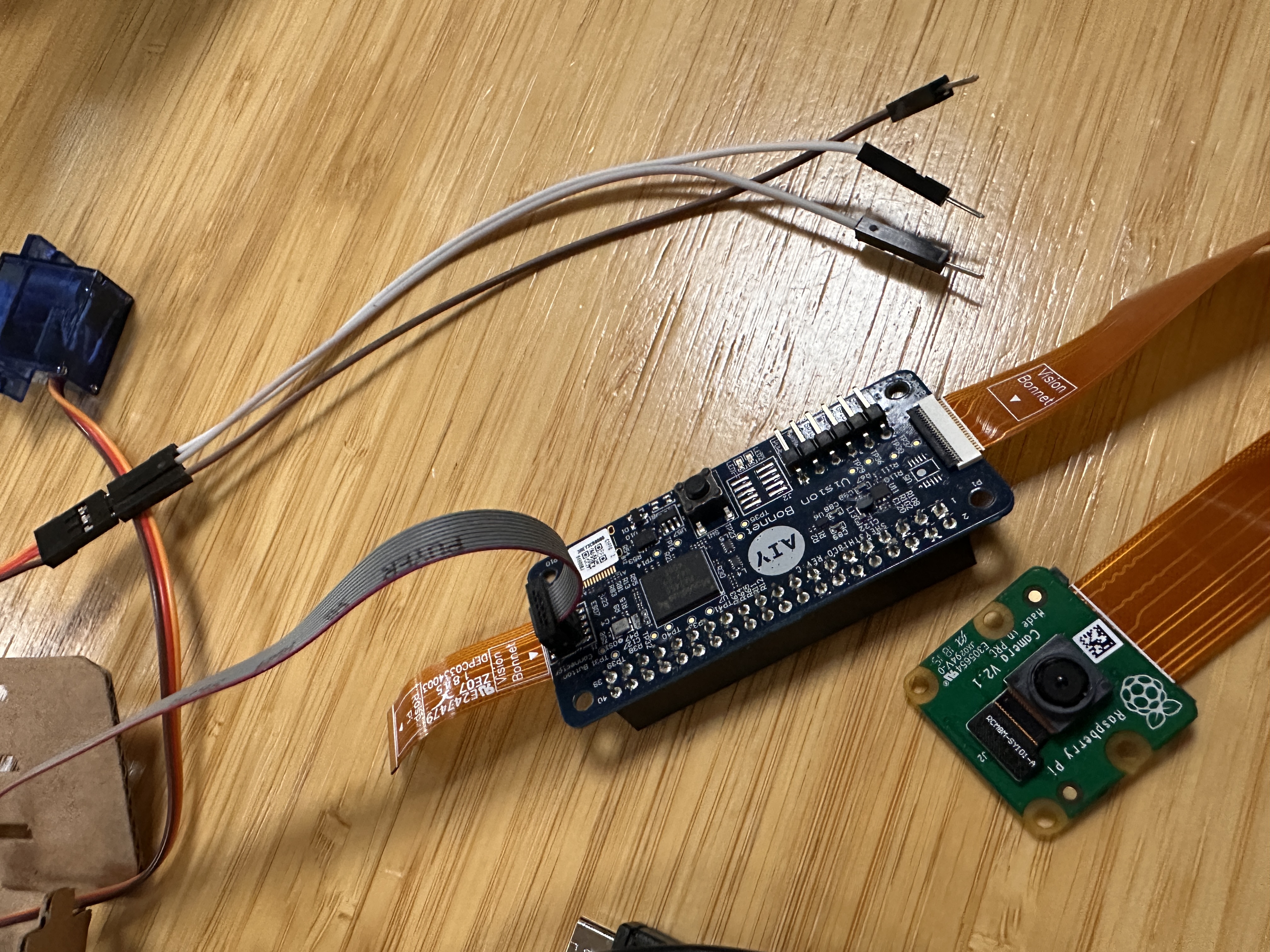
In our project, we leverage cutting-edge computer vision techniques to interpret the surrounding environment of individuals with visual impairments. By utilizing advanced algorithms and neural networks, we process real-time visual data captured by a camera, enabling us to identify and analyze objects, obstacles, and spatial cues in the user's surroundings. We integrate state-of-the-art language models and natural language generation powered by Wisp AI software to bridge the gap between the interpreted world and the user. This allows us to generate detailed and contextually relevant descriptions of the environment in real time, providing visually impaired individuals with comprehensive auditory feedback about their surroundings. Additionally, our solution extends beyond descriptive capabilities to enhance accessibility in public transportation. By leveraging the interpreted environmental data, we develop guidance systems that assist users in navigating through streets and accessing transportation hubs safely and independently. For efficient and scalable deployment of our model, we utilize Intel's AI environment, leveraging its robust infrastructure and resources to host and optimize our machine learning algorithms. Our system architecture is implemented on a Raspberry Pi embedded platform, equipped with a high-resolution camera for real-time visualization and data capture. This combination of hardware and software components enables seamless integration and efficient visual information processing, empowering visually impaired individuals with enhanced mobility and independence in their daily lives.
Challenges we ran into
As beginners in machine learning, we faced the tough challenge of setting up a machine learning model on a Raspberry Pi and connecting it to a camera, which was quite difficult to learn. Moreover, we had to figure out a way to train our model not only to understand text but also to recognize public transportation and calculate the distance to a bus entrance, which was quite a task. Adding our Intel-AI environment to the project made things even more complicated. Additionally, finding an affordable solution that could be easily accessible to people all around the world was a significant obstacle that we had to overcome.
Accomplishments that we're proud of
Through this process of building a hardware product from scratch and learning how to use raspberry pi with computer vision, we not only gained technical knowledge but also learned how to work as a team. There were challenges and obstacles along the way, but we figured it out by collaborating, communicating, and leveraging each other's strengths. It was a great learning experience, and we are proud of what we have achieved together.
What we learned
We learned about LLM, real-time text analysis, real-time text comprehension, and implementation of text-to-speech.
What's next for True-Sight
With the growing potential of Artificial Intelligence, our idea of True-Sight is expanding to include not only text recognition but also the ability to detect surroundings, which could greatly benefit public transportation users who rely on finding stops and navigating their way onto the correct buses/trains. After further development, True-Sight could potentially allow users to locate their desired stop and use environment detection to guide them towards the door with specific step-by-step instructions. In addition, we aim to make True-Sight accessible to children who are visually impaired, so they can have an immersive learning experience. Adding sensors and custom software will also allow for a more personalized and relatable experience with the AI assistant.
Built With
- computervision
- hardware
- llm
- python
- raspberry-pi

Log in or sign up for Devpost to join the conversation.