-
-
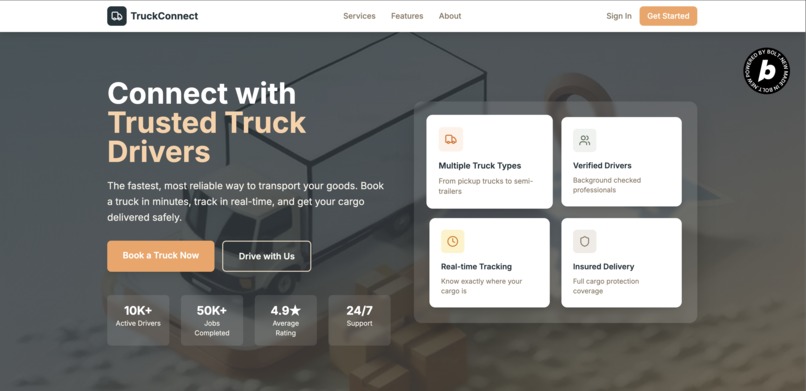
TruckConnect - Your reliable partner for affordable truck logistics in Kenya!
Inspiration
The inspiration for this project stemmed from the widespread challenges many Kenyans face when needing to transport furniture or other bulky goods. In Kenya, finding a vehicle at an affordable price is a common struggle, with individuals often relying on informal networks or chance encounters with truck drivers. Reliable trucks are hard to come by, as many drivers lack a centralized platform to showcase their services, leading to inconsistent quality and pricing. On the flip side, truck and pickup drivers face their own difficulties, frequently parking their vehicles on the roadside for hours with a simple "For hire" sign, hoping to attract customers. This inefficient process wastes time and fuel, limiting their income potential and making it challenging to secure regular jobs. I have also faced similar struggles when relocating. This inspired me to create a platform that simplifies the process, offering real-time truck availability, optimized pricing, and efficient job matching.
What it does
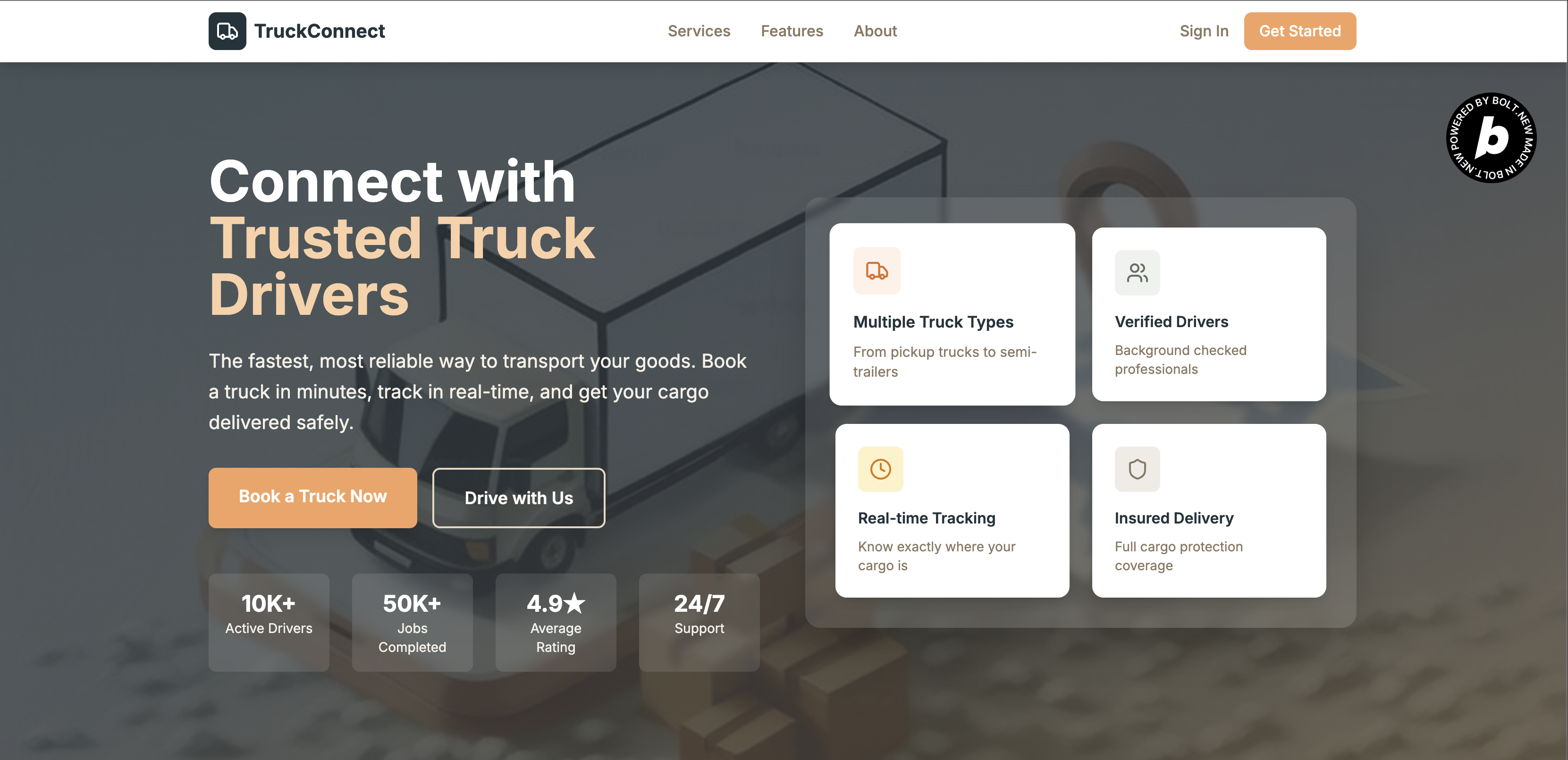
TruckConnect is a logistics application designed to connect truck drivers with customers needing cargo and furniture transportation, with a special focus on the Kenyan market.
How I built it
I started by designing a database schema to manage users, drivers, jobs, and locations, using Supabase for its real-time capabilities and authentication. The frontend was built with a modern React, while the backend logic was handled by Supabase. I implemented triggers to automate user profile creation and used TypeScript for type safety in the code. Iterative testing with sample Kenyan data helped refine the system.
Challenges I ran into
One major challenge was configuring RLS policies to allow sign-ups without violating security constraints, which required rethinking the authentication flow. Another hurdle was integrating real-time data for from the Google Maps API as it required a physical card rather than the virtual one that I have. Balancing affordability with advanced AI features also posed a cost challenge, pushing me to prioritize essential features first. Despite these, the project evolved into a robust solution ready for further enhancement.
Accomplishments that I'm proud of
Integrated Supabase for the first time. Successfully implemented a functional sign-up and profile management system with role-based access (drivers, individuals, businesses). Created a realistic dataset with Kenyan names, phone numbers, and truck specifications, reflecting local market needs. Established a secure database structure with row-level security to protect user data. Designed a scalable foundation that can support future AI-driven features like route optimization and pricing adjustments.
What I learned
I learnt how to write more efficient prompts on Bolt for better and enhanced results. I gained insights into database design, user authentication, and geographic data management while working with Supabase. The project taught me the importance of understanding user needs and leveraging technology to solve real-world problems.
What's next for Truck Connect
The next steps for TruckConnect involve integrating AI features to enhance user experience and operational efficiency. I plan to leverage OpenAI API for route optimization, predictive maintenance, and dynamic pricing based on real-time market trends. I will also research cost-effectiveness and affordability in the Kenyan market to ensure the application remains accessible, addressing the initial inspiration of affordable logistics solutions. This will include analyzing local demand patterns and collaborating with drivers to refine pricing models.

Log in or sign up for Devpost to join the conversation.