-
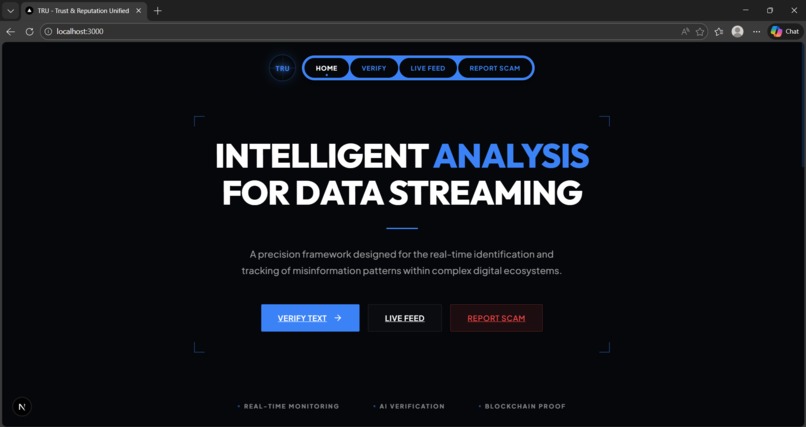
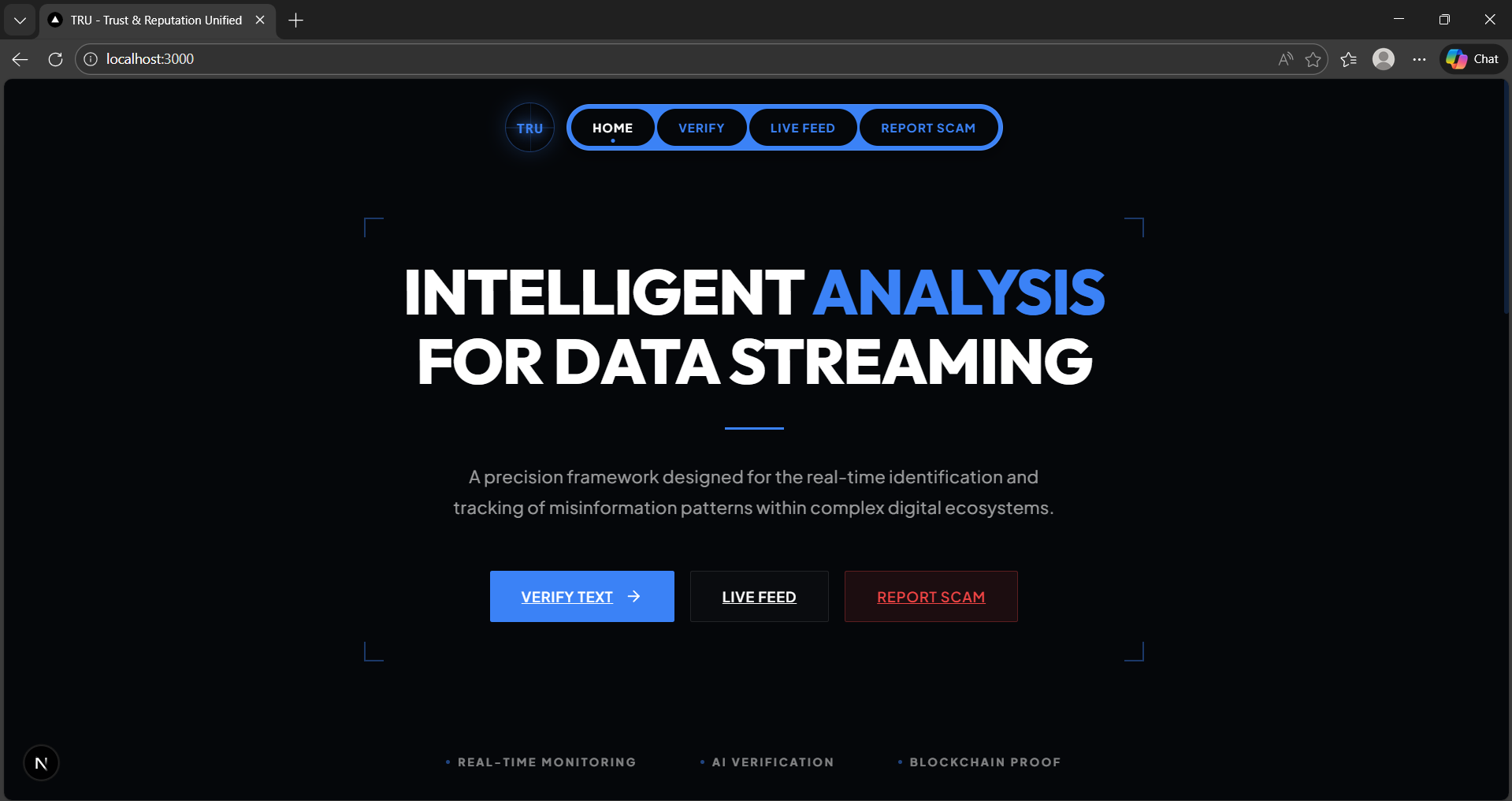
home page
-
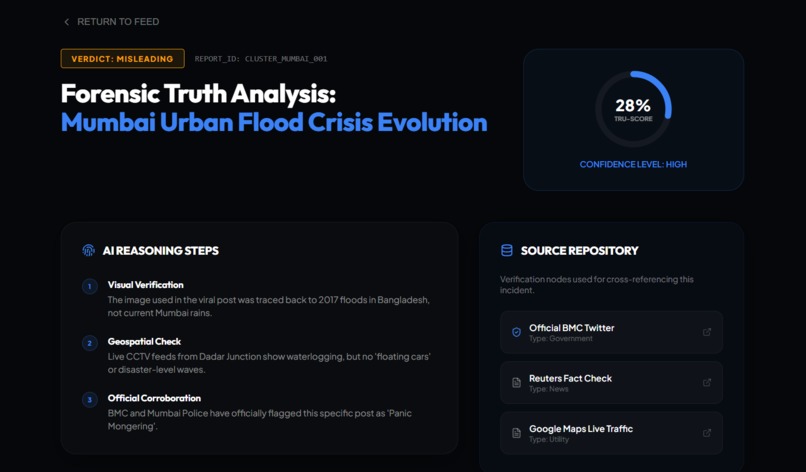
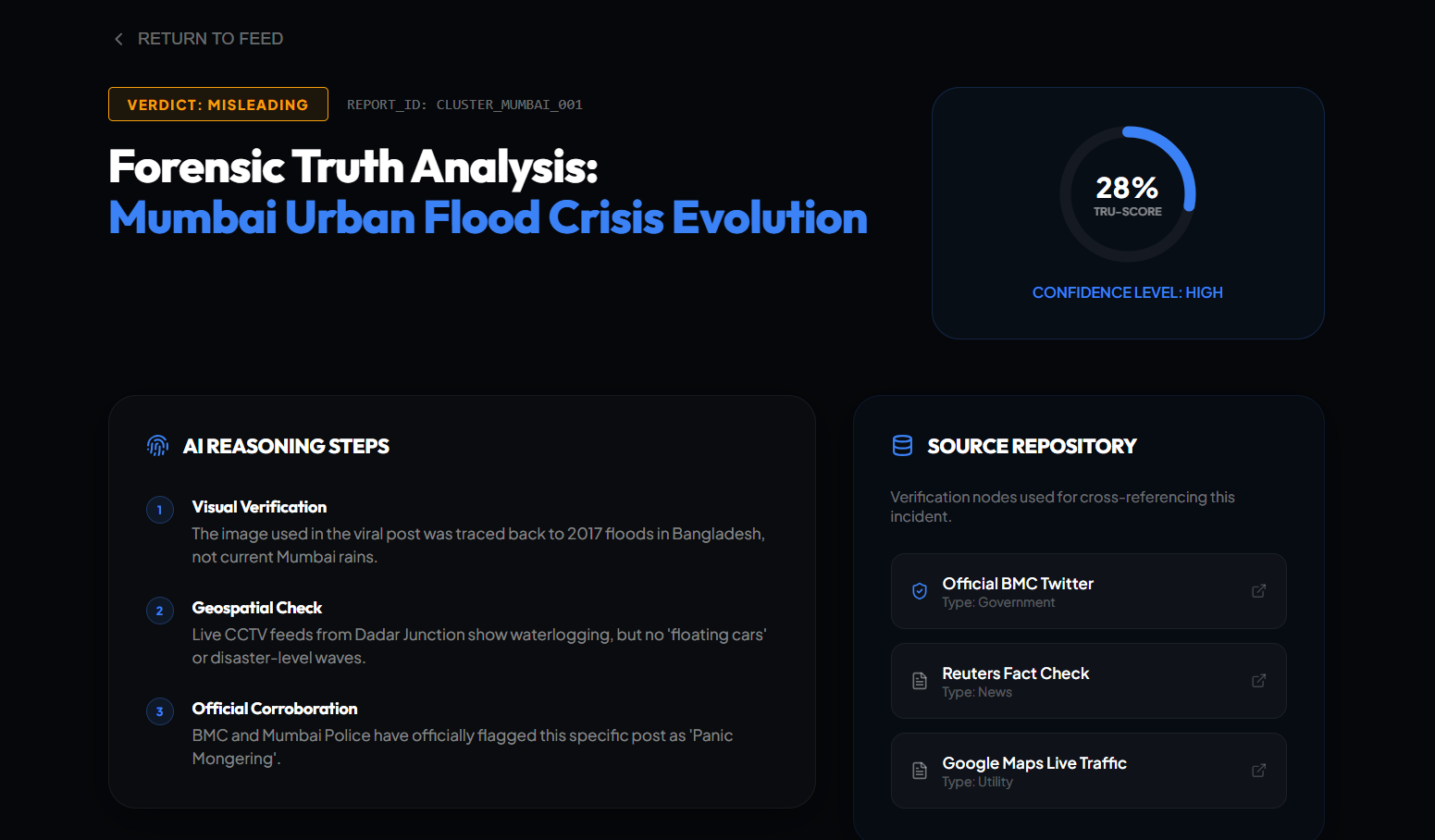
trust score
-
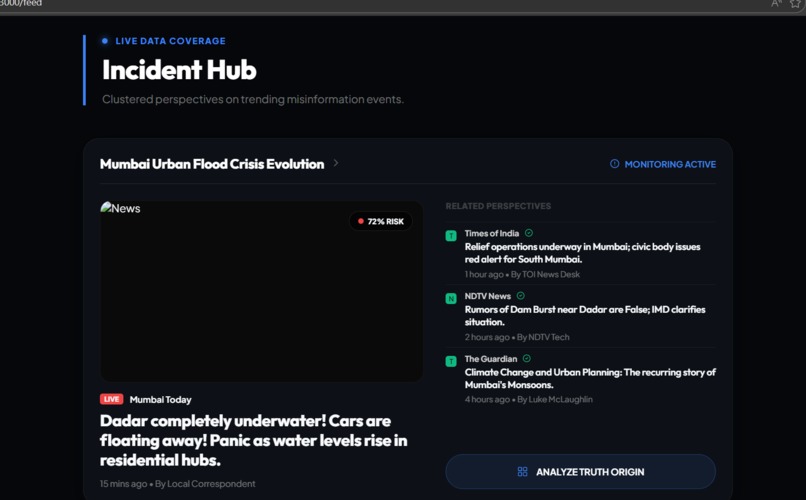
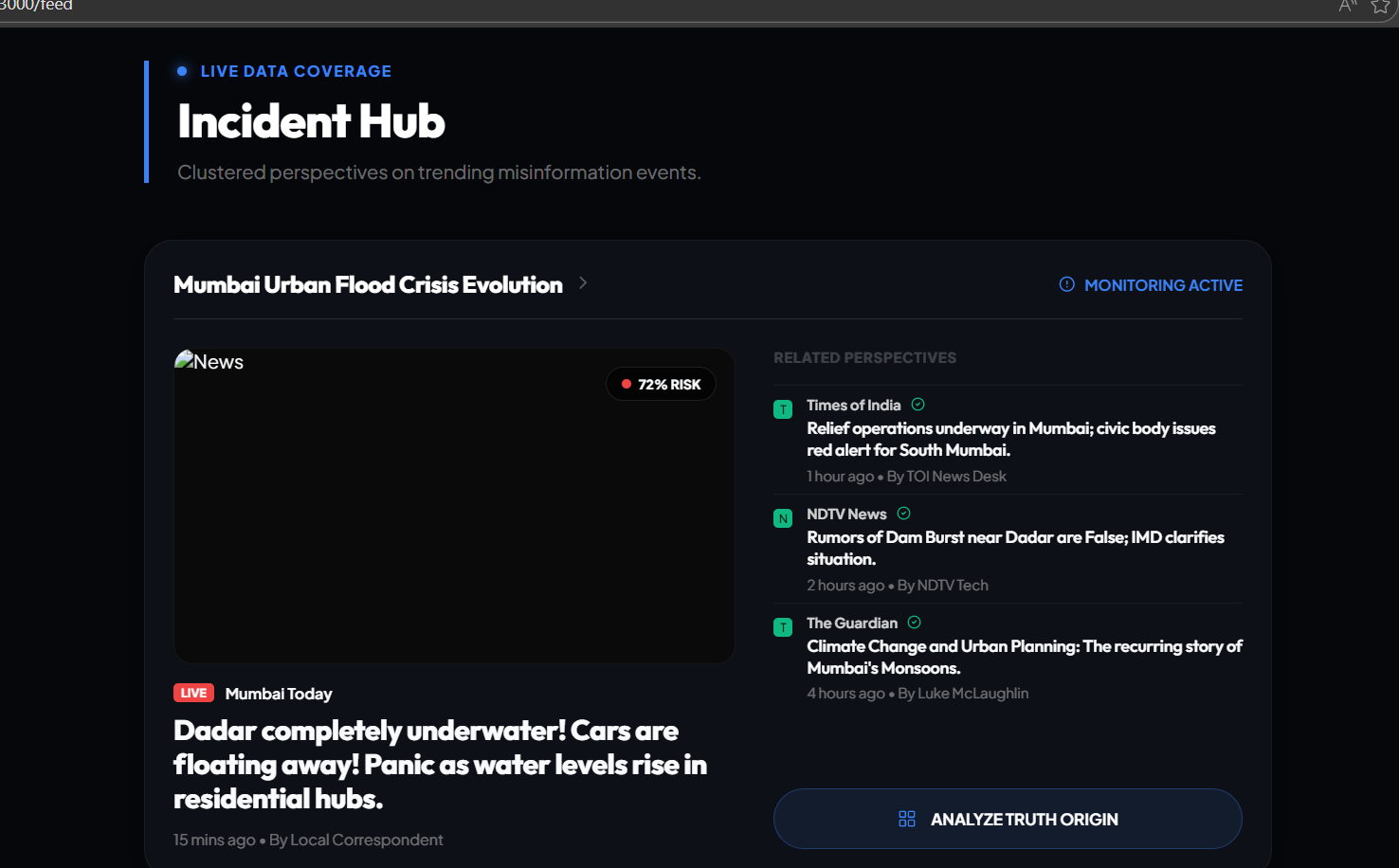
live_feed
-
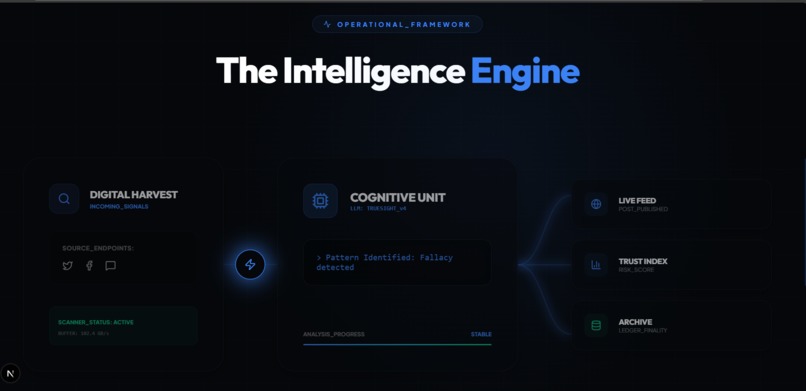
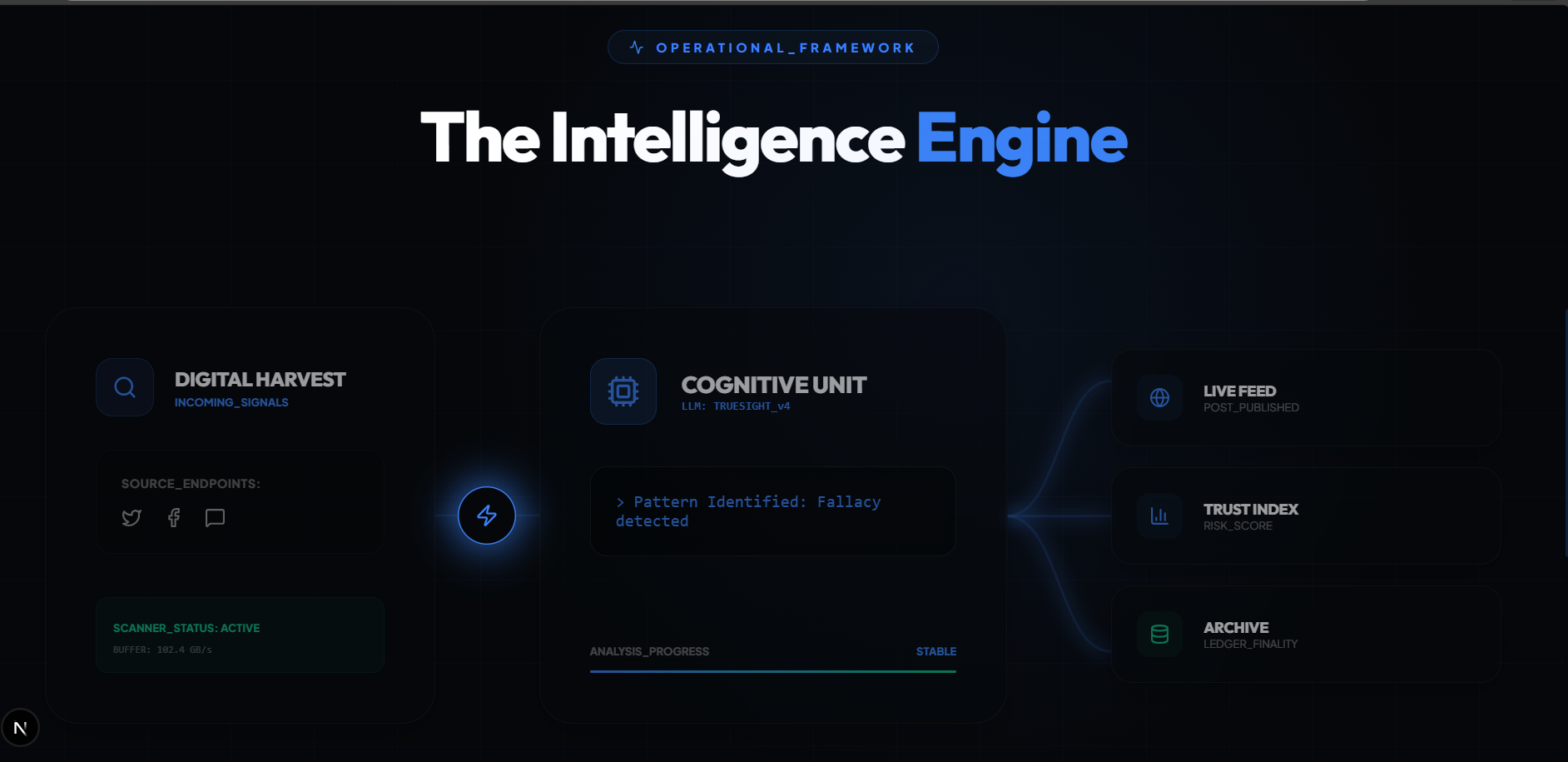
workflow
Inspiration
The idea for TRU (Trust & Reputation Unit) came from a simple but worrying reality:
in the age of AI-generated content, lies spread faster than truth.
Fake news, phishing scams, and manipulated content can go viral within minutes, while verification often takes hours or days. During critical moments—elections, pandemics, or financial crises—this delay causes real-world harm. Existing fact-checking systems are mostly centralized, slow, and vulnerable to censorship or external pressure.
We asked one core question:
“How can trust on the internet be verified instantly, transparently, and without relying on a single authority?”
That question became the foundation of TRU.
What We Built
TRU is a multi-layer trust verification system that combines:
- AI-powered content analysis for real-time misinformation detection
- Blockchain-based immutability for tamper-proof verification records
- Community-driven reporting with economic incentives to prevent abuse
At its core, TRU works as a digital notary for online content—verifying claims, assigning trust scores, and anchoring proof on-chain.
How We Built It
AI Verification Engine
We developed an AI pipeline using a fine-tuned DistilRoBERTa-based transformer trained on verified fake-news datasets.
Instead of a simple true/false output, the system provides:
- A Trust Score (0–100)
- A confidence value
- Explainable signals highlighting why a claim may be unreliable
This ensures transparency and avoids blind reliance on AI decisions.
Backend & APIs
The backend is built with FastAPI, enabling fast and asynchronous request handling.
Core endpoints include:
/verify– analyze content and generate trust scores with cryptographic hashes/feed– aggregate live cybersecurity threats via RSS feeds/report– allow community reporting of scams and misinformation
In-memory caching is used to maintain low-latency responses.
Blockchain Layer
TRU stores only essential metadata on-chain:
- SHA-256 content hash
- Verification verdict
- Timestamp
This approach preserves privacy while ensuring censorship-resistant and auditable verification.
Trust Economics
To prevent spam and coordinated attacks, TRU uses stake-based reporting:
- Users stake tokens when submitting reports
- Accurate reports are rewarded
- False or malicious reports lose their stake
This aligns incentives and discourages manipulation.
Challenges & Learnings
- Balancing speed and accuracy required confidence intervals and an uncertainty zone
- Preventing AI overconfidence meant never claiming absolute certainty
- Designing against spam and brigading required economic deterrents
- Blockchain was used carefully as a verification anchor, not a storage layer
We learned that trust is not binary—it is probabilistic, contextual, and adversarial.
Impact & Vision
TRU is built to scale beyond a hackathon project.
Our vision is to make trust verification a public digital utility for users, platforms, and institutions.
In a world where content is created instantly, truth must be verified even faster.
That is the mission of TRU.
Built With
- ai-(distilroberta)
- blockchain-(solidity
- distilroberta
- ethers.js
- fastapi
- hardhat
- hugging-face-transformers
- metamask
- next.js
- polygon)
- python
- pytorch
- rpc-providers-(infura/alchemy)
- solidity
- typescript

Log in or sign up for Devpost to join the conversation.