
Inspiration
Every home has the same quiet problem: you own hundreds of things and can't find any of them. And on the worst day — a fire, a flood, a break-in — the insurer asks for a list of what you owned, and nobody has one. Existing home inventory apps ask you to type a spreadsheet. Nobody finishes.
What it does
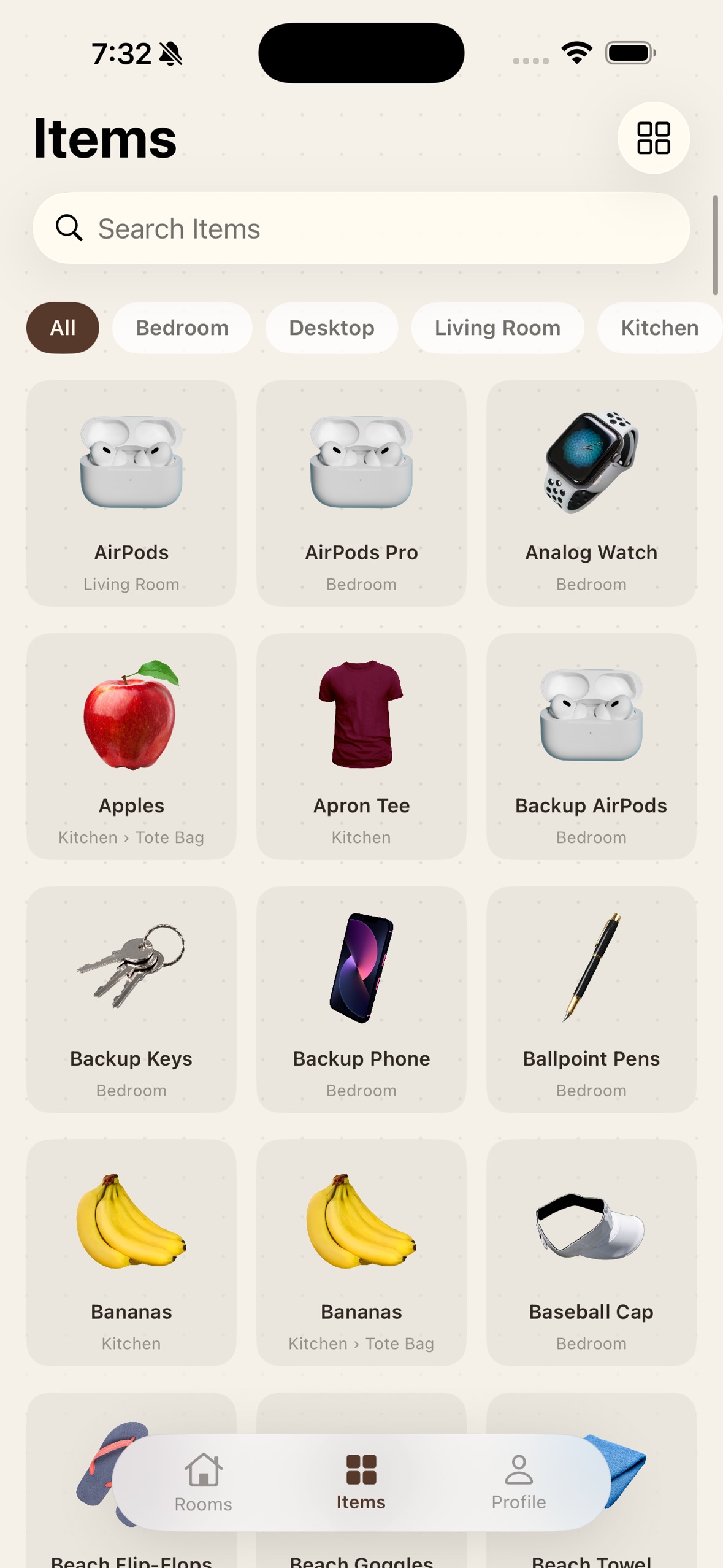
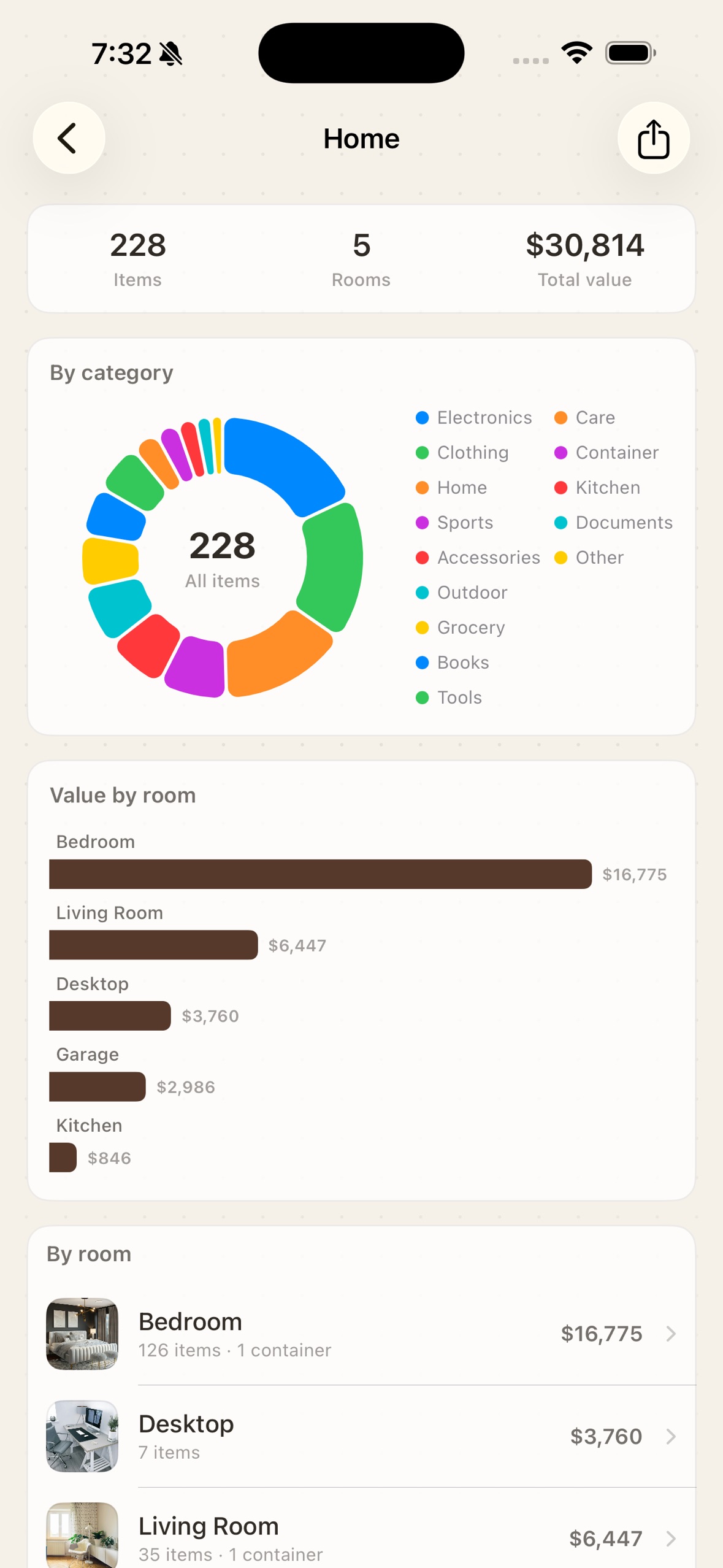
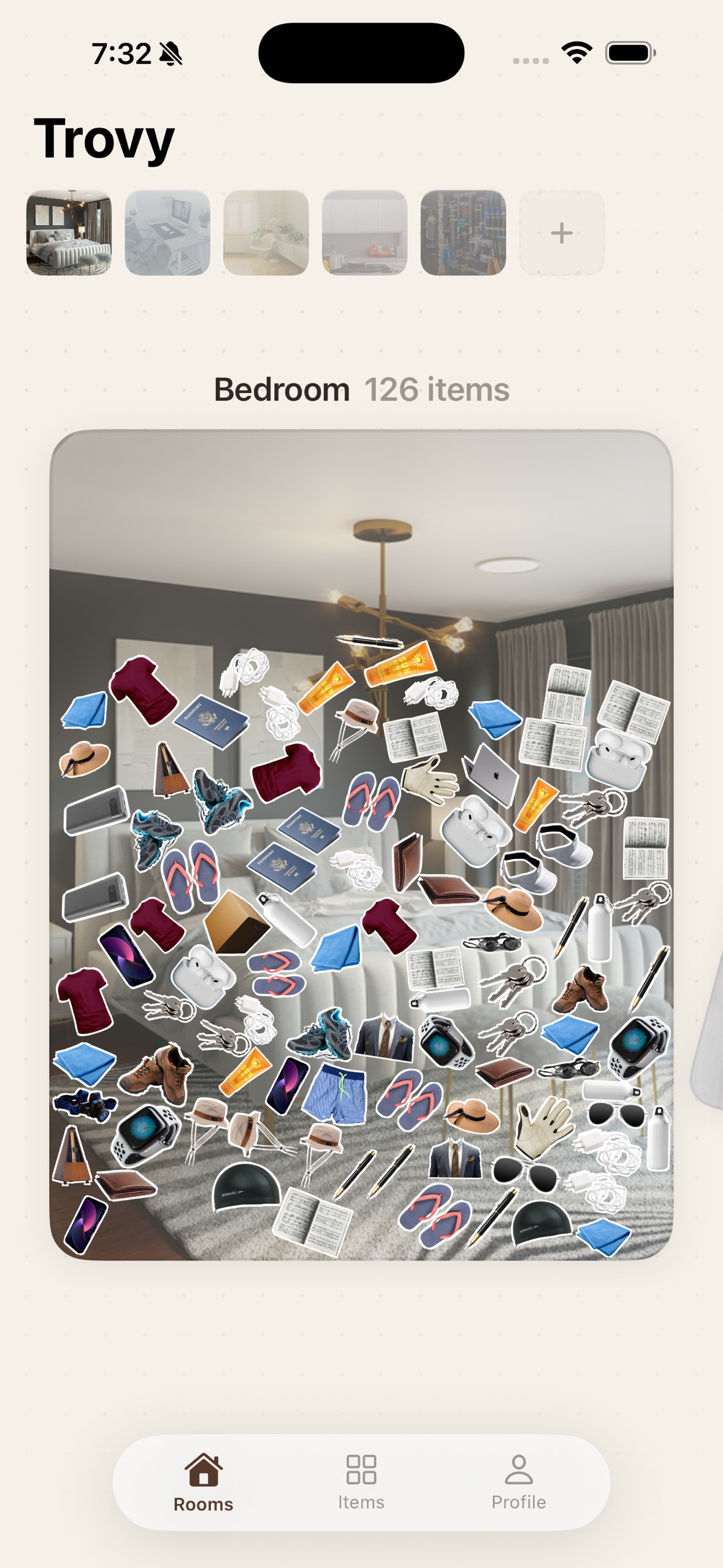
Trovy makes recording a thing cost about five seconds and finding it about three. Take a photo, Trovy cuts out the object and recognizes it, and you drop it into a room or a box. Rooms are a carousel of physical-feeling cards; a room opens into a pile you dig through; anything you haven't filed waits in an Inbox. Search works three ways, and when you need proof, Trovy exports an insurance-ready report — a CSV plus the original photos, zipped — for one room or the whole home.
How we built it
SwiftUI on iOS; Hono on Cloudflare Workers with Supabase (us-east-1) behind it; Gemini for on-capture recognition; Sign in with Apple. Monetization is RevenueCat: three tiers (monthly, yearly, lifetime) against a free allowance of 20 items.
Challenges we ran into
Entitlements had to be un-bypassable, so the server keeps its own entitlement table with RevenueCat webhooks as the only writer, and the items endpoint returns 403 past the free allowance — the client's flag only drives UI. Making the room carousel feel physical without dropping frames took a global O(1) index so no screen ever scans the store.
What's next
Android, on RevenueCat's cross-platform entitlements; warranty tracking; and a 3D room-scan mode already built and shelved.
Built With
- cloudflare
- gemini
- revenuecat
- supabase
- swift
- swiftui
- typescript

Log in or sign up for Devpost to join the conversation.