-
-
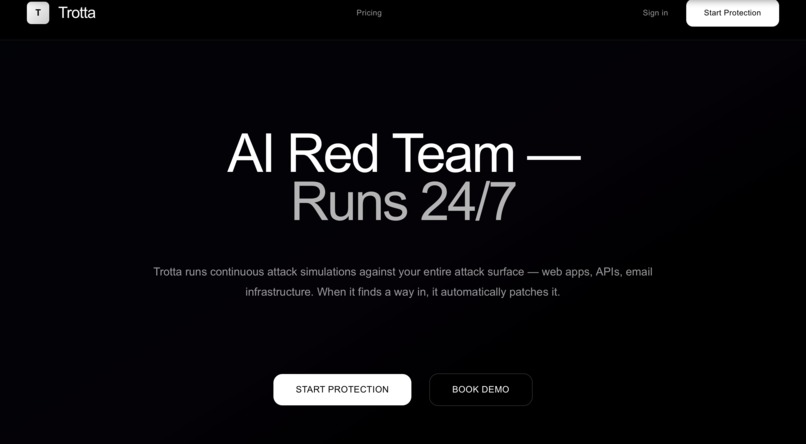
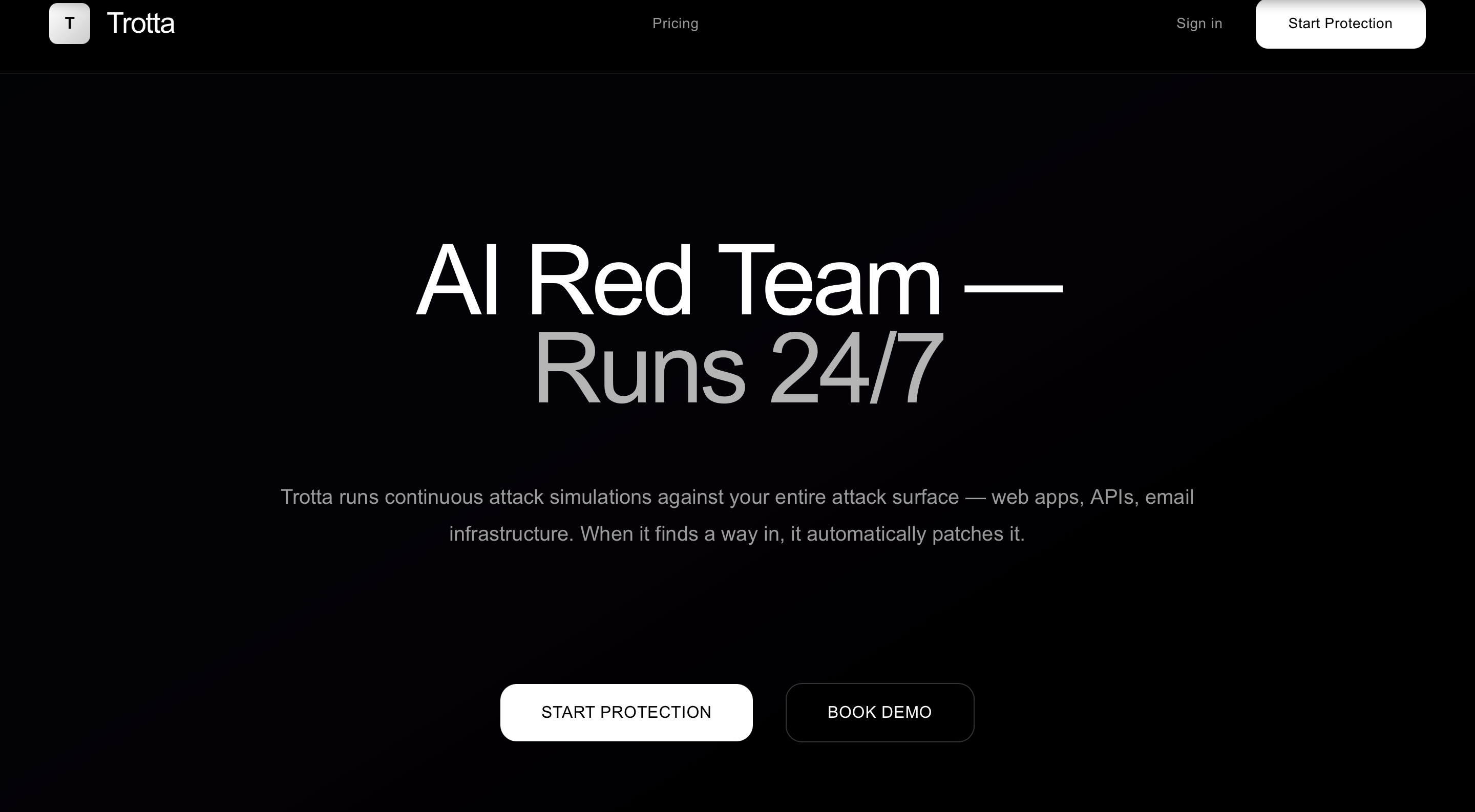
Landing page
Inspiration: We were inspired by the fact that most companies only find out about critical vulnerabilities after attackers exploit them. As former security engineers and software builders, we saw how manual penetration testing and reactive patching leaves massive blind spots. Trotta was born to close that gap - an AI red team that never sleeps, continuously simulating attacks and fixing weaknesses before hackers strike.
What We Learned: AI is only as good as the attack library it learns from - we needed a dynamic, constantly updated exploit knowledge base. Security automation is harder than detection - fixing issues without breaking systems required intelligent code generation and context awareness. Speed matters: finding vulnerabilities is only useful if you can patch them in near-real time.
How We Built It: Designed a multi-agent AI system for reconnaissance, exploitation, and patch generation. Integrated with popular dev and deployment platforms (GitHub, GCP) for seamless patch application. Built a dashboard for real-time alerts, vulnerability reports, and auto-fix logs.
Challenges We Faced: False positives vs. false negatives: Balancing precision so AI doesn't flood teams with noise. Complex integrations: Making Trotta work across different environments (cloud, on-prem, hybrid). Performance tuning: Running continuous simulations without impacting system uptime or user experience.
Built With
- burpsuite
- claude
- firebase
- gemini
- google-cloud
- google-cloud-functions
- javascript
- masscan
- metasploit
- nextjs
- nmap
- node.js
- python
- shodan
- typescript

Log in or sign up for Devpost to join the conversation.