-
-
Collaborators
-
AI Mentor/Scheduler
-

1
-
2
-
3
-
4
-
5
-
6
-
7
-
8
-
9
-
10
-
11
-
12
-

13

Inspiration
We were inspired by Fryft and how it has become an integral part of the USC student experience. We wanted to create a similarly accessible platform that students could turn to whenever they needed support bringing an idea to life, regardless of their major, interests, or goals.
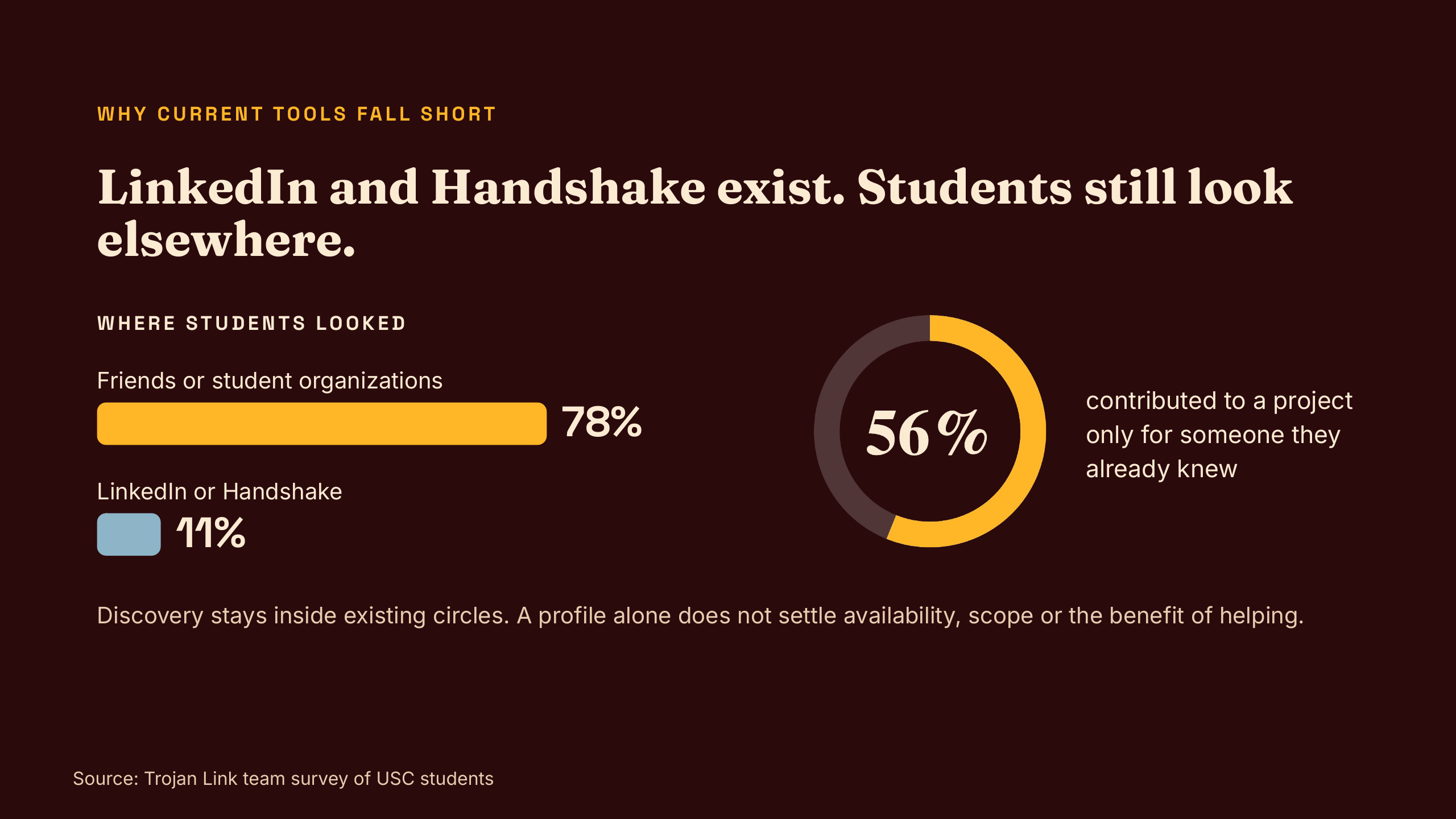
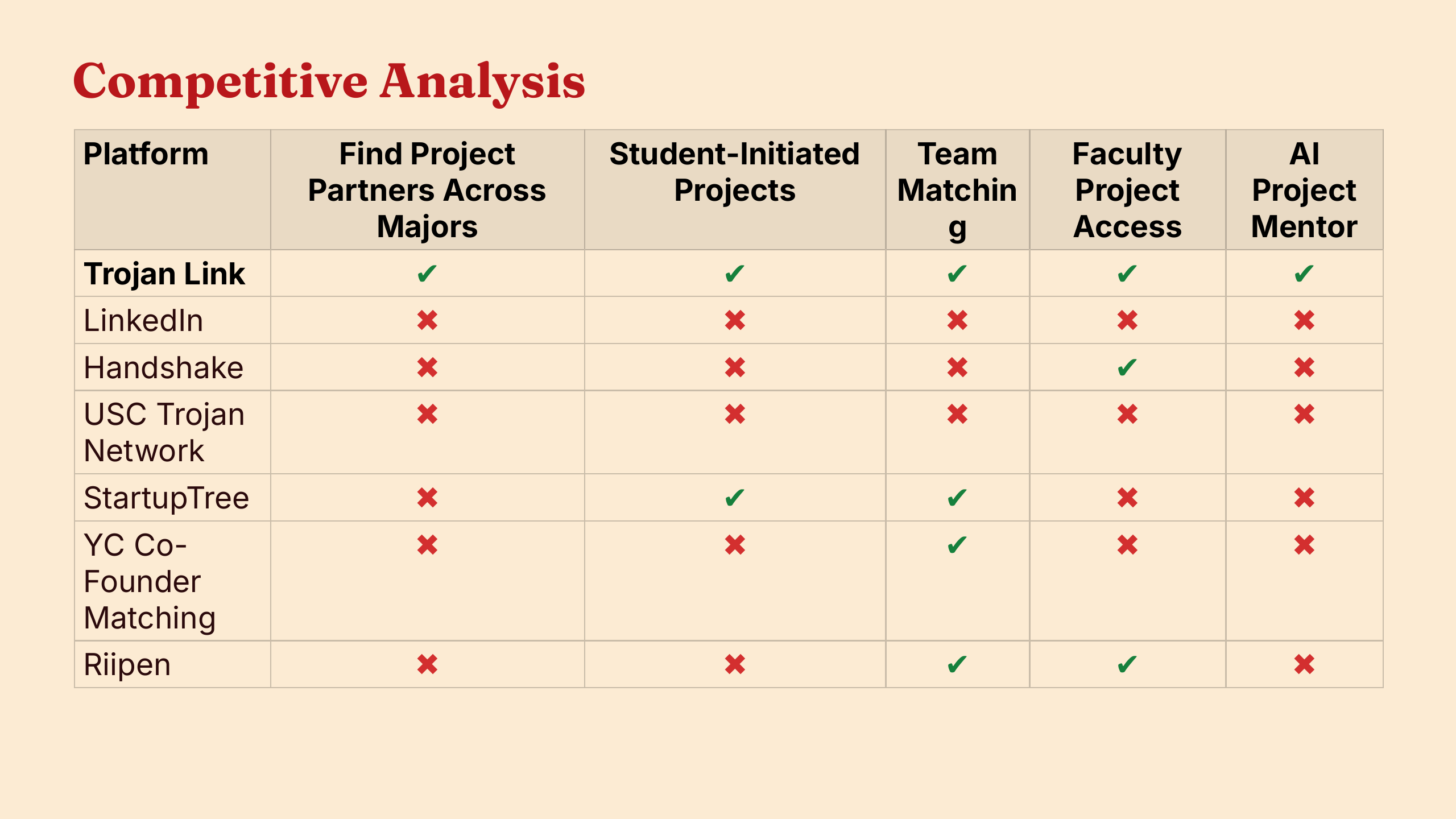
We also recognized that there were existing resources that help students find co-founders and collaborators, but there was a lack of guidance available to help them actually execute their ideas. We wanted to bridge that gap by creating a platform that not only connects students with the right people but also provides the tools and mentorship needed to turn their ideas into reality.
What it does
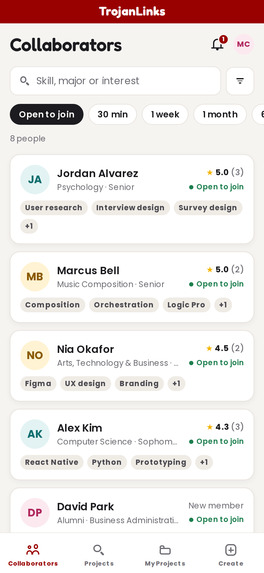
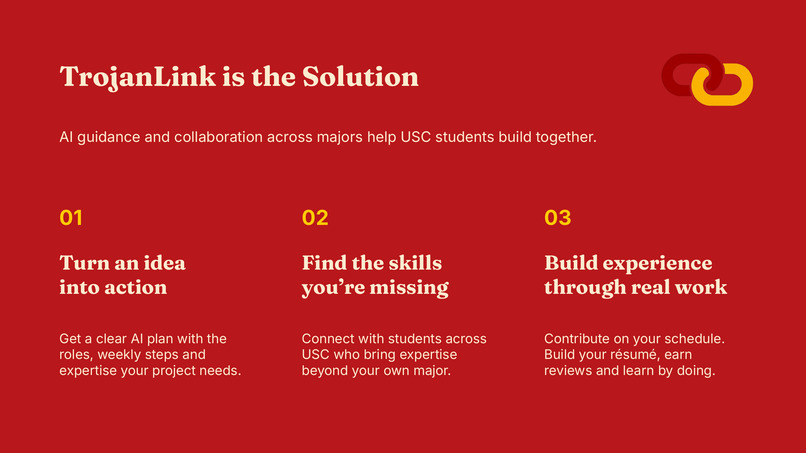
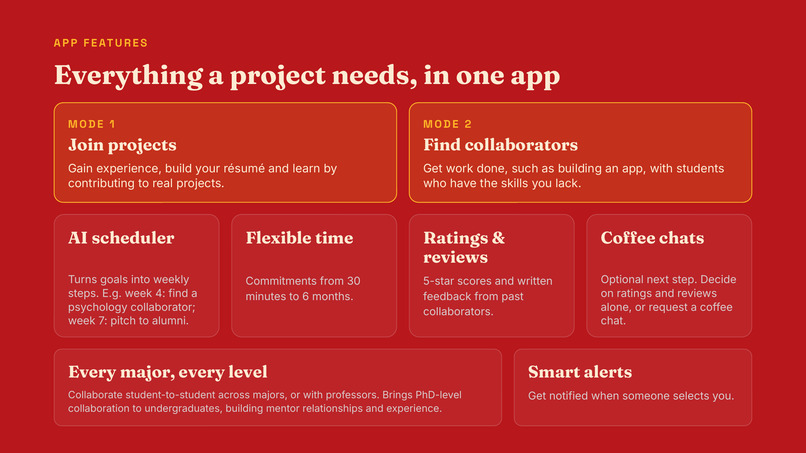
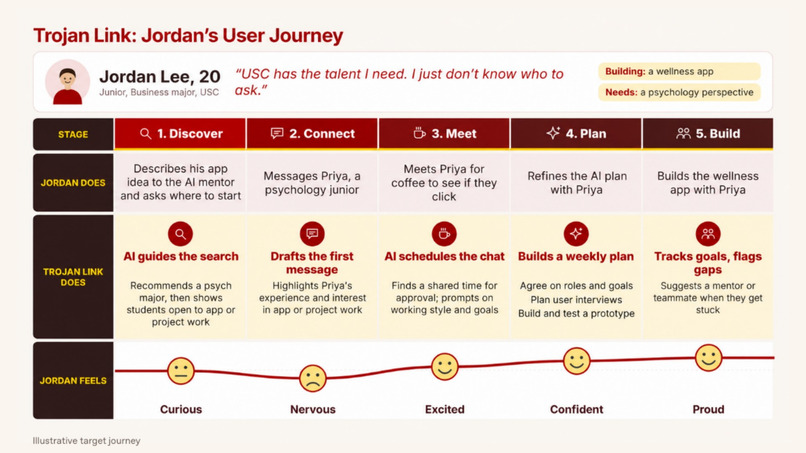
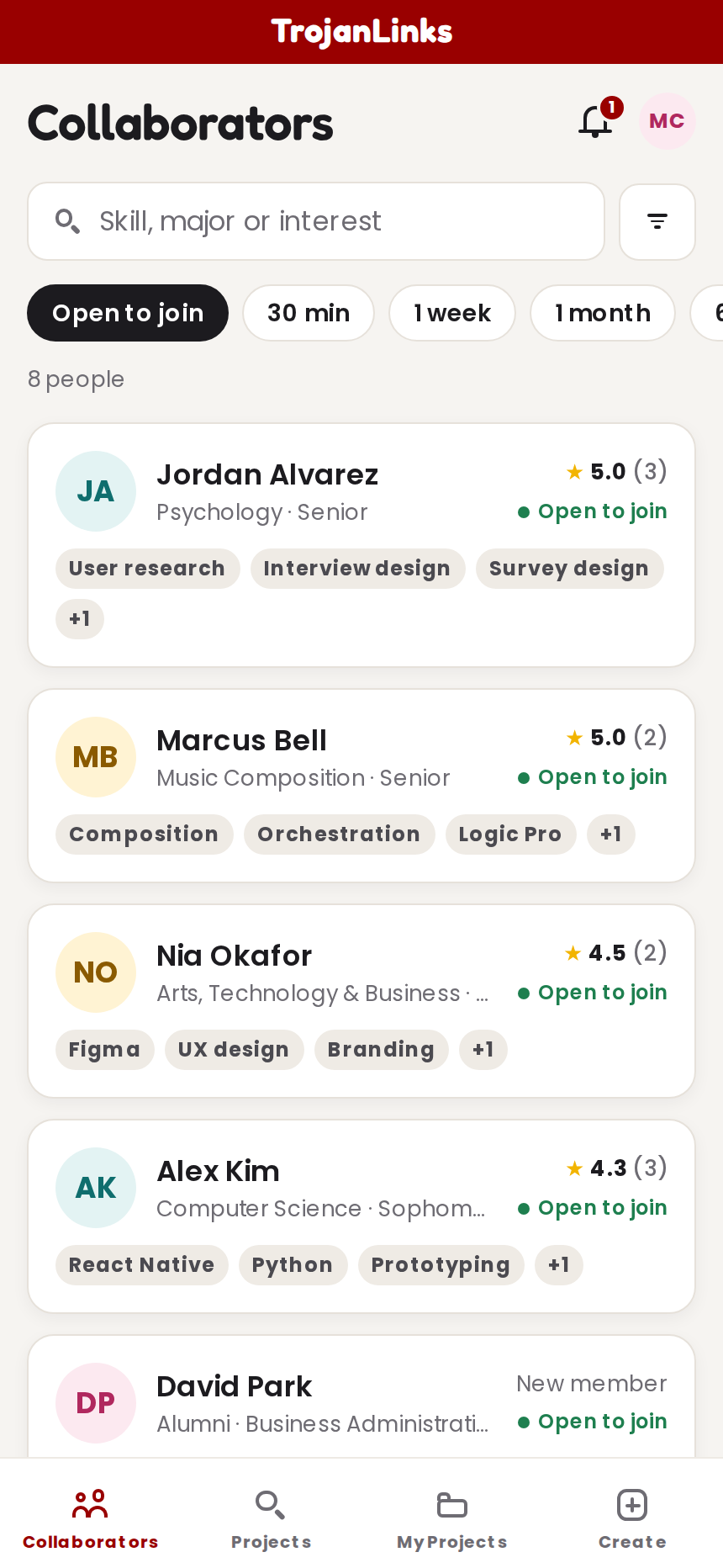
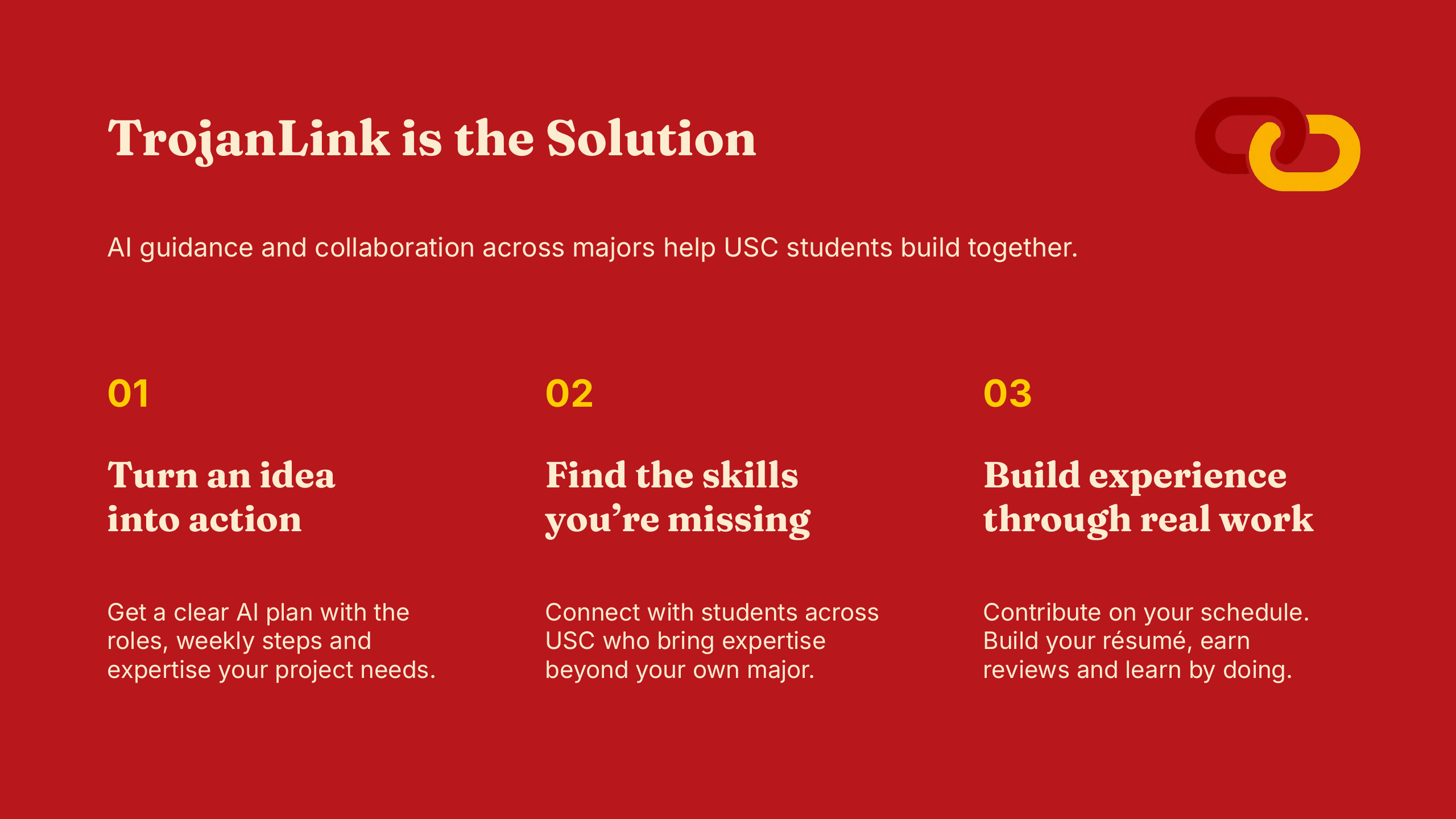
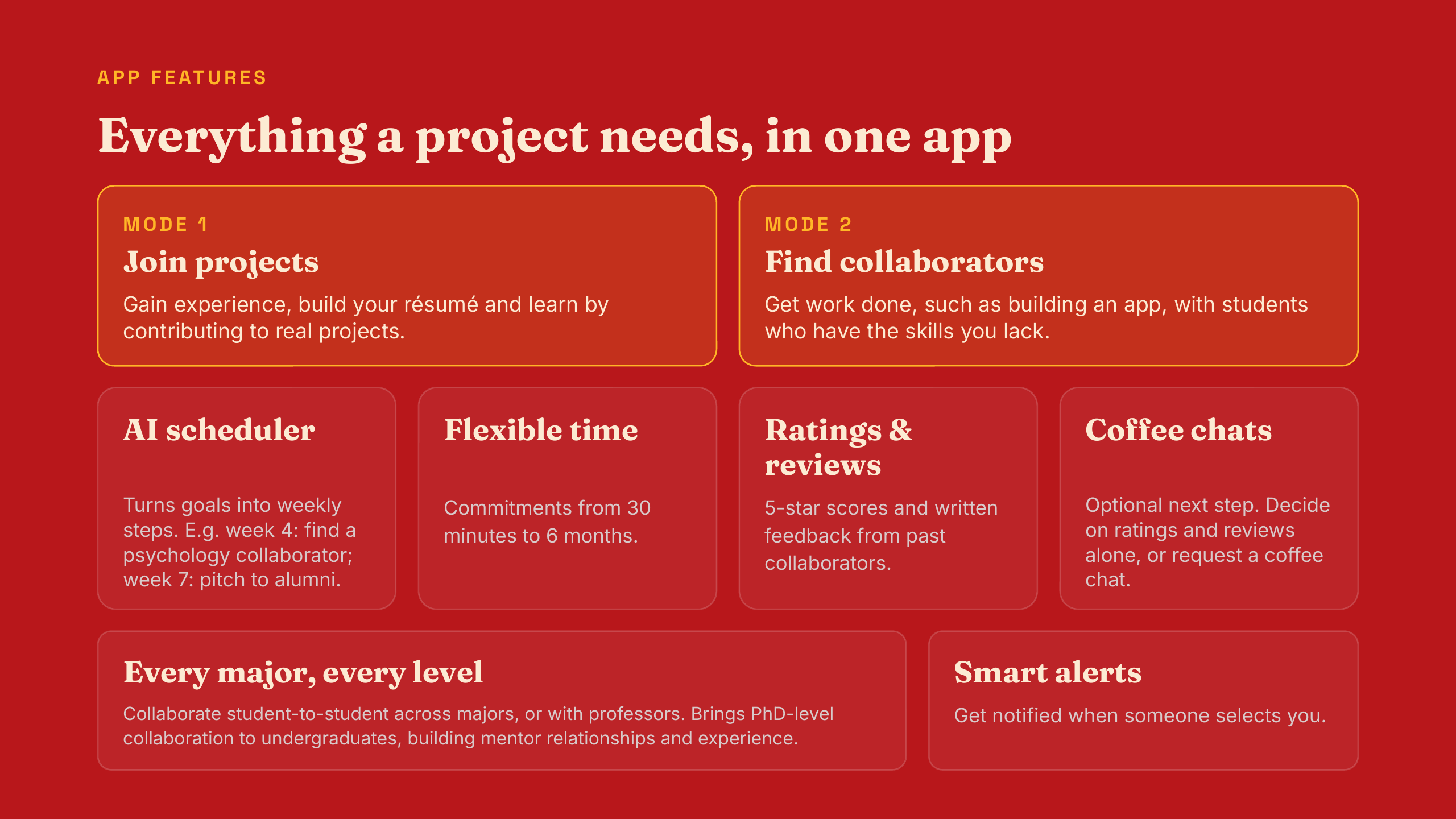
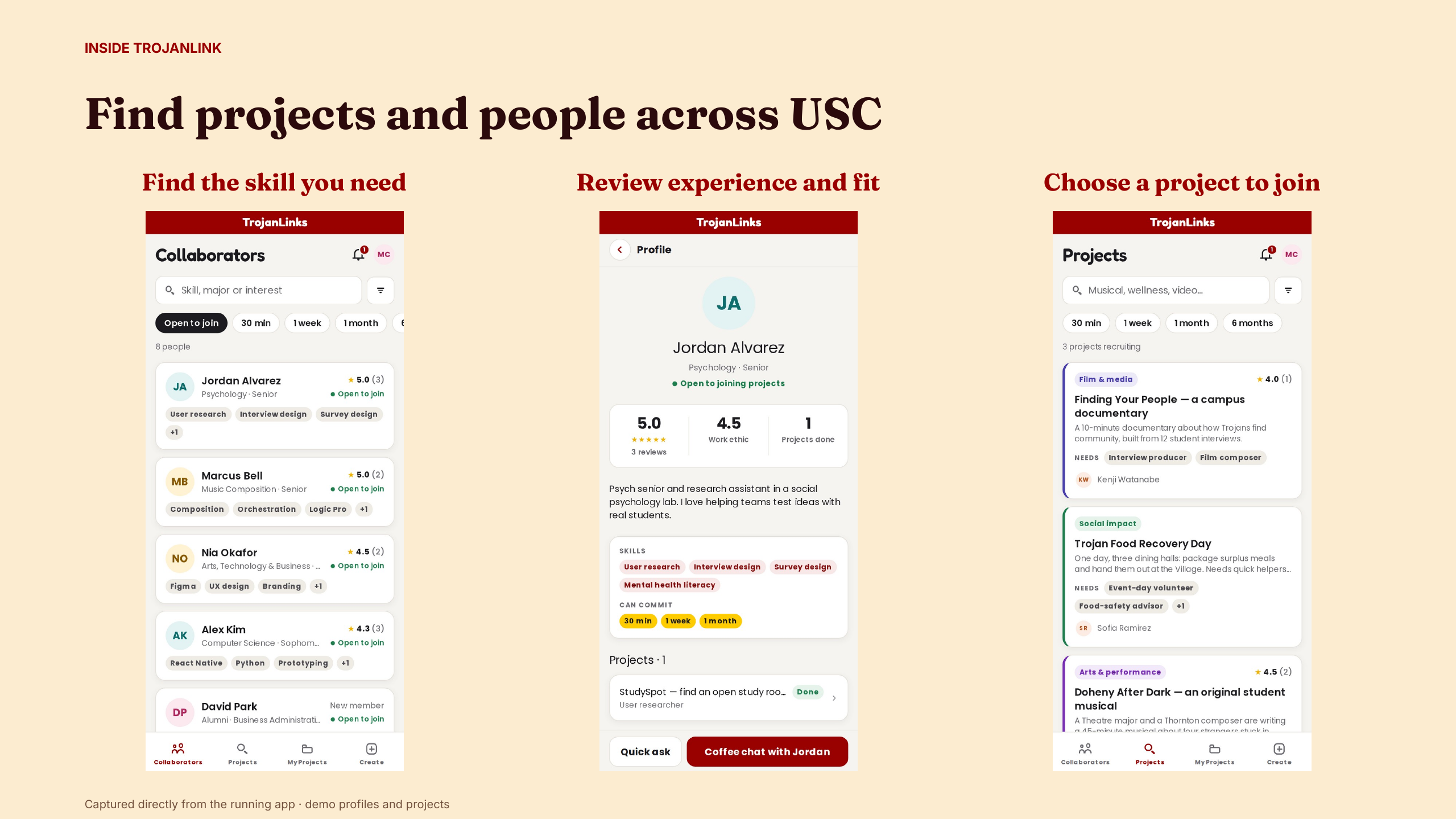
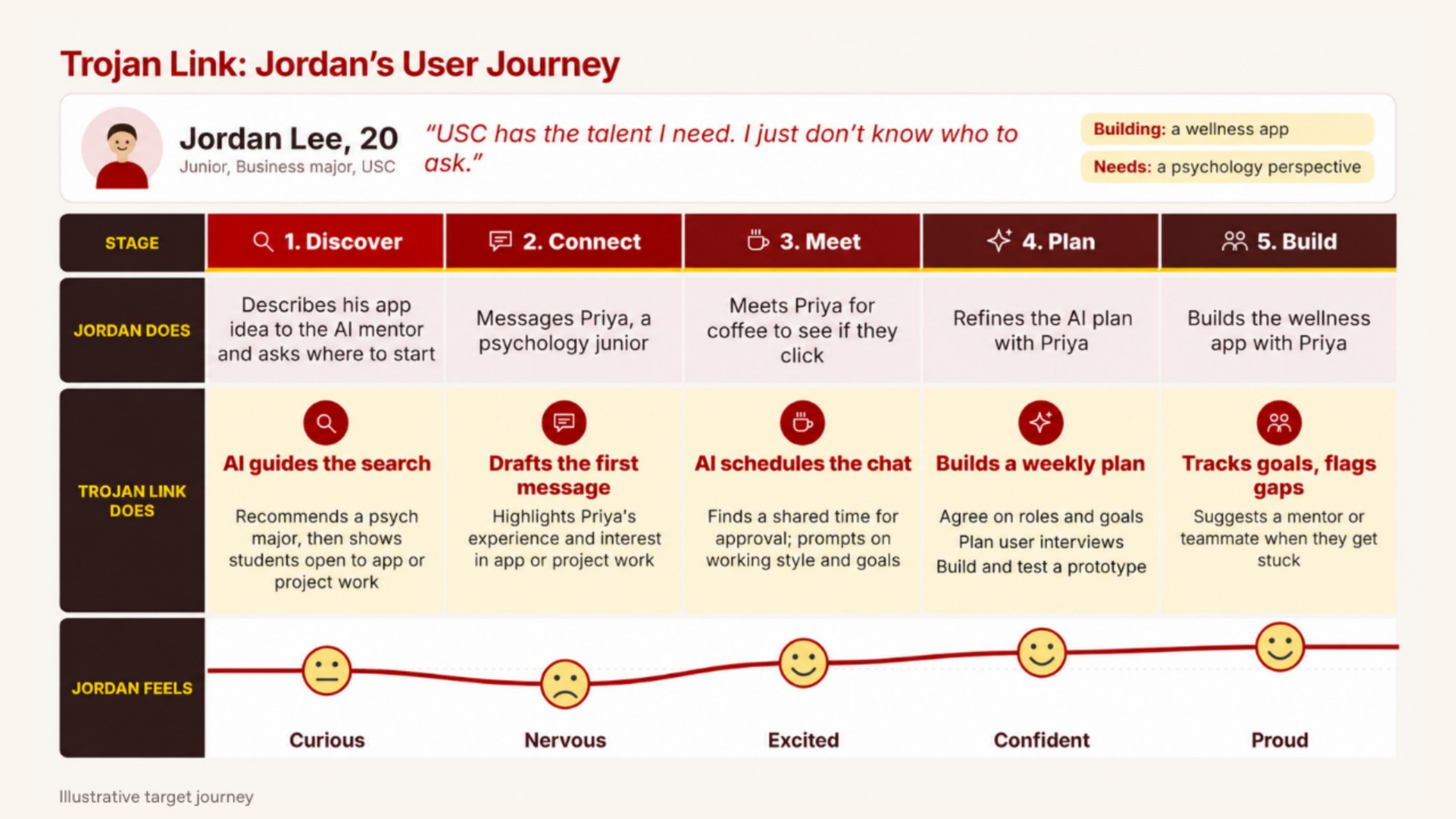
TrojanLinks is a USC-specific, AI-powered collaboration platform that connects students across disciplines based on their skills, interests, availability, and project goals.
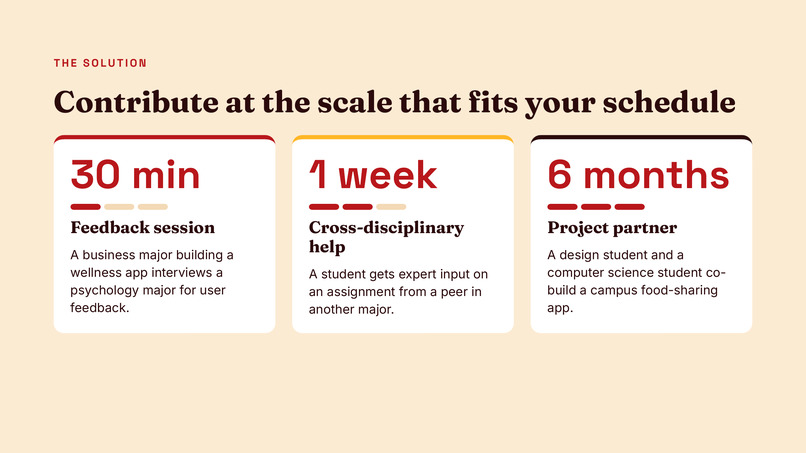
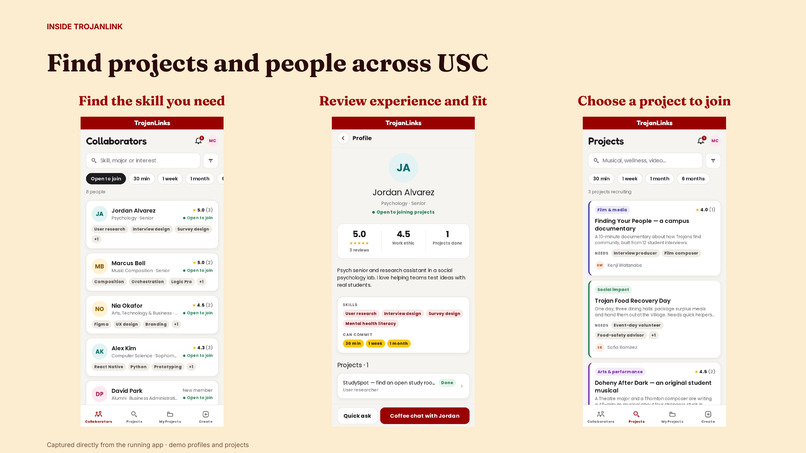
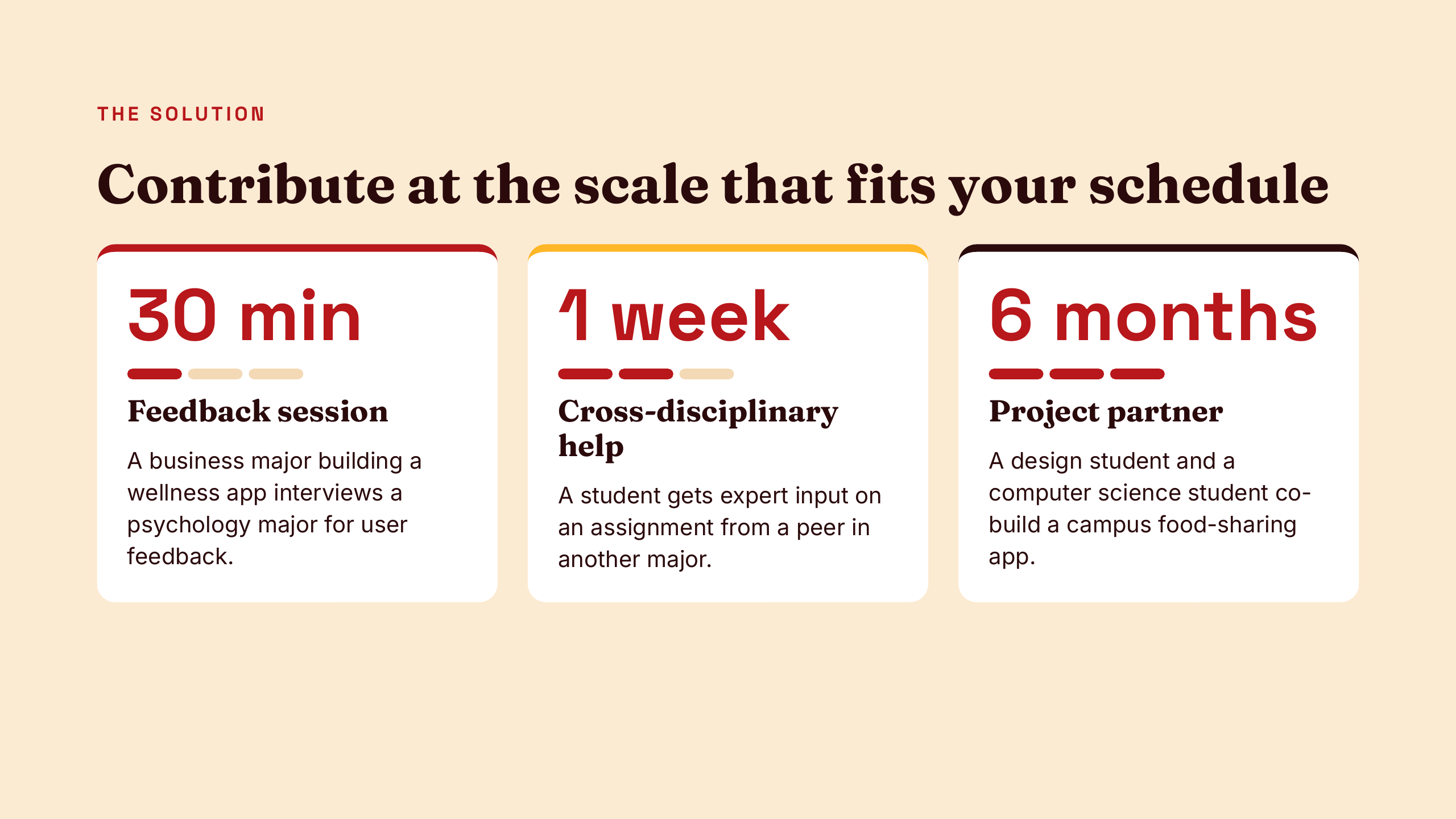
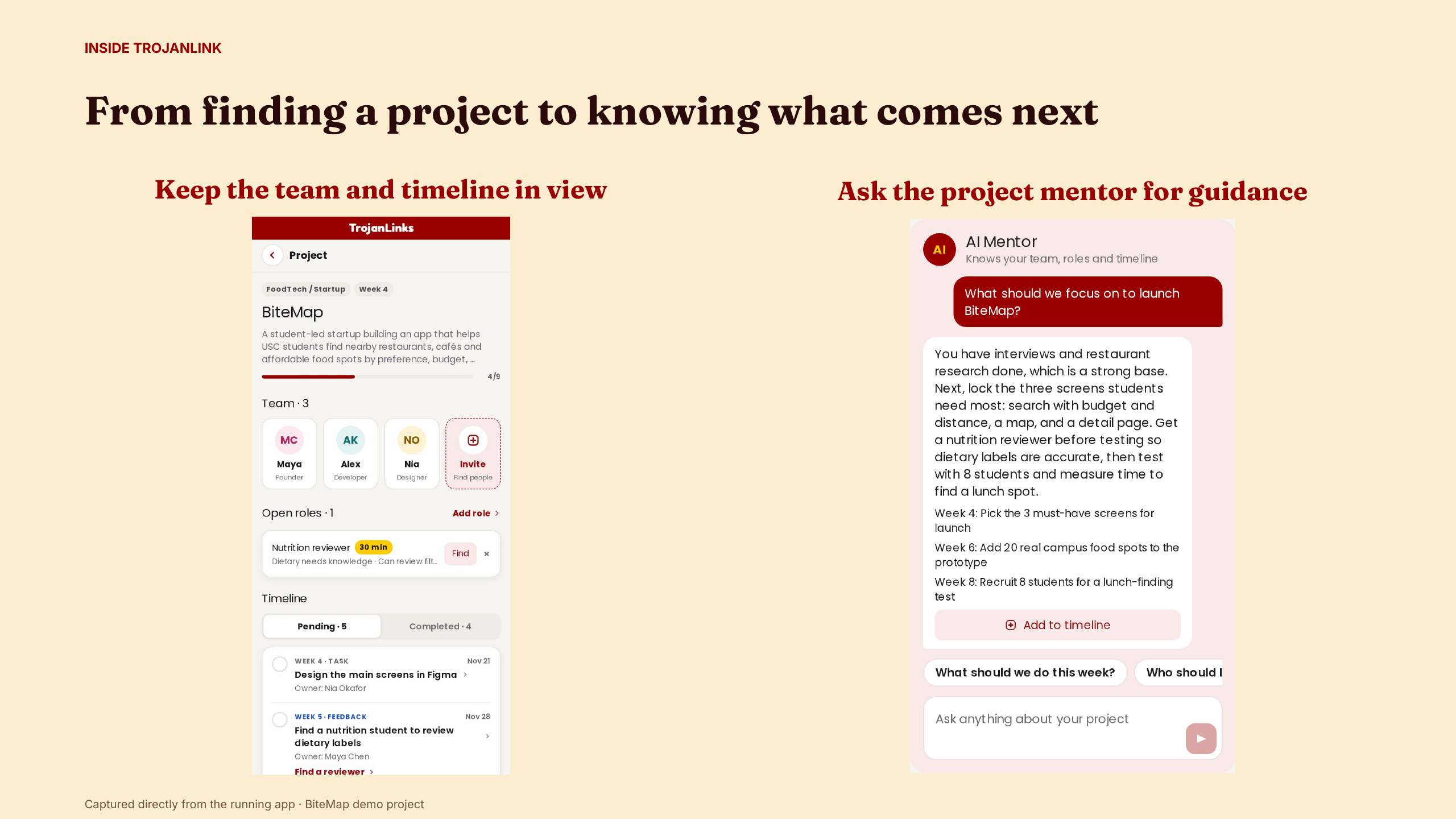
By bringing interdisciplinary opportunities into one platform, TrojanLinks allows students to discover collaborators with complementary expertise, explore projects ranging from quick 30-minute interviews to long-term commitments, and create their own projects.
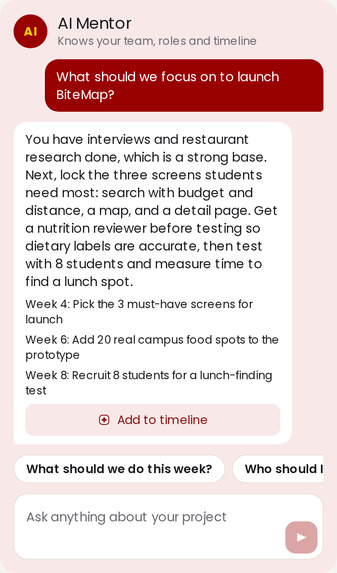
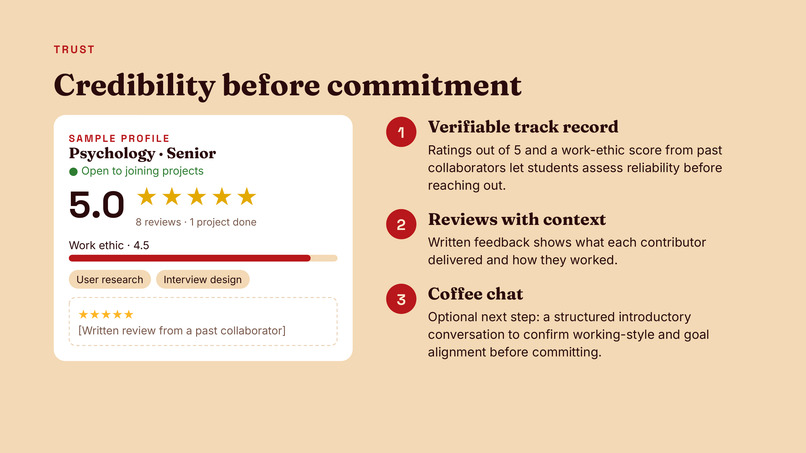
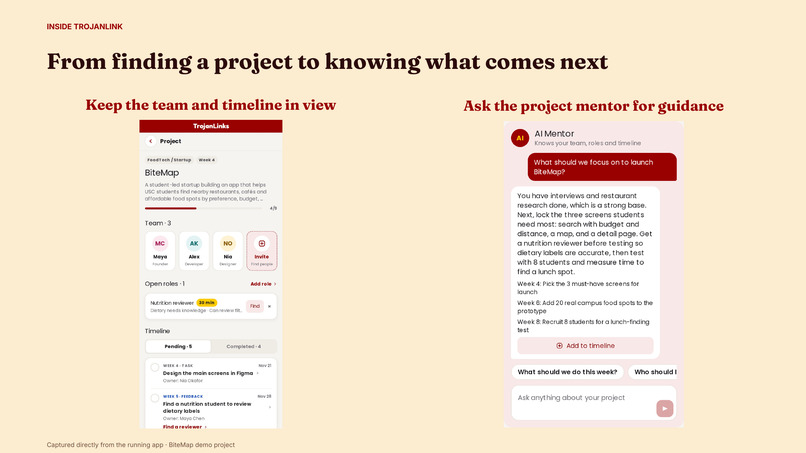
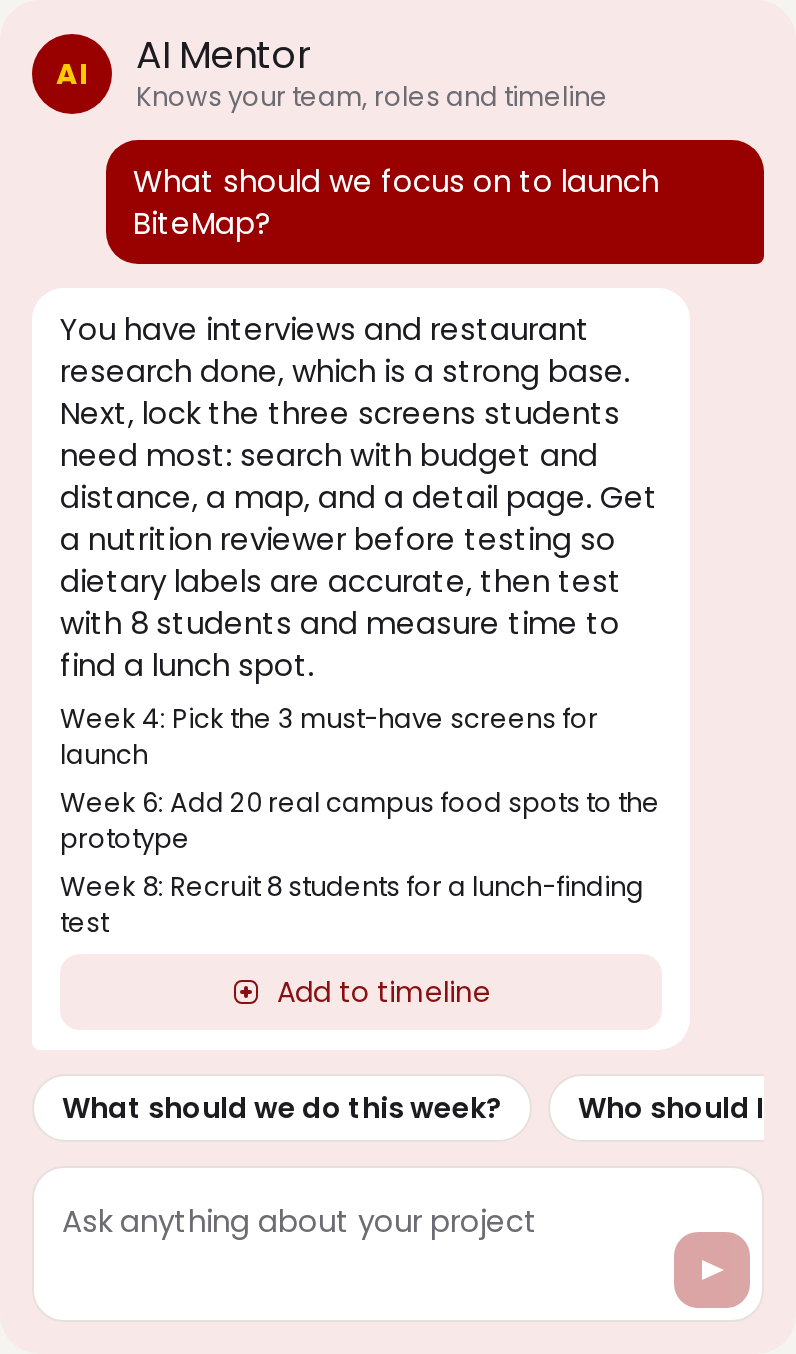
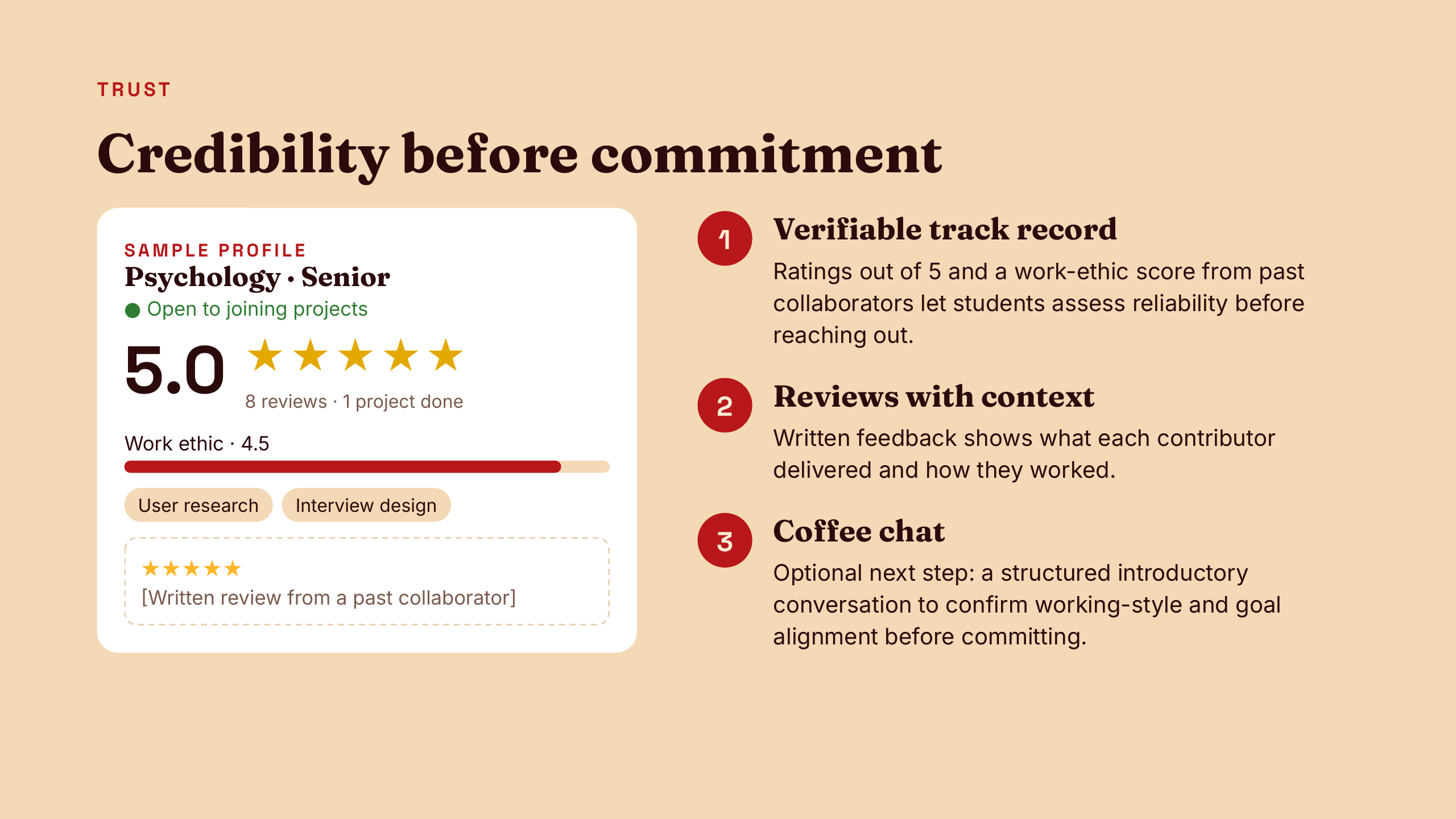
Beyond making connections, TrojanLinks helps students bring their ideas to life through personalized AI mentorship. Students can organize project teams, delegate responsibilities, track milestones, and receive personalized guidance to navigate challenges throughout the development process. A peer-review and rating system also helps build credibility and encourage accountability among collaborators.
How we built it
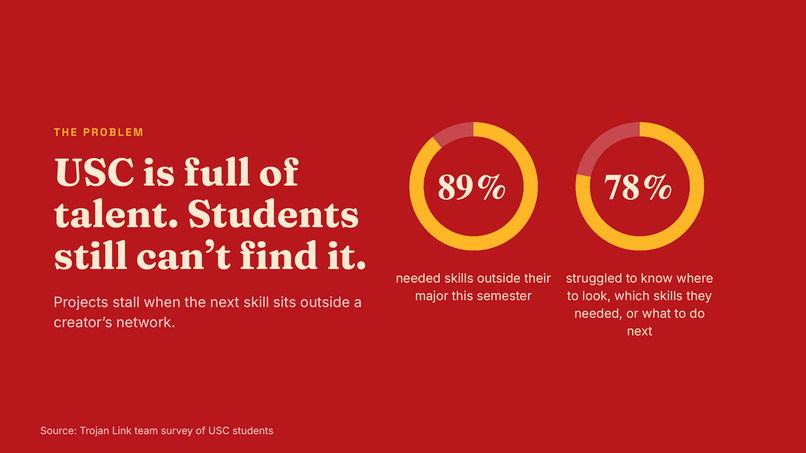
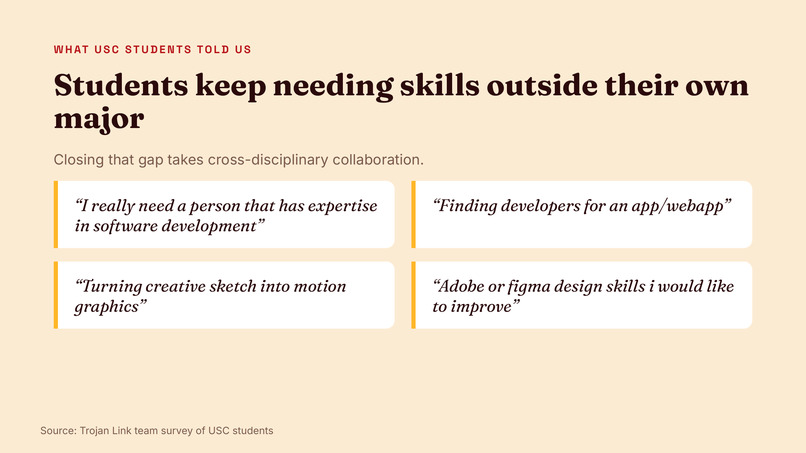
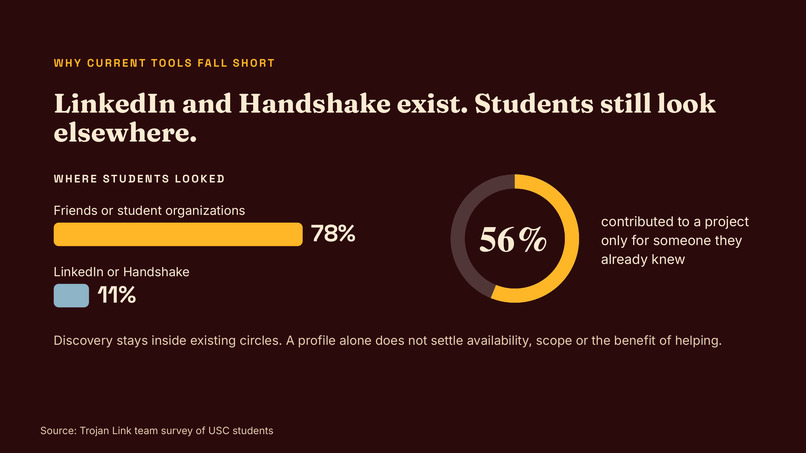
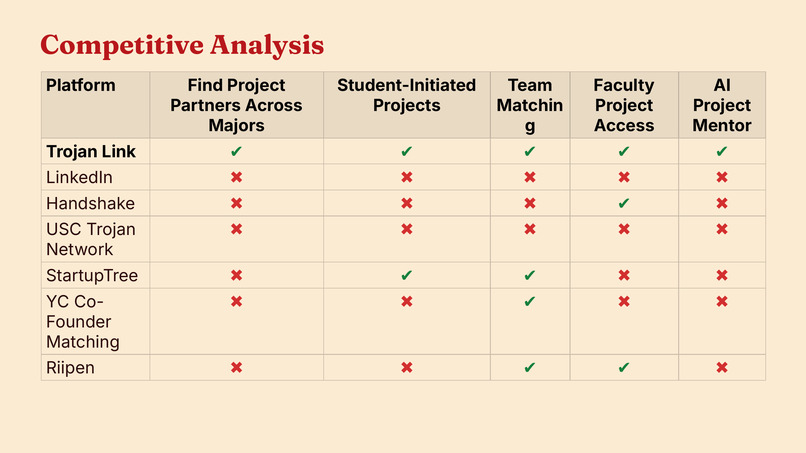
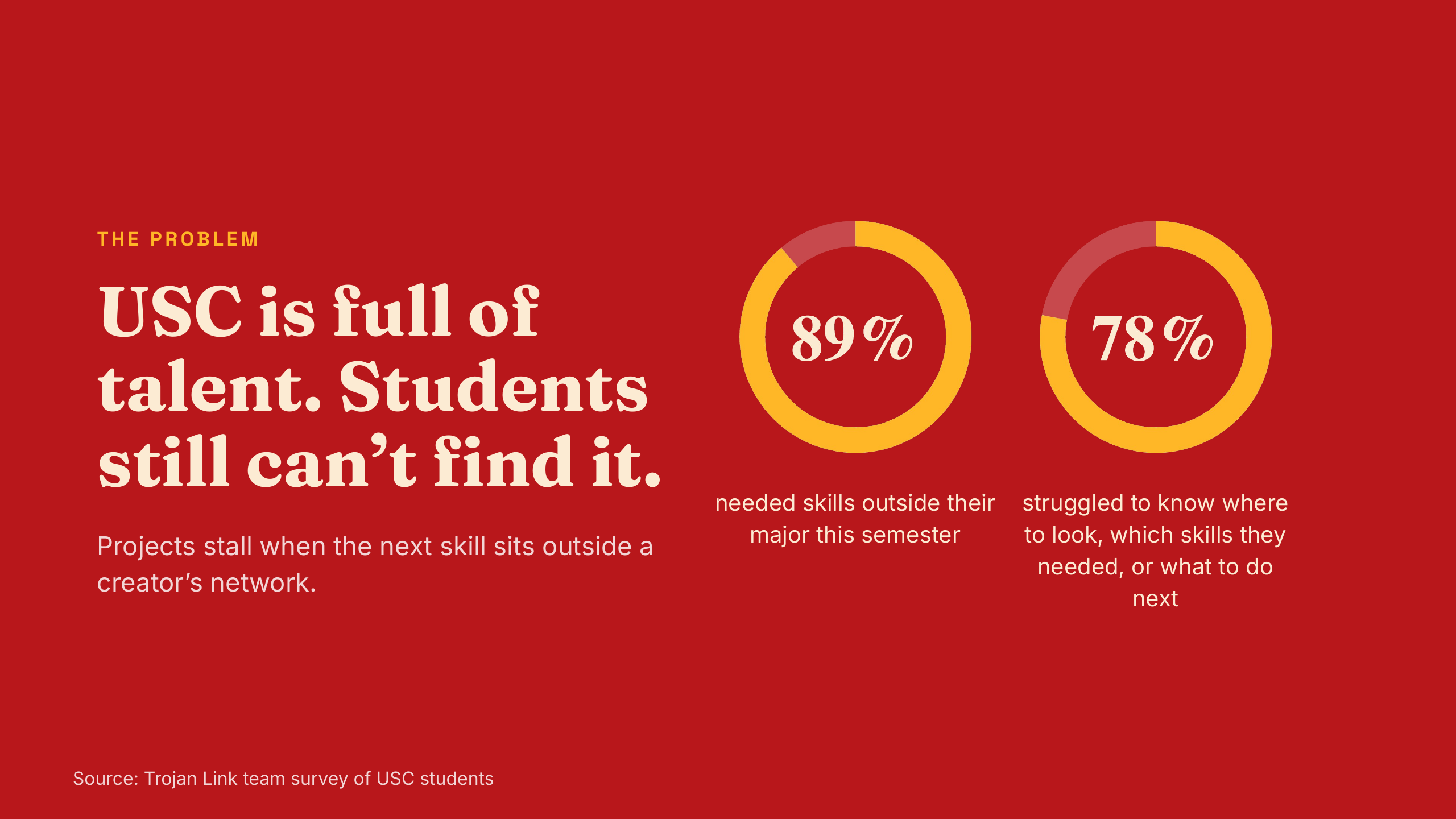
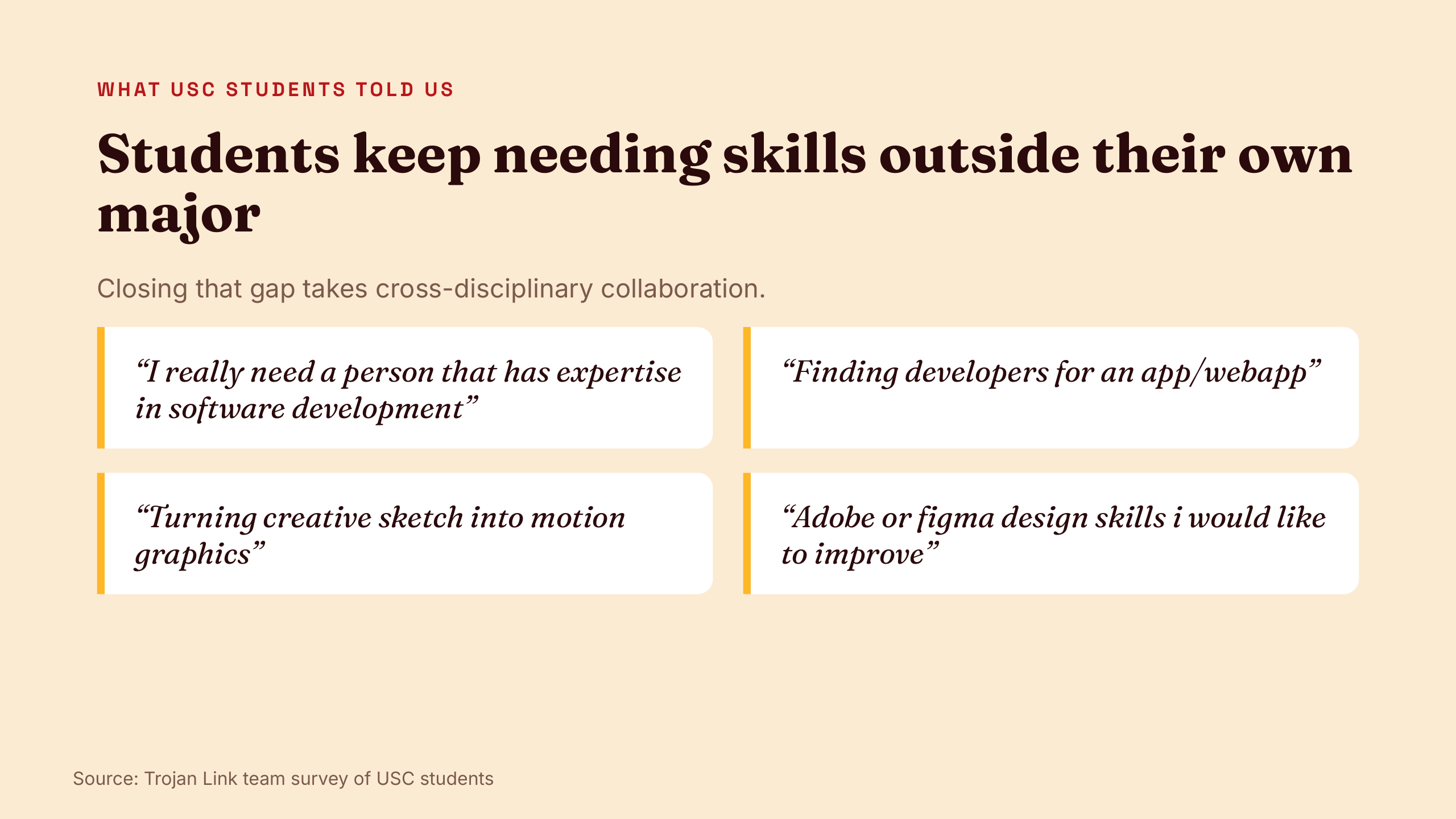
We began by identifying the barriers USC students face when going through the process of starting personal projects, which include finding collaborators. Through student research and competitive analysis, we found that interdisciplinary collaborator discovery, project-based networking, and AI-powered mentorship were the most significant features to include.
When creating the demo app, we used Emergent, an AI-assisted development platform, to build our initial prototype. The frontend was developed using React Native, Expo, and TypeScript to create a mobile-first experience, while the backend uses Python and FastAPI to manage application functionality. MongoDB provides the database infrastructure, and AI integration supports personalized project guidance and the generation of actionable steps.
Challenges we ran into
One of our biggest challenges was trying to ensure that the user experience would be seamless. We wanted TrojanLinks to offer a wide range of features, from interdisciplinary collaborator discovery to AI-powered project mentorship, without overwhelming users. We were able to overcome this by narrowing down the vital features and focusing more on implementing them. We also reduced unnecessary text and designed pages that made it easy for users to navigate.
We also encountered technical challenges throughout the development process of our demo. Combining code generated through Claude and Emergent caused some compatibility issues and database migration errors. Since we had limited technical experience, resolving these issues required us to experiment with different solutions by familiarizing ourselves with the technical environment. Despite these obstacles, we were able to make progress toward a functional prototype.
Accomplishments that we're proud of
As students who aren't very familiar with technology or software development, we are proud to have created a working demo through vibe coding. It was amazing to see an idea that began as a concept transform into an interactive app.
Beyond creating the prototype itself, we are proud of how we approached the development process. We conducted student research and evaluated competing platforms to study our market and demand.
What we learned
We learned how to create prototypes in a timely manner, as well as how to decide which features are necessary and which aren't. While various features can add depth to an application, fewer but stronger features can clarify the overall purpose of a project.
We also learned that developing an application involves much more than just translating an idea into code. We needed to understand the target audience, identify the underlying problem, and continuously refine the solution. Through vibe coding, we were exposed to the development process and learned how AI-assisted tools can make software creation more approachable for individuals who don't have a technical background.
What's next for TrojanLinks
Moving forward, we hope to continue developing TrojanLinks into a platform that becomes an integral part of the USC student experience, similar to Fryft.
Our immediate goal is to gather feedback from USC students to strengthen the existing features so that the app meets their needs.
Another area we hope to expand is our AI mentorship feature. We envision an AI mentor that not only breaks down ideas into actionable steps but also integrates calendar tools, notifications, and improved communication features to help students stay organized and accountable throughout their projects.
In the long term, we hope to partner with USC organizations, academic departments, and entrepreneurship programs to make interdisciplinary collaboration more accessible across campus.
Built With
- claude
- emergent
- expo.io
- exporouter
- fastapi
- github
- mongodb
- python
- reactnative
- reactnativeweb
- tanstack
- typescript
