-
-
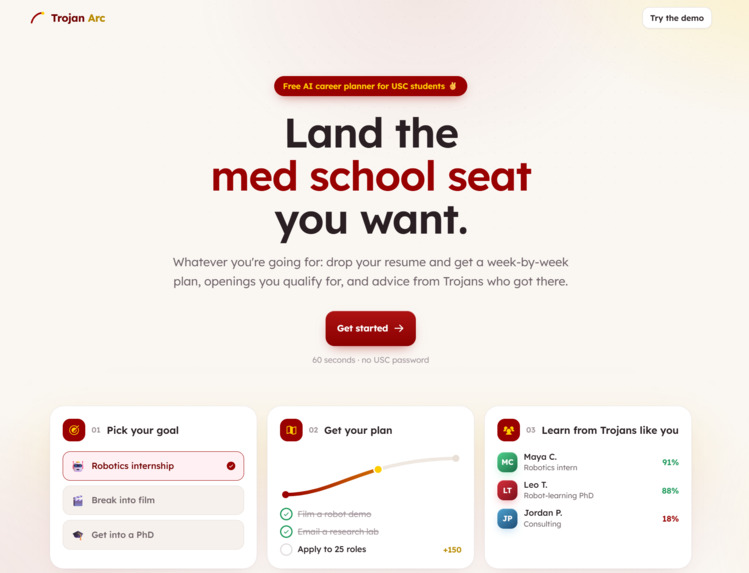
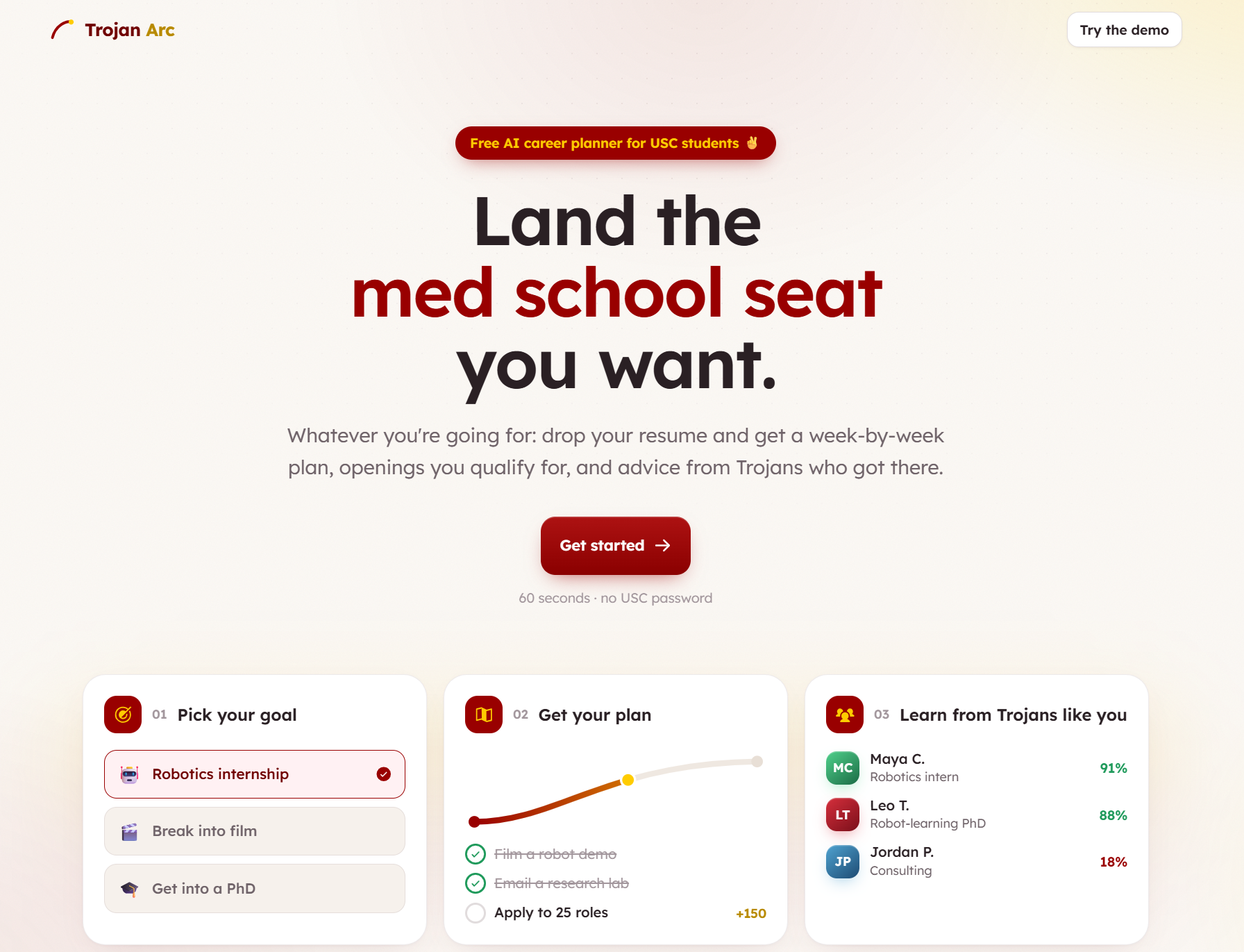
Starting page before the user creates their profile
-
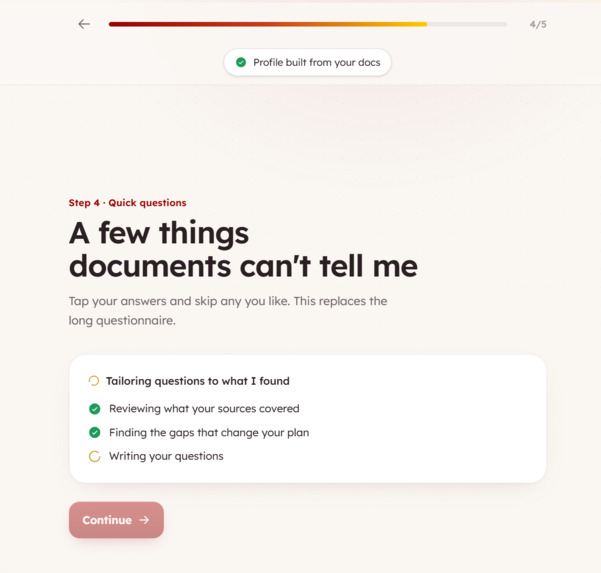
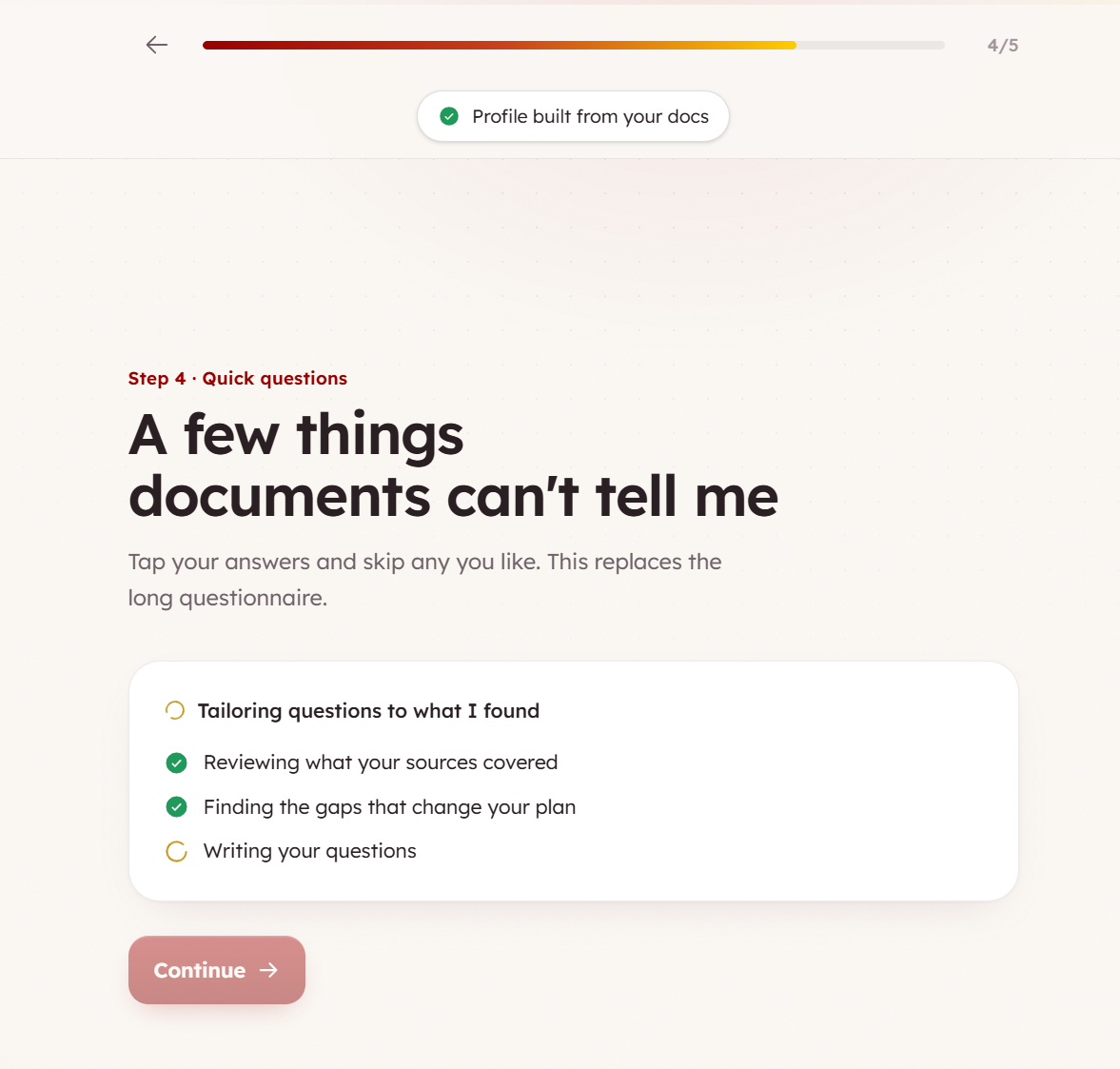
The loading of Trojan Arc's integrated AI for personalized questions to ask the user
-
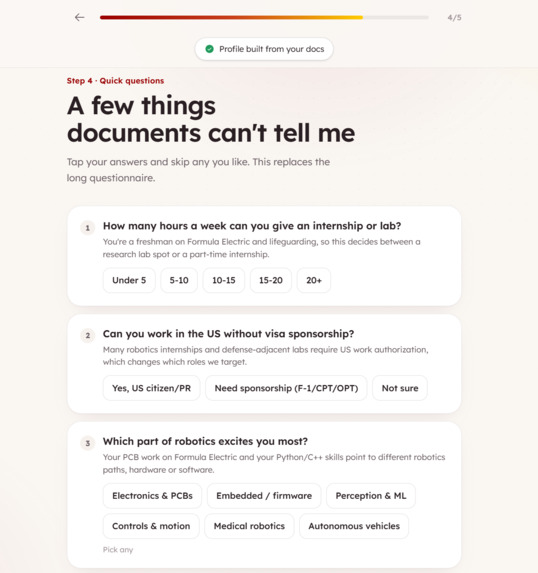
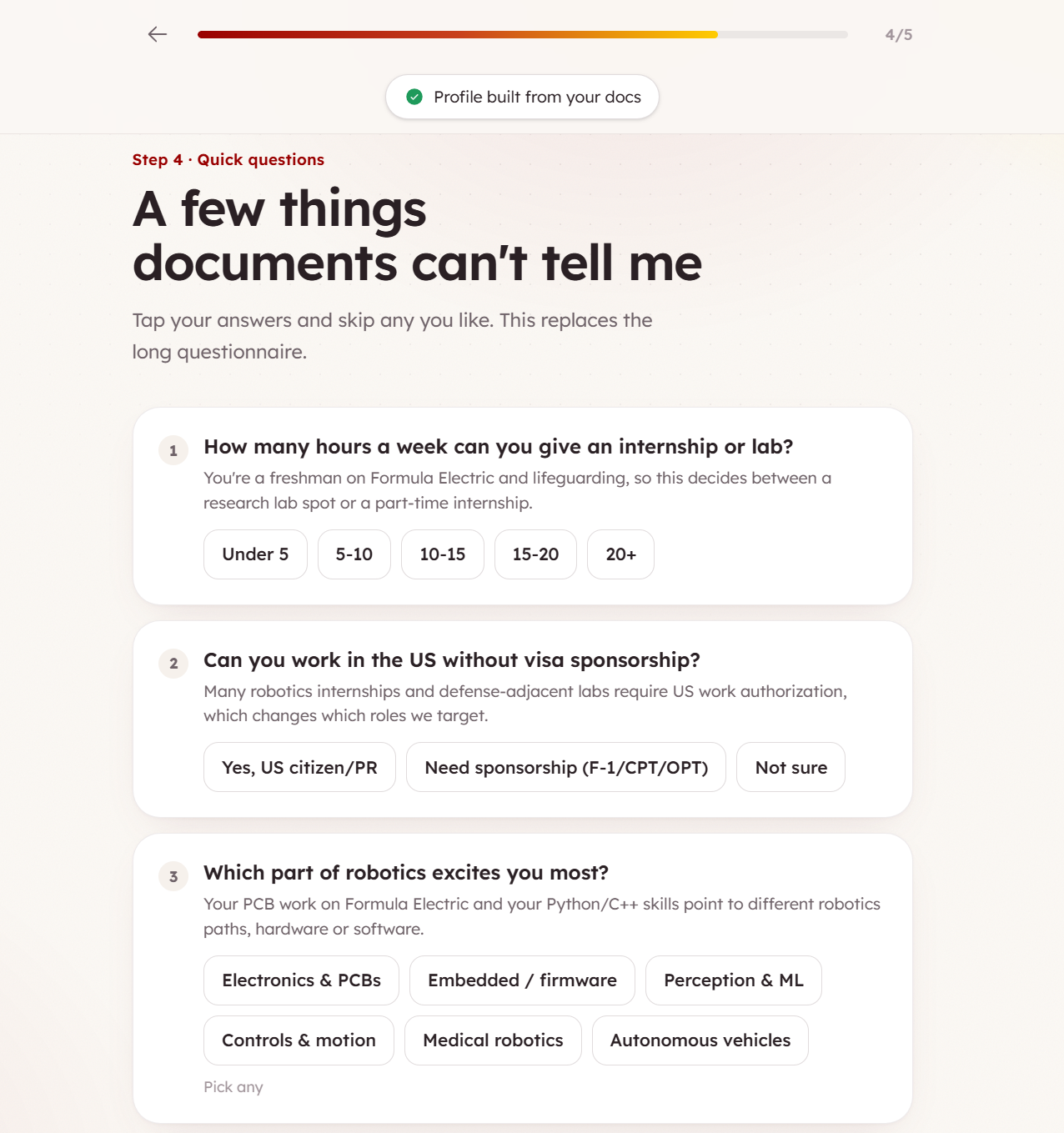
Example questions that the integrated AI may ask the user
-
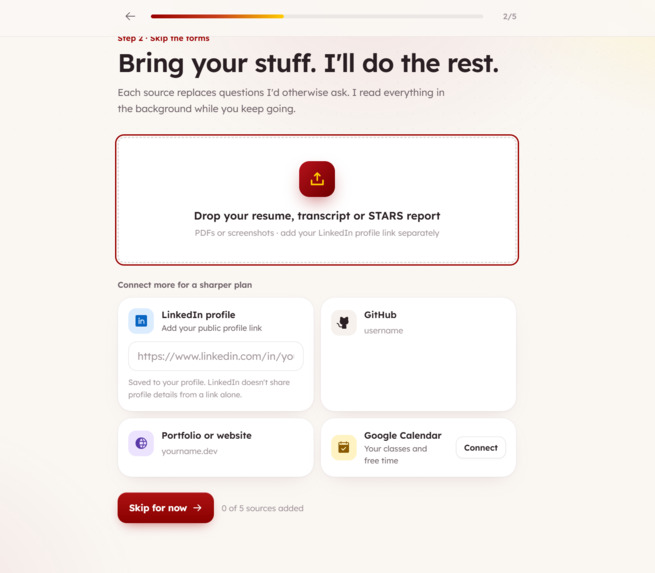
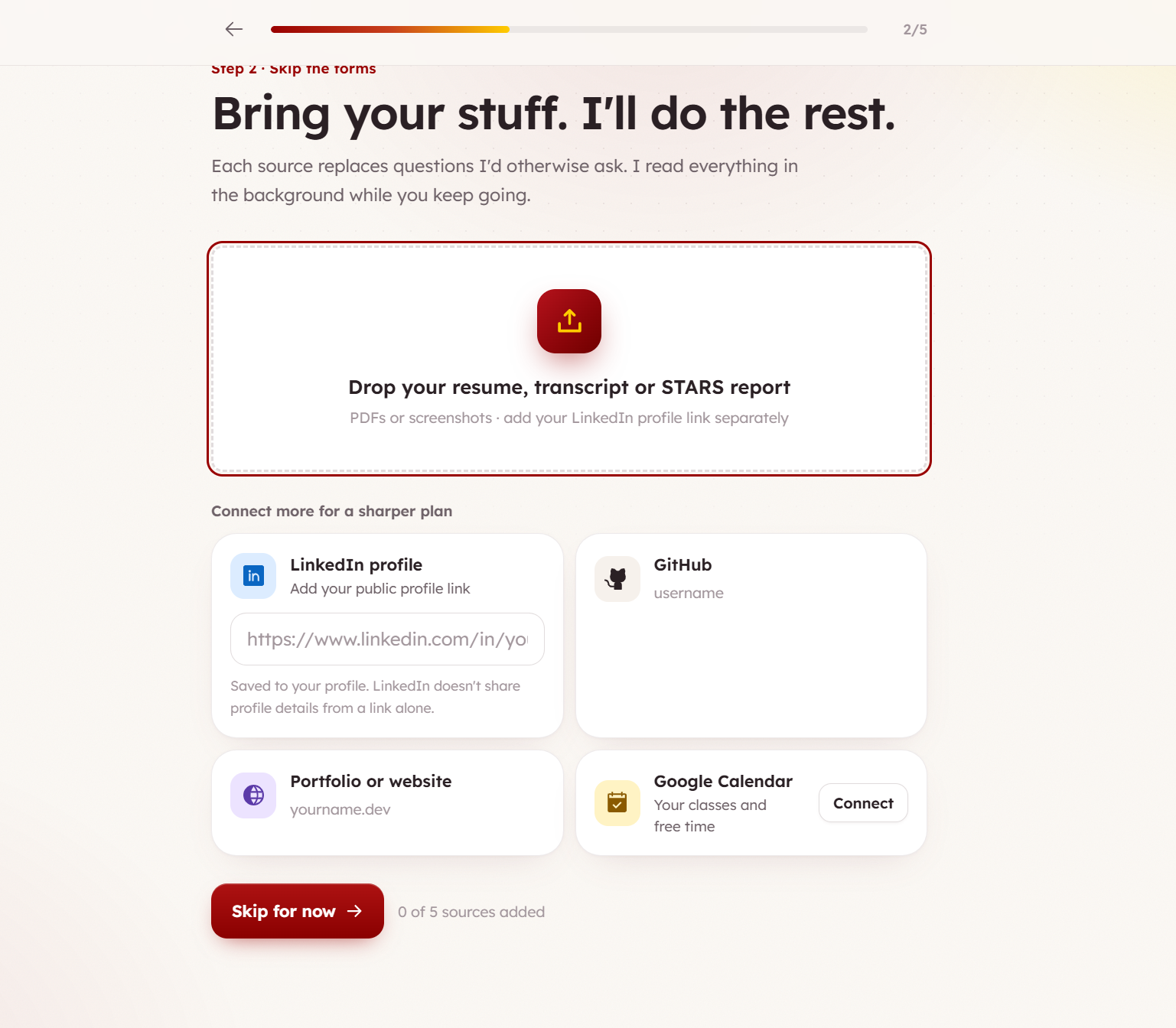
Sources page that prompts the user to provide their resume, LinkedIn, Github, and other sources that highlight the user's experience
-
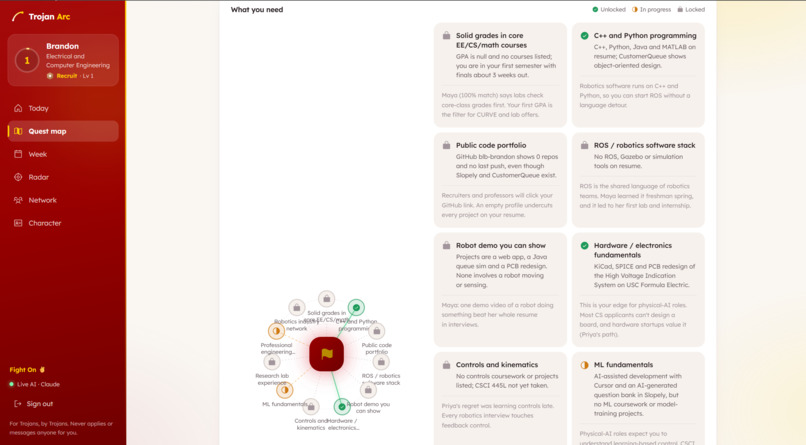
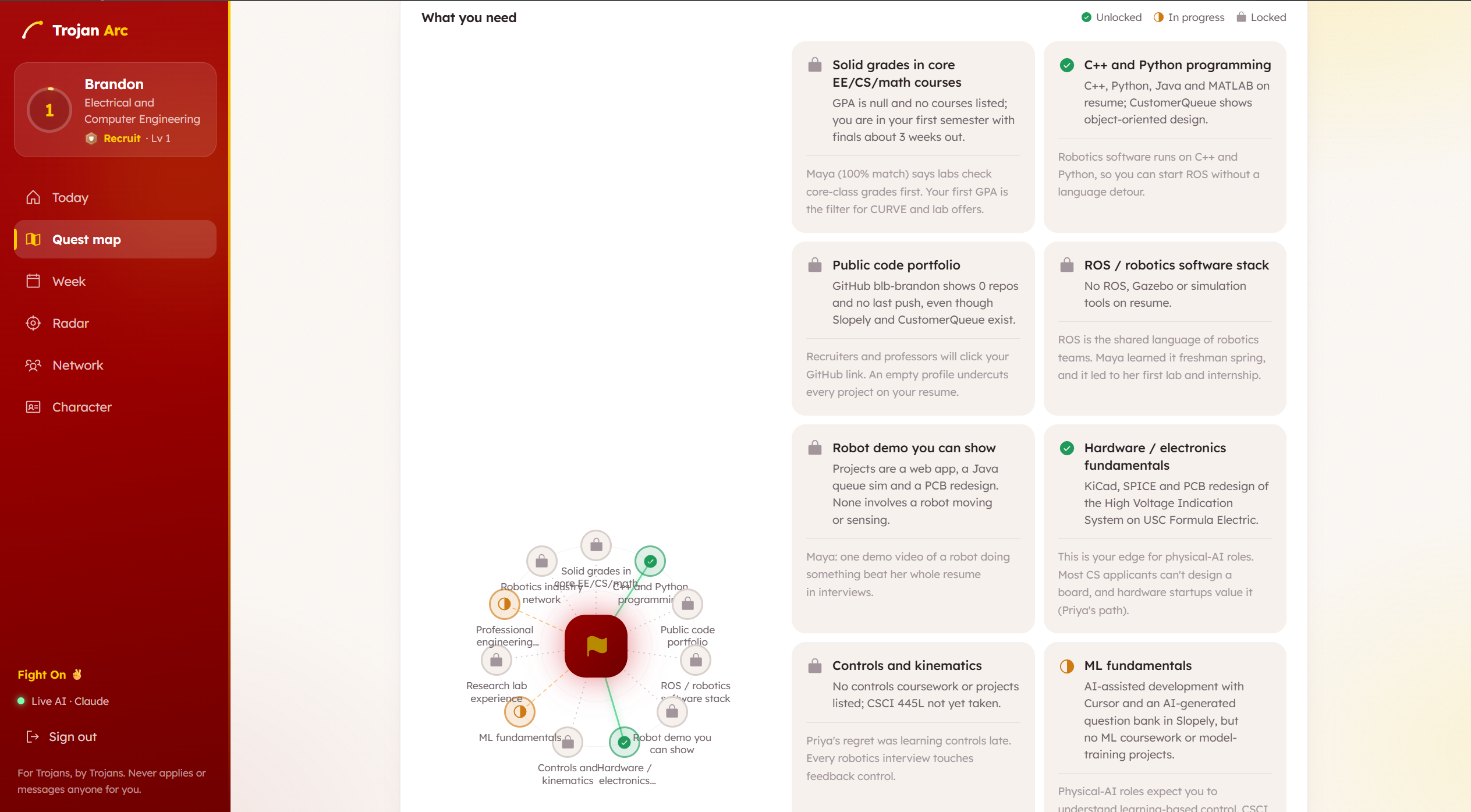
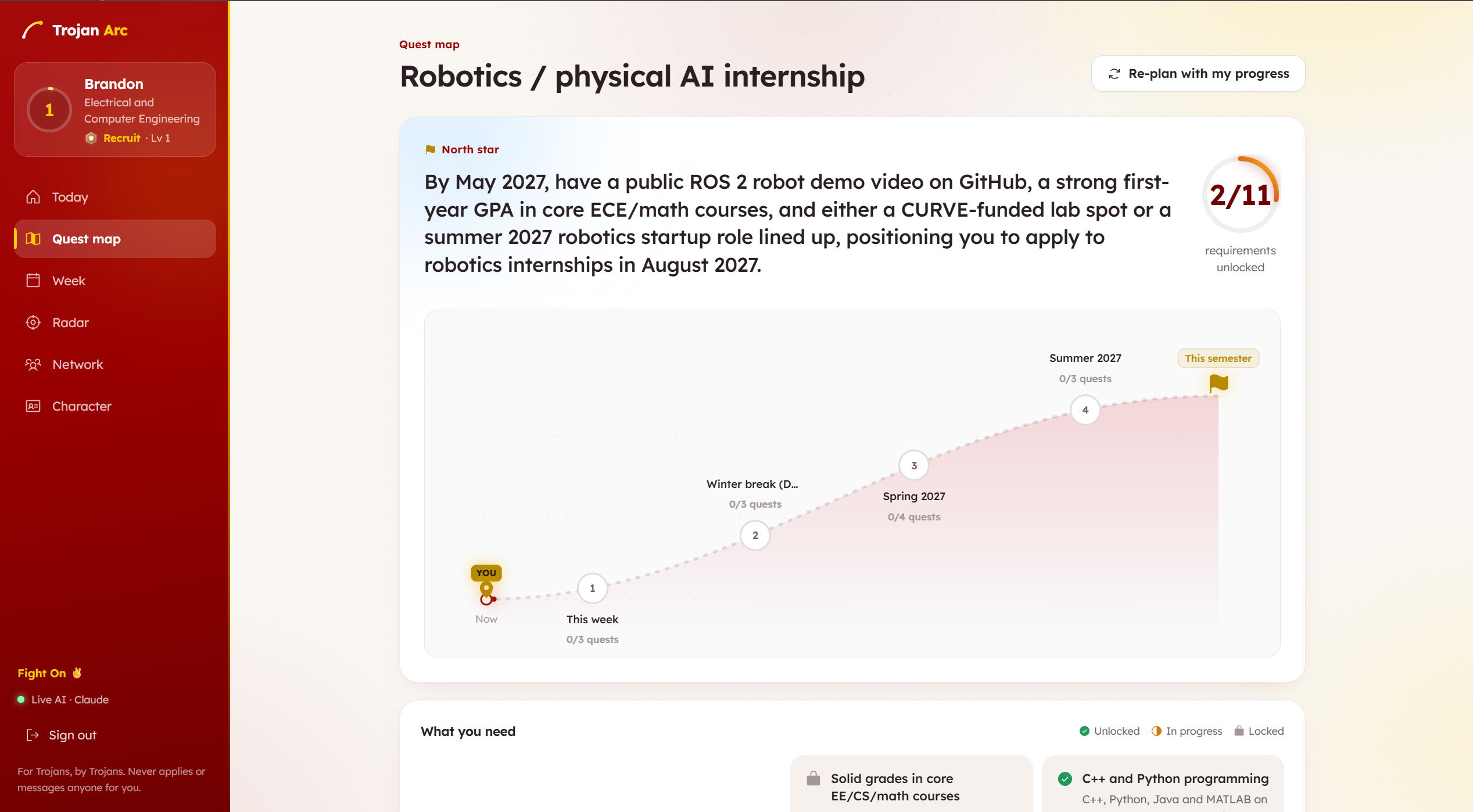
A list of things that a user should have completed by their specified deadline to be close to achieving their goal
-
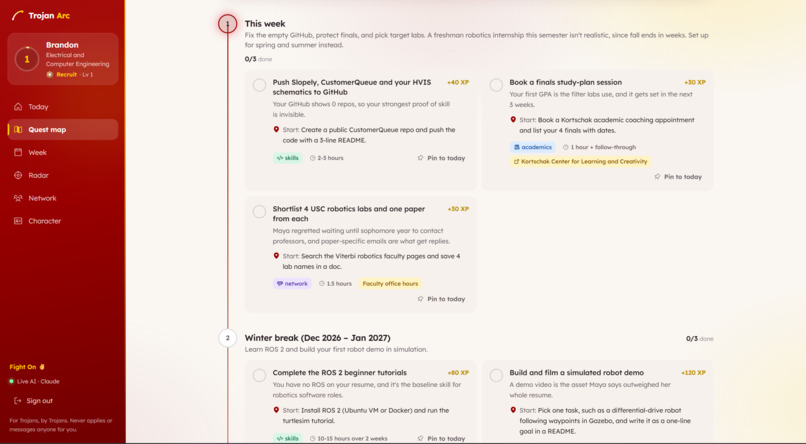
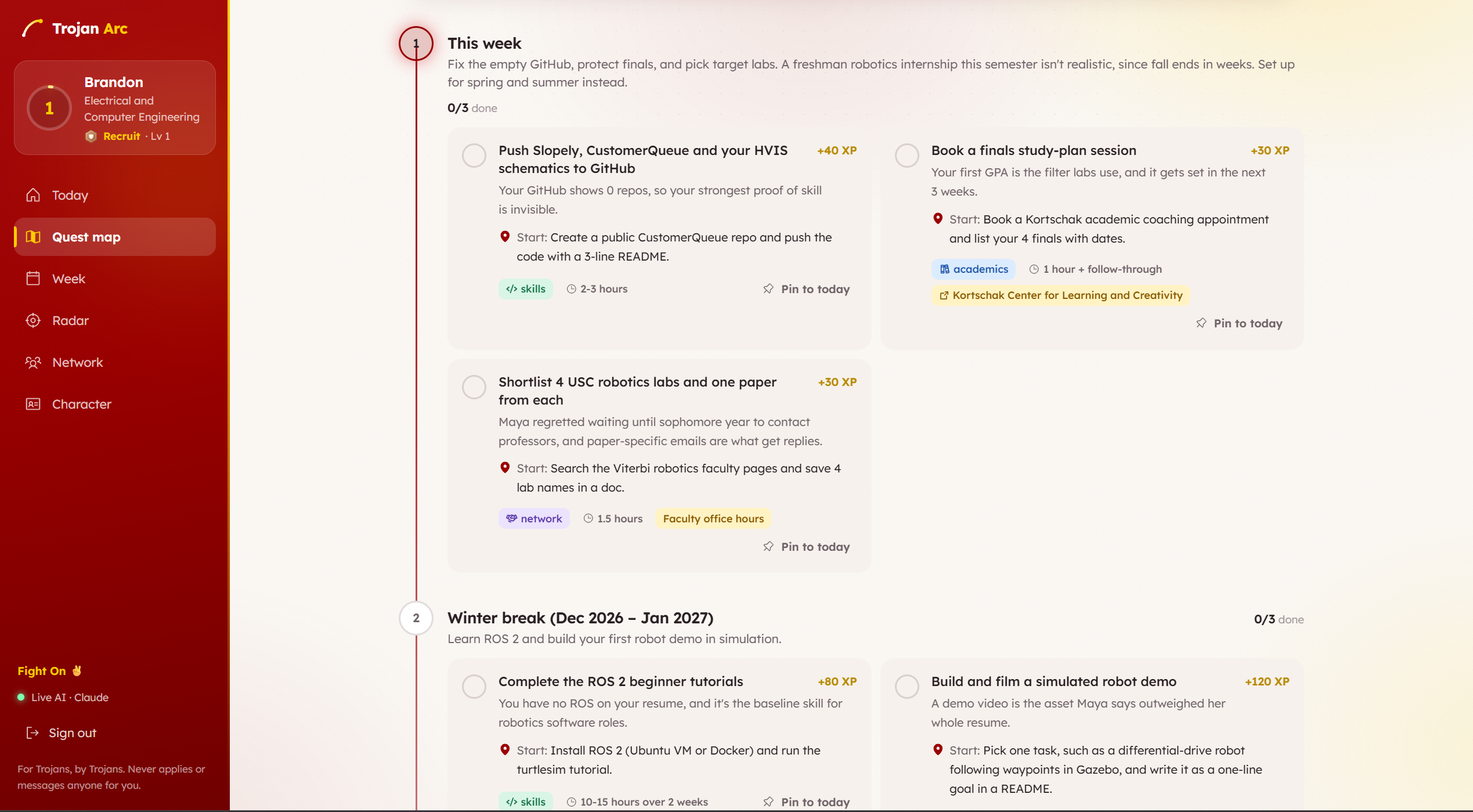
Set of tasks that a user should complete over a specific time frame
-
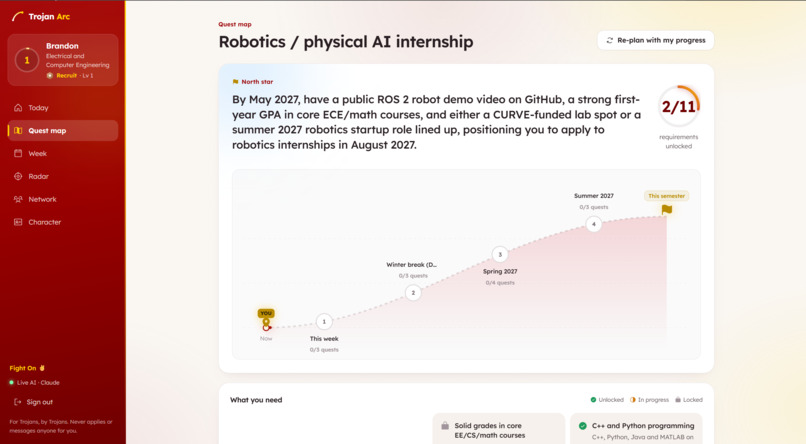
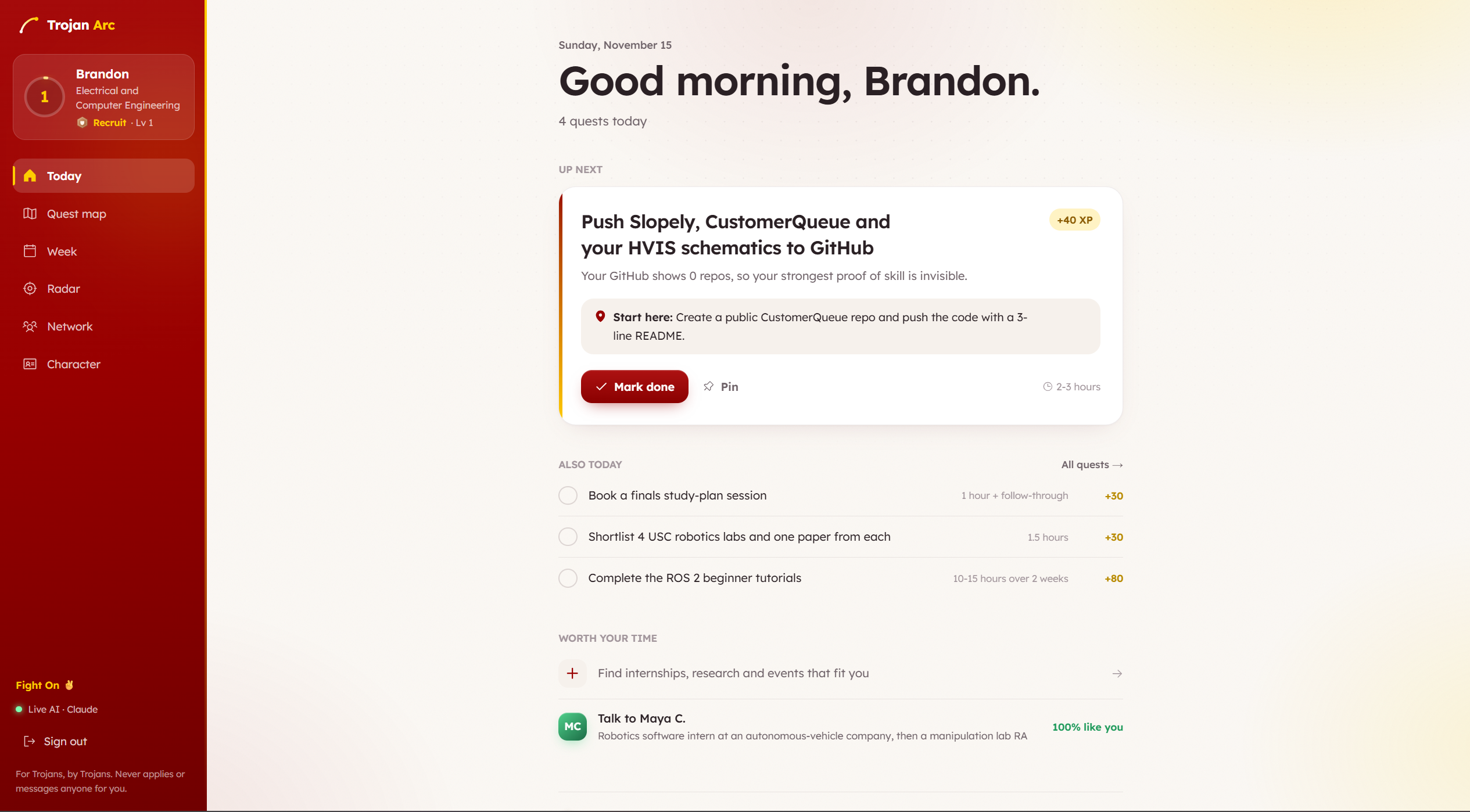
A personalized dashboard generated by Trojan Arc's integrated AI, based on the user's response to onboarding prompts
-
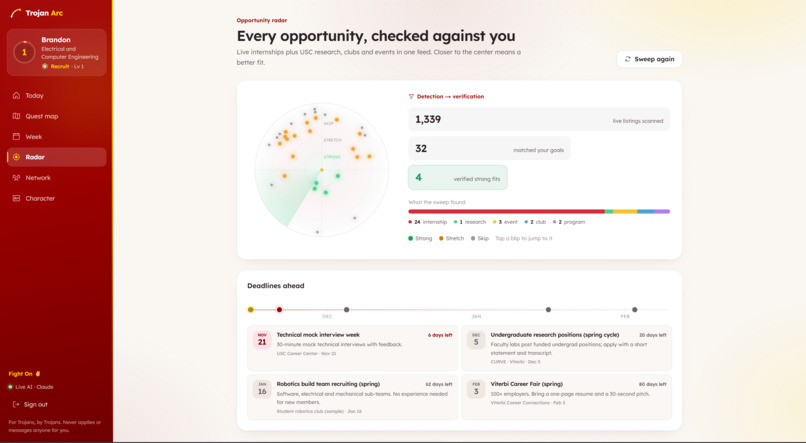
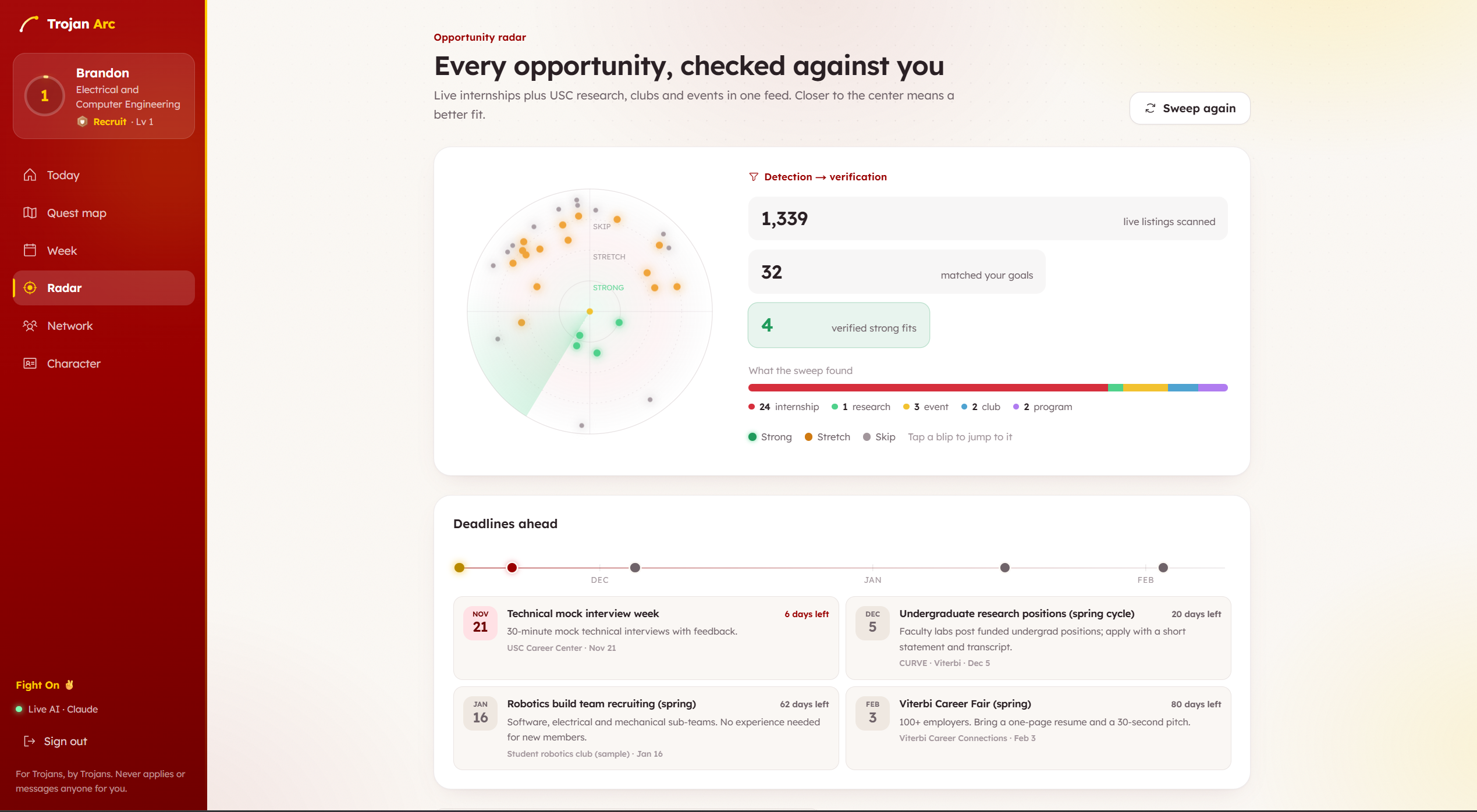
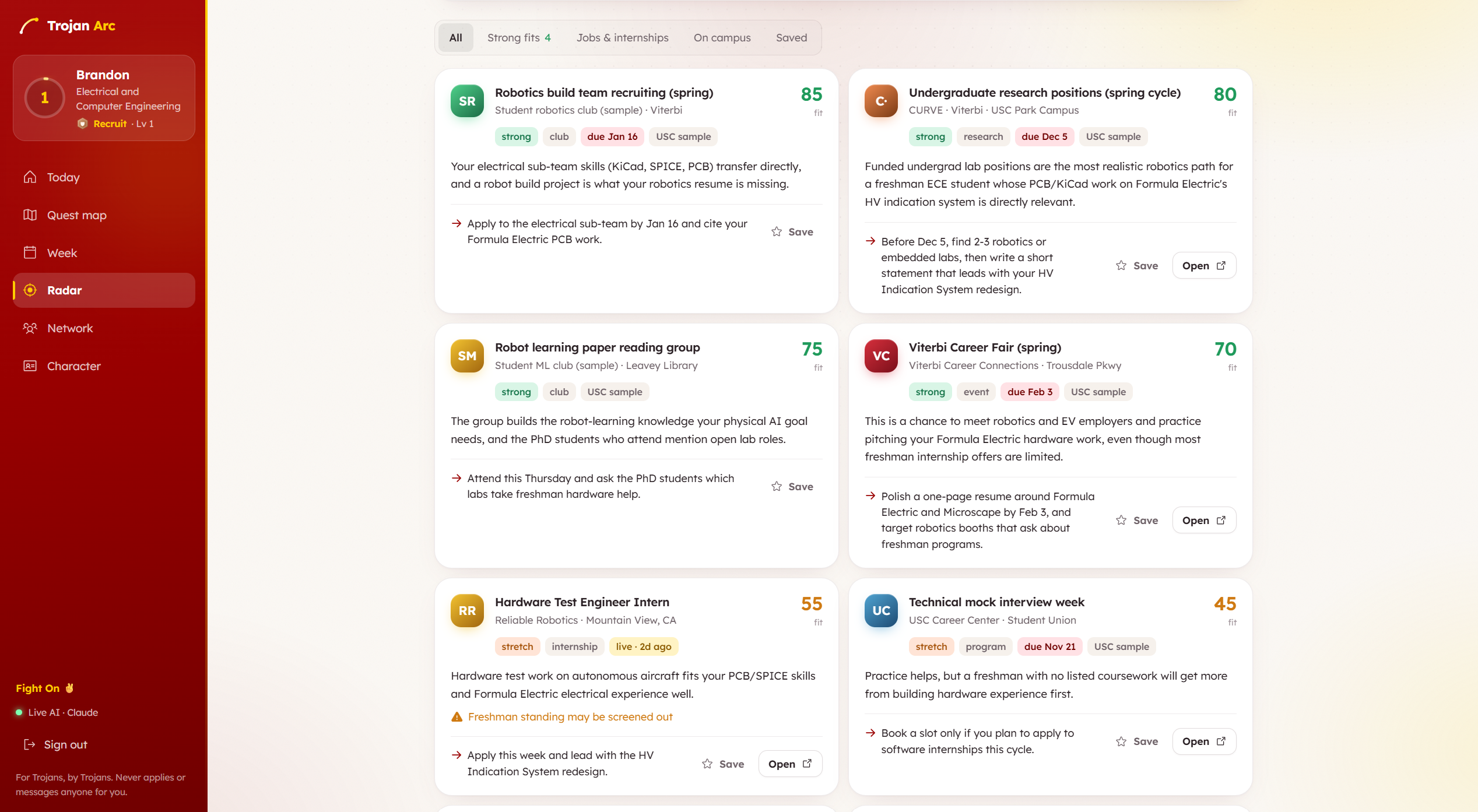
"Radar": A complete, and personalized, scan of career opportunities, and on-campus opportunities for students to learn about and explore
-
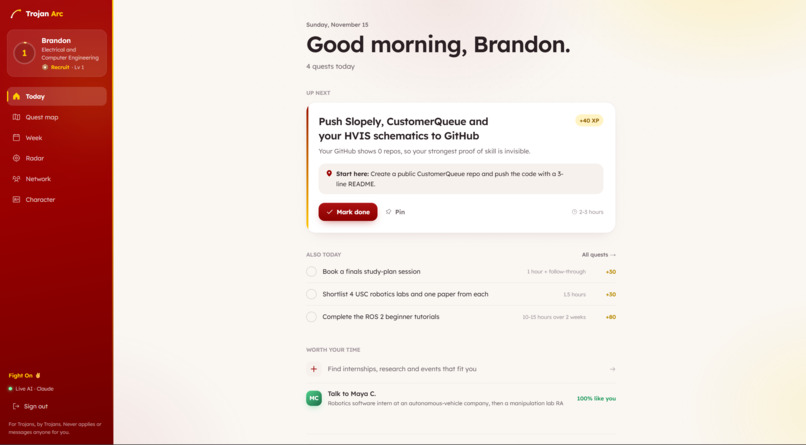
A todo list for the user for the specific day, according to what their goal is
-

Initiation of Trojan Arc's level up system. As user's complete tasks, they earn points and build up their personal attributes and profile
-
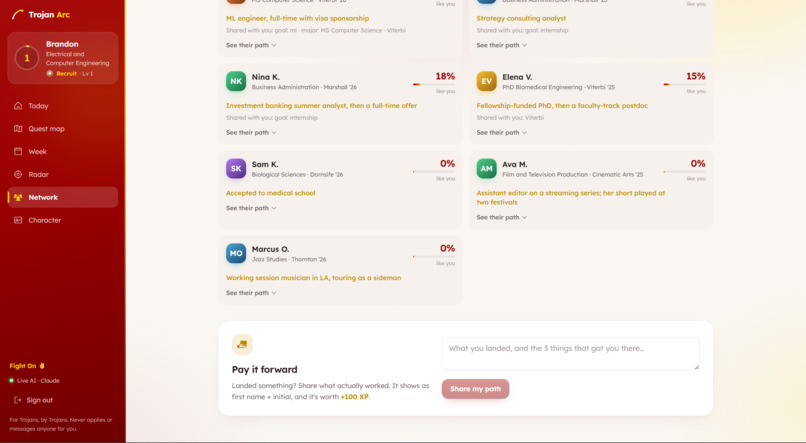
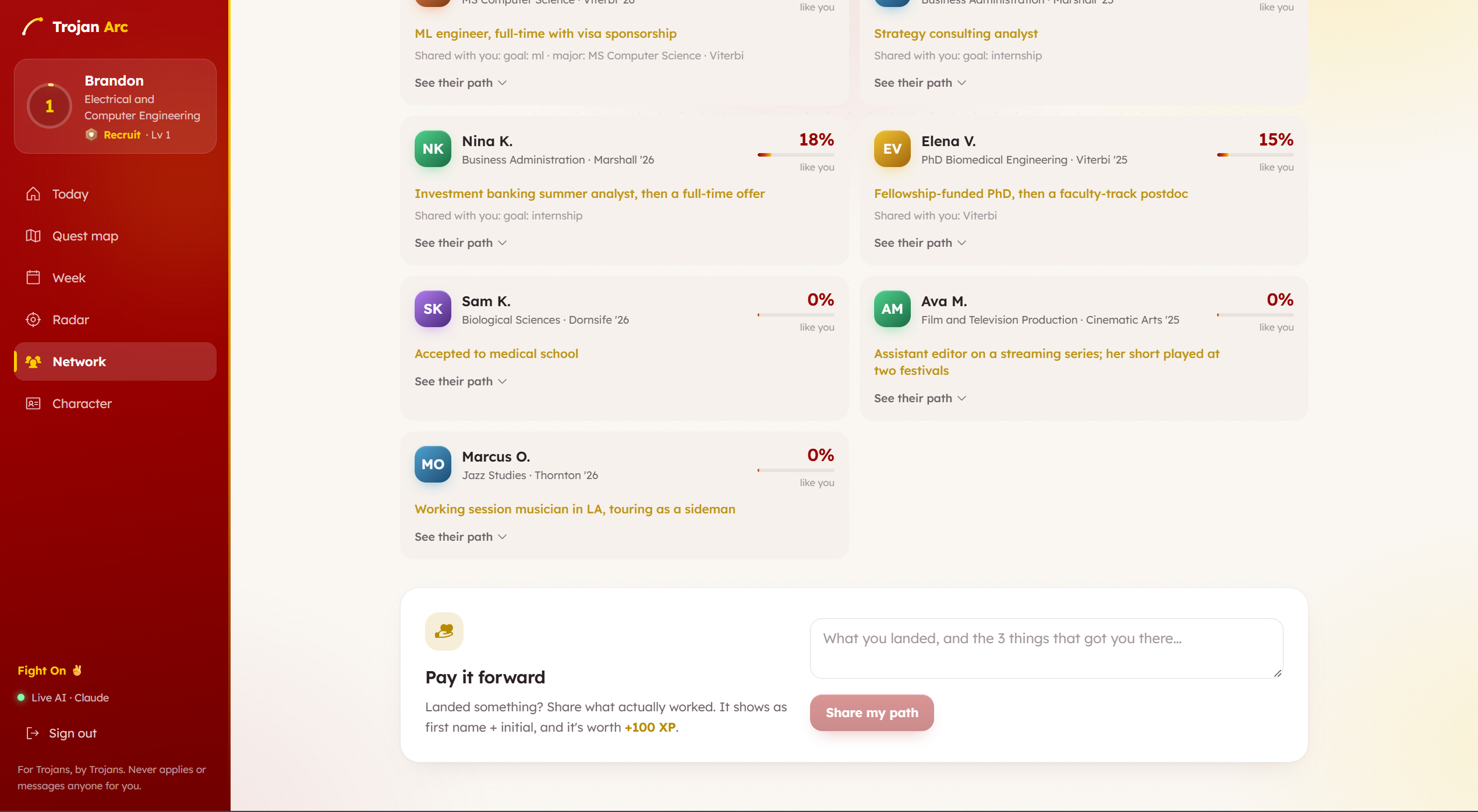
Sample set of other Trojan Arc users, indicating what experiences they have had, and previous advice they may have shared
-
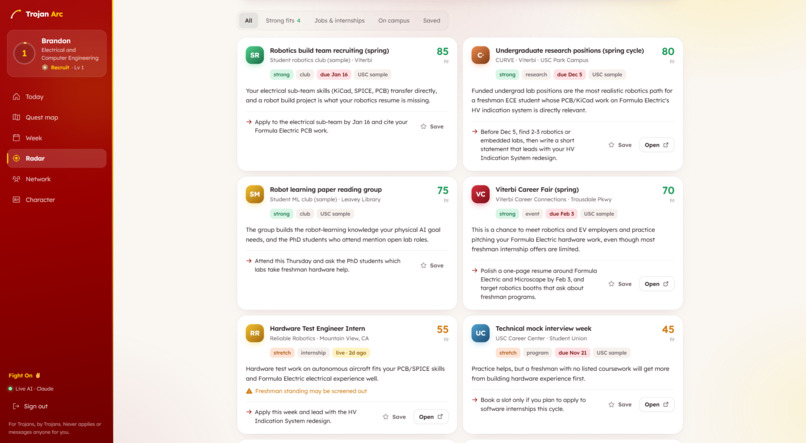
Sample set of career and on-campus opportunities for students to sign up for: pulled from real sources
-
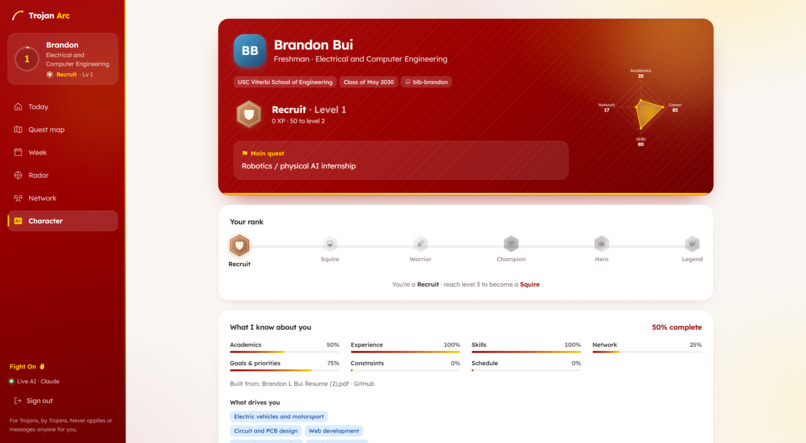
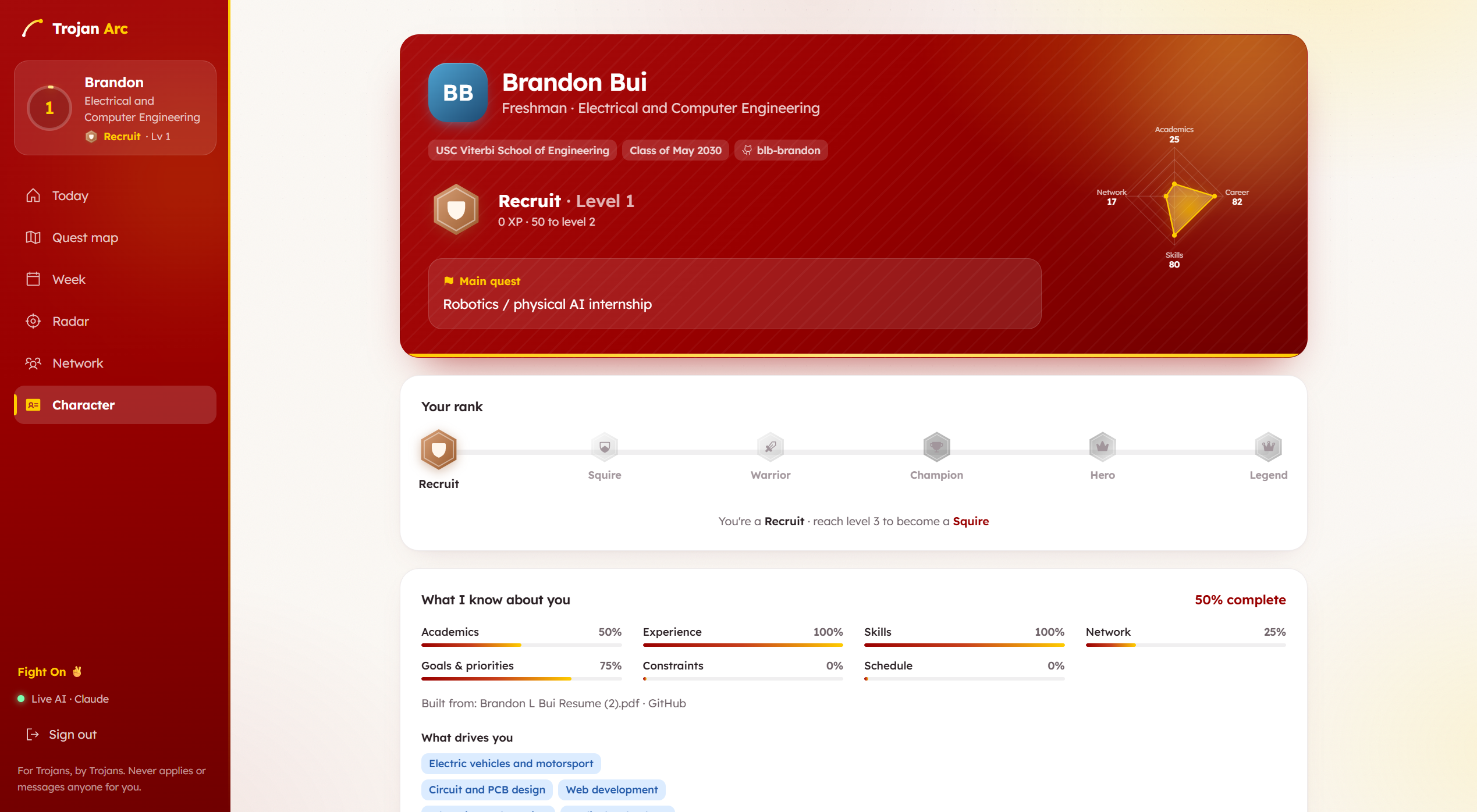
The personalized profile dashboard for the user, containing skills, attributes, level, and interests based on onboarding
-
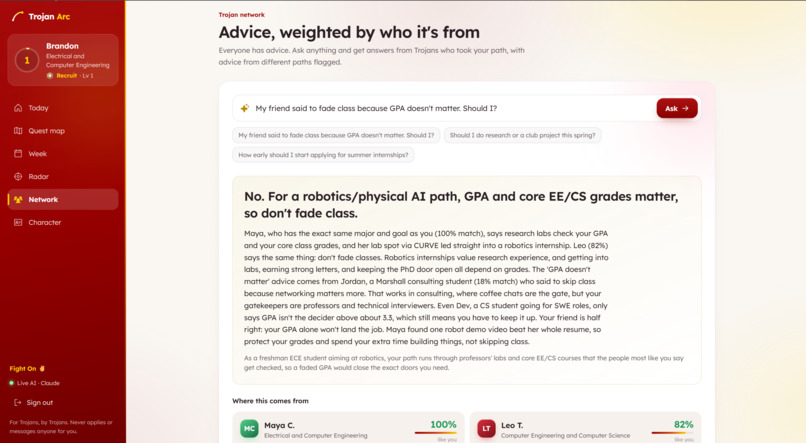
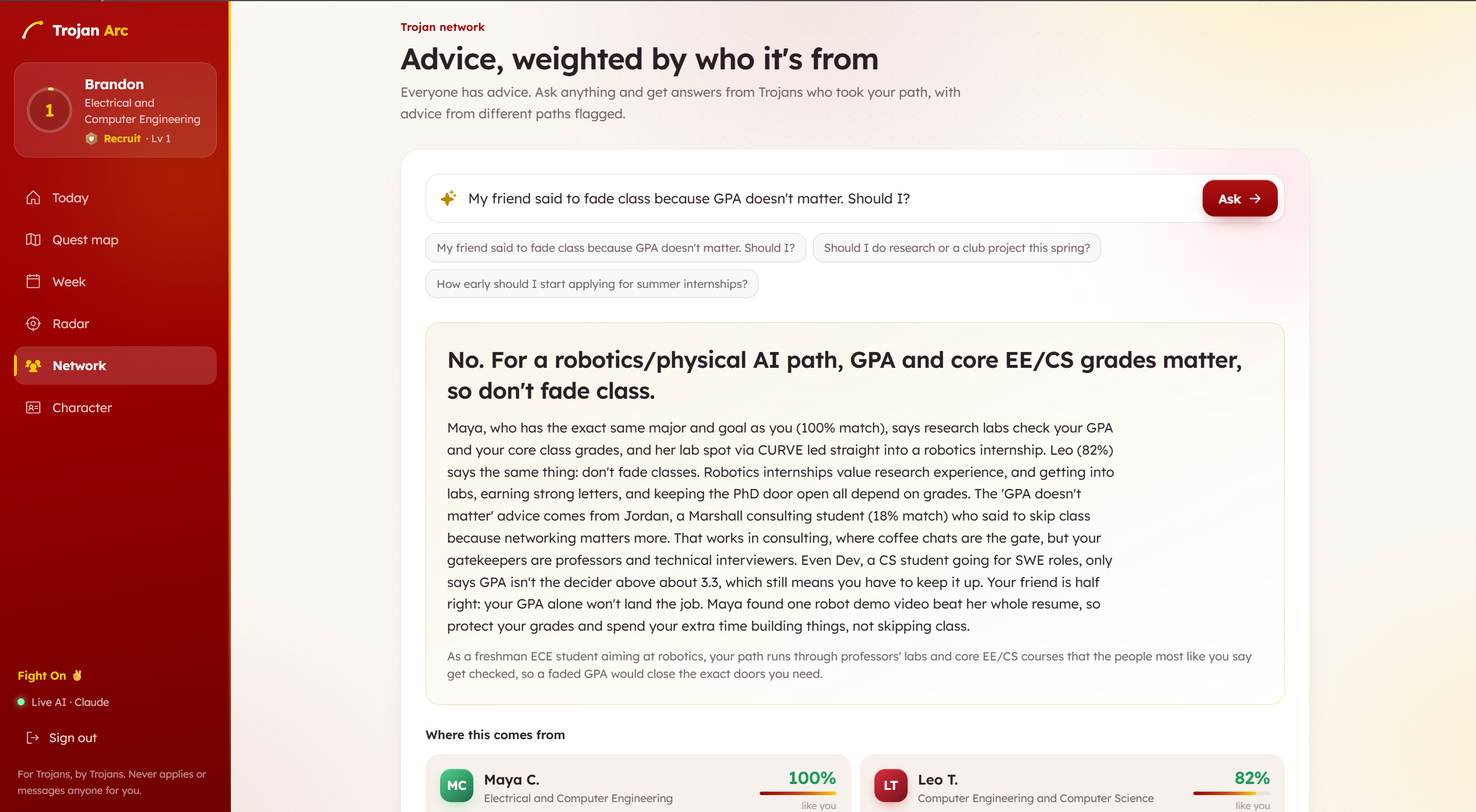
A sample inquiry that a user may look for advice on. The integrated AI will synthesize previous advice to guide the student on what to do

Inspiration
As incoming freshmen at USC, we felt lost about how we could achieve our career aspirations. As we sought advice from other people, both on and off campus, we found that insights sometimes contradicted each other, and we sometimes couldn’t fully interpret whether they were valuable to what we wanted to achieve. We decided to create a product centered around personalized advice to provide guidance for students at USC in tailored steps based on their experience, career goals, and interests.
What it does
Trojan Arc is an AI-powered website/tool that provides students with continuous guidance on their respective career goals. The advice and steps recommended to take are personally tailored based on an individual’s desires and academic statistics/standing in college, making the given guidance something that users can fall back on due to the adaptive nature of the product. The platform asks a user personalized questions relating to their academic statistics and their current position in the university. The platform also takes a user’s resume, LinkedIn, and other personal resources that the user might want to share (like GitHub or their portfolios), which can highlight the current experiences and skill sets of the user. This provides them with the appropriate steps and direction that truly benefits the user in achieving their career goals.
How we built it
- We used Claude Code to prototype a user interface for our product, pushing new files and changes to our GitHub repository.
- As we iterated, we found an interface that we thought was applicable for students, and imported the GitHub repository into Replit.
- We used Replit to help us develop the backend and develop a working demo version of our product.
- We also used Replit to find any security shortfalls and used its features to resolve them.
- Afterwards, we then took our project and hosted the product on Vercel, while integrating a Claude API key to power AI integration and user adaptation according to their submissions (resumes, LinkedIn profiles, and GitHub usernames)
Challenges we ran into
We had a hard time brainstorming an idea that could be generalized to the whole campus. Our initial drafts were more tailored towards Viterbi students, since we ourselves are Viterbi students. Additionally, other ideas we had were already existing/available for use on the internet, making our idea serve no purpose. For example, a specific idea we had was focused on preventing scooter/bike collisions with pedestrians when crossing across campus, but this idea was more compatible with hardware solutions as opposed to software/AI powered solutions. However, keeping in mind the parameters of the whole hackathon, we worked together and created Trojan Arc, which we all agreed addressed an issue that we and many other students in other schools outside of Viterbi (especially Marshall, Dornsife, and Anneberg) faced often.
Accomplishments that we're proud of
We are proud to create a project that is truly adaptive to the user. From start to finish, our AI implementation ensures that it gets to understand the user before it generates advice and seeks out opportunities to post on the user interface. We are proud to see that we were able to integrate personalized inquiries so that our platform gets a good understanding of who the individual is, alongside their resume and LinkedIn profiles.
What we found as we tested our product was that we truly believed that this was a product that students would use. We didn’t want to create a generic product, and by adding unique features like ranking up, we essentially gamified the student journey to reaching their career goals, making our testing experience more engaging and exciting.
Overall, we are proud to create a final product that is adaptive to the user and is ultimately engaging to use.
What we learned
Initially, we learned how to identify a common problem in our lives. Once we identified this problem, we were able to brainstorm solutions. While ideating, we came up with many ideas, and through a repetitive process, we ranked several based on the criteria we thought were valuable. This approach was especially important and is something our team developed and specifically found to be of great use. Another thing our team learned, despite each of us having limited experience in hackathons, is how to create a product backed by an innovative yet feasible idea all in an incredibly short amount of time. Throughout this process, we learned to think more than just leafnode engineers, but to think like leaders engineering the future.
What's next for Trojan Arc
Our next step for Trojan Arc is to create a database that stores individual users’ information regarding their career goals. This is going to be done by creating a login system that tracks a user’s data and stores it in the attached database. We plan to achieve this by joining our website (which is hosted on Vercel) with Supabase, attaching a backend to fully “complete” the frontend we are presenting as a demo thus far.
Built With
- claude
- github
- javascript
- next.js
- node.js
- replit
- typescript
- vercel
