-
-
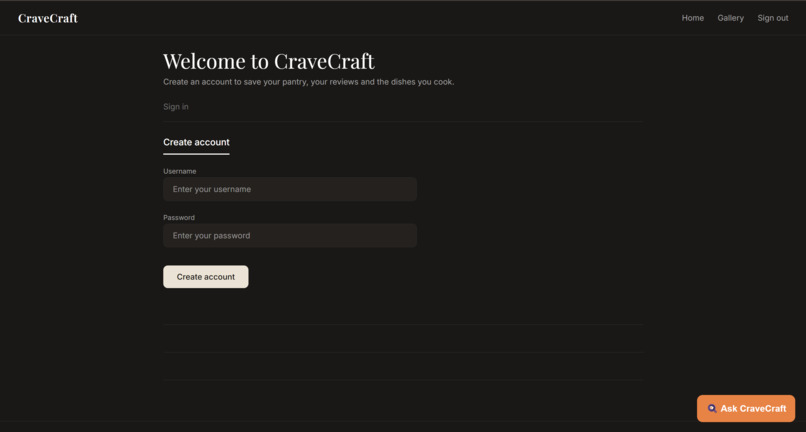
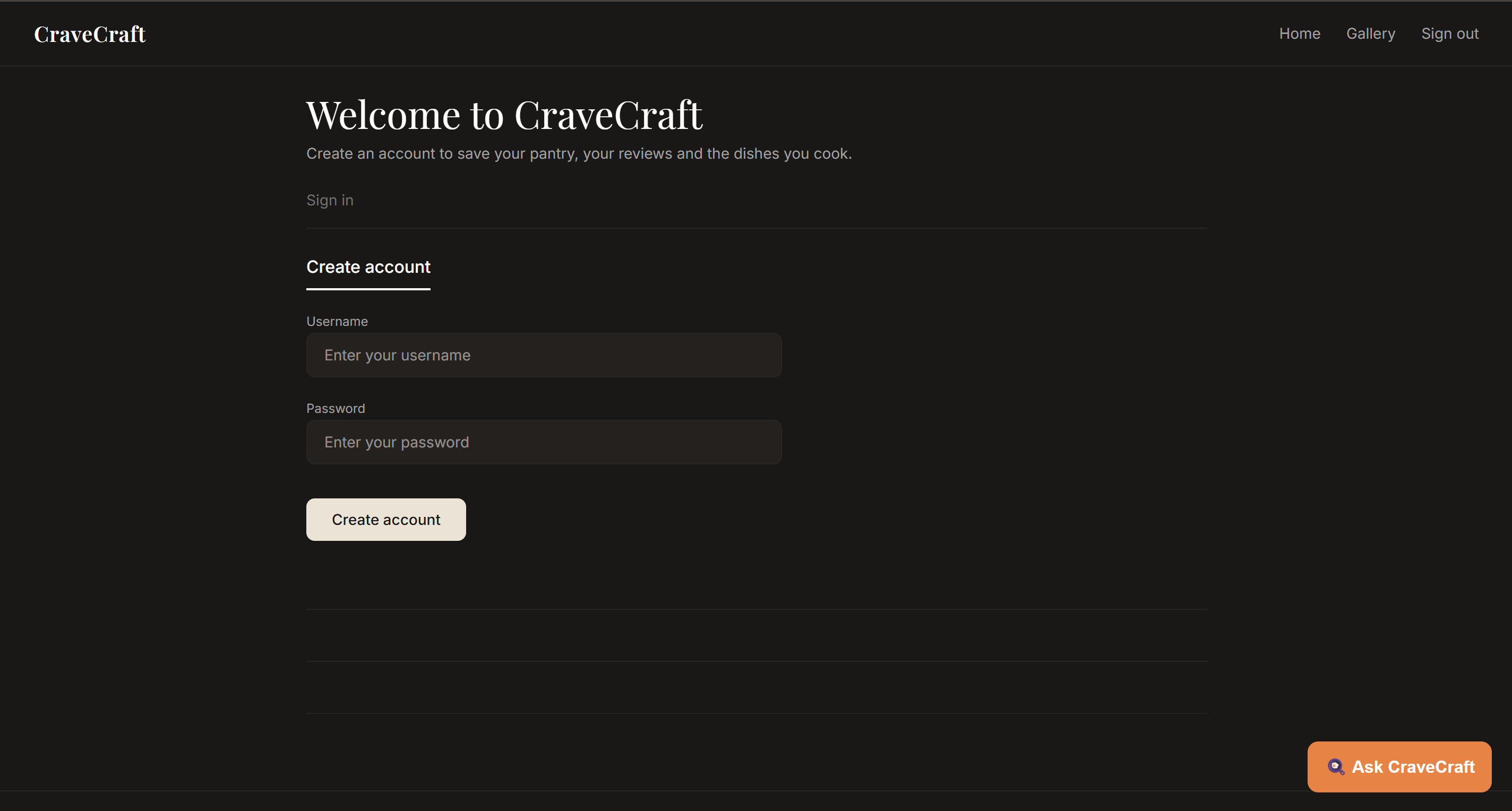
Secure user onboarding and personal profile access.
-
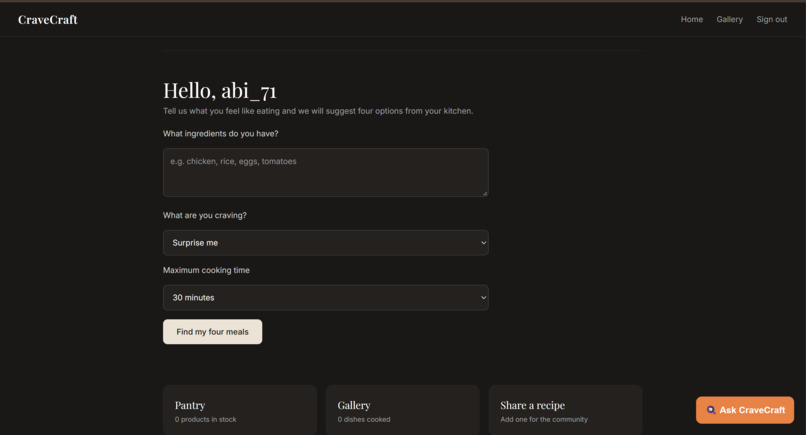
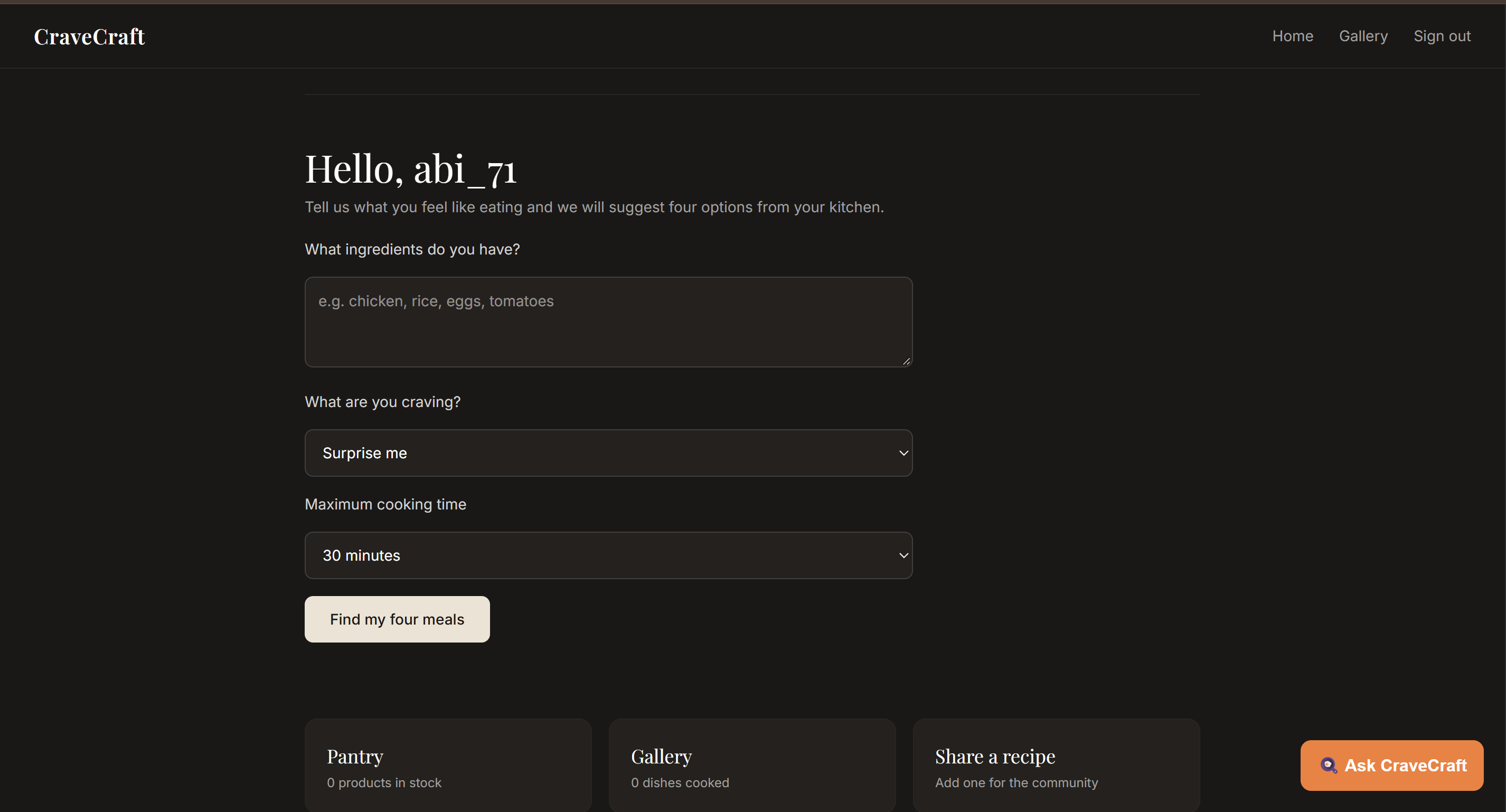
Enter items and preferences to get instant recipe ideas.
-
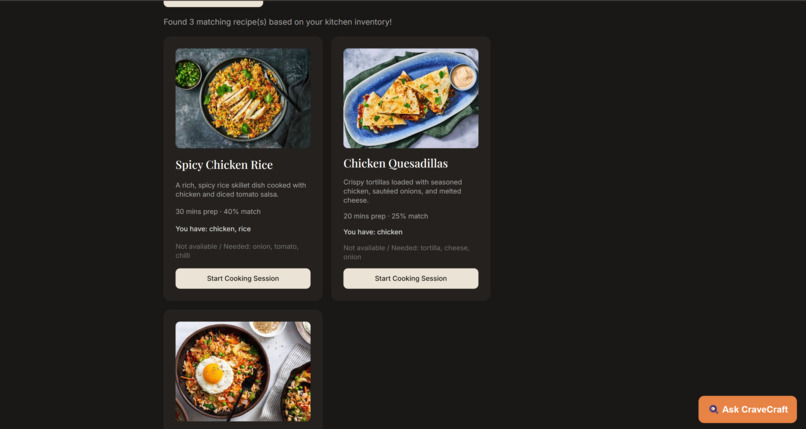
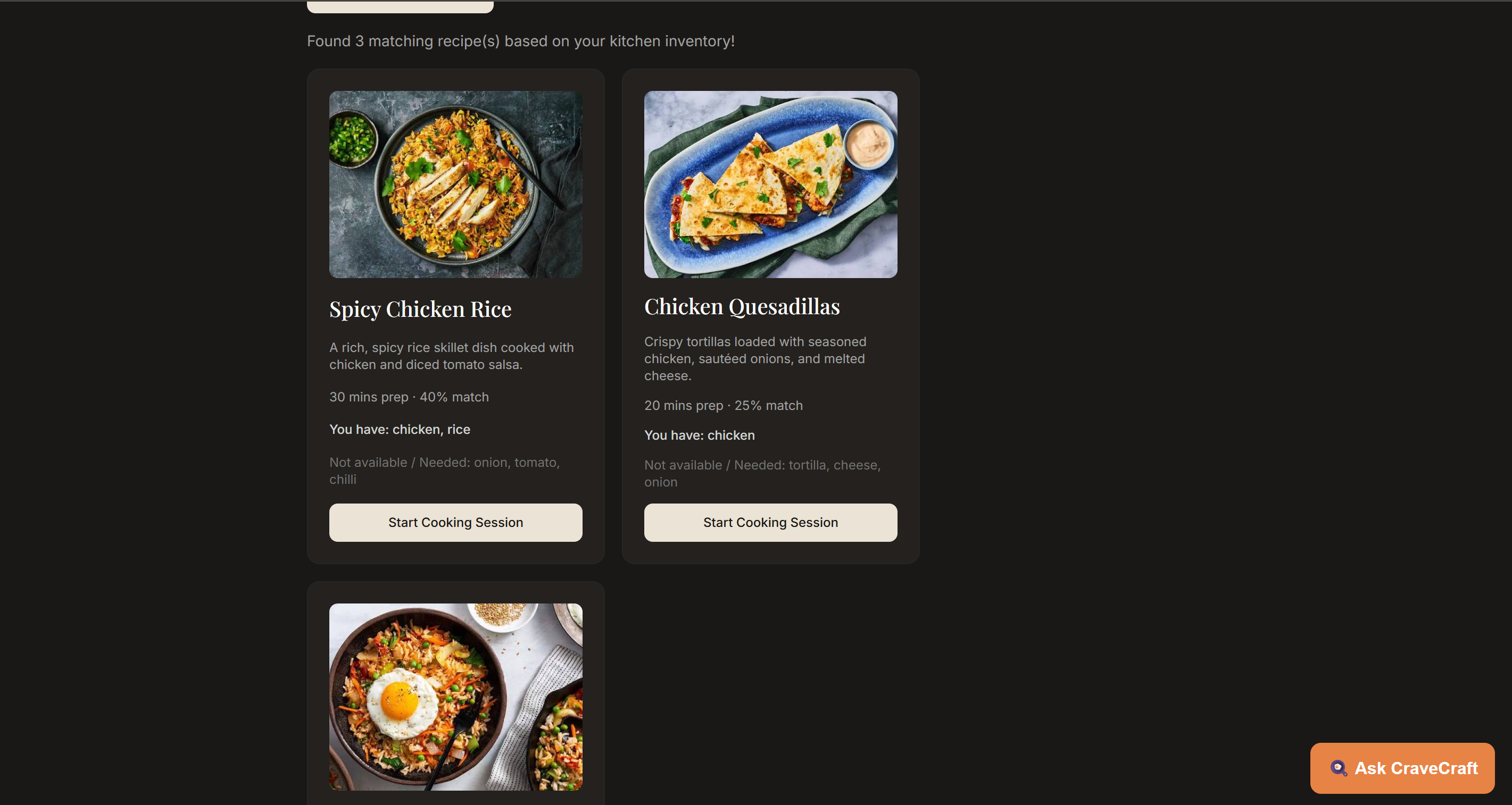
AI suggests meals with precise ingredient match percentages.
-
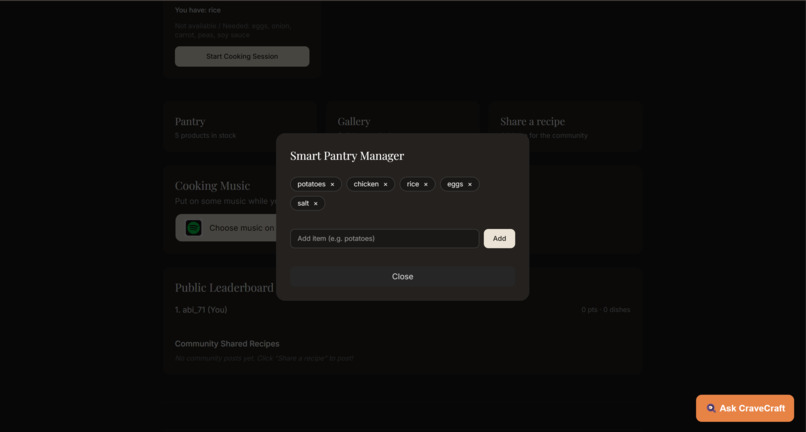
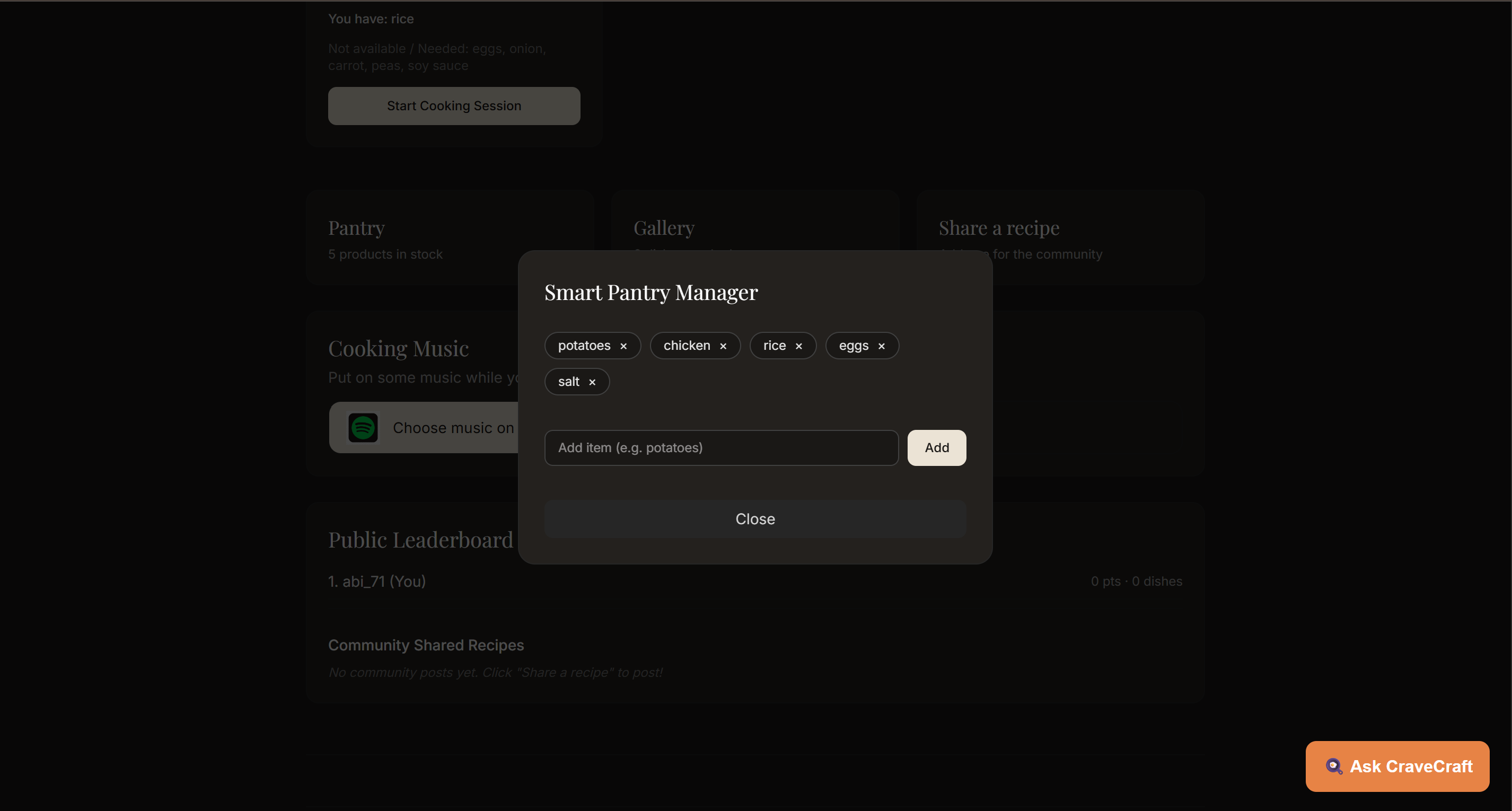
Track ingredients in stock to increase efficiency and reduce food wastage.
-
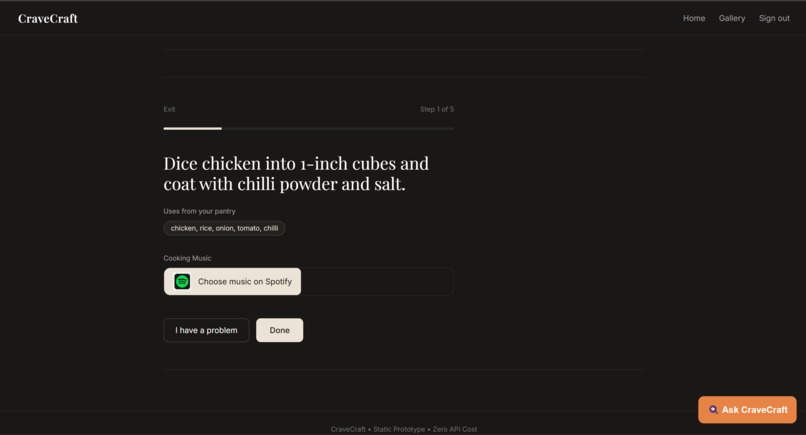
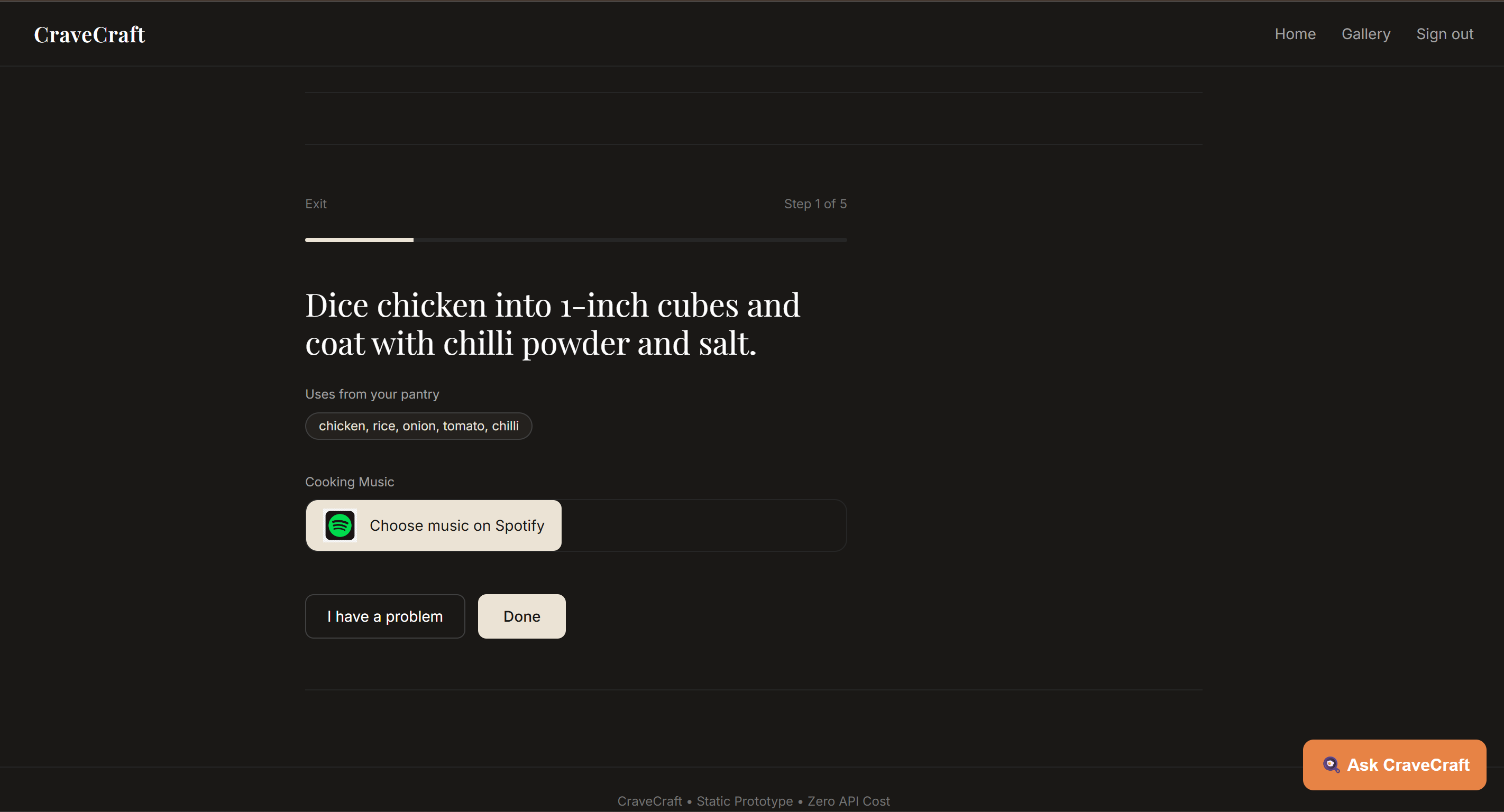
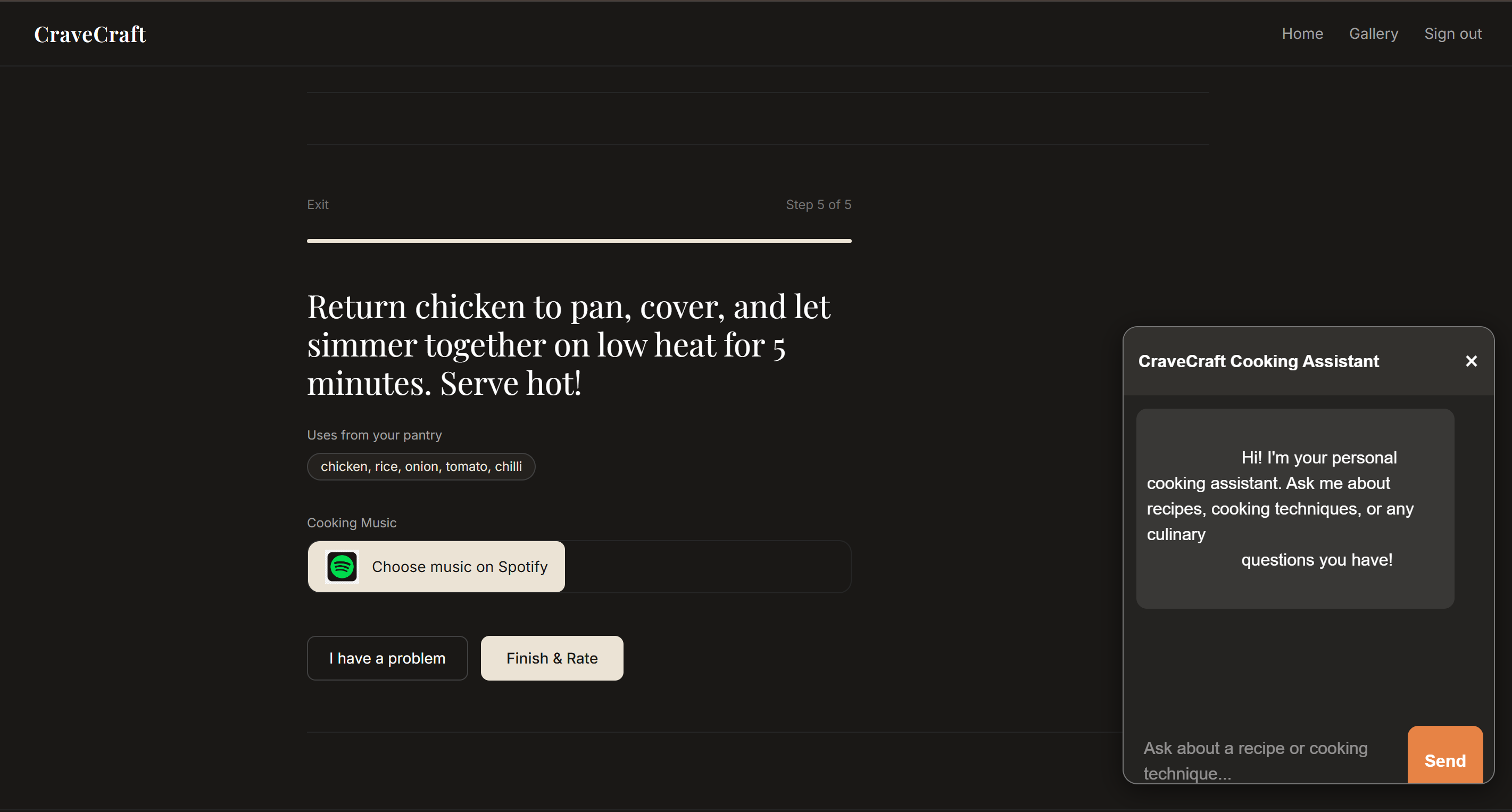
Step-by-step instructions paired with preferred Spotify music.
-
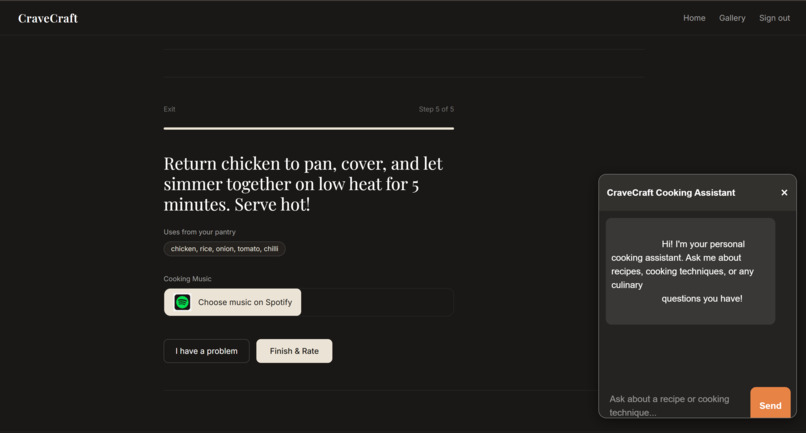
On-demand help for culinary questions while cooking.
-
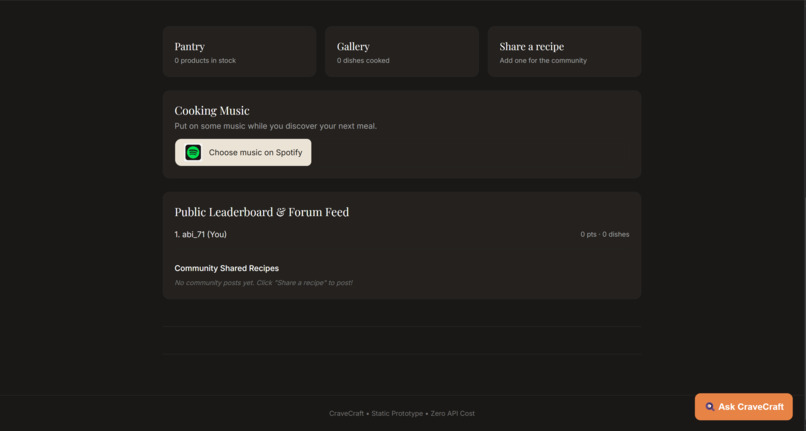
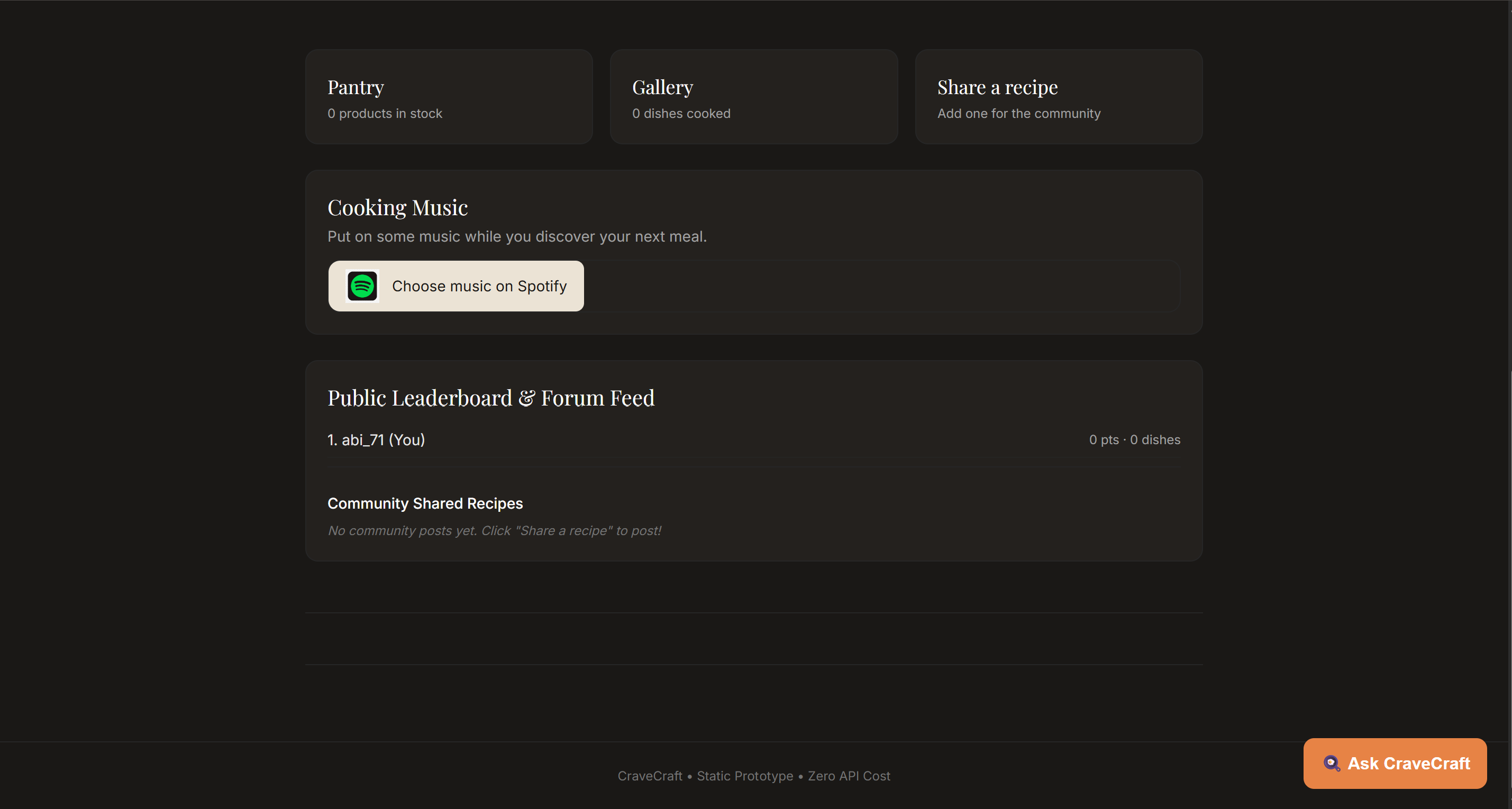
Quick access to pantry, gallery, leaderboard, and music.
-
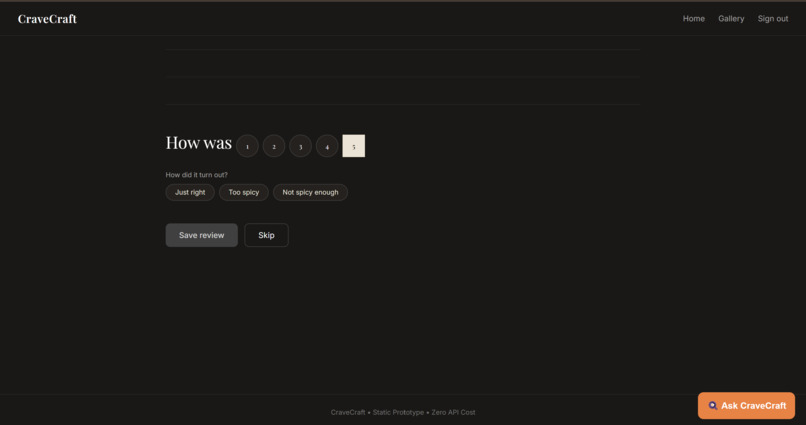
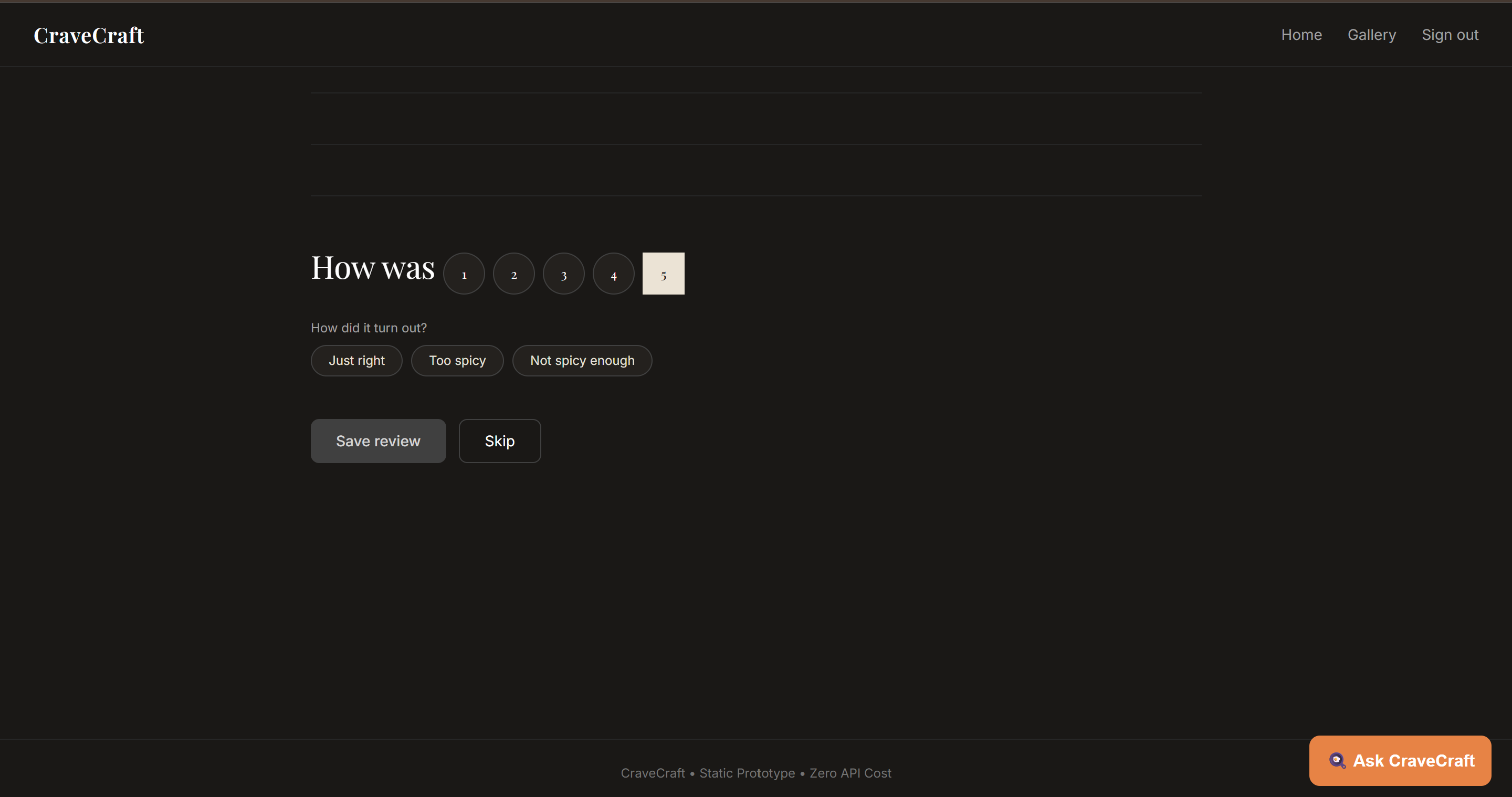
Rate dish outcomes to improve future recommendations.
-
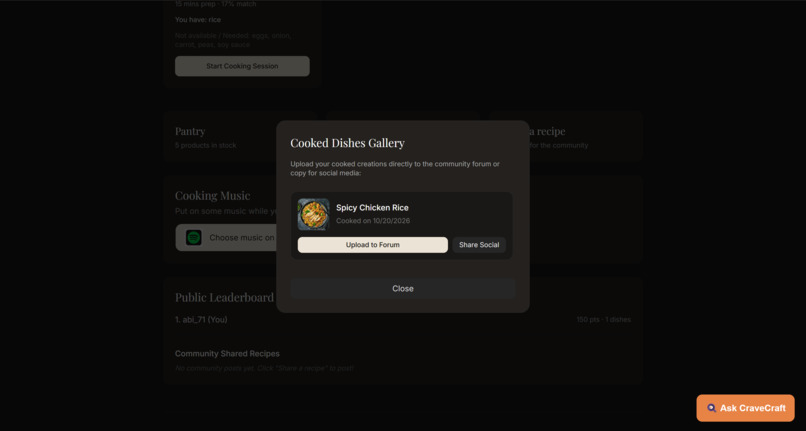
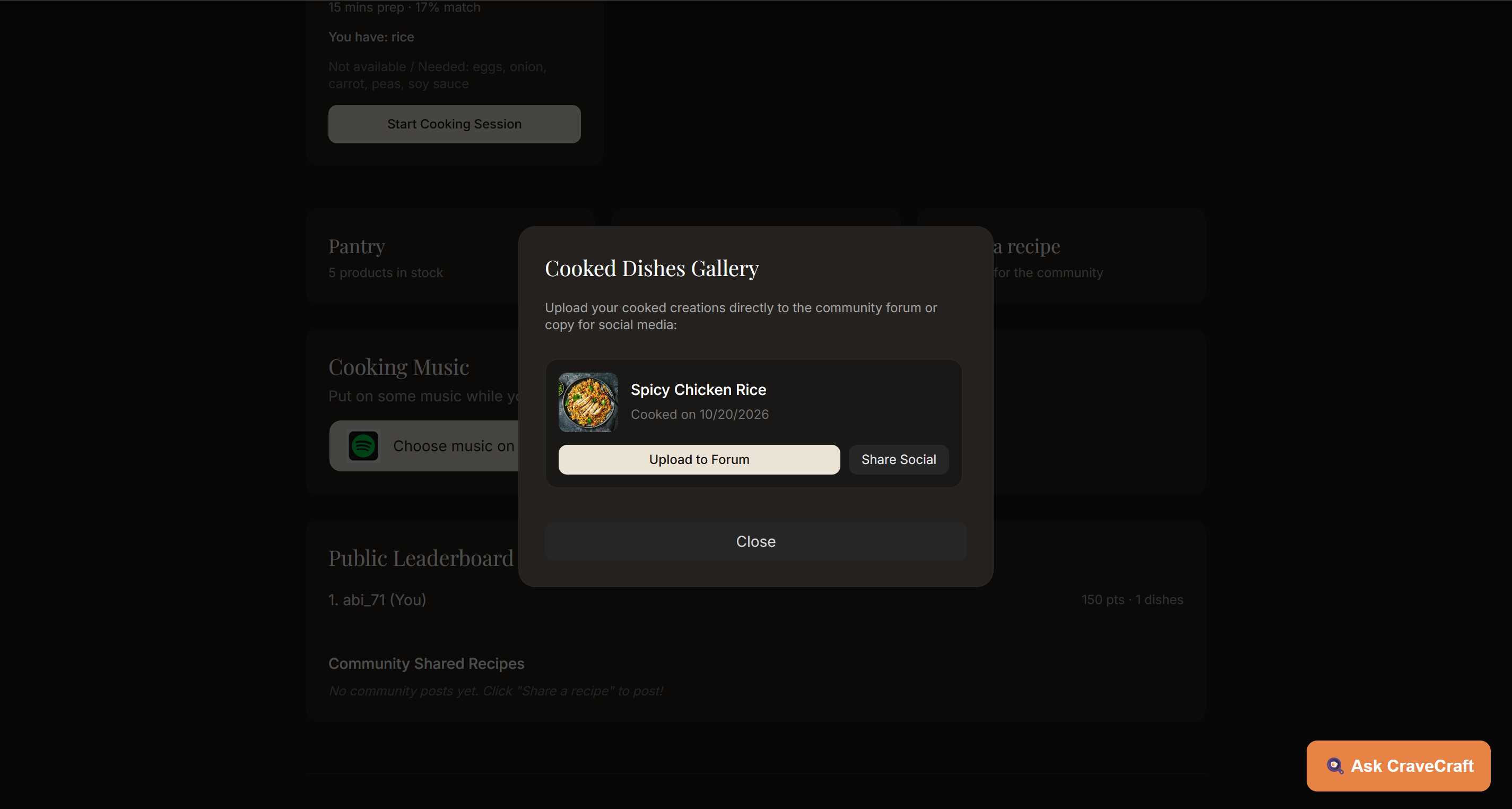
Save cooked meals to your gallery and share them on social media.
-
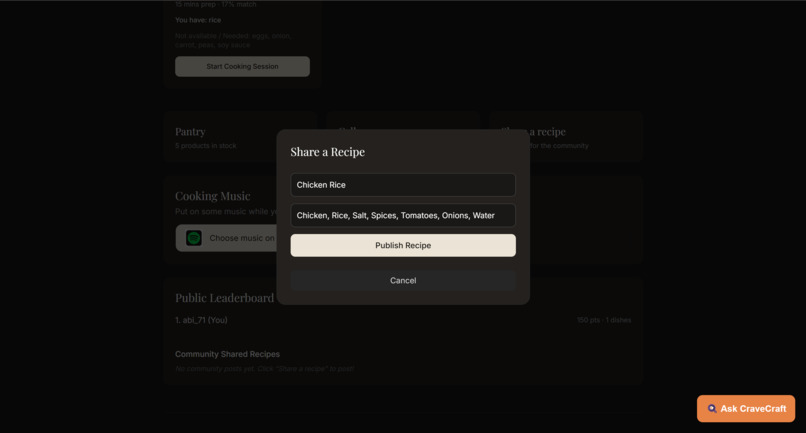
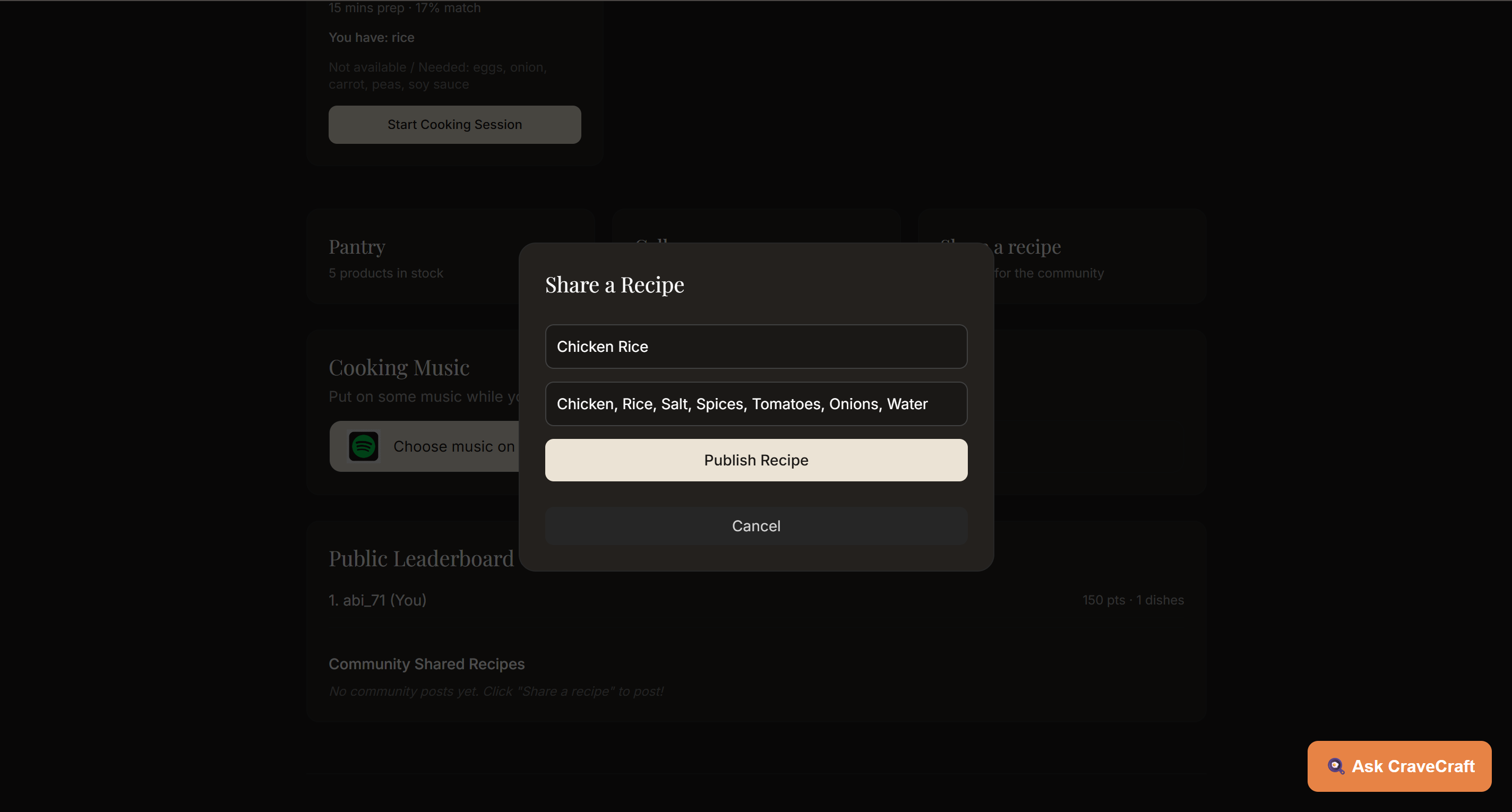
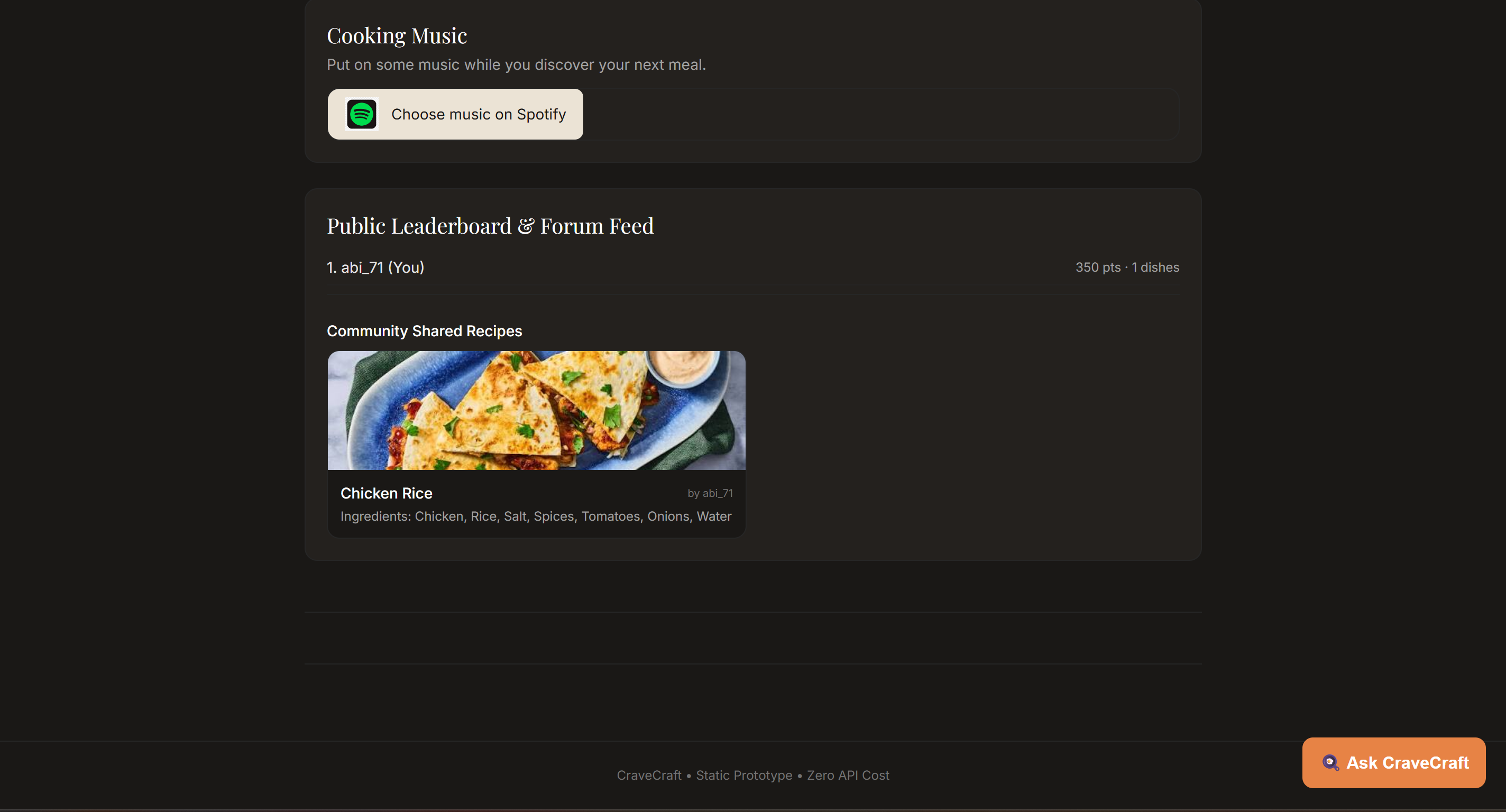
Easily publish custom creations to the community feed.
-
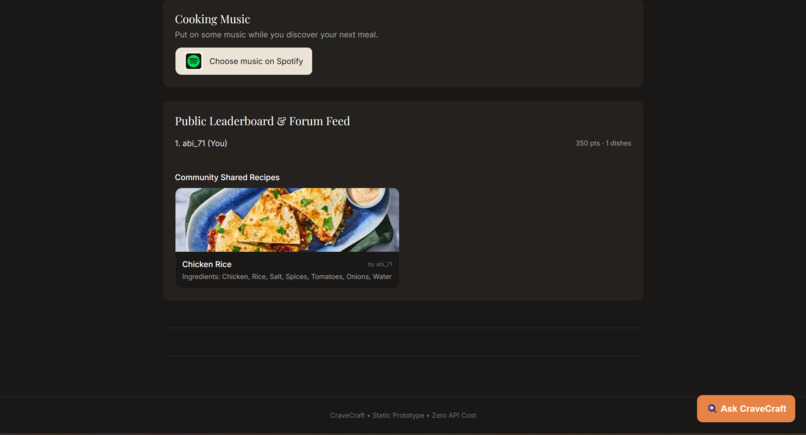
Earn points, climb ranks, and explore user recipes.
Inspiration
A butterfly travels millions of kilometers in search of a single flower. When she finds it, she doesn't drink the nectar for herself. She carries it home to feed her young.
That journey stayed with us, because so many people are on the same search, far from home.
Think of the student in a PG, eating whatever is quick because no one is there to cook for them. The student abroad, craving the dal or paratha their mother made, but never taught to cook it. The young professional who comes home exhausted, stares at the pantry, and has no idea what to make. They grieve the meals their parents made, feel lonely at an empty table, and put in so much effort just to figure out what to eat. Some give up and order takeout. Others skip meals altogether, while ingredients go to waste.
We built crave craft for them. Cooking becomes a way to feel at home, wherever you are.
What It Does
Crave Craft turns your pantry into dinner. You enter your taste preferences and what's in your kitchen, and our AI suggests recipes and guides you step by step with timers and music. If an ingredient is missing, you can search for alternatives on the spot. After cooking, you review the recipe, and Crave Craft reminds you of your past problems the next time you make it, remembers your choice and recommends accordingly. A community lets you share your cooking, and a points-based leaderboard rewards activity with perks. It’s a partner you didn’t know you needed.
How We Built It
We built CraveCraft to feel like a steady, guiding partner in the kitchen—bridging the gap between raw ingredients and a comforting meal.
To turn that vision into reality, we crafted a lightweight, accessible static frontend using HTML5, Tailwind CSS, and Vanilla JavaScript. We designed every screen to be calm and intuitive, from a zero-waste Smart Pantry Manager that tracks what you have on hand to an interactive Guided Cooking View complete with step-by-step instructions and ambient Spotify music integration.
Because cloud backends like Firebase or Supabase didn't guarantee long-term free tiers, and age restrictions on major commercial AI platforms made cloud API keys inaccessible, we took full ownership of our stack: we built a dedicated local Node.js and Express server to host our AI cooking assistant. This local engine handles dynamic recipe generation, real-time culinary Q&A, and ingredient substitution suggestions and more on the spot.
Finally, we engineered a Community Forum and a gamified Leaderboard where chefs earn points, share their creations, and celebrate home cooking together. We then deployed our static frontend live on Vercel, ensuring that no matter where someone is in the world, CraveCraft is ready to guide them home.
Challenges We Ran Into
Building CraveCraft definitely tested our patience. Since we’re under 18, getting access to major AI platform API keys was pretty tough due to age restrictions. We looked into using cloud backends like Firebase or Supabase, but since they weren't guaranteed to stay free, we decided to take matters into our own hands and build a local Node.js server instead. Running the AI locally wasn't smooth sailing either—we had to deal with random server crashes and dropped connections mid-test. Rebranding mid-project from Trisera to CraveCraft also threw a wrench into things, forcing us to refactor variable names, update UI assets, and rewrite documentation across the board. On top of that, writing the logic to break down multi-ingredient recipes and fixing buttons that randomly stopped working took hours of tedious DOM debugging. Lastly, getting our static site up on Vercel took a bit of trial and error, but we got everything running smoothly in the end!
Accomplishments We're Proud Off
We turned what could’ve been just another basic recipe finder into a cozy, comforting space for anyone cooking on their own. By pairing clear step-by-step guidance with background Spotify music and real-time AI help, we actually made cooking after a long day feel peaceful instead of like a stressful chore.
We’re really proud of how we handled technical roadblocks. When we ran into age limits for AI API keys and realized cloud backends were way too expensive, we didn't give up. We built our own local Node.js server from scratch, keeping our project completely free and fully functional.
We also built something that genuinely helps people save money and reduce food waste. Our pantry manager takes whatever random ingredients are sitting in your kitchen and turns them into a real meal, so students and young professionals don't have to stress about what to make or throw away bad groceries. We're also proud of how we went into a field we didn't know existed once and glad of the friendships we made.
Most of all, we created a space where no one feels like they're eating alone. Bringing our community feed, dish photo gallery, and leaderboard to life proved that CraveCraft can bring people together around a shared virtual table, celebrating every single home-cooked meal along the way.
What We Learned
Building CraveCraft taught us that the hardest part of software development isn't just writing code but that it's adapting when things don't go according to plan.
On the frontend, we learned the importance of patience and deep DOM debugging. Spending hours tracing unresponsive buttons, state conflicts, and dynamic page updates gave us a much deeper understanding of event handling and clean, modular JavaScript architecture.
Most importantly, we learned how to build with real empathy. Designing for tired students, homesick young adults, and busy professionals taught us to look beyond basic feature requirements and focus on how software actually feels to use.
What's Next For CraveCraft
• A living AI logo that grows from infant to old age, mirroring a person's life journey, with details the user chooses • User-created recipes that people can add to the app and share • Cook-together sessions, where several people cook the same dish at a set time and go through the process together • Cooking contests to challenge the community and reward creativity, etc
Built With
- css
- html
- javaexpress
- javascript
- node.js


Log in or sign up for Devpost to join the conversation.