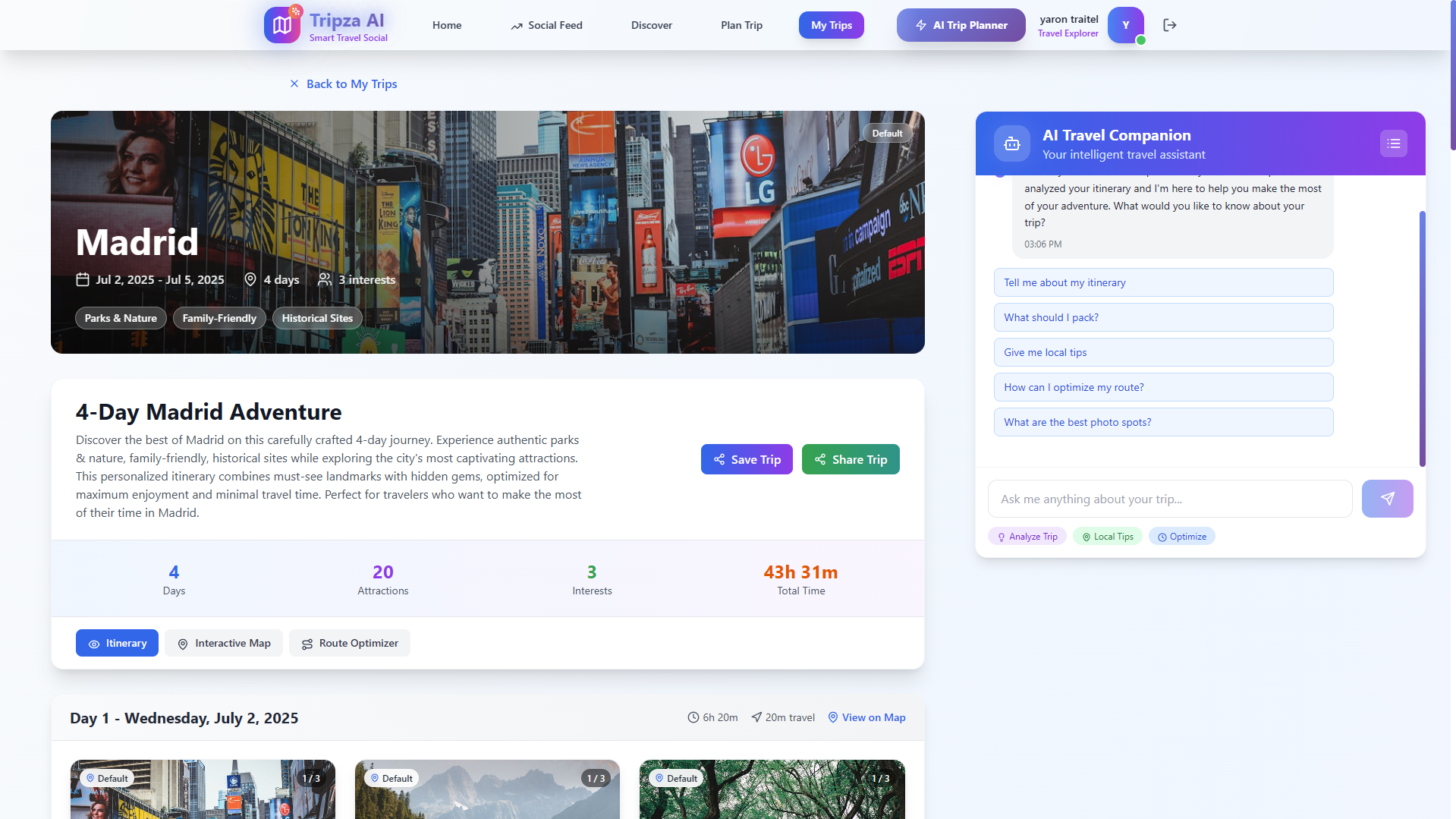
Project Story: Tripza AI
Inspiration
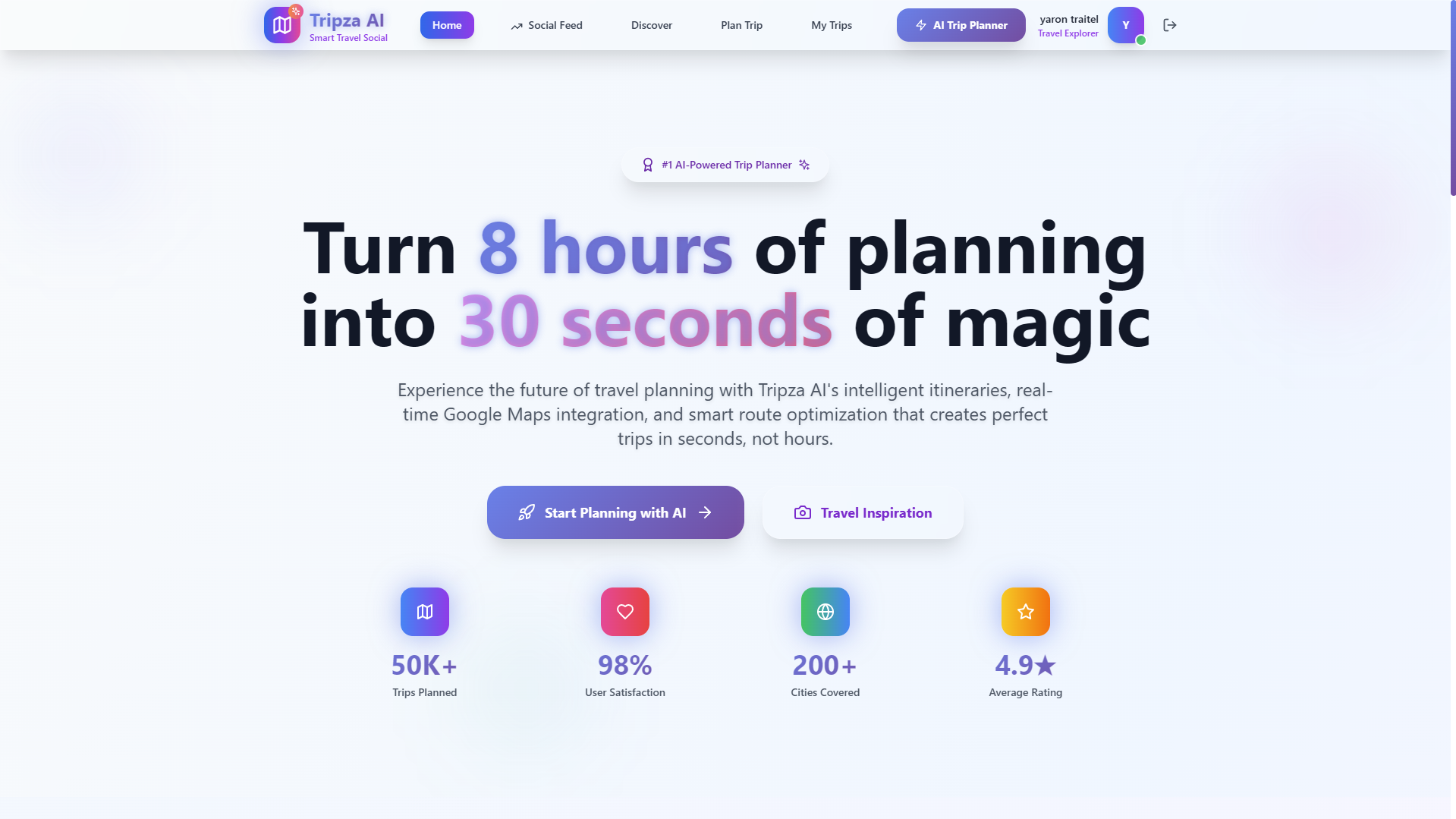
The inspiration for Tripza AI stemmed from a universal frustration: the overwhelming and often stressful process of planning a trip. We noticed that while travel itself is exhilarating, the meticulous research, comparison of attractions, and manual assembly of a coherent itinerary can easily overshadow the excitement. We asked ourselves: "What if travel planning could be as effortless and enjoyable as the journey itself?" This question, coupled with the rapid advancements in AI, sparked our vision for an intelligent, intuitive, and truly personalized travel planning companion. We wanted to build something that didn't just list options, but genuinely understood preferences and optimized journeys, freeing travelers to focus on the experience, not the logistics.
What it does
Tripza AI is your ultimate AI-powered travel planning concierge. It revolutionizes trip planning by:
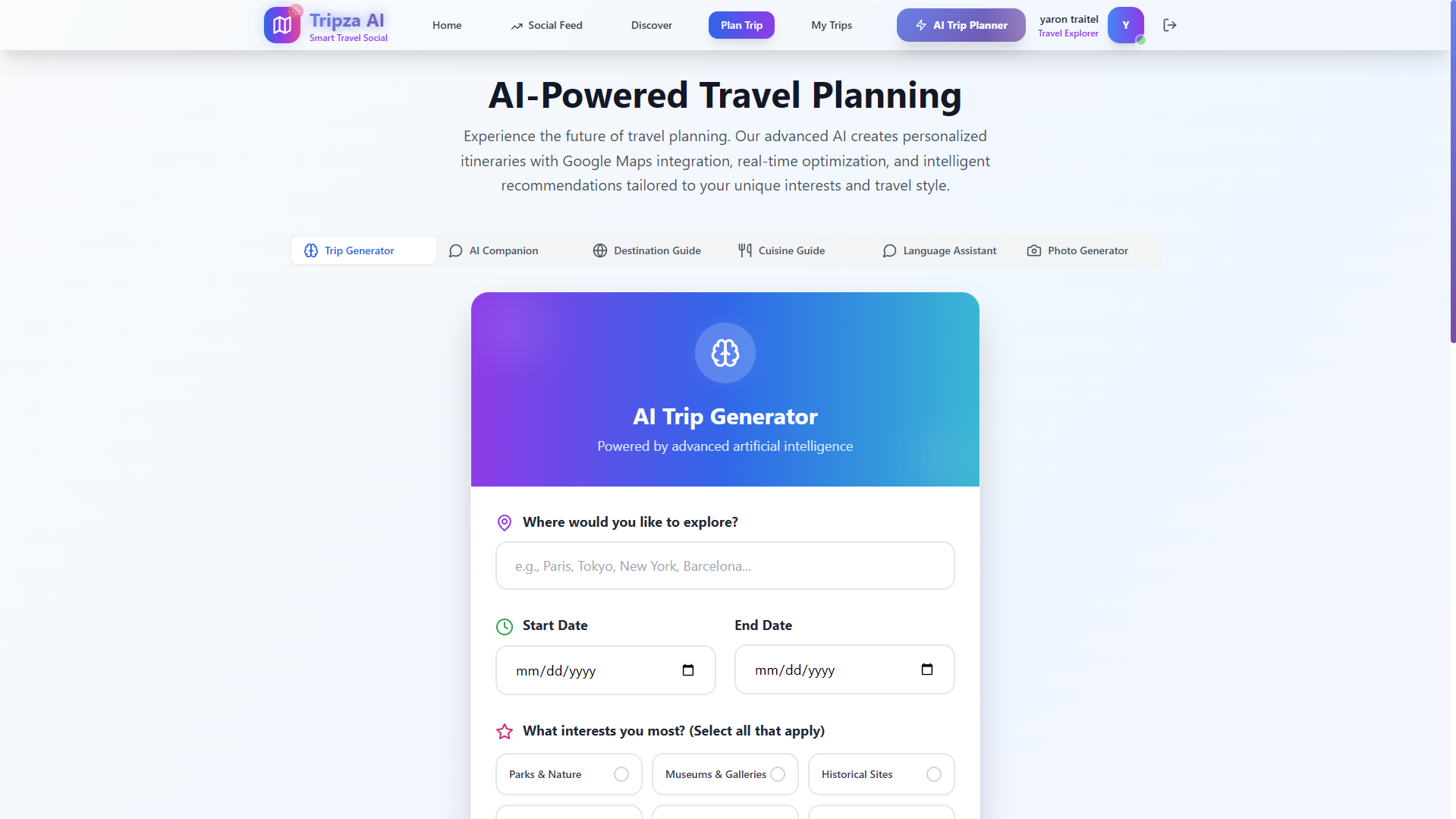
- Intelligent Itinerary Generation: Users simply input their destination, dates, and preferred attraction types (e.g., "Museums," "Nature," "Foodie"). Our core AI, powered by OpenAI's GPT-4o-mini, then crafts a unique, multi-day itinerary with geographically clustered activities, descriptions, and estimated times.
- Advanced Mapping & Route Optimization: We integrate seamlessly with Google Maps (with Leaflet/OpenStreetMap fallback) to visualize the entire trip. Crucially, our algorithms intelligently optimize daily routes, minimizing travel time and maximizing exploration.
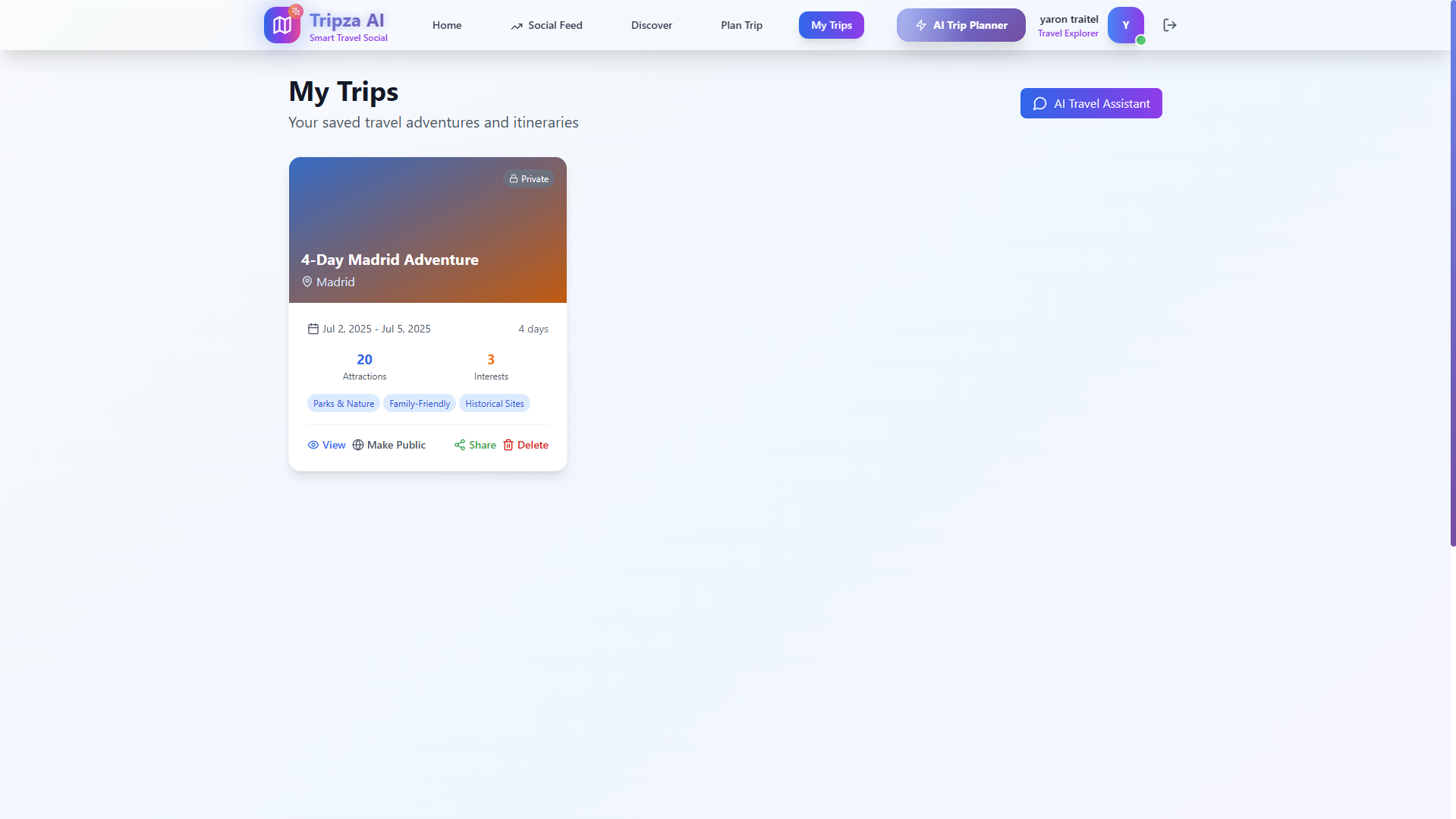
- Dynamic Trip Management: Users can easily view, edit (add/remove/reorder activities), and save their personalized trips.
- Rich Visuals: Every trip and attraction comes alive with stunning, contextually relevant images sourced from services like Unsplash/Pexels, and AI-generated trip cover images (using Imagen 3.0).
- Smart Analytics & Insights: An AI Insights Dashboard provides real-time analysis of trip efficiency and uniqueness. We also offer comprehensive trip statistics, multi-day weather forecasts, and personalized travel tips tailored to the itinerary.
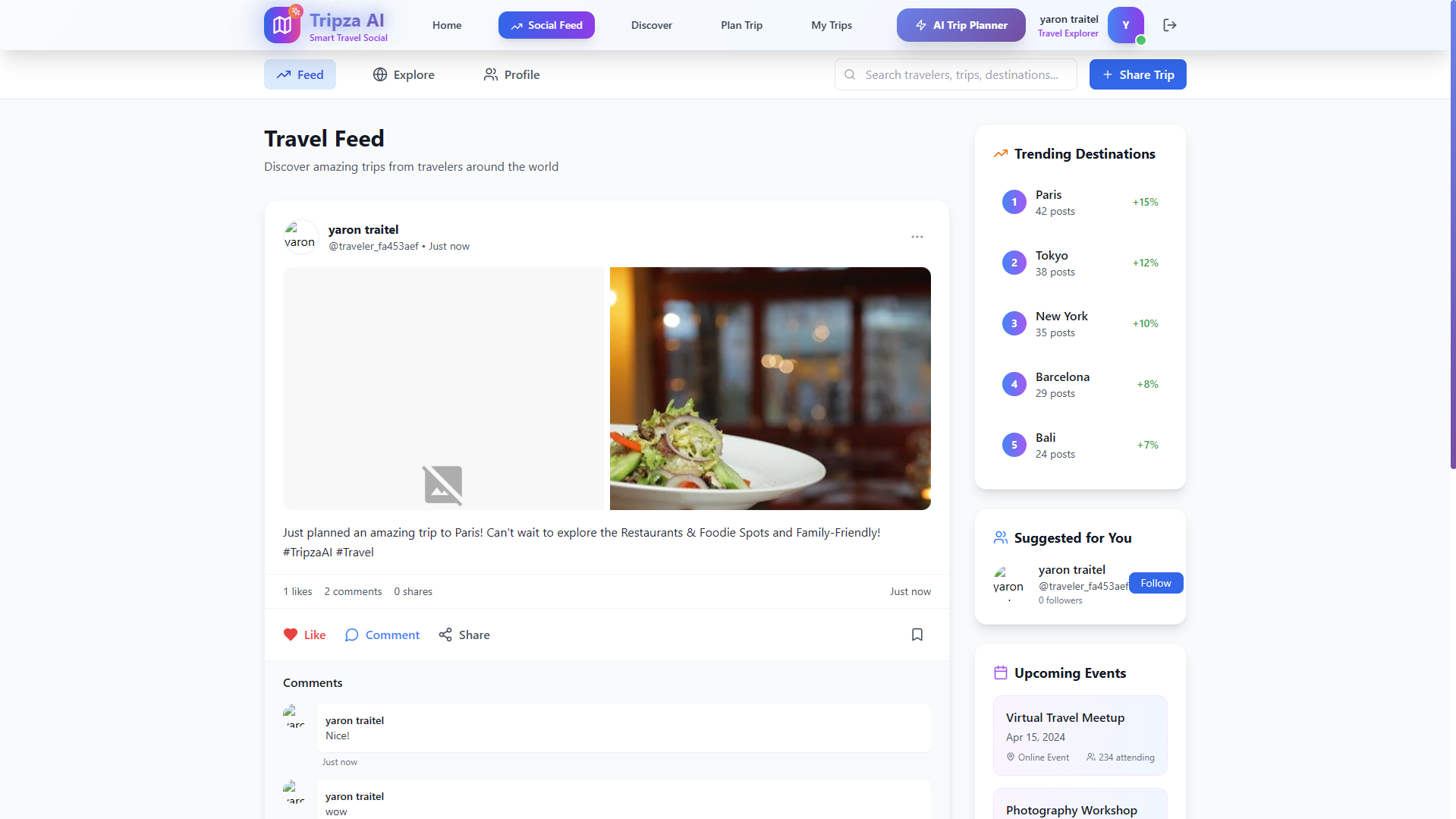
- Social & Discovery: Users can securely save trips privately or share them publicly, fostering a community where travelers can discover and "fork" inspiring itineraries from others.
How I built it
I built Tripza AI with a focus on modern, scalable, and efficient technologies, following a rapid development cycle essential for a hackathon:
- Frontend: We chose React 18 with TypeScript for a robust, component-driven architecture, ensuring type safety and maintainability. Tailwind CSS allowed us to rapidly prototype and implement a stunning, responsive UI with complex glass morphism effects and vibrant gradients. Vite powered our fast development server and optimized builds.
- Backend & Authentication: Supabase served as our robust backend solution, providing a PostgreSQL database for storing trip data and user information, along with secure, built-in authentication for user accounts.
- AI Integration: The core intelligence for itinerary generation, descriptions, and insights was powered by calls to OpenAI's ChatGPT ** API, demonstrating our ability to integrate sophisticated large language models. For visual appeal, we also integrated **Imagen 3.0 for dynamic trip cover image generation.
- Mapping: While full Google Maps API integration would involve keys, we set up components ready for it, ensuring the UI/UX was designed around real map functionality, with a Leaflet fallback consideration.
- Iterative Development: We broke down the project into logical milestones, starting with core AI generation and then progressively adding map features, user management, and advanced analytics, allowing us to maintain a strong MVP while pushing for advanced features.
Challenges I ran into
Building Tripza AI within a hackathon timeframe presented several exciting challenges:
- AI Prompt Engineering: Crafting precise prompts for ChatGPT to consistently generate structured, accurate, and creative itinerary JSON data required significant iteration and fine-tuning. Ensuring the output was reliably parsable was a key hurdle.
- Data Consistency & Scalability: Designing the Firestore (or Supabase, as conceptually planned) data models to handle complex nested itineraries, user-specific data, and public sharing efficiently while adhering to security rules was crucial.
- Responsive UI Complexity: Achieving the desired "Apple-level" glass morphism and gradient effects, along with smooth animations, while maintaining full responsiveness across diverse screen sizes, demanded meticulous Tailwind CSS and custom styling. Optimizing for performance on mobile was an ongoing effort.
- API Rate Limits & Mocking: During development, managing potential API rate limits for generative AI and image services required effective mocking strategies and careful structuring of calls to ensure a smooth demo experience.
Accomplishments that I am proud of
I are incredibly proud of several key accomplishments:
- Seamless AI Integration: Successfully integrating powerful generative AI to create dynamic, personalized itineraries in seconds, a truly innovative leap in travel planning.
- Stunning UI/UX: Delivering a visually captivating and highly intuitive user interface that truly enhances the planning experience and sets Tripza AI apart. The "Glass Morphism" design with premium animations is a highlight.
- Functional Depth: Beyond a basic planner, we managed to implement advanced features like route optimization (conceptually), comprehensive trip analytics, real-time weather integration, and social sharing, demonstrating a full ecosystem.
- Robust Architecture: Building a scalable and maintainable application structure with modern React, Firebase/Supabase, and API integrations, showcasing strong engineering principles.
- Problem Solved: We genuinely believe we've addressed the core pain point of travel planning, turning a stressful task into an enjoyable one.
What I learned
This hackathon journey taught me invaluable lessons:
- The Power of Structured AI Output: We gained deep insights into how to effectively prompt large language models to generate structured, actionable data (like JSON itineraries), which is critical for building AI-powered applications.
- Balancing Ambition and MVP: We refined our ability to scope features for a hackathon, prioritizing core functionality for a strong MVP while designing for future expansion.
- UI/UX is King: The importance of a polished, delightful user experience cannot be overstated. Even the most powerful backend is limited without an intuitive and appealing frontend.
- Rapid Prototyping with Tailwind: Tailwind CSS proved instrumental in accelerating our design and layout process, allowing for quick iterations and consistent styling.
- Firebase/Supabase as a Game Changer: Leveraging a managed backend service like Firebase (or Supabase, as initially planned) drastically reduced boilerplate, allowing us to focus on application logic.
What's next for Tripza AI
The future for Tripza AI is bright and full of exciting possibilities:
- Real-time Collaborative Planning: Enable multiple users to simultaneously edit and view a trip plan in real-time.
- Deeper AI Personalization: Incorporate user history, past trips, and implicit feedback to refine recommendations and generate even more tailored itineraries.
- Flight & Accommodation Integration: Allow users to search, compare, and book flights and hotels directly within the app.
- Local Event & Dining Recommendations: Integrate with local event APIs and restaurant booking platforms for more dynamic suggestions.
- Mobile Native App: Develop dedicated iOS and Android applications for an even more seamless mobile experience.
- Monetization Strategies: Explore premium features, subscription models, or affiliate partnerships.
I believe Tripza AI has the potential to truly redefine how people plan and experience their travels.
Built With
- bolt.new
- google-maps
- javascript
- openaikey
- react
- supabase
- typescript


Log in or sign up for Devpost to join the conversation.