Inspiration Planning group trips often turns into a chaotic mix of scattered tabs, conflicting budgets, and endless group chat messages. While modern AI trip planners promise convenience, they often introduce new problems: weak budget reasoning, fabricated venue suggestions, poor route planning, and slow response times. We wanted a better approach. Tripster combines the flexibility of AI assisted planning with the reliability of deterministic algorithms. Instead of relying on a model to guess the best trip, we use structured optimization logic to generate realistic, budget aware itineraries quickly and consistently.
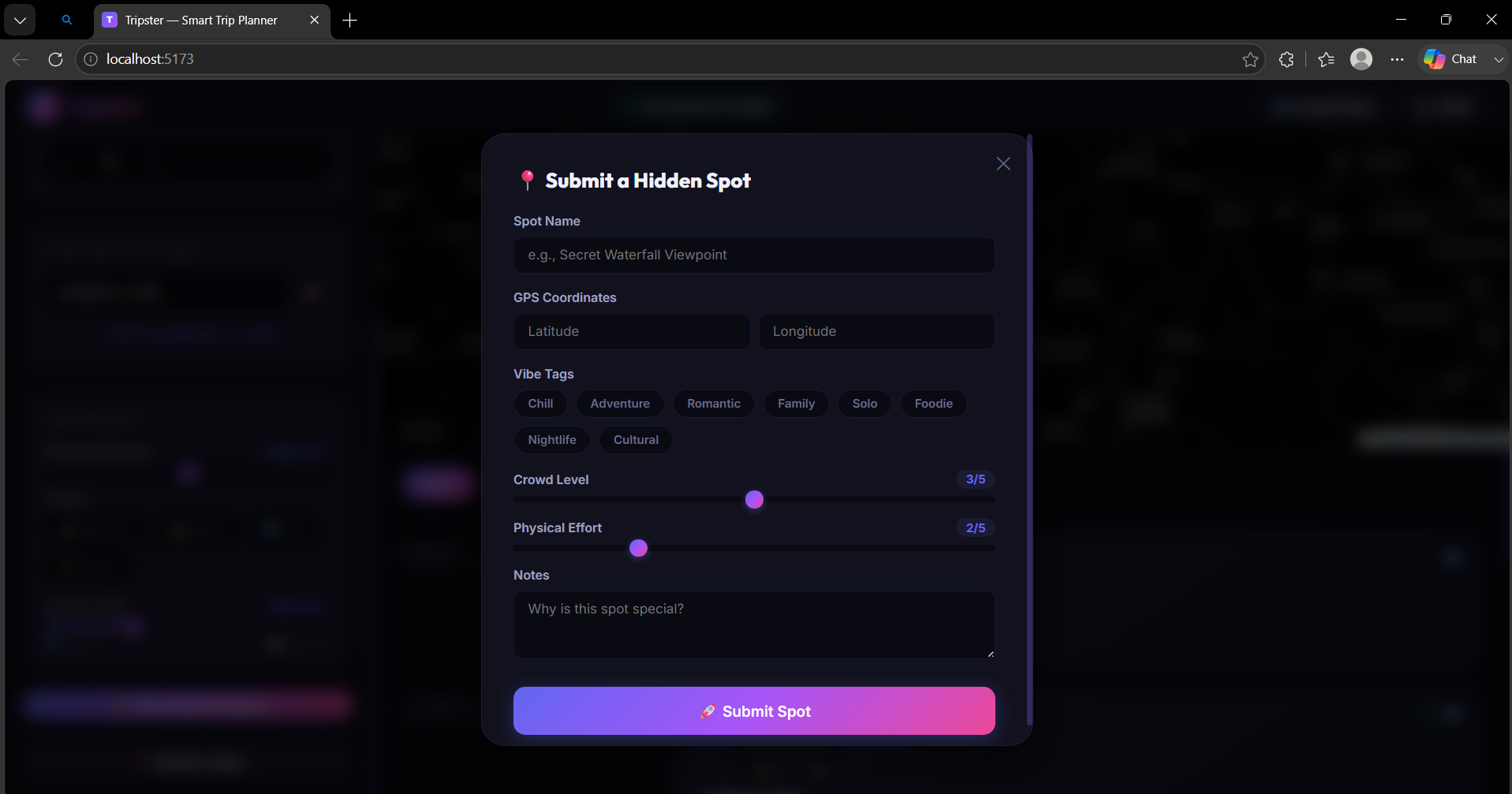
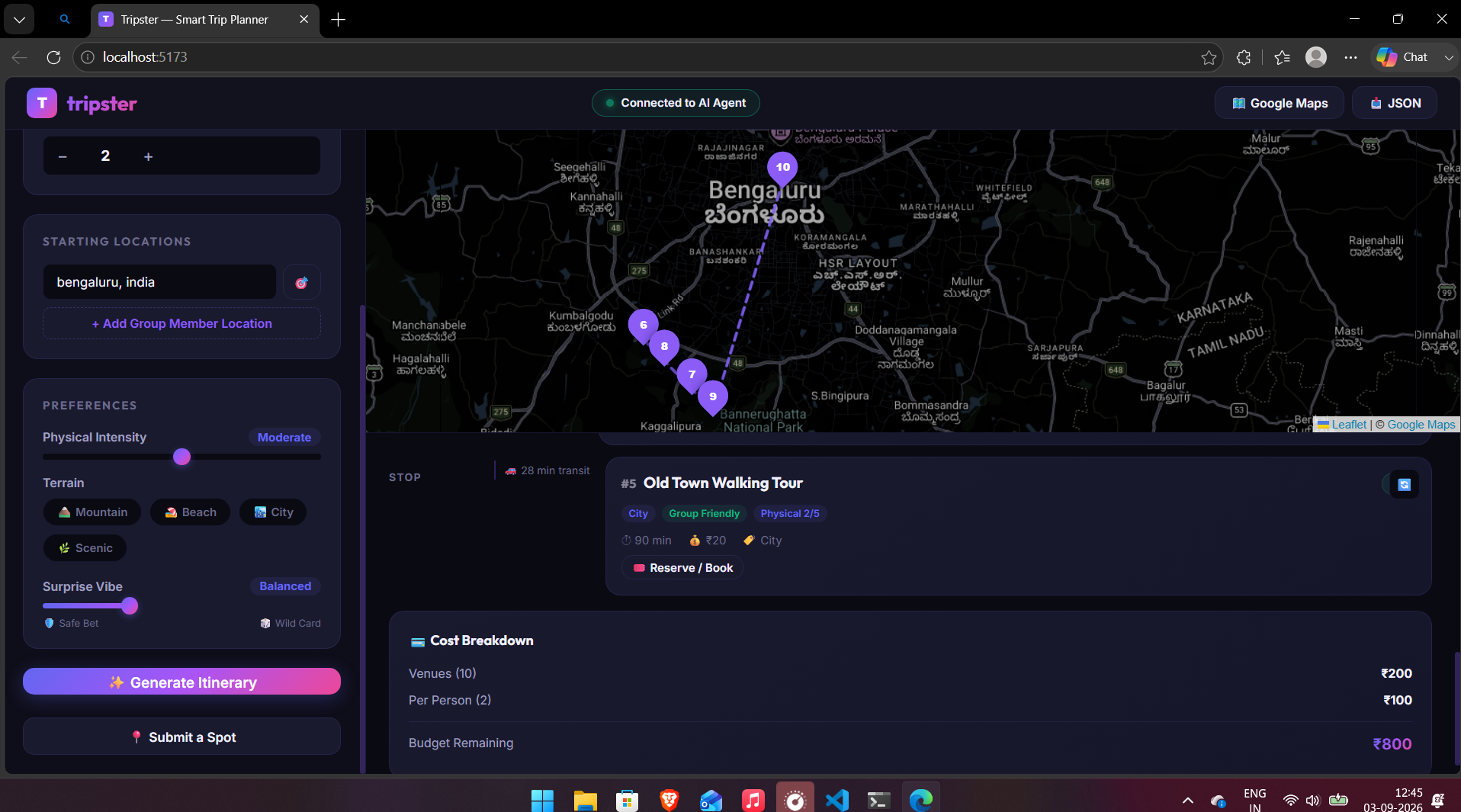
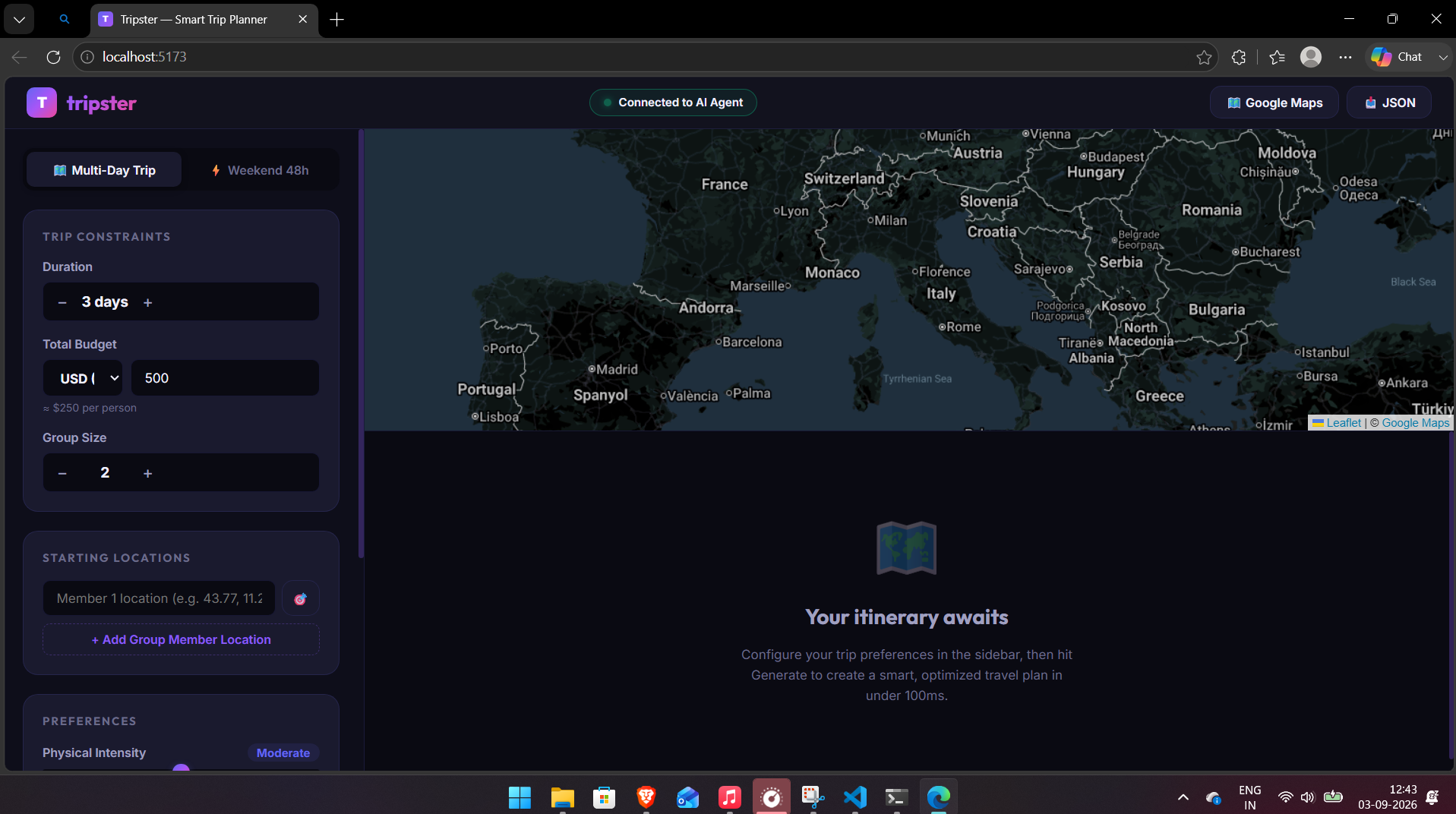
What it does Tripster is a trip planning app that helps groups create better travel plans based on their constraints. It supports multi origin trip planning for group members, budget aware itinerary generation, terrain and effort preference handling, spatially balanced destination selection, venue rerolling and itinerary refinement, interactive visual planning through a map and timeline, optional submission of new trip spots into the planning system, and agent style integration through browser native tool execution.
How we built it We built the frontend with React and Vite, used Leaflet and React Leaflet for maps, applied custom CSS for styling, and relied on Supabase for the data layer. The planning logic is powered by a custom deterministic engine for itinerary generation, route optimization, and constraints handling. For agent integration we added a browser side WebMCP bridge for tool interoperability. This stack keeps the app fast, lightweight, and cost efficient while still supporting an interactive planning experience.
Challenges we ran into We had to figure out how to find a fair group midpoint across multiple starting locations, balance travel distance with budget and venue suitability, handle edge cases where no venues fit perfectly within the provided constraints, keep route generation realistic while avoiding over optimization, and synchronize UI state with planning actions without breaking the user experience.
Accomplishments we are proud of We built a functioning trip planning app focused on real constraints instead of generic AI suggestions. We created a structure that blends deterministic planning with interactive user experience, designed a system that is lightweight, fast, and easy to extend, and integrated map based planning and itinerary visualization in a single interface.
What we learned The best travel planning experiences do not come from forcing AI to solve everything with raw generation. They come from combining AI interaction with well defined optimization logic. For structured tasks like trip planning, deterministic heuristics and route aware algorithms are often more reliable than purely generative approaches.
What is next for Tripster We plan to add real time shared itinerary updates, better transit aware route planning, more venue verification and review workflows, offline support for saved itineraries, and improved personalization and recommendation engines.
Built With
- agent
- frontend
- github
- javascript
- leaflet.js
- node.js
- npm
- react
- supabase
- vite
- webmcp

Log in or sign up for Devpost to join the conversation.